Tag: The Viral Fever

  • TVF partners Furlenco in ‘Truth Or Dare With Dad’

    TVF partners Furlenco in ‘Truth Or Dare With Dad’

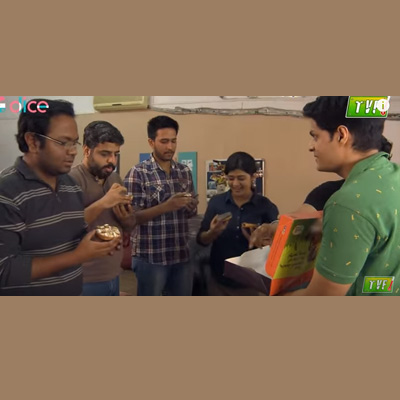
    MUMBAI:  While the world is raving about Huffington Post’s digital video series ‘Talk To Me’ that urges children to interview their parents, India’s own digital content and web series pioneer TVF has come up with its own variant of the same, only with an added dose of laughter. Calling it an infomercial, The Viral Fever has partnered with furniture rental brand Furlenco to launch ‘Truth or Dare with Dad’.

    Truth or Dare with Dad is a hilarious sketch between father and son and friend, as they go through a grueling fun game of Truth or Dare.  Starring everyone’s favorite from the TVF team, Jitendra Kumar (lovingly known as Jeetu!) enjoy the infomercial as Jeetu teaches his Dad the game and learns many a new thing along the way!

    Commenting on the launch, Furlenco CEO and founder  Ajith Mohan Karimpana said, “TVF is an immensely popular youth-centric digital content platform in our country, which boasts of more than 15,00,000 viewers. The idea of launching an infomercial with TVF came from a simple thought of introducing Furlenco to the youth of this city as well as all the other metropolitan cities, who are also our target group. We aim to make aspirations of Pune’s aspirers more accessible by providing premium designer furniture on rent. They can now Have Everything and Buy Nothing.”

    Having pioneered the web series genre in India and created two very successful web series Permanent Roommates and Pitchers,  The Viral Fever (TVF) ‘s founder Arunabh Kumar added, “Furlenco has made lives of young working professionals simpler without burning a hole in their pockets. As the fan base of TVF is primarily the youth – this collaboration was really exciting for us.”

    Truth or Dare with Dad is written by Chandan Kumar and directed by Raghav Subbu from Team TVF.

  • YouTube fanfest returns to India for 3rd edition

    YouTube fanfest returns to India for 3rd edition

    MUMBAI: Youtube Fanfest is back in India for a third time and how! On its third edition now, the mega celebration boasts of a 30 artists line up of digital artists and content creators, who will take centre stage on 18 March 2016 in Mumbai. The show will be co-produced by Only Much Louder and Branded, and has Pepsi, Pantene, Amazon.in and Clean and Clear as sponsors, with Pepsi coming onbaord for the second time. Star acts include SuperWoman aka Lilly Singh, Kanan Gill, Connor Franta, SANAM, TVF and AIB

    Sharing his excitement over the fest, YouTube India head of entertainment and content Satya Raghavan said, “India has undergone a content creator revolution. Over the last few years, Indian YouTube creators have gained millions of new subscribers and have taken over the imagination of the youth in India. In our view, 2015 was a breakout year for the young industry and the ecosystem has really evolved in India, with mobile driving massive growth for online video consumption. Now, we’re seeing online creators break open the gates for a whole new kind of entertainment for Indians online, with advertisers looking to tap into this space in a meaningful way.”

    While the idea is to reach out to maximum number of people and inspire them to not only celebrate the existing content creators, but join the community as well. YouTube is banking on organic promotion of the show through artists and their subscribers. “It is largely organic. Several thousands of content creators put out videos on their channels, and they have their millions of subscribers, who themselves have their own social media platforms to put the word across. We don’t think we need any more marketing,” said Raghavan.

    About the booming digital content industry and the mushrooming of OTT players across the board Ragahavan said, “I think it’s great that more people are doing things around video. It will only expand the pie. Especially with bandwidth opening up in the country hopefully thanks to the several 4G services. It is an exciting time for content creators and video content consumers to be in India.”

    Making the most of the platform, Culture Machine, OML, Qyuki, and The Viral Fever (TVF) also announced four new original properties on YouTube. Firstly #LaughterGames, where nine comedy creators will launch their own comedy web series, featuring YouTube comedians such as East India Comedy, Put Chutney and Kenny Sebastian. Qyuki will launch Jamminin’, a show featuring Bollywood composers and YouTube music creators. In the coming months, Culture Machine will be launching Beauty Hunt, a beauty/style-centric program, while OML will launch season 2 of its successful Comedy Hunt, the search for India’s next comedy act, while veteran web show creators TVF will be launching a search for the next generation of web series creators. A Tamil Comedy Hunt with Vision Time, a Telugu Comedy Hunt with ETV, and Katha, a Tamil/Telugu web series property are some of the launches that can be expected from south India later in the year.

    To reflect on YouTube’s growth in India Raghavan shared some data: “While overall watchtime in India has grown by 80 per cent YoY (with 55 per cent of that watchtime on mobile) and the hours of video uploaded from India has increased at 90 per cent YoY, content uploaded by India’s independent creators has risen especially quickly. For instance, watchtime of independent musicians grew over 92 per cent YoY; comedy and entertainment grew 100 per cent YoY; beauty and fashion videos have grown over 138 per cent YoY. Another notable area of watchtime growth came from the south, with Tamil and Telugu content seeing a 75 per cent spike in YoY growth.

  • YouTube fanfest returns to India for 3rd edition

    YouTube fanfest returns to India for 3rd edition

    MUMBAI: Youtube Fanfest is back in India for a third time and how! On its third edition now, the mega celebration boasts of a 30 artists line up of digital artists and content creators, who will take centre stage on 18 March 2016 in Mumbai. The show will be co-produced by Only Much Louder and Branded, and has Pepsi, Pantene, Amazon.in and Clean and Clear as sponsors, with Pepsi coming onbaord for the second time. Star acts include SuperWoman aka Lilly Singh, Kanan Gill, Connor Franta, SANAM, TVF and AIB

    Sharing his excitement over the fest, YouTube India head of entertainment and content Satya Raghavan said, “India has undergone a content creator revolution. Over the last few years, Indian YouTube creators have gained millions of new subscribers and have taken over the imagination of the youth in India. In our view, 2015 was a breakout year for the young industry and the ecosystem has really evolved in India, with mobile driving massive growth for online video consumption. Now, we’re seeing online creators break open the gates for a whole new kind of entertainment for Indians online, with advertisers looking to tap into this space in a meaningful way.”

    While the idea is to reach out to maximum number of people and inspire them to not only celebrate the existing content creators, but join the community as well. YouTube is banking on organic promotion of the show through artists and their subscribers. “It is largely organic. Several thousands of content creators put out videos on their channels, and they have their millions of subscribers, who themselves have their own social media platforms to put the word across. We don’t think we need any more marketing,” said Raghavan.

    About the booming digital content industry and the mushrooming of OTT players across the board Ragahavan said, “I think it’s great that more people are doing things around video. It will only expand the pie. Especially with bandwidth opening up in the country hopefully thanks to the several 4G services. It is an exciting time for content creators and video content consumers to be in India.”

    Making the most of the platform, Culture Machine, OML, Qyuki, and The Viral Fever (TVF) also announced four new original properties on YouTube. Firstly #LaughterGames, where nine comedy creators will launch their own comedy web series, featuring YouTube comedians such as East India Comedy, Put Chutney and Kenny Sebastian. Qyuki will launch Jamminin’, a show featuring Bollywood composers and YouTube music creators. In the coming months, Culture Machine will be launching Beauty Hunt, a beauty/style-centric program, while OML will launch season 2 of its successful Comedy Hunt, the search for India’s next comedy act, while veteran web show creators TVF will be launching a search for the next generation of web series creators. A Tamil Comedy Hunt with Vision Time, a Telugu Comedy Hunt with ETV, and Katha, a Tamil/Telugu web series property are some of the launches that can be expected from south India later in the year.

    To reflect on YouTube’s growth in India Raghavan shared some data: “While overall watchtime in India has grown by 80 per cent YoY (with 55 per cent of that watchtime on mobile) and the hours of video uploaded from India has increased at 90 per cent YoY, content uploaded by India’s independent creators has risen especially quickly. For instance, watchtime of independent musicians grew over 92 per cent YoY; comedy and entertainment grew 100 per cent YoY; beauty and fashion videos have grown over 138 per cent YoY. Another notable area of watchtime growth came from the south, with Tamil and Telugu content seeing a 75 per cent spike in YoY growth.

  • OTT – The new El Dorado: Nailing the coffin on television?

    OTT – The new El Dorado: Nailing the coffin on television?

    MUMBAI: With the industry buzz word for 2016 being ‘digital content,’ much has been spoken about the vista of prospects that the medium poses for content creators with figures and studies on rapidly growing digital adex often thrown around in the air. But how much of that talk is really translating into reality for those working in the ‘OTT’ or alternate video content business, was the question raised in the Indiantelevision.com organised Content Hub’s penultimate session ‘OTT: The New El Dorado.’

    Panelists on board the discussion were Alt Digital CEO Nachiket Pantvaidya, Isobar India MD Shamsuddin Jasani, The Viral Fever founder and CEO Arunabh Kumar, Big Synergy director Anita Kaul Basu, and Arré CEO Ajay Chacko.

    Just as the title reflects, while looking at the macro picture of digital media of the future, marketers and content creators often forget to ask the basic questions of budget, sustainable revenue models, relevance in future and of course the return on investments.

    Throwing light on ground reality of the matter, each of the panelists shared their insights and experiences.

    I Don’t Watch TV, the upcoming web series from Arré, and its equally disruptive trailer set the tone of the discussion, which was anchored by Indiantelevision.com founder, editor-in-chief and CEO Anil Wanvari.

    Consciously steering away from being called an “OTT” platform, Chacko stated that their new venture was a content brand that believed in disruptive content. Elaborating on the reason, he said, “Digital, like every media transition we have seen in the past, gives you the opportunity to create different tone of content, be experimental and maybe give form to the next big cliché. The need of the hour is social relevance and we not only churn out radical content but also play around with it within the social context. While we crib or joke about the hackneyed television content and the people behind it, the truth is that it isn’t as much. It’s the hackneyed content revenue that compels them to act in a certain way and our effort is to break free from it,” Chacko shares.

    Expanding on the business model of digital platforms, especially with respect to Arré’s on-demand content arm, Chacko confesses that he hails from a very traditional school of thought that Indian content market is ad-funded. “I don’t see an escape from dependency on advertisers even on digital. However, the nature in which a brand or advertisment interacts with content is changing. We are entering an era of the next level of branded content, which has been mastered by my fellow panelist Arunabh (of TVF fame),” Chacko adds.

    Seconding the new form of branded content and possibilities that it brings for marketers, Jasani shares, “From what I have observed, Indian viewers are inherently inclined to not pay for content and that mindset is not changing in the near future. Therefore, ad-funded content is the way forward. The way people are going to consume video will primarily be on demand. It is an interesting crossroad for advertisers and marketers as well on how to use this new age content. Several brands are open to experimenting with branded content with content creators and even take ownership of the content marketing they do. Agencies, marketers and content creators are coming together to make branded content and share the IPs of it, as well as the revenue the property generates.”

    Moving on from the tug of war between television and the second screen, Jasani projects a whole new dynamic in the near future when viewers will be screen agnostic. “A seamless flow of data and videos that is available on all my devices, be it television, laptop or mobile, is what people want in the near future. Therefore, the whole concept of creating for mobile or creating for television needs an overhaul and creators will need to think from a macro perspective.”

    While Jasani paints an optimistic picture on the investment interest advertisers have in the digital content front, TVF’s Kumar begs to differ.

    While taking a question raised in the post session Q&A round, Kumar comes clear on the ground reality of how an advertiser operating in the current landscape thinks of the digital medium as compared to the traditional medium platform for its advertising spends. “Let me be honest, people say digital spend is growing but that’s all lip-service. This is my observation over the last five years. The major advertisers end up striking a deal with a fancy agency and spend crores on TVCs, while their purses become tight when it comes to the digital video space. If brands were to spare even a single digital per cent of what they do on television, it will be a huge boost to the production budget and quality of what digital creators are making. But right now that is hardly happening.”

    Continuing, Kumar further adds, “When we pitch a show to a brand, we have to make it clear that we are not going to make a TVC. We are not asking money for a 30 sec slot, the content for which you have created and paid for. We are actually going to make your brand an integral part of storytelling so that viewers become fans of the show as well as the brand. I believe that is cent per cent more than what a TVC can do for a brand.”

    Jasani admits the challenge the digital believers have in hand is converting the old school thinkers to see the returns that digital content can give, but is equally confident that the change will follow, as the drastically changing content space will only compel the marketers to evolve or be left behind.

     

  • OTT – The new El Dorado: Nailing the coffin on television?

    OTT – The new El Dorado: Nailing the coffin on television?

    MUMBAI: With the industry buzz word for 2016 being ‘digital content,’ much has been spoken about the vista of prospects that the medium poses for content creators with figures and studies on rapidly growing digital adex often thrown around in the air. But how much of that talk is really translating into reality for those working in the ‘OTT’ or alternate video content business, was the question raised in the Indiantelevision.com organised Content Hub’s penultimate session ‘OTT: The New El Dorado.’

    Panelists on board the discussion were Alt Digital CEO Nachiket Pantvaidya, Isobar India MD Shamsuddin Jasani, The Viral Fever founder and CEO Arunabh Kumar, Big Synergy director Anita Kaul Basu, and Arré CEO Ajay Chacko.

    Just as the title reflects, while looking at the macro picture of digital media of the future, marketers and content creators often forget to ask the basic questions of budget, sustainable revenue models, relevance in future and of course the return on investments.

    Throwing light on ground reality of the matter, each of the panelists shared their insights and experiences.

    I Don’t Watch TV, the upcoming web series from Arré, and its equally disruptive trailer set the tone of the discussion, which was anchored by Indiantelevision.com founder, editor-in-chief and CEO Anil Wanvari.

    Consciously steering away from being called an “OTT” platform, Chacko stated that their new venture was a content brand that believed in disruptive content. Elaborating on the reason, he said, “Digital, like every media transition we have seen in the past, gives you the opportunity to create different tone of content, be experimental and maybe give form to the next big cliché. The need of the hour is social relevance and we not only churn out radical content but also play around with it within the social context. While we crib or joke about the hackneyed television content and the people behind it, the truth is that it isn’t as much. It’s the hackneyed content revenue that compels them to act in a certain way and our effort is to break free from it,” Chacko shares.

    Expanding on the business model of digital platforms, especially with respect to Arré’s on-demand content arm, Chacko confesses that he hails from a very traditional school of thought that Indian content market is ad-funded. “I don’t see an escape from dependency on advertisers even on digital. However, the nature in which a brand or advertisment interacts with content is changing. We are entering an era of the next level of branded content, which has been mastered by my fellow panelist Arunabh (of TVF fame),” Chacko adds.

    Seconding the new form of branded content and possibilities that it brings for marketers, Jasani shares, “From what I have observed, Indian viewers are inherently inclined to not pay for content and that mindset is not changing in the near future. Therefore, ad-funded content is the way forward. The way people are going to consume video will primarily be on demand. It is an interesting crossroad for advertisers and marketers as well on how to use this new age content. Several brands are open to experimenting with branded content with content creators and even take ownership of the content marketing they do. Agencies, marketers and content creators are coming together to make branded content and share the IPs of it, as well as the revenue the property generates.”

    Moving on from the tug of war between television and the second screen, Jasani projects a whole new dynamic in the near future when viewers will be screen agnostic. “A seamless flow of data and videos that is available on all my devices, be it television, laptop or mobile, is what people want in the near future. Therefore, the whole concept of creating for mobile or creating for television needs an overhaul and creators will need to think from a macro perspective.”

    While Jasani paints an optimistic picture on the investment interest advertisers have in the digital content front, TVF’s Kumar begs to differ.

    While taking a question raised in the post session Q&A round, Kumar comes clear on the ground reality of how an advertiser operating in the current landscape thinks of the digital medium as compared to the traditional medium platform for its advertising spends. “Let me be honest, people say digital spend is growing but that’s all lip-service. This is my observation over the last five years. The major advertisers end up striking a deal with a fancy agency and spend crores on TVCs, while their purses become tight when it comes to the digital video space. If brands were to spare even a single digital per cent of what they do on television, it will be a huge boost to the production budget and quality of what digital creators are making. But right now that is hardly happening.”

    Continuing, Kumar further adds, “When we pitch a show to a brand, we have to make it clear that we are not going to make a TVC. We are not asking money for a 30 sec slot, the content for which you have created and paid for. We are actually going to make your brand an integral part of storytelling so that viewers become fans of the show as well as the brand. I believe that is cent per cent more than what a TVC can do for a brand.”

    Jasani admits the challenge the digital believers have in hand is converting the old school thinkers to see the returns that digital content can give, but is equally confident that the change will follow, as the drastically changing content space will only compel the marketers to evolve or be left behind.

     

  • TVF, Ola Cabs & the Permanent Roommates association

    TVF, Ola Cabs & the Permanent Roommates association

    MUMBAI: One of India’s popular YouTube channels and digital producers, The Viral Fever (TVF), is back with the second season of its flagship web series Permanent Roommates . And how!


    Touting it as the best web series that TVF has put together so far, TFV CEO and founder Arunabh Kumar has high hopes from this ambitious project. The company is making this production in association with call taxi service Ola Cabs as of Permanent Roommates season 2.


    While Kumar refused to divulge any details, a source close to the development guesstimated that Ola has shelled out  an eye-popping Rs 2.5-3 crore for backing the production.


    Slated to go online on TVF Play and TVF’s YouTube channel on Valentine’s Day, the new season will consist of eight 30 – 40 minute long power packed episodes.


    It will take off from where season one left off — the drama in the lives of Internet’s most-loved fictional characters Tanya (Nidhi Singh) and Mikesh (Sumeet Vyas). The episodes are scheduled to air fortnightly. And the theme is “The Third Kind of Love.”


    Kumar expects viewership to touch four – five million per episode, which hardly comes as a surprise given last season’s success.


    Launched in October 2014, the web series grossed over 12 million views for five episodes that aired on YouTube, with every episode having more than a million views making it the (claimed) second most watched online long form content in the world.


    “Our target is to cater to and retain the three million viewers who already follow Permanent Roommates and maybe expand our viewership by a couple of more million. We have weaved the content so that it is not only a youth-based love story but also has elements of interest for the entire family. We have some surprises for all of them,” adds Kumar.


    What’s more, with a big chunk of sponsorship money in, the pressure is on the creative geniuses to up the ante now. Season One had CommonFloor as the brand partner; hence, the home was one of the main protagonists.


    Will season 2, see them going around in taxis or make mentions of them using the service like the duo does in the promo that released today?


    “We do work really hard in trying to integrate the brand’s value through the storytelling and send across the brand statement through the narrative rather than a product placement in a 10-second shot,” says Kumar.


    If the guesstimated sponsorship amount of Rs 2.5 crore to Rs 3 crore is right, then TVF has a budget of Rs 30-35 lakh per episode at its disposal, which is far higher than the commissioning fees for fictional TV shows on GECS which are in the range of Rs 7 to Rs 15 lakh per episode.


    “We generally take six to nine months to complete a production. We pay attention to detail and operate on a crew of almost a hundred people,” explains Kumar, adding that one can’t compare it to television as television mathematics work completely differently.


    The latest teaser released by TVF has already created a buzz amongst netizens with over a lakh views in just a few hours. Fans can expect a longer promo from 4 February onwards leading up to the show’s launch on 14 February.


    Surprisingly, with a scale this high, TVF continues to confidently depend on word of mouth and social buzz to increase its audience.


    “We don’t have any solid marketing strategy in place. We will do what we usually do, post messages on our respective social media accounts and our ever attentive fans will spread the word,” Kumar says confidently.


    Having said that, TVF is also looking at dabbling in conversational marketing by collaborating with several partners and maybe go beyond digital and make the shows presence felt offline.


    In the new content ecosystem, everything goes, doesn’t it?

     
  • TVF, Ola Cabs & the Permanent Roommates association

    TVF, Ola Cabs & the Permanent Roommates association

    MUMBAI: One of India’s popular YouTube channels and digital producers, The Viral Fever (TVF), is back with the second season of its flagship web series Permanent Roommates . And how!


    Touting it as the best web series that TVF has put together so far, TFV CEO and founder Arunabh Kumar has high hopes from this ambitious project. The company is making this production in association with call taxi service Ola Cabs as of Permanent Roommates season 2.


    While Kumar refused to divulge any details, a source close to the development guesstimated that Ola has shelled out  an eye-popping Rs 2.5-3 crore for backing the production.


    Slated to go online on TVF Play and TVF’s YouTube channel on Valentine’s Day, the new season will consist of eight 30 – 40 minute long power packed episodes.


    It will take off from where season one left off — the drama in the lives of Internet’s most-loved fictional characters Tanya (Nidhi Singh) and Mikesh (Sumeet Vyas). The episodes are scheduled to air fortnightly. And the theme is “The Third Kind of Love.”


    Kumar expects viewership to touch four – five million per episode, which hardly comes as a surprise given last season’s success.


    Launched in October 2014, the web series grossed over 12 million views for five episodes that aired on YouTube, with every episode having more than a million views making it the (claimed) second most watched online long form content in the world.


    “Our target is to cater to and retain the three million viewers who already follow Permanent Roommates and maybe expand our viewership by a couple of more million. We have weaved the content so that it is not only a youth-based love story but also has elements of interest for the entire family. We have some surprises for all of them,” adds Kumar.


    What’s more, with a big chunk of sponsorship money in, the pressure is on the creative geniuses to up the ante now. Season One had CommonFloor as the brand partner; hence, the home was one of the main protagonists.


    Will season 2, see them going around in taxis or make mentions of them using the service like the duo does in the promo that released today?


    “We do work really hard in trying to integrate the brand’s value through the storytelling and send across the brand statement through the narrative rather than a product placement in a 10-second shot,” says Kumar.


    If the guesstimated sponsorship amount of Rs 2.5 crore to Rs 3 crore is right, then TVF has a budget of Rs 30-35 lakh per episode at its disposal, which is far higher than the commissioning fees for fictional TV shows on GECS which are in the range of Rs 7 to Rs 15 lakh per episode.


    “We generally take six to nine months to complete a production. We pay attention to detail and operate on a crew of almost a hundred people,” explains Kumar, adding that one can’t compare it to television as television mathematics work completely differently.


    The latest teaser released by TVF has already created a buzz amongst netizens with over a lakh views in just a few hours. Fans can expect a longer promo from 4 February onwards leading up to the show’s launch on 14 February.


    Surprisingly, with a scale this high, TVF continues to confidently depend on word of mouth and social buzz to increase its audience.


    “We don’t have any solid marketing strategy in place. We will do what we usually do, post messages on our respective social media accounts and our ever attentive fans will spread the word,” Kumar says confidently.


    Having said that, TVF is also looking at dabbling in conversational marketing by collaborating with several partners and maybe go beyond digital and make the shows presence felt offline.


    In the new content ecosystem, everything goes, doesn’t it?

     
  • TVF launches mockumentary titled ‘Not Fit’

    TVF launches mockumentary titled ‘Not Fit’

    MUMBAIThe Viral Fever (TVF) founded by Arunabh Kumar, has released an original mockumentary series titled Not Fit. The trailer and the first episode of the web series was aired on 16 December, 2015 on TVF Play. The series is created by Dice Media.


    The new series follows the path of the popular web series Pitchers, which was a success. The series is written and directed by Sudev Nair and is a tongue-in-cheek look at the world of aspiring actors and the weird and wonderful environment they inhabit.


    Talking about the new series, Kumar says, “The fabulous team of Dice Media led by Ashwin Suresh and Anirudh Pandita along with Sudev Nair have been able to create an original series that is akin to our TVF mantra and we are happy to have them as our partners.”


    “We are extremely proud to have created Not Fit, soon after the tremendous success of our previous videos,Ban Ban, and Neta Sabki Leta. We are working hard to bring more engaging and entertaining content to young Indian audiences and look forward to collaborating with Arunabh and his team,” added Dice Media co-founder Ashwin Suresh.


    Speaking about the new initiative Dice Media co-founder Anirudh Pandita said, “We’re happy to partner with TVF on this series. We believe the company has the right audience for this show and this partnership allows us to showcase our content to them. The two brands have a common mission, which makes us natural partners as we push the envelope when it comes to content formats in India.”


    The prequel of to the series is already out on YouTube.

  • YouTube Space India names Jigisha Mistry Iyengar as head; plans year end launch

    YouTube Space India names Jigisha Mistry Iyengar as head; plans year end launch

    MUMBAI: For aspiring YouTube stars in India, 2015 is spelling out to be a good year. By the end of this year, Mumbai will be home to YouTube Space at Subhash Ghai’s Whistling Woods International (WWI), making India one of the seven in the world to have one.


    The India operations of YouTube Space will be headed by Jigisha Mistry Iyengar.


    The move comes in the wake of the emerging generation of YouTube creators and the growing demand for quality digital video content on the platform. As per YouTube’s internal studies, the number of watch hours on YouTube has grown by 80 per cent in India.


    “Jigisha comes from a very strong background in production, both here and in the US. Apart from her, we will be collaborating with all the popular creators onboard with YouTube from all genres be it music, art comedy, news,” said YouTube Space head South Asia David McDonald, who is in Mumbai to conduct a workshop on YouTube at Celebrate Cinema 2015.


    McDonald also threw light on how the launch of YouTube Space in India is going to be giant leap in inducting more YouTube creators in the country. The workshop’s key aim was to empower youngsters with the knowledge of how YouTube consumers can become creators and encourage them to seriously consider a profession as a YouTuber.


    The aim of the workshop was to show creators how to build an audience as well as design relevant content for YouTube, build one’s business as a creator and the role YouTube Space in all this. Keeping that in mind, three spokesperson from YouTube addressed the audience at the workshop clarifying their doubts on content creation, audience building and monetisation respectively.


    “YouTube Space will offer YouTubers a platform to build their community and network better through events, seminars, parties, ‘happy hours and workshops, at the same time facilitate for them to improve the quality of their product through better infrastructure at the Space,” McDonald said.


    “The Space will be open for creators to learn connect and create. Our first goal is to foster the community of YouTube creators in India. We give them a physical community a place they can call home. Secondly, it’s to inspire better quality content on YouTube, by giving them resources like shooting studios, cameras edit labs etc. It will allow them to experiment more with what they create. We want to push the envelope of creativity through this. Frankly, a YouTube Space becomes a front door to YouTube itself. Between the industry and media, it’s a great place catch up on what YouTube does,” he added.


    McDonald is confident that having YouTube Space in india will boost the number of creators here. “We have seen this in other parts of the world and I think it stands true for India as well. Specially with the growing demand,” he said.


    Citing an instance from YouTube Fanfest earlier this year, he said. “There were more than 5000 fans screaming and going gaga over 33 YouTube stars, and that number has increased by multiples from the previous year. It is a win – win for the viewers, who get more creative content, the creators who have access to facilities to improve their content and advertisers to expand their reach as well. We hope the numbers keep growing,” he adds.


    A lot is still under planning when it comes to accessibility of the ‘Space.’ While McDonald asserts that the workshops and networking events will be for all, the access to the studio will have certain eligibility criteria. “The seminars, workshops, happy hours and networking events are pretty much available for all those who have a YouTube channel to begin with. Our idea behind the Space is to democratise the access to these kind of facilities, which means we are a democratised platform available for everyone who wants to learn connect and create. The challenge of course is that we have finite resources in only so many studios, cameras and other equipments. At some point we have to figure what the right threshold of the access locations is,” he explains.


    While some may say that this will be counter productive of the ‘democratised’ idea behind the concept of Spaces, segregating the YouTubers who have access to the facilities from those who don’t, McDonald painted a different picture. “I have seen this happen in the US. We have only two Spaces there in Los Angeles and New York. But we still have creators doing good from other parts of the country as well, and there is no preference from the viewers as such. Similar is the case with our Spaces in London. Not everyone from the UK gets access to the facilities but that doesn’t deter YouTubers from all over UK and Europe to contribute. Our goal is to have more of the Spaces and the one in Mumbai is a first step. I hope we can support more creatives from all over India. We do have events and workshops in other parts of the country as well to reach out to as many creators as possible.”


    With this major push in India from YouTube, more Indian talent is soon poised to join the likes of All India Backchod (AIB), IISuperwomanII and The Viral Fever, who have become household names by showcasing their talent on this popular video platform.

  • YouTube collaborates with Subhash Ghai’s WWI to create YouTube Space in Mumbai

    YouTube collaborates with Subhash Ghai’s WWI to create YouTube Space in Mumbai

    MUMBAI: India is seeing an emergence of a new generation of YouTube creators who are capturing the color, music, humour, and drama of India more creatively than ever before. In fact, Indian creators are now amongst the top contributors in Asia when it comes to driving time spent on YouTube watching videos. 

    Recently, the country also celebrated milestones for two Indian creators All India Bakchod (AIB) and The Viral Fever (TVF), who reached over one million fans within two years on the platform. To support this increasing community of YouTube creators and foster the next generation of talent, YouTube has partnered with Subhash Ghai’s film school, Whistling Woods International (WWI), to set up a new YouTube Space in Mumbai.

    “Through this collaboration, India’s popular up-and-coming YouTube creators, as well as their students, will have free access to Whistling Woods’ studios, high-end audio, visual and editing equipment, in addition to training programs, workshops and community events. We’re already in advanced stages of setting up the place and we’ll be opening the gates for all creators soon,” said YouTube Spaces Asia Pacific head David Macdonald.

     As of now YouTube Spaces has a presence in Los Angeles, London, Tokyo, New York City, Sao Paulo, and more recently in Berlin. Since the first Space was launched in 2012, creators have visited YouTube Spaces over 100,000 times. “We have had over 800 events and workshops and our partners have created over 11,000 videos. Like all of our production facilities, YouTube Space Mumbai will be a place where creators can collaborate, innovate and experiment with new content for audiences around the world to watch and love,” added Macdonald.

    The YouTube Space Mumbai is a move forward from YouTube to help foster creativity, entrepreneurship and partnership with top video creators in the country and around the world.

    The collaboration between YouTube and WWI will offer opportunities to:

    Learn: From training programs and workshops to master classes, there are opportunities to get hands-on experience from industry leaders, and learn to use high end production equipment, production techniques, and YouTube best practices. 

    Connect: Attend events, meet fellow creators, spark new ideas and share experiences on how to succeed on YouTube.

    Create: This is a space for creators to bring stories to life. They’ll have access, for free, to studios and all the latest audio, visual and editing equipment that will enable them to experiment and create great videos that fans will love.