Tag: The Trade Desk

  • Trade Desk opens Audience Unlimited to put data back in the driver’s seat

    Trade Desk opens Audience Unlimited to put data back in the driver’s seat

    MUMBAI: For years, third-party data in digital advertising has been like the pricey side dish everyone admired but few ordered. Now, The Trade Desk (NASDAQ: TTD) is serving it up in a new format Audience Unlimited, an AI-powered marketplace upgrade designed to make precision targeting cheaper, smarter, and easier.

    Traditionally, advertisers who dared to dip into third-party data often forked out nearly 20 per cent of their media costs on it, only to wrestle with the uncertainty of which segments were worth the spend. Audience Unlimited aims to sweep away those hurdles by scoring thousands of curated data segments from hundreds of privacy-conscious providers, then offering them in bulk at transparent, inclusive pricing.

    “Audience Unlimited is going to transform the way marketers think about the value and cost of third-party data,” said The Trade Desk chief strategy officer Samantha Jacobson. “By securing bulk pricing for data, we can pass on savings to advertisers, while our AI helps them understand relevance and layer in as much as they need to optimise performance.”

    The upgrade isn’t just about cheaper data. It’s tied to new Koa Adaptive Trading Modes, powered by agentic AI, that let advertisers pick their level of automation:

    ●   Performance Mode: Koa acts as a full co-pilot, dynamically optimising bids, allocations and performance across The Trade Desk’s suite of innovations, from Audience Unlimited to Predictive Clearing and Identity Alliance. Here, Audience Unlimited is included at no extra cost.

    ●   Control Mode: Traders take the wheel, manually managing campaigns but still benefiting from AI recommendations. Here, Audience Unlimited comes at a tiered cost of 3.3 per cent or 4.4 per cent of impression spend, with the option to use a la carte data pricing.

    Early adopters are already buzzing. Dstillery CEO Michael Beebe said, “By embedding AI-powered audience selection directly into campaign strategy, it transforms data from an afterthought into a core driver of performance.”

    Liveramp SVP of commercial partnerships Anne Acker echoed the sentiment, “Solutions like Audience Unlimited take the guesswork out of building high-quality segments. With AI in the mix, marketers can extract even more value and efficiency.”

    Audience Unlimited and Koa Adaptive Trading Modes will roll out to select agencies on The Trade Desk’s Kokai platform in late 2025, with a full launch in early 2026.

    If third-party data once felt like a gamble, The Trade Desk is betting that with AI scoring, predictable pricing, and flexibility, advertisers will now treat it as the ace up their sleeve.

  • 70 per cent of consumers tune out repetitive ads: Trade Desk report

    70 per cent of consumers tune out repetitive ads: Trade Desk report

    MUMBAI: A new study by global advertising technology leader, The Trade Desk (Nasdaq: TTD) titled, “The Untapped Opportunity of Omnichannel,” reveals that an overwhelming 70 per cent of Indian consumers are tired of seeing the same ads repeatedly on a single channel. The findings underscore the urgent need for brands to adopt omnichannel strategies to combat the escalating ad fatigue in India.

    According to the report, India now ranks third globally in ad fatigue, trailing only the United States and Australia, surpassing the global average of 68 percent. With users in India spending about nine hours a day across an average of 5.4 media channels– including OTT/CTV, streaming music,news and websites, gaming and more, fragmentation has become a key hurdle for modern marketers.

    “While media fragmentation poses a real challenge, our research shows that brands that embrace it through an omnichannel approach can better manage frequency across channels, publishers, and platforms,” said The Trade Desk managing director, Tejinder Gill. “By placing the audience at the center and aligning with how they actually consume media, omnichannel campaigns not only improve the ad experience but also drive stronger brand outcomes.”

    The study draws a distinction between omnichannel and multichannel advertising strategies and their impact on consumer engagement. While both approaches use multiple channels, the distinction lies in execution. Multichannel campaigns often operate in siloswithseparate strategies across different platforms. In contrast, omnichannel campaigns unify three or more digital channels (such as mobile, display, native, video, audio, DOOH, or OTT/CTV) into a connected experience that optimizes message sequencing and frequency based on how users consume media.

    Recent studiesreveal that omnichannel approaches significantly outperform disconnected media strategies, reducing ad fatigue by 2.2 times and boosting persuasive impact by 1.5 times. Additionally, advertisers leveraging The Trade Desk’s platform for omnichannel campaigns saw a 1.7 times increase in purchase intent whenthree channels are connected holistically. The impact of strategic alignment across channels on the open internet is further validated by findings showing a 77 per cent uplift in return on investment when five channels are integrated.

    The report also highlights the unique strengths of each channel, providing a roadmap for brands and agencies seeking to build effective omnichannel plans:

    CTV/OTT: With 73 per cent of Indian viewers discovering new brands while streaming, significantly above the global average of 51 per cent, CTV/OTT stands out as a leading channel for brand discovery. Two-thirds (66 per cent) of consumers trust the ads they see on these channels, with a similar share (69 per cent) recalling the brands featured. This powerful combination of discovery, credibility, and emotional storytelling positions CTV/OTT as a cornerstone of any omnichannel strategy.

    ·  Streaming Audio: Provides a unique opportunity to reach audiences in moments few other media can, whether they’re starting their day or seeking background companionship. It is quickly emerging as a high-impact channel for both brand discovery (71 per cent) and recall (66 per cent), rapidly closing the gap with CTV/OTT. The rising popularity of podcasts, especially among Gen Z and Millennials, further expands the advertising potential for brands.

    ·  Digital Out-of-Home (DOOH): As a high-frequency, low-intrusion format, DOOH plays a key role in upper funnel brand-building.Nearly half (47 percent) of Indian consumers notice DOOH formats such as billboards and posters on a daily basis. This makes DOOH a vital complement to digital campaigns, driving mass awareness at scale.

    ·  Gaming: No longer a niche, gaming is now a mainstream channel across age groups. Over 80 percent of Millennials and Gen Zers playgames weekly, higher than the country average of 74 per cent. Most gamers are receptive to ads in exchange for in-game rewards, with Millennials being most receptive. As part of an omnichannel mix, gaming offers immersive, value-driven ad experiences that foster deeper brand engagement.

    ·  Display &Online Video: Display advertising excels at mid-funnel reinforcement, particularly among Millennials, 71 per cent of whom recall display ads. Online video, by contrast, thrives in laid-back, passive moments like casual browsing and proves especially effective with Gen Z, with 72 per cent recalling brands seen in this format. Together, these channels allow brands to strategically tailor campaigns by generation and funnel stage, balancing reach and relevance in a holistic omnichannel approach.

    The full report is available for download here

  • The Trade Desk checks out with Zepto to deliver retail media magic on the open internet

    The Trade Desk checks out with Zepto to deliver retail media magic on the open internet

    MUMBAI: The Trade Desk has zipped into a game-changing partnership with quick commerce darling Zepto, unlocking fresh firepower for advertisers hungry for precision, scale, and results. The deal blends Zepto’s rich first-party data – drawn from over 60 million monthly shoppers across 80+ Indian cities — with The Trade Desk’s open-internet muscle, paving the way for sharper targeting and real-time optimisation.

    Unlike walled-garden retail media that confines campaigns within app borders, this tie-up takes Zepto’s audience segments — from grocery and baby care to wellness and electronics — and serves them up across the digital landscape. Think connected TV, OTT, music streaming, and more — wherever the eyeballs are, the ads will follow.

    Marketers using The Trade Desk’s platform can now track the full shopper journey, connecting media spend with actual sales on Zepto. It’s closed-loop attribution meets open-internet scale — a cocktail built for today’s ROI-obsessed climate.

    With this partnership, Zepto isn’t just delivering groceries in 10 minutes — it’s delivering marketing intelligence faster than ever before.

    “Retail data represents an incredible opportunity for brands looking to connect their marketing spend to sales. As marketers continue to seek ways to demonstrate the return on investment of their media spend, they increasingly value the data-driven precision of the open internet that enables them to effectively measure campaign performance,” said The Trade Desk managing director, India, Tejinder Grill. “Together with Zepto, we’re enabling a more scalable, privacy-conscious, and outcomes-focused advertising approach for modern marketers.”

    As marketers seek to drive greater effectiveness and efficiency, access to real-world consumer insight has become a top priority. This is especially critical in today’s volatile economic climate, where every marketing dollar must deliver tangible results. By connecting the right brands with the right buyers at the right time, this partnership promises to maximize campaign performance and deliver tangible business results — a critical need in today’s ROI-driven environment.

    Zepto’s unique first-party data unlocks high-intent audience segments across multiple buying categories including health and wellness, grocery, baby care, household, electronics and value bundles.

    “As the digital landscape evolves, privacy has become a key concern for consumers and marketers alike. This partnership reflects that shift, reinforcing our commitment to protecting customer data, while still enabling advertising that’s relevant and respectful,” said Zepto CBO Devendra Meel. “By grounding media decisions in actual purchase behavior, brands can better understand their audiences, optimize performance, and drive meaningful business outcomes. We’re proud to partner with The Trade Desk to build a more transparent and effective approach to advertising across on the open internet.”

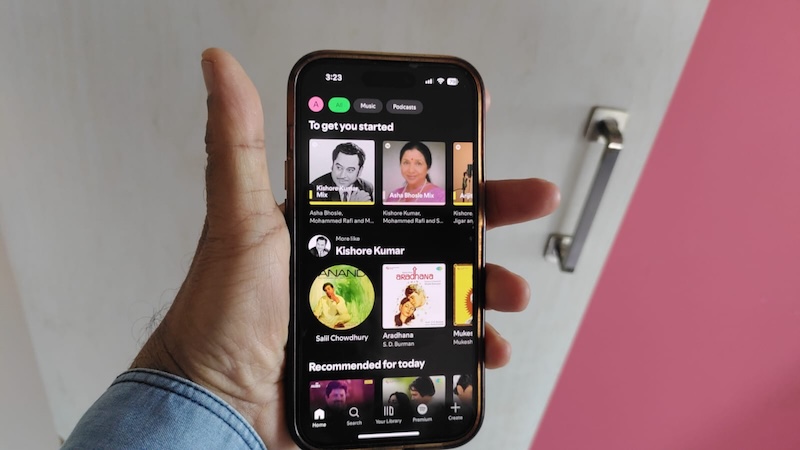
  • Spotify tunes up India’s advertising  scene with Sax and gen AI

    Spotify tunes up India’s advertising scene with Sax and gen AI

    MUMBAI: Spotify is cranking up the volume on its advertising game in India, launching the Spotify Ad Exchange (Sax)  and unleashing its generative AI ads. This double-whammy aims to give advertisers a programmatic playground and AI-powered audio ad creation, all while tapping into Spotify’s legion of engaged listeners.

    ” Sax is a new programmatic offering that will give advertisers in India easier access to Spotify’s high-quality inventory and more opportunities to reach our highly engaged audience at scale,” declared Spotify sales head India Arjun Kolady. “We aim to make it easier for our client and agency partners to include Spotify as a part of their programmatic always on audience strategies. Globally, over 5,000 advertisers have tested Sax, and with the official launch, our goal is to ensure that all programmatic players can plug into it”. 

    Sax, fresh from a successful US and Canadian pilot, integrates with Google DV360, The Trade Desk, and Magnite, allowing advertisers to bid for ad space via real-time auctions. This means full addressability and measurement across audio, video, and display ads, with podcast ads soon to join the party. Spotify is also boasting a partner framework to help advertisers track their results across the wider digital ecosystem. 

    Quipped Kolady. “We’re streamlining media strategies, boosting efficiency, and giving brands access to high-impact formats.”

    But that’s not all. Spotify is also leveraging its AI chops to launch generative AI ads, which allows advertisers to create audio ads – scripts, voiceovers, and background music – in a matter of minutes. This is a significant leap from the current multi-day process, and it comes at no extra cost.

    “We want to make it easier for advertisers of all stripes to create top-notch audio ads,” Kolady explained. “Gen AI Ads will help them stay topical, relevant, and reach a massive audience.”

    Spotify’s move is a clear shot at dominating the Indian audio advertising space, blending programmatic prowess with AI-driven creativity. With Sax and Gen AI Ads, the team is  betting big on making Spotify the go-to platform for advertisers looking to make some noise.

  • Disney advances live streaming ad technology in the US

    Disney advances live streaming ad technology in the US

    MUMBAI: The Walt Disney Co has launched new advertising technology integrations to enhance live streaming monetisation on its platforms earlier this week. Advertisers can now programmatically bid on live inventory across Hulu and Disney+, including ESPN and ABC News content, through Disney’s proprietary ad server and Google’s Display & Video 360.

    Senior vice president of ad platforms Amy Lehman highlighted the advancement in ad technology, enabling automated workflows for live ad inventory. Senior vice president of addressable sales Jamie Power confirmed that platforms like Google’s DV360, The Trade Desk, Yahoo DSP, and Magnite are now certified to leverage viewership spikes during live events.

    The integration of Google’s Display & Video 360 instant deals via Disney’s real-time ad exchange (Drax) allows for rapid deal creation, streamlining the buying process. This builds on the existing Drax direct integration.

    Disney is also deploying dynamic ad insertion (DAI) for live events on Disney+, extending the technology already available on Hulu, to enable personalised ad experiences. Lehman emphasised Disney’s leadership in live streaming, combining technological expertise with ad technology to meet market demand.

    This move allows advertisers to target audiences during live events with increased efficiency and precision

  • Dhruv Dhawan checks in at The Trade Desk to power adtech growth in India

    Dhruv Dhawan checks in at The Trade Desk to power adtech growth in India

    MUMBAI: In a move that’s set to make waves in the adtech space, Dhruv Dhawan is joining The Trade Desk as vice president for revenue. With over two decades of expertise spanning communications, digital transformation, and consulting, Dhawan’s appointment signals a strategic push to strengthen The Trade Desk’s position in the Indian market.

    From Google to Disney+ Hotstar, Airtel to Accenture, Dhawan’s career has been a masterclass in building brands, driving sales, and shaping digital-first strategies. At Google, where he spent nearly a decade, Dhawan worked across multiple industries including telecom, financial services, FMCG, automotive, e-commerce, and retail helping businesses leverage digital tools for both online and offline growth. His most recent role as head of ads at Disney+ Hotstar saw him navigating the rapidly evolving streaming landscape, further solidifying his expertise in media and advertising.

    Beyond his industry credentials, Dhawan is also known for his passion for people development, having spearheaded sales training initiatives and workplace culture programmes focused on psychological safety and team dependability. His diverse skill set spanning product management, marketing, and consulting makes him a formidable addition to The Trade Desk’s leadership team.

    With programmatic advertising in India witnessing unprecedented growth, Dhawan’s appointment comes at a pivotal time. His vast experience in ad sales, digital evangelism, and data-driven marketing will be instrumental in driving revenue growth, forging new partnerships, and further establishing The Trade Desk as a leader in the adtech ecosystem.

  • Preetha Athrey hits marketing jackpot, trades up to The Trade Desk as brand marketing director

    Preetha Athrey hits marketing jackpot, trades up to The Trade Desk as brand marketing director

    MUMBAI: Ever watched a seasoned marketer switch gigs like she’s flipping pancakes—swiftly, smoothly, and landing perfectly each time? Meet Preetha Athrey, who just flipped herself a sizzling new role as Director of Brand Marketing at The Trade Desk. If career moves were Olympic sports, she’d be clutching gold by now.

    Athrey, a seasoned brand-builder with a CV dazzling enough to make LinkedIn algorithms blush, announced today: “I’m happy to share that I’m starting a new position as director of brand marketing at The Trade Desk!”

    Athrey’s impressive professional innings include stints as marketing director for Twitter Asia Pacific, two-time entrepreneur, and roles at high-flying corporates such as Airtel, Time Warner, and Apollo Tyres. This certified independent director has navigated brands through marketing whirlwinds and emerged victorious each time. Talk about having more experience than a LinkedIn Influencer has connections!

    At The Trade Desk, a global leader in digital advertising technology, Athrey’s move signals a strategic play—much like swapping pawns for queens in a chess match of corporate marketing. Will her magic branding wand sprinkle gold dust again? Only every colleague who’s ever worked with her would say “obviously, yes!”

    Preetha Athrey stepping into her new role highlights the growing importance of brand narrative in a world ruled by algorithms and attention spans shorter than your last Netflix binge. Who better to keep audiences glued than someone who once kept Twitter timelines ticking across Asia Pacific?

    This career leap is not just a win for Athrey—it’s a slam dunk for The Trade Desk. As marketing continues to evolve at a dizzying pace, they’ve snagged someone who knows precisely how to make brands not just heard but adored.

    Stay tuned, folks—this could get very interesting, very fast. Because when Preetha Athrey makes a move, you know it’s going to shake things up.

  • Gracenote hires Bill Michels as chief product officer

    Gracenote hires Bill Michels as chief product officer

    MUMBAI: He’s got noteworthy credentials. Bill Michels, who was brought in as AC Nielsen’s content solutions business unit Gracenote’s chief product officer,  has held senior leadership roles in companies like Moloco, The Trade Desk, Foursquare/Factual and Yahoo.

    As chief product officer,  Bill has been given the responsibility for leading Gracenote’s global product team as the company looks to grow its suite of video, sports and music products and accelerate key market expansion initiatives.
     

    “As Gracenote redefines the role of metadata in an AI world, it was important to bring in someone like Bill Michels who has successfully built data businesses and platforms powered by machine learning,” said Gracenote CEO Jared Grusd, CEO. “Bill joins at a very exciting time for Gracenote and his adjacent experience will help the company think more horizontally and accelerate our growth initiatives.”

    Bill brings two decades of product management, engineering and data partnership expertise across CTV, ad tech and search to Gracenote, as well as deep experience operationalising and scaling products globally. 

    “As someone who is passionate about data, the chance to create products powered by Gracenote’s unparalleled dataset—the industry’s most comprehensive and enriched—is truly exciting,” said Bill Michels. “I’m thrilled to join such a talented team and eager to bring my experience to the table as we drive Gracenote’s next evolution of growth.”

    Bill’s appointment marks the most recent addition to the Gracenote executive leadership team. Earlier this year, Phani Kalagara was named chief technology officer for Gracenote. Phani is a highly accomplished technology leader with deep expertise building large, diverse and high performing global teams. He has held various leadership roles at multinational companies such as PayPal, Flipkart and Advanced Interactive Systems. Most recently, Phani served as chief product and technology officer at Pine Labs, a privately held fintech company focused on building merchant platforms and payment solutions that enable efficient financial transactions.

  • Times Internet adopts Unified ID 2.0

    Times Internet adopts Unified ID 2.0

    Mumbai: Times Internet announces its adoption of Unified ID 2.0 (UID2), a revolutionary identity framework designed for the open internet. This cutting-edge identity solution empowers advertisers to deliver highly targeted content by aligning first-party data with audience information within Times Internet’s fully authenticated logged-in dataset. In response to the deprecation of third-party cookies, forward-thinking publishers are embracing privacy-conscious approaches to navigate the evolving advertising landscape and strategies for a cookie-free future.

    The Trade Desk spearheaded the development of UID2, empowering consumers through a privacy-conscious identifier linked to encrypted email addresses. This open-source identity framework has swiftly gained traction among technology providers, advertisers, and publishers reliant on advertising revenue to sustain their businesses and support quality journalism.

    As India’s most prominent digital media conglomerate, Times Internet boasts an extensive network with over 415 million monthly visitors, reaching more than 54 per cent of internet users nationwide. Home to established brands such as TOI (Times of India), Economic Times, and GadgetsNow, Times Internet proudly becomes the first digital partner in India to embrace this innovative identity solution. UID2, which is interoperable with other identity frameworks, prioritises privacy and transparency while enabling advertisers to connect with more relevant audiences.

    Times Internet COO Puneet Gupt heralds a new era for India’s digital media landscape as the company takes a bold step forward by adopting Unified ID 2.0. In alignment with the industry’s data-driven evolution, this innovative identity framework not only empowers advertisers with precise targeting capabilities but also underscores Times Internet’s commitment to delivering premium content that readers trust. Unified ID 2.0 enhances the user experience, offering more relevant advertising while ensuring consumers enjoy heightened protection and control in the ever-changing digital advertising landscape.”

    The Trade Desk general manager of inventory partnerships Bihao Pan emphasised the significance of Unified ID 2.0 in the evolving advertising landscape, stating, “The deprecation of third-party cookies necessitates publishers adopting independent, privacy-centric solutions like Unified ID 2.0. As we progress towards a cookie-free future, Unified ID 2.0 offers an upgrade to current industry standards, resulting in a more personalised advertising experience for consumers. It also helps publishers address advertisers’ requirements for enhanced targeting and better measurement across various digital platforms. We’re proud to support Times Internet in their pioneering efforts for media in India.”

  • AVIA releases Indonesia study on the untapped opportunity of premium OTT services for advertisers

    AVIA releases Indonesia study on the untapped opportunity of premium OTT services for advertisers

    Mumbai: The Asia Video Industry Association (AVIA) has released a study to understand the usage of different video services in Indonesia and consumer attitudes towards  them. The study looked at video across social media, user-generated content (UGC), linear TV, messaging  services and premium OTT. This is a follow-up to its study on Premium OTT – Building its Rightful Place in  the Digital Market, which was first released in September 2022 and focused on the Singapore market.

    Amongst Indonesian consumers, premium OTT is viewed as having the highest quality content. 75 per cent of  users of premium OTT services (such as Netflix, Vidio, Viu and WeTV) said it offered the best quality  content, higher than users of any other category of video. Of all 24 video platforms studied, five of the  top seven services ranked as offering the highest quality content were premium OTT.  

    Usage of premium OTT is also associated with the most positive emotions. When asked about feelings after watching an hour of different types of content, TV series and movies significantly outscored user generated content and social media in eliciting happiness and amusement.  

    While premium OTT is still at an earlier stage of development in Indonesia than free UGC and social media  services like YouTube and TikTok, it is clear that those who use premium OTT value it more. When asked  what video services they would first be prepared to forego, only one in the top ten services was premium  OTT, and the top 4 were all social media or UGC services.

    “We believe the power and opportunity of premium OTT is hugely significant and offers a real and  relatively untapped opportunity for advertisers in Indonesia. The proven quality of the environment, the  stickiness of the content and the positive emotions created by it are critical for advertisers, and this study  clearly demonstrates that. Given the dominance and high penetration of UGC and social media video  services in Indonesia, the fact that this smaller but growing category of premium OTT performed so well  in these categories is quite remarkable. We believe advertisers need to sit up and take note,” said AVIA CEO Louis Boswell.

    The full Indonesia study research deck and methodology can be found here. This study continues to build  on a regional research project started with a two part study conducted in Singapore in 2022 and 2023.  

    AVIA thanks its members Magnite, PubMatic and The Trade Desk for supporting the Indonesia research.