Tag: The One Alliance

  • TS Panesar joins Hathway

    TS Panesar joins Hathway

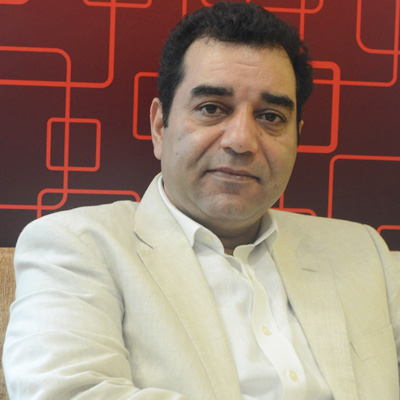
    MUMBAI: TS Panesar, who recently quit Star India as EVP distribution has joined Hathway Cable & Datacom as head-video business.  

    Confirming the news to indiantelevision.com, Panesar, who had a few options to choose from, says, “Distribution has a long way to go and with Hathway leading the way, I think it’s a sector with a bright future.”

    As for the plans for the multi system operator (MSO) Panesar, who joined the company on 8 December, says it’s too early to comment.

    Hathway which has two verticals: broadband and video, created the new portfolio for head-video starting today. “Yes, Panesar has joined Hathway to head the video segment. In his new role he will look after carriage, subscription and placement,” informs Hathway Cable & Datacom MD and CEO Jagdish Kumar.   

    “He will help us grow the video business,” adds Kumar.

    Panesar had been entrusted with the responsibility of handling distribution for national DTH and digital addressable systems (DAS) earlier this year when the JV between Star and Zee- MediaPro was broken. He was earlier ESPN Software India VP for affiliate sales.


  • Broadcasters want tariff to be left to market forces

    Broadcasters want tariff to be left to market forces

    MUMBAI: The Telecom Regulatory Authority of India’s (TRAI) latest tariff order that will come into effect from 1 January 2015 has already got a few stakeholders’ views on it. To be called the Telecommunication (Broadcasting and cable) services (seventh) (non-addressable systems) Tariff Order, 2014 (draft), it will be applicable to broadcasting and cable services provided to cable subscribers throughout India through non addressable systems.


    Tariff


    The main point that the stakeholders who have given their comments agree on is not having any regulation on wholesale tariff and there should be complete forbearance from the Authority. “The presence of a  plethora  of players in the market  clearly  indicates  that there exists enough competition  in  the  market  and  no  monopolistic  practices  or  unfair  trade practices can be practiced in such a scenario,” is the view of agent The One Alliance (A MSM and Discovery JV, which has now parted ways).


    NDTV and Star India also have similar views on tariff. “Given TRAI’s own finding that TV channels fulfill only ‘esteem needs’ of consumers and are as such non-essential, there is all the more no reason whatsoever for regulating channel prices,” is Star’s opinion. The same is shared by The One Alliance.


    If in case TRAI decides that complete forbearance cannot be allowed, then Star India says that it can consider regulating prices at retail level only. The One Alliance on the other hand feels that TRAI needs to keep its nose out of even retail tariff since it will affect the consumer and the entire distribution chain. “The MSOs under the guise of regulated retail pricing would either further renegotiate with the broadcasters or fill their bandwidth with lesser priced channels,” it says.


    According to The One Alliance, in case the TRAI feels that it should control wholesale rate then only it has to consider inflation rate while if it leaves to market forces, it won’t have to do the same.


    The agent also feels that pricing on the basis of genre is illogical since the Ministry of Information and Broadcasting (MIB) recognises only two categories: News and Current Affairs and Non News and Current Affairs while TRAI seeks to differentiate the non-news category into many genres. “Movie channels like Max and Star Gold also show live sports which is another genre with a different price cap,” it states.


    On the issue of HD and 3D channels, The One Alliance feels that since these are niche channels and require high technology, it should not be subjected to any tariff restrictions whereas Star India feels that they should be kept out since they anyway cannot be transmitted in an analogue regime.


    While TRAI says that broadcasters must give all channels in bouquets as well as a-la-carte, Star India says that there shouldn’t be any mandate that channels have to compulsorily be given on a-la-carte. At the same time, the obligation that old bouquets must be offered as per 2007, needs to go away specially after the coming into force of the deaggregation paper.


    Carriage


    Carriage fee is the biggest burden on broadcasters which everyone has askedthe regulator to include in its order. The News Broadcasters Association (NBA) and Times Television Network have just asked for carriage fees to be included as a crucial element.


    The One Alliance on the other hand states that the authority has ‘blatantly ignored’ the issue of carriage fee even after its own view in a 21 July 2010 report which states, “The Authority is of the view that all carriage and placement fee transactions should be a part of inter connection agreements between the broadcasters and MSO/LCOs in the case of pay channels, or separately formalised as carriage and placement fee agreements in the case of FTA channels, and these should be filed with the TRAI. Such filings of carriage and placement fees will enable the authority to monitor carriage and placement fee transactions regularly and regulate the same through interventions where considered necessary.”


    NDTV says that if there is a price control on how much broadcasters can charge MSOs for content, MSOs should also be told how much they can charge broadcasters for carriage and placement. “The charges paid by MCCS have increased by 300 per cent over the years. It is estimated that the carriage and placement fee paid by broadcasters is between Rs 1200 crore to Rs 1500 crore,” reads NDTV’s reply.


    Declaration and reporting


    The fact that MSOs and LCOs have not been asked to provide any reporting requirement is a question raised by them. Broadcasters urge TRAI to ensure that MSOs and LCOs do not under-declare their subscribers.


    “We strongly believe and submit that the inter-connect regulations must allow for Broadcasters to conduct surprise audits and surveys with their respective technical teams to prevent under-reporting of subscriber base,” states The One Alliance.


    Star India opines that strict financial disincentives should be prescribed for illegal transmission, area transgression, under declaration, piracy or any other illegality or non compliance. “Operators who have been found to be violating rules should not be given the protection of the Must Provide or regulated Tariffs.”


    Both The One Alliance and Star India feel that details on advertising need not be declared as they don’t have any relation to tariff or other issues.


    While TRAI says that a new channel launch needs 30 day prior intimation, The One Alliance feels that a seven day notice is sufficient.

  • Neo Sports decides to break away from The One Alliance

    Neo Sports decides to break away from The One Alliance

    MUMBAI: Three weeks after the Telecom Regulatory Authority of India (TRAI) issued its television content aggregation regulation, Neo Sports Broadcast has decided to break away from its distributor The One Alliance.


    A statement from the company states that the broadcaster has decided not to renew its agreement with The One Alliance that expires on 31 March. From 1 April, the sportscaster will be distributing its channels Neo Sports and Neo Prime through an in-house distribution team.


    When contacted by Indiantelevision.com, The One Alliance president Rajesh Kaul says, “The contract was coming to an end on 31 March and we were contemplating of not renewing the contract because they have lost all the sporting properties from the network. With MSM investing heavily on Sony Six and with IPL and FIFA, it is a formidable sports channel and so we did not want anything else in the bouquet.”


    Apart from Neo Sports, The One Alliance currently distributes television channels of Multi Screen Media, Discovery, Times Television Network and TV Today.


    Neo Sports believes that it can on its own strength build a robust relationship with cable operators, DTH operators and HITS companies. Even when its channels were being distributed by the aggregator to cable platforms, it was handling distribution through DTH on its own.


    According to Neo Sports, standalone channels with good content mix at affordable prices can be good and effective business cases in a digital environment.


    Says Neo Sports Broadcast EVP distribution platforms, Dilip Sharan, “The suggestive regulatory approach combined with digitisation clearly points that future distribution deals will be dictated by the relevant content that is made available to various audiences and the ability to work with the platforms keeping in mind the business issues and not entirely on the strength of the channels size in the bouquet, a prevalent practice in the analogue era.  Our cable distribution deal with MSMD made better commercial sense in the analogue environment.”


    TRAI’s regulation has barred aggregation of television channels from different broadcaster groups and allowed the aggregators six months of transition period.


    Neo Sports believes that there is a lot more scope to monetise from digitisation. The analogue era didn’t allow many channels due to bandwidth limitation. “The new regulation is indicative of how things are likely to pan out in the future. We were waiting for TRAI’s view on it to take this step at the opportune time,” adds Sharan.


    One of the major concerns of various broadcasters is that an aggregator might be bias against the smaller networks. Although Sharan doesn’t agree, he does feel it is very natural for an aggregator to give preferential treatment to its own channels.


    Most aggregators are aligned with several broadcasters.


    Will some other broadcasters also follow suit? “I won’t be surprised if others also do the same,” says Sharan.


    Neo Prime and Neo Sports channels are currently available on DTH platforms such as Dish TV, Videocon D2H, Airtel Digital TV, Reliance DTH and Sun Direct. The Neo channels are available on cable channels across all the leading networks.

  • “We are hoping for a fair share of revenue in a digitised ecosystem” :The One Alliance president Rajesh Kaul

    “We are hoping for a fair share of revenue in a digitised ecosystem” :The One Alliance president Rajesh Kaul

    Cable TV digitisation has forced the entire television ecosystem to come face to face with some gut-wrenching changes. Each one of the players has come under the scathing gaze of either the ministry of information and broadcasting or the telecom regulator, the Telecom Regulatory Authority of India (TRAI). Some have even got a rap on their knuckles as the powers that be continue to work overtime on evolving a rickety old cable TV landscape into one capable of delivering top of the line world class digital services.

    Earlier this month, it was the aggregators that came under the scanner of TRAI which sent out a consultation paper which tries to reduce their importance in a digitised cable TV India. TRAI has said that aggregators tend to misuse the clout they have and need to have their wings clipped.

    The One Alliance, a  Discovery India-MSM joint venture which distributes 28 channels to the 30,000 or so cable operators nationally is one of the aggregators whose future and existence many are questioning.  But its president Rajesh Kaul, a scarred veteran of many a cable TV battle,  is hopeful things will get sorted out and work out well for him and others of his ilk such as MediaPro and IndiaCast.

    Even as The One Alliance has been celebrating the completion of 11 years of being in business, Kaul was busy preparing his responses to be presented to the regulator before the scheduled 27 August deadline. He still found some time to speak to Indiantelevision.com’s Seema Singh on trends in carriage and placement fees, the TRAI consultation paper and all things cable TV. 

    Excerpts:

    Do you see the aggregators become more relevant or less in the coming years? Why or why not?

    We will be as relevant as we are right now. We are a very important link in the chain of the entire television ecosystem. We just hope that with digitisation we will get a fair share of revenue which we haven’t got for so many years.

    What is your take on the TRAI consultation paper, which if implemented will cut down on the aggregator’s clout?

    We are evaluating the entire paper for which we need to file replies.

    TRAI in all its open houses and interaction with stakeholders has maintained that the era of regulation should go now and that they want to deregulate. So the consultation paper came as a surprise. On one hand they talk of deregulation, while on the other they put us under more regulations.

    May be the regulators need some clarification on the same and we are working on it. I am unsure of the intensity of the complaints put by the MSOs. 

    All through we have been following the TRAI and Information & Broadcasting Ministry (MIB) guidelines, with not a single case of deviation.

    There are close to 700 channels today and this has led to huge competition. The situation is such that no one channel can behave unreasonably with an MSO or with consumers. We all need eyeballs from our consumers. The competition ensures that the channels’ content and rate is good. We have to ensure that everything is as per market dynamics so that they are more liked and watched. This is the age we should be talking of forbearance rather than regulation.

    As per the TRAI regulation we are supposed to offer our channels on a la carte rate as well and this is available to the MSOs. In this country, there is a ‘must provide’ for all broadcasters, according to which not a single channel can say “No”  to an MSO for providing the channel to them.  But the MSO has the option to not subscribe to our channels. Since all the channels are on a la carte rate as well, there is no question of forcing them to subscribe to our bouquet.

    Another point that needs mentioning is that the broadcasters have not been getting a fair share of revenue in subscription. We thought with digitisation things will change. We have been a very good stakeholder in this entire process and done all that the regulator wanted us to do, be it doing quick deals to help MSOs sell the set top boxes or curbing our ambitions to make profits.  We hope that we will bear the fruit of being responsible stakeholders in this entire stretch one day.

    TRAI had even in the past come up with such consultation papers, but always heard us and I am hopeful they will listen to us even in this case. We are going to them to present our thought process. May be some wrong impression and feedback has gone to them, our duty is to explain to the regulator.

    The second phase of DAS will conclude soon. Any problems that you faced in this switch? What is the percentage growth in revenue in phase two as compared to phase one?

    We are still waiting for a transparent system. With digitisation the consumer can chose what they want, and pay for it. This transparency has not come out so far. We are still not getting reports from the MSOs and do not know who is watching what. These are the bottlenecks that we face.

    We were looking at ambitious numbers when digitisation kicked off. We didn’t get that in the first phase. Also as responsible stakeholders we curbed our ambitions then because we knew it would be difficult to expect a huge jump in the beginning. We supported the MSOs, which is what the regulator wanted us to do.

    But with the completion of phase II, we should be inching towards that fair share, which should be around 35 to 40 per cent of the on-ground subscription revenue collected. This should happen by April 2014. Channels cannot survive only on ad sales, subscription money is a very important revenue stream for broadcasters, but unfortunately it hasn’t so far happened in India.

    Another problem that the broadcasters face is the high carriage fees. In an analogue system, due to capacity constraint, broadcasters had to pay huge carriage fees. But now with digitisation there is no question of any capacity constraint, so why have carriage fees?

    How are you playing out the carriage fee market? Will the carriage fees come down? How much has this come down, pre- and post-DAS?

     In the next three years there should be no carriage fees. Though carriage fees  have come down post DAS, we still have been paying some placement fees to support the MSOs as they make their transition. But, with the completion of digitisation, even this should go down.  I expect carriage and placement fees to disappear over the next two to three years. While these were expected to go down further by phase II of digitisation, it has only been to the extent of about 25 per cent.

    Earlier the subscription revenue share we (read: broadcasters) were getting from the cable TV ecosystem was about 10-15 per cent. Now it has gone up to maybe to 20 per cent on the overall. Some broadcasters may have got 25 per cent but others may have got lower amounts of the digital dividend.  Many of the channels don’t get any subscription revenues because in the analogue environment they could not afford to have that as a part of their business model. With digitisation all this could change.

    Do you plan to add more channels in the bouquet? What was your strategy to ensure that you had Times Network in your bouquet, when other news channels were walking out of the bouquet?

    We are not market shopping for channels and we are not desperate. Only if tomorrow we come across something good, we will think of adding it to our bouquet.

    We added Times Television Network to our bouquet this year. It was a mutual decision between the two of us. They fitted in our profile and also they wanted to be a part of our network. They are a premium channel and they deserve suitable revenues considering their performance and we at The One Alliance are working to get them those revenues.

    We are in the process of concluding deals for Times with other MSOs. We have finished with Hathway, GTPL, and some other MSOs. And more are coming.

    You had a dispute with Hathway going on for some time? How is that progressing?

    There were many issues like are bound to happen in the cable TV business and yes one of these issues was the one we had with Hathway. And one of the issues – amongst the many issues – we had with Hathway was The Times network, which we have been distributing. But we amicably resolved all the issues with Hathway this evening. And the One Alliance bouquet of channels should have come back on all of Hathway networks by this evening. (26 August).

    It’s been 11 years in the business, how has the journey been so far?

    The journey has been fantastic. While we started with three or four channels now we have a bouquet of 28 channels, with extremely powerful and premium channels. We have various genres, we have a solid name and repututation. It has a journey which has had  more ups than downs.


    Unfortunately, even with the IPL being the biggest sporting property in this country, we have not been able to monetise it well due to under declaration. But, now we have aggressive plans to monetise it for the next season..

    What are the key pointers that set The One Alliance apart from other aggregators? As compared to others aggregators you have less channels, is that a limitation. How do you see things going ahead?

    We are the most stable joint venture (JV) in the industry. All the other aggregators are just a couple of years old. Our partners are very much involved and keen to ensure that the stability continues. For us the quality of the channel is important. We have never been in the race of having 50-60 channels in our bouquet. 

    We have channels from different genres in our bouquet and most of them are amongst the top two or three ranking in their respective genres. There are many more who want to be a part of One Alliance, because they trust the JV. Also our dealings are very transparent. We can add two to three channels at any given time, but our policy doesn’t allow us to do that. We have always believed in quality and so want to have premium channels in our bouquet.

    Today we are the strongest, despite having 28 channels. Also we are the only one having a sports channel in our bouquet unlike the others. Considering we have most genres covered in the bouquet, I don’t see any limitation. Our revenue is far higher than the others.

    Are you selective about the channels you take in the bouquet? What are the criteria that a channel needs to fulfill to be a part of The One Alliance bouquet?

    The channel and the company backing the channel should have similar kind of values and ambitions like ours. We also look at the channels’ performance, which we understand on the basis of the weekly television viewership ratings.

    What is the reach of the bouquet and which is the largest channel in the bouquet?  

    We currently have 28 channels from different genres in our bouquet. Sony Entertainment has the largest reach and, during IPL, Sony Max gets the largest reach.
    IPL is the biggest sporting property that we have. What is interesting is that though most sporting properties are a simulcast with Doordarshan, IPL is the one property which is exclusive on Max. This makes it the most important property in the sporting channel world and we have it.

    We are present almost across the country. We would be there in around 90 per cent of the towns, which have cable and satellite, but through DTH our reach is 100 per cent. Close to some 6,000 cable networks across the country carry our channels. 

    What is the current strength of the organisation?

    One Alliance employs 125 people with offices in Delhi, Bengaluru, Kolkata, Indore and Mumbai. Apart from this, we also have a strong distribution network with distributors in Rajkot,  Pune, Ahmedabad, Guwahati, Patna, Ranchi and Lucknow among others. Like this we have offices in 60 cities. The distributors have their own employees. So, if we take a cumulative strength, we have around 350 people working for us.

    The major revenue for The One Alliance is dependent on IPL. So till how long will IPL be with Sony Max? How do you maintain subscription post IPL and also with so many controversies surrounding IPL, how will you deal with it?

     Unfortunately, even with IPL being the biggest sporting property in this country, we have not been able to monetise it well due to under declaration. But, now we have aggressive plans to monetise it for the next season.

    What are the future plans for The One Alliance?

    We have to lead the change and ensure that everybody gets their fair share.