Tag: The Office

  • Banijay Asia secures BBC Studios’ format rights in India

    Banijay Asia secures BBC Studios’ format rights in India

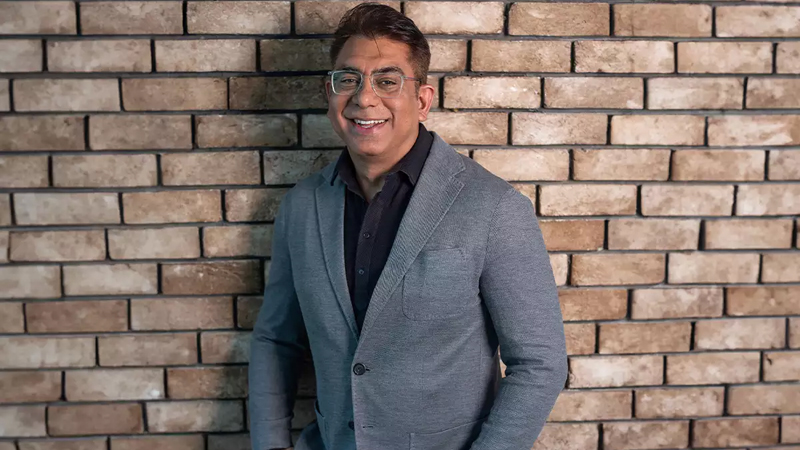
    MUMBAI: The Deepak Dhar-headed Banijay Asia has been appointed as the exclusive production partner for BBC Studios’ formats in India, following BBC’s exit from local production in the market.

    The multi-year agreement gives Banijay Asia exclusive rights to BBC Studios’ catalogue of scripted and unscripted formats, including The 1% Club, Dancing with the Stars, The Office and Ghosts.

    Banijay Asia has established itself as a leading format adaptor in India, having successfully produced local versions of global hits like MasterChef, Big Brother, and more recently, The Night Manager and Call My Agent: Bollywood.

    The deal strengthens Banijay Asia’s format portfolio as BBC Studios shifts its India strategy from direct production to licensing partnerships.

     And it brings Dhar closer to his long cherished  dream and vision of making Banijay the largest format licensing and production studio  in India. 

  • BBC Studios considers shuttering  Indian operations: Economic Times report

    BBC Studios considers shuttering Indian operations: Economic Times report

    MUMBAI: Is BBC Studios set to exit India?

    If a report in The Economic Times is to be believed it is strongly considering the possibility. Recently, its general manager Sameer Gogate quit the content production arm. 

    It is also considering other options like zooming in on a strategic investor who will share some of the challenges that have emerged in the severely  tested media and entertainment industry. Another option being toyed with is doing co-productions with Indian producers – something which has not been a huge hit in the Indian scenario as yet. 

    Sources indicate that consolidation and shrinking budgets from television broadcasters and OTT platforms have intensified competition for limited projects, significantly squeezing producers’ profit margins.

    Known for popular shows like Criminal Justice, The Office, Out of Love, and Nach Baliye BBC Studios, produces approximately 2,000 hours of content annually and operates in over 20 countries. It  also maintains a robust content licensing business in India, licensing British formats such as Dancing with the Stars* and Luther.

    Faced with a more selective landscape of OTT platforms and broadcasters, the pressure to maximize output under reduced budgets is prompting a re-evaluation of BBC Studios’ production strategy in India. A company spokesperson confirmed to The Economic Times that the management in the UK  is currently reviewing its  production operating model to enhance efficiency.

    The Indian M&E sector has experienced significant consolidation, with recent major mergers like the Star India and Viacom18 deal and discussions involving the acquisition of Tata Play by Bharti Airtel’s DTH arm, Airtel DTH.

    Experts suggest that BBC Studios’ production arm could be among the first casualties of this trend as margin pressures continue to mount.

    This potential shift comes as the BBC Group maintains its presence in India through various digital news platforms and joint ventures, including Sony BBC Earth and the recently launched BBC Player and BBC Kids on Prime Video.

    Additionally, BBC itself in the UK is under pressure. An audit report of the BBC  by the National Audit Office  expressed  this in no less words when it said: In 2023-24, BBC Studios’ income fell by £253 million (12 per cent) to £1,837 million and profits fell by £50 million (20 per cent ) to £202 million. This was partly due to challenging market conditions, including a reduction in spend by commissioners, including the BBC and global streamers, on the production of programmes and the ending of some high-value contracts which generated significant income in 2022-23. In addition its profits were reduced by higher costs as BBC Studios invested in its digital services such as BBC.com and BritBox International to support its future growth

    The audit report was also critical of BBC Studios and its inability to generate too many new IPs and for being dependent on BBC’s catalogue of shows before the production arm was set up in 2016. The report said: “In our 2020 report, we identified that BBC Studios had been less successful than planned in winning new commissions and generating IP.
    Since then, although generation of new IP has grown, BBC Studios has not met its targets in this area and remains reliant on the IP from BBC programmes created before it was first established in 2016. In 2023-24, of the 10 titles from its production business which provided the most profit to the BBC, only one was from new IP
    generated by BBC Studios.”

    Additionally, the Beeb is  on track to lay off close to 500 staff by March 2026 and generate savings of 200 million pounds sterling, according to reports.

  • Sameer Nair on Applause Entertainment’s shows, content creation and trends [Part 2]

    Sameer Nair on Applause Entertainment’s shows, content creation and trends [Part 2]

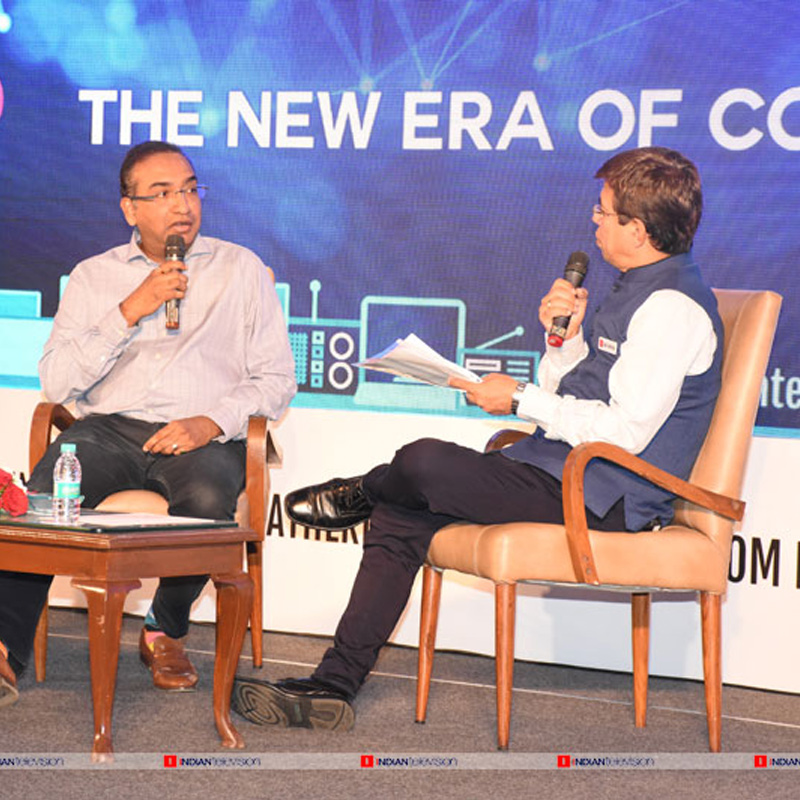
    MUMBAI: This is the second part of Indiantelevision.com’s conversation with Applause Entertainment CEO Sameer Nair. You can read the first part here.

    So within your company, is a format kind of a lab being developed going forward? Because I see opportunity in format, paper formats too while you’re creating content and you’re going to start licencing it in stage two I presume. That will be next year after the first wave is sold out.

    We hope the first of our shows streams at the end of March, so let’s see.

    So when will your agreements allow you to sell those globally?

    It depends. Some will be after a year.

    In the meanwhile are you looking at setting up a format lab? Like Zee has set up a format lab which is working on creating formats, Star is working on formats in house.

    No, I don’t think we are doing that. Currently, we are focusing on drama and fiction, not so much on the non-fiction part of business. And within that, if we find something that we really like, we proceed to make it. We are not really making a paper pilot or a pilot.

    We are not really making globally relevant content whereas the Turks make it, the Koreans are more advanced as a culture so their shows travel, but Indian shows are not really travelling, we’re getting $200, $250, maybe a Porus might get $3000 or $2000 per hour but not all shows are getting the money that they should.

    Actually, apart from US content which is the English content and which is what makes it a globally dominant soft power, I don’t think any other content is genuinely travelling.

    Today Turkish content is going at $150,000 an episode in west Asia.

    What I’m saying is that we’ve got a very large market, we’re a billion Indians. In any case, you’ve got to decide who you’re making this content for. There’s something known as primary audience and secondary audience. Narcos was not made for us, it was made for Latin American and North American audiences. We happened to like it, it went on to become a global hit and well, good luck. Like that, I’m sure a 100 other shows are made which we haven’t heard of. So what I’m saying is that as far as we are concerned, we are focused on telling great stories and we are catering to an extremely large Indian audience.

    Some shows do travel but you can’t set out to make something thinking it will straddle a global audience, even the Americans didn’t do that. When the Americans made Seinfeld, they didn’t make it to make Indians or Koreans or Japanese laugh, they made it to make Americans laugh. That the rest of the world laughs with The Big Bang Theory or FRIENDS or House of Cards or whatever is a happy outcome. So I think from a content creation point of view, we’ve got to focus on how we can tell great stories, how we can monetise those great stories and how can we make this business profitable.

    So you’re investing in production value, you’re investing in writing and I see that you’re investing in the cast.

    You’re investing in good actors, you’re investing in good writing, you’re investing in production values, good directors, you’re making these like essentially extended films, it’s all produced at one go, it’s post-produced at one go, so we are doing that and we should invest.

    Will all of these travel or will some of these travel?

    Some of these will travel, all may not. For example, The Office comes from abroad and I believe that a show like that should be made in every country because every country would have this dull sleepy office with the horrible boss from hell and the other terrible people we work with. But some will travel, I think something like City of Dreams will travel, that’s a nice political story. I find too many of my colleagues in this business stand on the shore and look towards the sea. I think we are a large enough country to stand on the shore and look inwards.

    That’s why Hollywood is a soft power.

    Hollywood is a soft power not for what they’re doing, it’s because it’s driven by the language.

    Roma is a Mexican film that went on to win so many Oscars.

    You know what, it is a cool fashionable thing to say that we should be all making stuff that the world applauds.

    But if you put sub-titles, everybody watches.

    I’m not disputing it, I’m saying that you’ve got to run a business, it is called showbiz. There’s show and there’s biz and they go together. So when you’re running a business you must be clear as to why you’re doing it. It cannot be for an amorphous global audience. If it’s a good story, the world will watch.

    There’s a science to get the world to watch, getting recommended, the social bars, etc.

    That comes after you’ve made a good story.

    Do you have a strategy to build this globally? Would you be investing as much to push these globally?

    It’s a process. You don’t plan for all these things, you’ve got to make it, you’ve got to put it out there, it gets some traction, it builds an audience, the word of mouth spreads, when things are going well you keep adding to it, it’s a process. I don’t think Ramesh Sippy set out to make Sholay, he set out to make a movie that proceeded to become Sholay. That’s how it goes. Everything happens like that.

    I believe that you’re more evolved than Ramesh Sippy in terms of understanding the ecosystem.

    No, not like that. I’m saying that even when you take a movie like Dangal, it went on to become a big success in China. In hindsight, we can all be geniuses and have 100 million reasons why that happened. But in the process of making it, it was not being made for that audience, it was being made for an Indian audience is what I’m saying.

    So around IP sharing, you’ve always told me that put your skin in the game then I’ll give you a piece of the action. The industry has started putting money where their mouth is. Producers like Siddharth Tewary, Abhimanyu Singh, Asit Modi have been putting their skin in the game and they’ve been retaining IP. How’s that going for you now that you’re on the other side?

    I remain exactly where I was. I think there should be a share of the spoils definitely because there’s a certain degree of a creative investment, there’s a certain degree of financial investment. I think it’s fair enough for people to want to have a share of it. So we are continuing with a similar model, we’re happy to do that. When I talk about putting skin in the game, I mean that. Not everyone has money, but there are different ways to do that. But again there’s so much debate that keeps happening about IP, that where are the shares of IP? I think the first important thing is to create IP. If you create intellectual property then you can derive value from them.

    I find too many people talking about IP without ever having created IP. So I think that focus is important. Beyond that, different models will emerge, we are already doing that. A lot of the international shows that we buy are represented by format owners who then proceed to give a share of what we have sold it for back to the original creator. It’s a process, internationally it’s been done forever. So I think it will happen in India as well. If the content community is not careful at this point in time, then it will just be a replica of TV.

    Do you fear that it could end up being a replica of what happened in TV?

    Currently, it seems to be approaching it in that manner, as in you get commissioned and that’s it, you have nothing left. If you indeed want to have a play beyond that, you must be willing to give up something, you must be willing to put something and you have to figure a way around it.

    So what are the different models that are available? Do you give the story rights, dubbing rights, sub-titling rights, Indian language rights, film rights or animation rights?

    No, this is an evolving market. Currently, the position is that we give nothing or we get nothing. But I think as it gets along it will sort of play out.

    Which of these will play along in the market or be more relevant to India?

    There are at least 10-15 streaming platforms. These are the early days, everyone is well funded, obviously serious competitors, nobody’s going away in a hurry, so I think the next 2-3 years will help define that as to who pulls ahead, who falls back, what kind of content works, how India responds to it and all of that. Currently, the default position of all the broadcast players is, well we want everything, even if it never goes on TV.

    So in terms of exports, we haven’t really grown.

    Again, now what will happen is you’ve created this great show, and it’s going to go onto a global platform, but now the platform itself wants to dub it into all international languages.

    If they give you a piece of it?

    So you’ve got to work all that out, it’s got to be figured out but the thing is that everyone is pushing in that direction. So your dream of having an Indian show that the whole world watches is around the corner now.

    Do we need legislation in place?

    I think that ship has sailed. Legislation and the opportunity of making a law out of this is long gone. This happened in the US in the 60s. Now I think if we indeed want to resolve this problem, we’ve got to be more creative about this. They’re not going to get a law passed.

    Javed Akhtar did that for the music industry.

    It’s a royalty thing. And the control of monetisation still rest with the music companies, it’s not with the composer.

    So at least, could we move in that direction?

    No, so the way to do that is for all the content creators to sort of galvanise and unite and work together and try and attract more money to the content creation business and have people believe in the process, believe in the thing that you can create content and that content can then be sold. Currently, the thing is that it sounds very risky, you’ve got to get commissioned from someone. If somebody is going to give you the money then I’ll move and make something. As long as it exists in that manner, it’s always going to be a hard sell and especially for something as large as a content business. A piece of music, a song, these are smaller pieces of content

    So you don’t see a solution?

    Not legislation, not at all.    

  • AFM sues six Hollywood studios for reusing soundtracks in movies

    AFM sues six Hollywood studios for reusing soundtracks in movies

    MUMBAI: The American Federation of Musicians of the United States and Canada (AFM) is suing six major studios for reusing film soundtrack clips in other films and television programs without appropriately compensating musicians.


    The studios named in the lawsuit are: Columbia Pictures, Paramount Pictures, Twentieth Century Fox, Universal City Studios, Walt Disney Pictures and Warner Brothers Entertainment.


    “Our agreements obligate the studios to make additional payments to musicians when soundtracks are reused and AFM members are entitled to receive the benefit of that bargain. Our efforts to resolve these contract violations and missing payments have been unproductive, so we are looking to the courts for relief,” said AFM International president Ray Hair.


    The studios have been pulled up for reusing previously recorded film soundtracks in violation of AFM’s collective bargaining agreement with the studios.


    The lawsuit cites numerous examples of the studios reusing film scores without paying musicians including:

    • Columbia using music from Karate Kid in an episode of the television series Happy Endings;

    • Disney using music from Beauty and the Beast and The Muppet Movie in the television series The Neighbors;

    • Fox using music from Titanic in the film This Means War;

    • Paramount using music from Up in the Air in the film Follow Me: The Yoni Netanyahu Story;

    • Universal using music from Bourne Identity in the television series The Office; and

    • Warner Brothers using music from Battle for the Planet of the Apes in the film Argo.


    The AFM is seeking award damages for all losses, including prejudgment interest.


    In April this year, the AFM had also sued the studios for allegedly breaching the guild agreement by recording film scores outside the US and Canada.


    Click here to read the complaint: