Tag: The Newshour

  • Arnab’s ‘The Newshour’ lands Times Now in soup in UK

    MUMBAI: United Kingdom broadcast regulator Ofcom has studied several episodes of Times Now’s nightly show ‘The Newshour’ from last summer, which was broadcast during the rising tensions between India and Pakistan over Kashmir.

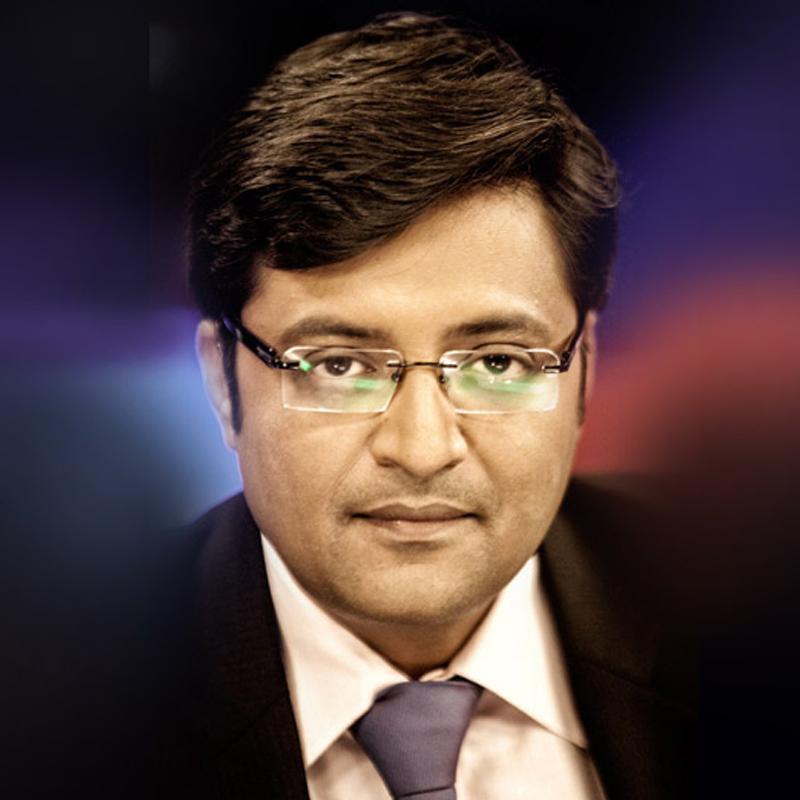
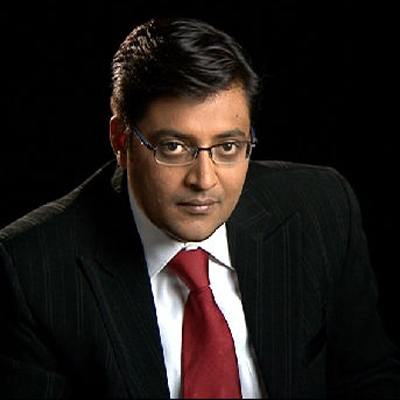
    At the time of Ofcom’s investigation between August and September 2016, this programme was presented by the then Times Now editor Arnab Goswami. Each edition typically featured two debates, each of approximately an hour’s duration. The show was telecast live from India at 16:30 each weekday, and then repeated at 21:00 in UK. Goswami was accused of being biased towards India in the debates.


    In Breach: The Newshour

    According to the Ofcom newsletter dated 24 April, 2017:

    “Don’t brush aside the role of Pakistan in fermenting the trouble in Kashmir. Let us accept it. Let us acknowledge it. Let us not brush it aside”. We could not identify in this programme any content that could reasonably be described as reflecting the viewpoint of the Pakistani Government, or otherwise rebutting the criticisms being made of it. Times Global provided evidence that it had reflected viewpoints representing the Pakistani Government in further editions of The Newshour presented by Arnab Goswami. We also received complaints about the editions of The Newshour broadcast on 19 and 26 September 2016, which featured only contributors from India, but also dealt with India’s on-going relationship with Pakistan.

    Ofcom viewed the 18 additional episodes of The Newshour broadcast between 3 August 2016 and 30 September 2016. All these programmes dealt with: the on-going tensions between India and Pakistan during August and September 2016; the Pakistani Government’s policy towards Kashmir; and alleged terrorist activities towards India. However, the programmes also featured highly critical discussion about the Pakistani Government’s policies and actions in other areas such as its treatment of the separatist movement in the Pakistani province of Balochistan.

    Further, the 16 programmes cited by the Licensee each included three or four contributors that could reasonably be described as supporting the Pakistani Government or Pakistan more generally. These contributors included: Pakistani political analysts and commentators; retired Pakistani diplomats; retired senior Pakistani armed forces; Pakistani journalists; and both current and retired Pakistani politicians.

    Ofcom’s concern in this case was not whether the Licensee had reflected a range of viewpoints, but the manner in which those viewpoints were dealt with by the presenter, Arnab Goswami. We lay out below examples of how Arnab Goswami dealt with different contributors:

    1 August 2016

    In this programme there was a debate about the march to the Wagah border crossing featuring the Pakistani militants, Syed Sallahudin and Hafiz Saeed. There was the following exchange between Arnab Goswami (“AG”) and Mufti Nasir-ul-Islam (“MNI”). Arnab Goswami referred to two contributors in the programme who were described as being critical of Pakistan, G.D. Bakshi and Nalin Kohl (“NK”), the latter who was invited to speak during this exchange. Arnab Goswami also referred to Navid Hamid, a contributor who was described as being an apologist for Pakistan:

    AG: “Essentially you are down playing what happened in Wagah, the role of Hafiz Saeed, Sayeed Salahudeen, and the Jamaat-e-Islami because these people are saying ‘we will hoist the Pakistani flag in Kashmir’. And I want to know from Mufti Nasir-ul-Islam, whether he agrees with such a statement. When these people say they, ‘we will hoist the Pakistani flag in Kashmir’. I want him to tell me whether he feels that’s a home grown problem. G.D. Bakshi, I will come back [to you] but let Mufti Nasir-ul-Islam reply to me please”.

    MNI: “Mr Arnab Goswami, do you, do you hear me?”
    AG: “I’m hearing you loud and clear”.
    MNI: “Ok. Let me begin by paying my tribute to Burhan Wami?–”
    AG: “Eh listen–”.
    MNI: “–and 70 others who were martyred”.
    AG: “No, no, no. Here you see. I will not, no, no, no one second, Mufti Nasir-ul-Islam, Mufti Nasir-ul-Islam. You, no, no, no, Mufti Nasir-ul-Islam you don’t have to say things to provoke. I can tell you. I can, no, no, no, one second I will not allow you. Nalin Kohli’s on the debate!”
    NK: “Any innocent person is not somebody who can be idolised. Next you’ll be saying we should pay tribute to Osama Bin Laden. Another time he’s going to say we should pay tribute to somebody else. A terrorist is a terrorist! It doesn’t matter those, those who want [continues to talk over MNI’s attempts to talk] to participate in democracy and
    get the aspirations each one is welcome. Those who give up their weapons are
    welcome but all these tributes of terrorist please not on any show–”.

    For example, in the programme broadcast on 4 August 2016, Dr Farid Ahmed Malik of the Tahreek-eInsaaf party took part; and in the programme broadcast on 8 August 2016, Rana Afzai Khan, a member of Pakistan’s National Assembly for the Pakistan Muslim League (Nawaz), and Federal Parliamentary Secretary for Finance, Revenue, Economic Affairs, Statistics and Privatization.

    AG: “[Interrupts and talks loudly over MNI and NK] The Indian state, the Indian state, also Nalin Kohli, as far as Mufti Nasir-ul-Islam is concerned, as far as Mufti Nasir-ul-Islam concerned, he is also a Pakistan apologist, Mufti Nasir-ul-Islam, Mufti Nasir-ul-Islam takes security, the Mufti, Mufti, takes security. The question is and the question goes
    to Navid Hamid. The question is Navid Hamid of the All Indian Muslim Majlis-eMushawarat, I’m coming to you, and Mufti Nasir ul-Islam, just a quick reminder to you that as of this minute, as of this second, you are taking security funded by the Indian taxpayer. Never forget that OK.

    [MNI tries to talk but AG talks over him] Never forget
    that, so at least have a sense of loyalty. Don’t, I had to expose you today because of your duplicity, because of your hypocrisy, your opportunism. Does that not reveal something? Now you know something [talking over Mufti Nasir-ul-Islam] you have no, you are beholden to the Pakistanis and I will not allow this channel to become an instrument for your venom so I’ll cut you off for a while and when you behave yourself I’ll bring you back. Neither for your venom or your political aspirations. You say you are a mufti, your political aspirations [MNI tries to talk] and I don’t know why you are loyal to Pakistan”.

    MNI: “Ok, I don’t want to be a part of this–”.

    AG: “You don’t have the guts to answer my question so you are walking out like a typical opportunist [MNI tries to talk and AG talks over him] Mufti Nasir-ul-Islam calm down. Mufti Nasir-ul-Islam calm down. If it was a choice between having you on the show and letting you. Letting you use The Newshour for your duplicitous venom. I would be much happier asking you. I would be much happier, Mufti Nasir-ul-Islam, if you are on Newshour you must behave yourself and show the least amount of loyalty that someone who takes security from the Indian taxpayer should show. or if you don’t want to show that I have no problems if you walk out the programme. I have no problems if you walk out the programme. It doesn’t matter to me. I’m happy to ask you to leave the programme Mufti Nasir-ul-Islam. Mufti Nasir-ul-Islam you are obviously beholden to the Pakistanis. You can continue your act. I think you’ve revealed yourself.[raises voice and starts shouting] And the fact is Mufti Nasir-ul-Islam, don’t you wag your finger at me Mufti Nasir-ul-Islam. I have decently debated with you for the last
    ten minutes but the fact of the matter is there has been a terror group called the Lashkar-e-Taiba7 and Hizbul Mujahideen which carried out a march with Jamaat-eIslami.But you for the opportunist that you are cannot speak against the LET [i.e. Lashkar-e-Taiba] you are scared of them or in league with them. So drink that water and behave yourself. calm down. Calm down, I’m not going to waste my time. Look at Mufti Nasir-ul-Islam unable to control his loyalties. Has to show his real loyalty to Pakistan. Absolutely unable to control. Has to show his loyalty to Pakistan at every
    single opportunity. I’m so glad television being a transparent medium. Let this medium
    expose the real loyalties of these people one by one”.

    4 August 2016

    In this programme, there was a debate discussing whether the Pakistani Government had “hit an all-time diplomatic low”. There was the following exchange between Arnab Goswami (“AG”) and the Pakistani barrister Zahid Saheed (“ZS”) about perceptions of the level of media coverage about the visit by the Indian Home Minister of Rajnath Singh to Pakistan:

    AG: “…the only word I have for this is childish with a capital ‘C’. So childishly you try to ensure that the Indian media can’t cover Rajnath Singh. What did you think? We are not going to get access to what he says, for your kind information, I have with me the full details of what Rajnath Singh has said. I can understand that the Pakistanis don’t want to allow Rajnath Singh’s words to be heard on Pakistan television because you’re damn scared, that is if Rajnath Singh’s truth is heard by the people of Pakistan, then they start asking you questions. I hope they will. But, you don’t allow us to report on our minister. This is childish, this amateurish, this unacceptable, this is just absolutely ridiculous and I want an explanation, on behalf of every Indian citizen, an answer from Pakistani panellists on why on earth this happened, what were you trying to do? What were you scared of? Were you scared that Rajnath walked into your territory and your

    Ofcom’s concern in this case was not whether the Licensee had reflected a range of viewpoints, but the manner in which those viewpoints were dealt with by the presenter, Arnab Goswami. We lay out below examples of how Arnab Goswami dealt with different
    contributors:

    1 August 2016

    In this programme there was a debate about the march to the Wagah border crossing featuring the Pakistani militants, Syed Sallahudin and Hafiz Saeed. There was the following exchange between Arnab Goswami (“AG”) and Mufti Nasir-ul-Islam (“MNI”). Arnab Goswami referred to two contributors in the programme who were described as being critical of Pakistan, G.D. Bakshi and Nalin Kohl (“NK”), the latter who was invited to speak during this exchange. Arnab Goswami also referred to Navid Hamid, a contributor who was described as being an apologist for Pakistan:

    AG: “Essentially you are down playing what happened in Wagah, the role of Hafiz Saeed, Sayeed Salahudeen, and the Jamaat-e-Islami because these people are saying ‘we will hoist the Pakistani flag in Kashmir’. And I want to know from Mufti Nasir-ul-Islam, whether he agrees with such a statement. When these people say they, ‘we will hoist the Pakistani flag in Kashmir’. I want him to tell me whether he feels that’s a home grown problem. G.D. Bakshi, I will come back [to you] but let Mufti Nasir-ul-Islam reply
    to me please”.

    MNI: “Mr Arnab Goswami, do you, do you hear me?”
    AG: “I’m hearing you loud and clear”.
    MNI: “Ok. Let me begin by paying my tribute to Burhan Wami?–”
    AG: “Eh listen–”.
    MNI: “–and 70 others who were martyred”.
    AG: “No, no, no. Here you see. I will not, no, no, no one second, Mufti Nasir-ul-Islam, Mufti Nasir-ul-Islam. You, no, no, no, Mufti Nasir-ul-Islam you don’t have to say things to provoke. I can tell you. I can, no, no, no, one second I will not allow you. Nalin Kohli’s on the debate!”
    NK: “Any innocent person is not somebody who can be idolised. Next you’ll be saying we should pay tribute to Osama Bin Laden. Another time he’s going to say we should pay tribute to somebody else. A terrorist is a terrorist! It doesn’t matter those, those who want [continues to talk over MNI’s attempts to talk] to participate in democracy and
    get the aspirations each one is welcome. Those who give up their weapons are
    welcome but all these tributes of terrorist please not on any show–”.

    For example, in the programme broadcast on 4 August 2016, Dr Farid Ahmed Malik of the Tahreek-eInsaaf party took part; and in the programme broadcast on 8 August 2016, Rana Afzai Khan, a member of Pakistan’s National Assembly for the Pakistan Muslim League (Nawaz), and Federal Parliamentary Secretary for Finance, Revenue, Economic Affairs, Statistics and Privatization.

    AG: “[Interrupts and talks loudly over MNI and NK] The Indian state, the Indian state, also Nalin Kohli, as far as Mufti Nasir-ul-Islam is concerned, as far as Mufti Nasir-ul-Islam concerned, he is also a Pakistan apologist, Mufti Nasir-ul-Islam, Mufti Nasir-ul-Islam takes security, the Mufti, Mufti, takes security. The question is and the question goes
    to Navid Hamid. The question is Navid Hamid of the All Indian Muslim Majlis-eMushawarat, I’m coming to you, and Mufti Nasir-ul-Islam, just a quick reminder to you that as of this minute, as of this second, you are taking security funded by the Indian taxpayer. Never forget that OK.

    [MNI tries to talk but AG talks over him] Never forget that, so at least have a sense of loyalty. Don’t, I had to expose you today because of your duplicity, because of your hypocrisy, your opportunism. Does that not reveal something? Now you know something [talking over Mufti Nasir-ul-Islam] you have no, you are beholden to the Pakistanis and I will not allow this channel to become an instrument for your venom so I’ll cut you off for a while and when you behave yourself I’ll bring you back. Neither for your venom or your political aspirations. You say you are a mufti, your political aspirations [MNI tries to talk] and I don’t know why you are loyal to Pakistan”.

    MNI: “Ok, I don’t want to be a part of this–”.

    AG: “You don’t have the guts to answer my question so you are walking out like a typical opportunist [MNI tries to talk and AG talks over him] Mufti Nasir-ul-Islam calm down. Mufti Nasir-ul-Islam calm down. If it was a choice between having you on the show and letting you. Letting you use The Newshour for your duplicitous venom. I would be
    much happier asking you. I would be much happier, Mufti Nasir-ul-Islam, if you are on Newshour you must behave yourself and show the least amount of loyalty that someone who takes security from the Indian taxpayer should show. or if you don’t want to show that I have no problems if you walk out the programme. I have no problems if you walk out the programme. It doesn’t matter to me. I’m happy to ask you to leave the programme Mufti Nasir-ul-Islam. Mufti Nasir-ul-Islam you are obviously beholden to the Pakistanis. You can continue your act. I think you’ve revealed yourself.
    [raises voice and starts shouting] And the fact is Mufti Nasir-ul-Islam, don’t you wag your finger at me Mufti Nasir-ul-Islam. I have decently debated with you for the last ten minutes but the fact of the matter is there has been a terror group called the Lashkar-e-Taiba7 and Hizbul Mujahideen which carried out a march with Jamaat-eIslami. But you for the opportunist that you are cannot speak against the LET [i.e. Lashkar-e-Taiba] you are scared of them or in league with them. So drink that water and behave yourself. calm down. Calm down, I’m not going to waste my time. Look at Mufti Nasir-ul-Islam unable to control his loyalties. Has to show his real loyalty to Pakistan. Absolutely unable to control. Has to show his loyalty to Pakistan at every single opportunity. I’m so glad television being a transparent medium. Let this medium
    expose the real loyalties of these people one by one”.

    4 August 2016

    In this programme, there was a debate discussing whether the Pakistani Government had “hit an all-time diplomatic low”. There was the following exchange between Arnab Goswami (“AG”) and the Pakistani barrister Zahid Saheed (“ZS”) about perceptions of the level of media coverage about the visit by the Indian Home Minister of Rajnath Singh to Pakistan:

    AG: “…the only word I have for this is childish with a capital ‘C’. So childishly you try to ensure that the Indian media can’t cover Rajnath Singh. What did you think? We are not going to get access to what he says, for your kind information, I have with me the full details of what Rajnath Singh has said. I can understand that the Pakistanis don’t want to allow Rajnath Singh’s words to be heard on Pakistan television because you’re damn scared, that is if Rajnath Singh’s truth is heard by the people of Pakistan, then they start asking you questions. I hope they will. But, you don’t allow us to report on our minister. This is childish, this amateurish, this unacceptable, this is just absolutely ridiculous and I want an explanation, on behalf of every Indian citizen, an answer from Pakistani panellists on why on earth this happened, what were you trying to do? What were you scared of? Were you scared that Rajnath walked into your territory and your
    soil and confronted you with the bare truth about your support for terrorism. Have the courage to listen to him. Barrister Zahid Saeed open the debate. It’s a free debate after that. Yes, Barrister Zahid Saeed”.

    ZS: “Your home minister was welcome in Pakistan–”.
    AG: “[AG interrupts shouting] Why was he censored?”
    ZS: “I’m trying to, I’m trying to explain. Can you please keep quiet please for a few minutes. He left before they could even answer what he was saying–”
    AG: “[Interrupts shouting] Absolute lies! Absolute lies! Absolute lies! How can you lie on Indian television like that Sir? Sorry, but how can you lie? [inaudible]”.
    ZS: “You have so much venom in you that its bursting out of you. You must listen!”
    AG: “I am asking you why you sent home our home minister. And you know why Zahir Saeed because you’re scared because Rajnath Singh walks out of your hollow promises”.

    8 August 2016
    In this programme, there was a debate discussing international attitudes to Pakistan’s policy on terrorism, during a heated discussion about India’s involvement in Balochistan, Arnab Goswami (“AG”) allowed Amir MustaQim (“AM”), a Balochi panellist who was critical of Pakistan’s policy on Balochistan, an opportunity to challenge a Pakistani panellist, retired Group Captain Sultan Ali Hali (“SAH”):

    AM: “Baloch and India are one. We are one. Why shouldn’t India be involved in Balochistan? I say it is the right of India, not only the right of India, it is the moral responsibility of India to openly support Balochistan. The main foreign interference in Balochistan is the presence of your military boots”.

    AG: “[Shouting] Well said!”
    AM: “How many have you killed of my blood and bone?”
    AG: “[Shouting] Well said!”
    AM: “How many have you killed and how many do you want to kill?”

    AG: “[Shouting] Answer him, Ambassador, answer him!”
    SAH: “Do you know the Geneva Convention? Do you know the lines of diplomacy? If India supports Balochistan openly, this will amount to intervention–”.

    AG: “[Shouting] What about Kashmir?! What about Kashmir?! What about Kashmir ?!”

    SAH: “Kashmir is a disputed area”.
    AG: “Oh for God’s sake! For God’s sake”.

    22 September 2016
    In this programme, there was a debate discussing about whether “Pakistani apologists” should be allowed on Indian soil. There was the following exchange between Arnab Goswami and an Indian Supreme Court Advocate, Shabnam Lone (“SL”):
    AG: “If there was an attempt at trying to keep a divide, a line of plausible deniability, between the Pakistan Government, the Pakistan army and ISI and the group of Pakistan apologists in India, it collapsed in a heap yesterday. Shabnam Lone, when Nawaz Sharif mirrored the words you used about Burhan Wani and therefore my question is simple”.

    SL: “Yes, well everything is hunky-dory between India and Pakistan–”.
    AG: “–I haven’t asked my question–”.
    SL: “–Arnab, nothing has changed–”.
    AG: “–I haven’t asked my question–”.
    SL: “–I know what question you are asking–”.
    AG: “I haven’t asked my question. No, you don’t know, let the question come. The question is this: Do you condemn, and use your words carefully, do you condemn the Pakistan Prime Minister Nawaz Sharif using his UN speech, using it to describe Burhan Wani as a peace icon and a young leader who was only armed with his beliefs? Do you
    condemn Nawaz Sharif?”

    Shabnam Lone tried to respond. While she spoke, Arnab Goswami continuously repeated the question “Do you still condemn Nawaz Sharif?” getting louder and more persistent each time she tried to talk. Arnab Goswami then said:

    AG: “[Pakistan] is a hostile terrorist nation and I’m asking you tonight. Old tactics will not work. Shabnam Lone’s inability to answer that straight forward question and respond in terms of ‘you’ and ‘them’ ‘us’ and ‘them’ reflects the hypocrisy of the pro-Pakistan brigade in India. Now we will get someone else in. [raises his voice] Shabnam Lone

    The Pakistani Directorate General for Inter-Services Intelligence or Inter-Services Intelligence (“ISI”). The Pakistani Prime Minister practices in the Supreme Court and refuses to condemn Nawaz Sharif. She is so paranoid that she will go and say anything, she is flustered and still speaking. Look viewers!”

    The Licensee said that the programme was an “internal debate and consciously did not have guest from Pakistan as it was the same day that Pakistan provoked India by allowing a march close to the Wagah border led by terrorists like Hafiz Saeed and Syed Sallahudin”. However, Times Global added that within the series The Newshour as a whole, the viewpoint of “Pakistan and its government” was regularly represented. It provided details of various Pakistani guests that had been featured on The Newshour, which included “representatives of the Pakistani ruling party, which heads the government”. On the issue of linked
    programmes, Times Global argued that “there is a clear nexus between the Pakistani establishment and the terror outfits operating out of its territory. And yet, despite the expressions we use in our debates when referring to this terror nexus, we have ensured Pakistani representation in the interests of fairness”.

    The Licensee also made representations about the various editions of The Newshour broadcast during August and September 2016. It argued that The Newshour “over this very difficult time in India, did its best to allow the various views to be heard through the debating structure used in this programming”. It added that although the programme “clearly does not follow the same pattern as UK based news services, it did not attempt to promote any particular view of the upheaval occurring at that sensitive point of time”.

    Rather, it said that, as a news channel “completely independent from Government, political parties, pressure groups and religious bodies” it had “tried to reflect the varying views that were mainly based both in India and Pakistan”.

    Times Global also argued that “It cannot be the purpose of our channel to exactly balance the views from Pakistan or other countries in a rigid fashion to ensure that equal voice is given to all parties. It added that, in its view, over the range of its output it had “observed the spirit of the ‘Due Impartiality’ rule.

    The Licensee said it strives “to bring in as much objectivity as possible in our broadcasts”. It added that the various editions of The Newshour “had strong representations with guests
    present from Pakistan i.e. spokespersons of the ruling party, former members of the military establishment, former diplomats, and journalists”.

    Times Global also argued that The Newshour content needs to be “viewed in perspective and particularly in the overall context of our coverage over the last few months, primarily
    reflecting the public debate and political discussions on Pakistan. The relevant broadcasts complained about were therefore a continuation of the overall coverage of the channel, which at this time primarily focused on the terror attacks in India and India’s position on the same”.

    Concerning the presenter, Arnab Goswami, The Licensee said that “we can understand some people’s views that the presenter’s role on these programmes seemed to be rather overwhelming and confrontational”. However, it added that “he is no longer associated with the channel and has moved out of the organization”. Times Global also said that the presenters who had replaced Mr Goswami had “a very different approach” and had been “bringing in a wide range of reactions and comments from the participants on the show, while ensuring that no personal views” are included in the programmes.

    In conclusion, Times Global said that as a result of the Ofcom investigation, it had “conducted extensive discussions with the current team, specifically drawing attention to Ofcom Rules and Guidance” It added that it had also taken steps to “conduct training programmes” for its news teams and it stated its belief that “our coverage on sensitive issues such as these should always be undertaken keeping in mind the pertinent rules and guidance”.

    24 April 2017

    Decision

    Under the Communications Act 2003, Ofcom has a statutory duty to set standards for broadcast content as appear to it best calculated to secure the standards objectives, including that the special impartiality requirements set out in section 320 of the Act are complied with. This objective is reflected in Section Five of the Code.

    Broadcasters are required to comply with the rules in Section Five to ensure that the impartiality requirements of the Act are complied with, including that due impartiality is preserved on matters of political or industrial controversy and matters relating to current public policy.

    When applying the requirement to preserve due impartiality, Ofcom must take into account Article 10 of the European Convention on Human Rights. This provides for the broadcaster’s and audience’s right to freedom of expression, which encompasses the right to hold opinions and to receive and impart information and ideas without undue interference by public authority. The broadcaster’s right to freedom of expression is not absolute. In carrying out its duties, Ofcom must balance the right to freedom of expression against the requirement in the Code to preserve due impartiality on matters relating to political or industrial controversy or matters relating to current public policy.

    Ofcom recognises that Section Five of the Code, which sets out how due impartiality must be preserved, acts to limit, to some extent, freedom of expression. This is because its application necessarily requires broadcasters to ensure that neither side of a debate relating to matters of political or industrial controversy and matters relating to current public policy is unduly favoured.

    Therefore, while any Ofcom licensee should have the freedom to discuss any controversial subject or include particular points of view in its programming, in doing so broadcasters must always comply with the Code.

    Ofcom underlines that the broadcasting of highly critical comments concerning the policies and actions of any government or state agency is not, in itself, a breach of rules on due impartiality. However, depending on the specific circumstances, it may be necessary to reflect alternative viewpoints or provide context in an appropriate way to ensure that Section Five is complied with.

    The Code makes clear that the term “due” means adequate or appropriate to the subject matter. Due impartiality does not mean an equal division of time has to be given to every view, or that every argument and every facet of the argument has to be represented. Due impartiality may be preserved in a number of ways and it is an editorial decision for the broadcaster as to how it ensures due impartiality is maintained.

    Rule 5.9 states:

    “Presenters and reporters (with the exception of news presenters and reporters in news programmes), presenters of “personal view” or “authored” programmes or items, and chairs of discussion programmes may express their own views on matters of political or industrial controversy or matters relating to current public policy. However, alternative viewpoints must be adequately represented either in the programme, or in a series of programmes taken as a whole. Additionally, presenters must not use the advantage of regular appearances to promote their views in a way that compromises the requirement for due impartiality. Presenter phone-ins must encourage and must not exclude alternative views”.

    The Code does not prohibit presenters of non-news programming from expressing their views on matters of political or industrial controversy or matters relating to current public policy.

    However, alternative viewpoints must be adequately represented either in the programme, or in a series of programmes taken as a whole (i.e.: more than one programme in the same service, editorially linked, dealing with the same or related issues within an appropriate period and aimed at a like audience).

    We recognise there is a long tradition of political interviewers and presenters of current affairs programmes, including discussion programmes like The Newshour, robustly challenging the viewpoints of interviewees and panellists to ensure all viewpoints are appropriately scrutinised. In our view, the role of a presenter in challenging the viewpoints of politicians, political commentators, experts and other contributors is an essential feature of current affairs programme as it exposes audiences to a range of viewpoints on political or industrial controversy or matters relating to current public policy. However, under the Code, presenters must not use the advantage of regular appearances to promote their views in a way that compromises the requirement for due impartiality.

    Ofcom acknowledged that during the two-month period when the 19 programmes in this case were broadcast, there was a period of notably heightened tension between the Indian and Pakistani Governments. As such, we recognised that Times Now, as a news channel broadcasting from the Indian perspective would want to cover the ongoing relationship between India and Pakistan. In such circumstances, we also recognised that as a channel broadcasting from an Indian perspective, Times Now may have been more likely to broadcast content that took a more critical perspective of the policies and actions of the Pakistani State.

    However, as an Ofcom licensee, Times Global had to ensure that it adequately reflected alternative viewpoints. We also recognised that Arnab Goswami, as the established presenter of The Newshour was known to audiences as having a unique hard-hitting style. He was also known for vocally expressing his views on the various matters under discussion in The Newshour.

    Ofcom first considered whether the requirements of Section Five of the Code should be applied: that is, whether the subject of the debate concerned matters of political or industrial controversy or matters relating to current public policy.

    In our view, the 19 programmes in this case all contained a number of highly critical statements about the policies and actions of the Pakistani Government towards Kashmir and alleged terrorist activities towards India. They also featured highly critical discussion about the Pakistani Government’s policies and actions in other areas such as its treatment of the separatist movement in the Pakistani province of Balochistan. We considered that the programmes clearly dealt with matters of political controversy and matters relating to current public policy. The Licensee was therefore required
    to preserve due impartiality to comply with Rule 5.9 of the Code.

    The programmes included a number of statements that were critical and gave a one-sided view of Pakistan’s policies and actions in relation to, for example, alleged terrorist activities towards India. Given the gravity of the various criticisms being made about Pakistan (for example, Pakistan was variously described as a: “failed state”; “terrorist nation” and
    “international pariah”), we considered that a key relevant alternative viewpoint was one that reflected the opinion of the Pakistani Government, in particular challenging the criticisms made about Pakistani Government within the programmes.
    As outlined in the Introduction, each debate on The Newshour included three or four contributors that could reasonably be described as supporting the Pakistani Government or Pakistan more generally. These contributors included: Pakistani political analysts and commentators; retired Pakistani diplomats; retired senior members of the Pakistani armed forces; Pakistani journalists; and both current and retired Pakistani politicians.

    However, our concern is this case was the manner in which any views that could be characterised as: either being representative or supportive of the Pakistani Government; or challenging the Indian Government’s policies towards Pakistan; or otherwise arguing that the Indian Government should be more conciliatory towards Pakistan, were treated. We considered that the role and actions of Arnab Goswami were the crucial factor in determining whether due impartiality had been preserved in this case. Throughout all the programmes, Mr Goswami made clear his position on the topic under discussion and consistently expressed views that were heavily critical of the Pakistan Government and correspondingly supportive of the Indian Government. Ofcom underlines that presenters in non-news programmes can express views that are critical or supportive of particular nation states but they must not promote their views in a way that compromises the requirement for due impartiality.

    In assessing Arnab Goswami’s role within the programmes, we noted the Licensee’s statement that: “With constant attacks being carried out on Indian soil, by terror forces from across the border, the pulse of the nation and sentiments in the minds of the Indian public and viewers were at a high pitch”. Therefore, it said that the programmes sought to concentrate on “what India should be focusing on at that juncture, in relation to Pakistan”. Further, such issues were “put out in the form of questions during these programmes and an open debate was conducted amongst the participants”. We noted, therefore, that the structure of the debates included within The Newshour followed a similar pattern, whereby Arnab Goswami would introduce the debate topic and then direct discussion during the debate by asking particular panellist questions related to the debate topic.

    In reaching our Decision, we considered the various ways in which Arnab Goswami treated the various viewpoints being expressed in the programmes. Times Global said the debates featured in The Newshour programmes “were represented by as many factions as possible and multiple views were put forth by the panellists who participated on these shows”. However, in our view, throughout the programmes, Arnab Goswami took a position that was consistently highly aggressive towards those panellists that could be described as taking a position that was either supportive of the Pakistani Government or suggesting that the Indian Government should adopt a more conciliatory attitude towards Pakistan. For example, when dealing with panellists who were supportive of the Pakistani Government, Arnab Goswami would consistently adopt a highly aggressive and confrontational tone. Frequently, when asking a question to such panellists, he typically afforded them very little opportunity to answer his question, and aggressively interrupted them, such as in the following example from the 4 August 2016 programme:

    AG: “What were you scared of? Were you scared that Rajnath walked into your territory and your soil and confronted you with the bare truth about your support for terrorism.Have the courage to listen to him. Barrister Zahid Saeed open the debate. It’s a free debate after that. Yes Barrister Zahid Saeed”.

    ZS: “Your home minister was welcome in Pakistan–”.
    AG: “[AG interrupts shouting] Why was he censored?
    ZS: “I’m trying to, I’m trying to explain. Can you please keep quiet please for a few
    minutes. He left before they could even answer what he was saying –”
    AG: “[Interrupts shouting] Absolute lies! Absolute lies! Absolute lies! How can you lie on
    Indian television like that Sir? Sorry, but how can you lie? [inaudible]”.
    ZS: “You have so much venom in you that its bursting out of you. You must listen! –”
    AG: “I am asking you why you sent home our home minister. And you know why ZAHIR Saeed because you’re scared because Rajnath Singh walks out of your hollow promises”.

    Similarly, in the 28 September 2016, there was the following exchange between Arnab Goswami and a Pakistani contributor, Shafqat Saeed:

    AG: “Is becoming a regional pariah enjoyable situation for you? Shafqat Seed is it for you?”
    SS: “To whom are you asking the question. Address your panellist?”
    AG: “You decide which one of you is speaking. This is the problem, Shafqat Saeed, you
    answer. Today, know your situation. You–”
    SS: “My situation is alright [inaudible]You have a stupid reason to undo this SAARC. This
    region is nothing without Pakistan”.
    AG: “One second, Shafqat Saeed, one second. Understand today you are globally notorious and you are globally notorious because you are an international pariah. You understand the seriousness of it? Never before has a country hosting a multi-lateral event faced a combined black out and boycott by other countries. This has never
    happened before. It’s not India anymore. Bhutan doesn’t trust you–”

    SS: “Who will be [inaudible] paid back? [inaudible due to AG shouting] you will–”
    AG: “[shouting over SS] What do you mean paid back? Don’t threaten people, are you
    declaring war? You are declaring war on South Asia because you have been boycotted.
    You have become an international embarrassment!”

    There were also examples when Arnab Goswami, after posing a question to a panellist supporting the Pakistani Government, would aggressively interrupt them, and then immediately allow a panellist from a viewpoint that was critical of the Pakistani Government to speak uninterrupted and at length, such as in the 1 August 2016 programme:

    AG: “And I want to know from Mufti Nasir-ul-Islam, whether he agrees with such a statement. When these people say they, ‘we will hoist the Pakistani flag in Kashmir’ I want him to tell me whether he feels that’s a home grown problem’. G.D. Bakshi I will come back but let Mufti Nasir-ul-Islam reply to me please”.

    MNI: “Mr Arnab Goswami, do you, do you hear me?”
    AG: “I’m hearing you loud and clear”.
    MNI: “Ok. Let me begin by paying my tribute to Burham Wami?–”
    AG: “Eh listen–”.
    MNI: “ –and 70 others who were martyred”.
    AG: “No, no, no. Here you see. I will not, no, no, no one second, Mufti Nasir-ul-Islam, Mufti Nasir-ul-Islam. You, no, no, no, Mufti Nasir-ul-Islam you don’t have to say things to
    provoke. I can tell you. I can, no, no, no, one second I will not allow you. Nalin Kohli’s on the debate!”

    NK: “Any innocent person is not somebody who can be idolised. Next you’ll be saying we should pay tribute to Osama bin Laden. Another time he’s going to say we should pay tribute to somebody else. terrorist is a terrorist! It doesn’t matter those, those who want [continues to talk over MNI’s attempts to talk] participate in democracy and get the aspirations each one is welcome. Those who give up their weapons are welcome but all these tributes of terrorist please not on any show–”.

    Arnab Goswami also voiced his enthusiastic support for panellists who were critical of the Pakistani Government, as shown by the following example from the 8 August 2016
    programme:

    AM: “Baloch and India are one. We are one. Why shouldn’t India be involved in Balochistan? I say it is the right of India, not only the right of India, it is the moral responsibility of India to openly support Balochistan. The main foreign interference in Balochistan is the presence of your military boots”.

    AG: “[Shouting] Well said!”
    AM: “How many have you killed of my blood and bone?”
    AG: “[Shouting] Well said!”
    AM: “How many have you killed and how many do you want to kill?”
    AG: “[Shouting] Answer him, Ambassador, answer him!”
    SAH: “Do you know the Geneva Convention? Do you know the lines of diplomacy? If India
    supports Balochistan openly, this will amount to intervention–”.
    AG: “[shouting] What about Kashmir?! What about Kashmir?! What about Kashmir?!”
    SAH: “Kashmir is a disputed area”.
    AG: “Oh for God’s sake! For God’s sake”.

    In our view, throughout the 19 programmes in this case, Mr Goswami adopted a markedly different approach when interacting with panellists who were critical of the policies and actions of the Pakistani Government, compared with panellists who supported the policies and actions of the Pakistani Government.

    Ofcom underlines it is an editorial matter for broadcasters how they preserve due impartiality, including the format of any programmes they may broadcast dealing with matters of political controversy and matters relating to current public policy. Therefore, in principle it is possible for presenters in panel discussion current affairs programmes to robustly put forward their own views and challenge different viewpoints. However, the editorial format of a programme, and in particular the manner in which a presenter moderates a panel discussion, must not compromise due impartiality.

    We took into account that Times Global argued that it had “tried to reflect the varying views that were mainly based both in India and Pakistan”. The programmes did include guests who represented the viewpoint of the Pakistani Government and/or opposed the various criticisms being made of Pakistan more widely. However, we did not consider that over the series of programmes taken as a whole these viewpoints were given sufficient opportunity to be expressed to ensure that the audience was presented with the various sides of the topics under debate.

    We also considered the various other representations made by Times Global. First, the Licensee said that The Newshour “clearly does not follow the same pattern as UK based news services”. We agree. Ofcom’s published Guidance states that Ofcom research has demonstrated that in relation to due impartiality “there are greater expectations for news
    channels that are perceived to be aimed at a UK audience than there are for channels with a global audience”.

    However, the Guidance goes on to state that: “Broadcasters can criticise or support the actions of particular nation-states in their programming, as long as they, as appropriate, reflect alternative views on such matters”.

    Second, Times Global also argued that “It cannot be the purpose of our channel to exactly balance the views from Pakistan or other countries in a rigid fashion to ensure that equal voice is given to all parties. It added that, in its view, over the range of its output it had “observed the spirit of the ‘Due Impartiality’ rule. As mentioned above, the Code makes clear that due impartiality does not mean an equal division of time has to be given to every view, or that every argument and every facet of every argument has to be represented. However, alternative viewpoints must be reflected as appropriate. For the reasons described above, we did not consider this happened in this case.

    Finally, the Licensee said that The Newshour content needs to be “viewed in perspective and particularly in the overall context of our coverage over the last few months, primarily reflecting the public debate and political discussions on Pakistan. The relevant broadcasts complained about were therefore a continuation of the overall coverage of the channel, which at this time primarily focused on the terror attacks in India and India’s position on the same”.

    However, in order to comply with Rule 5.5, alternative viewpoints had to be reflected, as appropriate in programme or series of programmes taken as a whole. Therefore, a television broadcaster cannot rely on its coverage over its schedule as a whole as evidence of how it may have reflected alternative views on a particular matter.

    In reaching our Decision, we took into account that the Licensee told us that the presenter “…is no longer associated with the channel and has moved out of the organization”.

    Times Global also said that the presenters who had replaced Mr Goswami had “a very different approach” and had been “bringing in a wide range of reactions and comments from the participants on the show, while ensuring that no personal views” are included in the programmes. In addition, the Licensee said, as a result of the Ofcom investigation, Times Global had “conducted extensive discussions with the current team, specifically drawing attention to Ofcom Rules and Guidance”. It had also taken steps to “conduct training programmes” for its news teams.

    However, for all the reasons above, we considered that the presenter used the advantage of his regular appearances in the 19 programmes in this case to promote his views in a way that compromised the requirement for due impartiality.

    Our Decision, therefore, is that the programmes Breaches of Rule 5.9.

    Ofcom understands that Arnab Goswami resigned from Times Now in early November 2016.

    Also Read

    Republic TV buzzing with pre-launch teasers featuring ‘soft’ targets, issues

    Copy-right vs right: Who can stop Arnab from using ‘nation wants to know’

    Times TV gets into a gunfight with CNBC TV18 on Budget Day claims

  • Arnab quits Times Now; Twitter gets noisy

    Arnab quits Times Now; Twitter gets noisy

    MUMBAI: When a man at the top of his game moves on, he is probably got a bigger game in mind. Love him or hate him, but, you cannot ignore him. He has transformed the way news is gathered, broadcast and consumed on Indian television.

    Known for standing with his viewers, replacing discussions with his monologue brand of nationalism, Arnab Goswami, India’s preacher-in-chief, has bid adieu to Times Television Network. He was the editor-in-chief of Times Now and ET Now. The channel’s flagship primetime show at 9pm – The Newshour, was Goswami’s last as its anchor on Tuesday..

    Goswami reportedly announced his resignation at an editorial meet on Tuesday morning.

    With speculation rife everywhere about his next movement, some hint at his new independent media venture while some state that he is going to be the face of some other channel.

    One thing is clear, from Wednesday, family dinner debates will be incomplete without him. The ‘loud’ news space, a niche which he championed, will be left with a void and the nation wants to know why…He made sure that even those who dislike his debates made themselves, secretly at times, available in front of their living room TV sets to enjoy the high-decibel show.

    From what made him take this impending jump from the newsroom to what is next on the cards is still not clear. Although, right after this news broke, it took less than a minute for the Twitterati to erupt with reactions, both positive and negative. From observing a one-minute noise as a tribute to the anchor, to observing the 9-10 pm as the “Earth Day” post his resignation, following which, Twitter went berserk.

  • Arnab quits Times Now; Twitter gets noisy

    Arnab quits Times Now; Twitter gets noisy

    MUMBAI: When a man at the top of his game moves on, he is probably got a bigger game in mind. Love him or hate him, but, you cannot ignore him. He has transformed the way news is gathered, broadcast and consumed on Indian television.

    Known for standing with his viewers, replacing discussions with his monologue brand of nationalism, Arnab Goswami, India’s preacher-in-chief, has bid adieu to Times Television Network. He was the editor-in-chief of Times Now and ET Now. The channel’s flagship primetime show at 9pm – The Newshour, was Goswami’s last as its anchor on Tuesday..

    Goswami reportedly announced his resignation at an editorial meet on Tuesday morning.

    With speculation rife everywhere about his next movement, some hint at his new independent media venture while some state that he is going to be the face of some other channel.

    One thing is clear, from Wednesday, family dinner debates will be incomplete without him. The ‘loud’ news space, a niche which he championed, will be left with a void and the nation wants to know why…He made sure that even those who dislike his debates made themselves, secretly at times, available in front of their living room TV sets to enjoy the high-decibel show.

    From what made him take this impending jump from the newsroom to what is next on the cards is still not clear. Although, right after this news broke, it took less than a minute for the Twitterati to erupt with reactions, both positive and negative. From observing a one-minute noise as a tribute to the anchor, to observing the 9-10 pm as the “Earth Day” post his resignation, following which, Twitter went berserk.

  • ‘The joy is in the journey and the journey for me is only journalism till the last breath:’ Arnab Goswami

    ‘The joy is in the journey and the journey for me is only journalism till the last breath:’ Arnab Goswami

    Arnab Goswami needs no introduction. He is the man who proved that high decibel is not always harmful and that sometimes it plays a pivotal role to awaken those in deep slumber. Opinionated journalism is not a bad thing if that opinion leads to a change for good. Sensationalism is not a crisis if done for the benefit of the society. Not following the traditional may give birth to something for the traditional to later follow. All these daring aspects are the gut feeling of the man who has redefined broadcast journalism in India. He along with his team has changed how media was consumed and perceived.

    Social consciousness was invoked time and again in the debates he conducted. The topics gave news a whole new dimension; the decibel levels brought the stories alive for viewers; the questions and counter questions heightened the bring-in-a-change quotient. His stories not only reflected the abysmal crisis in society but also exposed many a top notch officials. Be it Suresh Kalmadi in the CWG scam or Sushma Swaraj in Lalit Gate… backing down was never an option for him.

    He silenced naysayers early on with the famous lines crooned by Bob Dylan: Don’t speak too soon. For the wheel’s still in spin. And there’s no tellin’ who That it’s namin’. For the loser now, will be later to win. For the times they are a-changin’.

     He acknowledged every change and adapted accordingly to stay relevant and ahead of competition. If needed, he even resorted to speaking in Hindi on his English news channel. Ten years down the line, he is an established name and Times Now is the undisputed leader in its space. Not only in terms of viewership, the moolah that The Newshour rakes in now, is higher than that of many shows on GECs.

    Speaking to Indiantelevision.com’s Anirban Roy Choudhury, Times Now, ET Now and MagicBricks Now president – news and editor-in-chief expresses his profound love for journalism and speaks on competition’s mockery, the scams, investigative journalism and much more…

    Read on: 

    On screen on a Sunday morning, you break the Lalit Gate story. Incidentally the week before for the first time Times Now dropped down to second place. Was Lalit Gate an attempt to go back to number one?

    Actually, we had the story with us for almost three weeks before we broke it. These kind of stories doesn’t happen overnight. So we were working on it for a long period of time. We put it up on a Sunday typically because Sunday is a slow news cycle day. What we did not expect was the confirmation on the story from Sushma Swaraj’s office within 15 to 20 minutes, which led to the blow up. We take our time working on stories. Being a channel, which has been there done that, we don’t respond to things immediately. That one week that you are talking about was purely because of the double frequency model adopted by one channel, which failed very quickly and you can see the numbers now. We have been number one for 10 years on television and we are pretty immune to one or two weeks.


    How much does a campaign of a rival English news channel featuring mimicry of you and your show bother you?

    There is only one botheration from all that ape-mocking and negative campaigning that happens against me and Times Now and that is they are wasting their time trying to mock, mimic or ape us. People should stop wasting their time but if they want to pay more attention to us, they can. It only proves that they are also watching us all the time!


    There was a time when you were about to give up journalism and were standing in front of a PR firm with your CV in hand. Today, ten years later when you look back, are you glad that you did not give up journalism?

    I am very glad that I did not quit journalism. I feel I was very fortunate that I was given a chance to start a channel on my own, find my own team and get a group of people, who are willing to work with me. Also ten years back, I had not built a professional reputation of my own and I feel fortunate that people choose to share their professional years with me to take a big risk and start this channel. I am very grateful that I had the support of good people. I also feel fortunate that we have been able to go by our gut and change the way journalism is done. And it was not because our back was against the wall but because we felt this was the way forward. If I have to launch a channel all over again, I will go by gut instinct.


    Purulia Arms Drop was a piece of investigative journalism that turned to a documentary and got mass acclamation. Do you see investigative journalism, which is not the high decibel eight box debates getting more prominence?

    I think Purulia Arms Drop documentary, which led to foreign news organisations commissioning documentaries in it, is an amazing story. This is the kind of journalism I would like to do more and more. Going forward, when we explore different formats, the investigative format is the one that I will find most exciting.


    Despite having such high inclination towards investigative journalism, why did you publicly oppose the airing of India’s Daughter?

    I don’t think you can give a platform to a rapist on TV. It is ridiculous if a rapist is given a platform on TV to talk about how he is innocent when the matter is sub-judice. Will you give a platform to 1000 of rapists to go on air and justify why they are innocent? Will giving a rapist a platform not impact the victim as well as the rapist’s family? Is it not an interference in the judicial process? Of course it is!


    Even today I challenge such journalism. If giving a rapist a platform is good journalism, then I don’t believe in such journalism. It is disgraceful giving a rapist a platform. Certainly a foreigner with some interest in India cannot come and say that giving a rapist a platform is good journalism. Will they go to the US and the UK and give rapists there a platform to broadcast to the masses? It is morally wrong. It’s totally incorrect. I stand by my position and it was all on moral ground. I was cringing when I saw the clip of a rapist describing why he is innocent. Any right thinking person will cringe. Good journalism is Lalit Gate not giving a platform to a rapist; good journalism is breaking scams and not giving a platform to a rapist.


    How will you deal with a story from the hinterlands? Will you treat it with same detail as you do to a story breaking in the metros?

    We will do partnerships with regional channels to cover every story with utmost details. Our foot presence is low in those areas. For example, we have the largest TV presence with couple of camera crews, a consulting editor, two reporters a full VSAT 2 MBPs loop, an OB van and live view units. Compared to other channels, we are three times bigger in the North East. But if you ask me if it’s enough, well it’s certainly not! If something happens in Manipur, or upper Assam or Arunachal Pradesh, we are not in a position to connect in those regions. So we tie-up with regional channels like News Live and other local channels to ensure that we get the right news. These are all situation based tie-ups. While we don’t have formal associations with anyone, we have very strong informal understandings with channels across the country.


    If news was not a viewership and advertising led business in India, would you have followed the same form of journalism? Is this a rating led Arnab Goswami?

    Let me answer this in this way, there was no guarantee that the formats I was getting into would be successful. Without the guarantee, why did I start the format? Because I believed in it. I was a debater since I was in class seven. I think sometimes when you do things that you like, it works. TV is a transparent medium, you cannot lie on television or pretend to be something you are not. All those who pretend and lie, fail. And the ones who do things with honesty and purpose will succeed. So what we want is a group of producers and journalist saying, we want to see it the way it is. Sitting in Mumbai in the media business I couldn’t care less if it works or it doesn’t. I am not a Santa Clause. I’m not here to get affection or be popular. I am here to be relevant.


    How to you react to the perception that Times Now is as good as Arnab Goswami and that it’s a one man show? You must have heard it every now and then.

    I am the leader of my team of reporters and producers. I am as good as my team. My team believes in that and we work together. We are fortunate to have India’s best reporters working with us. I feel proud when I see a reporter who has just been with me for a year, covering a big political story. When we depute people for foreign assignments, I feel proud. We are the only channel to send reporters with the Prime Minister on his foreign visits. We deploy our reporters far quicker than our competition. Our speed of deploying reporters in a news space is far quicker than any other channel in India. If we need to deploy a particular person in a particular place, nobody can do it quicker than me and my logistics team. So in terms of production and logistics, we are far smarter than any other news channel in India. I cannot do anything about perception and frankly, I don’t care.


    Very often we see your peers from other media firms sharing their dislike for you. Does that somehow affect you?

    Since we have beaten every news channels in last ten years, I don’t expect to be liked by news channels and journalists. Since me and my team are not doing traditional journalism, I don’t expect the ones doing traditional journalism to like me. Also while we take away 60 per cent of the market share, the others are scrambling for the remaining 40 per cent. I don’t expect the ones scrambling for the 40 per cent to like me. How does it even matter if they don’t like me?


    How do you approach a legal sub-judice story?

    Generally when an issue goes to the realm of courts, we pull down. Most of the breaking stories like the 2G or CWG scams, we push with debates and discussions till the point it goes to the court. And once it goes to the court, we kind of pull back. We believe once it has gone to court, the court should look into it. We do not interfere in the judicial process.


    Social media is breaking stories in bits and bytes from every nook and corner. The news of Abdul Kalam’s death broke on Twitter. Do you see that impacting TV news?

    Breaking a big exclusive story has not yet happened on social media. But it’s good that social media is keeping us informed about things happening around us. That’s one thing but remember in the case of Abdul Kalam, we are talking about the demise of a former President. We will not put it up till we have an official confirmation. So there is no reason to presume that we did not have the news. It’s just that at times, we choose not to put the news till we receive official information on it.


    Your gut feeling and people management has taken Times Now to new heights in the last 10 years. The characteristics are exactly what is required for an entrepreneur. How far are you from your entrepreneurship voyage?

    Let’s see what happens in the future. Who can predict what happens in the future? I want to do nothing but journalism till my last breath. I want to do journalism in a way that we can make Indian media go global in the digital world. I want to do journalism in a way that people coming out of colleges should feel that the first job they want to do is with this team.


    The joy is in the journey and the journey for me is only journalism till the last breath. There may be many vehicles, Times Now itself has been an entrepreneurial journey for me. I never predict the future but the future can take me anywhere. Let’s see.

  • ‘The joy is in the journey and the journey for me is only journalism till the last breath:’ Arnab Goswami

    ‘The joy is in the journey and the journey for me is only journalism till the last breath:’ Arnab Goswami

    Arnab Goswami needs no introduction. He is the man who proved that high decibel is not always harmful and that sometimes it plays a pivotal role to awaken those in deep slumber. Opinionated journalism is not a bad thing if that opinion leads to a change for good. Sensationalism is not a crisis if done for the benefit of the society. Not following the traditional may give birth to something for the traditional to later follow. All these daring aspects are the gut feeling of the man who has redefined broadcast journalism in India. He along with his team has changed how media was consumed and perceived.

    Social consciousness was invoked time and again in the debates he conducted. The topics gave news a whole new dimension; the decibel levels brought the stories alive for viewers; the questions and counter questions heightened the bring-in-a-change quotient. His stories not only reflected the abysmal crisis in society but also exposed many a top notch officials. Be it Suresh Kalmadi in the CWG scam or Sushma Swaraj in Lalit Gate… backing down was never an option for him.

    He silenced naysayers early on with the famous lines crooned by Bob Dylan: Don’t speak too soon. For the wheel’s still in spin. And there’s no tellin’ who That it’s namin’. For the loser now, will be later to win. For the times they are a-changin’.

     He acknowledged every change and adapted accordingly to stay relevant and ahead of competition. If needed, he even resorted to speaking in Hindi on his English news channel. Ten years down the line, he is an established name and Times Now is the undisputed leader in its space. Not only in terms of viewership, the moolah that The Newshour rakes in now, is higher than that of many shows on GECs.

    Speaking to Indiantelevision.com’s Anirban Roy Choudhury, Times Now, ET Now and MagicBricks Now president – news and editor-in-chief expresses his profound love for journalism and speaks on competition’s mockery, the scams, investigative journalism and much more…

    Read on: 

    On screen on a Sunday morning, you break the Lalit Gate story. Incidentally the week before for the first time Times Now dropped down to second place. Was Lalit Gate an attempt to go back to number one?

    Actually, we had the story with us for almost three weeks before we broke it. These kind of stories doesn’t happen overnight. So we were working on it for a long period of time. We put it up on a Sunday typically because Sunday is a slow news cycle day. What we did not expect was the confirmation on the story from Sushma Swaraj’s office within 15 to 20 minutes, which led to the blow up. We take our time working on stories. Being a channel, which has been there done that, we don’t respond to things immediately. That one week that you are talking about was purely because of the double frequency model adopted by one channel, which failed very quickly and you can see the numbers now. We have been number one for 10 years on television and we are pretty immune to one or two weeks.


    How much does a campaign of a rival English news channel featuring mimicry of you and your show bother you?

    There is only one botheration from all that ape-mocking and negative campaigning that happens against me and Times Now and that is they are wasting their time trying to mock, mimic or ape us. People should stop wasting their time but if they want to pay more attention to us, they can. It only proves that they are also watching us all the time!


    There was a time when you were about to give up journalism and were standing in front of a PR firm with your CV in hand. Today, ten years later when you look back, are you glad that you did not give up journalism?

    I am very glad that I did not quit journalism. I feel I was very fortunate that I was given a chance to start a channel on my own, find my own team and get a group of people, who are willing to work with me. Also ten years back, I had not built a professional reputation of my own and I feel fortunate that people choose to share their professional years with me to take a big risk and start this channel. I am very grateful that I had the support of good people. I also feel fortunate that we have been able to go by our gut and change the way journalism is done. And it was not because our back was against the wall but because we felt this was the way forward. If I have to launch a channel all over again, I will go by gut instinct.


    Purulia Arms Drop was a piece of investigative journalism that turned to a documentary and got mass acclamation. Do you see investigative journalism, which is not the high decibel eight box debates getting more prominence?

    I think Purulia Arms Drop documentary, which led to foreign news organisations commissioning documentaries in it, is an amazing story. This is the kind of journalism I would like to do more and more. Going forward, when we explore different formats, the investigative format is the one that I will find most exciting.


    Despite having such high inclination towards investigative journalism, why did you publicly oppose the airing of India’s Daughter?

    I don’t think you can give a platform to a rapist on TV. It is ridiculous if a rapist is given a platform on TV to talk about how he is innocent when the matter is sub-judice. Will you give a platform to 1000 of rapists to go on air and justify why they are innocent? Will giving a rapist a platform not impact the victim as well as the rapist’s family? Is it not an interference in the judicial process? Of course it is!


    Even today I challenge such journalism. If giving a rapist a platform is good journalism, then I don’t believe in such journalism. It is disgraceful giving a rapist a platform. Certainly a foreigner with some interest in India cannot come and say that giving a rapist a platform is good journalism. Will they go to the US and the UK and give rapists there a platform to broadcast to the masses? It is morally wrong. It’s totally incorrect. I stand by my position and it was all on moral ground. I was cringing when I saw the clip of a rapist describing why he is innocent. Any right thinking person will cringe. Good journalism is Lalit Gate not giving a platform to a rapist; good journalism is breaking scams and not giving a platform to a rapist.


    How will you deal with a story from the hinterlands? Will you treat it with same detail as you do to a story breaking in the metros?

    We will do partnerships with regional channels to cover every story with utmost details. Our foot presence is low in those areas. For example, we have the largest TV presence with couple of camera crews, a consulting editor, two reporters a full VSAT 2 MBPs loop, an OB van and live view units. Compared to other channels, we are three times bigger in the North East. But if you ask me if it’s enough, well it’s certainly not! If something happens in Manipur, or upper Assam or Arunachal Pradesh, we are not in a position to connect in those regions. So we tie-up with regional channels like News Live and other local channels to ensure that we get the right news. These are all situation based tie-ups. While we don’t have formal associations with anyone, we have very strong informal understandings with channels across the country.


    If news was not a viewership and advertising led business in India, would you have followed the same form of journalism? Is this a rating led Arnab Goswami?

    Let me answer this in this way, there was no guarantee that the formats I was getting into would be successful. Without the guarantee, why did I start the format? Because I believed in it. I was a debater since I was in class seven. I think sometimes when you do things that you like, it works. TV is a transparent medium, you cannot lie on television or pretend to be something you are not. All those who pretend and lie, fail. And the ones who do things with honesty and purpose will succeed. So what we want is a group of producers and journalist saying, we want to see it the way it is. Sitting in Mumbai in the media business I couldn’t care less if it works or it doesn’t. I am not a Santa Clause. I’m not here to get affection or be popular. I am here to be relevant.


    How to you react to the perception that Times Now is as good as Arnab Goswami and that it’s a one man show? You must have heard it every now and then.

    I am the leader of my team of reporters and producers. I am as good as my team. My team believes in that and we work together. We are fortunate to have India’s best reporters working with us. I feel proud when I see a reporter who has just been with me for a year, covering a big political story. When we depute people for foreign assignments, I feel proud. We are the only channel to send reporters with the Prime Minister on his foreign visits. We deploy our reporters far quicker than our competition. Our speed of deploying reporters in a news space is far quicker than any other channel in India. If we need to deploy a particular person in a particular place, nobody can do it quicker than me and my logistics team. So in terms of production and logistics, we are far smarter than any other news channel in India. I cannot do anything about perception and frankly, I don’t care.


    Very often we see your peers from other media firms sharing their dislike for you. Does that somehow affect you?

    Since we have beaten every news channels in last ten years, I don’t expect to be liked by news channels and journalists. Since me and my team are not doing traditional journalism, I don’t expect the ones doing traditional journalism to like me. Also while we take away 60 per cent of the market share, the others are scrambling for the remaining 40 per cent. I don’t expect the ones scrambling for the 40 per cent to like me. How does it even matter if they don’t like me?


    How do you approach a legal sub-judice story?

    Generally when an issue goes to the realm of courts, we pull down. Most of the breaking stories like the 2G or CWG scams, we push with debates and discussions till the point it goes to the court. And once it goes to the court, we kind of pull back. We believe once it has gone to court, the court should look into it. We do not interfere in the judicial process.


    Social media is breaking stories in bits and bytes from every nook and corner. The news of Abdul Kalam’s death broke on Twitter. Do you see that impacting TV news?

    Breaking a big exclusive story has not yet happened on social media. But it’s good that social media is keeping us informed about things happening around us. That’s one thing but remember in the case of Abdul Kalam, we are talking about the demise of a former President. We will not put it up till we have an official confirmation. So there is no reason to presume that we did not have the news. It’s just that at times, we choose not to put the news till we receive official information on it.


    Your gut feeling and people management has taken Times Now to new heights in the last 10 years. The characteristics are exactly what is required for an entrepreneur. How far are you from your entrepreneurship voyage?

    Let’s see what happens in the future. Who can predict what happens in the future? I want to do nothing but journalism till my last breath. I want to do journalism in a way that we can make Indian media go global in the digital world. I want to do journalism in a way that people coming out of colleges should feel that the first job they want to do is with this team.


    The joy is in the journey and the journey for me is only journalism till the last breath. There may be many vehicles, Times Now itself has been an entrepreneurial journey for me. I never predict the future but the future can take me anywhere. Let’s see.

  • Times Now becomes ‘India’s election news HQ’

    Times Now becomes ‘India’s election news HQ’

    MUMBAI: It was at this year’s FICCI Frames where Times Now editor-in-chief Arnab Goswami in his keynote speech said that from 1 April the channel will undergo a change.


    Rightly so, as the new financial year began, the new shows on Times Now underwent change to suit the political mood of the country.


    Calling itself ‘India’s Election News Headquarter’, the 15 new shows have been lined up for both weekdays and weekends. A few more are expected in the coming weeks. The new programming will be on from 6:00 pm to 8:30 pm till 16 May and called as the ‘Super Prime Time’. The biggest of them all is the extension of ‘The Newshour’ on Sunday.


    The weekday lineup includes:


    -India 2014 – Live Report, a show that gets you the biggest election news story of the day from across the country at 6:00 pm


    -India 2014 – Wide Angle is a one-stop destination for the viewer to catch all the political news in a quick and a succinct format, at 6.30 pm


    -India 2014 – Politics, a pure political show  features the buzz worthy stories of the day, at 7:00 pm


    -India 2014 – Politics Central, a show that gets you all the political alliance of significance, the most noteworthy campaign of the day, the most controversial statement of a leader, at 7.30 pm


    -India 2014 – Blueprint, a show that reveals all the drama, the buzz, the impact of the biggest political stories of the day at 8:00 pm


    -News Deck, a short three to four minutes segment that provides additional information on the news of the day through accurate historical data on constituencies, percentage of votes, facts and statistics of electorate and candidates.


    -The Flip, an interesting one minute format which focuses on the politician who has retracted from his earlier statement, by bringing out both versions of his statements, exposing the fact behind his u-turn


    -Political Juice, to launch closure to the last phase of elections, this live show from Times Now will showcase the most important news of the day at 7:00 pm


    The weekend lineup includes:


    -Access, shooting the leaders in their natural environment as they campaign, this show aims to take the viewer closer to the leader, giving him a complete flavour of the elections frenzy, at 7.30 pm on weekends.


    -India’s Watershed Elections, a six episode series tracking the electoral archives of the country, how governments were formed right from the first one by Nehru till today, weekends at 11:30 am


    -Real Politik, the show looks at those politicians who are in the tumbles of tough politics, in an informal setting and gives an insight into the persona behind the politician, at Saturdays – 9:30 pm and Sundays – 5:30 pm


    -Showdown, a two minutes segment on all seven days, that will brings out the news stories in a nut shell with key constituencies profiled with candidates and their stand on the issues


    -Political Juice, the most talked about news of the day is featured in a two minutes segment, giving the viewer the highlight of the day in a concise format, all through the week


    –    Your Voice & Your Vote, the voice of the electorate, ‘Your Voice Your vote’ in a short 30 to 40 second vignette format, features people voicing their key issues and their expectations from the new government. These will play throughout the weeks


    -Politics Now, are fast news wrap format bulletins which give news updates in a crisp two to three minutes


    Says Times Now, ET Now and Zoom CEO Avinash Kaul, “Times Now has always led the elections news coverage whether the recently held 5 states election or others. This time around will be no exception as Times Now, with its most comprehensive line up of over 15 new shows and formats has virtually turned in to Election News Headquarters. In addition to this Times Now will continue with its endeavour to keep our viewers updated with all news during this crucial election period to make their voting decision easier.”