Tag: The New York Times

  • Pixel perfect on the go as Photoshop beta lands on Android

    Pixel perfect on the go as Photoshop beta lands on Android

    MUMBAI: Your pocket just got a whole lot more powerful. Adobe has officially rolled out the Photoshop (beta) app for Android users, letting anyone with a compatible smartphone tap into the magic of masking, layering, and Firefly-powered Generative Fill, no desktop required. And here’s the real kicker: during the beta phase, it’s completely free.

    Available now on Google Play for devices running Android 11 or later (with at least 6GB of RAM, though 8GB is recommended), Photoshop’s mobile debut is a sleek and simplified reimagining of its desktop heavyweight. Think intuitive design meets creative muscle ideal for everyone from on-the-go pros to curious first-timers.

    So, what’s in the toolbox? A surprisingly robust range of features, including:

    1    Layer and mask tools to blend and composite like a pro

    2    Tap Select, Magic Wand, and Object Select for quick, precise edits

    3    Spot Healing Brush and Clone Stamp to brush away visual hiccups

    4    The star of the show: Generative Fill, powered by Adobe Firefly, for adding or transforming elements with a text prompt

    5    Access to free Adobe Stock assets for extra flair

    Whether you’re dreaming up a YouTube thumbnail, polishing cover art, or just editing your next profile pic, Photoshop mobile brings real editing power to your fingertips literally. Users can also dive into in-app tutorials, explore the Adobe Inspiration Hub, and share ideas or seek support via the Photoshop community forums.

    While the iOS version of Photoshop is already available worldwide via the Apple App Store, Android’s beta launch signals Adobe’s commitment to democratising creativity, one swipe at a time.

    Ready to brush up your skills? The app is now live on Google Play because creativity doesn’t wait for a desk.

  • Business Standard offers complimentary access to The New York Times

    Business Standard offers complimentary access to The New York Times

    MUMBAI: Now that’s a headline-worthy combo. Business Standard just gave its digital subscribers a serious upgrade, complimentary unlimited access to The New York Times, including all its coveted sections like News, Games, Cooking, Audio, Wirecutter, and The Athletic. In what can only be described as a news nerd’s dream, this partnership fuses two powerhouse publications, blending Business Standard’s incisive Indian business journalism with The New York Times’ global reportage and Pulitzer-decorated opinion. From stock market sagas to sourdough recipes, readers are now in for a smarter scroll.

    For Business Standard, the move reaffirms its commitment to delivering journalism that’s not only sharp and trusted but now also backed with broader global context. Whether you’re chasing earnings reports, culture shifts, political twists or your next Wordle win this new offering has you covered.

    So go ahead, cook, quiz, read and analyse your digital subscription just got a Times two.

  • Can Reed Hastings Netflix the skiing business?

    Can Reed Hastings Netflix the skiing business?

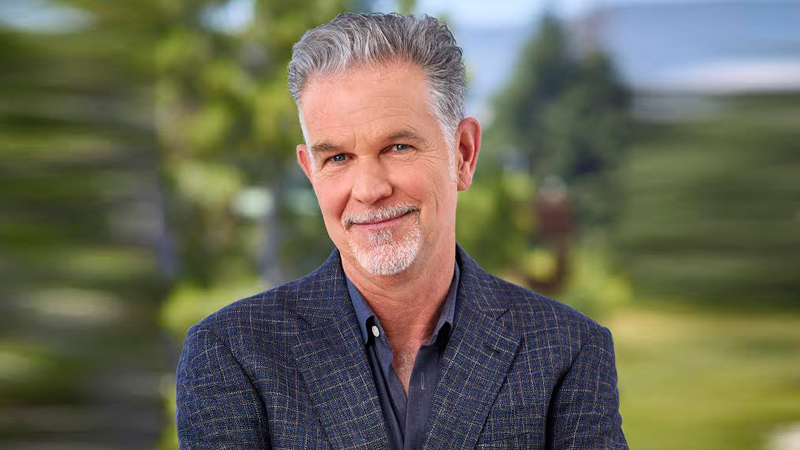
    Ted Sarandos and he totally and irreversibly changed how video is consumed with their streaming service Netflix. Forever. Now Reed Hastings is putting his best forward into the skiing business in the US, according to a feature in The New York Times.

    The 63 year old billionaire plonked an undisclosed sum to buy a controlling interest in Powder Mountain a skiing area in the north east patch of Utah.  The mountain receives close to 360 inches of snow each winter season which makes It a snow lovers delight. Summit, the owners of the mountain – one of the few private ones in the US (most of the rest are leased from the US Forest Service or are on a mix of private and publicy owned land) – had struggled to make a profit despite grandiose plans. Hastings a -an avid skier and snowboarder – jumped at the chance and put down $100 million of his own money and bought the 8,646 acre skiing property in September 2023. He followed that up by acquiring another 2,400 acres adjacent to the skiing area in March 2024.

    Hastings plans to spruce up PowMow (as Powder Mountain is locally called) by installing four chair lifts, building two day lodges with restaurants, private rentals, retail stores and a 40,000 square foot lodge with a state of the art spa.

    2,000 acres of this would be made private, he announced. An enclave at the top would host homes which would be sold at upwards of $2 million each. These would also carry an annual membership fee of between $30,000 and 100,000, which would give homeowners exclusive access to the private skiing area, apart from the 2,400 acres he acquired recently.

    The rest of the mountain which would be left open to the public, will cost skiers $1,399 for a season pass (as against $1,259 previously), seniors above 75 years  $1,049 (as against free). Additionally, there would be no limit on the membership numbers as has been the practice so far. The public area is slated to be opened in 2025.

    Hastings told The New York Times that his move into the skiing business is not a CSR activity.

    “I’m investing a lot of my money in Powder Mountain but my plan was never to subsidise it,: he said. “…I never saw this as a charitable endeavor. We are building a luxury experience on the private side of the mountain…We decided we needed to lure people here by offering a private experience they can’t get anyplace else..”

    And no one knows better than him about providing experiences, especially if you consider how he transformed a movie rental business into one of the most valuable media and entertainment business globally. 

  • Nate Silver and ESPN to reboot FiveThirtyEight.com as a data-driven news site

    Nate Silver and ESPN to reboot FiveThirtyEight.com as a data-driven news site

    MUMBAI: Statistician Nate Silver rose to prominence by accurately forecasting the results of the 2008 presidential election as an independent blogger and the 2012 presidency as a writer at The New York Times. But on Friday, Silver moved over to ESPN.


    In the next couple months, Silver will be relaunching his website, FiveThirtyEight.com, as an ESPN backed publication. The new FiveThirtyEight will be a standalone website that uses a data to tell stories and make predictions on sports, politics, economics, culture, science, and technology, ESPN said in a statement. Silver will run the new site as editor-in-chief, overseeing a team of writers and editors.


    ESPN took a similar approach back in 2010 when it launched Grantland, a website run by sports writer Bill Simmons that brings a long-form journalism approach to sports and culture. Silver will also serve as an occasional political analyst for ABC News which, like ESPN, is owned by The Walt Disney Company.

  • Rediff.com launches improved news app

    Rediff.com launches improved news app

    MUMBAI: Online provider of news, information, communication, entertainment and shopping services Rediff.com India Limited has modified and upgraded its Rediff News App service. Users will now be able to access news from over 30,000 Indian and International sources for free by downloading the news app.

    As part of the enhancements, the app also aggregates news from top news sources such as Reuters, The New York Times, Washington Post, The Times of India, The Economic Times, and The Hindu.

    In order to make sure that the app can be used by maximum mobile users, Rediff has released multiple versions of the app for mobile devices ranging from those using the latest versions of iOS, BlackBerry, Windows 8, and Android, to feature phones using the classical Java and Symbian operating systems. Each version is designed to provide the best user experience on the respective operating system and provides aggregated news content from multiple sources.

    The app has a tiled interface design that displays the latest news with images and a short description across popular categories such as top news, world, business, sports, cricket, and entertainment. A user can tap on an image to get a summary of the news and a further tap takes him/her to the full article on the original news source.

    The app also provides an offline access to previously downloaded news content even when the user is not connected to the internet, providing each user with a unique and differentiated news search and viewing experience.

    Rediff.com chairman and CEO Ajit Balakrishnan said, “The Indian mobile internet user base is expected to grow exponentially on the back of initiatives by the Government of India and leading Indian telecom service providers. Our launch of the Rediff News app that can work on almost all mobile phones provides users with better access to worldwide news and enhances search functionality. This is part of our continued strategy of enhancing our offerings to improve the Rediff user experience and positions Rediff to take advantage of future growth opportunities.”

  • Five news organizations and US government settle privacy suit

    MUMBAI: Can a journalist be forced to reveal his sources? A journalist holds the right to refuse to reveal his source, but in this connection he should be willing to face a trail. A court battle, which featured news organisations and the US government, and its climax have proved that protecting the source can be a costly affair.

    Five news organisations namely ABC News, The Associated Press, The Los Angeles Times, The New York Times and The Washington Post has agreed to join forces with the US government towards the settlement on invasion of privacy with the former scientist at Los Alamos National Laboratory, Wen Ho Lee who was falsely accused of being a Chinese spy.

    The US government is paying $1,645,000 and the five news organizations are paying $750,000 to avoid contempt sanctions against their reporters, who refused to disclose the sources of their stories about the espionage investigation. 

    The reporters of the five media organisations were not named in the suit as defendants, but had been held in contempt by the court for refusing to testify and had been ordered to pay fines of $500 per day for refusing to name their sources.

    Lee brought his case against the government and the five news media organisation in 1999,when the federal investigators accused him of giving nuclear secrets to China. He spent nine months in solitary confinement awaiting trial.

    Lee contended that the government had violated privacy laws by telling reporters about his employment history, finances, travels and polygraph tests.