Tag: the ministry of information and broadcasting

  • Nagarjuna launches season two of Krish, Trish and Baltiboy: Bharat Hain Hum, at IFFI Goa

    Nagarjuna launches season two of Krish, Trish and Baltiboy: Bharat Hain Hum, at IFFI Goa

    Mumbai— The Ministry of Information and Broadcasting launched the second season of the celebrated animated series Krish, Trish, and Baltiboy: Bharat Hain Hum at the ongoing International Film Festival of India (IFFI) Goa.

    Nagarjuna graced the event along with Information & Broadcasting secretary Sanjay Jaju; Prasar Bharati CEO Gaurav Dwiwedi; CBC, DG, Yogesh Baweja; Graphiti Studios creators Munjal Shroff and Tilak Shetty ; Prime Video, India director & head – SVOD, Shilangi Mukherji and Netflix India director of public policy Mahima Kaul.

    The groundbreaking animated series, which celebrates India’s lesser-known freedom fighters, made history with its season one debut across multiple platforms.

    Season two of the animation series, like season one, will premiere simultaneously across Doordarshan, Prime Video, and Netflix.

    The series will be available in 12 Indian languages—including Hindi, Tamil, Telugu, Kannada, Malayalam, Punjabi, Marathi, Gujarati, Bengali, Assamese, and Odia—and seven international languages – French, German, Spanish, Russian, Korean, Chinese and Arabic making it accessible to a global audience in 150 countries, further amplifying its reach.

    Season two continues the mission to highlight unsung heroes from all across the country, including Taji Dele and Ponge Dele from Arunachal Pradesh, Wazir Ram Singh Pathania from Himachal Pradesh, and Birsa Munda from Jharkhand, among others.

    These stories are meant to inspire pride in India’s history while celebrating the diversity and resilience of the country’s freedom fighters.

    The secretary highlighted the importance of such initiatives in nurturing national pride among India’s young generation.

    “The diversity of India’s freedom struggle needs to be communicated in ways that appeal to children. By using animation, we’re making these rich histories not only accessible but also engaging. Through these animated stories, we’re offering young minds a chance to learn about the unsung heroes who played pivotal roles in shaping India’s destiny,” Jaju said.

    “We are delighted to launch a new season of Krish, Trish and Baltiboy: Bharat Hain Hum on Prime Video starting 1st December. The series beautifully highlights the invaluable contribution of several heroes who played a significate part in India’s freedom struggle, giving viewers in India and around the world a chance to learn more about our rich history,” said Mukherji. “We would like to congratulate the Ministry of Information and Broadcasting (MIB), Central Bureau of Communication, and Graphiti Studios for producing this wonderful series. The series is a significant step in our efforts to foster the growth of India’s creative economy and give Indian stories a global showcase. We are confident that the new season will be as well-received by our viewers as the first season.”

    “I have grown up watching a lot of mythology, and stories of Shri Ram, Lakshman, Bharat, Arjun, but stories on our freedom fighters who sacrificed their lives for our country is equally important. With the new show Bharat Hai Hum, the children and the next generation will get to know about our heroes,” said Nagarjuna.

    Munjal Shroff and Tilak Shetty, the series’ creators, added, “The stories of India’s unsung heroes have often been overshadowed, but through this series, we aim to ensure that their contributions are remembered and celebrated by the younger generation. It’s not just a story of the past; it’s a lesson for today’s youth to understand the values of courage, resilience, and patriotism.”

    The creators employed nearly 1,000 professionals across India, including animators, voice artists, and production experts, in order to meet an ambitious timeline and deliver the series in record time.

    Krish, Trish, and Baltiboy: Bharat Hain Hum will also be available in an innovative format: a radio series and a podcast. The Krish, Trish and Baltiboy– Bharat Hain Hum Radio Series will premiere on 1 December on All India Radio (AIR), broadcasting in 12 languages across India. Each episode will be heard at 10:30 AM on Sundays, just 15 minutes before the animation series airs on Doordarshan at 11 AM. The radio show will promote the animated series, creating a seamless cross-platform transition that will help maximize the show’s audience. The unique scheduling strategy promises to offer a significant push for the animation series, ensuring that the young and diverse audience can transition from radio to television effortlessly.

    Additionally, a podcast will be available worldwide on Spotify in 180 countries. This podcast will feature episodes from the series, while also encouraging listeners to watch the animated show on Prime Video, Netflix, Waves and Doordarshan amplifying the reach of this cross-platform distribution strategy.

  • TRAI issues consultation paper on Broadcasting Service Authorisations under Telecom Act 2023

    TRAI issues consultation paper on Broadcasting Service Authorisations under Telecom Act 2023

    New Delhi – The Telecom Regulatory Authority of India (TRAI) released a consultation paper on Framework for Service Authorisations for provision of Broadcasting Services under the Telecommunications Act, 2023′.

    The Ministry of Information and Broadcasting (MIB) through a letter dated 25 July 2024, sent a reference to TRAI informing that the Telecommunications Act, 2023 has been published in the Official Gazette of India. Section 3(1)(a) of the Telecommunications Act, 2023, which is yet to be notified, provides for obtaining an authorisation by any entity/ person intending to provide telecommunication services, subject to such terms and conditions, incuding fees or charges, as may be prescribed.

    In respect of the broadcasting services, the reference has apprised that many broadcasting platforms (which employ radio waves and spectrum for offering services) viz. DTH, HITS, IPTV, Uplinking/ Downlinking of television channels (including teleports), SNG, DSNG, Community Radio, FM Radio etc. are issued license/ permission/ registration by MIB under Section 4 of the Indian Telegraph Act, 1885, which is replaced by the Telecommunications Act, 2023. 

  • MIB summons Netflix content head over IC814: The Kandahar Attack

    MIB summons Netflix content head over IC814: The Kandahar Attack

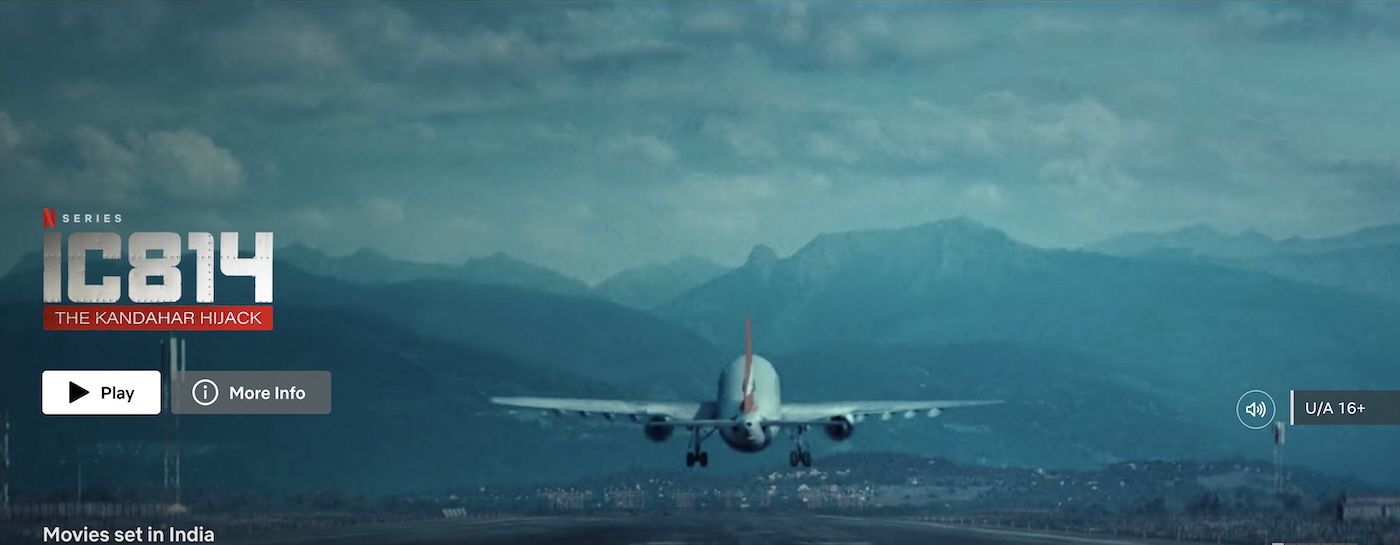
    MUMBAI: The ministry of information and broadcasting is cracking the whip on another series. This time it has summoned Netflix India content head Monika Shergill to Shastri Bhavan relating to “objectionable” treatment of the series IC814: the Kandahar Hijack which is based on the real life hijacking of an Indian Airlines plane in 1999 by Pakistan terrorists.  

    Created by Anubhav Sinha and Trishant Srivastava, the show is inspired by the book ‘Flight Into Fear: The Captain’s Story’ Devi Sharan, who was the captain of the flight and journalist Srinjoy Chowdhury

    IC814 has raised a stink on social media as hundreds of social media users have objected to the Pakistani terrorists names being changed to Bhola and Shankar while the real names were 
    Ibrahim Athar, Shahid Akhtar Sayed, Sunny Ahmed Qazi, Mistri Zahoor Ibrahim and Shakir. Several X-ers have complained that the changing of the names has been done to protect the Muslim community and besmirch Hindus.

    The furore could end  up being a storm in a teacup. NDTV.com,  quoting a home ministry statement dated 6 January 2000, has shared that the hijackers had come to be known as Chief, (2) Doctor, (3) Burger, (4) Bhola and (5) Shankar to the passengers in the plane as this how they addressed each other.

    The  incident  was unfortunate as the Atal Behari Vajpayee government (which was in power then) had to release three imprisoned terrorists Masood Azhar, Ahmed Omar Saeed Sheikh and Mushtaq Ahmed Zargar in exchange for the lives of the passengers of the hijacked plane. 
     

  • MIB pushes for GST exemption on digital news subscriptions

    MIB pushes for GST exemption on digital news subscriptions

    Mumbai: The Ministry of Information and Broadcasting (MIB) has urged the Department of Revenue to either exempt digital news subscriptions from the Goods and Services Tax (GST) or reduce the tax rate from 18 per cent to 5 per cent, as per media reports. In a letter addressed to Revenue Secretary Sanjay Malhotra, Information and Broadcasting Secretary Sanjay Jaju emphasised that newspapers are exempt from GST due to the importance of providing “correct and factual information” to Indian citizens.

    A note attached to the letter warned that the current higher tax burden could hinder the growth of the online news sector, potentially pushing it towards an advertising-based model, which could negatively impact the quality and credibility of news content.

    “With the growing internet penetration in India and the nascent stage of the online news industry, it is requested that the disparity between GST on printed newspapers and digital/online news subscriptions be addressed by either exempting the GST on the latter or reducing it from 18% to 5%, aligning it with the rate on e-books,” the letter stated.

    Digital publishers have been advocating for this change even before finance minister Nirmala Sitharaman presented the budget for the fiscal year 2024-25 on 23 July. MIB referred to a 29 September 2023, office memorandum that recommended exempting online news subscriptions from GST to create parity with printed newspapers. However, the revenue department’s office memo dated 5 June 2024, noted that the GST Council had discussed this proposal during its meeting on 11 July 2023, but did not endorse it.

    The MIB also cited a similar issue resolved in 2018 when the GST Council reduced the GST rate on e-books from 18 per cent to five per cent through a notification dated 26 July 2018. The 54th GST Council meeting is scheduled for 9 September, following the last meeting held on 22 June.

    In the attached background note, the MIB highlighted that very few internet users in India pay for online news. A higher GST rate on digital news subscriptions could push the online news sector toward an advertising model, potentially affecting the quality and credibility of content through practices such as clickbait, sensational headlines, and fake or misleading news.

    The MIB also pointed out that the 18 per cent GST on online news subscriptions generates approximately Rs 21.6 crore in revenue from a total revenue of Rs 120 crore. The MIB argued that reducing the GST to either nil or 5 per cent “may not lead to substantial revenue forgone by the government exchequer.” Online news subscriptions fall under the category of services for the “supply of images, text, and information and making available of databases.” The MIB stressed that providing “credible and factual information in the nature of news” is distinct from other online content services, as it “empowers citizens to make informed decisions and be aware of their rights and responsibilities.”

    Currently, printed newspapers, journals, and periodicals are exempt from GST. Under the IGST Act, online news subscriptions are taxed at 18 per cent as Online Information Database Access and Retrieval (OIDAR) services, which are internet services lacking a physical interface between the supplier and the recipient.

  • Arasu Cable TV faces broadcaster backlash over Rs 500 crore unpaid dues

    Arasu Cable TV faces broadcaster backlash over Rs 500 crore unpaid dues

    Mumbai: Broadcasters have voiced their concerns as TN govt-owned firm Arasu Cable TV (TACTV) fails to pay Rs 500-cr dues. Numerous broadcasters including Sony, Zee, Viacom, Disney Star, and Sun TV have raised concerns regarding unpaid dues which according to sources have been outstanding for over a year.

    In response to the prolonged non-payment, the Indian Broadcasting and Digital Foundation (IBDF) addressed a letter in March to Tamil Nadu’s IT and Digital Services minister Palanivel Thiagarajan and TACTV’s managing director, A John Louis, calling for a fair and sustainable business environment.

    “Given the severity of this issue and its adverse impact on the industry, we urgently seek your esteemed intervention to expedite the clearance of TACTV’s subscription dues. Resolving this matter promptly is vital for restoring confidence and stability in Tamil Nadu’s broadcasting ecosystem,” the IBDF stated in the letter dated 13 March.

    Sources indicated that the Tamil Nadu state government has not yet addressed the broadcasters’ requests, citing TACTV’s financial difficulties.

    Thiagarajan was quoted as saying by the Tamil newspaper Dinamalar on 29 June that Arasu Cable owes Rs 525 crore in fees to television broadcasting companies. The Tamil Nadu Government Cable company is in a critical state. It’s up to the contractors to provide the necessary support.

    When asked why broadcasters haven’t cut off TV channel access to TACTV, a leading broadcaster’s executive mentioned fears that the state government might retaliate against their business in the region. Another executive highlighted concerns about potential copyright issues and signal piracy if they disconnected the service.

    Broadcasters have the option to appeal for pending dues through the Telecom Disputes Settlement and Appellate Tribunal (TDSAT).

    TACTV has also not complied with a 2022 Central government advisory directing Union ministries, state governments, and union territory administrations to cease involvement in broadcasting or distribution activities by 31 December 2023. This advisory aimed to prevent the politicization of broadcasting, as content could potentially promote the ruling party and influence voters.

    The Ministry of Information and Broadcasting (MIB) has included similar provisions in the draft broadcasting bill, which will gain legal authority once enacted. MIB officials have discussed the issue with TACTV, but the matter remains sub judice.

  • TRAI releases recommendations on ‘Inputs for formulation of National Broadcasting Policy-2024’

    TRAI releases recommendations on ‘Inputs for formulation of National Broadcasting Policy-2024’

    Mumbai – The Telecom Regulatory Authority of India (TRAI) has today released recommendations on ‘Inputs for formulation of National Broadcasting Policy-2024’.

    The Ministry of Information and Broadcasting (MIB), vide its letter dated 13 per cent July 2023 has requested TRAI to provide its considered inputs under Section 11 of the TRAI Act, 1997 for formulation of National Broadcasting Policy.

    As a first step, TRAI issued a Pre-Consultation Paper on 2 September 2023, to elicit the issues which were required to be considered for the formulation of National Broadcasting Policy. Based on the comments received from a discussion held with stakeholders, TRAI released the Consultation Paper on ‘Inputs for formulation of National Broadcasting Policy-2024’ on 274 April 2024. The Consultation Paper identified the focus areas and raised 20 questions seeking comments of the stakeholders. TRAI received comments from 42 stakeholders including service providers, organizations, industry associations, consumer advocacy groups and few individuals.

    The Open House Discussion (OHD) was held on 15 May 2024. Certain additional comments were also received post OHD. The comments, OHD submissions and the additional comments have been analysed and duly considered while framing the recommendations to the Government.

    The broadcasting sector is a sunrise sector having huge potential to contribute towards the growth of the Indian economy. The recommendations  on inputs for formulation of the broadcasting policy has stipulated the vision, mission, goals and strategies for the planned development and growth of the broadcasting sector in the country in the era of emerging technologies.

    The objective of the policy is to facilitate the growth of the sector with quick adoption of the emerging technologies for providing an immersive and enriching experience to the consumers in a cost-effective manner, while safeguarding the interest of the stakeholders involved in the broadcasting sphere. Achieving these goals necessitates collaboration among the key stakeholders viz. the central and state governments, local governments and agencies, television and radio broadcasters, OTT service providers, content creators, distributors, equipment manufacturers, academia, research institutes, industry including startups and small and medium enterprises.

    The Authority has recommended the following Vision, Mission and Goals for the National Broadcasting Policy-2024.

    Vision

    To foster a competitive, affordable and ubiquitous ecosystem for sustained growth of the broadcasting sector, catering to the diverse needs of consumers that facilitates quality content creation, promotes democratic values and cultural diversity, enables inclusivity and literacy, attracts investments, safeguards intellectual property, develops resilient indigenous infrastructure, adopts emerging technologies, generates employment and drives socio-economic development through innovation and collaboration for strengthening India’s soft image and positioning ‘Brand India’ globally.

    Mission

    In pursuit of establishing India a global leader in the broadcasting sector, this policy intends to target broad roadmap for 10 years with special focus on the next five years. The National Broadcasting Policy-2024, envisages to achieve the following:

    A.Propelling Growth

    1.Establishing a robust broadcasting ecosystem by enabling growth-oriented policies and regulations through data-driven governance.

    2.Supporting creation of a resilient, adaptive and tech-agile infrastructure fostering R&D, technology innovation and indigenous manufacturing.

    3.Facilitating level-playing field and healthy competition; promoting ease of doing business and stimulating economic growth by enabling the reach of broadcasting services to all, positioning India as an ‘Uplinking Hub’ for television channels, attracting investments, generating employment opportunities and promoting skill development.

    B. Promoting Content

    1.Supporting quality content production and distribution for television, radio and OTT broadcasting services, encouraging proliferation of Indian content, both locally and globally, by harnessing the power of emerging broadcasting technologies and making India a ‘Global Content Hub’.

    2.Establishing India as a preferred destination for content creation. Enabling quality content production in public service broadcasting to inform, educate and entertain the masses.

    3.Promoting and facilitating the growth of Indian content through films, animation, visual effects, gaming, music and state-of-the-art post-production infrastructure.

    C. Protecting Interests

    1.Combating piracy and safeguarding the rights of content creators and intellectual property holders through copyright protection.

    2.Fulfilling social responsibilities by ensuring awareness and enabling provisions for disseminating information to all strata of society; and environmental responsibilities through green broadcasting practices and disaster preparedness.

    A. Propelling Growth: Establishing a robust broadcasting ecosystem

    a. Measure sector’s performance based on various key economic parameters to enable data-driven policy decisions

    b. Enable reach and access of television broadcasting services to uncovered households

    c. Enable radio coverage in uncovered areas

    d. Promote R&D and secure IPR in broadcasting sector

    e. Promote manufacturing and adoption of new technologies including indigenous broadcasting technologies and equipment

    f. Employment generation, bolstered up through training and upskilling for providing New Age Skills to the workforce

    g. Encourage innovation-led startups and empower Small and Medium Enterprises


  • MIB introduces Broadcasting Services (Regulation) Bill 2023

    MIB introduces Broadcasting Services (Regulation) Bill 2023

    Mumbai: The Ministry of Information and Broadcasting (MIB) has announced Broadcasting Services (Regulation) Bill 2023, to establish a consolidated legal framework for the entire broadcasting sector, seeking to replace the existing Cable Television Networks (Regulation) Act 1995 or any other policy guidelines currently governing the broadcasting sector in the country.

    The Bill streamlines regulatory processes, has extended its purview to cover the OTT content and digital news, and introduces contemporary definitions and provisions for emerging technologies.  It seeks to provide for a ‘Content Evaluation Committees’ and a ‘Broadcast Advisory Council’ for self-regulation, different program and advertisement code for different Broadcasting Network Operators, accessibility measures for persons with disabilities, and statutory penalties, etc.

    Key highlights of the bill are:

    1   Consolidation and Modernisation: It addresses the long-standing need of consolidating and updating the regulatory provisions for various broadcasting services under a single legislative framework. This move streamlines the regulatory process, making it more efficient and contemporary. It extends its regulatory purview to encompass broadcasting over-the-top (OTT) content and digital news and current affairs currently regulated through IT Act, 2000 and regulations made there under.

    2   Contemporary Definitions and Future-Ready Provisions: To keep pace with the evolving technologies and services, the bill introduces comprehensive definitions for contemporary broadcasting terms and incorporates provisions for emerging broadcasting technologies.

    3   Strengthens the Self-Regulation Regime: It enhances self-regulation with the introduction of ‘Content evaluation committees’ and evolves the existing Inter-Departmental Committee into a more participative and broader ‘Broadcast Advisory Council’.

     Differentiated Programme Code and Advertisement Code: It allows for a differentiated approach to Programme and Advertisement Codes across various services and requires self-classification by broadcasters and robust access control measures for restricted content.

    5   Accessibility for Persons with Disabilities: The bill addresses the specific needs of persons with disabilities by providing for enabling provisions for issue of comprehensive accessibility guidelines.

    6   Statutory Penalties and Fines: The draft Bill introduces statutory penalties such as: advisory, warning, censure, or monetary penalties, for operators and broadcasters. Provision for imprisonment and/or fines remains, but only for very serious offenses, ensuring a balanced approach to regulation.

     Equitable Penalties: Monetary penalties and fines are linked to the financial capacity of the entity, taking into account their investment and turnover to ensure fairness and equity.

    Infrastructure Sharing, Platform Services and Right of Way: The bill also includes provisions for infrastructure sharing among broadcasting network operators and carriage of platform services. Further, it streamlines the Right of Way section to address relocation and alterations more efficiently, and establishes a structured dispute resolution mechanism.

  • MIB empowers CBFC and I&B officials to remove pirated content

    MIB empowers CBFC and I&B officials to remove pirated content

    Mumbai: The Ministry of Information and Broadcasting has established an institutional mechanism for nodal officers to receive complaints against piracy and direct intermediaries to take down pirated content on digital platforms.

    After the parliament passed the Cinematograph (Amendment) Act, 1952 during this year’s Monsoon Session, Union Minister Anurag Singh Thakur stated that the Act aimed to curb film piracy, a measure which has been a long-standing demand of the film industry.

    The above action would allow instant action by MIB in case of piracy and will provide relief to the industry.

    The amendment includes strict punishment of minimum of three months’ imprisonment and a fine of Rs 3 lakh, which can be extended up to three years imprisonment and fine of up to 5 per cent of the audited gross production cost.

  • MIB notifies amendments in the Cable Television Networks Rules, 1995

    MIB notifies amendments in the Cable Television Networks Rules, 1995

    Mumbai: The Ministry of Information and Broadcasting has notified amendments in the Cable Television Networks Rules, 1994 thereby providing the operational mechanism for implementation of the decriminalised provisions of the Cable Television Networks (Regulation) Act, 1995.

    The Ministry issued a notification appointing 3 October 2023 as the date from which provisions of the Jan Vishwas (Amendment of Provisions) Act, 2023 and entries in the schedule thereto with respect to the Cable Television Networks (Regulation) Act, 1995 has come into force.

    Section 16 of the Cable Television Networks (Regulation) Act, 1995 dealt with the punishment for contraventions under any of its provisions. This section had provision for imprisonment which might extend upto 2 years, in case of first instance and 5 years for every subsequent offence.

    With an aim to make the Cable Television Networks (Regulation) Act, 1995 more business-friendly and to boost the investor confidence in the sector, punishments specified under Section 16 were re-examined and were decriminalised through the Jan Vishwas (Amendment of Provision) Act, 2023. The imprisonment provisions have been now replaced with monetary penalty and other non-monetary measures like Advisory, Warning and Censure. These measures will be enforced through the “designated officer” defined in the rules notified today. Moreover, Section 16 now introduces an appeal mechanism against the order made by the designated officer.  Sections 17 and 18 were omitted for being redundant.

    Some of the benefits of decriminalisation of provisions under the Cable Television Networks (Regulation) Act, 1995 are:

    ●   The amendments are likely to encourage compliance with the Act without resorting to harsh punishments and are sensitive to minor or unintended contraventions. The inclusion of advisory, censure, and warnings in the range of penalties suggests focus is on educating and encouraging compliance rather than solely punishing contraventions.

    ●   The amended provision allows for the use of a range of penalties, which provides flexibility in addressing different types of contraventions. It allows for a more proportional response to the nature, specificity and severity of the contravention.

    ●   The amendment in the rules defines a “designated officer” for imposing penalties. This streamlines the enforcement process and makes it simple in addition to unburdening the criminal justice system.

    ●   The amended provision explicitly addresses subsequent contraventions and in addition to the provision for higher penalties, includes the provisions for suspension or cancellation of registration. This promotes consistency and discourages habitual or repeated contraventions.

    ●   The inclusion of an appeal mechanism provides individuals or entities the opportunity to challenge penalties or decisions. This ensures a fair and transparent process and safeguards against potential abuse of power.

    ●   The definition of common terms in cable industry like “platform services” and “local cable operator” have been defined in the rules for the first time to bring about uniformity in their usages.

    Currently, there are over 1400 Multi-system Operators registered with the Ministry of Information and Broadcasting. Decriminalisation of the contraventions of provisions of the Cable Television Networks (Regulation) Act, 1995 and replacement with civil penalties shall boost stakeholders’ confidence and promote the ease of doing business.

  • TRAI releases recommendations on ‘License Fee and Policy Matters of DTH Services’

    TRAI releases recommendations on ‘License Fee and Policy Matters of DTH Services’

    Mumbai: The Telecom Regulatory Authority of India (TRAI) has issued the recommendations on “License Fee and Policy Matters of DTH Services”. The Ministry of Information and Broadcasting (MIB), vide letter No. 2/33/2021-BP&L dated 2 January 2022, sought recommendations of TRAI under Section (11)(1)(a) of the TRAI Act, 1997.

    The reference alluded to the amendments carried out by the Department of Telecommunications (DoT) in Unified License (UL) Agreement. Vide the amendments dated 25.10.2021 and 06.10.2021, DoT has rationalised the definition of Adjusted Gross Revenue (AGR) and Bank Guarantee (BG) quantum respectively under structural reforms.

    DTH operation in India is governed by the policy guidelines for obtaining license for providing DTH broadcasting services in India. These guidelines prescribe a License Fee (LF). LF is a non-tax fee levied on a service provider against the privilege of being permitted to carry out a licensed activity. As per the provisions of the guidelines, the DTH operators are required to pay a LF, which is eight per cent of Adjusted Gross Revenue (AGR) on a quarterly basis to MIB.

    Bank Guarantee (BG) is a type of financial instrument to ensure that a service provider pay their dues on time and is obligated to fulfil the terms and conditions of the license agreement. The extant DTH guidelines prescribe a BG for an amount of Rs five crore for the first two quarters, and thereafter, for an amount equivalent to LF for two quarters and other dues not otherwise securitised.

    Based on the reference, a consultation paper on “License Fee and Policy Matters of DTH Services” was issued by TRAI on 13 January 2023. Written comments and counter-comments on the Consultation Paper were invited from the stakeholders by 27 February 2023 and 13 March 2023 respectively. The Authority received seven comments and one counter-comment from various stakeholders. All these comments and counter-comment are available on TRAT website www.trai.gov.in. An Open House Discussion was also convened on the issues raised in the Consultation Paper on 20 April 2023 through video conferencing.

    The salient features of the recommendations are as follows: –

    a. Gross Revenue (GR) shall comprise revenue accruing to the licenced entity by way of all operations/ activities and inclusive of all other revenue! income on account of interest, dividend, rent, profit on sale of fixed assets, miscellaneous income etc. without any set-off for related items of expense. The recommendations also provided certain explanations with the definition.

    b. Applicable Gross Revenue (ApGR) for arriving at the revenue calculations for license fee should be equal to the total GR of the licensee as reduced by the following items:

    i. Revenue from activities under a license/permission issued by DoT;

    ii. Reimbursement, if any, from the Government;

    iii. List of other income to be excluded from GR to arrive at AGR:

          a. Income from Dividend;

          b. Income from Interest;

          c. Income from sale of fixed assets and securities;

          d. Gains from Foreign Exchange rates fluctuations;

          e. Income from property rent;

          f. Insurance claims;

          g. Bad Debts recovered;

          h. Excess Provisions written back

    *subjects to conditions given in Annexure-IJI of these recommendations

    c. Adjusted Gross Revenue (AGR) is calculated by excluding GST paid to the Government from the ApGR, if ApGR had been included as a component of GST.

    d. MIB should revise the Form-D (the Statement of Revenue and Licence Fee for DTH Licensees) and adopt the format of Form-D as prescribed in the recommendations. The process for the submission of Form-D should be Page 2 of 4 made end-to-end online with the facility to upload all the related documents in digital mode via a single window system.

    e. MIB should develop a robust mechanism for the deduction verification process through a single window portal. The Licensee is required to produce to the Licensor, all such books of accounts and documents required for reconciliation which have a bearing on the verification of revenue for the purpose of calculating License Fee.

    f. DTH Licensee should pay an annual license fee equivalent to three per cent of AGR.

    g. License Fee for DTH Licensees should be brought down to zero in the next three years. DTH Licensees should not be charged any License Fee after the end of the financial year 2026-2027.

    h. The Licensee should submit an Initial Bank Guarantee from any Scheduled Bank to the MIB for an amount of Rs five crore for the first two quarters.

    i. Thereafter, the Licensee should submit a Bank Guarantee (covering Financial and Performance Bank Guarantee) from any Scheduled Bank to the MIB for an amount equivalent to the Initial Bank Guarantee (i.e., Rs five crore) or 20 per cent of the estimated sum payable, equivalent to License Fee for two quarters and other dues not otherwise securitized, whichever is higher.

    j. Once the license fee becomes zero, the Licensee should submit a Bank Guarantee (Performance Bank Guarantee) for a fixed amount equivalent to the initial Bank Guarantee (i.e Rs five crore) from any Scheduled Bank to the MIB, which should be valid for a minimum of one year and renewed every year to ensure it remains valid for the entire currency of the license agreement.

    k. The Licensor should be at the liberty to encash the Bank Guarantee in full or part in the event of violation of any of the license conditions.

    l. Electronic Bank Guarantee should be encouraged and permitted for ease of doing business.

    m. These recommendations including the definition of Gross Revenue (GR), Applicable Gross Revenue (ApGR), Adjusted Gross Revenue (AGR) and the percentage of AGR to calculate the License Fee for the DTH Liçnse may be made applicable ‘prospectively’.

    In the highly competitive television distribution market, urgent measures are required for the DTH sector. The quick implementation of these recommendations will help the sector and enable all-round growth.