Tag: The Mavericks

  • Mavericks appoints Gaurav Tuli as new digital and tech director

    Mavericks appoints Gaurav Tuli as new digital and tech director

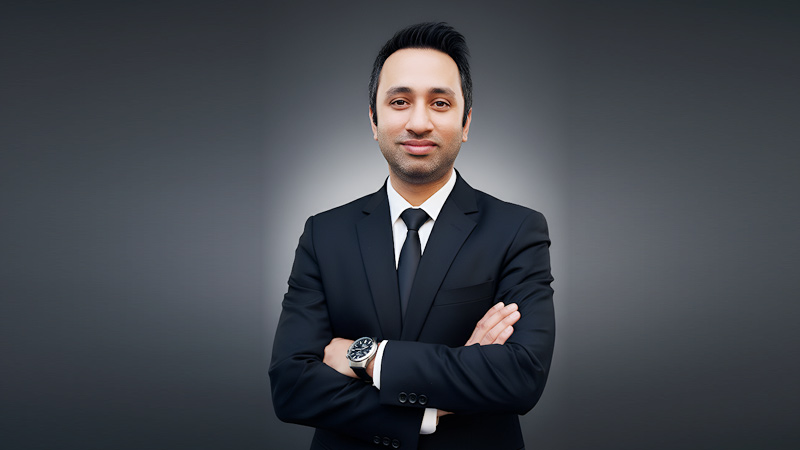
    MUMBAI: When brands talk clicks, The Mavericks wants to talk connections and its latest hire proves it’s serious. The integrated marketing communications agency has appointed Gaurav Tuli as director digital & tech, a move set to sharpen its AI-first, insight-led storytelling play. Armed with over 16 years of cross-market experience across India and Canada, Tuli has worked on marquee accounts including Bayer, Ford, Wendy’s, Jamie’s Italian, Pepsico, Swaraj Tractors, Hyatt, Interglobe, Oriflame, Luminous, and Himel. His track record spans sectors as varied as Auto, Healthcare, FMCG, Aviation, Hospitality, Banking, Alcobev, Education and Beauty blending tech with creativity to deliver campaigns that don’t just convert, but connect.

    At The Mavericks, Tuli will anchor digital transformation with new service lines built on Generative AI, predictive analytics, and automation. But for him, AI isn’t about replacing creativity, it’s about amplifying it. “The intersection of data, technology, and creativity is where the most exciting things are happening,” he said. “From Generative Engine Optimisation for AI discoverability to predictive performance models, these tools help brands move faster, listen smarter, and create more meaningfully.”

    The Mavericks India founder & CEO Chetan Mahajan echoed the sentiment, noting: “Integrated communications is no longer about channels ,it’s about cohesion. In the digital age, integration means agility, real-time impact, and context. Gaurav will be integral to building that ecosystem.”

    With brands now seeking outcome-driven communication rather than vanity metrics, The Mavericks’ appointment signals its ambition to push boundaries. For Tuli, the task is clear: keep brands discoverable, scalable, and emotionally resonant in an AI-led, digital-first world
     

  • The Mavericks plugs into One Asia Communications to power brands across 13 Asian markets

    The Mavericks plugs into One Asia Communications to power brands across 13 Asian markets

    MUMBAI: When reputation precedes the passport, it pays to go regional. The Mavericks, one of India’s fastest-rising communications consultancies, has officially joined the One Asia Communications (OAC) network—a coalition of leading owner-operated PR agencies across the continent. As OAC’s exclusive partner in India, The Mavericks now offers brands a single-window approach to strategic communications across 13 key Asian markets, including Japan, Korea, Singapore, Indonesia, and Vietnam.

    The move positions The Mavericks as a gateway for both Indian brands with regional ambitions and international players looking to decode India’s complex communications landscape. With OAC’s deep local reach, the firm will offer clients culturally attuned, insight-driven storytelling without the bureaucracy or disconnect of traditional global networks.

    “This partnership is built on shared values — deep local expertise, a commitment to meaningful storytelling, and an audience-first mindset”, said The Mavericks founder & CEO Chetan Mahajan. “For Indian brands going global and global brands entering India, this network offers the agility of local operators and the scale of a regional powerhouse”.

    The OAC alliance now spans Indonesia, Japan, South Korea, Singapore, China, Vietnam, Malaysia, and other dynamic markets. With The Mavericks onboard, the network consolidates its presence in south Asia, adding India to its coverage map.

    OAC chair & Hahm Partners CEO Siwon Hahm said, “The Mavericks brings incredible energy, creativity, and a strong foundation of strategic reputation management. Their inclusion completes OAC’s presence in major Asian markets, strengthening our mission to deliver cohesive, high-quality communications across borders”.

    For Maverick Indonesia founder Ong Hock Chuan, the partnership is more than coincidence. “While we share a name by chance, what binds us is a shared philosophy. Chetan and his team have consistently inspired with their bold yet grounded approach. We’re thrilled to collaborate more closely and create value for businesses, bridging India and Indonesia”, he said.

    As clients increasingly seek sharper localisation within global narratives, the OAC-Mavericks partnership offers a cross-border strategy rooted in trust, insight and creative muscle. Whether it’s launching a fintech brand in Seoul or repositioning an FMCG player in Jakarta, The Mavericks is now equipped to make the message travel farther and hit harder.

  • Survey reveals 61% Indians suffer mental health-related issues under lockdown

    Survey reveals 61% Indians suffer mental health-related issues under lockdown

    MUMBAI: Covid2019 has been the biggest impending crisis in the current era and has given rise to the new normal way of surviving, both personally and professionally. With uncertainty clouding over nations across the globe, economies have come to a standstill and India has been no different. Companies have been forced to adopt the “survival of the quickest and the smartest” mantra, while the economy struggles to come back to normalcy. With individuals restricted with the four walls of their homes, mental health has taken a severe hit. According to the Rebooting 2020: A Story of Covid2019, and shifting perceptions survey by reputation management advisory, The Mavericks India, 61 per cent Indians are experiencing mental health related issues due to the lockdown, uncertainty, and looming financial crisis.

    Mental health takes a beating this lockdown

    Gen-Z and millennials have been impacted the most with 27 per cent of Gen-Z and 19 per cent of millennials expressing that this crisis has taken a significant toll on their mental health. Baby boomers are least impacted or perhaps better experienced and prepared to handle the crisis.

    Furthermore, women are struggling more than men as their workload has increased significantly with them carrying multiple responsibilities without any assistance from domestic helpers.

    Work-from-home the new normal?

    46 per cent of CXOs surveyed believe that working remotely will be the most significant change in the post-COVID world. While Work From Home is quite prevalent in the western world, the concept was confined to a handful of sectors and very often, limited to a few functions in India. This lockdown has forced all industries to explore innovative ways to get their workforce to operate remotely. Given the success of the forced experiment, many CXOs are exploring options to get a major portion of their workforce to work from home for a longer period of time post-COVID, or permanently in some cases. With salary cuts implemented with immediate effect across all industries, the WFH proposition offers saving time and money while bringing down the real estate costs for the employers significantly. WFH is being touted as a win-win scenario.

    On the contrary, the workforce is itching to get back to working from office with 75 per cent Indians finding WFH very challenging and further blurring the boundaries between work and personal lives.

    Indian economy’s road to recovery – a bleak future

    90 per cent CXOs expect the recovery to be slow and painful and this is likely to be reflected heavily in their decision-making as they try and navigate the turbulent times.  A whopping 72 per cent of Indians do not expect the economy to recover in less than a year with 26 per cent being further pessimistic, not expecting the recovery before two years. A slow recovery stacked with depleted earnings and an expectation to save more spells impending doom for discretionary spending.

    The rebooted consumer mindset is good news for shared economy brands while brands in luxury, travel and assimilation of material assets are likely to struggle and bleed on their way to recovery. However, the premium mobile phones market is expected to make a V-shaped recovery and dishwashers, vacuum cleaners and automatic washing machines market is expected to grow substantially.

    “Early lockdown was the best solution to controlling the spread of COVID.”

    Overall, 70 per cent of Indians and 79 per cent of CXOs are supportive of the Central Government’s response in handling the crisis with the only exception being, lack of planning and implementation in accommodating the plight of migrant workers. It is likely to prove to be a major impediment while putting the economy back on the path of recovery and eventually, growth.

    Reduced dependencies on China the next big move for India?

    51 per cent of the CXOs and 40 per cent of other respondents believe that China will suffer a global backlash as the world perceives that China could have responded more responsibly in handling the crisis that has gotten the world down on its knees. It’s a great opportunity for India if we respond quickly to bring in policy reforms, making it an attractive investment and consumption market, while focusing aggressively on the Make in India initiative and encouraging Indians to going #VocalForLocal.

    Media consumption shifts to the online medium

    Indians are tuned in to Zoom and Google Hangouts/ Meets for most part of the day, besides being pushed to bring in the digital transformation to some of their most loyal habits like consumption of traditional media. 70 per cent of the respondents are reliant on online news sources and apps and only three per cent of the millennials hold on to their old habits.

    Sustainability is the name of the game

    58 per cent of respondents are likely to have increased appreciation towards sustainable environmental practices while 63 per cent are committed to leading a healthier lifestyle with a special focus on physical fitness and building better immunity.

    Say no to travel till there’s a vaccine

    As expected, the travel and hospitality business is likely to take the longest time to recover as social distancing will continue to be the new normal for a while and definitely until they are vaccine-protected. At least 67 per cent of the Indians are not likely to travel for the next six months unless it is absolutely necessary.

    The Mavericks founder-CEO Chetan Mahajan said: “Reputation, transparency, and trust will be the new currencies of the post-COVID era. Brands that are living their purpose and are conscious about building sustainable business models will enjoy preference and will recover faster.  Furthermore, digital transformation will change the storytelling game and authentic change the storytelling game and authentic influencers will become the key carriers of the brand story.”

    For more insights, you can download the full report https://www.themavericksindia.com/covid-19

  • The Mavericks pledges to observe “Together-Apart Week” every year starting March 2021

    The Mavericks pledges to observe “Together-Apart Week” every year starting March 2021

    Reputation Advisory, The Mavericks India, has announced that it will commit to a “Together-Apart Week” every year, starting 2021. Coronavirus was declared a pandemic on the 11th of March by the World Health Organization (WHO). The week-long lockdown (Together-Apart Week) will be observed in the second week of March to commemorate the declaration and pay gratitude to the healthcare workers for their selfless service in these trying times. The world has been under siege since the outbreak with most of the countries worldwide under partial lockdown forced into compulsory quarantine and social distancing, thereby resulting in the downfall of several industries globally.

    With more than 170K fatalities across 2.48 million cases as of 21st April and a mortality rate of 6.9%, COVID-19 is the worst pandemic of the modern era. According to the United Nations (UN), the global economy is expected to shrink by 1% instead of growing at 2.5% with millions of people losing their livelihood and an impending global recession. This crisis should not be forgotten easily and definitely not without us all both individually and collectively making a commitment to lead a more sustainable and healthy lifestyle. 

    The Mavericks will encourage each of its team members to lead a more balanced, healthy and sustainable lifestyle. This lockdown has taught us many lessons, besides the fact that how we have abused the environment and encroached into the lives of many animals pushing them to the verge of extinction; ironically enough we call animals with equal rights to this plant as wildlife. With PM2.5 and NO2 levels falling by 50% and 75% respectively in India, it doesn’t host any of the top 20 most polluted cities in the world since the lockdown, it hosted 14 of top 20 just 4 months ago, as of Jan of 2020. 

    During the week-long lockdown, all Mavericks will work exactly the way we've been during this lockdown – from the 25th of March to the 3rd of May; complete self-quarantine within the confines of our homes.  In addition, post the current lockdown 10% of our team members will be working from home at all times. This will be done by rotation and our endeavour will push this rate to 25% by 2023. 

    Apart from these proactive steps, Mavericks would not ignore reactive steps like planting at least 100 trees for each of its team members and give back what we’ve usurped from other inhabitants of this planet. 
     
    Chetan Mahajan, Founder & CEO of The Mavericks said, “COVID-19 has served us the much-needed wake-up call and we’ve decided to respond to this call with action that is inspired by Mahatma Gandhi, “be the change you want to see in the world". It’s a small step but I’m confident that when we all come together to live more responsibly we can create a revolution that will make this world a better place. I urge more individuals, entrepreneurs and businesses to come together and own their responsibilities to the planet and its habitat. We also urge the WHO to announce the second week of March to be “International Together-Apart Week” in commemoration of the world’s battle against COVID-19.”

    By staying indoors as part of the lockdown, we all have coincidentally developed habits that are good for the climate and ourselves, which includes minimal travel, mindfulness, lesser wastage and overall a conscious lifestyle. If this change in habit sticks and is encouraged by organizations through permanent efforts, it can help keep the toxic emissions lower even after this lockdown is lifted. Our initiative is aimed at developing a mindful consumption behaviour amongst team members. Moreover, staying indoors for a week every year will help us critically examine the impact of our daily activities on the environment without affecting the daily routine chores as we currently do.”
     
    “While we all revise our business playbooks to navigate these unsettling times through robust technical infrastructure, digital tools, and alternate business plans, we must carry forward the valuable lesson of combined community action to deal with climate change. COVID-19 is not the first pandemic and will certainly not be the last one. Reliving the memories of the lockdown of 2020 will hopefully not let us forget the pain and loss of life we suffered and push us and the generations to come to not go back to the ignorant and selfish selves.” Chetan added.

    Today, we have all the time to find the fine work-life balance in life, more time to spend with our families and more time to pursue our lost passion albeit in the confines of the four walls. We don’t intend to bury these learnings as we get back to our so-called normal lives.

    While India and the world fight the COVID-19 pandemic, The Mavericks urges other organizations to take the pledge and join hands together to address another looming health emergency, as we all observe ‘Earth Day’ this year.
     

  • When pandemic strikes, trust keeps brands, agencies going

    When pandemic strikes, trust keeps brands, agencies going

    MUMBAI: Trust plays an important factor when you can’t see the other person, and now the whole world is running on trust, as the whole world remains engulfed by the Covid-19 pandemic. Never has trust between advertisers and agencies been more apparent than now.

    Dentsu Aegis Network India CEO Anand Bhadkamkar says that trust builds if one acts responsibly and delivers in time. “Trust, definitely, is quite critical during this time. Clients or colleagues need comfort in regular interaction, which builds trust amongst teams. Yes, the challenge remains of not being able to see the person physically but, the current phase is a passing phase. Thus, as long as the deadlines are met, commitments delivered and there is constant engagement, the trust keeps on building,” he says.

    While most of us have always seen work from home as a convenient way of working, it has its challenges and limitations, too. It comes true for the advertising industry, where agencies and brands were used to physical meetings either in offices, coffee shops, board rooms, etc., which has now been converted into virtual meetings. According to industry experts, in these difficult times, teams have adopted the new way of working quite effortlessly via virtual meetings and teleconferences, etc.

    Bhadkamkar says that DAN had already planned this out. “For the work to continue smoothly, we provided alternative sharing sites and a secured VPN line for better communications and data access. There are some small challenges but that’s all part of the teething and learning process. Efficiency has not dropped that much. Yes, the work is slow but not hampered completely. As a daily practice, teams have regular check-ins – daily/weekly as per agreed duration to plan, review and execute. The working pattern also varies from team to team. Frankly, people are responsible and all the more support each other in these times.”

    Socxo CMO and program head Ajit Narayan says, “Business friendship is one of the most powerful drivers of the business, so educate them, help them and over service them. Forget the inane content of handwashing (they are already getting bombarded by it.) They would appreciate if you stepped back on the sales pitches to them and helped in whatever you do for them. They will remember you and do more business with you once they get their side of the business going well.” 

    The Mavericks founder and CEO Chetan Mahajan think that COVID-19 has impacted every human being and every brand globally. Agencies now have become geography-agnostic and are doing everything possible to support the brand's communication needs. Trust is derived from the transparency of relationship and commitment to the outcome and during these trying times, one has to have 200 per cent commitment. “Our teams are separated by corona yet together with purpose with unprecedented resilience, commitment, camaraderie, and focus to be solution-oriented and be together in spirit as well as action. Our clients have been appreciative of our efforts so far and the show must go on.”

    Adding to this, RED FM national marketing head Rajat Uppal says that he has always considered a brand-agency relationship as a partnership based on trust and faith in each other’s abilities and alignment to a common objective of delivering work par excellence.

    One of the major challenges of working from remote locations like home is the brand-agency team co-ordination issues and delays in work. This can be addressed with advance timeline planning. If one is more considerate about the limitations of the current setup of WFH, brands can actually get more quality work out of the agencies.

    Uppal adds, “For us at RED FM, last one week has been pretty productive and we have been able to get some good work going with our creative, PR and digital agencies. Briefs have gone out on time and agencies have delivered work with greater responsibility. With most brands prioritising work effectively, work has not really got affected. In fact, being away from the workplace and not getting occupied with the routine and hygiene work only, has given our brand team the time to think strategically and take on jobs and projects which were part of the wish list and never got the time to be taken up. On the flip side, WFH has surely extended the work hours for everyone, as everyone is accessible anytime and there are no stringently scheduled work hours. The need of the hour is for the brands and agencies to collaborate well and deliver quality work till we all move back to our workplaces and I am sure we all will do it well.”

    WATConsult VP – account planning and strategy Sabiha Khan  feels that the most important thing to do to ensure trust is to communicate with each other and be honest in communication, which means – be frank about the good, the bad and the ugly.

    Agencies should proactively keep clients abreast of trends and how the situation will impact and change behaviour among the audience and for the respective sectors/ industries.  They should seek to work towards the next quarter keeping in mind the presence of consumer fears and the change in behaviour and possibly even preempt an indoor summer and work towards campaigns accordingly.

    Brands on the other hand should consider agencies as partners whom they can trust in such turbulent times. Brands can keep an agency in the loop about their ongoing situation and the business operations to enable the agency to make informed plans and suggestions that can benefit the brand not just in the immediate term but for the long run.

    Technology has been a big enabler during this time. Brands and agencies are communication via platforms like Zoom Cloud Meetings, Google Hangout, Slack, Google Duo for both internal and client meetings. If things go fine, maybe we are looking at a future where more companies will provide work from home options.