
Tag: The Internet and Mobile Association of India

  • IAMAI hails piracy task force as shot in the arm for creative economy

    IAMAI hails piracy task force as shot in the arm for creative economy

    MUMBAI: The Internet and Mobile Association of India (IAMAI) has cheered the ministry of information and broadcasting’s (MIB’s) decision to set up a dedicated task force to tackle the scourge of online piracy, calling it a long-overdue step to protect the country’s creative economy.

    IAMAI’s digital entertainment committee said the initiative would help turn the tough provisions of the Cinematograph Amendment Act 2023 into action on the ground. The law introduced steep penalties for piracy and empowered authorities to crack down on illegal recordings and transmissions.

    A 2024 “Rob Report”, published by EY and IAMAI, estimated that India’s entertainment sector—spanning OTT platforms and cinemas—loses Rs 224 bn annually to piracy, with 51 per cent of consumers admitting to watching pirated content. It urged stronger enforcement, fairer pricing and more innovative distribution models.

    JioStar chief executive and chair of the digital entertainment committe Kiran Mani said IAMAI’s role in the task force would channel industry expertise into “decisive measures that safeguard our creative economy and fuel long-term growth.”

    Inshorts a co-founder & chief executive and co-chair of the committee  Deepit Purkayastha called piracy “one of the biggest hurdles” for the industry, adding that the task force was a chance to “set the stage for a stronger and more trusted entertainment industry.”

    With a task force in place, the law tightened and industry voices aligned, India’s media and entertainment sector is finally poised to fight piracy with more than words.

    (The picture shown above is just a representation of the task force and does not purport to depict either Shastri Bhawan or the industry executives who are part of the task force)
  • IAMAI unveils document on best practices for affiliate marketing in India

    IAMAI unveils document on best practices for affiliate marketing in India

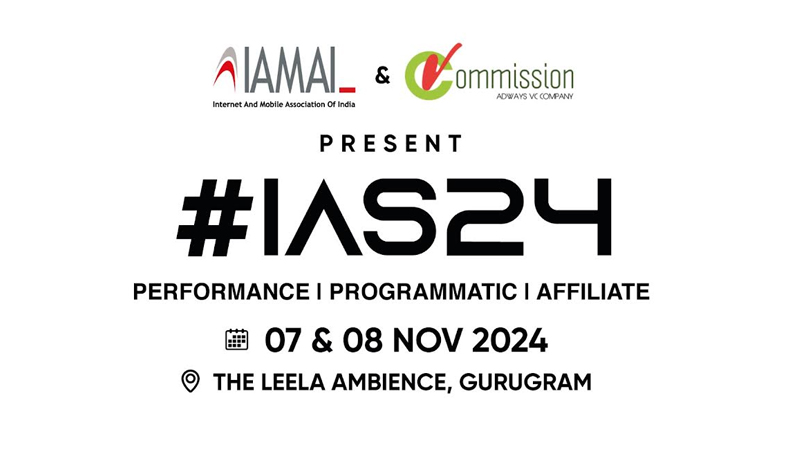
    Mumbai: The Internet and Mobile Association of India (IAMAI) launched a comprehensive document on the “Best Practices for Affiliate Marketing in India” at the India Affiliate Summit (IAS), India’s premier annual conference for affiliate marketing professionals. Organised by IAMAI, IAS 2024 serves as a platform for thought leaders and industry captains to address key issues within the affiliate marketing ecosystem.

    Affiliate marketing spending in India currently stands at around $331 million, with projections reaching over $420 million by 2025. This anticipated growth underscores the urgent need for standardised practices and ethical guidelines to sustain the industry’s expansion. The “Best Practices for Affiliate Marketing in India” document by IAMAI addresses this need, providing a comprehensive framework to guide the industry toward greater transparency, trust and efficiency.

    Given India’s position as one of the world’s top 10 markets in affiliate marketing, there is immense potential for further growth. Key factors driving this growth include the rising penetration of mobile phones, the rapid expansion of the e-commerce sector, robust digital infrastructure, and government initiatives such as Digital India. Together, these elements are anticipated to enhance the role of affiliate marketing as a strategic tool for companies across the country.

    The comprehensive framework outlined in the document aims to foster trust, transparency, and efficiency across the affiliate marketing ecosystem.

    The key objectives of launching the Best Practices for Affiliate Marketing are to:

    ●    Establish industry-wide standards for ethical, transparent and effective campaigns

    ●    Foster trust between advertisers, affiliates, and consumers

    ●    Provide compliance guidance in a complex regulatory landscape

    ●    Offer guidelines on performance optimization and KPI measurement

    ●    Address common challenges such as unclear contracts and undisclosed terms

    The document includes:

    ●    Overview of different types of affiliate marketing

    ●    Guidelines for technical setup and KPI tracking

    ●    Best practices for various campaign formats (CPV, CPL, CPS, CPI)

    ●    Emphasis on transparency and compliance

    In October 2023 IAMAI facilitated the creation of a taskforce, comprising nine renowned companies of the affiliate marketing sector with the intention of creating affiliate marketing best practices guidelines. Companies involved in drafting the document include leading brands such as Affle, Admitad, Grabon, mFilterIt, Optimise, Tyroo, Valueleaf, and vCommission.

  • IAMAI demands imposing revenue sharing mechanisms between internet companies and TSPs smack of rent-seeking

    IAMAI demands imposing revenue sharing mechanisms between internet companies and TSPs smack of rent-seeking

    Mumbai: The Internet and Mobile Association of India (IAMAI) has in its counter comments submitted to the Telecom Regulatory Authority of India (TRAI) on the consultation paper “Regulatory Mechanism for Over-The-Top (OTT) Communication Services, and Selective Banning of OTT Services” said that demands for imposing revenue sharing mechanisms between internet companies and telecom service providers (TSPs) smack of rent-seeking.

    IAMAI also flagged demands made by the Cellular Operators Association of India (COAI) and the Indian Council for Research on International Economic Relations (ICRIER). The COAI has called for regulatory intervention to ensure “largest traffic originators” pay a ‘fair share charge’ to telecom companies to account for capital investments made by the latter to “accommodate surging data traffic”. Similarly, ICRIER has called for the imposition of a ‘Broadband Infrastructure Levy’ to be applied at 3% of India operations of “significant” OTT service providers based on “specialized contracts” between service providers and network operators.

    According to IAMAI members, by requiring “largest” OTT service providers to pay TSPs for data used by consumers, TSPs would effectively be charging twice for the same service – as they already charge consumers for data. In any case, “surging data traffic” is merely data consumed by consumers that they have already purchased from telecom companies. Therefore, the “strain” on infrastructure of TSPs occurs when they sell data to consumers beyond their infrastructural capacity – a fact that has been conveniently ignored.

    Opposing demands to bring OTT service providers under regulations typically reserved for telecom companies, IAMAI highlighted that such demands fail to recognise that telecom service providers are subject to a special regulatory and licensing regime by virtue of the control that they exercise over valuable national resources such as spectrum. Therefore, the introduction of a telecom regulatory regime for OTT service providers would be an act of over-regulation.

    Over-the-top service providers have provided high quality content for little-to-no cost to users. This in turn has spurred the rapid growth of data consumption and economic activity in India. Mandating revenue-sharing mechanisms between OTTs and TSPs would effectively reverse this phenomenon by disincentivising growth for OTT based businesses, for whom a volume-based revenue sharing mechanism would be a glass ceiling for continuing growth and may prove to be an entry barrier for startups.