Tag: The information and broadcasting minister

  • Foreign firms find Indian film market attractive: Pratibha Patil

    Foreign firms find Indian film market attractive: Pratibha Patil

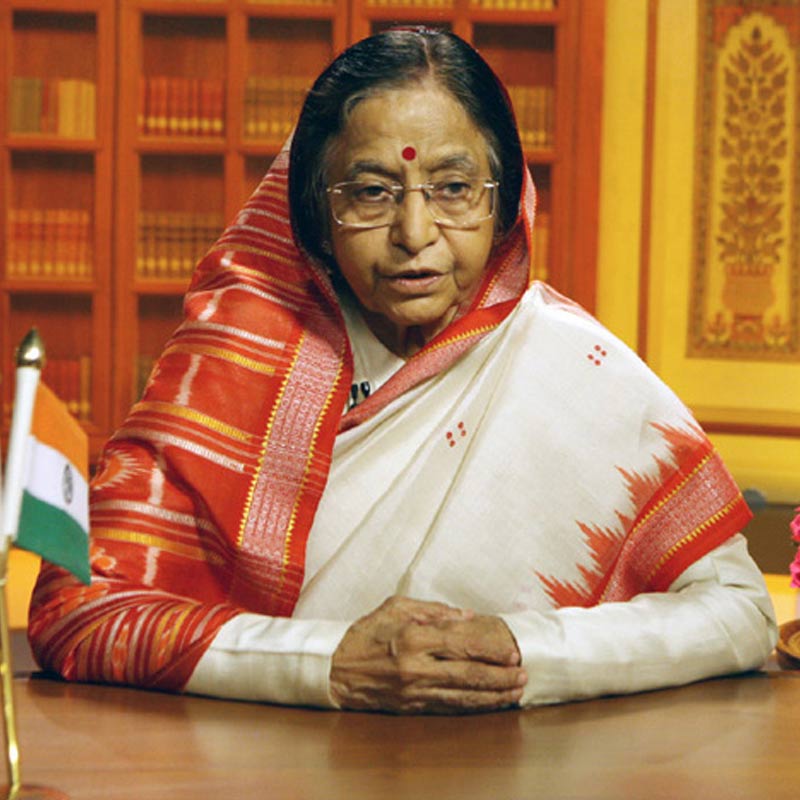
    NEW DELHI: Foreign film production houses are finding the Indian film market attractive, according to President Pratibha Devisingh Patil.

    Indian movie companies are also going global, finding new markets and deepening their existing presence.

    Speaking after giving away the 58th National Film Awards for 2010, Patil said that the medium of cinema imposes a great responsibility on everyone associated with the film industry to use the power of cinema to do good for society, through the portrayal of attitudes that help in building a tolerant and harmonious society.

    She stated creativity knew no barrier of age and the human spirit had always been striving for excellence. The awards received by five young artistes and the award for best writing in cinema going to the 90-year old Vijay Mulay was an encouraging fact and would surely inspire and motivate young film makers to give their greatest possible expression through this powerful medium.

    Speaking on the occasion, Information and Broadcasting Minister Ambika Soni said the Government had moved forward in setting up the National Film Heritage Mission with an outlay of Rs 6.6 billion. This Mission would provide a platform for comprehensive solutions for cataloguing, dissemination and monetisation of film content, video tapes, posters and other related materials in the possession of either the film wings of the Ministry or with various State Governments as well as with private individuals and institutions. The greatest benefit of the mission would be to enable the preservation of invaluable filmic heritage of the country which was an integral part of the socio-cultural heritage of the nation, she said.

    She said the year 2013 would mark the centenary year of Indian Cinema as the country’s first indigenous feature film ‘Raja Harishchandra’ by DG Phalke was produced in 1913. This centenary would be a milestone in India’s cinematic journey and needed to be showcased and celebrated. The Minister added that the Centenary celebrations would provide the country with an excellent opportunity to exhibit India’s ‘soft power‘ on a global scale and reinforce the idea of “Cinemas of India” along with the “Incredible India” campaign. As part of the Centenary celebrations, the National Museum of Indian Cinema, a first of its kind in India now being built in Mumbai, would showcase the evolution of Indian Cinema.

    Regarding skill development in the film sector, the Minister said the two Institutes under the Ministry – the Film and Television Institute of India (FTII), Pune, and the Satyajit Ray Film and Television Institute (SRFTI), Kolkata – were being upgraded to cater to the ever-increasing, highly skilled and specialised manpower requirement of the film and TV industry. Measures were being taken to declare these two Institutes as Institutions of National Importance through an Act of the Parliament.

    The Minister added that the winners of the awards in various categories had reinforced the belief in the motto of the National Film Awards for good cinema. This provided a platform for film centres to emerge all over the country thereby reflecting the vibrant socio cultural identity of our country in the realm of cinema.

    Veteran filmmaker K Balachander received a standing ovation as he went up to receive the Dadasaheb Phalke award, the nation’s highest honour for cinema. The award is conferred by the Government of India for outstanding contribution to the growth and development of Indian Cinema. The award consists of a Swarn Kamal, a cash prize of Rs 1 million, and a shawl. The award is given on the recommendations of a committee of eminent persons.

    A special highlight of the programme was the musical renditions of their award-winning songs by Suresh Wadekar from Mee Sindhutai Sapkal, and Rekha Bhardwaj from Ishqiya.

    Another highlight was that four children have won the best child actor awards. They include Harsh Mayer for the film I am Kalam, Shantanu Ranganekar and Machindra Gadekar for the film Champions, and Vivek Chabukswar for Baboo Band Baaja.

    The President particularly paid a special tribute to Vijay Mulay, who – when complemented by the President on receiving an award at this age – remarked: “But I am only ninety”.

  • TV content code to be in place soon

    TV content code to be in place soon

    NEW DELHI: The Indian government is close to finalising the content code for television and films, which is likely to re-write the business of broadcasting vis-à-vis prime time viewing.

    According to a government official in the information and broadcasting minister, the content code is likely to be notified by month-end or early November.

    “We are in the process of finalizing the content code and would like to get it in place as soon as possible,” an official in the I&B ministry said.

    The content code is aimed at having a uniform yardstick for films and television content.

    If the code gets in place, then quite a few popular TV soaps are likely to get re-classified and would have to be aired at timings set by the government.

    The official said that the government is worried about complaints relating to content on TV and would like to regulate the same.

    The content code is likely to classify TV content into categories, including whether it’s fit for unrestricted viewing or not.

    This would be the first time that the Indian government would bring under censor regulations (mainly meant for films) TV content, which has been left out of regulation.

    The Indian film censor board chief and veteran actress Sharmila Tagore had exhorted the government to remove overlaps in the functioning of censor board and a proposed broadcast regulator.

    She also called for “transparency” while forming the proposed Broadcast Regulatory Authority of India (Brai), which is supposed to deal with content regulations.

    Regulating content or complaints relating to TV shows is part of the government’s overall aim to address issues on content.