Mumbai: Music is deeply ingrained in India’s rich cultural history, reflected in ancient texts and mythology. With roots tracing back to the celestial chants of the Sāma Veda, our musical heritage is intertwined with spirituality and culture. The divine pantheon, including deities like Brahma, Vishnu, Shiva, and Saraswati, emphasises the integral connection between music, wisdom, and artistic expression.
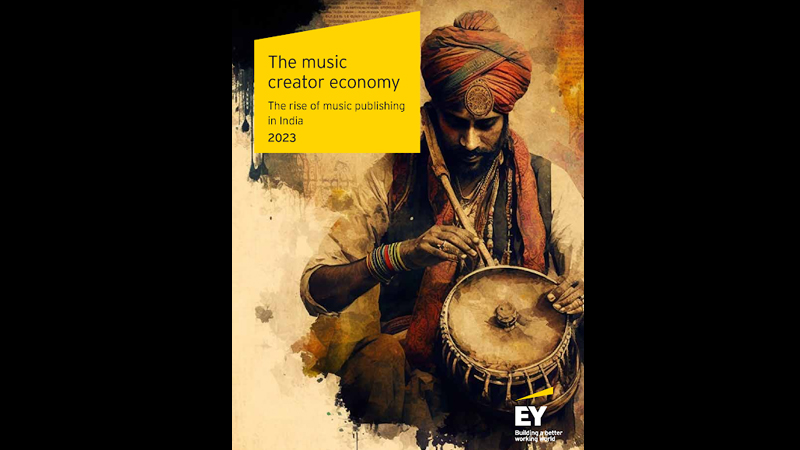
Despite the global celebration of India’s musical diversity, the challenges faced by music creators persist. Aiming to spark a dialogue on music’s intrinsic value and the crucial support needed for creators, The Indian Performing Right Society (IPRS) launched its nationwide campaign, “My Music, My Rights” around the auspicious occasion of Vasant Panchami. A recent EY study reveals that while India produces over 20,000 original songs annually, generating substantial revenues, many creators struggle financially.
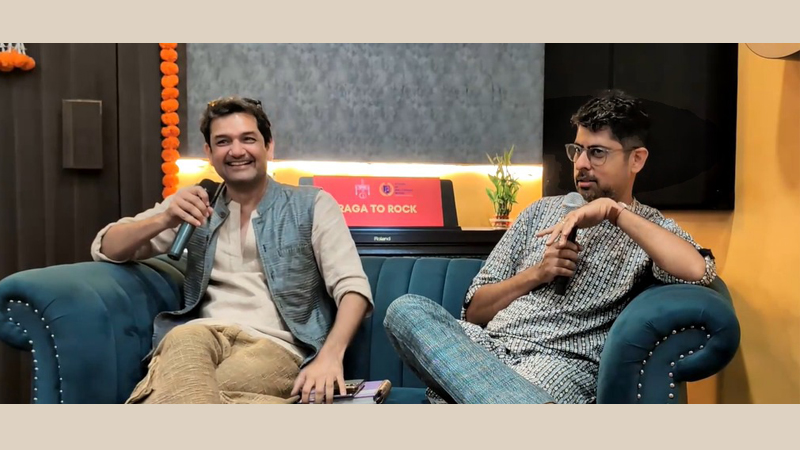
Adding significance to the same, an event titled “Raga to Rock” was held on 15 Jan wherein eminent author, poet, actor, and film director Varun Grover and leading songwriter, film director, and IPRS board member Mayur Puri, shed light on India’s rich musical heritage and its evolution to the present day. Additionally, a captivating musical drama, ‘Suro Mein Lipate Kisse’, curated by the very versatile writer and storyteller Ulka Mayur offered a visual depiction of this musical journey.
On the sidelines of the event, Indian Television caught up with Varun Grover and Mayur Puri to gain more insights regarding the campaign and much more…
Edited Excerpts:
On inspiration that fuels Varun’s creative process as a multifaceted artist
Varun: Curiosity! I am just curious about a lot of things. I want to do comedy which can only cover certain topics. Then there is poetry which can be written for children but can’t be written for a film. Then I write that separately. But I love music because it’s very easy to connect with music. You don’t have to learn an instrument or sing but still you’re a very key part of the music album. Becoming a part of the music world was the only skill I had to try it. So it is curiosity and a sense of wonder that I have about lots of things, that is, music, comedy, screenwriting and cinema. I love to be a part of all of these and I had a hope that I could be. So that is why I do multiple things. I’m just a hungry kid in a supermarket.
On Varun’s directorial debut
The film is titled – All India Rank and it is my first film as a director. It’s a very personal story, set in the 90s. That is roughly the same time I went to an IIT coaching in 1998. At that age, there are confusions about life and things and people want you to sort out your entire life in those years. Those are the years when you are not allowed to vote, consume alcohol, or marry but people want you to get your life sorted or the society terms you as a loser. So that pressure and the age where you’ve just hit puberty, there’s so many other things to explore in life. That confusion was the core of the film and the core of the story and I wanted to make it my first film because it’s a personal story. The film is set to release on 23 Feb. It’s a bittersweet comedy-drama with lots of music. Everything in the films is very indie in terms of new cast and new composer. Also according to me, for every situation in the film, there should be a song like the legacy we have in Hindi cinema. So the film originally has five songs and then we acquired three songs, out of which one is and original and two of them are old songs (Title track of Rangeela & Papa Kehte Hain from Qayamat se Qayamat Tak). Five of them are written by me. In total, the film which is of 90 mins, has eight songs.
On the goals and significance of the ‘My Music, My Rights’ campaign in empowering music creators and preserving our musical heritage
Mayur: A lot of music is being created, especially independent music. Traditionally it has been that music companies would invest in music or producers would invest in music and would let people create music input and then monetise and utilise it in different ways and exploit it wherever possible. The word exploit is literally used for the monetisation of music and creators have been receiving only a very small or trickled-down portion of it. But lately, we are seeing, with the advent of digital mediums, what has happened is, the data in the music industry has become transparent. So numbers of the consumption through digital mediums are very clear nowadays. That is why independent music that has been made without the help of any bigger support is growing and making money.
Yet, some creators remain unaware of their rights. These encompass eight categories: recording, copying, selling, publicising, translating, adapting from the original master, and recording in a distinct manner. So creators should first know about ‘My Music, My Rights’. People need to recognize the effort behind creative work and acknowledge the associated rights. Are we truly investing in listening to music, considering the lack of subscription models in India? Subscribing to a service ensures the creator receives compensation, a crucial aspect absent in the freemium model. People need to grasp that creating a piece of music involves investing one’s life. Last year we had ‘Fair Play, Fair Pay’ and now ‘My Music, My Rights’.
On rights that singers/composers have vs lyricists
Mayur: The rights that singers and composers have are quite similar. Their rights fall under the category of performing rights. Singers have more avenues compared to lyricists. They receive more love as compared to us. Their struggles are distinct; ours, however, revolves around the challenge of gaining recognition. Without recognition, there’s no remuneration, and for the recognition we need representation. The legal structure for royalties has existed for years, but execution has been a challenge. Digital platforms have brought transparency, ensuring singers and composers receive royalties. However, the concern lies in the inadequacy of the amount received.
On a favorite era or genre in Indian music that holds a special place in their heart, and how has it influenced your work
Varun: I love all eras of music, so to say, starting from the 50s. For example, there’s been RD Burman in the 80s whom I highly admire. Then there used to be a TV show on Doordarshan called ‘Bharat Ek Khoj’ which had an amazing title track. It was a fusion of Western music along with the lyrics which were derived from the Vedas. So I love and listen to all sorts of music, be it Hindustani classical music or songs like ‘Tandoori Nights’ (smirking).
Mayur: I appreciate the current era for its remarkable creativity, with outstanding lyricists like Varun, Irshad bhai, Swanand bhai, and, of course, Amitabh. The youth is producing remarkable work. However, I have reservations about the mastering and compression in today’s music. The warmth present in 80s music recorded on quarter-inch or two-inch tape has diminished due to digitalisation, resulting in a shrill sound. Technically, we’ve taken a different path, not necessarily negative, just different. Despite this, composition and lyrics-wise, I don’t think this generation is any less than the 50-60s era.
On the importance of having a foundation in Indian classical music before pursuing a career in other music genres, and its benefit to aspiring musicians in India
Mayur: We possess Indian classical music, but what we label as folk music here is distinct. While other countries’ folk music tends to be rudimentary, Indian folk music stands out with its complexity. It features various beats and patterns, making it on par with classical music. It’s rare to find an Indian without some internal understanding of our classical music. The need is actually to teach an instrument to each child in every school and college in India which foreign countries do. The problem is we don’t have enough music schools and we don’t have a centralised music education system. Every Indian naturally develops an inherent sense of classical music.