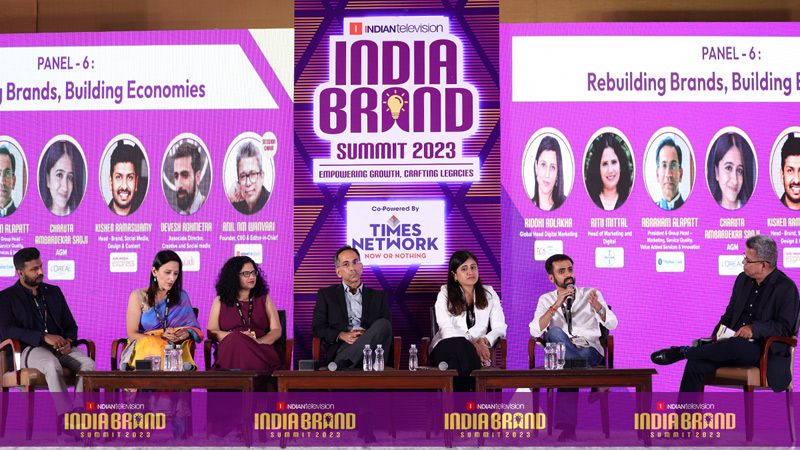
Tag: The India Brand Summit

  • IBS: Rebuilding brands, building economies

    IBS: Rebuilding brands, building economies

    Mumbai: The India Brand Summit held on 28 November 2023 at The Lalit Mumbai, convened leaders, marketers, entrepreneurs, and experts to explore current trends, challenges, and opportunities in the dynamic brands and marketing arena.

    The session offered a comprehensive exploration of the strategies and approaches required to revitalize brands to contribute to the growing economy. Through this session, We delve into the intricate relationship between brand revitalization and its impact on larger economic landscapes.

    The key highlights of the session were How brand revitalization efforts can contribute to stimulating economies, attracting investments, and creating jobs. Indicators to understand the brand’s current perception, customer sentiment, and market positioning. Strategies for Brand Revitalization – To explore methods to refresh brand messaging & how to adapt to evolving consumer preferences. To underscore the role of digital platforms and technology in brand rebuilding. To examine how brand extensions in brand rebuilding initiatives translate into tangible economic benefits. Recognizing the global scope of brand rebuilding & how it can collectively contribute to the development of the country

    The session was chaired by Indiantelevision.com group founder – CEO & editor in chief Anil NM Wanvari had panellists including Bayer consumer health division India head of marketing and digital Ritu Mittal, Tata consultancy services global head of digital marketing Riddhi Adlakha, Thomas Cook (India) Ltd president & group head – marketing, service quality, value-added services & innovation Abraham Alapatt

    Loreal Paris AGM Charuta Ambardekar Saoji, Air India Express head-brand, social media, design & content Kishen Ramaswamy, Shaadi.com associate director creative and social media Devesh Rohmetra

    Anil began the session by asking,  “How is each of your houses? How are each of you transforming yourself to serve this new consumer? And what’s happened to the brand that you’re associated with?”

    Devesh stated “So as you mentioned, like how and we were just talking about it that you know how the world around this is changing so much and especially not just economically, culturally and in all aspects, the institution of marriage is changing, There was an idea of arranged marriages, which has now changed to planned marriages as we spoke about. There was a time when parents found you somebody and said, this person looks like a good person. This is going to be your party. Those were arranged marriages. Now we’re in a world when parents come to you and then they look for you and they find multiple suitors for you, for you to meet, match a vibe and you know eventually then settle down with one of them. That’s something that we can do, say planned marriages. It is somewhere between love marriages and arranged marriages. So it’s chosen by you but may be found by somebody else. That’s what we at shaadi.com are also trying to do right? You spoke about the economic changes in our lives and our lifestyles. I’ll give you a great insight. Recently we were doing some research on our data from the platform. And we found out that women who are, you know, doing very well professionally and financially, independently. Are underplaying their salaries by a lot on our platform. So we found out that you know, people who are women, who are at very senior positions and very good companies, global companies have added their salaries at let’s say 12 LPA ++, Now that can be anything. So technically they are not lying, but we know this for a fact they are much higher than that. But they are doing that to kind of fit in and be more suitable or for multiple other reasons. Also found out that you remember there was a time when government job was the thing. if you’re a guy who has a government job, you are right, now entrepreneurs and MBAs are the new government jobs. They are the most suitable suitors on our platform. People are more desirable suitors on the platform, almost like, how a government job used to be. So yeah, we are also changing our brand approach. We are not trying to be the regressive, matchmakers that everybody thinks that we are.  We are trying to evolve our brand approach to fit the new narrative of our society and hopefully, it works out pretty soon.”

    Anil asked, “How are the changes that have impacted you how are you reacting to the changes and how has it impacted what you’re doing apart from localizing, colors maybe shades?”

    Charuta replied, “ Loreal Paris is a 114-year-old brand present in 150-plus countries. It’s massive from a global point of view. It has three pillars, One is women empowerment or because you’re worth it like everyone knows, the Second is science and the third part is inspiration and luxury. Now these three pillars don’t really change. They don’t need to be revitalized. So no matter which country we move to exactly like you said, the macroeconomic trends of more working women, more disposable income consumption shifting from household to individual consumers, and digitization. So that really helps a company like L’Oreal. So it’s more from a brand point of view we don’t need to drastically change our brand image from country to country however what we need to adapt in a growing economy like India. Firstly, are our products the correct products for Indian women? Many times what happens is when you launch a new brand comes into a country, there is a plug-and-play. So you have imports that come in and that’s what gets sold. But over a period of time, a scale builds. The products have to be made for the country. They have to be tested on Indian skin, on Indian hair and that’s the first step. And that’s how you will get skin. The more you make such products, the more you produce in the country, the costs become lower, the volume increases and this is a virtual cycle that everyone in FMCG slash beauty wants to get into. So that’s the first thing for us to do, which we did. I think the second thing is that this consumer is also very demanding. So it’s no longer to say for example, just about Shampoos to quote hair care there is a routine. So shampoo, everyone uses shampoo conditioner, half the consumers use conditional, then you have serums, then you have some hair masks and so many other products just in one category. And it is our responsibility as a company who’s known for this and who has been at this. We are the number one beauty brand in the world to really bring to the market newer and newer gestures like this. And this is what we do, So we play everything. So we play in terms of formats, smaller packs, etc. For the mass market. At the same time, we play high and low. So we play high for the evolved consumer who’s online. So in fact L’Oreal is a pioneer when it comes to e-commerce. When it comes to digitization, we have invested ahead of the curve. We foresaw that this is happening and in fact from 2018-2019 onwards we are over-indexed on our investments and that’s really helped us because that’s where the consumer is. Currently, there are 660 million smartphones in the country. So that’s massive and some around half of that household, so 330 million households, so around 2 smartphones. So the way we look at consumers has changed and that’s really helping us. So in terms of premiumization, new gestures, format change, and our brand itself being positioned being international, the consumer has come to that now and that’s what they asked for. So it really helps us create this virtual circle.”

    Abraham further spoke about his company adding, “The fastest-growing major economy in the world. So as a result of that, we’re pushing up a fair amount of people literally every year into the consumption disposal segment, which is a segment that we in the travel industry focus on. Two is that the youngest demography in the world obviously has a lot of implications in terms of media consumption, lifestyle, attitude towards saving or suspending as you refer to, and so on. And the third is the fastest-growing digital economy and the sort of rapid shift from analog to digital that India has witnessed leapfrogging various other economies. So if you look at our category, I think brand for those who don’t know, Thomas Co we are 143-year-old pioneer in modern travel as we know it. Everything from the first traveller’s check to the first hotel coupon was invented by Thomas Co. So Thomas Co India itself in its own right as I was explaining to you as a multinational, we are in 25 countries and five continents ourselves. We bought the British brand when it was liquidated in 2019. So we are the original Thomas Co now. So our whole attitude on the backdrop of these three trends is really looking at how we need to shift from a sustainability standpoint. One is this whole positioning, So I think where we are most focused on is what we call premium mass, which is the segment that’s big enough to want high-quality experiences when they travel and go on holiday especially. But at the same time, not too much customization because we recognize that’s not really a space that we are good at in terms of scale. So clearly positioning-wise, we are in the premium mass phase. Two is because of the young demography thing. The big shift is the shift from travel to places to travel for experiences. So you have a segment that’s coming to us over the last 10 years that’s coming from I want to do this and this. So why should I be going rather than I want to go here? What can I do? So that’s a big shift and that really signifies, not just young in terms of age, but young in terms of attitude, experience late travelers. And the third piece is, of course, the digital-first economy that India has already become. And that really means from a discovery point of view, from a transactional consumption point of view. We’ve shifted from being pure traditional, which is where we were born and while a lot of our competitors appear online, we have what we call Omni channel. So we allow customers to interface with us purely offline or analogue if that’s the mode they prefer and a lot of us stand that way and your digital which is the evolved customers may be customers like you and I, but most of India actually is a hybrid. So you have a lot of digital discovery and digital part analog consumption. This has got to do with ticket size. This has to do with the involvement of the family, This has got to do with complexity. This has to do with these applications and foreign exchange, a lot of HR physical processes still. So I think these are three big trends and three shifts that we’re making. So I’m happy to say that from pre-pandemic to post a lot of focus is on going after younger customers because we realize we appeal more to older customers. We’ve actually managed to recreate products and experiences and reach young customers in a funky, quirky way. We’ve actually managed to bring down the average age of our customers by 10 years over the last three-year period. Which I think makes us squat in the middle of the Indian demography average age.

    Anil moved on to the next question, “What’s been going on at bio-consumer health products?”

    Ritu commented, “Bayer globally has three divisions: Crop Science, Pharmaceuticals, and Consumer Health, operating in over 80 countries. The Consumer Health Business was launched in India in 2021 amidst the pandemic, presenting unique challenges. Our mission, upon launch, became centered on enhancing and democratizing access to self-care in India. This involves not only improving product availability but also providing easier access to information. Now, let’s explore why this mission is critical. In a rapidly growing economy like India, where individuals harbor significant dreams and aspirations, the need for better self-care is paramount. Data reveals that the average peak productivity period for an Indian lasts only seven years, nearly half that of a Chinese individual. India ranks 158 out of 195 countries in productivity surveys, signaling a substantial scope for improvement. Improving self-care is crucial for both individuals and the economy. The healthcare system in India is strained, with a ratio of one doctor per 2000 people, contrasting with the WHO’s recommended ratio of one doctor per 1000 people. This imbalance worsens in rural areas. Therefore, effective self-care can alleviate the burden on the healthcare system.

    Next, how do we drive this mission further? Despite being present in India for over 50 years, our flagship brand Saridon has seen minimal innovation. We are currently working on new developments, and although details are limited due to ongoing projects, we are excited about the potential. The introduction of formats can stimulate self-care adoption, as observed in developed markets for vitamins and supplements. While this trend is emerging in India, its scale remains relatively small. Leveraging our expertise, we aim to make these products more accessible to a broader audience.

    Creativity can play a pivotal role in simplifying complex scientific concepts for consumers. Besides leveraging science and expertise, translating it into relevant, easy-to-understand, and memorable ideas is a key area of intervention needed. In terms of technology, we have explored the potential of AI to launch a voice-AI-based program, leveraging the penetration of mobiles in India. In a pilot program initiated in Uttar Pradesh last year, a voice chatbot provides consumers with information on managing headaches, offering solutions both with and without pills. Under the “without pills” pillar, modules were designed to address common stressors, such as financial and relationship issues, contributing to better stress management and, consequently, reduced absenteeism and enhanced productivity.

    McKinsey’s self-care report from 2018 suggests that good health through self-care can contribute up to half a point to a country’s GDP. Recognizing this potential, we continue to focus on enhancing self-care practices in India, combining innovation, creativity, and technology for a healthier and more productive future.”

    Riddhi further commented about his company,  “So the way I would look at this opportunity is to talk today about how people think. TCS is an enterprise that basically deals with the B2B world. Everybody knows about TCS, but surprisingly, a lot of people still don’t know about TCS.

    We are in enterprise we have gone service products, platforms, consulting, all of it under one umbrella. We definitely take a lot of pride in working with almost everybody who was on the stage. So we take a lot of pride right from Air India to some called Bayer or Loreal, not with shadi.com. So we believe in getting married in-house.

    The way I would look at it is we’re trying to serve three different segments. The segment that I would say is there are a lot of people who know and who want to join us in India because we’re TCS we’re a tech giant Little did you know that we’re actually touching every person’s daily walk of life. Sure, right without actually talking about technology to rather enabling a person on your terms of your postal services to get a passport today is TCS even your postal services. So there are various such not just like I said, these are products and platforms, you go to any one of your retail stores like a chroma everything that comes on your bill is to TCS, what you’re seeing through AI is through TCS, if you’re seeing something on Air India the technology backbone is TCS. So that’s one segment that we deal into the second segment that we’re definitely Catering is to our customer’s customer and I think that’s what we spoke briefly inside. Our job is not to go back and create brand awareness for ourselves, but literally have our customers know more about themselves. what do I mean by this? So today, if I want to help them innovate, and growth transform, I need to become the strategic partner. I don’t need to be considered a technology giant alone. Tech definitely is an enabler for a lot of things that we do today. But do I also have to go back and become a transformative partner to you, I need to sit down with you and be hand in glove with your problems, your challenges your needs. And that’s the role that teachers are playing today. And here is the way marketing plays and also my brand image in India would be very different. And people would love to know me, versus somebody sitting in North America, or Latin America, or as a matter of fact, within Canada or Europe, Little do people know that we do not advertise in French, or in Spanish, or we are talking to German, and we talk to them in their language. But we will always consider ourselves as tech people, which is when the transformation journey is going to change the way we talk to these customers. And the way we are bringing ourselves out is the different side of TCS that we talked about today. So that’s the segment number two. Segment number three is bringing the two ecosystems together. We can’t do this separately because, at the end of the day, we may be the president of each and every company, we may be the CEOs of every company, but we’re individuals who have daily needs. How are we connecting the two to dry this entire ecosystem from this white animal? is what we’re trying to achieve.

    Kishen further about his company added, “Air India Express has been a legacy brand. It’s been there for about 18 years now. And if you look at Air India as a group, it’s been there for nineteen years., I think our brand has seen a transformation in the last five years I was part of AirAsia India, and now it’s part of Air India Express, It has taken us over two years of work that we have put into Air India Express itself, although a legacy brand, it had its own positioning in the Middle East Market, etc. But we wanted to take that ahead in terms of what it means like if we have to completely revitalize a brand such as Air India Express, which has a legacy of Air India as well as the Tata has now how do we bring that across to the new consumers, right, that is what we wanted to take. At the core of any airline, it is the three pillars that we look at which is connecting people, places, and cultures, right? We wanted to take that one step ahead, we wanted to say that you know, we would stand for an airline that will make meaningful connections, we will bring you the most unique of experiences and we will give you the best in value. But also tying it back to being rooted to the culture that we are coming from like being an Indian airline, we need to have that Indian warmth as well. We call it the unique Indian warmth. There is a reason for us to position it as a unique Indian walk because there is a classification in India or anybody anywhere else where the media is classified as a full-service airline and a low-cost carrier, We don’t classify ourselves as a low-cost carrier. The only reason for that is when you look at the differentiation between the first full-service airline and low-cost airline. There is not much of a difference we rather give you more value, we feel that we give you more value than a full-service airline where you get to choose how you want to fly. We have as a low-cost carrier, as they say, we give you options for you to choose from in terms of if you want to eat something like a wage meal or a non-veg. That is what you get from a full-service airline you will you will be asked whether Veg or non-veg and we will give you a full menu, we have four major options. If you don’t want to carry baggage, why would you want to pay for it? Those are value additions that are there. But you don’t get to choose a full-service airline. But you can do so with a low-cost carrier, which comes across as a value-based service. So we call ourselves a class of its own. And we position ourselves as fly as you are, right? You decide how you want to fly with us. You decide what you want to take with you, you decide how much you want to pay for it. We have everything that you want, you just have to choose and decide what is the experience you want. That is what we stand for. Now as a brand, that has been there for about 18 years now, how do we revitalize it we had to look at it from the ground down It’s not just about putting a great ad on TV. It’s about changing everything from our systems to our website. As Riddhi said, it’s been powered by TCS right now, we have a brand new website, which we launched last few months back even there, we had so much interest from the consumers and we saw a 130 per cent increase in terms of people visiting our website. India is Ota driven market for us to achieve that is great, people took an interest in terms what we are doing, we launched our brand in October and since then, our brand value has increased by over 3x people are looking for us and seeing that what is that new brand stands for we have a known livery that we have achieved, we are looking at completely revitalizing our service standards, we are looking at everything that has been there on Air India Express and looking at how can we improve our services from ground up? How do we talk to the customers, what do we serve them everything. So, that is what we are doing as a brand that you will see I think in India, as an Air India group, we have about 470 orders and then that that means that we will be getting about 190 aircraft in the next five years. And in the next 15 months, we will be adding about 50 aircraft which shows how much the economy is going to grow.” 

  • IBS: Redefining viewing experiences: The next era of connected TV  innovations

    IBS: Redefining viewing experiences: The next era of connected TV innovations

    Mumbai: The India Brand Summit held on 28 November 2023 at The Lalit Mumbai, convened leaders, marketers, entrepreneurs, and experts to explore current trends, challenges, and opportunities in the dynamic brands and marketing arena.

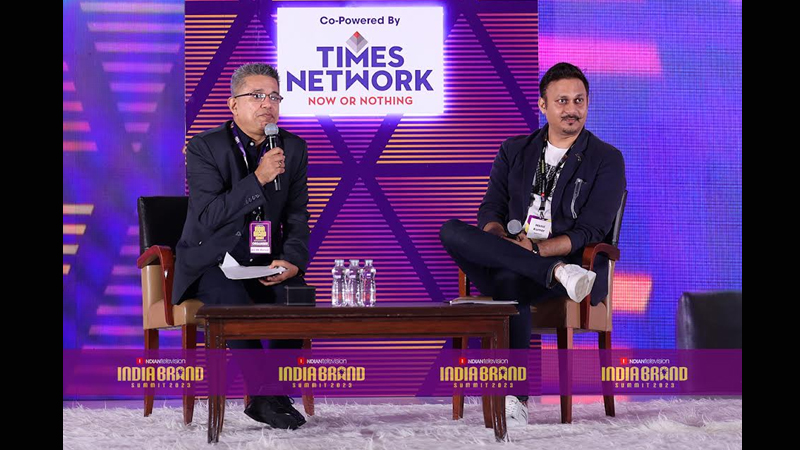
    Indian Television.com group founder CEO & editor-in-chief Anil NM Wanvari in a fireside chat with mediasmart vice president India, SEA and ME Nikhil Kumar

    Anil began the conversation by asking, “When speaking to industry, they see that the figure we should look at is 22 billion or 20 billion. Where are we at?”

    Nikhil replied “I mean, frankly, we feel the connected TV bases, approximately 18 to 20 million, which approximately means from an Indian context close to 60 million reach. In terms of households, but, the connected TV penetration, the number of activated connected TVs is close to 20 million to 22 million, but it’s growing really fast. By the time we have another panel like this, it could be 24, 28  and we all know Jio IPL is unexpecting and you know what it did or even the year so those numbers are growing really fast, double-digit, and pretty fast.”

    Anil questioned, “What are the innovations we’re seeing in terms of your experiences as far as connected TVs are concerned?”

    Nikhil commented, “Interesting things are happening, I mean, what connected TV has done is provide users with a very interesting way to engage with the television. Now, we all come from an era where you know, we were all growing up, we used to watch television together at home,  we found off watching.TV with a family, there used to be a Shaktiman and Ramayana I don’t know, choose your big night, right or no, or Baywatch, whichever finds your fancy. But we went to an era of personalized mobiles. And then suddenly everybody had a smart screen. Everybody was doing their own thing and the smart screen and then you found your families disintegrated. And then suddenly we were hit by this whole phenomenon called COVID. Where you didn’t have much to do at home, you watched television feed, which was quite depressing, because most of the live feeds were telling you depressing talks about people dying, which was not the most optimistic news you wanted to hear. media feeds led to a decline in what could be repeated and can be watched again, come on, it’s like well, months to 24 months to not have anything being shot. I think that is the time when connected TVs really started to rise and the growth of connected TV during that era actually catapulted the overall growth of connected TV. And when there are so many eyeballs, there are so many uses on connected TV, just the way you consume content itself also started to change. As an Indian, as a starting point, I don’t even need to talk about innovations. You watching Korean content, is that an innovation? Or is it just the way it’s supposed to be? If I asked people how many people have watched Money Heist or Squid games, I’m assuming it’ll be at 90 per cent. Again, none of you are Koreans. None of you are Spanish. But while you’re watching many eyes, I think that in itself speaks volumes of content consumption in terms of innovation,  I mean, there is all kinds of content available. There are 46 plus OTTs in India alone, That speaks volumes of just innovation, and the kind of content now, in terms of consumption and content innovation within connected TV, you can engage with the content you’re watching. Let’s say you can decide where  Ranveer Singh has to jump from the hill or Ranveer Singh has to take a row. We also what Netflix did recently, there are many such contents which are being developed by publishers that are letting users be controlled by Black Mirror one of the episodes you can actually control what the end outcome of the episode will be. Imagine the user in being control of the content.”

    Anil then went on to ask “What are the new innovations it seems to It appears to be that connected TV has kind of hit a pause mode in terms of content. So where is the innovation coming?”

    Nikhil replied, “I think innovations are coming and lots of engagement and interaction. I think your remote today is far more powerful than the remotes that you want it to have. And I think I was interestingly having a panel a couple of days back and what we did was we asked like a young gen Z to come and sit on the panel and really tell us what he wants from connected TV  and the kind of stuff he was saying is I don’t want to go all the way and pick up the remote from there, I won’t hand gestures so the world is moving towards Weiss automated commands. You can purchase the products that you actually want you can say hey, you don’t watch I’m going for a match. Need a Josie now suddenly you can have two TVs, you know tracking you down to a YouTube page or two or probably a website which you can actually view connected you can scan it which it opens up on your mobile the purchase can be made or in developed economy where the purchase itself can be made of the Apple TV because it’s connected to your card, your television experience is no longer the same, the innovation is actually coming a lot from the way you consume content. From the way you look at your television as an alternate screen, which it probably was never, it was only one side earlier, television is giving you content you are consuming. That’s why it was called the idiot box. Today, the smart TV is called a smart TV because it is smart. You can do a lot of things on your mobile, and your TV, you can connect your mobile to television, in fact, and suddenly you realise that my screens are all the same no matter where I watch it only the experience is better on the television.”

    Anil asked “I was watching one of the players Jio actually watching India vs. Australia. And there’s a QR code, which tells me you know, I have to go and that’s where we are at QR codes. When the ad is running, why hasn’t there been much more progress?”

    Nikhil shared “I think I’m a firm believer that everything doesn’t change. India was not built in a day, Rome was not built in a day either. And I think, at the cusp of where our ecosystem is, India has got over 800 internet users, we are 1.2 billion countries, I mean, things are gonna 20 million looks nothing when you talk about some statistics on the right. But look at the growth of it. Now Jio entering, the whole foray of connected televisions, suddenly changing the ballgame. It’s it’s gonna grow really fast. There’s a very contentious debate on whether you should be watching it on Star Sports or Jio, there’s a serious debate about where you should be watching it now.

    if you look at how things are changing QR codes, QR codes are probably a starting point. It’s getting the users a taste of what they can do with their television. Now, at the end of the day, if I get my user remote and tell him that you can buy a jersey of his favorite IPL team, probably he’ll get really confused. And it’s not just the consumer, I can start with the marketer. I mean, the marketer is questioning, how am I getting clicks from a connected television, they are really surprised by calling it fraudulent. But if you look at world economies like us, close to 50 to 60 per cent of the business is performance advertising on connected television. Now I would say connected TV and performance, how is it even met? Yeah, it is a screen. And you can use your remote to do a lot of things, download apps, engage with apps within apps, and do so many more things gaming itself is an ecosystem of connected TV where there’s an entire universe, you can put ads within games being played on cricket, TV connect with users across the globe purchase stuff from a store within that game, which have been delivered to your home, the world is moving really fast. India is taking its early stages of you know the revolution, which is connected to the TV, and if you see how we also started like three years back, vs where we are today, you can see the number of players talking like television, you can see the number of forums talking connected television, you can see the number of players with a connected television ecosystem, whether it’s OEMs, whether it’s smart tech companies, whether it’s publishers, they’re all out there it’s something that’s going to grow really fast.”:

    Anil further asked “What are the challenges that are in their place currently? And how do we get over them? And how do we get a connected TV viewing experience? How do we drive footfalls to stores even more? What is needed to get that to happen?”

    Nikhil commented “I think I sort of tend to agree and disagree that are we moving fast. I mean, we’re growing it 30 to 40 per cent quarter over quarter, I think that’s as good a growth. That’s what smart TV would actually look at. If you look at the factors, India is one of the most penetrated countries when it comes to the internet, we have got the cheapest package in terms of data per GB, if you look at any TV that is produced today is smart. Technically, I don’t remember the last time somebody was making a box TV. Just the accessibility but accessibility part of getting those smart TVs to your homes is well penetrated. It’s not like a tier one tier two phenomenon if you put these factors together, connected TVs only to grow. So technically, most people aren’t using the connected TV, but they probably don’t call it a connected TV the way we are calling it.

    If survive two years. And if you’re employed and you still have a job, I’m sure you figure out what Wi-Fi is. And that’s the factor that I think we are negating a lot how did CTV become so important? Why are why is IPL on Jio why, what’s going on? Why are the set-top boxes streaming set-top boxes anymore? These are all factors which are determined by what’s happened in the last three to four years. Some controllable factors, and noncontrollable factors like who doesn’t have Wi-Fi now today Wi-Fi is not a cost. You all have Wi-Fi most people don’t have Wi-Fi at home even in the remotest villages you would look at if they don’t have Wi-Fi India’s gonna be fine If you can’t read still, as a 5g country, you have well penetrated 5g ecosystems within the ecosystem. And that can very well actually support any kind of content that you want to watch on a connected TV.”

    Anil asked further” What are the innovative ad formats, that are coming in, not just in India, but globally, which which can be really put to use in India going forward? And which marketers can look forward to?”

    Nikhil replied “I think in terms of innovative ad formats, there are many things happening, I think. Just the fact that you can engage with the ad, just the fact that you can talk to your ad, just the fact that he can tell you the ad that I don’t want to see you. And itself is I think new in terms of innovation, when it comes to the large screen television, I think a lot of the comparative start to come with mobile, because there’s so much happening on mobile, but we need to understand the screens are different. They’re both digital, but just the way you consume anything, even as an ad on a large screen television versus where you are in itself is like ten steps ahead,  We come from an era where it used to be pushed down our throat, we could change channels, but we couldn’t escape an ad till the body had to step in says only 15 minutes of ad within one hour. Still, you can’t escape ads to now you deciding what ad comes to you? Can you engage with the ad? Can the ad really translate into you making a purchase? In fact, the innovation is not coming from just advertising innovation is also coming from ads transforming into a metric because any advertising is not done for the purpose of making a great ad, I as a marketer never made ads, because I loved making ads.

    I think most marketers have made ads for the share purpose of ROIs. As for ad spend, she would go back and say what’s the business? Where is the needle moving at. And connected TV today is able to serve that metric not as a post-mortem. So you’re not looking at the share of investments in advertising on television and looking at your market shares next month. With connected television, you can look at your investments in television in terms of TV ads being served in large screen format, which we love the TV ad and tracking it down to a metric right in terms of purchase website,  brand score search indexes on a real-time basis. Now from a marketing scenario, imagine that this is a best-case scenario because technically you’re not looking at a post-mortem which happens next month after your spending has been done because the body is lying there whether it was good or bad. I mean, you’re just finding out later with connected television or advertising and finding out real-time. you can down the funnel all the way to purchase remarketed re-retention reordered referred to my family. Imagine suddenly you have a metric which is the best-looking triangle, obviously upside down and you’re saying I showed an ad to a user. This guy engages with the ad. He filled out a form for a driving test driving a BMW. The BMW came to his house. It took him free he has gotten converted from the ad that he saw on television he is actually a purchaser of the BMW etc best case scenario.”

    Anil asked “I wish for a seamless content experience—starting a show on my connected TV, continuing in my Wi-Fi-connected car, then on my phone in the elevator, and finally, back on my office TV. Why isn’t this integration more widespread across platforms?”

    Nikhil commented on this “That’s already here, glad you brought it up, I think while content syndication needs to happen, I think from an ad tech lens from an advertising lens, this technology already is out there. I think I was talking to my earlier panelists that eventually, you want to use the reach the user at multiple levels, right, you want to reach them on their pistol on a phone screen, while they’re entering the left exactly like you said, you want to reach them and they are driving across the busy Bandra ceiling and a fancy holding. You want to reach them and reach home and switch on their television and watch their content of, I don’t know Annapurna whatever they want to watch a cricket match on the connected television. And eventually, it was sleeping at night, looking at the mobile going down to sleep now you want the user to see your ad in all these locations. But if you choose to be operating at multiple levels, with multiple partners doing multiple things, and at a certain frequency, which you believe is good, what are you creating? Are you making a little series ad 12 times 14 times where he’s saying, Why are these guys spending so much on me like, or could you create an environment where the multiscreen touch points are engaging with each other? We know this is the same. We need to catch him on maybe 12 times, no, maybe nine times or six times across the screen. So he suddenly realises Oh, yeah, I love the ad man. I’m seeing it everywhere. It’s not fatiguing me.”

    Anil asked further “Hotstar has been doing they had maximum mode, and vertical mode during the Cricket World Cup this year. That calls for content to be reimagined, it does not score for the app to be reminded. “

    Nikhil shared his opinion “Absolutely. You know, I think there the advertisers have the power to do it. Now. You know, it’s we live in a world today where ads can be shot on iPhone movies, it can be made on an iPhone. So we have evolved from an era where you shot an ad spent a bomb, and then you couldn’t change your advertising strategy or tank it. Now India has one that’s a sentiment and if your ad is coming during that sentiment, it will have a positive. Hopefully also be repercussions. India is lost. There is a certain sentiment on a Sunday, and you are bombarding the user with a very different happy ad of India very much. I don’t know what emotional outcome it could lead to.” 

  • IBS: From India to the world: Communication that takes you global

    IBS: From India to the world: Communication that takes you global

    Mumbai: The India Brand Summit held on 28 November 2023 at The Lalit Mumbai, convenes leaders, marketers, entrepreneurs, and experts to explore current trends, challenges, and opportunities in the dynamic brands and marketing arena.

    The session will offer an insightful exploration into the strategies and tactics essential for effectively navigating the globala communication landscape. With a focus on Indian businesses and entities to expand their reach beyond borders. The session will delve into the nuances of transcending cultural, linguistic, and geographical barriers to map the roadway for the effective communication towards a successful brand building.

    The key highlights of this session are: Understanding global cultural norms, leveraging social media, establishing a consistent global brand identity, crafting boundary-transcending narratives, and adapting to evolving global consumer behaviors, technology, and media landscapes.

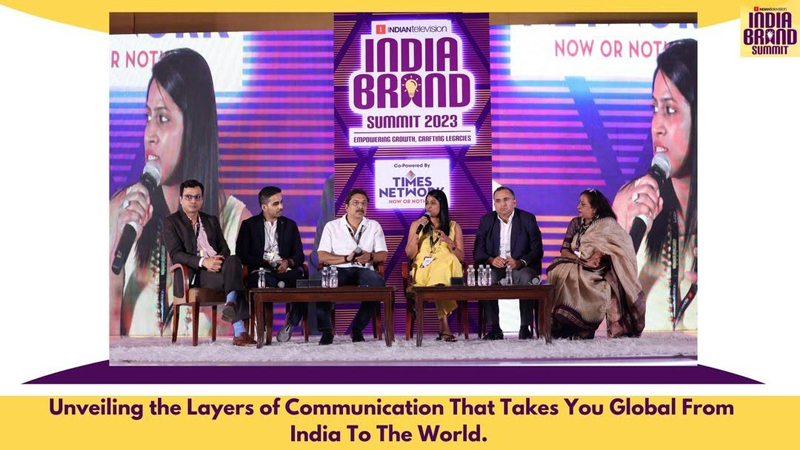
    The panel moderated by Indian Television.com Group associate editor Kalpana Ravi had panelists including Tata Communications global head – digital, experiential & content marketing Saugata Bagchi, Pernod Ricard India lead digital communications Shetanshu Dikshit, Hill & Knowlton India CEO Abhishek Gulyani, Value 360 group advisor Paresh Chaudhry, Weber Shandwick India CEO Valerie Pinto.

    The session began by Ravi first asking Pinto about she is taking the India brand story globally.

    To which Pinto answered, “What is the world looking at really from India? They’re looking at unlocking this whole big potential that we have from a middle class standpoint, from the markets that are opening up. We’re seeing a lot of villages transform into towns. So there’s a lot going on in this country and from a brand standpoint, when you’re looking at India as an investor, as a global company looking to launch their brands in India, you’re looking at how do you integrate with culture, How do you look at values, ethics, supporting growth and development. I think if they are able to bring that purpose into brands to communicate, you will have a beautiful brand from India to the world story that we can look at whether it’s people, product, process, we have it all here that’s transforming, whether it’s with digitization or AI or anything else. I think there’s a lot for us to learn from global brands, but also look at how we can inculcate our culture and values to build brands to the world.”

    After which Chaudhry said, “The next 30-40 years belongs to this nation. The last 10 years of reform that has happened has been phenomenal. There are three ways I look at how India’s story can be told globally. So one is from the government side and I think in the last 10 years or 50 years of dispensation with the current government, a lot of reforms and it’s been walking the talk. So that’s that’s really happening foreign relations, trade etcetera. The second one is got is a very political narrative and these political narratives are getting stronger as what China had many years ago when they were rising. India’s into that type what on a situation where a lot of people target the Prime Minister, they target the government and therefore the target companies and having worked with both Mukesh Ambani and Gautam Adhani can tell you that two years exactly before the elections these bombs keep coming on to our to our stables. The third one is of course how companies and all of us here and you guys there. Manage your brands, which is communicating to not just to India. I have spent many years with leavers. There’s one thing that Vindhya Bangla and Harish Manmani used to always say that India is 31 countries rolled into one. 

    So every 100 kilometers, your behavior changes, close changes, your food habit changes and therefore, you know, the way you would market your brands and communicate to them also changes. So once you’ve got a hang of what your country needs and how they think of you as a citizen, as an organization, that builds trust and credibility and therefore it’s easier for you to then go global. So that communication to the outside world and I’ll give you a couple of examples. Which recently happened with the Adani group on the famous Hindenburg report. Which is nothing but a collection of this bad reports, media reports against the group from the last 15-17 years and how we kind of managed to come out of it pretty well, although we’re still down by $20-30 billion. But this whole communication that that the company which is which is very media shy but went not just after every single media house which is relevant. Not just in India, but also the US, in Europe and Australia, in Japan and China, in trying to communicate a story that’s not defending yourself, but just talking about how solid we are on the assets on the ground. So I think earlier people never used to, confront issues, but now I think the changing digital world, it’s very important that how you communicate your story well. My last point here is the consumer versus citizen relationship and communications.Everyone talks about consumer, consumer, customer and consumer all the time. But if your entire DNA is working towards citizens, communication and therefore citizens become such a very important part of how they perceive you as an organization. A good hearted guy, someone who’s got a good social outreach, you care for the environment and you care for your people and therefore you care for your country is something that is very important to communicate to the outside world.There is an if you look at any market research reports across developed and developing countries, you will see that an effective citizen communication. The more chances of 28 per cent higher chances of a citizen buying your brand or being associated with you. For example, Tata is a great example of that. Than just a consumer connect. Consumer loyalty is feeding and failing in how. You open Amazon, you find something at ₹100 discount, you go somewhere else, 120, and you buy that, you don’t get a damn over brands, and that’s where the world is going to. So citizen communication and therefore just not communicating but backing that with a lot of effort in what you’re doing on CSR, what you’re doing on foundations, how you’re helping people, how you’re helping the nation. In a very like, Valerie said ethical transparent manner is something that is so critical to take all the communications to India and beyond borders.”

    Thereafter Gulyani said, “We’ll try and put it into two perspectives, one is the trend disrupting and what most companies today are facing. We’ve to accept the fact that there is a world that is transforming around us. It is vene more challenging for CEOs, marketing heads and everybody else to see how the stakeholder environment in India and globally is evolving. So the challenges are a lot more transformation is a lot more, it’s more rapid and therefore both Indian and global organizations which are trying to look at creating a more sustainable value creation for themselves in the market, need to look at reputation, risk and growth in a virtual cycle. So it’s kind of evolving. So you have to build your reputation in India and globally.You have to map the risks that are coming because of this transformation and because of the geopolitical environment that you’re going to be bringing your business up within India or globally and also the growth because as CEOs or leading brand managers have to manage growth for the organization too. With this aspect in mind, if you look at the India story of to again bridge it into two parts. One is, the story that India is trying to create to the world, which is the new India, which is young, which is aspirational, which has demographic power, it has democracy working in its favour. So there’s a lot of diversity in the country and that story and how we are kind of positioning ourselves as a great investment, a destination for companies to look at. The other part is the India story, which is going out, which is pretty strong in itself. If you look at that, there are two parts parallels you look at the story that we’ve created around. The narrative that we are trying to build around the global South and patterns that we are going to build around financial digitization, the 10 billion UPI story, which is a story that can be built for the entire ecosystem of people sitting here to partner on and say how we can take that business globally and then build brand narratives accordingly. Similarly on the healthcare site, our win through Cowin with 2 billion inoculation drives that we ran which which again is a story that’s going to the world. The third part is the climate change story. You look at the brands that are getting aspirational today. So I think there are two parallels that are running, which is investments coming into India through the new India narrative and again the new India narrative, which is going to the world for companies. A lot of young companies not only expanding in India, but they’re also looking at their second markets as as the Middle East or the Asia Pacific or even looking at US and UK as markets. So I think in that if you map your risk reputation and growth, I think those are going to be key trends which are going to be very important for people who are looking at communication from a brand perspective.Or various facets of advertising, VR or how you want to look at it.”

    Moving forward, Dikshit said, “Loyalty is tough. Humans do not have loyalty. It’s a tough ask, but on a serious note, I think it’s communication with purpose. Gone are the days when from advertising perspective it will be used to think that we can actually hit the cards, and look at the way India is striking gold at Cannes. A last couple of years are great examples and today brands are driving communication with purpose, trust, credibility, authenticity. These are these are just not words talked in the boardrooms. I think brands today are taking a stand. They are building purpose. They are working on continuity and as we go later in the conversation at Pernord Ricard India which is Alco Bev company with brands like Royal Stag. So it has brands across the portfolio right from the massy to the classy. So right from loyal Royal Stag to a brand like shoes, each of the brand tries to communicate to the consumer in a very experience driven conversations because at the core of it is celebration. We operate in a category in which there is celebration. But we talked about we always talk about contained celebration. You cannot go over the top with your celebration. One of the industry initiatives which we took as a stand and Kalpana wanted to highlight how we taken a stand globally. Pernod Ricard India became the first brand in this industry to remove permanent mono cartons across its portfolio. Now what is a permanent mono carton? When you go and buy a brand at a outlet, they give you in a permanent dabba, mono carton. We’ve actually removed this because we realized that this permanent mono cartoons is driving six driving environmental hazards and we realize that if we can remove it permanently from our portfolio, it’s a big challenge. You have to do it in a phased out manner. So it’s a two year project which started a year back and we are proud to say it’s a it’s a team effort at the end of the day. But in June 2023, we actually removed 600 million permanent mono cartons across our portfolio leading to 2.5 lakh trees which were cut. You were trying to kind of get the impact to ensure that environment is kind of being safe. What did it result into? We became the first country at India to do it. Panord Ricard globally took a stand. Our competition also took a stand. So the industry kind of joined us in this initiative. So key take away, if you take a stand, you better take a stand with purpose, don’t just do it from a gimmicky marketing perspective because that because we consumers as Parish talked about is really smart. He knows, he or she knows that you’re doing it with a purpose or you’re kind of just doing it for a namesake. B to highlight there are a lot of challenges, there are a lot of regulations and we as a company. Again as a industry we ensure that whatever we communicate, we do it with trust, credibility, authenticity. But again purpose is really critical for our sustainability is really critical for us. Environmental is really critical for us, when we kind of operate in this in this category.

    Lastly, Bagchi said, “So I think, Tata Communication as an organization is probably one of the best examples for this particular discussion. From a stake in a government entity to forming an international organization which today caters to more than 120 markets globally. I think we are a great example of how to take a concept, a thought, a capability which arises in India and take it globally. See if you take a step back as a country, as India, we have a unique advantage. If you look at it historically and over the ages, what we have propagated to the world, the larger world, in one way or the other is what the West is today following. Be it what are Rishi munies and sages used to write in their doctrines and their books. Be it the concept of yoga, for example, which today is becoming a global phenomenon. The reason I’m saying this is that historically India with a rich culture and heritage is uniquely poised with these traits of trust, credibility and authenticity, which has been taken into the market, which has been taken globally and it has actually given us a lot of credibility and traction. What we need to now consistently do and smartly do with all of our all of our global exposures now is to position or continue to position ourselves even more strongly. Building upon these things, another huge advantage that we have today, is the level and the quality of talent that we have till about 10-15 years back. At least when I was in college, I was told that if you are not going abroad, if you’re not in the US in your early 20s, if you’re not in the UK in your early 20s, you won’t be able to do much with life. That has changed. So I mean jokes just in the lighter way. So the point I’m making is that the way India has repositioned itself due to various factors puts us in a very interesting and in a position of power to actually take what we have, not only build our own brands globally but also to build global brands which are emanating from outside of this country and bring them to India. So I think it’s a very beautiful cross pollination that that we are currently doing and can continue to do. Like I said, Tata Communication is a great example, more than 35% of our workforce resides outside of this country. And the reason why a majority of the workforce resides here is because the kind of ideas, the kind of technical capabilities, the kind of, heavy lifts that we can do sitting out of our India offices actually benefits our global markets far more. So I’ll not meander from here but going back, we have the credibility, we have the capability, we have the talent, we have the authenticity and we have the trust. We now need to position ourselves more more actively, more aggressively and in a much more smarter manner to be able to drive this momentum of taking Bharat into the global markets.”

  • IBS: Building the MarTech stack for digital India

    IBS: Building the MarTech stack for digital India

    Mumbai: The India Brand Summit held on 28 November 2023 at The Lalit Mumbai, convenes leaders, marketers, entrepreneurs, and experts to explore current trends, challenges, and opportunities in the dynamic brands and marketing arena.

    The session focuses on the implementation of marketing technology (MarTech) to drive digital transformation in India. The session delves into how organisations are leveraging Martech tools and strategies to navigate the digital landscape and connect with consumers in a rapidly evolving technological environment.

    The key highlights of this session are: To explore Martech stack components, reaching India’s diverse population, personalised experiences, challenges, competing with larger players, and aiding digital transformation in businesses.

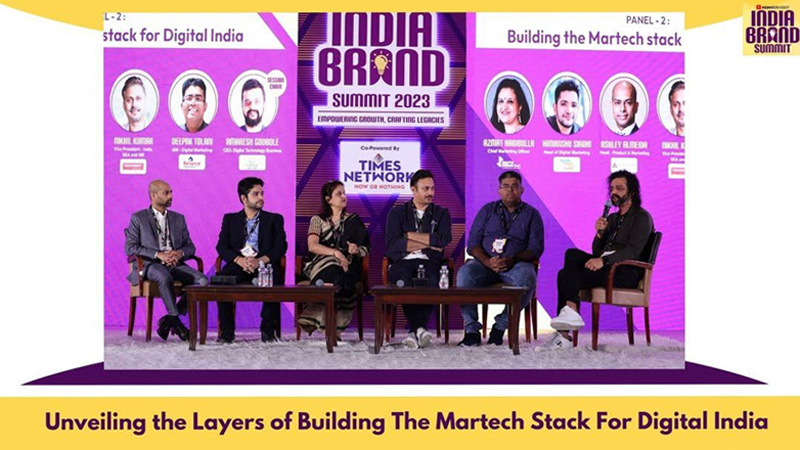
    The panel moderated by Publicis Groupe India CEO, digital technology business Amaresh Godbole had panelists including South Indian Bank CMO Azmat Habibulla, Apollo 24|7 head of digital marketing Himanshu Sirohi, Axis Securities head – product & marketing Ashley Almeida, mediasmart VP – India, SEA and ME Nikhil Kumar and Reliance Retail GM digital marketing Deepak Tolani.

    The session began by Godbole asking a question to all the panellists, “Given the evolution that we’ve seen with the MarTech world over the last decade, how have you seen the investment drive? how has it changed your life? What is the single biggest benefit that you’ve seen from you MarTech stats? How has it changed you as a marketeror the program that you take and what are the challenges there is?”

    Tolani said, “The concept of MarTech itself is so new. A lot of people are actually not familiar within the system of what MarTech is. So I think, we need to have more of making this a non-jargonish kind of a thing and let the entire organisation know. Because when you are actually talking about MarTech and its implementation while you can get the best of the best tools onboarded. The most critical part is how it is getting used and how the data is actually getting collected. Then if the data is getting collected cleanly in a manner in which will help you. That’s when the MarTech could actually be utilised. So I think as marketers our role has become to be more of people who are actually spokesperson for how you go and adopt technology and make it easy for adoption within the organisation. Whether it is a supply chain who has their own systems, or it is the operations at the stores, or it is whether it is your end delivery logistics partner who is actually handling over the product to the customers. I think for us, the role as marketers has become how do you ensure that people are not afraid who this entire MarTech. It’s something that will help business become more efficient, help better conversation and also ensure that it will give insights which may not be available five or ten years back. So I think it’s very important for us to educate the entire environment inside our organisations.”

    Thereafter Kumar said, ”Marketing and technology coming together in a short form word which is cool and we’re having a panel today celery talks how we’ve evolved. I think technology is going to play a role not just today but in the future and how its evolving is where we need to put our focus on. I represent an organisation which started as an SMS organisation. Today we’re one of the world’s leading global Ad-tech companies.”

    He then went on to talk about the evolution from single screen, SMS once being the best way to reach consumers to smart screens and all these giving birth to technologies. He then added saying, “As a marketer myself, I think every marketing insight comes from a consumer or from a need generated by the consumer or just the need of the current hour. I think that’s where MarTech is heading.”

    Slightly changing the question for Azmat Habibulla, Godbole asked, “How is MarTech playing a role in marketing for banks?”

    To which Habibulla replied,  “In the earlier days there was no concept of MarTech and now nothing can be done without technology. We’re all living in a technology advanced world. What MarTech does for all brand in generali: you get all your customer data in one place which becomes a central data repository. It was never the case earlier. We had lot of data silos and every channel was a separate channel, not even talking to each other. This is the biggest advantage that I feel of MarTech today is. The level of personalisation and sub segmentation that you can do. You can talk to very specific cohorts and personas and do highly personalised communication. All this is only because of the MarTech technology that exists today. Banking is a very very regulated industry. Fortunately there is lots of security and processes around data which helps BFSI. Being regulated really helps us and the way we collect data from customers as in consent driven, be transparent, what will be the use of the data, etc, all of these goes into building trust. When it comes to the trust that a customer has with a brand: it’s attached to personalisation; it’s attached to data security. Thanks to MarTech.”

    Thereafter, Sirohi said, “Now if you breakdown MarTech into 3 core elements, one of the biggest element would be a customer 360° view. You have data coming into all kinds of engines. It can be a back-end engine which is upper order, which is created 10 years back. It could be a new engine like an app supplier or Adobe Analytics or a Google Analytics where you’re tracking data and it’s a very new age engine. How do you get data across all of these traditional landing sources and create that customer 360° view? That is one very, very important part of MarTech, which again to a lot of degree has been solved by a lot of new age market getting stacks. The second aspect what I would call is hyper-personalisation. So personalisation 10 years back used to be many to one. I would have a customer cohort of maybe thousands of users and I would probably send an e-mail, SMS or a push to that entire cohort. Now that is big-time award. Now it’s very one-to-one. You can have all those variables coming out of that customer’s 360° view and you can personalize everything the way you want to.

    The third aspect is real-time campaign orchestration, real time campaign orchestration across channels. Now you have the customer 360° view. You know what to probably send to the customer. How do you personalize it. Now the third aspect is how do you kind of send it to the user across multiple channels in a profitable manner so that there is no fatigue via your communication and you orchestrate your campaigns in real time. Now 10 years back, I will tell you a use case, there was no way for doing that that now and at Apollo we do that use case almost day in and day out. We run one of the biggest key pharmacies in the country. Now imagine someone ordering in Delhi in winter and my customer 360° view telling me, ‘OK, this person ordered something is based out of Delhi. Should I send him/her an informative mailer or an offer around sub-interventions? Now imagine this person now moving to Bangalore and that e-mail, if this person opens in out of Bangalore, this e-mail is absolutely not relevant while all the data points suggested that this was the right e-mail to be sent to. Via our marketing stack, what we can do is when this individual opens their e-mail boxes, we capture the IP location. We send it back to our dynamic creative optimizer. Understand, OK which location is it coming from changing the creative on the go. So someone sitting out of maybe Delhi in winters would be seeing a different creative to someone sitting out of Bombay or Bangalore or Hyderabad. So these sort of interesting use cases kind of very, very interesting to us. Imagine sending someone an offer, a Diwali offer code and this individual opening that e-mail five days after Diwali. That offer and that e-mail is kind of waste to this individual now. But what you can do via these marketing stacks these days is, you can change the offer on the go. So if there is a date counter, you check it out and then you send a revised offer as per the latest trends or whatever is happening. So that I believe is a big, big play wherein one you can have all of the data in your system, you can create personalised offers or emails or products for this individual and on real time orchestrate, basis the location, time, segment. So that I think is very interesting for us in terms of marketing stacks.”

    After which, Almeida went on to say, ”Three years back we realised that AI is going to be such a huge part in what we do. Therefore I upskilled myself and spent two years in learning AI, etc. The reason is, the name itself MarTech – marketing in tech. I think the tools are all there but I think the most important thing as marketers is how do I make it useful to the company and also useful to the consumer in the end. So this personalisation etcetera, but personalization also can mean, you know, personalisation at different levels for the industry that I’m in stockbroking, I’ve spent most of my time in stockbroking and I think the most important thing that people are looking for is getting something that is really relevant to them. In the stock market, it’s almost to the degree of one. We need to speak to each person individually because each need is so different. So how can you understand that user using his behavior and then give him something that he can use to make, you know, wise investment decisions? That’s where we really want to take MarTech to.”

  • IBS: New Bharat: How startups are changing the business dynamics of India

    IBS: New Bharat: How startups are changing the business dynamics of India

    Mumbai: The India Brand Summit held on 28 November 2023 at The Lalit Mumbai, convenes leaders, marketers, entrepreneurs, and experts to explore current trends, challenges, and opportunities in the dynamic brands and marketing arena.

    The session explores the profound impact that startups are having on India’s evolving business landscape. The session delves into various aspects of this transformation, highlighting the innovative approaches, disruptions, and opportunities that startups are bringing to the forefront.

    The key highlights of this session are: Startups are reshaping business models by leveraging technology and agility, fostering innovation, and embracing fresh perspectives. Their willingness to take risks drives growth, while understanding evolving consumer behavior aligns with modern preferences. In India, startups impact job creation and skill development. Navigating challenges through strategic partnerships and collaboration within the ecosystem is key. Startups play a transformative role in reshaping the business landscape and can lead India towards an export-oriented economy.

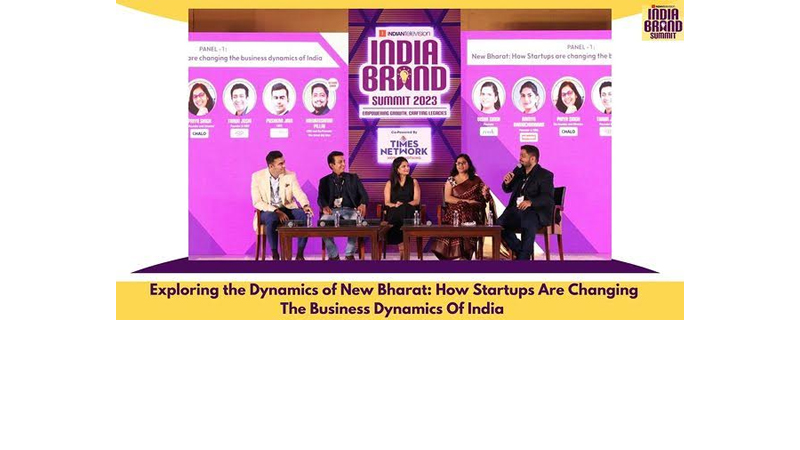
    The session moderated by The Small Big Idea CEO and co-founder Harikrishnan Pillai had panelists including Whoppl founder & CEO Ramya Ramachandran, Chalo Mobility co-founder and director Priya Singh, IGP founder & CEO Tarun Joshi and Sawai Fragrances CEO Pushkar Jain.

    Pillai began the session by asking panellists about what their business is about and how they are disrupting the market.

    Answering the first question Jain said, “Our brand is called Eze Perfumes. It’s a family-run business since the past 70 years. Always when you speak about perfumes the first that comes to mind wasn’t India but many of the western countries that were said to be the manufacturers for fragrances. But we’re disrupting the market with fragrances from India that are going to the west and becoming Indian manufacturers that are selling fragrances outside our country, with the top quality resources that are available in our country. So that has been the USP of Sawai Fragrances for a very long time with the promise of international quality fragrances at affordable prices. That’s what Eze stands for and that’s what we’re doing right now.”

    Jha then introduced himself and his brand that started our journey in 2016. Giving a throwback about his past that how he missed celebrating festivals and important moments for many years. Emphasising on the same, he said, “That’s when we started thinking that while the whole ecommerce industry is picking up in  such a big way. But one core thing which is important to all of us as Indians we celebrate almost about 14 festivals. So overall if you see there is an industry which is five billion purchases being made. So a country with 100 crore population which actually has a willingness to spend money, they’re atleast celebrating about five festivals in a year. Why there is no single platform which is a go to retailer where you can actually go and help you celebrate these. So that was our starting point.

    Now another important thing that came out was – a lot of us are migrated individuals, so its not only celebrating your own house but how can I send and make my family members happy. That’s where we started our international gifts platform (IGP). Today we’re a company with two and a half thousand plus people. We’ve 100 warehouses. We send products and gifts to almost 150 countries globally. So that’s been our journey.”

    Moving on to Ramachandran, she began by saying, ”What we primarily do in Whoppl is, three things which help your brands sell better on social media platforms. Number one being content. We build brand narratives and what’s required for you and your brand to stand out. Second one being creators. Today we’re doing so much influencer marketing, influencer marketing, creator marketing, etc. My third vertical is commerce. When there is a brand, there is some sort of customer loyalty which you’ve to build for your brand over a period of time. So that’s exactly what we help brand with.

    India is such a beautiful rich country for celebrations. How do we create these nudges for brands so that we stand out? There are more options, and more reasons for brands to be as the top of minds awareness and also part of the conversion funnel. So that’s primarily what we do. We’re four and a half years old and cater to a bunch of segments – FMCG, fashion, retail, edutech, martech. We’ve about 100 plus brands on our portfolio and we’re just growing.”

    After which, Singh began her statement by first asking the audience that who all take BEST buses for travelling and then said, ”We are transport technology company called Chalo Mobility. We’re solving the real life buses problem for India which is called digitizing the buses and live tracking. So we thought that we’ll solve the public transport and now we’re established in 51 cities in India., We live track around 18000 buses in Mumbai. We have solved international, inter city but we’re yet to solve intra-city commute which is what our focus is.”

    Ending the panel on a lighter note, Pillai spoke about hiring the GenZ.