Tag: The Hindu

  • Trick or Treat: Bring out the troll in you

    Trick or Treat: Bring out the troll in you

    With just couple of hours to go before people dress up to trick or treat for Halloween, one thing that comes to mind is the Pepsi versus Coca Cola war.

    So, what is new between the two cola giants taking on each other, which they have been doing for years now? Well, it is the response which the campaign by Pepsi generated.

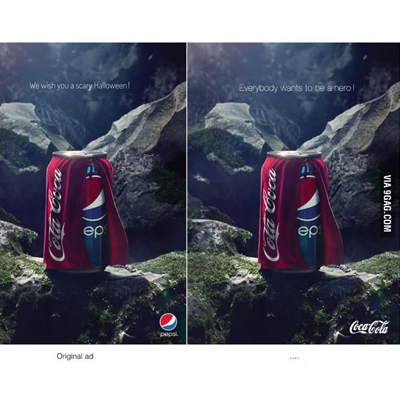
    Last year, Pepsi released a campaign during Halloween wherein a Pepsi can wore a red cape with “Cola Coca” written on it and with a tagline saying, “Have a scary Halloween”. Of course, the campaign went viral, but what was more interesting was the response from one of the avid Coca Cola fan.

    The new tagline read, “Eveybody wants to be a superhero”, hinting that the red cape was that of the Superman.

    Ambush advertising is nothing new, but it takes a lot of wit and guts for the players to take a jab at each other and take it in their stride as well. And not to forget, to make it worth a while for the costumers as well.

    The objectives of ambush marketing are twofold: to get maximum returns on the marketing buck and to undermine the branding efforts of the rivals by stealing the attention, increasing the clutter and confusing the viewers.

    Who can forget the Pepsi’s ‘Nothing official about it’ campaign during the 1996 cricket World Cup that introduced the concept of ambush marketing in India.

    Indiantelevision.com takes a look at a few memorable advertising wars between brands in India.

    Kingfisher vs. Jet Airways

    In April 2007, Jet Airways had an image makeover and had released an outdoor campaign that stated, ‘We have changed.’ Soon, Kingfisher placed a hoarding above that which read, ‘We made them change’.

    Samsung vs. Nokia

    It was in 2012, in a packed theatre in New Delhi, as scores of excited movie buffs sat to watch an exclusive premier of SRK-starrer Ra.One for mobile phone maker Nokia’s premium users at PVR Select City Walk mall, what took everyone by surprise were the advertisements that had been running for the previous few minutes were of Samsung mobile.

    HUL vs. P&G

    Hindustan Unilever’s shampoo brand “Dove” and Procter & Gamble’s shampoo brand “Pantene” caught it out in 2010. P&G launched its intriguing ad campaign for Pantene with the tagline “A mystery shampoo. Eighty per cent women said it is better than anything else.” A few days later and before P&G could announce the launch the new Pantene, Hindustan Unilever ambushed the campaign by placing an adjacent hoarding with the tagline “There is no mystery. Dove is the No. 1 shampoo.”

    The Hindu vs. Times of India

    For its Chennai edition, Times of India in late 2011, launched a ‘Wake Up!’ campaign, provoking the readers (mainly targeted at Chennai readers) to shift from the newspaper that puts them to sleep with its boring and dreary news (indirectly pointing out at the Hindu). Soon afterwards, The Hindu hit back with the tag line ‘Stay Ahead of the Times’, telling the readers to move out of the Bollywood and Page 3 gossips and take up the news that is relevant to current affairs of the country and the world.

    Flipkart vs. Snapdeal

     The latest to enter the bandwagon is none other than the highly-competitive e-commerce sector. On 6 October, Flipkart announced its ‘The Big Billion Sale’ as a jacket ad in the Times of India, announcing, ‘Today Don’t Look Anywhere Else, India’s Greatest Ever Sale is here’. But the thunder was stolen on the page immediately following with a Snapdeal ad announcing, ‘For Others it is a Big Day. For us, today is no different’.
  • Media comes under attack from CEC and Law Minister on regulation and paid news

    Media comes under attack from CEC and Law Minister on regulation and paid news

    NEW DELHI: The media came under attack on issues of paid news and regulation at different forums in the capital over the weekend.


    Chief election commissioner (CEC) VS Sampath suggested that paid news should be made an electoral offence that attracts disqualification so that it acts as a deterrent, regretting that inadequacies in legal framework were not allowing the poll panel to effectively check this and other malpractices.


    He also said that there is a ‘crying need’ for a ‘well defined legislation’ governing expenditure of political parties during elections as its absence was allowing them and their candidates to circumvent the rules.


    Speaking at a session organised by the Law Commission, Sampath reckoned, “When the Election Commission looked into whether it had the powers to deal with paid news it found the answer was negative.”


    He also added that paid news in whatever form is presently not even an electoral offence. “If it is an electoral offence, it can eventually lead to the disqualification of the candidate. Whatever the difficulties of implementation, the very fact that if it is listed as electoral offence, it would act as a deterrent against people using it in the elections,” he further explained.


    The CEC revealed that a recommendation in this regard has been made to the Law Ministry.


    He also asked why government advertisements during elections should not be considered as paid news. “Since paid news is not an electoral offence, the Commission now tries to check this menace by invoking its powers related to candidates’ spending,” he added.


    “When they (candidates) file their expenditure returns, they always build a cushion for this. If Rs 40 lakh those days was the limit, invariably no candidate would file a return for more than Rs 25 lakh. That Rs 15 lakh will be the cushion for this,” Sampath stated.


    Sampath also revealed that while the Commission’s control over a candidate’s spending is only after he files his nomination, people make substantial election related expenses before that.


    He added that people start spending but the Election Commission is constrained ‘because of the law and the interpretation of the law.’


    The law states that EC can hold an election within the period of six months before the due date.  “We have been making proposals on so many occasions. Why should not the Commission have powers to ensure the purity of the election during this six-month period?” the CEC questioned.


    He noted that all limits for poll expenditure is for candidates and none for political parties.


    “We have seen political parties handling huge amounts of cash. We have seen political parties giving to the candidates’ huge amounts of cash. When it is caught they will say no, no it is not meant for him, it is meant for him to distribute to others in his district or in his state.


    “There is no regulatory framework governing these things.  There is a crying need for a well defined legislation governing political parties particularly political parties’ finance,” Sampath reckoned.


    The Commission had recently tried to come out with some transparency guidelines. He said in countries like the US, expenditure commissions only take care of the expenditure and how political parties raise finance.  He also called for a ‘well defined law’ relating to opinion polls conducted by TV channels.


    “There should be a well defined law regulating opinion polls also,” Sampath said, adding that there is a view that voters will not be swayed by opinion polls but added that that there were instances where candidates won by wafer thin margins. Later, he was asked why during elections when polling was on in one area, poll related news from other areas continued to be shown on electronic media or internet.


    Sampath also explained that there is a mismatch between law and electronic revolution. “On every poll day during this Lok Sabha election, this violation has taken place. It is because of mismatch between law and electronic revolution in the country. All our laws did not take in to account electronic revolution,” he said, adding that EC has to abide by the law as it exists.


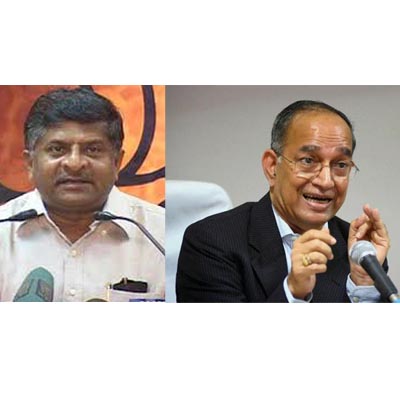
    At another session, Law Minister Ravi Shankar Prasad said those in politics and government should recognise the right of the Press to ‘criticise, lampoon us.’


    Delivering the inaugural address at the National Consultation in Media Law organised by the Law Commission of India with the National Law University, Delhi, Prasad said the leaders in his government, including Prime Minister Narendra Modi, were those who fought for press freedom during the Emergency.


    Noting that the Indian media has matured during the comparatively short span of its existence, he spoke of his early years as a panellist on TV. “Earlier we used to outshout each other. Anchors spoke more, some still do it. But the process of maturing has started,” he said.


    “But if media freedom is necessary and important for the media, self-regulation must be the mode,” he added.


    “Paid news is sickening. Politicians have to realise that Indian voters are mature and cannot be swayed by aggressive promises alone,” Prasad stated.


    He said press freedom should be equally balanced with right to privacy, so also the right of the media should not hinder the freedom to conduct a fair trial.


    “My government recognises the importance of social media. We have no intention to curb this flowering of creativity. But there are reasonable restrictions prescribed under the Constitution, which will be used only in extreme, rare circumstances and with the complete approval of the higher authorities, that too only in serious issues threatening our national or communal framework,” the Minister explained.


    Speaking at a panel discussion on the topic media regulations, Kasturi and Sons Ltd Chairman (publishers of The Hindu) N Ram opined, “There was hardly any self-regulation for the Press today. He claimed that his newspaper had introduced the idea of a full-time news ombudsman independent of the editor. He said this practice however had not spread to other newspapers, and TV certainly did not have it.”


    He also added how even the Press Council of India was dominated by people from the newspaper industry and that an independent mechanism, which was also transparent, was crucial for self-regulation.

  • Telangana MSOs continue to boycott two news channels

    Telangana MSOs continue to boycott two news channels

    MUMBAI: The Telangana Multiple System Operators (MSOs) on 11 August 2014 decided to continue blockade of TV9 and ABN Andhra Jyothi news channels, a mediahouse reported.


    Federation of Telangana MSOs’ president M Subhash Reddy, charged the channels of telecasting objectionable content that hurt the sentiments of Telangana people and said, “Even the Telangana state assembly took cognisance of the objectionable content.”


    The Federation maintained that they had presented their case to the High Court and responded to a notice served by the Telecom Regulatory Authority of India (TRAI). “The TRAI sought explanation on why we had stopped the two channels without the mandatory 15-day notice and we explained the reasons. There was pressure on us from the Telangana people and we had to act,” the president of the federation said.


    At a meeting attended by district representatives, the Federation of Telangana MSOs said they are planning to send a delegation to the I&B minister to explain to him the events that led to the cable operators blocking these two news channels.


    Reddy also added that since the channels are not doing anything to find a resolution to the problem, the MSOs will stick to their decision of blocking the channels.

  • Suhasini Haidar to join The Hindu as diplomatic editor

    Suhasini Haidar to join The Hindu as diplomatic editor

    MUMBAI: On Saturday, Suhasini Haidar tweeted saying that she will be joining The Hindu as its diplomatic editor.


    Indiantelevision.com broke the news of CNN-IBN deputy foreign affairs editor and prime time anchor deciding to quit from her current position.


    Haidar also tweeted that she hopes to keep doing World View, CNN-IBN’s international affairs show, too.


    Haidar began her career in 1995, with CNN International, working at the Delhi bureau that also covered Pakistan at the time (CNN subsequently opened its Islamabad bureau).Later on she moved to CNN-IBN. In her 20 years of journalism, Haider has covered issues concerning Pakistan, Sri Lanka, Syria, Lebanon and Libya. She regularly contributes as a columnist on Indian Foreign Policy for various newspapers.


    In 2010, she won the prestigious News Television “Best TV News Presenter” Award. Haidar is credited to be the only journalist to have interviewed Indian Prime Minister Manmohan Singh and his family, a show that also won her the Indian Television Academy award as ‘Best Chat show’ for the year.

  • Rajiv Lochan to lead all non-editorial operations of The Hindu and Group newspapers

    Rajiv Lochan to lead all non-editorial operations of The Hindu and Group newspapers

    NEW DELHI: The Hindu Group today announced that Rajiv C Lochan had been appointed as managing director and chief executive office of the group with effect from 1 June 2014.


    According to the Board of Directors decision announced by the newspaper today, he will lead all non-editorial operations of the company and will join the Board of Directors of Kasturi and Sons Limited (KSL), publishers of The Hindu and Group newspapers.


    KSL chairman N Ram and co-chairman N Murali said: “In this digital age when the Indian press, and specifically The Hindu newspaper group, faces radically new types of challenges and opportunities, when relevant and rich editorial content that continually engages a variety of readers and best editorial practices need to go hand in hand with a smart business strategy that thinks two steps ahead, operates with a progressive vision rooted in values, and balances its responsibilities of ensuring value to shareholders, a fair and just deal for employees, and sustained gains for readers, advertisers, and other partners in the business, we are confident that we have found the right person to head the non-editorial operations of the company.”


    They added: “Rajiv brings to his challenging role as MD & CEO of KSL dynamism and social awareness combined with a winning record as a professional who has led in driving performance and transforming the culture of large organisations in step with rapidly changing times. We are excited about this change at the helm of our business operations.”


    Lochan was a partner with McKinsey & Company and founding location manager of McKinsey’s practice in Chennai. His focus in McKinsey was to help leaders and leadership teams drive performance and cultural transformation of their organisations. In addition, he focused on the social sector, primarily rural economic development and financial inclusion.


    Lochan is currently the trustee of IKP Trust and will continue to devote time to public health issues in rural India. He graduated from IIT, Madras and has advanced degrees from the Massachusetts Institute of Technology and Columbia Business School.

  • Volkswagen shows how print can be effectively tapped with smart innovations

    MUMBAI: German automotive manufacturer Volkswagen is showing how print can used effectively as the main advertising platform as an India entry strategy and then subsequently for pushing products in a highly competitive but growing marketplace.

    Volkswagen launched its campaign for the Polo and Vento with an innovation in today’s edition of The Times of India, The Hindustan Times and The Hindu. The creative force behind the innovation is Omnicom’s DDB Mudra.

    As part of the innovation a light-sensitive chip attached to the paper began to vibrate as readers opened the newspaper. This was the car manufacturer’s way of communicating to readers the shiver of excitement they’ll experience when they see the exciting new features in the Polo and Vento.

    Two pages of the four page jacket were devoted to bringing alive the many innovations and unique processes that go into making each and every Volkswagen. The fourth page of the jacket also communicated the great value that the Polo and Vento offer.

    Volkswagen Passenger Cars and Volkswagen Group Sales India head of marketing and pr Lutz Kothesaid, “Like our carlines, innovation has always been the core of our communication. Through this innovation we have not only communicated the unique processes that go into making a Volkswagen but also the new features added to Polo and Vento. I am confident that like our other campaigns, this initiative will excite our customers to walk into our showrooms for a test drive.”

    DDB Mudra Group Mumbai president Rajiv Sabnis said, “Volkswagen operates its business globally on three fundamental value pillars- Innovative, Responsible and Valuable. The “shivering” newspaper idea and the content in the four page pull-out advertisement demonstrates all three value pillars of Volkswagen- it is led by the innovative idea of a shivering newspaper, supported by the responsibility with which Volkswagen manufactures their cars and the value that the Vento and Polo offer with their exciting new features. Volkswagen and DDB Mudra have raised the bar again in creating innovative communication and demonstrated social creativity that is getting talked about on social networks.”

    DDB Mudra senior vice president Anurag Tandon said, “When you walk inside a Volkswagen plant, every step you take makes you want to share with the world, the story about the passion, the rigour, the attention to detail and the sheer superiority that goes inside every Volkswagen. Our idea stems from a deep understanding of what makes a Volkswagen, a Volkswagen and strategically it comes from a belief that we need to influence a fundamental shift in the car buying behavior of the Indians”

    DDB Mudra executive creative director Louella Rebello said, “The vibrating newspaper besides conveying the excitement of the Polo and Vento, highlights how Volkswagen cars are fundamentally superior. As Indians, we like to tick the boxes on peripherals while buying a car. What we are saying is sure, tick boxes. But tick the right ones. Make sure the fundamentals are rock solid first.”

    Volkswagen currently offers the Jetta, Passat, New Beetle, the SUV Touareg, the Phaeton, the Polo and the Vento.

    Volkswagen has in the past carried out a nationwide roadblock on The Times of India, with its ‘roadblock‘ along with its Volkswagen Polo ‘Hole-in-the-paper‘ campaign.

    As part of the campaign, for the first time ever, a newspaper was blocked on a nationwide scale by a single advertiser across 16 editions. A total of 6.86 million readers were introduced to Volkswagen which resulted in Volkswagen becoming the No.1 searched term on Google India soon after the roadblock.

    To launch its premium hatchback, Polo, Volkswagen had cut-outs in the shape of the car at the top of every page of The Times of India and a distinct feature of the car was detailed on each page.

    Last year, the German automobile manufacturer had taken the aid of the talking newspapers to reach out to its potential buyers in an attempt to introduce its premium entry level sedan Vento in India.

    For the ‘talking newspaper’ campaign, Volkswagen partnered with the TOI and The Hindu for a nationwide communication strategy wherein whenever the reader opens the newspaper, a voice speaks to him about the car manufacturer‘s latest variant in India. A light-sensitive chip is attached to the page announcing the arrival of a perfectly engineered car by Volkswagen.

    The Polo is a the Volkswagen offering in the hatchback segment and competes with Ford Figo, Maruti Suzuki Swift, Nissan Micra and Honda Brio while Vento’s main competition comes from Ford Fiesta, Skoda Rapid, Hyundai Verna and Toyota Etios.

    Polo is priced between Rs 400,000 to 450, 000 and Vento costs between Rs 850, 000 to Rs one million.

  • Essel Group picks up stake in UNI

    Essel Group picks up stake in UNI

    NEW DELHI: The Subhash Chandra-promoted Essel Group, which is the co-owner of DNA newspaper along with the Dainik Bhaskar group, has joined the United News of India (UNI) board as a shareholder.

    News agency UNI has shareholding from about nine big media organisations who also form the board of the news organisation formed in 1961.

    Confirming the development, Essel Group senior vice-president Ashish Kaul said, “We are on the board of UNI now as a shareholder, but the quantum of the holding cannot be disclosed at this point of time.”

    Kaul also clarified that Zee Telefilms, also an Essel Group enterprise, has nothing to do with the UNI deal. The other shareholders and board members of UNI include media outfits like HT Media, Times of India group, Ananda Bazar Patrika and The Hindu.

    Chandra has used his investment vehicle, Mediawest, to conclude the UNI agreement.

    Launched in March 1961, UNI has grown into one of the largest news agencies in Asia. today it serves more than 1000 subscribers in more than 100 locations in India and abroad. They include newspapers, radio and television networks, web sites , government offices and private and public sector corporations.

    The agencies communication network stretches over 90,000 kms in India and the Gulf states with bureaux in all major cities and towns of India.

    UNI has collaboration agreements with several foreign news agencies, including Reuters and DPA , whose stories are distributed to media organisations in India.

    Apart from that, UNI has news exchange agreements with Xinhua of China, UNB of Bangladesh, Gulf News Agency of Bahrain, WAM of the United Arab Emirates, KUNA of Kuwait News Agency, ONA of Oman and QNA of Qatar.