Tag: The Hindu

  • Rohit Gandhi appointed revenue head at moneycontrol.com

    Rohit Gandhi appointed revenue head at moneycontrol.com

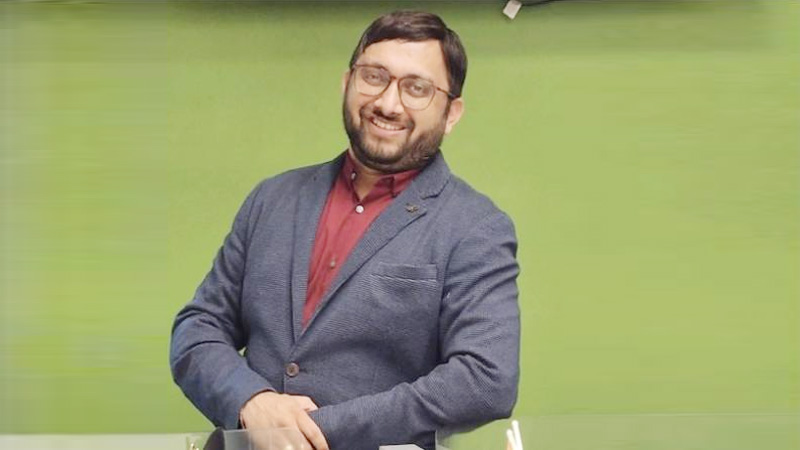
    MUMBAI: The city  has seen a significant move in the digital media landscape with Rohit Gandhi taking up the role of vice president and revenue head at moneycontrol.com. Commencing July, Gandhi has overseen the crucial display, branded content, IPs, and video revenue streams for the financial news platform.

    Gandhi transitions to moneycontrol.com from HT Digital Streams, where he served as revenue head for digital business for over two years. In that capacity, he was responsible for the digital monetisation of a diverse portfolio, including hindustantimes.com, livemint.com, livehindustan.com, and various specialist portals.

    His extensive background in digital revenue generation also includes an eight-month stint as revenue head for LCS business at MX Player. Prior to that, Gandhi spent four years as national sales head at Network 18 Digital, overseeing revenue for cnbctv18.com and Moneycontrol, encompassing display, content marketing, branded video content, native ad solutions, and programmatic sales.

    Earlier in his career, Gandhi was digital monetisation director at Condé Nast India, where he drove revenue strategy across titles like Vogue and GQ. He also held the position of national revenue head for The Hindu Group’s digital properties and was the national head for content marketing and native advertising at Times Internet Ltd, focusing on the “Demand Plus” business for economictimes.com and its B2B verticals.
    Gandhi’s appointment underscores moneycontrol.com’s strategic focus on strengthening its diverse revenue channels in the competitive digital media market.

  • Mathrubhumi to organise a one-day event on World News Day

    Mathrubhumi to organise a one-day event on World News Day

    Mumbai: Mathrubhumi on Monday announced plans to host an event on World News Day on 28 September at the Uday Palace Convention Centre, Kowdiar Gardens, Thiruvananthapuram.

    Speaking of the event, Mathrubhumi managing director M. V. Shreyams Kumar, who will deliver the presidential address, elaborated on why the centurion institution was associated with the international event, said, “World News Day is a global campaign to display support for journalists and their audiences organised by the Canadian Journalism Foundation and WAN-IFRA’s World Editors Forum. By associating with this event, organised as a part of Mathrubhumi’s centenary celebrations, we intend to reinforce our identity as the custodian of credible and fact-checked journalism.” 

    Media mavens, eminent journalists, and owners will deliberate on the way ahead for practitioners of credible journalism in our age of disruption. The subject is “Sacred Facts: Media in a Post-Truth World.”

    The Hindu former chief editor N. Ram, the doyen of Indian journalism, will deliver the inaugural address. The keynote speech of the first session on “Fact Punch: Curated Media and its Challenges” is by the Indian Express’s former editor Arun Shourie. The event will start at 10 a.m. with a welcome address by Mathrubhumi vice president of operations Devika Shreyams Kumar.

    The Times of India, Tamil Nadu resident editor Arun Ram; Outlook former editor Ruben Banerjee; senior journalist Seema Chisti; and Frontline editor Vaishna Roy are the discussants, with The Hindu, Delhi resident editor Varghese K. George moderating the session.

    The post-lunch session between 1.45 p.m. and 3.15 p.m. will be on “Counter Media: Narratives, Lapses in Reporting, and Self-Critique,” to be moderated by N. Open Magazine executive editor P. Ullekh. The keynote address will be given by India Today TV consulting editor Rajdeep Sardesai.

    Senior journalist Hari S Kartha will be on the panel, as will Madhyamam editor V. M. Ibrahim, social media activist Kiran Thomas, Asianet News Group editorial advisor M. G. Radhakrishnan, and media critic advocate Sebastian Paul.

    The concluding session between 3.45 p.m. and 5.15 p.m. will be on “The way forward: Is fact-based journalism a winning proposition?” featuring ABP Network CEO Avinash Pandey; Kairali TV managing director John Brittas MP; The News Minute editor-in-chief Dhanya Rajendran; Boom Fact Check managing editor Jency Jacob and Ananda Vikatan managing director B. Srinivasan. While the keynote speech will be delivered by The Indian Express executive director Anant Goenka, the session will be moderated by Mathrubhumi director of digital business Mayura Shreyams Kumar.

    All three sessions will be followed by audience-discussant interaction.

  • Krishna Prasad named The Hindu’s group editorial officer

    Krishna Prasad named The Hindu’s group editorial officer

    NEW DELHI: The Hindu Group Publishing, which owns The Hindu, The Hindu BusinessLine, Frontline, and Sportstar, has appointed Krishna Prasad as the group editorial officer. Prasad is the former editor-in-chief of Outlook magazine, and former editor of Vijay Times, a Times of India publication. 

    In a career that spans over 35 years, Prasad has taught journalism on three continents. A member of the Press Council of India, he was one of the earliest mainstream journalists who switched to digital journalism. 

    The veteran journalist is also known for having exposed match-fixing in Indian cricket along with Cobrapost founder Aniruddha Bahal. American political commentator and author Thomas Friedman, during his visit to India in 2004, had called Prasad ''one of the brightest young journalists in India.'' 

    "Krishna Prasad as group editorial officer will play a guiding role on content management and strategy across all the publications, working with the editors of the various publications, digital editors, and the business and technical teams to drive THG’s digital transformation,” said The Hindu Group chairperson Malini Parthasarathy. “He will help situate content optimally across publications and ensure synergy between our product offerings. We are confident that he will help us not only build greater synergy in our content offerings but help us raise the bar in building high-quality journalism and widen our digital imagination."

    Prasad said, "For 143 years, The Hindu has been India’s most trusted newspaper, respected the world over for its independence, credibility and authority. It is a real honour to be tasked with shaping its direction for the digital age while keeping journalism front and centre. I look forward to working closely with the group’s editors and journalists, business and technical teams, to future-proof the institution’s awesome legacy."

  • Print on recovery road, pin high hopes on festive season: Industry heads

    Print on recovery road, pin high hopes on festive season: Industry heads

    NEW DELHI: The Covid2019 pandemic threw the print publication industry into crisis. When the lockdown was imposed, circulation was severely impacted in major cities which caused newspapers to go into survival mode. Buffeted by declining readership, print companies resorted to cost-cutting, downscaled manpower, put investments on hold and channelled resources into the digital landscape. The industry took lessons from this experience, and kept the ball rolling.

    Now, six months later, the print industry is on the way back to normalcy, experimenting with new opportunities, and scaling the business for the future.

    At Pubnation, the virtual roundtable organised by Indiantelevision.com, industry heads and representatives from leading media houses – The Hindu chief revenue officer Suresh Balakrishna; Malayala Manorama VP marketing and ad sales Varghese Chandy; Punjab Kesari Group director Abhijay Chopra; Sakshi Media Group ED & CEO Vinay Maheshwari; HT Media Ltd executive director Rajeev Beotra; The Pioneer general manager Gurudatta Jha – discussed the new hopes the print business is looking forward to, what monetisation models can publishers’ experiment with, and expectations from the festive season. The session was moderated by indianielevision.com founder, CEO and editor-in-chief Anil Wanvari.

    With the economy gradually recovering from the aftershocks of the pandemic, newspaper publishers are witnessing an all-time high market consumption. According to Malayala Manorama’s Varghese Chandy, there is no drop in circulation, and the business for them is growing month-on-month in terms of getting advertisements.

    HT Media Ltd executive director Rajeev Beotra echoed the same thought, saying: “Each month is better than the previous one. The language dailies did not see any disruption in distribution, they were pretty much stable. The disruption was confined to large metros and big cities. English publication got a little impacted, but from a revenue standpoint we are doing well. We are on a good track, and the focus is to drive the growth engine.”

    The Hindu chief revenue officer Suresh Balakrishna acknowledged that the company took some cost-cutting measures during the lockdown period, when advertising was a complete washout. He also noted a curious anomaly in circulation figures amid the pandemic. “We had a sort of mix reaction during the time – Kerala, Andhra Pradesh, and Telangana were reasonably unaffected in terms of circulation but in states like Karnataka and Tamil Nadu circulation numbers went down in April, May, and June and then we had to bring them back gradually in the unlock phase.”

    In terms of advertising, the publication registered a month-on-month progress of the graph, and August and September were particularly good for the business, with things looking up ahead of the festive season, Balakrishna added.

    Sakshi Media Group ED & CEO Vinay Maheshwari agreed that the market is opening up a little, and it did not encounter many challenges in Andhra and Telangana on the circulation front, but the Hyderabad market was a stumbling block. “The impact has been more on English dailies in contrast to regional and Hindi dailies, but now we are doing fairly well and advertisers are showing interest again which is a good sign for the business and the overall industry.”

    Declaring that the worst is over, The Pioneer general manager Gurudatta Jha also pointed out some unexpected setbacks. “Education and real estate were counted as big properties in terms of advertisement but the business is not coming from that side. But then there are new opportunities which are helping the business. We will do better as time progresses.”

    Festive demand

    Most of the newspaper houses are hopeful that the festive season will bring a little cheer for the industry, and advertisers will leverage the print medium, as they do every year.

    “Diwali is the biggest money-maker for us, followed by the wedding season. We might not see a rush in the market but segments like paints, edtech, electronic goods are doing very well due to demand across various products. The use of technology adoption is leading to a new wave of consumption. That is going to translate into advertisements,” said Punjab Kesari Group director Abhijay Chopra.

    Besides edtech companies, advertising from the auto sector, especially during the auspicious Navratri-Diwali period, is also on the rise, said Balakrishna.

    “I was not expecting car sales to go up so fast but it is growing, 2-wheelers have also become very important. These are the pocket of opportunities that have come up for us. In the Diwali seasons, we expect categories like edtech, automobile, e-commerce participating big this time, and the season will offer more opportunities. However, we need to learn to handle this new ecosystem better,” added Balakrishna. 

    Chandy held the view that people were reluctant and advertisers were apprehensive about putting money in Onam, but those who have invested money are reaping the benefits. “Advertisers should utilise this opportunity as there is a pent-up demand now, and people are buying across categories.”

    Beotra, too, is keen to make hay while the sun shines. “In this year’s IPL, we have seen very different forms of advertisers. While some traditional advertisers may be conspicuous by their absence, several other edtech players are becoming a huge category. This will continue to be a disruptive, volatile world for a long time to come. We will have to be vigilant and look for opportunities.” 

  • The Hindu urges people to #KeepTheHabit

    The Hindu urges people to #KeepTheHabit

    MUMBAI: The Hindu, a newspaper, released a campaign to highlight the change in people’s behaviour and habits during the lockdown. The first visual of this campaign draws attention to the simple fact that a microscopic organism is all it took for us to be more human.

    The campaign then goes on to showcase different instances of how we have changed – from calling aged parents more often to enquiring about our house help’s wellbeing. We have also started recognising and respecting the immense role played by frontline healthcare workers, people in uniforms, and even delivery agents. The campaign argues that some of these habits are definitely worth keeping.

    These are troubled times we live in, with the global health crisis right at our doorstep. But signs of change have been evident, as people make a conscious attempt at being more thoughtful and empathetic to fellow humans. With this campaign, The Hindu aims to get readers to share the ‘new habits’ that have made them happier, and these will later be featured in their newspaper.

    Ogilvy India-South CCO Mahesh Gharat says, “Crisis brings people closer and therefore they are able to view the world very differently. The change in their outlook towards fellow humans is most certainly the positive change that has emerged in this crisis. We decided to acknowledge these instances and publish them through a campaign, as a means of reassuring the world that, despite all our troubles, tomorrow could be a happier place.”

    The campaign was released across India through the print editions of The Hindu, as well as published on their social media pages. A radio campaign follows.

    Follow Tellychakkar for the consumer facing news & entertainment
     

  • Network 18 announces the team behind its first newspaper – Firstpost

    Network 18 announces the team behind its first newspaper – Firstpost

    Network18 will be launching its very first weekly newspaper – Firstpost. Expected to see the launch on Republic Day – 26th January, 2019, the newspaper will mark the media conglomerate’s foray in the newspaper domain.

    The Network appointed Praveen Swami as the Group Consulting Editor a few months ago. Along with BV Rao, the Editor of Firstpost, he will lead the editorial team of Firstpost newspaper. Rahul Kansal, Network18’s brand advisor will also be seen in the role of Business Head of the newspaper. A veteran of media marketing, Rahul was earlier the Executive President of Bennett Coleman, serving as the business head of The Times of India.  Praveen Swami has earlier held key editorial positions at The Indian Express, The Hindu, and The Daily Telegraph, London. B.V. Rao comes with an extensive experience of 33 years where he has led newsrooms across various brands, formats and platforms.

    A roster of some of the biggest Indian and international columnists will write for the paper; anchored by a talented team of journalists, cherry-picked from India’s leading newsrooms.

  • Outbrain appoints SVG Media as sales partner

    MUMBAI: Outbrain, the leading global discovery platform, has announced that it has entered into a sales partnership in India with SVG Media- India’s largest Digital Media Company, recently acquired by Dentsu Aegis Network.

    SVG Media, soon to be known as SVG Columbus, has been appointed as the official Sales Partner in India for Outbrain. It will help the company to continue to grow its presence and strengthen its foundation in India, allowing Outbrain to further penetrate the market.

    SVG Media will allocate a workforce of over 10 digital experts across offices in Delhi, Mumbai and Bangalore and will support Outbrain in working with brands all over the country. Since its launch in early 2014, Outbrain has experienced massive growth in India, and the partnership will further strengthen its presence in the market at a time when the company is more than ever advancing its product and services to provide something truly valuable for its clients.

    “Since entering the market in 2014, India has proven to be a market with huge potential for Outbrain and we’ve observed tremendous growth over the past few years,” said Outbrain HoD – APAC Chris Mockford.

    Outbrain sales director for India Neeraj Singhal commented: “Outbrain continues to be the medium of choice for brands across all industry sectors that wish to reach relevant audiences in India. Through this partnership with SVG Media we will be able to serve our clients, as well as better deploy our technology, tools, proprietary analytics and insight capabilities.”

    Komli SVP Akshay Mathur said, “SVG brings unparalleled understanding of the Indian market and execution capabilities. This is the reason why majority of the world’s leading companies are choosing us for setting up their India business. We are delighted to partner with Outbrain and look forward to supporting them in building their India business.”

    SVG Media CEO Anurag Gupta commented, “We’re incredibly excited about the potential for this new partnership. Outbrain’s superb reputation is entirely in-sync with the reputation that SVG Media has worked so hard to create in India.” He added: “SVG Media works with almost all the leading brands in India and we look forward to bringing them on Outbrain’s unique discovery solution”.

    Over the last six years, SVG Media has been the India market entry partner for the leading Internet brands, including Facebook, Twitter, OLX, LinkedIn, Zynga and others. These companies have chosen SVG Media because of its unmatched understanding of India’s emerging digital advertising market. The company has also contributed aggregate revenues of $2 billion to its international partners.

    Outbrain continues to advance Discovery in Asia and has spent the past five years on the ground educating the market and building the largest network of premium sites for discovery. The continued expansion of the company significantly increases the marketer’s ability to build audiences and drive discovery for their brands.

    Outbrain’s growing reach combines local premium publications, such as the Indian Express, The Hindu, Moneycontrol, Business Standard and ESPNcricinfo, in addition to global sites like CNN, ESPN, Time Inc. and BBC. Worldwide, it serves over 250 billion recommendations per month and reaches in the region of a billion users every month across the globe.

  • Hotstar to live stream Chennai Open 2016

    Hotstar to live stream Chennai Open 2016

    MUMBAI: As many as 24 sponsors and partners have associated with the Aircel Chennai Open 2016, which will mark the 20th year of South Asia’s only and India’s premier ATP tournament in the tennis capital of India.

    The bevy of sponsors and partners include new associations and existing partnerships led by Aircel, the title sponsor for the tournament, and supported by a consortium of sponsors in the Platinum, Gold and Silver category, headed by the Government of Tamil Nadu.

    While existing Platinum sponsors including the Indian Bank, United India Insurance and Murugappa Group continue to show strong support, the event has attracted top-notch brands in Hero Cycles as the Gold Sponsor, and the Shriram Group as the Silver Sponsor in new signings for the 20th year of the event in Chennai.

    The event is backed strong marketing and promotional support and will be aired live on Star Sports 4 and Star Sports HD4, with live streaming on Hotstar and starsports.com, all of which combined cater to the millennial generation. In addition, the print and radio promotions on The Hindu, Sportstar, Chennai Live and Radio City will add value to the event’s sponsors and partners.

    IMG Reliance COO Ashu Jindal said, “We are extremely pleased and proud to announce the huge line-up of our valuable sponsors and partners for the Aircel Chennai Open 2016, which is a historic event as it marks the 20th year of the tournament in this city. We are overwhelmed with the response from the wide range of brands from multiple industry verticals that have been attracted to the tournament. We welcome these companies on board for this special occasion. The continuing participation of our sponsors, and the addition of new ones highlight the value that this long-running event delivers to its stakeholders. We look for to a grand edition of the Aircel Chennai Open in the New Year.”

    International brands such as FedEx and Emirates, who are ATP partners, are utilising their association with Aircel Chennai Open to leverage the value they derive from the tournament to further establish their brand in India.

  • IAA Debate: Will mobile take over TV as primary screen three years from now?

    IAA Debate: Will mobile take over TV as primary screen three years from now?

    MUMBAI: With mobile proliferation in the country and the advent of 4G, the big question remains whether mobile will be the primary screen for news and entertainment in India in three to four years from now?


    At Melt 2015, the Indian Advertising Association (IAA) organised a riveting debate on the same with a panel comprising Times Now editor in chief Arnab Goswami and The Hindu MD and CEO Rajiv Lochan, who teamed up to debate against the motion, whereas Madison Media group CEO Vikram Sakhuja and The Quint.com founder and seasoned entrepreneur Raghav Bahl argued for the motion.


    ET Now journalist Sonali Krishna moderated the debate. The audience, which comprised the who’s who of the media, advertising and marketing industry, was the ultimate judge of the debate.


    All four participating members were given seven minutes to put forth their argument. Sakhuja kick started the debate by basing his argument on the power and features of a smart phone and also the connection that the device has built with consumers in recent years. He was of the opinion that the mobile is something that a person picks up the first thing in the morning and puts down the last at night. The prime connect of Sakhuja’s piece was when he asked people in the audience who had a mobile to raise their hand. Of course, it came as no surprise that the entire hall put their hand up.


    However, that aside, his opponents also made sensible rebuttals to portray counter arguments. The prime base of Sakhuja’s argument was the ability of mobile phones and how it enables consumer to consume content while in motion.


    Goswami, who in his inimitable style kept putting counter facts and figures in between Sakhuja’s speech initially, took to the floor by basing his piece on the reach and accessibility of television as opposed to the limitations of the mobile phone. Goswami said that the hands that went up when asked if they had a mobile phone, do not represent the entire country and there are people beyond them too who have limited access to smartphones and high speed internet.


    Goswami also focused on the affordability quotient and how by paying certain sum of money, an entire house consisting multiple members can enjoy action on television while the investment is way more when it comes to consumption of content on mobile phones, which is less mass and hence gets lesser reach or viewership as compared to television.


    Though Goswami’s opponents made numerous attempts to break him by interrupting and putting forth questions, as always he was least deflected and managed to put way more in justifying his stand.


    Giving a pass to the mumbo jumbo of statistics, Bahl justified his stand by speaking about consumer behavior and how it can change drastically within a short span of time. He stated the example of mobile phone and the high initial rates associated with it, which in turn placed it as a product for the elite class and totally irrelevant to the middleclass or lower middle class. However, in a short span during 2001 to 2005 everything changed drastically and now a vegetable vendor sits with his cart and sends the vegetable price to consumers over mobile phone using Whatsapp. Many in the audience appreciated Bahl’s arguments and examples as the foundation of his argument was that statistics are derived from past occurrences and hence predicting the duration required to bring a change in consumer behavior on the basis of available statistics cannot be justified.


    Not missing the chance even once, Goswami and Lochan interrupted him at numerous occasions. However, one such instance turned into a light banter between Goswami and Bahl, which got the audience on the edge of their seats. Bahl, during his speech, mentioned, “News is consumed in bits and bytes,” to which Goswami countered by saying, “I run a two hour long news show, which cannot be called as bits and bytes and is widely watched.” Bahl immediately launched the direct war by saying, “The show you run is not news but opinion.” Not letting Bahl continue with his point, Goswami retaliated by saying, “Raghav, you launched a news channel, which never managed to get half my ratings.”


    However, before things could go out of control, Krishna interjected and called for the debate to go on smoothly.


    Adding more substance to the few points already made by Goswami, Lochan also touched upon the qualitative aspect and his major issues were poor available infrastructure, which is in a buffering mode. He also made a point on the basis of health issues and stated mobile phones are a hazard to health and hence there are possibilities of people refraining from using the device.


    Once the four speakers had put forth their points, in the concluding statements they acknowledged all the arguments put forward.


    A message that Goswami repeatedly tried to convey through his comments, which were directed towards Sakhuja – a media planning and buying representative, was that Sakhuja was standing on the wrong side and should make a shift. The message was not only directed at Sakhuja but was an indirect attempt to convey that television is still the primary screen and advertisers should rate them undisputedly.


    After rounds of arguments and counter arguments there was no clear winner that was depicted through audience reaction. However, IAA president Srinivasan Swamy declared Goswami and Lochan as the winners of the debate, which was considered as the official verdict.

  • Cartoonist & ‘Common Man’ creator RK Laxman passes away

    Cartoonist & ‘Common Man’ creator RK Laxman passes away

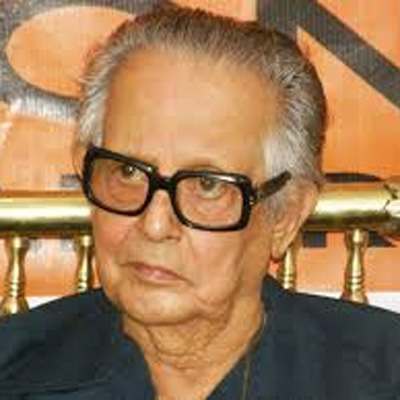
    NEW DELHI: Eminent cartoonist R K Laxman, who highlighted the woes of society through his cartoons featuring the Common Man, died of multi-organ failure. He was 93.


    A recipient of both the Padma Bhushan and the Padma Vibhushan, Laxman was spending a retired life in Pune, away from the hustle and bustle of Mumbai where he had for almost fifty years in ‘The Times of India’ ‘lived’ through his cartoons the woes of the common man in the cartoon series ‘You said it’.


    He had commenced the daily cartoon strip, in 1951 and was forced to stop it only after a partial paralysis just over a decade earlier.


    Laxman started his career as a part-time cartoonist, working mostly for local newspapers and magazines. While a college student, he illustrated his elder brother RK Narayan’s stories in The Hindu. His first full-time job was as a political cartoonist for the The Free Press Journal in Mumbai. Later, he joined The Times of India, and became famous for the Common Man character.


    Laxman was born in Mysore on 15 August, 1921. His father was a headmaster and Laxman was the youngest of six sons; Laxman was engrossed by the illustrations in magazines such as The Strand Magazine, Punch, Bystander, Wide World and Tit-Bits, even before he could read. Another early influence on Laxman were the cartoons of the world-renowned British cartoonist, Sir David Low (whose signature he misread as “cow” for a long time) that appeared now and then in The Hindu.


    Laxman was the captain of his local “Rough and Tough and Jolly” cricket team and his antics inspired the stories “Dodu the money maker” and “The Regal Cricket Club” written by his brother, Narayan. Laxman’s idyllic childhood was shaken for a while when his father suffered a paralytic stroke and died around a year later, but the elders at home bore most of the increased responsibility, while Laxman continued with his schooling.


    After high school, Laxman applied to the J. J. School of Art, Bombay hoping to concentrate on his lifelong interests of drawing and painting, but was rejected. He finally graduated with a Bachelor of Arts from the University of Mysore. In the meantime he continued his freelance artistic activities and contributed cartoons to Swarajyaand an animated film based on the mythological character, Narada.


    Laxman’s earliest work was for newspapers and magazines such as Swarajya and Blitz. While still at the Maharaja College of Mysore, he began to illustrate his elder brother RK Narayan’s stories in The Hindu, and he drew political cartoons for the local newspapers and for the Swatantra. Laxman also drew cartoons, for the Kannada humour magazine, Koravanji, founded by Dr M Shivaram, who himself was an eminent humourist in Kannada. He encouraged Laxman quite a lot. His “common man” character featured in his pocket cartoons is portrayed as a witness to the making of democracy.


    He also created a popular mascot for the Asian Paints group called Gattu in 1954 Laxman has also penned a few novels. His cartoons have appeared in Hindi films such as Mr. & Mrs. 55 and a Tamil film Kamaraj. His creations also include the sketches drawn for the television adaptation of Malgudi Days, which was written by his elder brother and directed by Shankar Nag. Laxman also drew caricatures of friends for private purposes.


    Laxman’s Common Man inspired a TV show — RK Laxman Ki Duniya with comedian Atul Parchure essaying the common man on Sab TV, while Vandana Pathak was seen as his wife.


    In September 2003, Laxman suffered a stroke, which left him paralysed on his left side. He partly recovered from its effects.