Tag: The Glitch

  • The rise of young execs in agencies

    The rise of young execs in agencies

    MUMBAI: When you walk into a government office or a bank, chances are you will find over half the employees above the age of 35 years. The office environment is dull, boring and serious. On the contrary, if you were to visit an advertising agency, you would be surprised to see young executives driving the growth for the company and donning the executive hat. Today, agencies don’t blink an eye before appointing exes who are as young as 25 years and oh boy, they run the company!

    Generation-Y is the first generation that grew up with the internet, and these youngsters, also termed as millennials, are used to having everything at their fingertips. They are pragmatic, connected, bold, and eclectic. Millennials also have a heightened social consciousness compared to previous generations. They believe they can change the world and are not afraid to take risks and challenge the status quo. They are forthright and fearless, insist that their voices are heard, keen to share their ideas, opinions and views on a subject, not afraid of hierarchies to ask questions. This obviously leads to a positive business impact and makes them a great asset for companies.

    Big brands hop onto campus placements to source the next wave of fresh talent for their businesses or offer internships that turn into fully fledged employment. The world’s largest advertising media company, GroupM, hires close to 30 leadership trainees from the top B-schools and they undergo a six-month training before they are assigned to their roles. GroupM also hires lateral talent from premier B-schools due to which they are able to assign bigger roles to them fairly early in their careers.

    iProspect India CEO Rubeena Singh notes that we are currently in the digital age of disruption and millennials are better equipped to navigate it. They are usually more abreast with the latest in technology and are comfortable in using it for seeking solutions. In many ways, they are making agencies more tech-savvy, helping them meet complex client needs in a fast-changing digital economy.

    Mentioning that this generation has led to breaking silos and more collaboration, which is good for clients and agencies, Singh believes this is because millennials tend to work across departments, tapping into broader expertise rather than struggling on their own in the hope of claiming the glory. She adds that they are quick learners and are willing to go the extra mile, not limited to a hierarchy or an insular structure and the focus is on getting the job done.

    Having internal employee mobility programmes is the core of ensuring talent retention and elevating the younger lot to explore various roles early in their career. GroupM chief HR and talent officer of South Asia Rohit Suri mentions that the group runs an extensive employee mobility program which provides its employees the opportunity to apply for various roles within the organisation in India and across the region and GroupM India is the largest exporter of talent to the APAC region.

    Agencies are also increasingly investing in employee training programmes which help them in updating their skills and talent. Media agency Vizeum appoints its star performers to a program called Route 500 every year wherein such candidates are accorded disproportionate training and development opportunities and a fast track growth path within the network.

    India’s largest integrated communications agency Ogilvy undertakes leadership sessions to enhance the younger generation’s skills through workshops and training sessions. Ogilvy India national head of talent and HR Monty Bharali believes that learning interventions potentially accelerate a professional’s capability and possibly, growth and these days that’s very welcome.

    The people and teams are usually the backbone of a company. Without them, it’s impossible to run a business, especially one involving servicing. Investing in talent is extremely crucial for companies as it’s now almost a prerequisite for organisations to have development programmes for their employees. iProspect has a number of programmes to nurture talent and give its employees scope to move forward. A program such as NEXTGEN is designed for individuals to identify their calibre and accelerate their career to a higher / leadership level, employee exchange programs providing them with the opportunity for knowledge sharing and collaboration across global markets, iProspect University which is a central learning platform, Certified iProspect Learning Series that is crafted for employees to be informed on every aspect of digital marketing, national and international conferences, employee of the month title and fun Fridays.

    The millennial employee group is extraordinarily creative, believes in excellence and is impatient to be shown in all of its capabilities. In an organisation built around creativity and excellence, its human capital will always be the greatest strength. Bharali opines that it’s essential to retain great young talent today as agility and adaptability are the need of the hour.

    Young talent is probably the most expensive asset for agencies and Vizeum media associate general manager Saumya Agarwal points that talent retention continues to gain more importance as the availability of right talent remains a big challenge and it takes far more time, energy and money to replace than to groom an existing talent.

    On a different note, The Glitch co-founder and content chief Varun Duggirala thinks that the idea should not be talent retention but talent farming. “Companies need to build great talent, nurture them and if and when they move on, be happy that you’ve sent the right kind of talent into the world,” he says.

    One can criticise millennials for being fickle job-hoppers who show little interest in their work, but they actually care more about professional development than the previous generations which will only lead to more young executives in the industry going forward.  

    ALSO READ:

    The Glitch to leverage GroupM data to reach rural India

    We focus on employee learning & development: Rohit Suri, GroupM

    How agencies deal with defaulters

    Has advertising finally begun to embrace AI?

     

  • Time for condom brands to review their storytelling

    Time for condom brands to review their storytelling

    MUMBAI: Ironically, when it comes to advertisements, condom players don’t know how to play it safe. Condom ads have been at the centre of numerous controversies owing to the erotic nature of the storytelling. Several governments have taken a strong stand against sleazy ads.

    Condom advertising in the US has been a much-debated topic for the longest time. At first, advertisements for condoms were mostly limited to men’s magazines such as Penthouse. The first television ad, on the California station KNTV, aired in 1975 but was quickly pulled off after it provoked the ire of people. Years later, the first condom commercial on US television aired in 1991.

    Condoms have been available in India since the 1940s but the first mass-distributed condom was introduced in 1963 under the name of Kamaraj (pseudonym of Indian cupid Kamadeva) but K Kamaraj was then the president of the ruling party, Indian National Congress. Hence, a new name for the condom was chosen: Nirodh that means protection in Hindi.

    In 1952, the Government of India established the first national family-planning programme in the world. At this time, condoms were privately manufactured and sold at high prices. Only the rich could afford the price of 25 paise even though population growth rate was the highest amongst the lower-income groups. In the late 1980s, several TV commercials were developed to create awareness about Nirodh. But the message from these advertisements was not clear about what a condom was, who used it, where would one get it or that it was distributed free of cost.

    It was in 1991 that KamaSutra condoms seduced viewers with erotic images of Bollywood actors, linking condoms to pleasure for the first time. Today, you have plenty of condom brands but all of them rely on the same creative–sensual and explicit scenes. Durex, Manforce, Playgard, Skore and others have resorted to the same storytelling through the years.

    They have not wavered from using the ‘sex sells’ motto to grab eyeballs. The Glitch co-founder and content chief Varun Duggirala thinks that the audience has matured but is still being considered as naive.

    It was in December 2017 when the Ministry of Information and Broadcasting (MIB) decided to ban condom advertisements on television between 6 am to 10 pm. The move was directed after the Advertising Standards Council of India (Asci) approached the MIB for withdrawing condom ads that were telecast during prime time or ‘family-viewing time’. The council was reacting to complaints regarding the kind of content condom brands showed in ads, which was not necessarily suitable for kids and teenagers. Asci, in its letter to the ministry, specifically stated that ads that were explicit and vulgar in nature should be aired only between 10 pm and 6 am.

    Havas India CEO Nirmalya Sen thinks that in India, the category has, to an extent, called the recent ban upon itself with mindless use of sex to sell condoms. He adds that this ban, in fact, could well be the catalyst the brands in the category need to act responsibly and be creative.

    Ajay Rawal, general manager of marketing for JK Ansell, maker of KamaSutra sexual wellness products, believes brands need to change their communication now and move away from using erotic ads. “Things have changed drastically in the last decade and the option to view eroticism is now easily available online. Millennials today are not interested in seeing this kind of content and want to see a creative that is relatable, realistic and memorable for them,” he adds.

    Interestingly, condom ads on digital are more creative than the TV ones – skewed to showing their use and benefits.

    Condom makers don’t use these ads on TV because of the cost involved in buying ad slots where they don’t want to risk their necks.

    Rawal notes that the advertising spends in the condom category are pithy compared to the giant FMCG category. “If a condom brand wants to create a new communication that does not have eroticism and sexual overdose to it, it has to be memorable and a lot of effort needs to be put in creating resonating, real and relatable stories,” he adds.

    While stating that India is still a conservative country when it comes down to sex, Dentsu One president Harjot Singh Narang mentions that companies tend to resort to the easiest part of storytelling—to have lots of sex without any fear—which is why most condom ads show romanticising situations on air. “Internationally, brands have moved over sexuality in ads and are talking about where it actually fits in the consumer’s life. In India, Durex is taking that route but we still have a long way to go,” he says.

    Historically, most condom purchases were made by men and that’s why the focus has predominantly been on the male audience. But since using contraception is essentially a woman’s call, maybe there is a need for change in communication and have more female protagonists in ads.

    While raising a point that why condom advertising in India stops at soft porn, Narang concludes that it is time for brands to build deeper relationships with consumers by creating engaging content as it is the need of the hour.

  • GroupM acquires digital agency The Glitch

    GroupM acquires digital agency The Glitch

    MUMBAI: WPP’s GroupM, the world’s leading global media investment group, has acquired the digitally led creative agency The Glitch in India. 

    This acquisition will demonstrate the company’s growth plans in a technology-driven communication market. The Glitch will continue to operate as an independently positioned brand while taking advantage of GroupM’s larger infrastructure and agency ecosystem. It will continue GroupM’s growth strategy in one of the world’s most dynamic emerging economies.

    GroupM South Asia country manager for WPP India and CEO CVL Srinivas says, “The communications ecosystem in India has evolved dramatically in the last few years and GroupM continues to lead the market in creating cutting-edge solutions that leverage data, technology and creativity. With The Glitch, we found a partner that brings exciting creative and content skills that can leverage our unique assets to create effective solutions for our clients. The Glitch has done some outstanding work for clients and we eagerly look forward to their coming on board.”

    Speaking on the announcement, The Glitch co-founder and creative chief Rohit Raj adds, “With GroupM, we have found the perfect partner who complements our skills and shares a similar vision on the future of advertising. We will be able to use their strong expertise in data and analytics to help craft more insightful and effective campaigns for brands and help close the loop with a superior understanding of content and creative strategy to serve today’s economy.”

    The Glitch is a digitally led creative agency, which believes that through shaping culture, great business results can be delivered and being strategically driven is how great creative is made.

    The agency has delivered award-winning campaigns for a wide spectrum of clients including Unilever, Netflix, OYO Rooms, Shutterstock, Tinder and many other international brands in the realm of entertainment, beauty, and FMCG amongst others. With over 200 digital strategists, technologists, content creators and planners, The Glitch has offices in Mumbai and Delhi.

  • Is India ready for the impact of AI on marketing?

    Is India ready for the impact of AI on marketing?

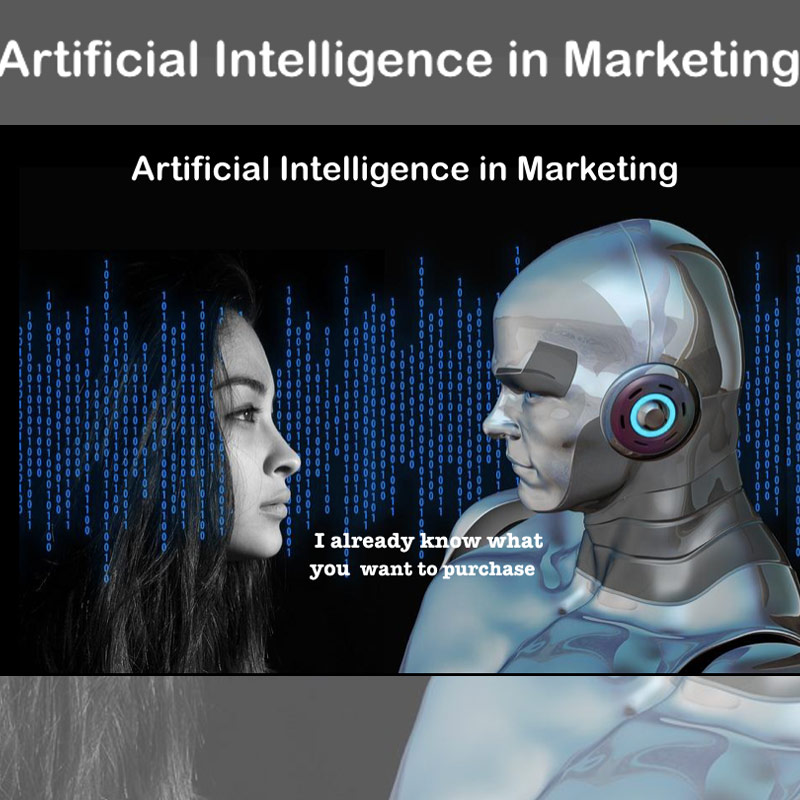
    MUMBAI: From self-driving cars to voice assistants Siri and Alexa, artificial intelligence (AI) is expeditiously becoming popular. While one may think of AI only as intelligent robots or technology, it encompasses everything from Google’s search algorithm to e-commerce to geo-target and understanding consumer behaviour. 

    AI has taken a hold of the advertising and marketing industry too along with big data, analytics, machine learning (ML), and chatbots. Not one advertising or marketing conference goes by without one or more sessions on the subject. 

    It was in 2017 that marketers realised the leverage AI and ML provided. But the reality is far from the hype as marketers in India and around the world are still unacquainted with the technology and the benefit it can add to business.

    Today, companies are gathering thousands of records from each consumer touch point. They have the entire database of what their consumer is searching for, from which device and how long before they actually purchase it. Companies can also trace the consumer’s likes and dislikes by scrutinising their customer profile. This large set of data about consumer behaviour, which is also known as big data, provides definite information to brands that can help their business. This is where AI comes into the picture.

    public://kirin.jpg

    AI in marketing terms consists of machine learning, deep learning and natural language processing applications. But the hard reality is that many of the tools that are being marketed as AI are still in their primitive form and there is a long way before companies can actually begin to use AI to yield better results. Currently, a lot of brands feel the urgency to adopt the modern and new technologies to keep up with the changing marketing dynamics, but AI, just like any other technical tool, is not a magic solution and requires time, resources and money. 

    Though the name sounds fancy, it may not be essential for every brand to jump on the bandwagon. Agencies, being industry experts, first need to familiarise themselves with how best to use AI for their client before even discussing client readiness of AI in marketing strategy. Setting the record straight, The Glitch managing partner and business head Kabir Kochhar says that the first step to getting clients interested in using these tools by showing them the money. “Showing improved return on investment will get clients to take notice and giving them deeper insights into their customers will allow and inform them on their future product roadmaps,” he says. 

    public://goolge.jpg

    For instance, predictive analytics allows online players like Amazon, Netflix, Hotstar, Myntra, Flipkart and YouTube among others to surface and finesse recommendations. Putting together information from diverse datasets is a common use of AI. Even the most advanced tech firms in Silicon Valley are just beginning to unearth its possibilities. Dentsu Aegis Network chief data officer Gautam Mehra suggests that if media companies do not catch up, it’s definitely going to affect them as we do see the local OTT players and even telecoms such as Jio building significant data practices.

    In spite of all the automation and move to programmatic, there are large parts of media planning and strategy that are still being done laboriously by human intervention. While stating that currently only some really sharp media planners will come up with half a dozen hypotheses and run tests that either prove or disprove the same, Indigo Consulting national head of strategy Devang Raiyani believes that going forward, a few startups will lead this and big media players will wait till some of them acquire critical mass and acquire them. 

    The revolution of AI in marketing has been propelled by the advent of affordable and advanced data analytics tools, extensive datasets and a growing acceptance of the data-driven approach to marketing decision making by marketers. With the advent of cloud computing, it’s very easy to scale without having to make large upfront investments. Most of the cost to use an AI system is rarely the system itself, but in ensuring you have the right data in the right format prepared for the AI engine. While stating that certain AI systems require some level of initial investment in technology, Mehra points out that these, however, sustain themselves within a year and hence it’s not really a CapEx investment in that sense. And then there are AI systems that are absolutely turn-key and pay-per-use.

    It is a herculean task for agencies to convince clients unaware of AI to use the technology. In such cases, Raiyani opines that the best way is to prove the use-cases at the fringes, create a few proof of concepts before betting big as the challenge with most Indian companies is that data available is not very clean and highly fragmented across touch-points. He believes that it will be the GAFAs (Google – Apple – Facebook – Amazon) of the world who will lead this change.

    Kochhar thinks that the grasp of terms such as AI and big data are theoretical and in practice, we’re just scratching the surface on how AI can transform industries. “For now, agencies need to think of it as a tool of inspiration for the copywriter as it will essentially eliminate a bunch of A/B testing we currently do to see the effectiveness of communication,” he says.

    AI in creative advertising has been touted as a replacement to human copy although there’s still a long way to go for that since, in advertising, context is everything and the nuances of language still need to be mastered. AI will help throw up more insights based on user interaction with ads and act as a guide showcasing the types of communication routes that can have a higher impact on the end user. 

    Also Read :

    FabIndia sets aside 40% on digital advertising

    Vodafone India modernises for IoT-ready future

    How iProspect’s Vivek Bhargava foresaw a digital future two decades ago

    Talent retention is key, says Mindshare’s Prasanth Kumar

  • Kids’ candy segment: Communication sees a shift

    Kids’ candy segment: Communication sees a shift

    MUMBAI: The lure of candies and chocolates for kids has been a trait that confectionery makers never failed at. With the 1990s bringing jellies and fruit chews to Indian kids, technology has enabled for the acceptance of a wider range of sweetmeats today and would even coax their parents to spend a little more on premium items.

    public://poppins.jpg

    Sugar candies today include hard candies, soft candies, caramels, marshmallows, taffy, and other candies whose principal ingredient is sugar. The penetration of confectionery items in India is just 60 per cent, versus the 90-93 per cent of biscuits. This leaves a huge opportunity to grow. Parle Products category head Krishnarao Buddha believes that the Indian confectionery segment hasn’t evolved much in comparison to other counterparts of the world.

    Advertisers have also changed the messaging to suit the shorter attention span of the kids of today using animals, fantasy or cartoon characters. Dentsu India senior vice president and head of planning Vishal Nicholas affirms that advertising today has also gotten rid of the precocious, over smart kid as the protagonist and is getting more real.

    Perfetti Van Melle India director of marketing Rohit Kapoor opines that today the messaging has become simpler, direct, routed in product truth yet maintaining the entertainment quotient. The brand is the third largest confectionery manufacturer in the world that has products like Alpenliebe, Big Babol, Centre Fresh, Fruittella, Mentos among others in its kitty.

    While TV is still the lead medium from both a storytelling and reach perspective, digital becomes a strong medium for kids over eight years of age. Kids today not only play games on mobiles but are increasingly using computers for school projects and assignments, resulting in a rise of engagement with screens and technology. Some reports estimate time spent on digital mediums at almost 50 minutes a day.

    Hence, creating campaigns specifically targeted at kids can be a challenge as they are impressionable minds and tend to get influenced by whatever they see, so advertising has to be fun but responsible.

    Kids are undoubtedly more fun than adults and putting them in adult-like situations gives a comic relief to viewers while also bringing relativity. Remember the ever-loved Flipkart campaigns that portray kids acting as adults? Stressing that it’s an immense creative challenge, The Glitch creative director Prashant Kohli suggests that brands and agencies need to be conscious and conscientious of what they advertise to kids around the world and although it seems like an obvious fact, it can get tricky to observe objectively in an adult world. “Campaigns crafted for them, need to be designed like stories they’d like to pick up from, craft their own versions, and tell their friends as their new story,” he adds. 

    For Parle Products, television is still the best medium to communicate with kids and get the message across followed by school, on-ground activations and advertising in kids movies. Perfetti Van Melle India vouches for television followed by digital platforms. “What we see clearly is that viewership in kids has become even more fragmented with a significant portion of kids viewership on GECs. OTT platforms, gaming on digital could get relevance in near future as these gain scale in the kids genre,” says Kapoor. 

    Having a well-distributed network and making sure the product reached the right audience at the right time is the core of any business strategy. Since kids are very fickle about their choices and prefer buying attractive-looking products, it is a constant battle among marketers to make sure their products are always available on the shelf for children to see them. Parle Products has access to over 6.2 million outlets in India where the company’s biscuits are available in across 60 million outlets and confectionery in 0.65 million outlets. The company has a stronger indirect distribution than direct. 

    public://joy.jpg

    Kapoor informs that Perfetti Van Melle continues to work on making sure that the products are available to consumers across the spectrum of outlets and have a good mix of direct and indirect distribution. 

    In 2017, Parle Products achieved a 15-18 per cent of growth and projects to cross 20 per cent growth in 2018-19 in the confectionery business. The company is the second largest confectionery and biscuits brand in India that produces Parle G, Poppins, Kismi, Melody, Mango Bite among others. On the other hand, Perfetti Van Melle India registered a net profit of Rs 40 crore during the financial year to March 2017 which was a rise of 24 per cent.

    Brands still have a long way to go in rural penetration with premium products such as Kinder Joy, Choco pie, M&M and Ferrero Rocher being close to invisible in rural department stores. 

    ALSO READ:

    FabIndia sets aside 40% on digital advertising

    The attention grabbing gimmick of comparative advertising

    Brands pick digital over TV and print for Diwali marketing

    Want the Silk jingle to be popular culture: Mondelez’s Prashant Peres

  • Semi-urban connect helps FilterCopy attain top slot on Facebook

    Semi-urban connect helps FilterCopy attain top slot on Facebook

    MUMBAI: It’s time to pour a nice cup of filter coffee because it’s no small feat to beat a giant like Buzzfeed. According to a report by Vidooly, FilterCopy page ranked top on Facebook with more than 71 million (71,128,760) views in new age entertainment category with 27.4 million (2,743,641) lifetime followers.

    It has taken over the place of BuzzFeed which reserved the second position with 68.7 million (68,765,209) video viewership. The Glitch co-founder and content chief of the creative Varun Duggirala feels that what may have given FilterCopy an edge was its all-encompassing narrative that cuts across urban and semi-urban people while BuzzFeed is purely urban.

    FilterCopy’s relatable entertainment and humour content is what makes it touch emotions, says iProspect India strategist – content marketing Shipra Tandon. She adds: “FilterCopy is creating connecting and customised content that is tuned to the current generation. Brands are connecting with the audiences in the same language and tonality in which they talk which makes people relate the content to their situations and the way they are.”

    Duggirala adds, “When we scroll down our feeds only two things make us stop and watch- something our mindset relates to and something that sparks our curiosity. In both cases, the right dash of universal humour or tight-knit narrative is what makes all the difference to grab Indian eyeballs, because we innately relate to anything that sparks an emotional response from us.”

    For December, Pocket Aces, which runs the tending content site FilterCopy, will be launching 20 new pieces a day. Over the month there will be six short videos, 300 articles and 20 memes. Two videos have been released as is a new format called FilterCopy Practicals. Plans are underway to launch exciting formats and target the creation of over 500 short videos and over 3000 articles. The team creates everything from scratch. They conceptualise, script, produce, release, and market the whole content.

    But the big question is that, is the revenue pouring in? Duggirala feels gaining substantial viewership will enable signing up in-show advertisers as well as building inventory for when Facebook launches a monetisation model.

    Pocket Aces co-founder Aditi Shrivastava attributes the success to content that people not only love but also share by tagging others. Innovative content and the audience’s favourite FilterCopy faces like Dhruv Sehgal, Veer Rajwant Singh, Aisha Ahmed, Mithila Palkar, AkashDeep Arora, Kriti Vij, Apoorva Arora and many more, catch more eyeballs on social media.

    Currently, Pocket Aces is very much active on its own website, YouTube channel and Facebook. It does not have any plans to launch an OTT platform in the near future. It reaches 40 million unique viewers a week through its channels on social media. Content is also syndicated via Ola Play, Sony Liv, Dainik Bhaskar, Youku Toudo (China) and airlines like Jet Airways, SpiceJet and Etihad.

    Started in 2013, FilterCopy is mixed-media offering from Pocket Aces for shareable written and video content includes articles, relatable videos, funny memes and much more. Pocket Aces is a tech-driven digital media entertainment company of India, focused on creating and distributing highly engaging original content for millennial audiences via its channels Dice Media (premium digital web series), FilterCopy (shareable written and video content), and Gobble (all things food).

    In the past two years, the company has worked with over 40 advertisers including PepsiCo, Flipkart, Landmark Group, T Series, Marico, Kingfisher, Oyo Rooms, Swiggy, etc. Pocket Aces has a wide range of investors that include Sequoia Capital, Aarin Capital, Axilor Ventures, and North Base Media.

    The audience can be assured of new content in the last week but the company is giving a whole week off for its employees to usher in the new year.

  • The Glitch expands; enters Delhi market

    The Glitch expands; enters Delhi market

    MUMBAI: Mumbai-based digital marketing agency, The Glitch, is geared up for its first geographical expansion with entry into the capital city. Founded in 2009 by Varun Duggirala and Rohit Raj, the agency announced the start of operations in New Delhi, where they have already begun servicing clients such as Horlicks and Carlsberg.


    The Glitch-Delhi will be spearheaded by Kabir Kochhar, who comes with significant international expertise in digital media from his stint at Carat in New York as well as vast entrepreneurial exposure having recently run and exited food startup Megamenu.in. The Delhi setup will begin with a team of 10 strategists and digital junkies, who will work in sync with the Mumbai team on national clients, while simultaneously fronting their independent work. The management is looking to expand the team gradually, aiming to ramp up to 50 by the end of the financial year as a part of their Delhi growth plan.


    Duggirala said, “Plans to open a Delhi unit have been in the offing for a while, as we saw a genuine need for our services in the region and have had many brands express interest in bringing us aboard if we did decide to set up in Delhi. But the idea was to build a solid independent unit and not a branch unit, which definitely demanded the need for it to have a clear driving force in its operations, and Kabir has truly filled that spot for us.”


    Kochhar said, “The Glitch is incredibly strong as a content creation and dissemination company that uses video, tech and creativity to deliver spot on strategic solutions for clients. I am very excited to join such a talented bunch. We have a novel approach to employee engagement, retention and motivation that allows us to bring in passionate and top quality digital talent in the market and we are hiring aggressively across all divisions.”


    “Our clients are our partners and we consider ourselves to be able advisors. We have been quick to spot emerging trends and deliver creative clutter-breaking solutions for our partners in Mumbai and we plan on taking that to the next level in Delhi-NCR. These are indeed, ‘achhe din’ for us all.” he added.