Tag: The Content Hub

  • High concept, simple story, understandable plot are key to good movies: Kross Pictures’ Thomas Kim

    High concept, simple story, understandable plot are key to good movies: Kross Pictures’ Thomas Kim

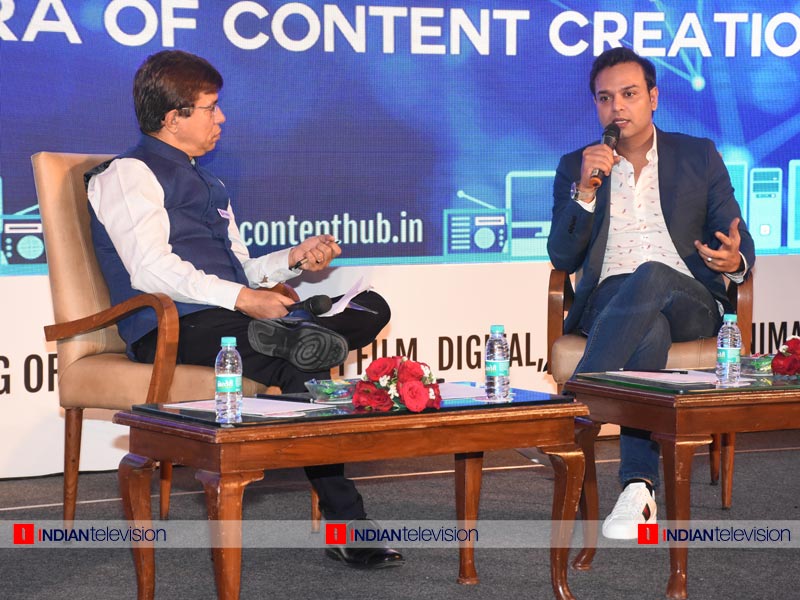
    MUMBAI: Thomas Kim, co-founder of Kross Pictures, in a candid conversation with indiantelevision.com founder CEO and editor in chief Anil Wanvari at The Content Hub 2020, mentioned how he started his career as an investment banker. He also shared how working in The Walt Disney Company and Pirates of the Caribbean inspired him to become a filmmaker.

    Kross Pictures, an international film and television production company, made the commercially successful movie The Devotion of Suspect X.

    Kim echoed, "I was working as a management consultant for a few years but never really enjoyed that work. I had an opportunity to go to Hollywood and work at The Walt Disney company. This was the first time I saw how movies are made. One particular project Pirates of the Caribbean opened my eyes to filmmaking. The motion pictures group came to my group which was in charge of making a theme park called imaginary group. They made a movie based on the storyboard. This actually taught me that films can be made with any type of stories. So, I quit Disney and started my company in 2003. I am mostly active in Korea and China in making films and TV series based on famous IPs, mostly in comics and novels. In 2015 I had the pleasure to come to India and worked on a film project called ‘Teen’ with Amitabh Bachchan. This was my first experience of working in Bollywood. Today I have offices in Seoul, Los Angeles, Mumbai and Hyderabad.”

    Kim, who is very active in China, made one feature film and a TV series and both were commercially hit. The Devotion of Suspect X became a mega-hit with Rs 4 crore box office collection.

    Kross Pictures currently has over 15 features and TV content both in Hindi and the South and aspires to become a premium production house. “I believe storytelling is universal. The story which works in one country can work in other countries too. With that vision I have a team in Korea, India, and America, who are constantly looking at projects,” he stated.

    In 2014 Kim met Balaji Telefilms' Tanuj Garg in Korea for a project. This meeting led Kim to come to India and explore Indian filmmaking market.

    Sharing his Indian vision of Kross Pictures Kim said: “My aspiration for my Mumbai team is to grow to be a premier production house and maybe possibly a studio in the near future."

    Kim believes that not all stories are able to mobilise in foreign countries, other than the one which do commercially well. According to Kim, there are key three aspects for a good movie: the element of high concept, a simple story and an understandable plotline. Also, not all stories can localise. A lot of Indian stories are great but it may not work in the Korean market.

    Kim, who is currently working on the adaptation of the Bollywood film Kahaani, thinks Believe Oh Baby! – a Telugu movie was a great combination of storytelling and execution. Successful stories or successful adaptation requires a good understanding of the original material. He finds Indian films exciting and emotional. However, there is a lack of disciplined storytelling. That's what the Kross Pictures wants to bring to India.

    Sharing details on the necessary ingredients required for a commercially successful film, Kim said, “We try to identify stories which are exciting to the Indian audience. We also look at commercial success. Combining the two we constantly look for stories in Korea, Japan and China that have a track record of being a commercial success.”

  • Fantasy gives creative liberty to writers

    Fantasy gives creative liberty to writers

    MUMBAI: Writers of the show Naagin, Mukta Dhond and  Mrinal Jha, explored the scope of supernatural genre at day two of The Content Hub 2020 organised by indiantelevision.com.

    Dhond thinks the most exciting thing about fantasy is that it gives creative liberty to writers. As they say, anything is possible in the fantasy world which usually is not possible in other normal stories. There are some real stories; outside of that there is a whole world of small creatures that have a power. Naagin is a female superhero and there are very few female superheroes worldwide, especially here in India.

    “For example, Naagin's biggest attraction when we started was that here is a woman who does what she wants to, who has a power. She is able to fight back and takes revenge, but the world doesn’t hate her. The character can do unimaginable things that we cannot think of. That is the beauty of supernatural shows.”

    Mrinal Jha said, “Supernatural genre also demands pace in writing which sometimes is a challenge. The struggle is to find something new to tell every week.”

    Sharing the same sentiments, Mukta said: “People in India don't have patience. They want romance, action, drama all in one episode. So, the volume of content generation in supernatural genre like Naagin or Nazar becomes high. It is like surprising yourself and the audience every day.”

    The panelists also agreed that the one good thing about supernatural genre is that you can discover finer sub-classifications which make one show different from the other.

  • Gippi director Sonam Nair on her upcoming shows and challenges in the OTT industry

    Gippi director Sonam Nair on her upcoming shows and challenges in the OTT industry

    MUMBAI: Sonam Nair, director and writer best known for her work in Wake Up Sid, Gippi and The Trip in a fireside chat at the Content Hub 2020 spoke at length about directing digital and television series.

    After working as an assistant director in Wake Up Sid and Vishal Bharadwaj’s Saath Khoon Maaf Nair made Gippi a movie based on her own life. Nair poured her heart out while addressing social stigmas and how she was bullied and body shamed as a kid. However, things were never easy for her. She had to wait for three years to make a sex comedy film. Finally, a short film based on the same ethos of sex comedy Khujli starring Neena Gupta and Jackie Shroff resurrected Nair’s career.

    “I don’t think in a way which is a very large screen, having lots of special effects, ensemble star cast. I think simple, relatable stories can have humour attached to it. This whole digital platform opened up for me  and I could tell stories I wanted to tell. After Khujli I directed the second season of Trip, I directed Kaafir and now I am working on a story written and directed for Netflix called Masaba and Masaba," she said.

    The  show is based on the bond between a real-life mother-daughter duo of ace fashion designer Masaba Gupta and Bollywood actor Neena Gupta.

    While addressing the issues prevailing in the content industry Nair said, “It is difficult to sell stories to a particular platform because this not how OTT platforms work. It is an anthology of supposedly six short films that works otherwise platforms are quite scared to take just one story.”

  • Short video content ecosystem grew by 100x in last two years: TikTok’s Nikhil Gandhi

    Short video content ecosystem grew by 100x in last two years: TikTok’s Nikhil Gandhi

    MUMBAI: Streaming services started democratising content creation a couple of years ago but TikTok has made easier for the mass also to express and create. Bytedance’s most popular app has taken young Indians by a storm along with boosting vertical video growth. TikTok India head Nikhil Gandhi said that they have been now on the forefront of creating a new economy.

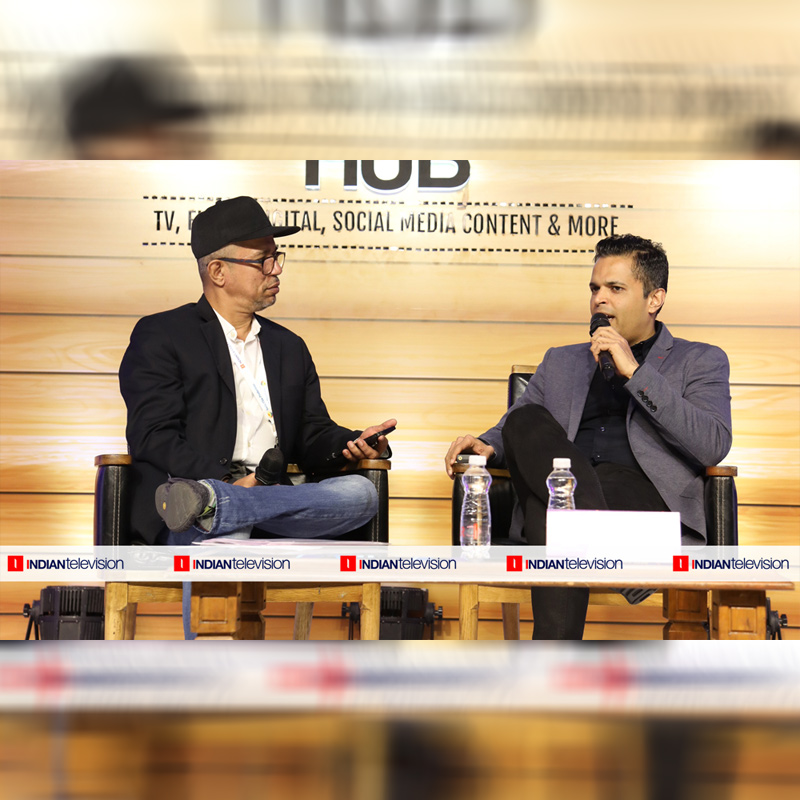
    Gandhi got the mandate to lead  ByteDance’s most aspiring product in India last year. In a fireside chat with Indiantelevision.com founder, CEO and editor-in-chief Anil Wanvari at the Content Hub 2020, the TikTok India head shared the growth of short-format video, how TikTok is helping a new breed of creators, how they maintain a self-moderated standard of content. He said that the app actually promotes and inspires creativity. Moreover, it has given wings to young creators to fly , to showcase their creativity and bring out their art form.

    As he comes from a rich broadcasting background, it’s a new learning phase for Gandhi as well. He mentions the suit of four products from ByteDance that operate in India. Along with TikTok, helo, and Vigo Video, the latest addition is a music streaming app Resso. Hence, he pointed out that the suite of apps that they have reach out to all ends of the spectrum. He added that it has been a fascinating journey for TikTok. “We've taken off on a great start. And in the last two years, we've seen massive, massive growth as far as the user base is concerned in India,” Gandhi said. Although he did not reveal the exact number, reports say it boasts of 200 million users in India.

    “The average consumer in India spends a little less than three hours a day on TV. But he spends about three and a half hours a day being online. And out of that, he spends about two hours plus just watching video content. So I think it's a very, very encouraging trend for content creators who are in the digital space. And I think this is going to continue,” he commented.

    Not only video viewing is growing, the bite size, short video content ecosystem also grew by 100 X in the last two years. Gandhi shared the total consumption of short video was about 530 million per month in January 2018. Exactly after two years, about 5.3 billion minutes of short video is being consumed.

    “From our analysis, about 70 odd percent of people tend to continue to watch the entire short video which is a full length of one to three minutes. However, the moment you have a video, which is about 20 minutes, almost 24 per cent only consumed the entire content,” he said.

    While content creation has already become a career for many youngsters, Gandhi added that if a creator’s video is good, brands will also follow them. According to him, as long as the creator has the ability to promote themselves and bring out the art form, the app lends a lot of support. Many TikTok influencers are now working with brands, getting featured on TV shows, collaborating with B-Town faces. Even established creators are gradually coming on the platform. He said that the platform hosts right from popular creators to unique talent, which is unlikely on other platforms. He added that the discoverability is huge.

    But along with more native creators, the risk of unsolicited content also increases. Gandhi noted that TikTok has got a very comprehensive set of community guidelines to create awareness about trust and safety. They keep updating community guidelines every year.

    “We do a lot of social awareness campaigns for creators to make them conscious to promote the fact that they should be posting responsibly and sensitive issues that are related to India and overall trust and safety. And anybody who violates our community guidelines is not welcome on the app. So we take those content off the app,” he pointed out.

    “We have a very strong tested safety moderation system, which is a huge factory of about a huge number of people who are just constantly moderating content and the numbers of the total uploads as is huge on a daily basis is in India. So it's a very, very big push for us,” he added. 

  • Cinema content producers still discovering audience taste

    Cinema content producers still discovering audience taste

    MUMBAI: The Indian movie industry is one of the richest in the world and its content has been gaining patrons worldwide. But producers still believe that the industry doesn’t have the pulse of audience preference.

    The point was raised at the third edition of Indiantelevision.com’s ‘The Content Hub’ during a panel discussion on how new Hindi film producers are making their mark and what business models they are drawing up. The panel included Essel Vision (Zee Studios) CEO Shariq Patel, Viacom18 Studios chief operating officer Ajit Andhare, Alliance Media and Entertainment owner Sunil Doshi and Fox Star Studios India CEO Vijay Singh. Moderating the panel was film reviewer at Film Companion Suchitra Tyagi.

    Singh said that though we do not have an absolute understanding, we are better informed than we were few years ago. "Let me just give you some facts. Theatrical in India was going single digit till last year, where it actually has its most record breaking year and the business has grown by 14 per cent. Correspondingly, even if you look at Hollywood, last year they have had their biggest theatrical year," he said.

    However, Patel was of the view that the reason behind this is the constantly emerging trends. He shared that it is not possible to foresee or sight the changes in what the audience deems popular.

    Reflecting similar thoughts was Andhare who said, “Trends and cinema are two terms which are not friends with each other, because the moment you try to say this is trend you will falter. You can safely say that yes content has to be taken more seriously, just the package film which used to a success few years ago may not work.”

    He further added, “Also from a purely film business point of view, if you see a movie goer base, it is actually divided in three major markets, Hindi is just one, and the other two big bases are down south. So if you really want to address the entire consumer base for cinema in this country, you have to address all these three and from that stand point regional becomes extremely relevant.”

    There is a great opportunity to be a content producer today. "There is a huge opportunity in OTT and I can tell you that in films there is equally large opportunity. What has happened in Hollywood over the last 10 years, because the contribution from outside America started going up. 10 years back international content contributed 30 per cent and today it contributes 70 per cent. That is the reason why studios are working on franchise films or the few films which have the ability to actually travel across the globe,” Singh concluded.

  • Sameer Nair on Applause Entertainment’s shows, content creation and trends [Part 2]

    Sameer Nair on Applause Entertainment’s shows, content creation and trends [Part 2]

    MUMBAI: This is the second part of Indiantelevision.com’s conversation with Applause Entertainment CEO Sameer Nair. You can read the first part here.

    So within your company, is a format kind of a lab being developed going forward? Because I see opportunity in format, paper formats too while you’re creating content and you’re going to start licencing it in stage two I presume. That will be next year after the first wave is sold out.

    We hope the first of our shows streams at the end of March, so let’s see.

    So when will your agreements allow you to sell those globally?

    It depends. Some will be after a year.

    In the meanwhile are you looking at setting up a format lab? Like Zee has set up a format lab which is working on creating formats, Star is working on formats in house.

    No, I don’t think we are doing that. Currently, we are focusing on drama and fiction, not so much on the non-fiction part of business. And within that, if we find something that we really like, we proceed to make it. We are not really making a paper pilot or a pilot.

    We are not really making globally relevant content whereas the Turks make it, the Koreans are more advanced as a culture so their shows travel, but Indian shows are not really travelling, we’re getting $200, $250, maybe a Porus might get $3000 or $2000 per hour but not all shows are getting the money that they should.

    Actually, apart from US content which is the English content and which is what makes it a globally dominant soft power, I don’t think any other content is genuinely travelling.

    Today Turkish content is going at $150,000 an episode in west Asia.

    What I’m saying is that we’ve got a very large market, we’re a billion Indians. In any case, you’ve got to decide who you’re making this content for. There’s something known as primary audience and secondary audience. Narcos was not made for us, it was made for Latin American and North American audiences. We happened to like it, it went on to become a global hit and well, good luck. Like that, I’m sure a 100 other shows are made which we haven’t heard of. So what I’m saying is that as far as we are concerned, we are focused on telling great stories and we are catering to an extremely large Indian audience.

    Some shows do travel but you can’t set out to make something thinking it will straddle a global audience, even the Americans didn’t do that. When the Americans made Seinfeld, they didn’t make it to make Indians or Koreans or Japanese laugh, they made it to make Americans laugh. That the rest of the world laughs with The Big Bang Theory or FRIENDS or House of Cards or whatever is a happy outcome. So I think from a content creation point of view, we’ve got to focus on how we can tell great stories, how we can monetise those great stories and how can we make this business profitable.

    So you’re investing in production value, you’re investing in writing and I see that you’re investing in the cast.

    You’re investing in good actors, you’re investing in good writing, you’re investing in production values, good directors, you’re making these like essentially extended films, it’s all produced at one go, it’s post-produced at one go, so we are doing that and we should invest.

    Will all of these travel or will some of these travel?

    Some of these will travel, all may not. For example, The Office comes from abroad and I believe that a show like that should be made in every country because every country would have this dull sleepy office with the horrible boss from hell and the other terrible people we work with. But some will travel, I think something like City of Dreams will travel, that’s a nice political story. I find too many of my colleagues in this business stand on the shore and look towards the sea. I think we are a large enough country to stand on the shore and look inwards.

    That’s why Hollywood is a soft power.

    Hollywood is a soft power not for what they’re doing, it’s because it’s driven by the language.

    Roma is a Mexican film that went on to win so many Oscars.

    You know what, it is a cool fashionable thing to say that we should be all making stuff that the world applauds.

    But if you put sub-titles, everybody watches.

    I’m not disputing it, I’m saying that you’ve got to run a business, it is called showbiz. There’s show and there’s biz and they go together. So when you’re running a business you must be clear as to why you’re doing it. It cannot be for an amorphous global audience. If it’s a good story, the world will watch.

    There’s a science to get the world to watch, getting recommended, the social bars, etc.

    That comes after you’ve made a good story.

    Do you have a strategy to build this globally? Would you be investing as much to push these globally?

    It’s a process. You don’t plan for all these things, you’ve got to make it, you’ve got to put it out there, it gets some traction, it builds an audience, the word of mouth spreads, when things are going well you keep adding to it, it’s a process. I don’t think Ramesh Sippy set out to make Sholay, he set out to make a movie that proceeded to become Sholay. That’s how it goes. Everything happens like that.

    I believe that you’re more evolved than Ramesh Sippy in terms of understanding the ecosystem.

    No, not like that. I’m saying that even when you take a movie like Dangal, it went on to become a big success in China. In hindsight, we can all be geniuses and have 100 million reasons why that happened. But in the process of making it, it was not being made for that audience, it was being made for an Indian audience is what I’m saying.

    So around IP sharing, you’ve always told me that put your skin in the game then I’ll give you a piece of the action. The industry has started putting money where their mouth is. Producers like Siddharth Tewary, Abhimanyu Singh, Asit Modi have been putting their skin in the game and they’ve been retaining IP. How’s that going for you now that you’re on the other side?

    I remain exactly where I was. I think there should be a share of the spoils definitely because there’s a certain degree of a creative investment, there’s a certain degree of financial investment. I think it’s fair enough for people to want to have a share of it. So we are continuing with a similar model, we’re happy to do that. When I talk about putting skin in the game, I mean that. Not everyone has money, but there are different ways to do that. But again there’s so much debate that keeps happening about IP, that where are the shares of IP? I think the first important thing is to create IP. If you create intellectual property then you can derive value from them.

    I find too many people talking about IP without ever having created IP. So I think that focus is important. Beyond that, different models will emerge, we are already doing that. A lot of the international shows that we buy are represented by format owners who then proceed to give a share of what we have sold it for back to the original creator. It’s a process, internationally it’s been done forever. So I think it will happen in India as well. If the content community is not careful at this point in time, then it will just be a replica of TV.

    Do you fear that it could end up being a replica of what happened in TV?

    Currently, it seems to be approaching it in that manner, as in you get commissioned and that’s it, you have nothing left. If you indeed want to have a play beyond that, you must be willing to give up something, you must be willing to put something and you have to figure a way around it.

    So what are the different models that are available? Do you give the story rights, dubbing rights, sub-titling rights, Indian language rights, film rights or animation rights?

    No, this is an evolving market. Currently, the position is that we give nothing or we get nothing. But I think as it gets along it will sort of play out.

    Which of these will play along in the market or be more relevant to India?

    There are at least 10-15 streaming platforms. These are the early days, everyone is well funded, obviously serious competitors, nobody’s going away in a hurry, so I think the next 2-3 years will help define that as to who pulls ahead, who falls back, what kind of content works, how India responds to it and all of that. Currently, the default position of all the broadcast players is, well we want everything, even if it never goes on TV.

    So in terms of exports, we haven’t really grown.

    Again, now what will happen is you’ve created this great show, and it’s going to go onto a global platform, but now the platform itself wants to dub it into all international languages.

    If they give you a piece of it?

    So you’ve got to work all that out, it’s got to be figured out but the thing is that everyone is pushing in that direction. So your dream of having an Indian show that the whole world watches is around the corner now.

    Do we need legislation in place?

    I think that ship has sailed. Legislation and the opportunity of making a law out of this is long gone. This happened in the US in the 60s. Now I think if we indeed want to resolve this problem, we’ve got to be more creative about this. They’re not going to get a law passed.

    Javed Akhtar did that for the music industry.

    It’s a royalty thing. And the control of monetisation still rest with the music companies, it’s not with the composer.

    So at least, could we move in that direction?

    No, so the way to do that is for all the content creators to sort of galvanise and unite and work together and try and attract more money to the content creation business and have people believe in the process, believe in the thing that you can create content and that content can then be sold. Currently, the thing is that it sounds very risky, you’ve got to get commissioned from someone. If somebody is going to give you the money then I’ll move and make something. As long as it exists in that manner, it’s always going to be a hard sell and especially for something as large as a content business. A piece of music, a song, these are smaller pieces of content

    So you don’t see a solution?

    Not legislation, not at all.    
  • OTT platforms need more passion projects, experimental content, original voices

    OTT platforms need more passion projects, experimental content, original voices

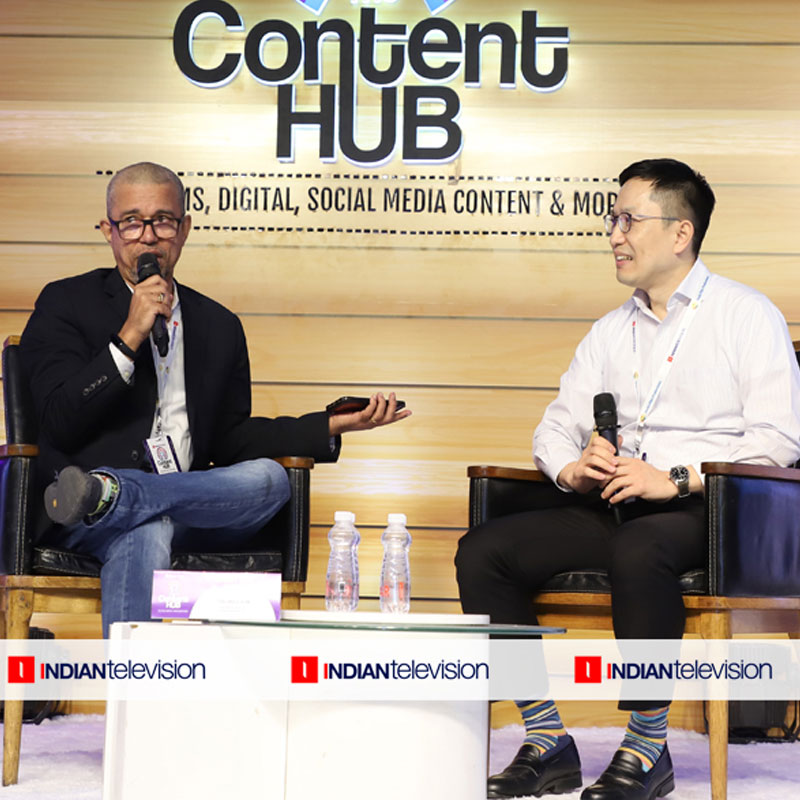
    MUMBAI: 2018 saw various OTT players in India gain massive popularity. There are more than 30 sites serving hours and hours of original as well as syndicated content, in various languages, genres, and tastes. During the third edition of Indiantelevision.com’s The Content Hub, sponsored by MX Player, representatives from some of the top OTT platforms in the country the need of good and meaningful content and the kind of programs that can work in this dynamic world.

    Part of the panel were Addatimes Pvt Ltd managing director Rajiv Mehra, The Viral Fever (TVF) global head of business and content Rahul Sarangi, Viacom 18 EVP and head content Monika Shergill, MX Player chief content officer Gautam Talwar and One Digital Entertainment COO and co-founder Gurpreet Singh. The panel was moderated by industry veteran and Hungama Digital Media Entertainment executive producer Sanjeev Lamba.

    The panel unanimously agreed on the fact that the greatest need of time is to procure and create high-quality original content that resonates with the audience. They stated that all the logistics; be it production or budgets, come only after people who can create and write quality content.

    Shergill said, “The competition to find good creators and partners to tell great stories is actually, by far, the single biggest challenge that we face because I feel that as a market, we kind of missed out on the golden age of content creation. While the world was producing a lot of mature content, we were leaning towards only soap opera kind of stories.”

    Sarangi chipped in with some fine examples of the work that TVF has created, “To see what kind of content people watch, we pulled out a few episodes of ‘Yeh Meri Family’ from YouTube and then put it on Netflix. The show became the second-most trending content in India and has a completion rate of 70 per cent. Because the writing was so strong, people came and watched it again and again. Similarly, with ‘Pitchers’, it wasn’t a grand show shot on high production budgets like ‘Sacred Games’. But it became the highest rated show on IMDB, just because of good writing.”

    He added, “I think the biggest thing we need to do right now is to invest in good writers. Also, we need to give them the time and pay them well. Groom the talent! Writers are going to be the prime thing that we need.”

    Moderating the panel, Lamba put another pertinent question forward asking what sort of content OTT platforms are willing to back. To this, the panel hailed the need of bringing original voices to the paradigm that are not just fresh but can also add on to the type of content that is already working on the web.

    Talwar mentioned that being the newest kid on the block, MX Player is currently trying to understand what the viewing pattern of the audience is. He said, “We have licenced quite a lot of content from people who have a high experience in actually creating successful web series, including TVF, Pocket Aces, and ALTBalaji. We have put this content online and now we are using a lot of data to understand what actually works in the space.”

    He continued, “Essentially, we are looking for content that is going to appeal to 18-30-old males, largely from North India. But it is genre-agnostic because I believe, people today watch everything. We are looking out for authentic stories from heartland India as they work well with the metro audience as well.”

    Mehra also agreed that the audience today loves watching all sort of content, be it long form or short form. He mentioned the need to experiment with the duration of the content and tell stories that the audience can connect to.

    While Shergill vouched for the need for passion projects and experimental content, Sarangi shared that they are looking for stories that touch the hearts of people. He stated that TVF will not indulge in violence or sexually explicit content, at least for a few more years.

    The panel also discussed the much-debated topic of IP rights. Shergill noted, “IP is something that is very important because this content is meant for posterity. You are believing in someone’s idea and paying to the last stream. So, the skin of the game for any platform is to have IP rights with them. But having said that, I also feel that when we know what kind of content creators we are speaking about, then there may be certain different models to work. But when you are working with teams of creators, and backing their idea, IP is the only asset you are creating and you should have the right to it.”

    Sarangi mentioned that as a company they do not sell their IP rights despite having worked with several OTT platforms. He said, “The reason behind this is that it is not only about production cost. It is also because of the time and effort put in by the creative team. We thereby do mostly an output kind of a deal or a licencing avenue. Also, we can do this at this point in time because we can guarantee a hit rate.”

    However, Singh shared a different angle and said, “IP has become a very crude word. Most people don’t even know what the value of an IP is. People are just fighting for it right now but they don’t even know what they are going to do of it after two or three years. So, I think if you are being compensated for the value, you must sell the rights to the platform.”

  • Sameer Nair on Applause Entertainment’s shows, content creation and trends [Part 1]

    Sameer Nair on Applause Entertainment’s shows, content creation and trends [Part 1]

    MUMBAI: Sameer Nair isn’t a man in a hurry. The seasoned media and entertainment industry executive describes the content creation business as a real get rich slow scheme and not a get rich quick scheme. He’s in it for the long haul and he’s here to stay. The Applause Entertainment CEO, who has been witness to many seismic shifts in showbiz, is among the most important and influential figures in the OTT ecosystem as India and the word scrambles to deliver consistent and credible content to consumers. During the third edition of Indiantelevision.com’s The Content Hub 2019, Nair gave the audience a tour d’horizon of the Indian and global content landscape. In conversation with founder, CEO and editor-in-chief of the Indiantelevision.com Group Anil Wanvari, the 53-year-old offered key insights into his company’s plans, creating content in today's age and making shows that grip the audience.

    You're collaborating with a diverse range of producers, there’s Deepak [Dhar], you’ve got BBC and you’ve got Nagesh [Kukunoor], so how did you go about selecting these guys to produce for your studio model?

    Actually, I’ve been working with all of them for all these years so we’ve done a lot of work before. When we set up Applause, the thought was to invest in content. I didn’t want to set up a company and be a production house because that’s not what we are, what we are is a studio which is investing in the production of content and we’re working with the best talent, best production houses, best writers, international formats, books, all sorts of things and we are investing money in content and then once its ready then we show it to platforms and hopefully they like it.

    So the thing was that you knew these guys and you knew that they could deliver, what if there’s someone absolutely new but has great ideas?

    No, actually it’s a mix. For example, Rasbhari is made with a producer called Tanveer Bookwala of Ding. I’ve known him from Balaji, but his is a relatively new company. Rasbhari has been selected for the Series Mania Festival in France as the only show from India, so it’s a big deal. It’s not necessarily about the big names, it’s really about storytelling and there’s a lot of creative talent out there and I think this premium drama series opens a whole new world because there is daily soap television for the fiction space and then there are the movies and that's a totally different beast. This is opening up a whole new world for writers, for directors, for creators and for actors. It’s not star-dependent, we work on great stories.

    So how far down are you on the road that you want to take? You’ve got about six series on board?

    Now we’ve produced 10, we’ve also done something in Tamil, we’ve also done a show in Bhojpuri, and we’ve of course done Hindi. We’ve got another 10 in production, we’ve got another 15-20 in development, so it’s actually quite a lot.

    Are you getting a good price on these or are they licensing deals?

    It’s both, it can be licencing, it can be outright, as in it depends and different platforms have different strategies and not necessarily every show works for everyone. Different people have different ways of doing it, but either way, I am here to help the platforms and work with them. They’ve got the harder job because they are the B2C business, they are the ones who’ve got to acquire customers, they’ve got to retain customers, and they’ve got to spend millions of dollars in doing all of that. What the biggest driving factor in customer retention is the quality of the content and the price you’re giving it at. 

    Are you getting the prices you want or is there a gap? My understanding is there is a gap.

    There’s no such thing as prices you want. We are not in any sort of 'get rich quick scheme'. This is a real 'get rich slow scheme'. I’m in no hurry. We’d like these shows to be liked by the audience, which should then allow us to do multiple seasons. That would be the thing. The platform should be happy and it should get a lot of traction.

    So that’s going to be the first outlet of sale. What happens after that? Do you go out globally with this or do you retain it for a while?

    It depends. On some shows our platforms are international platforms, they tend to be everywhere. In some cases, we have domestic platforms so there’s something left on the table for us to continue to sell. We are talking about language dubs, both domestic and international. We are talking about making the same show in another language when we get a chance. It’s brand new, we are a year and a half old, now we are doing our first round of deals, the shows will come out, and we’ll do a lot more.

    I think this is a great time, so we are investing in content and I think this is the time for all content creators to genuinely put their money where their mouth is because you keep hearing this debate about IP and ownership and is there anything left for us and all of that. This is the moment in time where it is possible for all the creators to get out there.

    Let’s talk about creativity in India. I’m seeing a bit of unfurling of creativity, a lot of creativity is being unleashed. Do you think that it has or there still needs to be a lot more unleashing of creativity?

    I don’t agree with this that we are somehow unleashing creativity now. If you take Indian cinema as an example, every year, and you can pick any year at random, has always produced a mainstream blockbuster that has gone out to become a hit, it’s also produced a big mainstream blockbuster that has bombed. In the same year, there have been sleeper hits and there have been art house movies.

    But now what appeared to be art house movies are becoming big hits.

    No, I’m saying even if you take the year for example when the movie Naseeb released, it was the big AB (Amitabh Bachchan) movie of the time. That was also the year Jaane Bhi Do Yaaro came. It was not an art house, but it went on to become a very successful movie. So this has been happening always, so what happens this year, happened last year, happens every year. I don’t think we have a problem with creativity. India is a very creative country. We are creative with accounting, we are creative with politics, and we are a creative country.

    But that being said, I think what is happening now is that the market has grown so we are spending more money on it. But the focus should be on content because that is the soul of the business. Finally, the consumers don’t know what’s behind the screen, they only know what’s on the screen and in this new digital world they just push play and if it captivates them and it holds them, they’re watching or they go away. So while all the tech is important and everything else is important, finally the consumer interface is the content.

    Haven’t you got stories being told that could not be told before?

    Of course.

    So in that sense, it’s unleashing the writing.

    It’s a good thing. Actually when you think about it, before satellite TV came Doordarshan used to do this. Doordarshan has done Tamas and Khandaan. Doordarshan has done a partition story. So there has been great work that has already happened on Doordarshan. Then satellite TV came along and it took the market in a direction and then the daily soap operas came along and took the market in an even more skewed direction. But that doesn’t mean India has not done that. So this is a good opportunity.

    But the filmmakers are looking at this as an opportunity too..

    This actually happened in the US in the late 90s. In the late 90s, TV had got to a point and Hollywood had become really big and that’s when premium drama broke out in the US, starting with HBO and Sopranos and then Showtime and everything else. In fact, a lot of Hollywood, all the film guys moved to TV. That was the golden age of American television and radio and it continues today. This, I hope, is going to be for India.

    Have we developed a Chuck Lorre in India? Will you do that?

    We will do that. It will happen. It’s just started. We are trying to work on an animated series, we are doing a lot of development on all sorts of new genres, all sorts of crazy shows. Rasbhari is that kind of show. We are doing a show called Salt City. It’s just about relationships, there’s nothing else to it. So there are so many things that are happening.

    I want you to commit that you’ll get a Chuck Lorre kind of a guy who can do the shows that he does in America in India.

    It depends. Chuck Lorre does a lot of shows, so it’s not just one type. So in that sense, many of these shows have been made and they have been made in India, some have worked very well, some have not. I don’t think Asit Modi is anywhere lesser than being Chuck Lorre. He is our version of it. We shouldn’t be bedazzled by that, but on the other hand, of course, there’s so much to learn, there’s so much creativity and so much stuff that they’ve done which we can adapt, which we can learn from. I don’t like to rip off anything, so I prefer to adapt.

    (Part 2 of this interview will be released tomorrow) 

  • The Content Hub 2019: Creators discuss digital adaptation, creativity and originality

    The Content Hub 2019: Creators discuss digital adaptation, creativity and originality

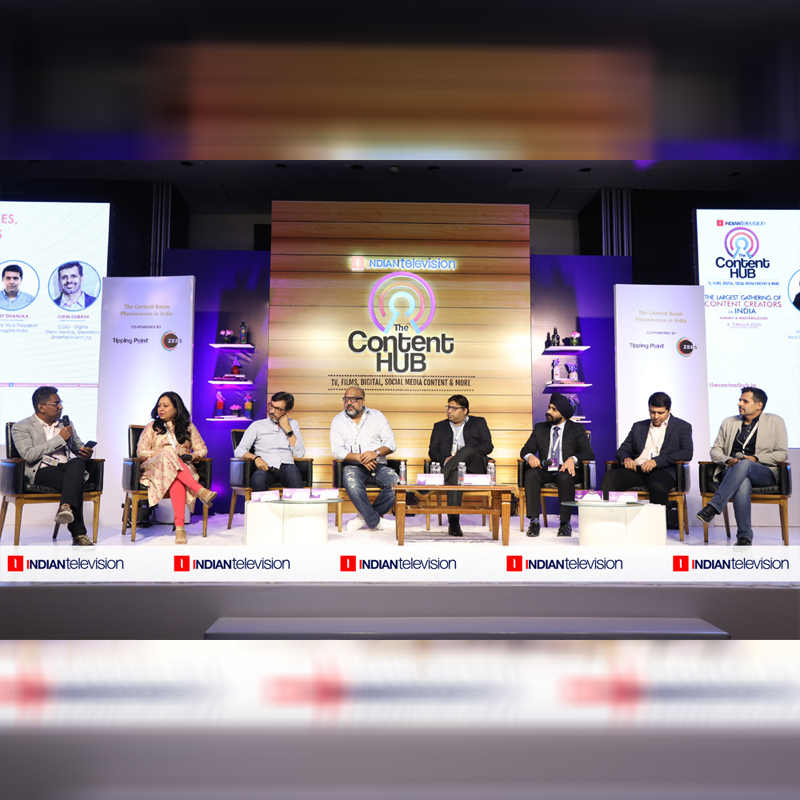
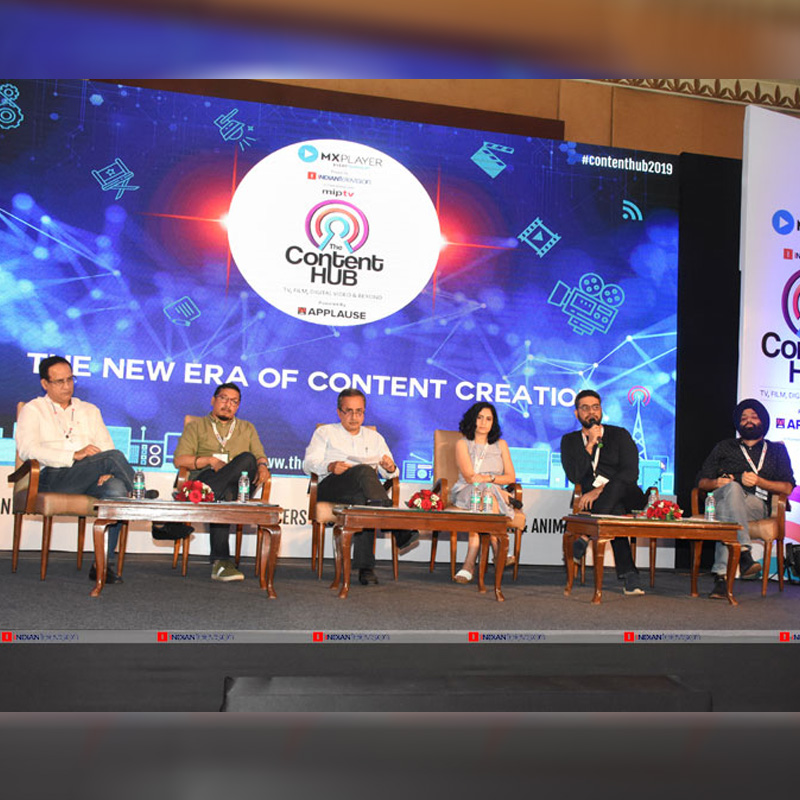
    MUMBAI: Indiantelevision.com on Wednesday wrapped the third edition of its popular event The Content Hub in presence of some of the biggest names from the TV, digital, and the movies industry. Spanned across several panel discussions and fireside chats, this edition of The Content Hub discussed ‘the new era of content creation’ with a focus on the digital boom, need of good content creators, the synergy between creators and producers, and creating properties that can travel globally.

    Starting the day was a panel discussion on ‘The TV Production Story: Reality, Not Fiction’, moderated by Bodhi Tree Multimedia co-founder and director Mautik Tolia. In discussion were some of the most successful and prominent names in the TV industry – Contiloe Pictures Pvt Ltd founder and producer Abhimanyu Singh, Endemol Shine India CEO Abhishek Rege and SOL India – Banijay Group founder and MD Fazila Allana.

    The distinguished panel discussed the opportunities and challenges fiction and non-fiction formats today face in the TV and digital world. They also shed some light on the prospects premium content has in the Indian industry.

    The panel agreed that non-fiction producers face bigger challenges in creating content as compared to those investing in fiction and dramas. Allana noted that while earlier people were chasing formats, now they are chasing stories. However, she quipped that there is a vast opportunity for non-fiction shows on OTT platforms citing examples of TV shows like MTV Troll Police.

    Singh reflected the same sentiments as he noted that this is a very good time for the content creators. He said, “I feel it is a great time to tell stories. I think we as an industry haven’t delivered premium content because the nature of delivery has always been daily content. So, this is an opportunity to deliver premium content.”

    Rege mentioned, “Scripted becomes a little easier to tell stories more across TV, OTT or across multiple platforms. The challenge here is making attractive content for the viewers and targeting the right people. With OTT I don’t think it’s easy to do as many talent shows that we do on linear.”

    The second session was a fireside chat between Indiantelevision.com founder, CEO and editor-in-chief Anil Wanvari and Swastik Productions  & One Life Studios founder and chief creative officer Siddharth Kumar Tewary.

    Tewary, based on his extensive experience of industry work, reflected upon many aspects of content creation and production including formats, IP rights, and disruptors in the industry. He noted while most of the people believe that longer formats don’t work internationally, the reality is not the same.

    Speaking about IP rights of content, Tewary made some relevant points saying, “IP creation is a scientific thing related to the socio-political situation in the country and the world. We need to know where the world is heading. If you are going to add value and bring something unique for the TV, then you will get the IP.” He also announced the foray of his group in the animation category at the platform.

    The next session was a discussion on the animation industry with an esteemed panel of Discovery Kids head Uttam Pal Singh, Golden Robot Animation head of business development RK Chand, Paperboat Animation co-founder and chairman Soumitra Ranade and Bioscopewala Pictures managing partner Nishith Takia. The session was moderated by Kinsane Entertainment Inc chief marketing officer Pranab Punj.

    The panel highlighted the vast opportunities OTT platforms are offering them right now. Takia shared that his company is in talks with several big digital players to create content for them. Another point that the panel highlighted was that Indian audience is not very keen to visit theatres to consume animated content and that closed their avenues of creating content for a wider audience and not just the kids.

    Answering a question on why there aren’t more female-led animated shows in India, the panel shared a similar tone as they mentioned that in most of their shows, the female characters have an equal prominence as the mail lead, they are inclusive to the storyline. They added that male-led shows are doing well in the market and from a business perspective they are focusing on that aspect as well.

    The next session was an interesting and insightful chat on ‘The Syndication Opportunity’ between Sony head networks—licencing Malvika Prabhu, Go Quest Media Ventures MD Vivek Lath, Swastik Productions and One life studio producer and managing director Rahul Kumar Tewary, MX Player head of content acquisition Mansi Shrivastav and ANM Global co-founder partner Nidhish Mehrotra. Moderating the panel was Wanvari.

    Wanvari started the discussion by asking the panellists whether the demand for Indian content in the global market is going up or declining. To this, the panel stated that it has probably reduced over time. However, the Indian creations are performing well at markets like Thailand and Sri Lanka.

    The panel mentioned that genres like romance, drama, horror, and good animation has a lot of markets overseas. They also added that premium content will also attract a lot of traction towards Indian creations. Kumar stated that we need to relook at the type of content we are creating and invest more in subjects that have the potential to travel. He also said that Indians do not value their content enough.

    Lath said, “We have to think like a programmer and not from a sales perspective,” as he elaborated on the right approach to sell content overseas. He predicted that India has the potential to make around Rs 400-500 crore with content syndication (minus the movies) because it is still young in the market and has a lot of potential to improve in the coming times. Kumar added that in the next few years Indian premium content will find a lot of audiences globally.

    Taking the insightful day ahead was the next panel of digital producers including Addatimes Pvt Ltd managing director Rajiv Mehra, The Viral Fever (TVF) global head of business and content Rahul Sarangi, Viacom18 EVP and head content Monika Shergill, MX Player chief content officer Gautam Talwar and One Digital Entertainment COO and co-founder Gurpreet Singh. The panel was moderated by industry veteran and Hungama Digital Media Entertainment executive producer Sanjeev Lamba.

    While the panel agreed that there is a great influx of male-oriented and sexually-oriented content performing on OTT platform, they all are looking beyond that. They all mentioned that the industry is currently focusing on good writing talent and meaningful stories. Sarangi said that TVF is not looking towards creating violent or sexual content at all, at least for the next four to five years. Its focus is on stories like Pitchers and Yeh Meri Family that touch the hearts of the people.

    Shergill shared that Voot is looking at ideas that bring new and original voices to the stories. Unless platforms experiment, she believes they will lose their audience.

    Talwar shared that the focus of recently launched MX Player is on creating content that can be watched on a 5-inch phone screen rather on a 50-inch TV. The TG for the player is 18-30-year-old male and it wants the platform to be genre-agnostic.

    The next event was a fireside chat between Wanvari and Applause Entertainment CEO Sameer Nair. The duo discussed ‘The New Studio Model’.

    Nair started with launching an amazing showreel of upcoming programmes from the Applause banner. They included a wide variety of content ranging from humour to political to drama. It also included the Indian version of the very popular The Office series.

    Nair stated that he did not want to start a company which goes on to become just a production house but he rather wanted to invest in good content. He thus worked with some amazing directors, writers, and actors like Ronit Roy, Pankaj Tripathi and Swara Bhaskar to create the first instalment of the Applause shows. One of the flagship series, Rasbhari-starring Swara Bhaskar and written by Shantanu Shrivastava—has in fact already been selected for ‘Series Mania’ festival in France. Warning them of slacking in content, he said, “If the content industry is not careful right now, it will end up becoming a replica of TV.”

    The day continued with a panel discussion on how new Hindi film producers are making their mark and what business models they are drawing up. Part of the discussion were Essel Vision (Zee Studios) CEO Shariq Patel, Viacom18 Studios chief operating officer Ajit Andhare, Alliance Media and Entertainment owner Sunil Doshi and Fox Star Studios India CEO Vijay Singh. Moderating the panel was film reviewer at Film Companion Suchitra Tyagi.

    The panel was a light-hearted but with insightful discussions on the current trends of the Indian movie industry, the need for well-written scripts and content that performs. The panel agreed that today is an amazing time for good storytellers and content creators. They forced upon the fact that literature is the sibling of cinema. The panel also discussed on creating avenues to make the system more approachable to the budding writers who want to reach out to the studios.

    The evening was concluded by an overview of the MIP platform by MIP China Hangzhou director of market development Ted Baracos, who in an interactive session apprised the gathering of various opportunities this global content-sharing platform brings and how they can leverage on that.

  • The Content Hub: How formats are created?

    The Content Hub: How formats are created?

    MUMBAI: On the day first day of The Content Hub masterclass, The Format People CCO and partner Justin Scroggie, spoke about how ideas are generated and then turned into formats for television.


    Defining a format as a series that travels and something that can be adapted in another territory, Scroggie emphasised  that certain elements in a format determine how effective it is.  In the making of a television programme, the order of television elements, both original and common, have to be in such a way that a distinctive narrative progression is created.  These elements could be: set, cast, rules, prize money, audience connect or any other element that make up a television show. Scroggie cited the reality show, ‘Canada’s worst driver’ as an example where the element of ‘elimination’ came as a twist wherein the contestants wanted to get eliminated instead of the avoiding it. He elaborated that the level of originality depends on the order of these elements and how one can give the audience something new. There needs to be a precise beginning, middle and end to each format.  According to him, formats need to address three important things – people (who are involved), action (what they have to do) and motivation (why they have to do it).  The audience needs to know the genre and core subject of the show.


    “In order to generate good television ideas, one should start of by watching television content, in a genre that is unfamiliar to you,” he said. By watching television shows that one is not used to, he/she becomes aware of what else is happening around the realm and it helps in developing better ideas. “The wider your own television experience is, the more broadly you will be able to think”, he added. 


    Scroggie believes that television influences the way in which people behave, speak and think.


    There are several methods from which good content and format can be created.  “When we start thinking of ideas, we tend to go down the familiar path. That is how our brains are designed. We need to find ways to trick our way out of that”, he informed.


    He went on add that, one can simply begin with a phrase, proverb, movie title or lyrics as a starting point for an idea. For example, one can take the idea of the film title, ‘Frozen’ and formulate a dating show wherein the guy ‘freezes’ upon meeting his date and how he overcomes the same.  Ideas can also be generated by changing the angle of a simple show. For example, one can take a simple cooking show and look at it from another angle, that could possibly also highlight domestic problems between married couples. Scroggie added, “When you take a married couple and put them in a kitchen, particularly ‘her’ kitchen, there are bound to be difficulties”.


    Another method of creating ideas would be to take an existing show and reverse it. “Things can basically start from anywhere. By reversing ideas, it will help you open up fresh and new stuff”, he commented.


     ‘Secret Millionaire’ is one such show, that starts with the contestant having a million dollars at the beginning and then starts losing it as the game progresses.


    A lot of formats follow a set of narratives. “Audiences like stories with a familiar shape to it, that’s why even movies follow a familiar shape of a beginning, middle and end. Shows have different narratives that add to the value of the show.” he added. Similarly for television, narratives can be applied to the basic themes. One needs to understand these narratives in order to come up with successful formats.


    Narratives can be in the form of a make-over as showed in programmes like ‘American dream builders’, ‘Shamba shape up’ and “Let me in” or follow a campaign narrative, like the show ‘Dream school’. There is also the swap narrative format.


    According to Scroggie, successful formats are majorly designed along the lines of the ‘fish out of water’ narrative where you put a person or group of people in an unfamiliar situation, out of their comfort zone. “It is a common narrative where you see the outcome of putting people in an unfamiliar situation,” he stated and added, “Narratives that are experimental are also picking up fast these days. Unlike most reality shows that are scripted, experimental narrative has a lot more honesty to it. People want to see open-ended shows where nobody really knows what is going to happen next”.


    Apart from that, a creator or writer of a show should try and break rules that could possibly bring about twists in the show. One should also keep an emotional connect with the audience. “You should be clear about the kind of reaction you want from the audience. It could be a feeling of happiness or anger”. 


    Last but not the least, titles play an important part in grabbing attention.