Tag: The Content Hub 2022

  • TCH 2022: Experts discuss the secret sauce of OTT storytelling to keep the audience engaged

    TCH 2022: Experts discuss the secret sauce of OTT storytelling to keep the audience engaged

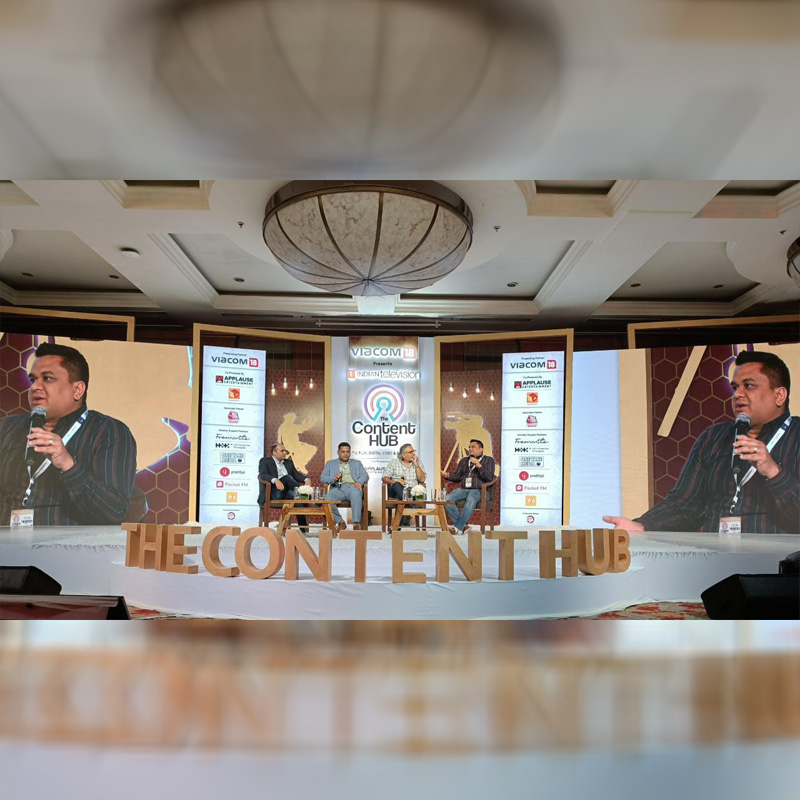
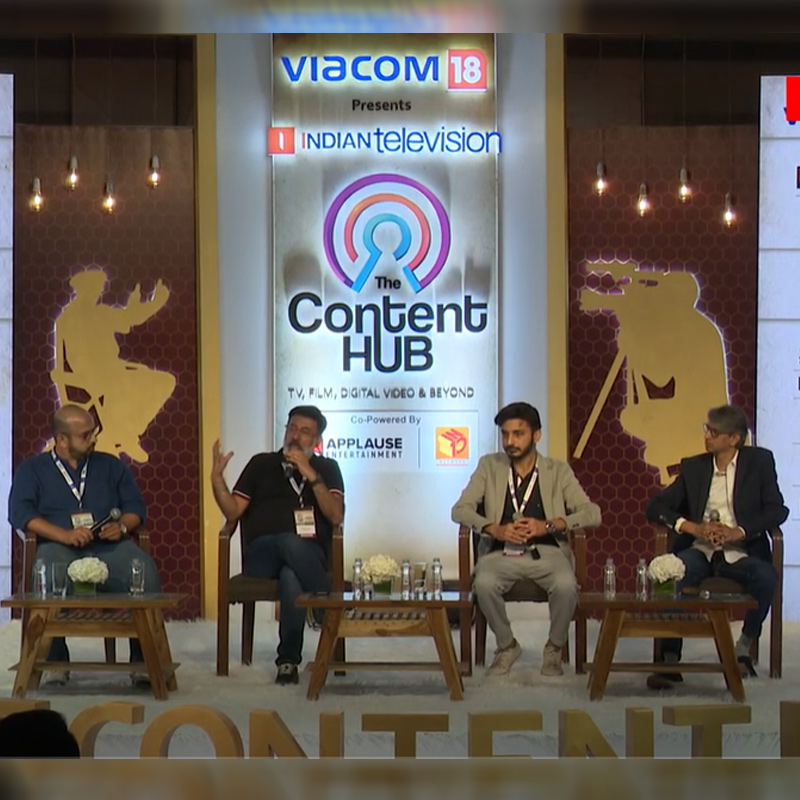
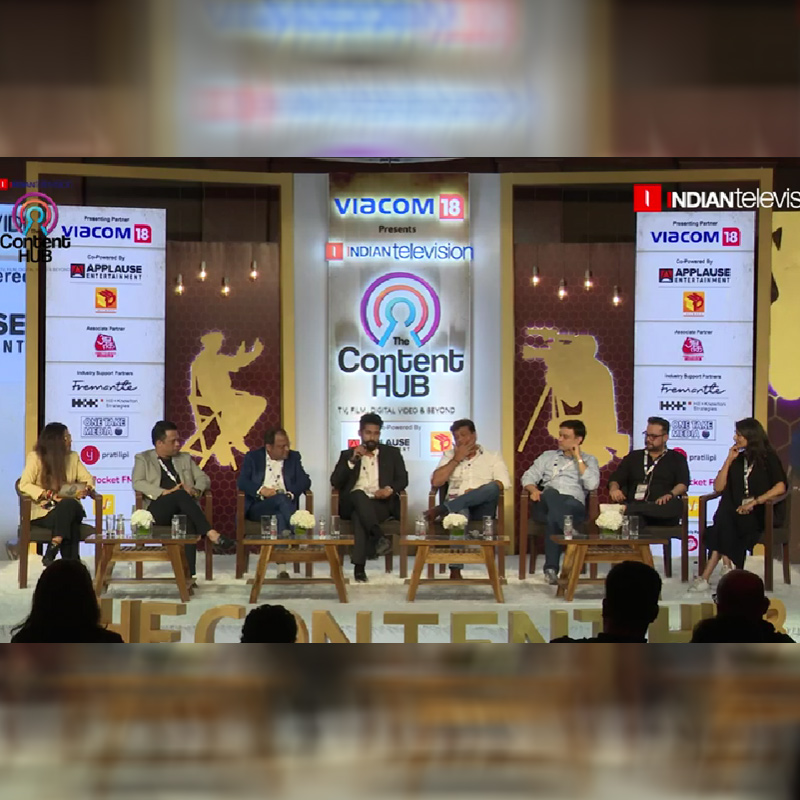
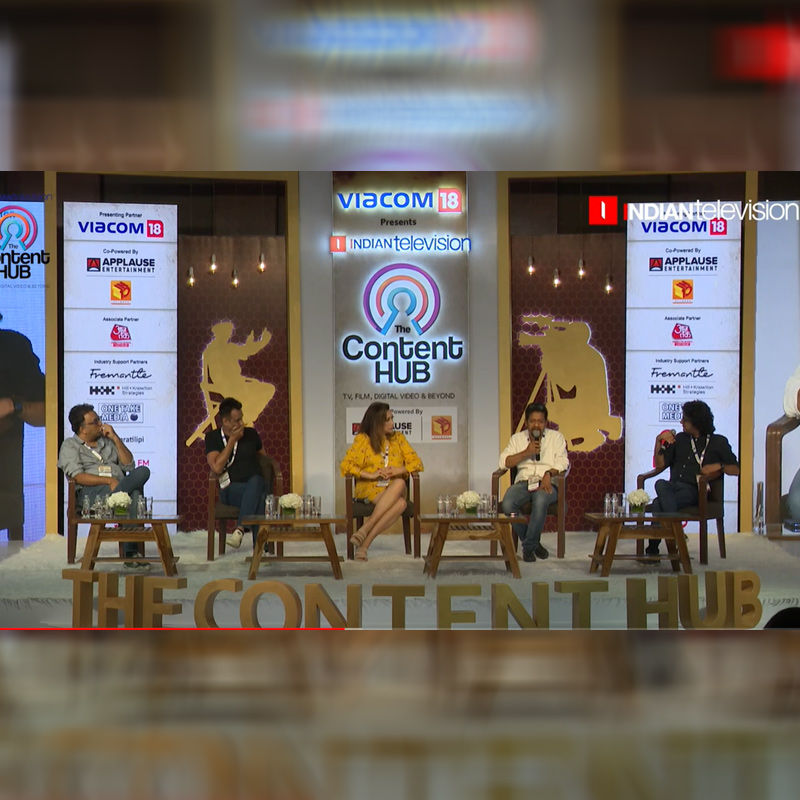
    Mumbai: The craft is constantly changing in OTT space. Every few months, the rules keep changing. The business players are still looking for the secret sauce. They are still trying to figure out and grapple with what kind of content works. How are the tastes of the audience changing? It’s highly dynamic, and to decipher this unique situation, on the sixth edition of Indiantelevision.com’s ‘The Content Hub Summit 2022,’ held in Mumbai, the media and entertainment industry experts shared their insights on the topic, “The legion of OTT content creators: Storytelling has never been on such an exciting journey.”

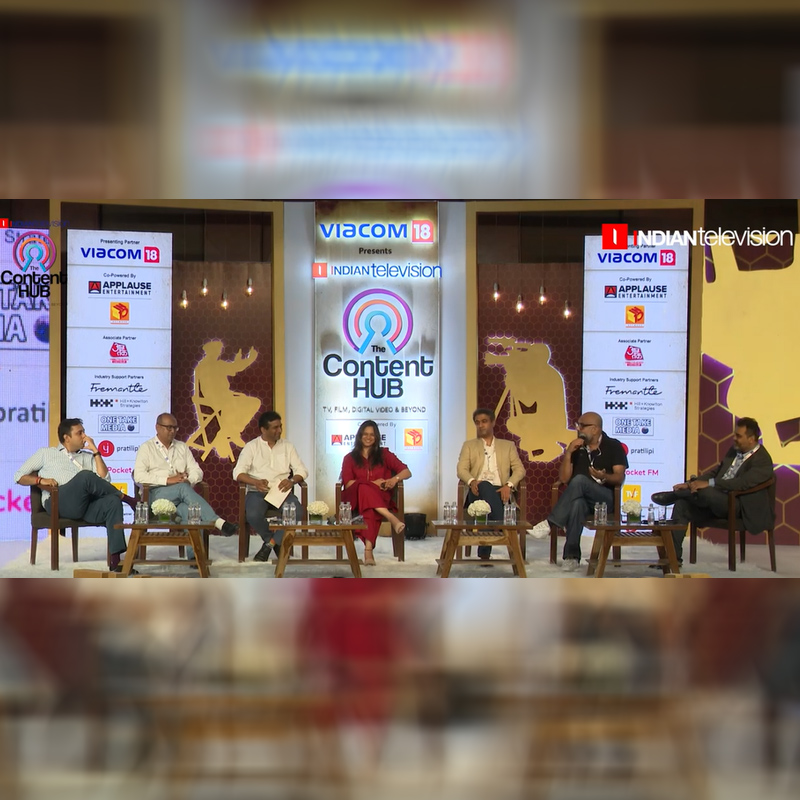
    The session had the presence of Pratilipi Studios business head Ambesh Tiwari, Sony Pictures Entertainment head – StudioNext Indranil Chakraborty, Roy Kapur Films head-originals Jinesh Shah, ZEE5 chief content officer, Hindi Originals Nimisha Pandey, Warner Bros Discovery head of original content – South Asia Sai Abishek and Juggernaut Productions (OTT) chief executive officer Samar Khan.

    The panel was moderated by Bodhitree Multimedia managing director Mautik Tolia.

    The summit was presented by Viacom18, and co-powered by Applause Entertainment & IN10 Media Network. Aaj Tak Connected Stream was the association partner. Industry partners were Fremantle India, Hill+Knowlton Strategies, One Take Media, Pratilipi, Pocket FM and The Viral Fever. The Indian Motion Pictures Producers’ Association (IMPPA) was our community partner.

    The discussion began with an awareness of these experts’ attempts to break into the mainstream content market. Is it through design that has been attempted to build a specialisation, or any secret sauce, or is it just an accident?

    Khan noted that it was by design; “There is no secret sauce. The sauce is essentially that you really have to work hard and you have to go out there and find new stories because everybody will agree to the fact that it’s becoming difficult to find new stories because so many shows are being made, so you have to go out there and find people and say, “Give me something that is going to be a little different from what is already there, so it’s just the search for new stories that keeps me going.”

    When asked for the insights and secrets of some interesting products coming out like the Swami Nithyananda Show (My Daughter Joined a Cult) and Secrets Of Sinauli, the experts said that we’re maturing in the non-fiction space. 

    Speaking in this context, Abishek commented that viewers are generally looking at consuming good content but also focusing on the storytelling to make it slightly more cinematic than people are used to generally consuming. “We’re attempting to marry entertainment, which has previously been considered niche, and documentary, which has, unfortunately, not been the most popular genre. Oh, it’s boring or it’s too niche or things like that!”

    Continuing the conversation, Pandey expressed her thoughts when asked if there are any unique elements in a show that she looks for as the secret sauce. What are the essential ingredients required to commission a show?

    She mentioned there is no secret sauce available but the four main recipes that must be followed in order to stand out from the crowd are, first and foremost, a realistic real-world setting. Second, a fascinating story without any shortcuts. Third, a real character with different shades, and finally, a strong passion to create the show.

    Discussing ahead with Shah, Tolia highlighted the different formats of story-telling and its dynamics. He asked Shah, What are the lessons learned and challenges encountered during the transition to the long-form format (web-series) from the movie format?

    The process started from an organic place, so the challenge was different from the television writers & film writers. As an OTT writer, we took some training sessions from experienced writers, show runners, and creators from across the world to help put a process together. It is the alignment of all the cooks (writers, show runners, and creators) that helped us in making this sauce, said Shah.

    Watch the complete session on the link below: 

  • TCH 2022: Experts discuss the significance of technology to create authentic content

    TCH 2022: Experts discuss the significance of technology to create authentic content

    Mumbai: The media & entertainment sector is facing an adverse effect of the Covid 19 pandemic crisis. During the lockdown period, most of the film production and entertainment houses had to shut down, in such a scenario, technology played an imperative role in generating quality production work by functioning virtually. The pandemic has accelerated the adoption of technologies. The introduction of virtual productions, VFX, and game engines changed the film production business. The creation of content is improved by technological development and adapting to new trends.

    On the sixth edition of Indiantelevision.com’s The Content Hub Summit 2022 held in Mumbai recently the media and entertainment industry experts shared their insights on the topic, ‘Tech-celeration of content: where have we reached?’

    The session had the presence of Eros Now chief technology officer Lokesh Chauhan; Contiloe Group CFO and Illusion Reality Studios CEO Nitin Dadoo; EPIC ON & Stream-Sense chief operating officer Sourjya Mohanty. 

    The panel deliberated views on the development of tools and techniques for creating incredible content experiences. There has been immense development on the tech front that is changing the way content is consumed. Cutting-edge content is transforming the media & entertainment sector every day. Virtual production capabilities are becoming a key differentiator for content creators. 

    During the Covid-19 pandemic, the entertainment segment leveraged technology throughout the entire virtual production life cycle to enhance the way content is created. It helped to improve production planning, increase shooting efficiency, and reduce the number of expensive reshoots.

    The panel was also moderated by Plug and Play Entertainment media consultant & co-founder Anuj Gandhi.

    The summit was presented by Viacom18, and co-powered by Applause Entertainment and IN10 Media Network. Aaj Tak Connected Stream is the association partner. Industry partners are Fremantle India, Hill+Knowlton Strategies, One Take Media, Pratilipi, Pocket FM and The Viral Fever. The Indian Motion Pictures Producers’ Association (IMPPA) is our community partner.

    Understanding the significance of technology for generating content was the starting point of the conversation.

    When asked, Is content & technology limited to OTT and theatre? What has happened to the good old TV? Dadoo said, “I don’t think that technology is only restricted to OTT! Rather, it is highly helpful to all types of storytellers.” He explained that “the use of new technologies like Unreal and Cam, which provide DOP directors camera tracking as well as onset information with an unreal virtual background, has drawn viewers back to television. The amount of time spent has increased during the past three months.”

    In addition, he also remarked on the availability of talent to handle such technologies, “The talent aspect is quite difficult. We came to the conclusion that we needed to hire a foreign crew since Indians are unprepared for these kinds of technologies. After a month or two of preparing the Indian crew for the new technologies, we had another difficulty: keeping them employed when other opportunities in the market were available.”

    Another member from the panel, Mohanty added, “The problem is omnipresent. There is always a talent crunch in the industry.”

    Chauhan also mentioned, “OTT platforms’ journeys are very distinct from those of traditional platforms.” He continued, “All of these systems, including LG, Samsung, Android, and iOS are constantly evolving. There are continually more changes occurring; these are not coming to an end. There will be immersive experiences that will necessitate the complete rebuilding of many of these services, many of which we currently consider to be quite stable. In light of this, you must constantly develop your skills and learn new things, unlike many other technologies.”

    Sharing his view on the impact of technology on the creative side of the business, Mohanty said, “Today is the era where machines decide what we need to think and what we need to do. The basic recommendation engine which is driven by AI and ML decides the content that audiences would like to watch.”

    Regarding the monetization aspect, Chauhan stated, “Right now in India, there aren’t enough individuals utilising these sites. Most of them run in the red. Players on OTT platforms are attempting to optimize their journey. The ugly truth is that Indian OTT services don’t have as much money as Netflix and Amazon do.” 

    Watch the full session:

  • TCH 2022: How to drive the next wave of growth in the digital audio ecosystem

    TCH 2022: How to drive the next wave of growth in the digital audio ecosystem

    Mumbai: The Indian audio and music landscape has undergone a paradigm shift in the past few years. On-demand audio content and podcasts are transforming people’s listening habits, just as on-demand video has changed how viewers watch television. Music streaming platforms have been gaining traction driven by the growing appetite for on-demand music and the rising popularity of podcasts, with a pandemic-prompted shift in the public’s content consumption patterns. The Indian music streaming market is projected to cross $870 million by the year 2025, according to the data from market research firm Statista.

    On day two of the sixth edition of Indiantelevision.com’s The Content Hub Summit 2022 held on Thursday in Mumbai, executives of the music and audio content industry share their insights on ‘Decoding the business of audio, music and podcast’. The informative session chaired by Ideabrew Studios co-founder & CEO Aditya Kuber saw industry insiders comprising Hungama Digital chief executive officer Siddhartha Roy, Showbox vice president -Programming & Strategy Clyde Dsouza and Pocket FM senior vice president – content Ashu Behl discuss ways and means to drive the next wave of business growth in the digital audio space.

    The summit was presented by Viacom18, and co-powered by Applause Entertainment and IN10 Media Network. Aaj Tak Connected Stream is the association partner. Industry partners are Fremantle India, Hill+Knowlton Strategies, One Take Media, Pratilipi, Pocket FM and The Viral Fever. The Indian Motion Pictures Producers’ Association (IMPPA) is our community partner. 

    With widespread internet penetration, and affordable smartphones becoming a common commodity even in the country’s tier three and four towns, the boundaries of the music streaming landscape have been pushed.

    Showbox’s Clyde Dsouza, represents the more traditional media which some may say is on its way out. In his view, the more things change the more they remain the same. He said “While the platforms will keep evolving, the core piece- which’s the content- be it audio or visual- will always remain the same. So, the curation, the programming, the packaging- all of that remains the same. It’s just that the distribution models will keep changing.”

    While the Indian market is now choc-a-bloc with digital music streaming platforms, OTTs that are purely ‘non-music’ and ‘audio-based’, such as Pocket FM, are also getting launched. These OTTs are evolving the audio-listening space into three broad categories, namely the traditional informative podcasts, audio books and lastly, the dominant category of audio series, explained Pocket FM’s Ashu Behl.

    “The biggest barrier to user acquisition for us was there are not many audio user-acquisition channels, unless we go to competitors like Gaana or maybe, Hungama. So, we actually leveraged a video-led acquisition approach where we got consumers to sample audio content in some form of video, maybe a five-minute or three-minute clip,” continued Behl. “When the audience gets ‘stuck’ to the content or the story they then latch onto the content and download the app and continue to listen.”

    How has the digital side of the business affected revenue on the traditional side, Ideabrew Studios’s Aditya Kuber asked Showbox’s Dsouza. From an advertising perspective one might have expected a downturn from digital platforms eating away at the advertising revenue, but there’s actually been an upturn, observed D’souza.

    “I think traditional TV media is grounded within the ecosystem of the advertiser, the client, the audience and the measurability,” he added further. “Showbox has seen a huge uptick, not only in terms of viewership, but also in terms of advertising. So, music channels are still robust and it’s a while away for the traditional space to be upturned as such.”

    The industry stakeholders discussed some of the newer payment methods in terms of micropayment models, and how smaller pieces of content can be converted into paid pieces of content.

    “When we started monetising, we did so with an annual subscription model, but then we realised there’s an entry barrier for users to pay even nominal amounts,” said Behl. “So, we completely did away with it and started micro-payments, where the initial user can start spending, say as low as nine rupees, and listen to a number of episodes of a particular show.” This has lowered the entry barrier for the users, as well as, helped retention and stickiness of our long-form content.

    When it comes to streaming platforms- more so music-driven- the entire category, each of us are aggressively continuing to grow our communities and each of us have different ways and forms in the way we are going about it, said Hungama Digital’s Siddhartha Roy. “From a payment perspective, it’s not the price. It’s all about the fact that if I’m getting the service free, why should I be paying? So, each of us are running different programs on how to move the consumer from a ‘free’ bucket into ‘paid’.”

    What is the role that brands can play, in terms of advertising and effectively tapping into a platform’s community of users, asked Kuber, while going beyond the standard sponsorship or advertising route? The key for brands could be to step up by taking calculated risks and partnering more with the content, say the panellists.

    Taking the same content, and packaging it and giving the brand proposition across music, OTT and broadcast, creating a 360-degree play with the brand’s passion was some of the other means spoken about. Another innovation is integrating the brand’s stories as a part of an audio series or content, where brands can actually monetise and see the outcome.

    One of the major challenges brands face today is measuring the return on investment (RoI) on their investments in the digital audio space. How are the platforms aiding the brands on this, asked Kuber.

    Digital as a medium is the most transparent measurement of what you would call ‘brand value’, says Roy. “It could be done through an impression, a view, or through the time spent. So, the amount of data that is being put out to brands, the effective RoI for the money that they deploy on advertising in digital – it can’t get more transparent than that.”

    That context-setting and target-setting needs to be done at the time of engaging with the brand, he added.

    The panellists also debated on having a standardised tool of data measurement for brands to measure their ROI, when it came to digital platforms.

    On dealing with upcoming challenges and rising competition in the audio content space, experts were united about applying the standard tenets of staying ‘relevant’ and ‘committed’, while continuing to add something new and of value to the ecosystem.

    Watch the entire session.

  • TCH 2022: Competition will drive TV to innovate its programming

    TCH 2022: Competition will drive TV to innovate its programming

    Mumbai: Two decades ago, when audiences wanted to consume entertainment in a video format, they had only two options – TV and cinema. Today, the modes of delivering video content have grown multi-fold. Content production, too, has seen a democratization with new technologies that have enabled every individual to become a creator. This has radically changed the dynamic of content consumption which is also affecting TV.

    At the sixth edition of Viacom18 presents The Content Hub Summit 2022 organized by Indiantelevision.com held recently, panellists discussed the topic ‘Mastering a New TV Language’ to get ahead of changing TV viewing habits and develop content to suit the audience preferences.

    The session was chaired by media and entertainment advisor Mansi Darbar and was joined by Fremantle India Television Productions managing director Aradhana Bhola, The Q programming head Ashutosh Barve, Endemol Shine India chief operating officer Gourav Gokhale, Sony Pictures Networks India business head – Sony SAB, PAL and Hindi movies cluster Neeraj Vyas, Dreamiyata Entertainment actor and producer Ravi Dubey, Atrangii founder Vibhu Agarwal, Beyond Dreams Group founder and managing director Yash A Patnaik.

    The discussion began by trying to understand what has essentially changed with the audience contrasting the 90s to the 2020s.

    Sony Pictures Networks’ Neeraj Vyas, who is a broadcast industry veteran with over 25 years of experience, observed, “Today, TV still has 60 per cent of penetration but there’s a variety of alternatives for video consumption. The environment is a lot more competitive with emerging formats like long-form, short-form, video-on-demand etc.”

    He contrasted the current state of TV to the transformation of cinemas post the 80-90s. He said, “The movies of the 80s and 90s were very similar. The movie industry had fallen into a rut until multiplexes opened up, where you could have different shows all screening at the same time. This choice infused a freshness in the movie business with new stories like ‘Lagaan’ and ‘Dil Chahta Hai’.”

    “TV is being tested with the variety of alternatives that are available. We need to balance between the TV ratings reality and finding out what the consumer actually wants,” he added.

    Fremantle India’s Aradhana Bhola, behind shows like Indian Idol, India’s Got Talent, said that “The biggest change has been the pattern of consumption on TV. There used to be a culture of co-viewing on TV where more than one viewer was in front on a TV set. Now, co-viewing has turned into individual viewing with personal devices such as iPads and smartphones.”

    TV producer Yash A Patnaik candidly said that he is as old as the TV industry in India. He is the producer behind the shows Veera for StarPlus, Sadda Haq for Channel V, Ishq Me Marjawan for Colors, Kuch Rang Pyaar Ke Aise Bhi for Sony Pictures Networks and Raksha Bandhan for Dangal.

    He noted that content has more of a voice today as compared to platforms. Earlier, the success of a show was dictated by how many episodes of content it aired. But, now, shows have different buyers for different formats and different audience cohorts.

    Endemol Shine India’s Gourav Gokhale agreed. “Philosophically speaking, technology has made us impatient,” he stated. “People want to see a finite series for the immediate gratification. The expected size of a show has come down as audiences want the climax to come earlier. Also, audiences are consuming content at any time, anywhere, whether during their lunch break or during their commute.”

    He remarked that the nature of TV content being 24-minute long shows airing at 9 p.m in the night needs to be reassessed.  

    The Q India is changing the language on TV by bringing popular digital formats to TV. Ashutosh Barve said that while consumption of content has changed over the years, the core TV programming has not. “It is the same five per cent of shows that are doing well, today, as they did years ago. The bulk of consumption on TV remains the same.”

    However, “there are all sorts of formats making inroads from digital on to TV and we’re leading the charge,” he added.  

    “The measurement reality of our country is not accurately reflecting the viewing reality of the TV audience as there has been a log of change in the last five years,” said Vyas.

    Vyas, who manages six channels under Sony Pictures Networks including Hindi GEC Sony SAB, said that in the future he does not see Sony SAB being just a channel but a differentiated brand that is available across platforms. “

    Vibhu Agarwal, who founded OTT platform Ullu and Hindi general entertainment channel Atrangii, said there’s an audience for all kinds of content formats. “When I watch on digital, discovery is a big problem, and by the time I settle on a piece of content, my dinner is finished!” he candidly shared. Highlighting that even with the emergence of digital media, traditional media such as print, radio and TV continue to see robust consumption. “Why did I, as a digital player, choose to launch a TV channel? Because people are just as interested in TV long-format series as much as they are interested in a finite web series.”

    Bhola affirmed that content producers are scrutinising which broadcast partner, target audience and genre/format works best to showcase their talent and story. She said that it’s the nature of the idea and duration of the series that dictates which platform it is made available on.

    Actor and producer Ravi Dubey recalled that the pioneering shows on TV arrived much before there was any research to back them up. He stated “As a creative person in the industry, I still believe in backing shows based purely on gut instinct.” 

    Watch the full session. 

  • TCH 2022: How can Indian content woo the world?

    TCH 2022: How can Indian content woo the world?

    Mumbai: Indian cinema and entertainment has been gradually gaining a share in the global market, with audiences around the world being more receptive to Indian content now than they have been in the past. Spurred, no doubt, in part due to the increased accessibility of the content on online streaming platforms. Despite this, India is yet to score a global hit like Parasite or Squid Game, with a worldwide impact and appeal. How can Indian content woo global audiences better, transcending boundaries and barriers to tell stories that connect with audiences worldwide? Are global co-productions the way forward?

    At the sixth edition of Indiantelevision.com’s The Content Hub Summit 2022 held at Mumbai’s JW Marriott on Wednesday, industry stakeholders explore these questions, while sharing their views and insights on how Indian content can play a bigger role in the global cinema & entertainment landscape. The session, “Made in India, For the World” was moderated by film critic, journalist and author Mayank Shekhar and comprised of Friday Filmworks chief executive officer Devendra Deshpande, The Foundry creator-in-chief Vekeana Dhillon, International Media Acq Corp chairman & CEO Shibasish Sarkar, Indian Film Producer Sunir Kheterpal as panelists.

    The summit was presented by Viacom18, and co-powered by Applause Entertainment and IN10 Media Network. Aaj Tak Connected Stream is the association partner. Industry partners are Fremantle India, Hill+Knowlton Strategies, One Take Media, Pratilipi, Pocket FM and The Viral Fever. The Indian Motion Pictures Producers’ Association (IMPPA) is our community partner. 

    Mayank Shekhar kicked off the session by asking the panellists whether any of them had attempted creating anything on a global scale, or content that’s meant for a more global audience. He noted as well that it’s not as though Indian content has not travelled across the world, it just hasn’t broken in the West.

    “I don’t think that when we develop a story for a film, we look at the international audience as the primary audience,” Film Producer Sunir Kheterpal responded to Shekhar’s query. In fact, nowhere in the world, except maybe Hollywood or China, do they create movies for international audiences- they just happen, he further said. “So, most of the stuff I end up developing and that goes into production, is for the mainstream Indian audience. And if something comes out of it, great,” he added.

    When it comes to storytelling and content, India is just not there yet, where enough people outside (the country) would look to us for original stories, Kheterpal noted.

    The DNA of what one looks for in a story is “universal appeal”, said Friday Filmworks chief executive officer Devendra Deshpande, adding that it can be further broken down into whether the story has ‘curiosity’ and ‘awe’. “It’s not about ‘A audience’ or ‘B audience’. Whether it breaks boundaries or not, then depends on various parameters like execution, distribution etc.”

    Talking about what international broadcasters are looking for, The Foundry’s Vekeana Dhillon said, “a hyperlocal story with a universal theme, that’s specific but not niche.” Where Bollywood falls into a potentially problematic zone, Dhillon adds, is the ‘Goldilocks zone’- that is, the story can’t be “too hard”, or “too soft” and it has to be just right. Because it doesn’t necessarily mean that we are getting the best product. It means we are getting a product that’s a levelled out, synthesised version of something that’s not quite hyperlocal.

    “We develop a lot of content in-house. And one of our stringent rules is to flesh out characters- create human tornados of angst, love, dilemma and complications,” she says, adding that is something that’s going to get you the global gaze.

    According to International Media Acquisition Corp’s Shibasish Sarkar, when you write a story, regardless of which country you are from, your first approach is how much audience you want to reach. The great news is that over the last four to five years the ecosystem has evolved and the whole medium of storytelling can now reach an audience, regardless of money, distribution capability or marketing capability.

    Post-pandemic, there’s a clear demarcation in audiences’ minds today on what they want to watch in a theatre and what they wish to watch at home, said Sarkar.

    When you look at the kind of money that goes into making the kind of movies that Hollywood is known for, is it that they can afford it only because they have an audience across the world. Is that the threshold that India cannot afford to cross, that unless you spend that kind of money you cannot have such a huge market, asks Shekhar of the panel.

    The industry experts agreed that the Indian movie industry was more into trying to find stories that would work across the country, rather than targeting a global audience.

    “I think we have a bigger battle to win within our country, said Khetarpal. “Even after we cover the Hindi-speaking belt, our next challenge is how do we take our film into the Tamil-speaking and Telugu-speaking audiences.

    Devendra Deshpande agreed with Khetarpal, remarking that there’s no metrics which says that spend “X” and you will get “Y” audience. It’s just a matter of time before Indian content goes global, as with technology two major barriers have been breached- One is time- as one can access anything as per convenience. And second is distribution, he noted.

    We have to figure out what is our unique selling point (USP), asserted Dhillon. “Bollywood is a brand, however, Indian cinema is far more expansive than that. We have seen the success of the South so we know that. There’s far more vibrancy, far more unique tangents that we can revel in and enjoy across the board as entertainment,” she said.

    The industry experts agreed that taking Indian content global is a huge opportunity, because the language has become agnostic today. People have got used to watching content with subtitles, and are consuming it across every other language, be it Indian or any other. With OTTs, Content has acquired an ability to travel, which was not there earlier in the film world.

  • TCH 2022: Will the 2020s decade drive an insatiable demand for content?

    TCH 2022: Will the 2020s decade drive an insatiable demand for content?

    Mumbai: The world is undergoing a fierce transformation courtesy the pandemic, streaming services, new content forms and formats and changing work and entertainment consumption habits. The excitement and expectation are palpable amongst those in content creation and distribution – TV, film, streaming, short format, audio series, games, metaverses and what have been to serve those emerging needs.

    The transformation leads to a lot of questions such as will the 2020s see a further revolution and exploitation of the opportunities the decade offers? Or will there be a cooling off? Will Indian content follow the trajectory of the Korean Wave? And how? Will the 2020s prove to be India’s roaring twenties?

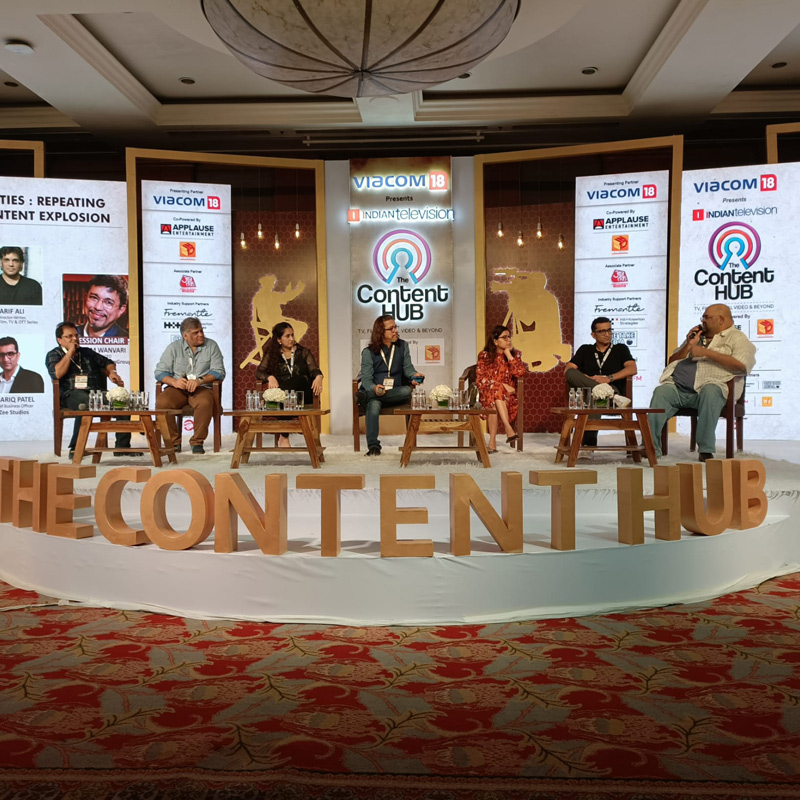
    Finding and discussing the answers to these questions, the first panel of the sixth edition of Viacom18 presents Indiantelevision.com’s The Content Hub Summit 2022 saw an insightful debate on the theme ‘The Roaring Twenties: Repeating The Successful Era Of Content Explosion.’

    Moderated by Indiantelevision.com Group founder & CEO, the panel included Indian screenwriter, director and producer Alankrita Shrivastava, Indian Film Director Arif Ali, Pratilipi  head, IVM Podcasts Amit Doshi, Neela Films Productions founder and managing director Asit Kumarr Modi, Balaji Motion Pictures creative producer and executive vice president Ruchikaa Kapoor and Zee Studios chief business officer Shariq Patel.

    The industry event is co-powered by Applause Entertainment and IN10 Media Network. Aaj Tak Connected Stream is the association partner. Industry partners are Fremantle India, Hill+Knowlton Strategies, One Take Media, Pratilipi, Pocket FM and The Viral Fever. The Indian Motion Pictures Producers’ Association (IMPPA) is our community partner.

    A century ago, after the global pandemic known as the Spanish flu, much of the world enjoyed a boom period, later immortalised as the ‘Roaring Twenties’.Opening the discussion, ITV founder, CEO & editor-in-chief Anil Wanvari asked the panel, “Are we about to experience another Roaring Twenties?”

     Pratilipi head, IVM Podcasts Amit Doshi said, “we’ve barely scratched the surface in terms of what exactly kinds of content we’re going to see in future.”

    “Technological transformation over the last ten years has already unleashed creativity in this country and it is going to continue,” he added.

    Further, Wanvari asked Neela Films Productions founder and managing director Asit Kumarr Modi, who has successfully run over thirty-five hundred episodes of ‘Tarak Mehta Ka Ooltah Chashma’, how he sees this remarkable show in the 2020s?

    “We started back in 2008 where technology was way behind than where we are today and we have seen it all changing over the years. Now, things are developing rapidly, it might be more challenging but we are more excited to create stories in the new age of technology,” answered Modi.

    Taking the discussion further, Zee Studios chief business officer Shariq Pate said, “pandemic has shown that all of us have this insatiable amount of content that all of us could consume and this prompted platforms to step up on investments.”

    “We can expect a roaring 2020s with huge amounts of content to be created which is definitely far more than what the existing platforms can digest at present,” he added.

    Sharing her outlook for the roaring 2020s, Balaji Motion Pictures creative producer and executive vice president Ruchikaa Kapoor said, “the big realization about this changing content landscape is that there’s an audience for every genre, however the size of the audience differs.”

    She added, “the content consumption has increased dramatically over the last three years. But as far as movies are concerned, the urgency of going to the theatres has come down drastically due to the growth of OTT.” Talking about the future, she said, “we expect exponential growth in the 2020s too.”

    Agreeing with what his co-panellists had said, Indian film director Arif Ali said, “being behind the doors for so many months during the pandemic has actually opened a lot of doors for content creators.”

    “Pre-pandemic there was more focus on making money, but now content creators want to have a legacy and it is going to lead to a thrilling 2020s,” he asserted.

    Further, highlighting the challenges that the transformation in the content space brings, screenwriter, director and producer Alankrita Shrivastava said, “today the major challenge is to go back to the core of storytelling and not get overwhelmed.”

    Watch the complete video of this insightful session here.

  • TCH 2022: The art of telling authentic brand stories using content

    TCH 2022: The art of telling authentic brand stories using content

    Mumbai: There’s a lot of content available to consumers that is vying for their attention. Brands are finding it difficult to leave a deeper mark on the consumers’ minds with plain vanilla advertising. The mode of brand storytelling has evolved from 30 seconders and one-minute advertisements to creating owned media platforms and content to form an association with the consumer which lasts.

    Brands cannot jump blindly into the content-making exercise. First, one has to identify the brand purpose and where the brand is standing with its content. Content is a powerful way to increase the mind share of the brand but if executed poorly it can also go wrong.

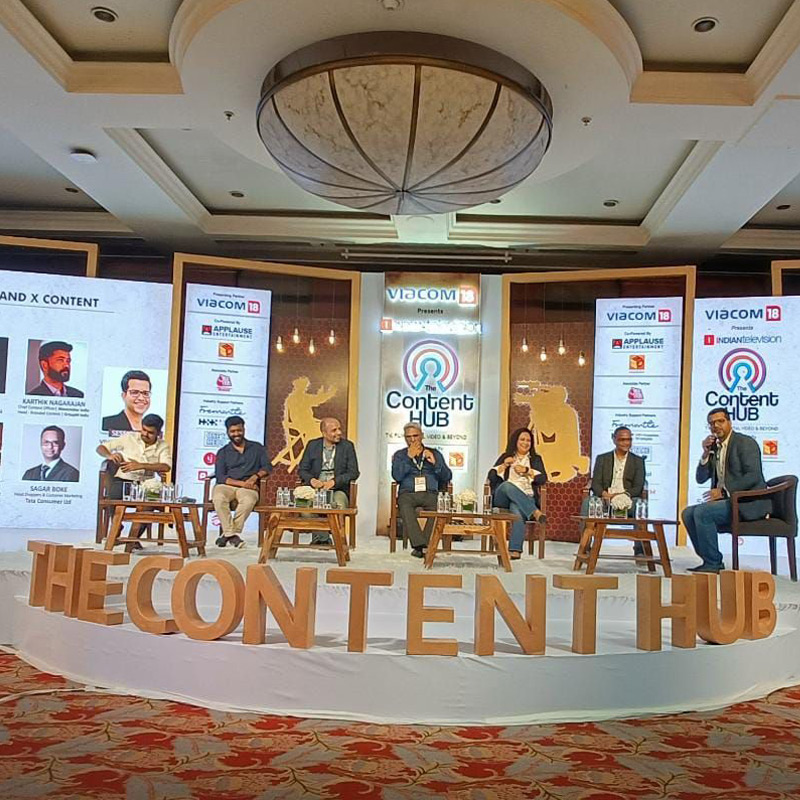
    At the sixth edition of Viacom18 presents Indiantelevision.com’s The Content Hub Summit 2022 held on Wednesday leading marketers spoke about the role of content in their brand strategy. The session was joined by Dentu international The Story Lab country head Deepak, Godrej Industries and Associate Companies AVP corporate brand and communications Michelle Francis, GroupM India head – branded content and Wavemaker India chief content officer Karthik Nagarajan, Tata Consumer Products head shoppers and customer marketing Sagar Boke, PhonePe director and head of brand marketing Ramesh Srinivasan and OPPO India chief marketing officer Damyant Singh Khanoria. The session was moderated by Viacom18 head branded content Vivek Mohan Sharma.  

    The industry event is co-powered by Applause Entertainment and IN10 Media Network. Aaj Tak Connected Stream is the association partner. Industry partners are Fremantle India, Hill+Knowlton Strategies, One Take Media, Pratilipi, Pocket FM and The Viral Fever. The Indian Motion Pictures Producers’ Association (IMPPA) is our community partner.  

    “We have a smartphone launch every second week. When you need to make the consumer realise the unique features of each product there’s a lot of content creation that needs to happen,” remarked OPPO’s Damyant Singh Khanoria. “We solved this problem by enabling creation in the larger community of creators and influencers.”

    Another aspect that OPPO realised was to stop looking at its brand ambassadors as celebrities who are endorsing a product but rather as actors to leverage in a storytelling narrative.

    “I think it is important to have a healthy appetite for risk as a brand. We started commissioning projects that break the artificial boundaries of how we advertise,” said Khanoria.

    OPPO had partnered with the infotainment channel National Geographic to create a series called OPPO Superfactories that turned out to be an excellent piece of branded content, he added. “We want content to be natural and authentic to our brand. An ad is no longer about showing a consumer visiting a store, asking about a product in a three-minute film.”

    When Godrej wanted to change its perception to be associated with lifestyle, the challenge, observed Godrej’s Michelle Francis, was that it was perceived as a legacy brand that had been around for many decades. “We thought that we needed to build a community that would advocate for the lifestyle brands of the Godrej group. That’s how we came up with Godrej L’affaire.”

    The platform launched a nine-episode web series with actor and comedian Jamie Lever with a seamless integration of Godrej brands. “The content was so authentic that it did not look at branded content in terms of integration,” said Francis.

    Whether a brand decides to create its own content is not an either, or question, explained Tata Consumer Products Sagar Boke. He believes it depends on the object and life cycle of the brand. There are advantages to branded content which takes a bit more time to build but connects deeply with the audience. “If you want to build a community around your brand, there’s nothing better than building your own content,” he said. “If you use someone else’s content or a celebrity, it is not going to work.”

    Boke further said that if data is part of a brand strategy, then building your own platforms makes a lot of sense to gather first party data on your consumer.  This helps the brand create more targeted and sharper advertising communication.  

    PhonePe’s Ramesh Srinivasan concurred with Boke stating “As a brand we’re trying to cater to India at large. That means we need to be placed where India is in terms of culture. Branded content captures the consumers’ mind space when they want to consume communication. It creates the right context which is key.”