Tag: The Content Hub 2020

  • Research is important while creating content: Nepa India

    Research is important while creating content: Nepa India

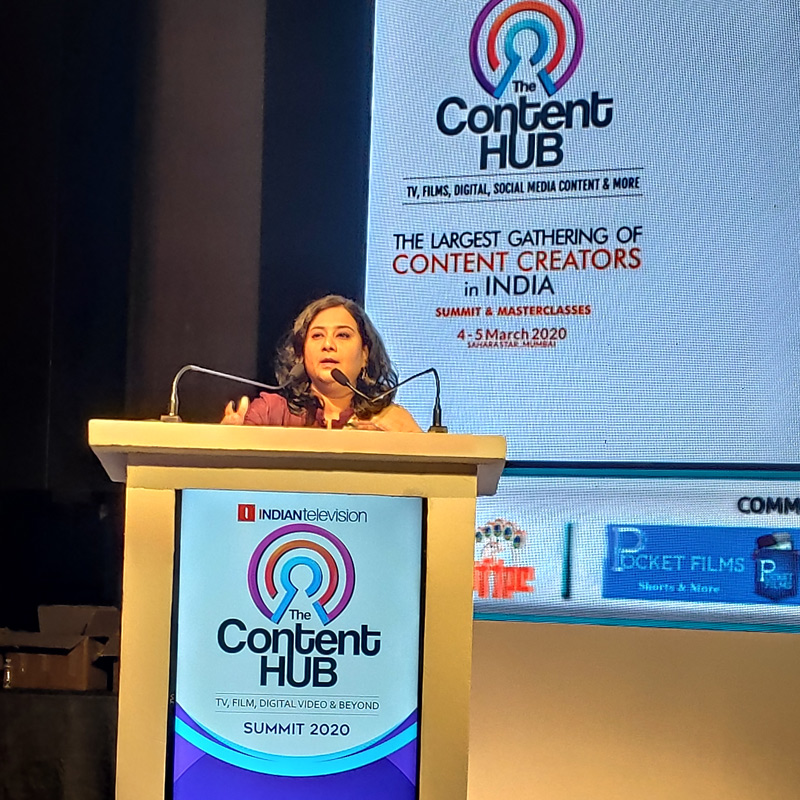
    MUMBAI: Research is a key ingredient before the launch of any product or brand. And creating content is nothing without appropriate research about the audience and their choices, explains Nepa India managing director Esha Nagar while giving a presentation at the fourth edition of The Content Hub 2020 organised by indiantelvision.com.

    Nagar, while explaining the nitty-gritty of the research involved in the content business, says, “Research is not everything to make content but it definitely is important to understand the viewers behaviour related to the content, its content taste and the clutter he/she likes.”

    Nagar points out the importance of understanding how the content resonates with the audience. She mentions that the choice of the content is driven by two concepts – behaviour and physiography. Behavioural aspect is dependent on the relevance, brand and category, whereas the psychographics rely on the social and cultural persona of the viewers.

    Nagar says that a binge-worthy content is a dedicated balance between viewers’ resonance and creative fluidity, which includes different phenomenon such as ideas, service, clutter, quality, flow, loyalty among others. Nepa India is in the business of research and the business of media & science.

    Giving an example of an educated middle-age home-maker, Nagar says, despite her busy schedule, a person will certainly take out time to continue watching a show that he/she was binge-watching a night before. She adds that even while travelling, having a meal or in their free time, of even a few minutes, a viewer wants to know and watch more about the content he/she is engrossed in.

    Nepa India’s MD also states it has been proved by a research that content gets major popularity due to word of mouth. She also says that at least 50 per cent of the audience watches a show on OTT platform due to ‘fear of missing out’ and peer pressure.

    Due to the proliferation of over-the-top platforms, content is now consumed across genres, genders, and boundaries. And while pointing out some research numbers, she adds that at least 60 per cent of the south viewers watch Hindi content.

    “Lately, a change in the consumption pattern has been seen in both male and female audience,” says Nagar. “It has been found that at least 45 per cent of women viewers prefer dark themed genre content, whereas 53 per cent of men watch romcom and drama genres.”

    Nagar says, “With over 40 OTT players and growing in the content market, we are on the verge of doubling up its viewer base by 250 million and 88 billion minutes of content per month by 2020. We are in the process of making a super viewer in the content business like an FMCG super consumer."

    Nagar, before concluding her presentation, also guides fellow and budding content creators to help them understand the importance of research involved in the spread of the content. “Research before the release will help the content get proper traction and attention of viewers,” she concludes.

  • Spontaneity, gut feeling are fundamentals of my direction: Badhaai Ho director Amit Sharma

    Spontaneity, gut feeling are fundamentals of my direction: Badhaai Ho director Amit Sharma

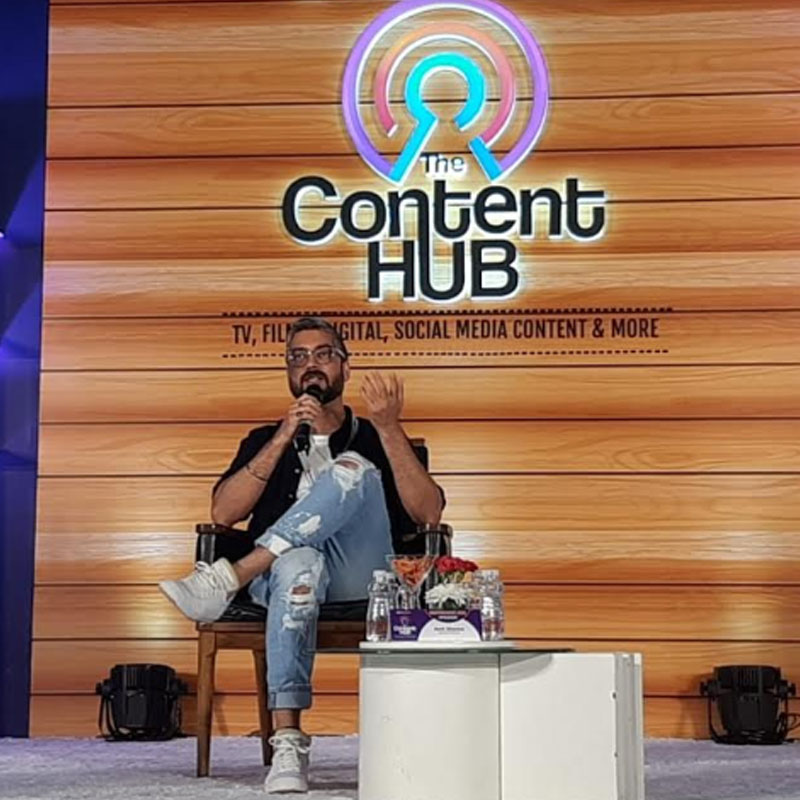
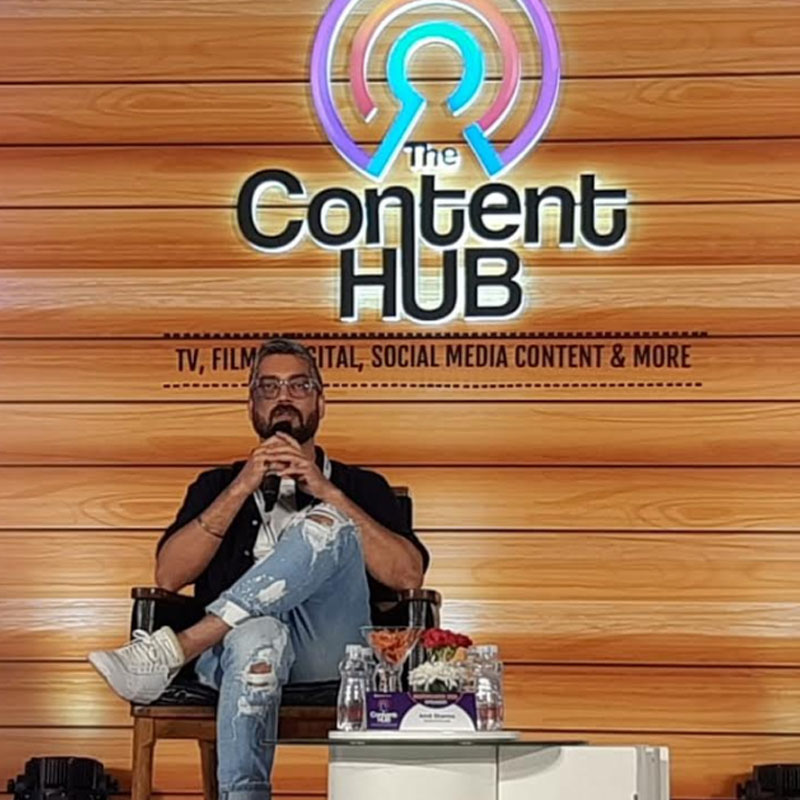
    MUMBAI: The director is like the manager of a film who brings talent under one roof and extracts it to create good content, said film director and producer Amit Sharma while addressing fellow and budding content creators at the fourth edition of The Content Hub 2020 organised by indiantelevision.com earlier this month.

    Sharma is the director of Ayushmann Khurrana-starring Badhaai Ho and is currently directing Ajay Devgn for an upcoming project called Maidan, which is scheduled for later this year.

    While guiding content creators, he shared his experience of filmmaking and said that he believes in ‘NG cuts’ (not good cuts), which majority of the time, are useful for the film. He, playing a scene from his last directorial, explained the audience how a narration or storytelling should be done and how every director has their own journey to tell the story.

    He also told the audience, “I never say cut as when you don’t say cut, the actor keeps improvising and this eventually helps to get the different moods of the character that the actor is playing.”  

    Sharma said that he has never liked reading a script and has always visualised a scene before taking a final shot. “I don’t read scripts because I remember the story of the film with dialogues, full stop, and commas mentioned in the script. I also don’t make storyboards; don’t write my shots as it’s all in my mind,” he said.

    In fact, he even leaves home with a blank mind. “I usually don’t have any idea or agenda while leaving from the home for shooting. Rather, during the shoot, I enact the scene to my actors along with the screenplay.”

    Sharma, being a keen observer, points out that it’s important to feel the film from the perspective of different departments such as sound, art and DoP. The film is a team effort with music, actors’ performance and writers, among others.

    Giving his mantra to the audience, Sharma said, “Spontaneous is the word that works for me and believing in gut feeling, which helps me create a scene or film. These two phenomena are the basic fundamentals of my direction.”

    For him, it’s important that the scene affects him emotionally because only then will the audience also feel the same. “I like to play with the emotions of the audience in a good manner. My work is only done when the audience leaves theatres with either teary eyes or happy faces,” he added.

    Before concluding, he proudly mentioned that extracting performance from the actors is something that is his forte.

  • Applause Entertainment’s Sameer Nair on digital content creation, self-regulation and creative freedom

    Applause Entertainment’s Sameer Nair on digital content creation, self-regulation and creative freedom

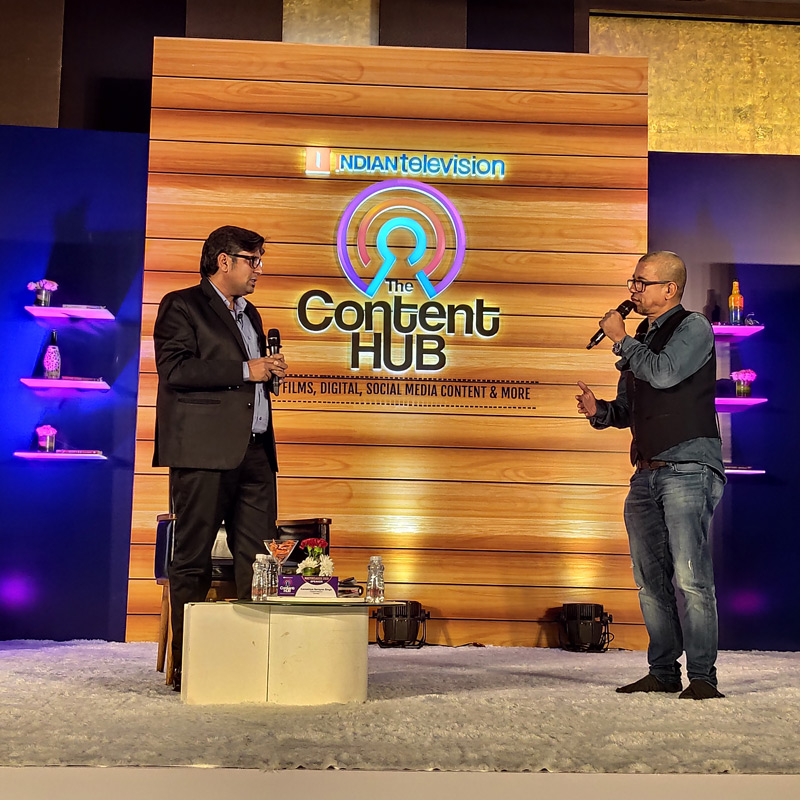
    MUMBAI: Creativity, freedom of expression, self-regulation and content quality are some of the factors that come into play for digital platforms. These topics were addressed in a fireside chat between House of Cheer founder and CEO Raj Nayak and Applause Entertainment CEO Sameer Nair, at Indiantelevision.com’s The Content Hub 2020.

    Nayak started off by stating that even though just 30 per cent of Indians have access to the theatre, films like Thappad and Badhaai Ho are growing in production and acceptance. Does this signal a diamond era for content creators? Nair agreed that the screen density in India is less in comparison to the US or China. However, he feels that television has played a big role in the distribution and dissemination of cinema. Even if just 30 per cent watch movies in the theatre, eventually more people watch it on TV.

    “From a consumption point of view, everyone is seeing. The big challenge is the lack of screens. Of late, there seems to be a push that all content needs to go to digital which, in my opinion, is not the best thing. The US has figured out this window where they first go to theatres and then to TV and DVD. So, there’s more monetisation. It’s a pity when they go directly to digital because you can’t extract revenue out of it when people are willing to go to theatres and buy tickers. Theatre screens need to be an opportunity taken. It’s a good time where different kinds of stories are being told. Smaller movies have also done well. But it’s always been in the history of Indian cinema where we have space for all kinds of things. In the year when Naseeb launched, we also had something like Jaane Bhi Do Yaaron,” he said.

    Nair has delved in various types of content creation from production houses to TV to digital, making him one of the most prominent faces of the industry. With Applause, his aim is on producing content for digital. “The digital medium makes consumers behave in a particular way and that creates a difference in the content,” he said. “TV has always been a one-way talk. You program a channel and give it to the consumer. The consumer can’t control the schedule. OTT and digital have given the consumer the power to choose what they want to see or read – when, where and how they like it.”

    Even though TV is dictatorial and one-way, it has been and is still successful, according to Nair. But the choice that digital provides is creating niches. “That’s why so much of international content is being consumed with subtitles. That wouldn’t have been possible in the pre-OTT era.”

    Nayak questioned Nair on the differentiation between the content found on digital and TV. Nair replied, “We missed a revolutionary step of doing premium subscription television. For digital series, we’re talking of what the US has done successfully for 25 years with shows like The Sopranos. That’s what we are doing now with OTT. All broadcasters have found one more place to show their content.”

    With his experience, Nair highlighted that TV is driven by ratings and that limits the kind of stories that can be told. But on OTT, you can tell those stories that are restricted by TV and this is driving the change in content.

    Nayak brought up the topic of creative freedom in times of growing censorship. Nair said, “If you’re a genuinely creative person, you will look to be subversive in any environment. There’s no such thing as freedom. You have to tell your story and get it out. During the Emergency, the government banned Aandhi which returned after the government changed. But because of the new medium, we can tell stories. TV didn’t allow it, not because there wasn’t any freedom but rather because the medium wasn’t conducive. The medium requires ratings and ratings require the lowest common denominator. Stories on mothers-in-law and daughters-in-law worked very well as a formula for TV.” However, even in this new freedom, Nair said, there are bad shows.

    Even though India is only just warming up to the series format, Nair feels we are already late. With India’s propensity to leapfrog technology, it is likely we may do so in content too. “Will India watch 60-minute episodes on 4G connection? There is a lot of talk about short-form content and other disruptors but right now, we have to look at making money. Going forward, we are looking at series and short-form content.”

    Nayak, who has decades of experience in the TV industry, quizzed Nair on the need for self-regulation. “On TV, since it was family viewing, we had restrictions. But, now with digital, we have great creative freedom. Both international and local are pushing the envelope. So do you think self-regulation is necessary and does it kill creative freedom?” he asked.

    “Self-regulation is a slippery slope. It puts you in a place where you accept that if you don’t regulate in that manner there will be repercussions,” Nair pointed out. “If you want to speak, there will always be someone who will be unhappy. Someone will protest to your freedom of speech. Different countries operate differently. The US is the freest. They are also a 200-year-old democracy and they have been at freedom longer. But people are pushing boundaries and finding new ways of expression and getting away with things. Most often the establishment finds it hard to figure out what you’re saying. That’s the sort of thing to do.”

    It’s a fact that known faces work well in promoting films and shows but a show like Jamtara performed well on Netflix with new faces too. “It always starts with the story and writing. We’ve done shows with stars and without. I don’t think you can knock down faces. They are faces for a reason, for marketing and have value. There are audiences out there who like them and want to see their work. The series format does allow us to take different stars and these tend to be an ensemble cast and not focussed on a single hero. So, the script is the hero,” explained Nair.

    The area to be cautious is that since the power lies with the viewer, they can choose to skip or stop watching. That’s where the story must be interesting. “Faces will get an audience but not keep them there,” he said.

    Applause Entertainment is in the process of creating the Indian adaptation of the popular Israeli series Fauda. Giving insights into its creation, Nair said, “From an adaptation point of view, it operates at two levels. One level is the socio-political issue of the place being set in Israel and Palestine. The other one is the thriller. We’ve separated the two. With what’s going on in India, we’re using that as fodder for dialogue and context. This environment lends itself to that.”

    Comparing filmmaking and writing in the US with India, Nair mentioned, “The US takes greater care to mitigate failure. They are more disciplined in their writing and production process. They tick a lot more boxes and we have also been doing that, even if not at the same level. Even in the series business, we are looking at international businesses and learning.”

    On his prediction for content creators in 2020, Nair said that there can’t be anything truer than stories being well-written. “Everyone feels not everyone gets an opportunity. But there’s a lot of work happening out there. It’s the nature of the business that not everything gets made and even great ideas get left behind. It’s nothing to be despondent about. You’ve got to keep at it and keep trying to tell your story,” he concluded.

  • Visuals go hand-in-hand with storytelling for compelling content

    Visuals go hand-in-hand with storytelling for compelling content

    MUMBAI: It takes massive effort, time and investment but delivers great result for producing high-quality content in terms of visuals, said Travelxp’s creative director Kamakhya Narayana Singh while sharing the advantages of 4K and 8K format during the fourth edition of The Content Hub 2020 hosted by indiantelevision.com.

    Travelxp is the first Indian travel genre broadcasting channel to provide high-quality viewing experience of 4K and 8K to the viewers. It began its journey to create 4k content in 2015 and 8K in between 2016-17.

    “Two things make content great: storytelling and visual quality,” said Singh. “Storytelling is important but at the same time visuals are also important as it increases the viewing experience of the consumer.”

    From scratch to the final product, Singh points out that content creation in high-quality visual may be tiresome but the final output is beautiful and enriching. He said, “The concept of 4K is not just about increasing pixels but making the pixels, screen and viewers' experience more beautiful.”

    “Producing content is a futuristic process; we don’t produce content for one day; rather it’s done for the generations to come. And because of our futuristic approach, it took us time to understand the value of high-quality filmings such as 4K and 8K,” he said. 

    Singh said, “70 minutes of an HD shoot takes 52 gigabytes (GB) storage, whereas a 32-minute 4K shoot requires 512 GB storage. Similarly, it takes 2 hours to ingest one terabyte (TB) data, while for 4K data it takes 24 hours to ingest at the same duration.”

    “Even the last stage to get the final product takes time: 24 hours to render 30 minutes of 4K show, and 36 hours to render 8K. The time for rendering may increase subject to glitches in the first attempt'" added Singh.  

    The advantage of shooting the content in raw format and increasing the frame-per-second (FPS) from 25 to 55 gave producers a lead in visual experience. However, the major challenge they faced was storing the data they shot in high-quality like 4K and 8K as the budget increased four-fold.

    Singh said that the channel started receiving respect in the broadcasting industry because of the quality of its content (4K and 8K).

    During his 20-minute conversation with the audience, he explained how visual quality is important along with content, to give 360-degree experience to viewers. 

    The Content Hub 2020 witnessed over 900 registered delegates, more than 110 speakers and 19 partners. The two-day event saw at least 35 sessions for the content creators.

    The Content Hub’s main goal is to bring individual creators, professional storytellers, producers, streaming platforms, broadcasters and film studios under one platform to connect with a mission to broaden the knowledge pool of the content industry. “It is all about learning, networking and collaborating towards building a roadmap for a better content ecosystem,” said Indiantelevision.com group founder, chief executive officer and editor-in-chief Anil Wanvari.

  • ZEE5’s content strategy is customer-centric: Aparna Acharekar

    ZEE5’s content strategy is customer-centric: Aparna Acharekar

    MUMBAI: The core values of Zee’s digital platform are based on three Cs – compelling content, the convenience of viewing  and consumer experience, said ZEE5 programming head Aparna Acharekar while giving a presentation at the fourth edition of The Content Hub 2020 organised by indiantelevision.com.

    Explaining about the three Cs, Acharekar said, “We want to create compelling content, which can be watched as per the convenience of the audience, anywhere and eventually, that increases the viewing experience of the consumer while giving value for their money.”

    She added, “We want to ensure that a 40-minute each 10 episode-long series or 90-minute long digital film become compelling enough to binge-watch. Similarly, we give the power of convenience to consumers of what to watch, when to watch and with whom to watch the content. And the consumer experience to view content on various platforms be it subscription or advertising-based.”

    “Our main theme is being customer-centric,” said Acharekar. “We have kept the customer at the heart of everything we do, and which is exactly why, we are able to entertain the young boy in Colaba, Mumbai and a person of the same age living in Chhapra, Bihar.”

    “Relatable content that is real and resonates with the audience is going to work,” Acharekar said. She believes convenience is the basic reason we see the shift of audience towards over-the-top platforms.

    “ZEE5’s content strategy has relied on the understanding of consumers, who are divided in a huge number of content clusters,” Acharekar said post the audiovisual screening, which had glimpses of the original shows and films the platform possesses.

    “It’s important to indulge in perfect science and art while creating content – the science of making the content and the art of how you execute it,” pointed out Acharekar. “We are in the era of content creation wherein even an antagonist, who has made a star in the state, is enough to attract eyeballs.”

    The Content Hub 2020 witnessed over 900 registered delegates, more than 110 speakers and 19 partners. The two-day event saw at least 35 sessions for the content creators.

    The Content Hub’s main goal is to bring individual creators, professional storytellers, and producers, streaming platforms and broadcasters, film studios under one platform to connect with a mission to broaden the knowledge pool of the content industry. “It is all about learning, networking and collaborating towards building a roadmap for a better content ecosystem,” said Indiantelevision.com group founder, chief executive officer and editor-in-chief Anil Wanvari.

  • We want to be future-protected: Netflix’s Aashish Singh

    We want to be future-protected: Netflix’s Aashish Singh

    MUMBAI: Netflix India’s recent film Yeh Ballet has received critical appreciation. It is a story of two boys from humble backgrounds who go on to become dancers. On the contrary, critics did not hold a very high view of Drive. The streaming service has kicked off March with another film Guilty. Along with churning out premium episodic content like Sacred Games, Jamtara, the ambition of Netflix to make a mark in digital original films is very evident.

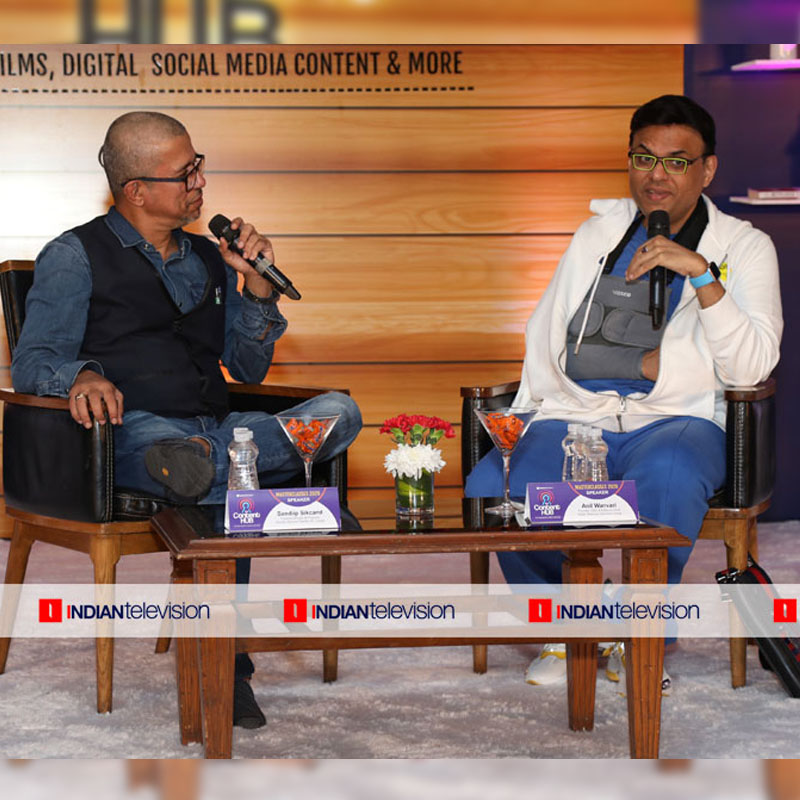
    At Indiantelevision.com's The Content Hub 2020, Netflix India original film director Aashish Singh in a candid chat with Indiantelevision.com founder, CEO and editor-in-chief Anil Wanvari spoke about Netflix’s upcoming diverse slate of films to offer its subscribers content for every mood.

    Singh said that they are looking for content creators to create the best work of their lives. The platform is looking at a very diverse slate including films that can work across all genres for any audience that they can watch, anytime, anywhere. Singh is of the view that good stories could come from anywhere and can be watched everywhere. 

    “We do look at quality in terms of the technical requirements of a film, in terms of the cameras because we want to be future-protected. We want our films to be watched even ten years later, for that matter. So definitely quality is something that we definitely look at. We want to work with the best creative talent,” Singh commented.

    Netflix is also expanding its funnel by getting to know the Indian market better. 

    "So you will get to see a very diverse state going forward. And we have a wonderful slate already that's in process for 2021 and 2022,” he added.

    Singh also reaffirmed that the platform is not only looking at big names and they are working with ten new directors, nine new writers, eight women as new writers and directors this year itself. He added that Netflix is hungry for people who have not yet been discovered. According to him, those are the people who can come up with shows like Jamtara.

    When it comes to filmmaking, Netflix helps filmmakers throughout the process right from pre-production. The streaming service has a production team, finance team, post production team, VFX team that supports the entire filmmaking process. He notes that it helps in quality production. He also mentioned that they support creators to make it the best experience for them but they do not interfere in the process.

    “I liked Yeh Ballet a lot. And it's a very authentic story which talks about dance form that's not very common. The feedback that I got from a lot of people is that they didn't know much about ballet but after they saw the film, they want their kids to probably go and learn ballet,” he added. He also stated that Drive has also performed well on the platform.

    Although Netflix has not announced any animated content in terms of films, the platform is exploring things that could do well in the animation space and is in talks with a lot of people who are creating animation content in the country.

    Talking about challenges, Singh mentions that awareness of Netflix is an issue in India. Although the tier one cities and most of the urban people know about Netflix, Singh thinks they still have a long way to go as far as reaching out to the tier two cities or tier three cities. 

  • OTT gives an opportunity to tell realistic, honest stories

    OTT gives an opportunity to tell realistic, honest stories

    MUMBAI: Critically acclaimed screenwriter and director Charudutt Acharya in his speech at The Content Hub 2020 discussed scriptwriting and opportunities in over-the-top platforms.

    Acharya said, “For my entire life I have been a writer; the whole OTT thing happened just a couple of years ago. When you are working on a certain story or plot you derive ideas from your own experiences. You have a folder of an idea that you love but deep down a person knows all ideas cannot be made into stories. Because it does not fit into the kind of television that is commissioned. But, now ideas from your thinking bag are doable; it comes from your own life, your own experiences.”

    According to Acharya, OTT gives an opportunity to tell stories that are realistic and honest in nature. It is a growing medium. Acharya who doesn’t differentiate between OTT and television content finds TV is now like a bungalow system. But writers will have to look at the world angle where nuances are more defined.

    Acharya believes that apart from learning techniques and structures, one needs to learn the art of creating originals. Writing for OTT is evolving grammar. One has to focus on writing economically because audiences just don’t come for a plot they come for the character in the series and what treatment has been given to the show.

  • Content executives believe ‘doing it the right way’ should be the focus

    Content executives believe ‘doing it the right way’ should be the focus

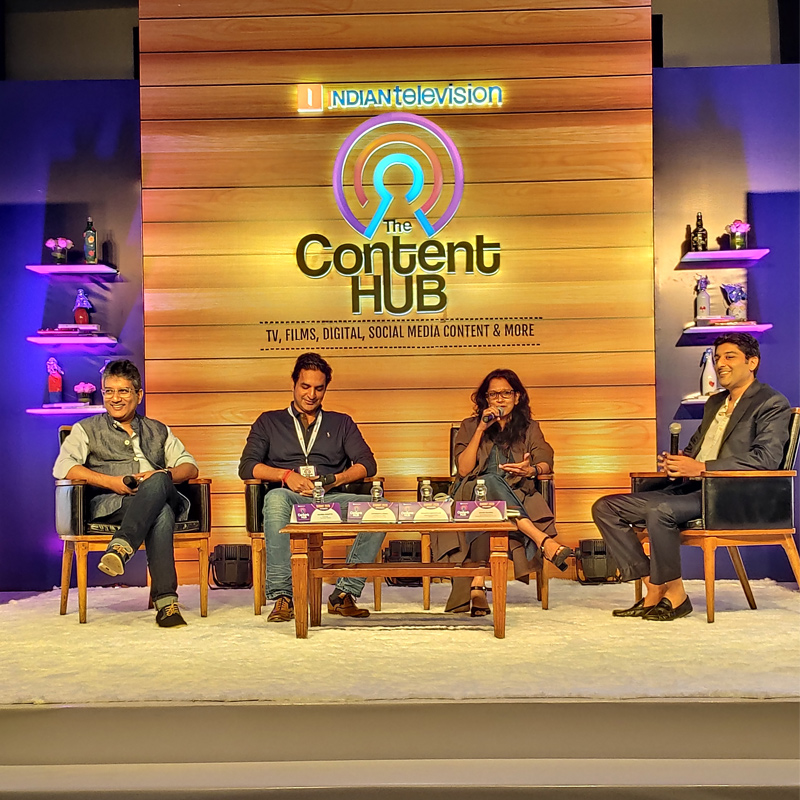
    MUMBAI: Doing it right! This was the fundamental view of the panel of content creators that participated in a discussion on ‘uncovering opportunities for great content’ during the fourth edition of The Content Hub 2020, an initiative by Indiantelevision.com.

    The panel, moderated by Bulldog Media and Entertainment co-founder and producer Akash Sharma, comprises of Zee Studios Originals vice-president and head Ashima Avasthi, Contiloe Pictures Pvt Ltd chief creative officer Abhimanyu Singh, SonyLIV head of original content Saugata Mukherjee.

    The panel was also of the view that the recent surge in content creation and consumption is mainly because of technological advancement and awareness within the audience. Due to these factors, the boundaries across the world have come down and local stories are becoming global.

    In this regard, Avasthi while giving her input said, “The content boom in India was about to happen. Individual viewing has eventually increased all thanks to the emergence of smartphones and high-speed internet. As technology grows, the boundaries between countries are coming down.”

    Zee group’s film production and distribution arm Zee Studios last year had rolled-out an independent digital content subsidy Zee Studios Originals, which will produce premium, original content and create new IPs (intellectual properties) for all digital platforms of the group globally.

    She added, “Despite the surge of individual viewership, there is no difference between binge and traditional watching, both have respective markets. However, television gives only a single opportunity, whereas the digital platform is providing viewers’ a variety.”

    Meanwhile, Singh was of the view that the number of increasing screens such as mobile, laptop, smart TV, etc., are directly proportional to the number of increasing audience. He said, “The television audience is no more identifying the content shown on the channels and is done with it. Currently, the content market is driven by what consumers want and watch.”

    He added, “It’s the right time to re-invent the grammar of telling stories and digital platforms have this acumen to show these stories with a new tale. India has a quality to tell its own Narcos story and we have many stories to tell the world.”

    Abhimanyu’s Contiloe Pictures' upcoming State of Siege: 26/11 will feature on ZEE5 from 20 March 2020 and took at least a year to complete, said Singh.

    Another panellist, Mukherjee, pointed out that the growth of the internet has helped content to boom. “Digital has enabled the diversified connection of content, which has been appreciated the across continents in the world,” he said.

    Mukherjee added, “There’s scope and space for everyone, be it TV or OTT (over-the-top) platforms; it's never us versus them.” He believes that content will find its place and reach across borders. Moreover, broadcast content won’t go away because there’s a big market for it already.

    Echoing the thoughts of Singh, the SonyLIV head said, “The big difference between TV and digital platform is the grammar of storytelling. We should re-invent and tell stories which are quintessentially Indian and draw a line of how Indian platform is different from global digital platforms.”

    Saugata, talking about SonyLIV’s future plan, said: “We don’t want to get stuck with thriller or love stories; rather we are going to try everything to lure the consumers to the platform.”

    Being positive of the growth of the digital content, the panel mentioned that this is the perfect time to enter the business. However, the only thing that should be adhered to is whichever form or format is done, it should be done in the right way as content creation is not an easy task and takes blood and sweat.

  • TV, OTT coexist and complement each other

    TV, OTT coexist and complement each other

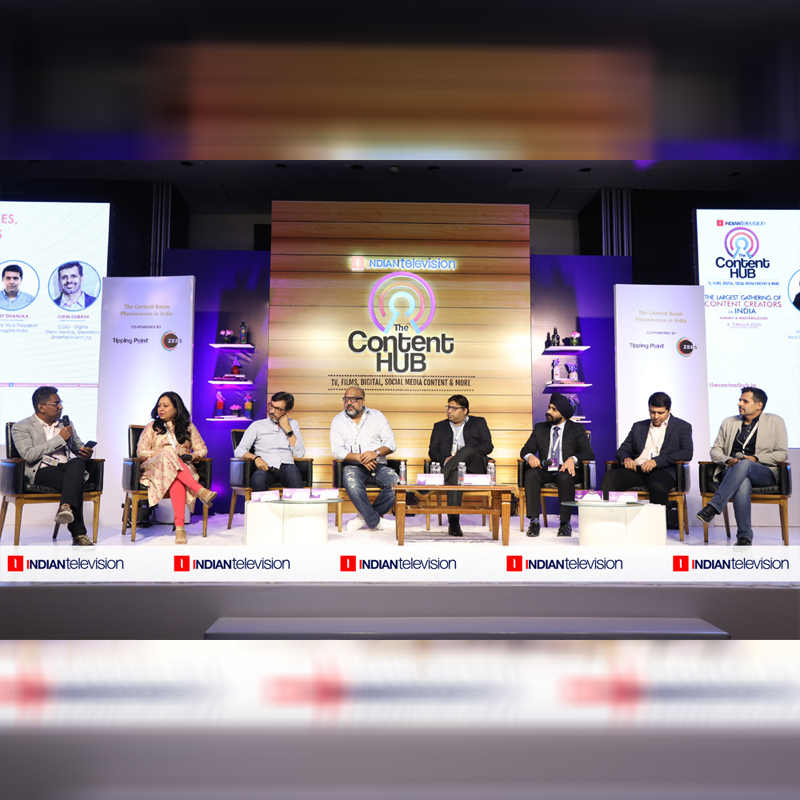
    MUMBAI: A panel discussion at The Content Hub 2020 discussed the topic of generating audiences and building stickiness around the content that has been created. The panel was moderated by ISOBAR India chief growth officer Shekhar Mhaskar with panelists Red Chillies Entertainment head marketing Binda Dey, MX Player head of marketing and business partnerships Abhishek Joshi, Juggernaut Productions chief operating officer (OTT) Samar Khan, Filme founder Abhishek Shukla, EVP Lionsgate India executive vice president Amit Dhanuka and Shemaroo Entertainment digital new media COO Zubin Dubash.

    The panel discussed how content made is of no use unless and until it reaches the right audiences. Getting them to watch your content is important. The panel also discussed how traditional broadcasters would retain their core audiences in view of increasing affinity towards on-demand OTT platforms.  

    Binda Dey said, "I have been working in the broadcast sector for a long time. With OTT coming in, the number of ways in which people can consume content has increased. So, it is not television vs OTT but about how people want to consume content and at what time. In television Live content has been a big boom. There has been a lot of innovation in the way IPL is being promoted by Star. This is a kind of gamification where you are combining television with digital. It leads to consuming the same kind of content across different platforms.”

    Amit Dhanuka added, “The content that you see on broadcast television and OTT platform has a stark difference because the consumer that’s consuming it on television vs the audiences who are consuming it on OTT have a different sensibility. One medium reaches out to a very mass pool of audiences while the other is looking for edgy content that has a certain sense of storytelling. Television is not in any way losing out on OTT. They, in fact, are complimenting in some manner.”

    The panelists believe that OTT has given new audiences. It is giving someone who used to watch television earlier at 9 pm an opportunity to watch the same show at any time. OTT has supplemented television audiences in many ways and also brought in audiences who are not getting that content on television. They are now watching content on streaming services rather than traditional broadcast channels. Originals has opened up a brand new audience that was not getting its content on television. Because in television there is a different number of hours and limited slots available to make that content. On the contrary, OTT does not suffer from that as they do not have a designated slot. The Originals that are created for OTT are bringing in more stickiness which consumers were not getting earlier.

    There are so many different platforms like television, cinema and OTT but the question arises are these platforms geared up to face the changing media consumption pattern.

    Zubin Dubash said, "Shemaroo has been there for the last five decades as an organisation. We have been on every digital platform one can think of. So, when we started our OTT story with Shemaroo Me, we had ten years of solid data and consumption habits around our YouTube story. Today on YouTube Shemaroo’s content generates close to 3 billion views every month and we have got around 120 million MAUs on the YouTube platform consuming the content voluntarily. When looking at the business plan of Shemaroo Me we analysed that there is a lot of unmet demand of content that is cataloged and the content that has its shelf-life which doesn’t end ever. We have launched it a year ago, and during this time we witnessed a lot of traction bringing customers to say that a lot of AVOD content comes from Shemaroo.”

    Sharing their views on the same panellists believe that platforms are challenging each other with better storytelling along with better special effects and technicians working on them. Audiences are now expecting better writing, better performances because now consumers are open to new challenges. It is in fact pushing platforms to create better content.

  • Spontaneity and reliance on gut feeling are the guidelines of Amit Sharma’s direction

    Spontaneity and reliance on gut feeling are the guidelines of Amit Sharma’s direction

    MUMBAI: Director is like a manager of a film, who incorporates the idea received from departments, says film director and producer Amit Sharma while addressing fellow and budding content creators at the fourth edition of The Content Hub 2020, an initiative by Indiantelevision.com.

    Amit Sharma is the director of Ayushmann Khurrana-starring Badhaai Ho! and is currently directing Ajay Devgn for an upcoming project called Maidan, which is schedule for later this year.

    Sharma, while guiding the content creators, shared his experience of filmmaking and believes that ‘NG cuts’ (not good cuts) are also sometimes useful for the film.

    Sharma told the crowd that he has never liked reading a script and has always visualised a scene before taking a final shot. Sharma, being a keen observer, pointed out that it’s important to feel the film from the perspective of different departments involved in filmmaking.

    Giving his mantra to the audience, Sharma said, “Being spontaneous and believing on gut feeling are the two basic fundamentals of my direction.”

    Sharma started his career from very early age of 18 and had always wanted to become an actor. He has acted in at least 16-17 television commercials; however end up becoming a film maker. Moreover, Sharma also spoke about how he likes to play with the audience’s emotions in a good manner. “It gives satisfaction to him, when audience leave theatres with a smile on their face or teary eyed,” he added.