Tag: Tewari

  • Media should consider reasonable restrictions: Tewari

    Media should consider reasonable restrictions: Tewari

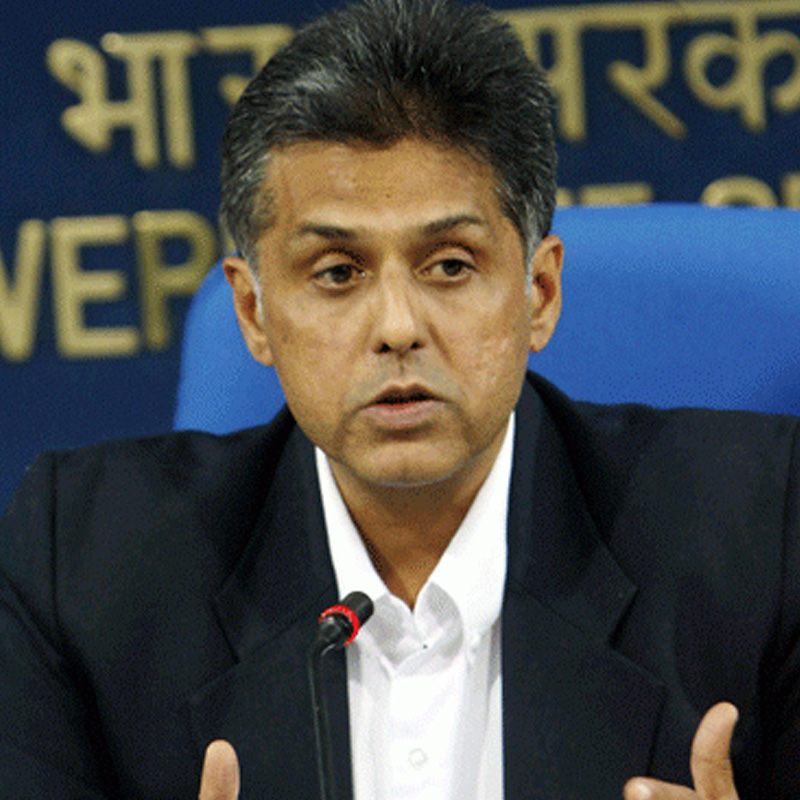
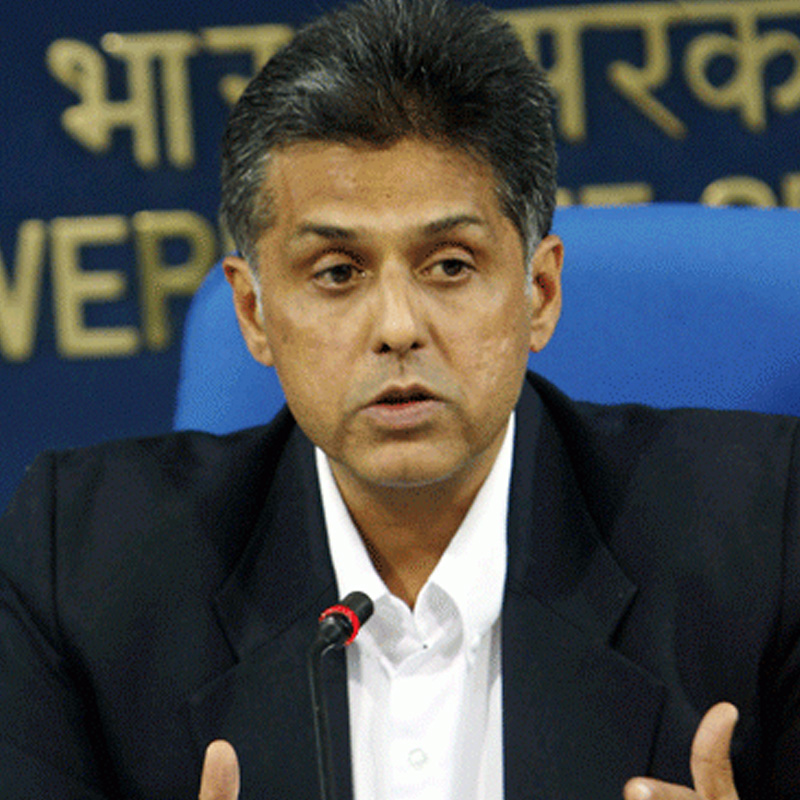
    NEW DELHI: Information and Broadcasting Minister (I &B) Manish Tewari today stressed that the government wanted the relationship with the media to be one of persuasion rather than regulation but the media should introspect about the reasonable restrictions laid down in the constitution to the freedom of speech.

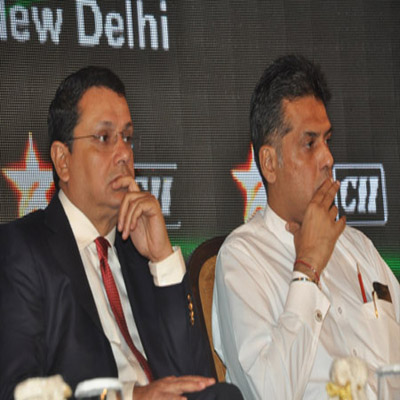
    Making the inaugural address at the Big Picture Summit on Media and Entertainment organised by CII, the minister said the government will cooperate to ensure that the M & E sector is able to ‘unlock the potential of millions.’

    He stated that the phase III in FM radio will get underway next month with the e-auctions, adding that radio had seen a major resurgence thanks to mobile telephony.
    Manish Tewari believes that the industry must explore new avenues and technologies like mobile telephony and how it can be used to grow the sector

     The minister announced that the Justice Mudgal Committee which was going into the Cinematograph Act including film censorship was expected to give its report by mid-October. Tewari was responding to remarks made by previous speakers Star TV CEO Uday Shankar and Walt Disney MD Ronnie Screwvala about extra-constitutional authorities and even state governments raising voices even after a film had been cleared by the Central Board of Film Certification, and making a strong case for bringing cinema on the concurrent list.

    Tewari noted that despite the general slowdown the world over and in India, the M and E sector was expected to grow at a pace of 18.4 per cent CAGR to Rs 2,245 billion by 2017 from Rs 965 billion in 2012.

    He noted that the print and television sector comprised 48 per cent of this growth and the internet was expected to take over by 2017. He said the real success story was the print media since its growth continued at a rate of ten per cent per year when it was falling all over the world.

    Although India had the largest number of TV news channels in the world, it represented only 17 per cent of the M and E industry and therefore there was need to remove the bottlenecks in distribution.

    While the channels were not lagging in content, hardware was an area in which they were found lagging, he felt. The minister said that he wanted the industry to come up with ideas on how the number of cinema screens could be increased.

    Complimenting CII for its optimism in setting a target of USD 100 billion for the industry, he spoke of the opportunity that the sector presents in terms of innovation in content and non-content areas, adding that the government would partner the industry to put into place a system to see that the vision of USD 100 billion is translated into reality.

    He also mentioned that the industry must explore new avenues and technologies like mobile telephony and how it can be used to grow the sector, emphasising that the government would look to facilitate innovation and expansion.

    Screwvala in the keynote address said that although there have been challenges and a sense of gloom, there has been a fair amount of progress as well, especially in the movie industry, which has flourished.

    The M&E industry, he said, is seen as an industry of ‘high impact’ with the ability to bring about noteworthy transformation. Therefore, he felt that the time is right for the M&E industry, the government and other stakeholders to take time to deliberate upon the challenging issues that the industry faces such as dependency on advertising, inconsistent regulation, the need and ability to attract the best talent, unanimity and long-term thinking and then come up with a roadmap that will help the industry achieve the target of USD 100 billion.

    He hailed the progress in digitisation of cable TV and efforts to go on to better consumer TV viewing surveys, he said dependency on advertising remains a big problem and ways have to be found to make the consumer pay. There was need for unanimity and long-term thinking in the industry, a need to attract the best talent, and the need to recognise that new media needed a different kind of audience and talent.

    While India was among the least regulated countries in the world, he admitted that some regulation was necessary and this has to be consistent and not vary from state to state.

    He also wanted edutainment to be encouraged without being dependent on curriculum, sports to extend from just cricket as far as media was concerned, and the need for a greater bandwidth.

    He suggested setting up of a core group of the government and the industry which could work over the next 18 months or so to get over the bottlenecks, an issue supported by eminent filmmaker Amit Khanna.

    Khanna said the target of $100 billion for M &E was not unrealistic, if there was proper planning and greater cooperation between the government and the industry.

    He said it was unfortunate that the country was over-producing in cinema, considering the small number of screens.

    He suggested that the I & B ministry should change its name to the media ministry as new media was taking over.

    He regretted that there was no proper broadcasting regulator and the Telecom Regulatory Authority of India had been given this responsibility.

    India may have the largest number of TV news channels, but they were all getting ‘tabloidised’.

    He also felt the need for more trained professionals if the industry had to meet its targets.

     Delivering the theme address, Shankar said that openness to new ideas, capital and talent would unleash a fresh wave of growth, just as it did in the 1990s, when economic reforms ushered in a fresh wave of growth for the Indian economy.

    Earlier, in his welcome remarks, CII director general Chandrajit Banerjee spoke of the tremendous ‘soft power’ of the industry to bring about innumerable benefits to the Indian economy.
    A CII-PriceWaterhouse Coopers report on the M&E industry, titled ‘India Entertainment and Media Outlook 2013’ was also released on the occasion by Tewari.
  • Tewari launches Bharat Nirman portal, AIR News on SMS Service

    Tewari launches Bharat Nirman portal, AIR News on SMS Service

    NEW DELHI: A total of 69,491 video spots were released to cable and satellite television channels for the first and second phases of the Bharat Nirman Campaign, including 3,660 spots to Doordarshan.

    Radio aired a total of 107,532 spots including 12,600 by All India Radio across 92 stations and 94,932 spots across 216 private FM stations. This was apart from 6,048 spots aired on 36 community radio stations.

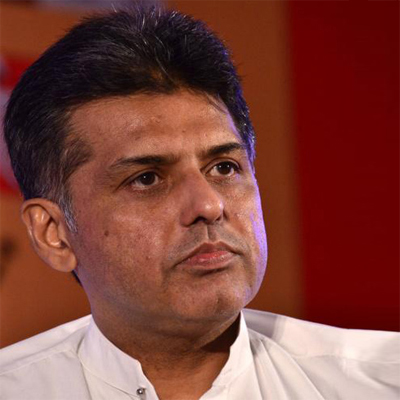
    These figures were revealed by Information and Broadcasting Minister Manish Tewari at the launch of the online portal for the Bharat Nirman Campaign which provides an interactive digital platform for the creative campaign on various schemes and programmes of the campaign.

    The Minister also launched All India Radio`s free News SMS service. The service provides AIR news headlines free of cost to its subscribers on mobile telephones. There are two or three headlines in each SMS, which also carried a public service information message.

    The event was attended among others by I&B Secretary Bimal Julka, DAVP Director General G Mohanty, Prasar Bharati CEO Jawhar Sircar, Director General (Media and Communications) Neelam Kapoor, and All India Radio Director General L D Mandloi.

    AIR News Services Division Director General Archana Datta said there will be three updates everyday. She clarified this would not replace the news on phone which people would continue to get.

    People willing to subscribe to the service can SMS “AIRNEWS <space> their name” to 08082080820. They can also give a missed call to 08082080820 to subscribe to the service. So far 200,000 people have subscribed to the service.

    Anurag Srivastava, Joint Secretary in charge of New Media said the digital platform is both in English and Hindi with creatives in 11 regional languages. The portal enables the user to get information about the Bharat Nirman and the Flagship schemes at a single place. There were six tabs on the home page on certain schemes like Aadhar card, Food Security, Real Estate, Street Vendors, Direct Benefit Transfer, and land acquisition.

    It also has live integration with social media platforms such as Facebook, Twitter and YouTube. The portal has apps for mobiles and tablets to provide easy reading. The website is available at www.bharat-nirman.in.

    The first phase of Bharat Nirman was launched in May and the second phase in August. The 360 degree communication approach used all formats of media such a TV, radio, print, outdoor publicity and special outreach programmes.

    A total of 9.7 lakh spots were screened in the two phases over 8,231 empanelled digital screens in theatres.

    A total of 27,870 advertorials were carried across about 1,450 newspapers including 9,000 strip ads.

    Outdoor displays for the Bharat Nirman in the two phases were put up at 7,715 sites.

    The multi media campaign was supported by a strong media outreach programme through eight Public Information Campaigns (PICs) in rural areas conducted by the Press Information Bureau (PIB) with support from the Directorate of Advertising and Visual Publicity (DAVP), the Directorate of Field Publicity (DFP) and the Song and Drama Division. So far, four PICs have been supported by the ‘Jamunia’ Sound and Light Show.

    The Song and Drama Division is also developing a new production taking forward the theme of ‘Priya Power’ which is scheduled to be launched in mid-September at the Red Fort grounds, New Delhi.

    In addition, Prasar Bharati conceptualised different programmes such as serials, interviews of eminent personalities and success stories/achievements of flagship schemes. Doordarshan has been airing a serial named Poorva Suhani Aaye Re every Wednesday and Thursday at 10.00 pm and All India Radio has come up with a serial named “Priya”.

    The Minister said a scientific approach has been undertaken to monitor and evaluate the Bharat Nirman Media Campaign.

    Later asked about the Indian Shining campaign of the previous government, he said the Bharat Nirman campaign was not linked to elections as it had commenced as early as 2007. India Shining on the other hand was a shoddy attempt on the eve of the polls, he said.

    He said that while new media was a highly empowering tool, it had to be ensured that it was developed with certain responsibility.

    He said the Press Council of India had been asked to go into measures that can be taken to ensure the safety of mediapersons.

  • Cinema must help build the moral compass of the nation and portray positive societal values; Pranab Mukherjee

    Cinema must help build the moral compass of the nation and portray positive societal values; Pranab Mukherjee

    NEW DELHI: President Pranab Mukherjee has said that cinema must be used to portray positive societal values for building a tolerant and harmonious India.

    Referring to recent criminal events involving women and children, he said the role of the film industry was very crucial in building the moral compass of the nation. He said the film industry ought to take steps to ensure that cinema was morally energising.

    Mukherjee was speaking after he conferred the National Film awards for the year 2012 in various categories at the 60th National Film Awards Function held at the Vigyan Bhawan. The award ceremony coincided with the release of the first Indian feature ‘Raja Harishchandra‘ by the father of Indian cinema D G Phalke on 3 May.

    He lauded the initiatives taken by the information and broadcasting ministry including single window clearance for shooting the films in India.

    Lauding the recipient of the highest award in cinema, the Dadasaheb Phalke award, he said actor Pran had commenced in films as a hero in 1940 but then moved on to become the ‘quintessential gentleman villain‘.

    There was standing ovation as the name of the 93-year old Pran Sikand, who could not attend because of illness, was announced.

    I&B minister Manish Tewari said the presence of films with innovative themes at the 60th NFA had proved that the Indian film industry was playing a proactive role in articulating issues and prejudices that had been historically embedded in our society.

    Indian cinema, Tewari added, had been the mirror of the nation‘s milieu and had an incisive influence on the evaluation of society. Internationally, Indian cinema had evolved to cater to the taste of international audiences. A unifying synthesis, Indian films had been able to institutionalise and project India‘s soft power outside the country. The film industry, he said, had grown despite and in spite of the government.

    He announced that the government had decided to institute an annual centenary award from this year to be given to a personality or institution recognising a paradigm transformation in film making and honouring individuals or films that had profoundly influenced contemporary, socio cultural evolution.

    He also announced that the Films Division Auditorium in Delhi was being re-furbished to convert it into a hub for alternate cinema. The Auditorium which was being used for screenings only on special occasions would be modelled along the lines of Prithvi Theatre in Mumbai to not just screen documentaries, small budget films but also provide a forum for film makers and connoisseurs to discuss the film making.

    He referred to the justice Mudgal Committee which was taking a fresh look of the Cinematographic Act 1952, and the Committee would aim to find a golden mean between creative essence and aesthetic sensitivity.

    The highlight of the evening was the release of postal stamps of 50 iconic personalities of Indian cinema by the President to commemorate the century long journey of Indian cinema. The film personalities depicted in stamps include Ashok Kumar, Bhalji Pendharkar, Durga Khote, Dev Annad, Yash Chopra, Smita Patil, Rajesh Khanna, Shammi Kapoor, Suraiya, Geeta Dutt, Sohrab Modi, Tapan Sinha, C.V. Sridhar and Bhanumathi.

    Speaking on the occasion, communication and information technology minister Kapil Sibal said the Department of Posts had given a fitting tribute to the powerful medium by issuing 50 new stamps.

  • Single Window Clearance Mechanism for Shooting of Foreign Films in India Shortly: Tewari

    Single Window Clearance Mechanism for Shooting of Foreign Films in India Shortly: Tewari

    NEW DELHI: A notification is being issued soon for constitution of an Inter-Ministerial Empowered Committee which would provide single window clearance for shooting of foreign films in India.

    Information and Broadcasting Minister Manish Tewari today said the proposed committee would include representatives of the State Governments and key Central Government Ministries. The creation of such an empowered committee would provide the platform and impetus to promote India as a filming destination across the world.

    He said the Justice Mudgal Committee constituted to review the mandate and functioning of the Central Board of Film Certification and to recommend measures including statutory changes to enable CBFC to deal with contemporary requirements of certification and increased transparency / efficiency was expected to submit its recommendations shortly. These recommendations would enable the Ministry to review the legal architecture for the film certification process. Tewari added that the mandate of the Committee was extremely comprehensive and would provide the roadmap for the future.

    The Committee would also review the categories of certification, existing and proposed, under the Cinematograph (Amendment) Bill, 2013. This will be done to review the mandate and functioning of Film Certification Appellate Tribunal (FCAT) in order to make it a more efficacious appellate body and to examine the role of Central Government regarding sanctioning of cinematograph films for exhibition under Entry 60, List I of the Seventh Schedule to the Constitution of India vis-?-vis Entry 33, List II of the Seventh Schedule to the Constitution of India.

    Delivering his key note address at the release of the Limca Book of Records 2013 dedicated to 100 years of Indian Cinema, Tewari said this initiative was an important step as the country was celebrating 100 years of Indian Cinema. He said the publication was a true tribute to the cinematic heritage of India. It had enabled the country to project the power of cinema across the globe and promote India’s image as a soft power.

    On the occasion, the Minister also felicitated cinema luminaries for their contribution to the medium and conferred on them “People of the Year” Awards. They included actor Shabana Azmi, cinematographer Santosh Sivan, director Jahnu Barua, choreographer, actor and director Prabhu Deva, maker of wildlife documentaries Mike Pandey, and Telegu film maker K Viswanath.

  • Local organizations or states cannot ban film certified by CBFC, Tewari

    Local organizations or states cannot ban film certified by CBFC, Tewari

    NEW DELHI: The central government reiterated in Parliament today that a local organization cannot ban a film if it has a problem with the content of that film and has to approach the Central Board for Film Certification in redressal.

    Information and Broadcasting Minister Manish Tewari stressed that state governments have the power to regulate cinemas under Constitution‘s entry 33 in List II, subject to the exclusive power of the Central Government for certification (entry 60, List I).

    Referring to cases where films had been banned or held up by state governments, Tewari said the film ‘Viswaroopam‘ was not banned but delayed by executive orders under section 144 of Criminal Procedure Code in Tamil Nadu. In 2011, the film ‘Dam 999‘ was banned by Tamil Nadu while ‘Aarakshan‘ was banned in Punjab, Andhra Pradesh and Uttar Pradesh.

    The Minister said Article 19(2) of the Constitution provides for reasonable restrictions imposed by Law on the freedom of speech and expression.

    The exclusive power of certifying films for public screening rests with the Central Board of Film Certification as mandated by the Cinematograph Act, 1952.

    Executive orders of State Governments, at times, also orders issued under various State laws relating to Cinema made under Entry 33, List II of the Seventh Schedule to the Constitution of India, regulate public screening.