Tag: tesla

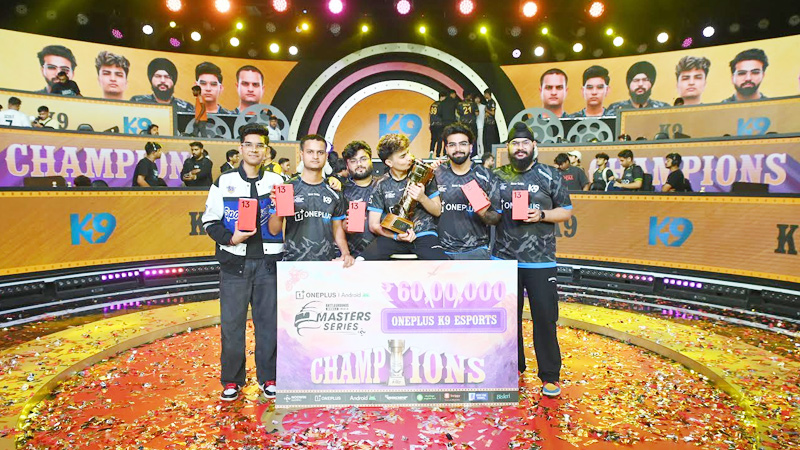
  • Team K9 Esports clinch BGMS Season 4 title, take home Rs 60 lakh

    Team K9 Esports clinch BGMS Season 4 title, take home Rs 60 lakh

    MUMBAI: The squad stormed to victory at the Oneplus android ‘Battlegrounds Mobile India Masters Series’ (BGMS), lifting the trophy and walking away with Rs 60 lakh from the Rs 1.5 crore prize pool. The three-day LAN finals, held from 12–14 September at the Nodwin Gaming Arena in Delhi, drew record eyeballs: over 10 million views on Youtube and more than 500,000 on Jiohotstar, with streams in Hindi, English, and Gujarati.

    Led by in-game leader Sahil “Omega” Jakhar, Team K9 Esports (Arclyn, Beast, Ninjaboi, and Slug) topped the table on all three days, finishing with 107 points and three chicken dinners. “One in the bag, more to go,” Omega quipped after their win.

    Sinewy Esports and Iqoo Soul tied at 96 points but Sinewy edged second place on finishes, pocketing Rs 22.6 lakh. True Rippers and Revenant Xspark completed the top five.

    Individual honours shone too: Hydro of True Rippers was named MVP with 27 finishes, while Tracegod of Revenant Xspark bagged the ‘TVS Most Wicked Player’ award for a stunning 113 finishes across the season.

    This season also pushed boundaries beyond the battlefield. With its dual-format league, grassroots teams and even all-women rosters from the BGCS feeder league earned their shot on the big stage. Big-name partners including Oneplus, TVS, Red Bull, Swiggy, Bisleri, and even Tesla (which showcased its Model Y) added to the spectacle.

    Nodwin Gaming, co-founder and md, Akshat Rathee, hailed the season as a breakthrough moment and said, “From all-women teams to new brands entering esports, BGMS Season 4 has set benchmarks for inclusivity, scale and reach, bringing competitive gaming to Indian homes on TV and OTT, and proving it’s more than just a tournament. It’s a movement.” 
     

  • Learning from disruptive brands: What makes them stand out

    Learning from disruptive brands: What makes them stand out

    Mumbai: In today’s competitive landscape, brands need to do more than just survive—they need to stand out. Enter disruptive brands. These are the trailblazers that have redefined industries and altered consumer expectations. But what makes them unique? What can traditional businesses learn from these disruptive innovators? The answer lies in their willingness to challenge norms, push boundaries, and embrace bold, unconventional strategies. Let us uncover the vital insights traditional brands can harness by studying the bold moves and innovative approaches of disruptive companies.

    Disruption demands guts: Daring to dream bigger

    Disruption, at its core, is gutsy. It’s about doing something that has never been done before, and it requires a certain kind of bravery that not every brand possesses. Disruptive brands take the leap into the unknown, often at great personal and financial risk. They aren’t content with following industry norms or playing it safe—they set out to create their own rules.

    Take the example of Airbnb, a company that completely revolutionised the hospitality industry. When the founders initially proposed the idea of strangers staying in each other’s homes, the concept seemed absurd to many. Who would want to open their homes to strangers, or trust a website for lodging? But by sticking to their bold vision, they not only created a billion-dollar company but also redefined how we think about travel accommodations.

    The lesson for traditional brands? Disruption requires courage. It’s not enough to think big; you must act on your vision, even when the odds (and sometimes the world) are against you. Disruption is about ignoring the naysayers and believing in your unique idea, even if it hasn’t been done before. This kind of daring is often what separates innovators from the rest of the pack.

    Sticking to the vision amidst criticism: A key to phenomenal success

    One of the defining characteristics of disruptive brands is their resilience. More often than not, these companies face scepticism, criticism, and even outright rejection in their early days. Everyone seems to put them down, but what sets them apart is their unrelenting belief in their idea. They don’t waver, and instead, they push through the noise to turn their vision into reality.

    Tesla, for example, faced enormous criticism when it first introduced electric vehicles (EVs) to the market. Many questioned the feasibility of EVs replacing traditional fuel-powered cars. Yet, despite the scepticism, Tesla stuck to its mission of accelerating the world’s transition to sustainable energy. Today, Tesla leads the EV market, and their dedication to the original vision is paying off in dividends.

    For traditional brands, the takeaway is clear: resilience is key. Pioneering a new path means encountering resistance, but standing firm in your belief and moving forward despite criticism is what separates disruptive brands from those that give up at the first hurdle.

    Disruption is more than just innovation: It can be about marketing

    Disruption isn’t always about creating an entirely new product or service. Sometimes, the disruption lies in how you bring that product to market. Being disruptive doesn’t necessarily mean doing something the market has never seen before; it can also mean introducing a new way to communicate with or engage your audience.

    A great example is Nike’s ‘Nike+ Run Club’ app. Instead of merely selling shoes, Nike created a digital ecosystem to engage with runners globally. The app allows users to track runs, connect with other runners, receive coaching tips, and set fitness goals. Nike wasn’t just promoting products—they were fostering a community and enhancing the customer experience. This approach went beyond traditional marketing, creating long-lasting brand loyalty by delivering real value outside of the core product offering.

    Traditional brands can take a page from this playbook. Disruption doesn’t have to mean turning your entire business upside down. Sometimes, even small changes in how you engage with your audience can yield big results. It’s about thinking creatively and offering something your competitors don’t.

    Standing out from the competition: The core of disruption

    At the heart of disruption lies the goal of standing out from the competition. Disruptive brands don’t aim to just compete with the market leaders—they aim to replace them by doing things differently. Whether through product innovation, marketing strategies, or business models, these brands find ways to separate themselves from the pack.

    Netflix serves as a textbook case. In its early days, Netflix was up against blockbuster, the then-dominant force in the video rental industry. Instead of trying to compete on Blockbuster’s terms, Netflix took a different route—subscription-based streaming. By focusing on convenience, accessibility, and personalised content, Netflix redefined how we consume media and effectively drove Blockbuster out of business.

    For traditional brands, the lesson is this: don’t just try to compete—try to innovate in ways that make your competition irrelevant. Find what makes your brand unique, focus on it, and build your strategy around it. This is the essence of disruption.

    Learning from the Greats: What Traditional Brands Can Do

    So, how can traditional brands apply the lessons of disruption to their own businesses? Here are a few key takeaways:

    ● Embrace Risk: Don’t be afraid to take bold steps, even if it means veering away from what’s conventional or safe.

    ● Stick to Your Vision: Be prepared for criticism and scepticism, but don’t let it derail your long-term vision.

    ● Innovate in Marketing: You don’t always have to reinvent the wheel—sometimes it’s about how you market the wheel.

    ● Differentiate, Don’t Just Compete: Focus on what makes your brand different and build your strategy around that uniqueness.

    Ultimately, disruption is about courage, innovation, and persistence. Traditional brands don’t need to entirely disrupt their industries to learn from disruptive brands, but by adopting some of their core principles, they can position themselves for sustained success.

    Embracing the spirit of disruption

    In a fast-paced world where consumer expectations are constantly evolving, brands that stand still are bound to fall behind. Disruptive brands aren’t afraid to take risks, challenge the status quo, and reinvent how industries operate. Whether it’s by innovating in product design, marketing strategies, or customer engagement, these brands offer valuable lessons for those willing to learn.

    As traditional businesses look to future-proof their operations, adopting the disruptive mindset can offer them a competitive edge. It’s not always about breaking the mold—it’s about creating a new one. So, what are you waiting for? It’s time to disrupt.

    The author of this article is CPR Global founder Chaitali Pishay Roy.

  • Cyrus Broacha’s apology to Kapil Dev and the launch of ‘Bluntly Streaming’ podcast with Sumedha

    Cyrus Broacha’s apology to Kapil Dev and the launch of ‘Bluntly Streaming’ podcast with Sumedha

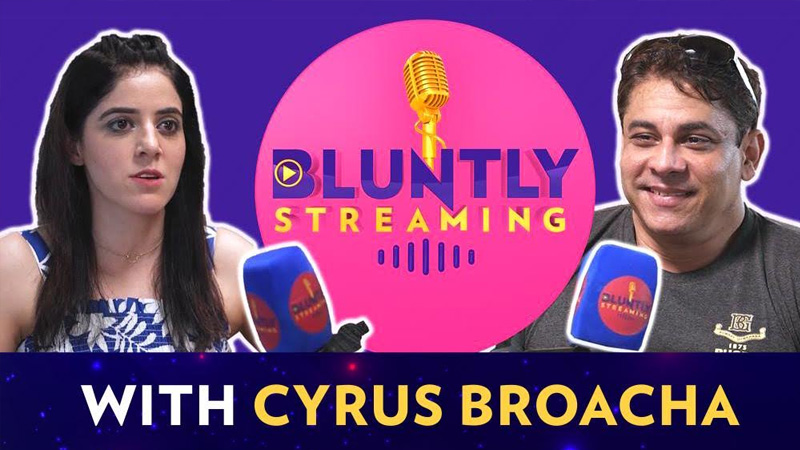
    Mumbai: Cyrus Broacha, the iconic talkative personality who has entertained audiences since the ’90s, was on top of his witty and sarcastic best in the debut episode of the brand-new podcast, “Bluntly Streaming.” Inside the cracking 21-minute of the episode hosted by Sumedha Malhotra, the original “Bakra Boy of India” offered an unexpected apology that set off a series of thumbs up for him on social media.

    Broacha’s humor has always been known for its sharp wit and satirical edge. In the same spirit, his recent comparison of Tesla and SpaceX CEO Elon Musk, to an Indian politician left the twitter world rolling in laughter. This unusual pairing can only be Broacha’s brainchild 🙂 As candid as he can be, he also is compassionate and recounted how he once felt compelled to apologize to Kapil Dev, acknowledging that his words could be misinterpreted.

    The incident belongs to a time when Cyrus’ Dad, the renowned lawyer Mr. Broacha, who he recently lost, had reprimanded him. He’d apparently warned Cyrus to stay away from insulting and demeaning a legend like Kapil Dev in any way whatsoever. The joke was supposed to be humorous and satirical, but Cyrus understood that it may have been misinterpreted by many people who saw it. “Mr. Kapil Dev’s contributions to cricket and his country are immense and they deserve nothing but respect from me and everyone else on this planet. I deeply regret any offence my comments may have caused.” He approached Kapil Dev.

    The aftermath of the apology left fans and the media in suspense, appreciating his down to earth demeanour. Amidst all this, Broacha continued to do what he does best – making people laugh and scratch their heads. His most recent suggestion to shut down the internet for six months is just one of his many absurd propositions. And while some laughed, others seriously pondered its implications on modern life as a poignant point.

    “Bluntly Streaming” is not digging out a controversy; it offers relief as a hilarious and insightful journey into the life and experiences of a true entertainment icon. In the debut episode, Broacha candidly discusses a range of topics, from his thoughts on Bigg Boss and how it wasn’t the bickerings but the foodie’s nightmare meals that made him lose weight

    The conversation covers Broacha’s erstwhile weekly show, “The Week That Wasn’t,” that drew ire from politicians, his early days at MTV, his acting experiences, and humorous anecdotes from his career. He even touches upon topics like reality shows, Elon Musk’s influence on the world, and the addictive nature of smartphones. In summary, “Bluntly Streaming” promises to provide laughter and entertainment in every episode.

    For those interested in a good dose of laughter and entertainment, “Bluntly Streaming” is a must-listen podcast. It’s hosted by Sumedha, who brings a fresh and candid perspective to the show with a new guest every time, pun at a time.

  • Elon Musk takes control of Twitter, fires CEO Parag Agrawal

    Elon Musk takes control of Twitter, fires CEO Parag Agrawal

    Mumbai: Elon Musk started his ownership of Twitter by dismissing the company’s CEO Parag Agrawal, CFO Ned Segal, and head of legal affairs and policy, Vijaya Gadde.

    Tesla’s CEO has stated that, while limiting censorship, he also wants to fight spam bots on Twitter, make the algorithms that decide how information is exposed to users public, and stop the social media site from turning into an echo chamber for hate and division.

    The influential social media platform’s new owner, Musk, fired top executives he had accused of deceiving him and offered no details on how he would carry out the ambitious goals he has set for it.

    He has stated that he intends to make employment cuts, which has caused the 7,500 or so employees of Twitter to worry about their future.

    Also Read: Elon Musk makes a human appeal to advertisers few hours before Twitter deal

    Musk fired Twitter’s chief executive officer Parag Agrawal, chief financial officer Ned Segal, and head of legal & policy Vijaya Gadde. Apparently, they had misled him and Twitter’s investors over the prevalence of phoney accounts on the social media site.

    The sources stated that Agrawal and Segal were escorted out of Twitter’s San Francisco offices after the deal was finalised.

    The $44 billion deal is the culmination of a remarkable saga full of twists and turns that cast doubt on Musk’s ability to complete the deal. On 4 April, Musk disclosed a 9.2 per cent stake in the San Francisco company, making him the company’s largest shareholder.

  • Elon Musk makes a human appeal to advertisers few hours before Twitter deal

    Elon Musk makes a human appeal to advertisers few hours before Twitter deal

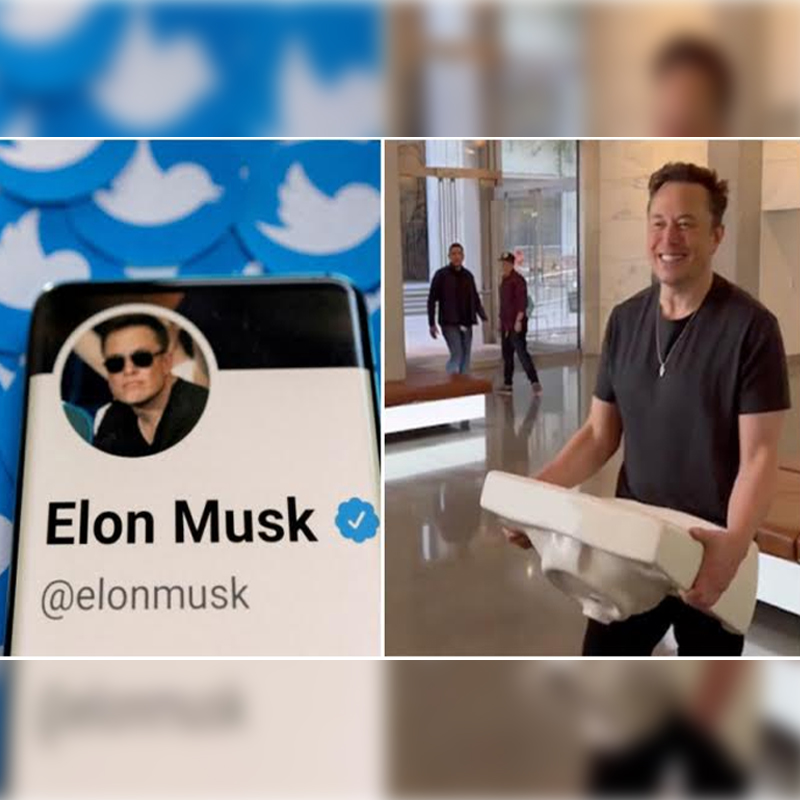
    Mumbai: Elon Musk, the billionaire businessman, donned a serious hat with his human appeal on Twitter, just hours after his amusing entry at the company’s headquarters in San Francisco, California, with a toilet sink in his hand on Thursday. He also posted a video on the social media platform with the caption, ‘Entering Twitter HQ-Let that sink in.’ And this time around, the Tesla chief is determined to seal the $44 billion deal on 28 October, which is reflected in his Twitter bio as it now reads “Chief Twit.”

    In his most recent post, Musk expresses his concern, has requested advertisers to work together, and says that he is buying Twitter to help humanity. The post reads, “I wanted to reach out personally to share my motivation for acquiring Twitter. There has been much speculation about why I bought Twitter and what I think about advertising. Most of it has been wrong.”

    He goes on, “The reason I acquired Twitter is because it is important for the future of civilization to have a common digital town square, where a wide range of beliefs can be debated in a healthy manner without resorting to violence. There is currently a great danger that social media will splinter into far right-wing and far left-wing echo chambers that generate more hate and divide our society.”

    As Musk points out in his post, “In the relentless pursuit of clicks, much of traditional media has fueled and catered to those polarised extremes, as they believe that is what brings in the money, but, in doing so, the opportunity for dialogue is lost.”

    Citing his reasons for buying out the social media platform, he explains, “That is why I bought Twitter. I didn’t do it because it would be easy. I didn’t do it to make more money. I did it to try to help humanity, whom I love. And I do so with humility, recognising that failure in pursuing this goal, despite our best efforts, is a very real possibility.”

    He adds, “That said, Twitter obviously cannot become a free-for-all hellscape, where anything can be said with no consequences! In addition to adhering to the laws of the land, our platform must be warm and welcoming to all, where you can choose your desired experience according to your preferences, just as you can choose, for example, to see movies or play video games ranging from all ages to mature.”

    “I also very much believe that advertising, when done right, can delight, entertain, and inform you; it can show you a service or product or medical treatment that you never knew existed but is right for you. For this to be true, it is essential to show Twitter users advertising that is as relevant as possible to their needs. Low relevancy ads are spam, but highly relevant ads are actually content,” brings out Musk.

    He wraps up his post with, “Fundamentally, Twitter aspires to be the most respected advertising platform in the world that strengthens your brand and grows your enterprise. To everyone who has partnered with us, I thank you. Let us build something extraordinary together.”

    Musk originally offered to buy the social media company earlier in April. But later backed out of the deal in July. After Twitter sued the 51-year-old billionaire, he offered to complete the deal. The court ordered Musk to do so by 28 October 2022.

  • Twitter sues Elon Musk for breaching $44 bn deal, he reacts with a meme

    Twitter sues Elon Musk for breaching $44 bn deal, he reacts with a meme

    Mumbai: Tesla CEO Elon Musk was quick to react to a lawsuit filed against him by Twitter for breaching the $44 billion contract in his trademark maverick style – with a meme.

    Twitter recently sued the billionaire for violating the deal to buy the micro blogging platform, accusing him of hypocrisy and asked a Delaware court to order Musk to complete the merger at the agreed $54.20 per Twitter share, according to a court filing.  

    “Musk apparently believes that he – unlike every other party subject to Delaware contract law – is free to change his mind, trash the company, disrupt its operations, destroy stockholder value, and walk away,” stated the lawsuit.

    “Twitter brings this action to enjoin Musk from further breaches, to compel Musk to fulfil his legal obligations, and to compel consummation of the merger upon satisfaction of the few outstanding conditions,” Twitter asserted in the lawsuit.

    In response to the news of the lawsuit, Musk took to the microblogging site and simply tweeted, “Oh the irony lol.” Earlier, he had responded to reports of Twitter taking him to court with a hilarious meme which seemed to take potshots at the social media giant’s decision.”

    The meme, accompanied by images of a laughing Musk, read: They said I cannot buy Twitter. Then they wouldn’t disclose bot info. Now they want to force me to buy Twitter in court. Now they have to disclose both info in court.

    The lawsuit could be the beginning of a long-drawn-out legal battle with both parties unwilling to climb down from their stances, as Twitter seeks to hold Musk to his deal to pay $44 billion for the company. The litigation accused Musk of “a long list” of violations of the merger agreement that “have cast a pall over Twitter and its business.”

    Last week, the Tesla CEO said he was terminating the merger because Twitter violated the agreement by failing to respond to requests for information regarding fake or spam accounts on the platforms. Musk said the lack of information about spam accounts and inaccurate representations amounted to a “material adverse event.”

    The standoff between the two parties has been ongoing for a while now, specifically since April this year when Musk reached an acquisition agreement with Twitter at $54.20 per share in a transaction valued at approximately $44 billion. Since then, however, Musk has been challenging Twitter’s claim that less than five per cent of accounts on the platform are bots or spam, even putting the deal on hold in May to allow his team to review the veracity of Twitter’s claim.

    ALSO READ | The Twitter-Elon Musk tussle: To be ‘bot’ or not to be

    In June, Musk had openly accused the social media company of breaching the merger agreement and threatened to walk away and call off the acquisition of the micro blogging site for not providing the data he has requested on spam and fake accounts.

  • Tesla’s Elon Musk unlikely to buy Twitter; may face legal consequences

    Tesla’s Elon Musk unlikely to buy Twitter; may face legal consequences

    Mumbai: After a lot of speculation, Tesla chief executive officer Elon Musk has pulled out of the $44 billion deal to buy Twitter which he inked back in April.

    Musk stepped back with an announcement, in a regulatory filing, on Friday that he would drop his $44 billion offer to buy Twitter. Musk’s lawyers stated that Twitter has failed to respond to their multiple requests for information about fake accounts.

    According to a letter sent to Twitter on behalf of the Tesla chief’s, Elon Musk is terminating his $44 billion deal to buy Twitter, citing multiple breaches of the purchase agreement. The letter said that Musk is terminating the merger agreement because Twitter violates several provisions of that agreement.

    Also Read: The Twitter-Elon Musk tussle: To be ‘bot’ or not to be

    Reacting to this, Twitter chairman Bret Taylo, said the board will take a legal route to enforce the merger agreement. He tweeted, “The Twitter Board is committed to closing the transaction on the price and terms agreed upon with Musk and plans to pursue legal action to enforce the merger agreement.”

    According to the agreement, Musk will have to pay $1 billion if he fails to make the complete transaction for the deal.

    Musk had threatened to cancel the transaction unless the business could demonstrate that less than 5 percent of members on the social media platform were made up of
    spam and bot accounts.

    The billionaire and the 16-year-old San Francisco-based corporation are likely to engage in a protracted legal battle as a result of the ruling.

  • Twitter to address Elon Musk’s demands by providing crucial tweet data

    Twitter to address Elon Musk’s demands by providing crucial tweet data

    MUMBAI: In a bid to end the standoff between the company and Elon Musk, Twitter will grant Tesla’s CEO unprecedented access to its “firehose” of public tweet data, The Washington Post reported. With this, the tech giant seeks to assuage Musk’s concerns over fake or automated accounts by yielding access to the firehose API, which contains ‘every tweet as it is posted.’

    Twitter’s firehose API, in its entirety, shows what a user would see if they followed every account on Twitter — although the sheer volume of data is impossible to obtain or analyse without automation. Due to its value for ad-targeting and platform surveillance, it is also one of the company’s most closely held resources.

    Firehose data could be immensely valuable as raw material for a study on automated activity. However, conducting a full study of automated activity would require significant time and resources, given the sheer scale of the data.

    Providing valuable data could help Twitter score political points over Musk, as the micro networking platform seeks to fend off Musk’s qualms over the number of bots or automated accounts on the platform, and ensure that he honours his part of the buyout deal.

    The news comes just days after the maverick billionaire once again threatened to back out of his deal to purchase Twitter, accusing it of failing to provide data on fake accounts.

    In his filing with the US Securities Exchange on Monday, Musk accused Twitter of breaching its April agreement by not providing him sufficient data on automated accounts, rejecting the company’s offer to provide more detail on its internal studies of the issue.

    Musk legally committed to purchasing Twitter in April this year, but since then has been increasingly vocal about growing bot activity on the platform, in what is seen by many as an attempt to renegotiate the deal on more favourable terms or cancel it altogether.

    ALSO READ |The Twitter-Elon Musk tussle: To be ‘bot’ or not to be

    “Twitter’s latest offer to simply provide additional details regarding the company’s testing methodologies is tantamount to refusing Musk’s data requests,” Musk’s representatives said in the filing. “At this point, Musk believes Twitter is transparently refusing to comply with its obligations under the merger agreement.”

    Despite all this, Twitter Inc. remains confident the deal will proceed as planned. In an internal meeting, a senior company executive assured employees that the deal was proceeding normally and set for a shareholder vote in late July or early August.

    Meanwhile, the networking giant’s stock continues to trade well below the $54.20 price set by Musk, reflecting market skepticism that the deal will go through as agreed.

    In response to Musk’s SEC filing, Twitter issued a statement earlier this week. “Twitter has and will continue to cooperatively share information with Musk to consummate the transaction by the terms of the merger agreement,” the statement reads. “We intend to close the transaction and enforce the merger agreement at the agreed price and terms.”

  • Twitter unlikely to be free for commercial & government users: Elon Musk

    Twitter unlikely to be free for commercial & government users: Elon Musk

    Twitter is likely to charge costs for commercial or government users, Tesla’s CEO Elon Musk revealed in a recent twitter post.

    He also highlighted that Twitter will always remain free for casual users. “Twitter will always be free for casual users, but maybe a slight cost for commercial/government users,” he said in his tweet.

    In the last week of April, Twitter announced the sale of the company to Tesla for $ 44 billion. Ever since the news of Twitter’s acquisition by Tesla broke out, Tesla CEO Elon Musk has been suggesting a series of changes to Twitter. After finalizing the deal with Twitter, Musk made it very clear that he is planning to enhance the platform with new features.

    “Twitter has tremendous potential – I look forward to working with the company and the community of users to unlock it,” he had said earlier. 

    This is not it, in one of his Tweets, he even advocated free speech over social media and said, “I hope even my worst critics remain on Twitter, because that is what free speech means.”

  • Amazon, Apple emerge as most valuable global brands 2021: Kantar

    New Delhi: Multinational giant Amazon consolidated its position as the world’s most valuable brand, growing 64 per cent to $ 684 billion, Kantar said in its latest BrandZTM Most Valuable Global Brands 2021 ranking released on Monday.

    Amazon’s brand value grew by almost $268 billion this year and it became the first half-a-trillion-dollar brand, alongside Apple, at number two, valued at $612bn. The other brands that figured in the top ten most valuable global brands in 2021 were: Google, Microsoft, Tencent, Facebook, Alibaba, Visa, McDonald’s, and MasterCard.

    China’s TikTok and USA’s Tesla are among the brands that doubled their brand values during the pandemic. Tesla even emerged as the fastest growing brand and became the most valuable car brand, growing its value by 275 per cent year-on-year to $ 42.6 billion, said the report.

    Tech brands dominate global rankings

    Seven of the top ten brands are from the tech sector. Tech has also enabled non-tech brands to achieve significant growth, for example Gucci – harnessing the power of TikTok during the pandemic, and Domino’s – leveraging online and delivery services. New entrant Zoom was one of the big tech stories of 2021, with its ease of use and reliability driving momentum with business and personal users. It entered the ranking at 52 with a valuation of $36.9bn.

    World’s most valuable brands show record growth

    Despite the economic downturn brought by the devastating wave of Covid-19, the report found that the world’s most valuable brands experienced record growth. Their total worth reached $7.1 trillion – equivalent to the combined GDP of France and Germany. This was largely driven by confidence derived from vaccine availability, economic stimulus packages, and improving GDP outlooks, said Kantar Group.

    “Despite many facing a difficult year, our research has again proven that strong brands deliver superior shareholder returns, are more resilient, and recover more quickly,” said Kantar CMO, Nathalie Burdet. “With global e-commerce growing from 12 per cent to 15 per cent of all sales in 2020, it has been a positive year for brands involved in that value chain.”

    Apparel brands overtake M&E brands

    Despite reduced travel and lockdowns globally, apparel brands have collectively grown even more than media and entertainment brands in the ranking, as people redefined the boundaries between work and leisurewear. Adidas, Nike, and Puma all secured over 50 per cent value growth. Whilst, collectively, fast fashion did not grow as fast, notably, Uniqlo (+88 per cent) and H&M (+47 per cent) grew valuations significantly. The Top 20 retailers grew their brand value by a combined 48 per cent.

    Success of subscription-based models

    Microsoft innovated offers to adapt to new working environments and transitioned to subscription models to improve convenience and scalability, recording a growth of 26 per cent. Xbox (+55 per cent), Disney (+13 per cent), and Netflix (+55 per cent) all saw growth, while Spotify entered the ranking following a 454 per cent growth in subscribers from 2015-20 and a significant improvement in consumer brand equity.

    Reputation: A Key factor

    According to the report, reputation, especially for sustainable and ethical purposes, is increasingly a driver for brand growth. The luxury category saw 34 per cent brand growth with, predominantly, French and Italian luxury companies such as LVMH investing in their corporate reputation through pandemic-related initiatives, sustainable transformation, and support for social movements such as BLM. Similarly, L’Oréal Paris successfully bucked the trend across beauty brands in the pandemic, securing brand growth by flexing its assets and driving female empowerment.

    Emphasis on Trust and Reliability

    “Our analytics have uncovered that 70 per cent of what makes a brand successful is executing four fundamentals well: providing superior experience across consistently branded touchpoints, a range of well-designed and functional products and services, convenience, and exposure through great advertising. However, COVID-19 has emphasised consumer values such as trust and reliability. Those brands that are evolving their values, projecting leadership on these issues are demonstrating differentiation and standing out,” said Burdet.