Tag: Terry Bleakley

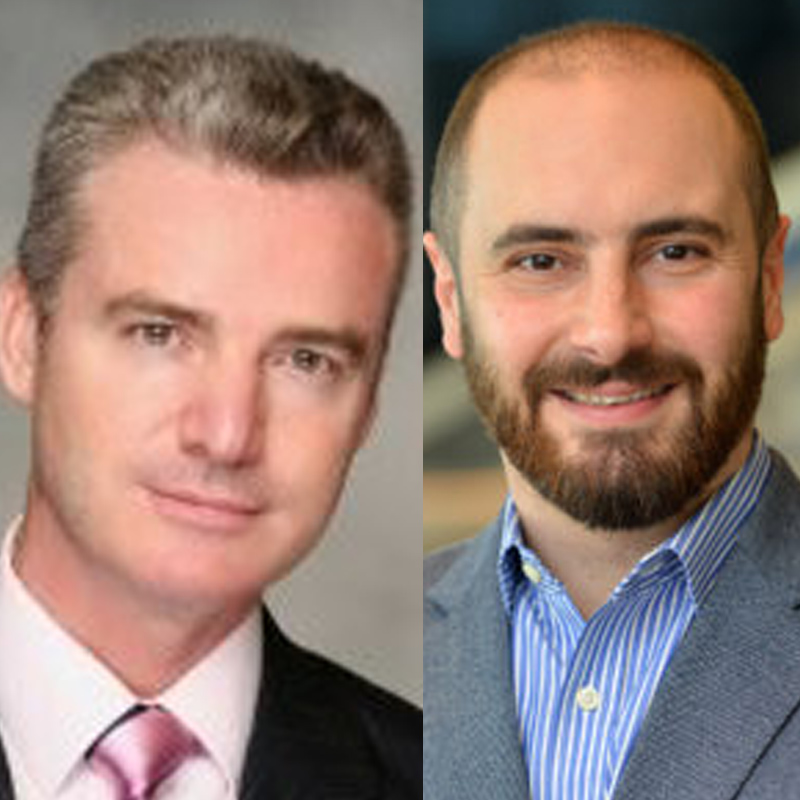
  • “India is the strongest media market in APAC”: Intelsat’s Bill O’Hara & Terry Bleakley

    “India is the strongest media market in APAC”: Intelsat’s Bill O’Hara & Terry Bleakley

    Bill O’Hara and Terry Bleakley make for an odd couple – they are as different as chalk and cheese. O’Hara is a true blood American, while Bleakley is from that distant land called New Zealand, and is a Kiwi. But they have one thing in common between them: the company they work for – global satellite major Intelsat. 

    As general manager of media, O’Hara leads global sales/revenue, marketing and product management. He has also been charged with increasing its $700 million a year top line while keeping a sharp eye on the bottomline. An industry veteran with nearly six years at his current firm, O’Hara has taken a stab at turning into an entrepreneur when for three years from 2013 onwards he ran a direct-to-consumer streaming service called KlowdTV. 

    Bleakley , on the other hand, has been a bird man for almost all of his working career, with organisations such as Panmsat, Intelsat, and then Measat., following which he came back to Intelsat to grow its Asian business. 

    The organisation is well positioned to grow, even more robustly, not just in Asia, but globally. With a fleet of more than 50 satellites in the sky, teleport gateways, terrestrial networking infrastructure and robust managed services, Intelsat claims that it offers the world’s most extensive and secure communications network. Its focus now is on building the future of global communications with the world’s first hybrid, multi-orbit, software-defined 5G network designed for simple, seamless, and secure coverage precisely when and where customers most need it. 

    Indiantelevision.com founder & editor-in-chief Anil Wanvari caught up with Bill and Terry during last month’s BroadcastAsia conference in Singapore to get insights on how Intelsat is gearing for the requirements of a data and IP-driven media industry going forward. 

    Edited Excerpts:

    On how the company is structured today.

    Terry: We went through financial restructuring and came out of it about two or three months ago. We shed about $8 billion of debt. We took our debt from $16 billion to about $7billion. We are receiving $4.8 billion for the clearing spectrum for the US government. We have received $1 billion of that payment already. And we are also owed $1 billion for the cost of clearing that spectrum. And those payments come by the timeline that has been set which is by end-2023. That takes our balance sheet down about $2 billion in debt, way down from when we hit $16 billion of debt. We bring in about $2 billion in revenue. That’s a really low debt structure for an organisation. You normally want a ratio of 3 to 4:1. So our balance sheet has been as strong as it has been since 2002. As we emerged from our financial restructuring from a public company to a private company, the creditors whose debt was shared got new equity. So it is now a private company from being a public company.  

    On how Intelsat evolved in response to move toward IP delivery for video customers.

    Bill: I think that while there are a lot of changes in this industry, the satellite is still central to distribution, regardless of whether the content originates as IP or is delivered as IP to the end consumer. We recognise this and our strategy is very much to be IP native, to plug ourselves into different parts of the ecosystem, where our customers are going. We are a very customer-focused company – always trying to move with our customers as they move along. For example, as our customers have moved to the cloud with greater velocity, we too have been forging cloud partnerships so that we can source content directly from the cloud, directly from folks like AWS. With it, we have a public partnership so that we can bring content either to the cloud or take it away from the cloud and distribute it to our customer base. 

    Our value position as a media business, however, is connecting an audience with content. And we do that today with cable TV distribution and direct-to-home. But tomorrow, especially with the acquisition and integration of our commercial aviation business, we can connect new viewers with other types of content, perhaps on board planes. So streaming partnerships with many of our content owners today, and our customers could be the way we distribute OTT content tomorrow to a new audience we have not capitalised on serving in the past. 

    Terry: Further let me give you some numbers on this. Go-Go Commercial Aviation, which we acquired around 18 months ago, has around 1700 connected commercially around the world. They have 1300 on the backlog, and they are getting an antenna put on top of them as Covid goes away. That represented, in 2019, precovid, 200 million passengers a year. That’s an audience that was not tapped into with the media. If you look at 2019, how many people travelled on airlines globally, it is 4.5 billion people a year. So if we can stream content, whether it is some of our broadcast partners who are going direct to consumers, and start reaching this audience for them, we think there’s a lot of value in that. 

    And there’s another play with telcos. We are also building a 5G core for our network going forward, and we are going open standards. We call it a unified network. And as we develop this 5G core satellite network that can run with other networks like Jio and Airtel and others, then the idea is that the experience of a person with a mobile phone, when they get on a plan, then it’s like roaming to another country. It’s a 5G native infrastructure that we have got there, they don’t have to put an SSID number, they connect and they don’t realise they are paying for a service to their provider, a roaming charge. So you get past the issue of payment to an aircraft which is expensive. They feel like they are getting it for free because they are roaming on to our service which is our roaming 5G core that is sitting on the aircraft. And a whole new audience comes in from there too. 

    Bill: So fundamentally when you put these ideas together: the content owner who is going direct to consumer, like any one of them have done – Paramount+, Discovery+, Disney+, any of these major players. Or it is with an MNO. By controlling the ecosystem that is on board the plane – both for connectivity and the end user experience – that is an audience that is highly desirable and hard to capture. That we have the exclusive ability to deliver through satellite. 

    On how the airlines’ in-house entertainment system will be impacted.

    Bill: I think this will be determined on an airline to airline basis. It’s a three-way partnership: the MNO, the content owner, us, and the airline. And different airlines have different strategies. 

    Terry: They pay a lot for those entertainment systems to get the content. So technically, if people can access their content when they get on board then they can reduce the cost of an airline to get content. We already are seeing hybrid systems in play in airlines wherein you have inflight entertainment, you have live TV as an option. So you can watch sports live. And this is being made thanks to advancements in connectivity to aircraft through satellites. In a high throughput satellite, the antenna can take a lot more megabits. It’s a lot more efficient in delivering real-time internet to an aircraft that you can now do these services. We think there’s a play where we can do streaming services. 

    On the strategic plan going forward.

    Bill: Our five-year strategic plan is to be an aggregator of networks. Somebody has to sit in the middle of all this. And with a universal terminal – with multi-orbit, multi-band capabilities to integrate low earth orbit (Leos), medium orbit (Meos) and geostationary earth orbit satellites (GEOs) – that is operating via standards – open standards – integrated into a 5G core, 3GPP compliant. All of these things add up to a scalable system that develops the right kind of connectivity at the right time for the right application with one terminal, one modem, and one integration into the broader telecom infrastructure. I believe that’s a very powerful place to be. And I think it takes a very specific entity to do it. I think we are in the best position to do so with our infrastructure and our geo play. 

    Terry: As far as open standards are concerned, you have to remember satellites in the past, and I am talking telecom, not broadcast…and now the two are converging again…and it’s happening greater today than it ever was thanks to the internet and video…Satellites have tended to be heterogeneous. Satellites have tended to be on the side of a network, with their standards, its proprietary hardware. And it’s not homogenous like the telecom industry. We have been pushing a standard to adopt within 3GPP to have satellites included in that so that we are no longer a pimple on the landscape. 

    And release 17 of 3Gpp which comes out in the next few weeks, they have got a thing called NTN which is non-terrestrial networks. That allows satellites to be a part of the 5G core going forward. So that’s massive because the benefits of that as we start getting economies of scale of mass silicon production for 5G chipsets. So a Snapdragon chipset for a mobile phone is $30 today. We pay $300 for the same silicon in satellite modems because they don’t have the same scale that a mobile phone has. Once we get 5G in there we can reduce our silicon costs by ten-fold. That makes us more relevant there and we stream into the network a lot more efficiently. 

    But two other standards are more relevant: Meth (metro ethernet). We are the first satellite operator to be accredited with Meth. The other part is a thing called Digital IF. Today, our IF is all analogue and there’s no open standard around how we can take it from an analogue play to a digital one. We chaired the forum and Digital IF has created its first standard and Microsoft has come on board, SES has come along. All of the antenna manufacturers have joined up. And we are an open standard that takes analogue IF (intermediate frequency) and converts it into digital. 

    We are a homogenous network and what can this translate into: today the annual spends on telecoms and pay TV is $1.6 trillion annually. We only have one per cent of that. As a satellite operator we represent a whole selling capacity of $1 billion a year. So with our unified network and what we are developing around that if we can go from a one per cent share to two per cent…it’s huge and it’s not that hard to do. And we believe that that’s what is about to come with the adoption of the 5G core that we are developing which will be able to interface with MNOs, which are these giants we want to be part of.

    On how the geo play will pan out.

    Terry: We are at 52 geostationary satellites. Six of these are high throughput. We are all around the globe. We have 30 in the Asia Pacific. Our satellites are in the spectrum of one year old to 15 year old. We have also been putting some into inclination. And for two others we performed scientific feats like using missing extension vehicles to extend their life. Part of our $2 billion build out to our unified network is a virtualisation of the network, software defined satellites. So we have ordered four software defined satellites – two with Airbus, two with Thales. They are being built at the moment. Two will sit over Asia, Indian Ocean. Two over the American region. And they will be online 2025. We also have eight satellites in the factory which are going to be used as part of our clearance for spectrum for 5G in North America. We have 12 satellites in the factory.  

    On their view about India. 

    Terry: We have three very large neighbourhoods in India. So IS-17 and IS-20 are two of the satellites that are covering India. We have high MSO penetration to cable TV headends, which is still a very strong business. We saw a shift of some channels to Insat, but the tier one channels resisted that. Our business in India is stable. However, we did see a growth in movement from SD to HD from 2018 to 2021. We still see potential there. So then we got NXT Digital from Thaicom. And they are kind of loving it because we can do so much more throughout per transponder. We have got HITs, SunTV, and Viacom18. Thanks to Covid some other channels could not sustain themselves because of the lack of advertising revenue and the content crunch. Overall channel count decreased. Some of them were forced to look at distribution options. 

    I believe we have seen a great big rebound. India, we believe it is the strongest media market in the Asia Pacific. 

  • CASBAA India Forum 2014 Indian Content: Going Global?

    CASBAA India Forum 2014 Indian Content: Going Global?

    MUMBAI: CASBAA’s annual India Forum will take place on Wednesday, March 5, 2014 at the Shangri-La New Delhi where an international and local roster of high-level speakers will explore the Indian cable and broadcasting markets in the context of the global economy and challenging regulatory regimes.


    “With over 146 million non-terrestrial TV connections in the country representing a 92 per cent reach of the population and multichannel TV accounting for nearly 90 per cent of TV advertising, India continues to be one of the most important markets in the Asia Pacific,” said Christopher Slaughter, CEO, CASBAA. “But to be truly successful nowadays, it takes more than doing well in your own back yard. This year’s forum will explore what it takes to be factor on the global stage.”


    Bringing their unparalleled knowledge and experience, thought-leaders representing the many facets of the broadcasting industry will participate in a variety of keynotes, panel discussions and conversations to explore the India market. Confirmed guests for 2014, up to now, include Dr. Rahul Khullar (Chairman, TRAI), Terry Bleakley (Regional VP, Asia Pacific Sales, Intelsat), Paul Brown-Kenyon (CEO, MEASAT), Thomas Choi (CEO, Asia Broadcast Satellite), Jawahar Goel (MD, Dish TV), Punit Goenka (MD & CEO, Zee Entertainment), Siddharth Jain (MD, South Asia, Turner International India), Bharat Ranga (Chief Content & Creative Officer, Zee Network), Narayan Rao (Exe. Vice-Chairperson, NDTV; President, NBA), Shailesh Shah (Secretary-General, IBF) and many others.


    Themed “Indian Content: Going Global?”, the forum programme will provide a platform to look inwards on issues such as the ongoing digitization of country’s cable networks and the state of the DTH industry as well as global matters including foreign direct investment and the ‘internationalisation’ of Indian content.


    The CASBAA India Forum 2014 continues the Association’s mandate to inform, represent and connect its membership base with key market influencers in the multichannel TV sphere.

    The CASBAA India Forum 2014 recognizes Supporting Sponsor SES and Sponsors AsiaSat, Eutelsat and MEASAT for their generous participation at this year’s event.


    For more information about the event, please visit http://www.casbaa.com/events/events-calendar/details/431-casbaa-india-forum-2014.

  • CommunicAsia to address satellite connectivity across biz environments

    CommunicAsia to address satellite connectivity across biz environments

    MUMBAI: CommunicAsia and EnterpriseIT, the ICT industry event, will bring together hundreds of companies in 2013 as demand for greater connectivity increases, new technologies continue to be deployed and more players come into play.

    Both shows – held from 18 to 21 June 2013, will be housed at the Marina Bay Sands and have already witnessed strong exhibition space bookings by returning and new exhibitors, seven months ahead of the event.

    Satellite connectivity still reigns in today’s telecoms landscape. CommunicAsia and EnterpriseIT will debate and stage live demonstrations across the latest technology breakthroughs and applications, ranging from cloud, mobile, broadband, security, satellite, M2M and vertical solutions.

    2013 promises to parallel this year’s success with a host of satellite communications and technologies exhibitors already signed up, including Asia Broadcast Satellite, Asia Satellite, Advantech Wireless, APT Satellite, China Satellite Communications, Cobham, Comtech Telecommunications, iDirect, Inmarsat, Intelsat, Newtec, Measat Satellite Systems, Novelsat, Russian Satellite Communications Company, SES, Singapore Technologies Electronics, SkyPerfect JSAT, Thaicom Public Company and Work Microwave.

    These companies will form part of SatComm2013, which is incorporated with CommunicAsia2013 and EnterpriseIT2013. SatComm2013 is the choice business platform in Asia for the satellite communications industry, and exhibitors are leveraging this to provide turnkey solutions that address critical issues surrounding Asia’s telecoms ecosystem, whilst heightening their presence in the region’s robust marketplace.

    Many satellite exhibitors are also returning in 2013 to increase their presence at the show and have invested in expanding their exhibition booth space. Intelsat, which has exhibited at the event for the past ten years, will again be supporting 2013’s event.

    Intelsat RVP, Asia Pacific sales Terry Bleakley said, “CommunicAsia and EnterpriseIT are truly international shows in Asia where business professionals across a range of industries come together in one place. For the past decade, the events have been a focal point of our business and they will continue to play a key role in our operations to support our outreach both in the region and beyond.”

    Satellite communications specialist, Newtec has been involved with CommunicAsia for more than a decade, playing a major role in the company’s expansion. Newtec CEO Serge Van Herck said, “CommunicAsia represents a good investment for us as it explores the future of satellite communications while providing fantastic networking opportunities and enabling us to showcase our latest innovations to further support our customers.”

    Singapore Exhibition Services (SES) project director of communications events from show organiser Victor Wong said, “The evolving focus for 2013’s events will echo current changes taking place and give show participants invaluable insight into current and new industry trends, while providing them the opportunity to connect with peers and potential customers”.

    “The task of ensuring CommunicAsia and EnterpriseIT constant evolve to stay relevant and match the pace of the fast changing business and technology landscapes remains top priority,” Mr. Wong enthuses.

    The conference will address key business concerns surrounding satellite networks. The CommunicAsia2013 Summit will ride the next wave with the ICT community, providing a dedicated platform for industry leaders and professionals to share and discuss key issues, trends and challenges in the industry.

    The SatComm Evolution track, a part of CommunicAsia2013 Summit, will bring together Asian and global satellite operators as well as suppliers of satellite technology to discuss vital business issues that are driving the industry today, and transforming the business for tomorrow. This track already boasts several confirmed speaking companies, such as Gilat Satellite Networks CEO Erez Antebi; Hughes VP of sales Ramesh Ramaswarmy and Speedcast CEO Pierre-Jean Beylier.

    Key areas that will be addressed include the future of satellite businesses, determining which business models will be most suitable to monetise new technologies, and solutions to meet the demands of the vertical markets.

    In addition to SatComm, the Conference will also feature focused forums and workshops that will bring to light the most thought provoking issues as well as offer experts‘ insights on future business landscapes in relation to broadband evolution, M2M, SatComm Telecom CEM, Cloud Computing, enterprise mobility, and mobile marketing services and commerce.

    Three largest industry events of its kind in Asia at one venue BroadcastAsia2013, Asia’s largest integrated event for the pro-audio, film and TV industries, will showcase a global array of the newest, ground-breaking technologies for these industry verticals. In addition, the exhibition will also cast a spotlight on the myriad of applications, equipment and solutions developed for Multi Streaming, Hybrid Broadcast Broadband TV (HbbTV), Playout Services, Over The Top (OTT), Cloud Broadcasting and Digital Radio.

    A host of industry luminaries already signed up to the BroadcastAsia2013 International Conference will address key issues surrounding OTT, the adoption of DVB-T2 and T2 lite, bandwidth restrictions within Asia, transmission quality, and how technology is converging in gaming and learning through Smart TV adoption.

    For the first time ever, BroadcastAsia will join CommunicAsia and EnterpriseIT at the Marina Bay Sands in 2013. Visitors attending BroadcastAsia, such as international broadcasters, will be further exposed to the world’s top satellite players such as MEASAT, which provide end-to-end solutions from content acquisition, uplink to content distribution, as well as their latest communication technologies at one single event.