Tag: Term insurance

  • The Life Insurance Plan Every Responsible Parent Should Know About

    The Life Insurance Plan Every Responsible Parent Should Know About

    Parents have the responsibility of ensuring long-term financial security for their family, even in their absence. While parents strive to provide comfort, stability, and opportunities for their children, life’s unpredictability makes financial preparedness essential. Among various life insurance options, term insurance stands out as a simple, cost-effective solution that offers substantial protection. It ensures your loved ones are financially supported to meet expenses such as education, daily living costs, and future goals. This article explores why term insurance is an important financial step every responsible parent should take.

    What is Term Insurance?

    Term insurance is a type of life insurance plan that provides financial coverage for a specific period or term. In the event of the policyholder’s untimely death during the policy term, a fixed amount known as the sum assured is paid to the nominee. If the policyholder survives the term, there is typically no payout, unless the plan includes a return of premium feature.This type of plan is simple, affordable, and highly effective in offering protection to your family when they need it the most.

    Why Should Parents Consider Term Insurance?

    When it comes to choosing the right life insurance, term insurance stands out as a practical and effective option for parents. Its affordability, high coverage, and focused protection make it especially suitable for safeguarding your family’s financial future. Here are key reasons why term insurance should be a priority for every parent:

    Cost-Effective Coverage: Among all life insurance plans, term insurance provides a high sum assured at an affordable premium. This makes it suitable for young or middle-income parents looking for maximum protection without straining their budget.

    Pure Protection: Term plans focus only on life cover, unlike market linked plans that combine insurance with savings or investment. This keeps term plans simple, transparent, and easier to understand.

    Financial Support for Children: In the unfortunate event of the policyholder’s demise, the lump sum payout can help the surviving family cover essential expenses like school fees, higher education costs, and day-to-day living, ensuring continuity in their standard of life.

    Debt Protection: Term insurance ensures that any outstanding financial obligations, such as a home loan or personal loan, do not fall on your family. The payout can be used to clear debts, reducing financial stress on your dependents.

    Peace of Mind: Knowing that your family will have a financial safety net offers emotional security. It allows you to focus on your responsibilities today, without worrying about future uncertainties.

    Key Features of Term Insurance Plans

    Before choosing a term insurance policy, it’s important to understand its key features:

    1.  Sum Assured  
    This is the amount your family will receive in case of your death during the policy term. Choose a sum thatcovers your family’s living expenses, children’s education, and any existing liabilities.

    2.  Policy Term  
    This refers to the duration of the insurance coverage. It should preferably cover the years until your children become financially independent or until your planned retirement.

    3.  Premium Payment Term  
    You can choose to pay premiums regularly (monthly, quarterly, yearly) or as a one-time payment. Regular payments are most common and manageable for salaried individuals.

    4.  Riders and Add-ons  
    Term insurance plans can be enhanced with riders such as:

    a.    Accidental death benefit  
    b.    Critical illness cover  
    c.    Waiver of premium on disability

    These riders provide additional protection at a nominal cost.

    5.  Claim Settlement Ratio  
    Always choose an insurer with a high claim settlement ratio, as it reflects the company’s reliability in paying out claims.

    How Much Term Insurance Coverage Do You Need?

    A suitable coverage amount depends on several factors, including:

    •  Your current income  
    •  Monthly household expenses  
    •  Existing loans and liabilities  
    •  Future financial goals (like children’s education or marriage)  
    •  Inflation

    As a general guideline, the sum assured should be enough to cover your family’s financial needs for several years in your absence. A simple way to calculate this is by estimating your annual income and multiplying it by the number of years your dependents will need support.

    When Should Parents Buy Term Insurance?

    The right time to buy the best term insurance plan is as early as possible. Younger individuals pay lower premiums and can get coverage for a longerduration. Buying early helps you get the plan at a lower cost and without health-related exclusions that may apply if your health changes later.

    Even if you are a new parent or planning to start a family, buying term insurance in advance is a smart financial decision. It provides peace of mind knowing your family is protected from the very beginning.

    Conclusion

    Every parent planto give their children a secure and comfortable life. But responsible parenting also means preparing for the unexpected. A term insurance plan is one of the practical tools for ensuring that your family remains financially stable in your absence. It protects your children’s future, covers essential expenses, and helps your family manage debt or emergencies. Termplans from trusted insurers like Tata AIA offer high cover at affordable cost, making them a smart and easy choice for every parent.Taking this step today shows you care about your family and want to secure their future.

    Disclaimer: The information provided above is for informational purposes only and is not intended as professional or legal advice. The Insurance Regulatory and Development Authority of India (IRDAI) is not responsible for any decisions made based on the information.  
     

  • Difference Between Term Insurance And Life Insurance

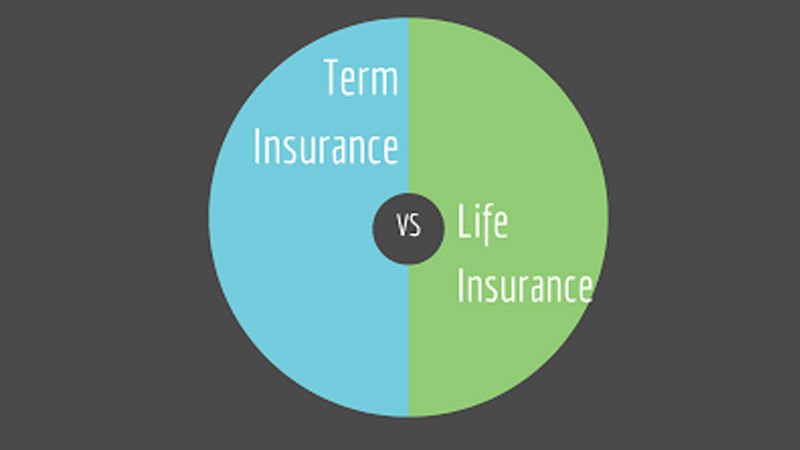
    Difference Between Term Insurance And Life Insurance

    Insurance is an important tool to secure your loved ones’ future. Among the most common types are term insurance and life insurance. While both offer financial protection to your family, they work in different ways. Before you finalise what kind of coverage you want, it is important to understand the distinction between the two. Let’s explore what term and life insurance mean and the main differences between them.

    What is Term Insurance?

    Term insurance is a pure protection plan. It provides life cover for a specific period, i.e., around 10, 20, or 30 years. If the policyholder passes away during this term, the nominee receives the death benefit (sum assured). However, if the policyholder survives the term, there is no maturity or return benefit. Some plans may come with a return of premium feature, where you get the premiums refunded if you outlive the end of the term.

    The main aim of a term plan is to offer high coverage at a low cost. It is considered the most affordable and straightforward type of insurance. You can use a term insurance premium calculator to check how much premium you need to pay based on your age, income, and sum assured. If you are looking for the best term insurance plan, opt for one that offers flexible tenure, claim settlement ease, and rider options.

    What is Life Insurance?

    Life insurance is a broader term that includes products offering a life cover, which may come with savings or investment components. These plans not only offer a death benefit to the nominee in case of the policyholder’s demise but also provide a maturity benefit if the policyholder survives the policy term (endowment plans or ULIPs) or payouts during the plan (money-back policies). 

    Examples of life insurance include endowment plans, whole life insurance, money-back plans, and Unit-linked Insurance Plans (ULIPs). These policies are suitable for individuals looking to save (or invest) over the long term while staying insured. Though the premiums are higher compared to term plans, they offer the advantage of building a financial corpus over time.

    Key Points of Difference Between Term Insurance and Life Insurance

    Are you wondering which to choose – the best term insurance plan or the best life insurance in the market? The following points of difference will help you choose between the two: 

    Parameters  Term Insurance  Life Insurance 
    Purpose  It is purely for financial protection. It combines protection with savings or investment.
    Payouts Only pays the death benefit if the policyholder passes away during the term. Pays the death benefit and also offers maturity benefits if the policyholder survives.
    Premium Cost  Affordable and offers higher coverage for lower premiums.  Comes with higher premiums due to the savings component. 
    Policy Term Covers a specific period. Can offer coverage for a fixed term or even lifetime coverage (whole life).
    Returns Offers no returns unless you opt for return-of-premium variants. Offers returns through bonuses, savings accumulation, or market-linked gains. 
    Ideal For Those who want life insurance coverage at an affordable rate. Those looking to build savings with insurance over a longer period. 

    The right choice between term insurance and life insurance will depend on your financial goals and current life stage. Term insurance is best for those looking for affordable protection while life insurance is ideal for those looking to combine security and long-term savings. Use tools like a term insurance premium calculator to compare and choose the best term insurance plan for your family’s future. Whatever you choose, ensuring financial safety for your loved ones is always a wise decision.

  • How Does Term Insurance Benefit Self-Employed Individuals Without Employer Benefits?

    How Does Term Insurance Benefit Self-Employed Individuals Without Employer Benefits?

    When you’re self-employed, you handle everything—your income, your business, and your family’s financial security. There’s no company insurance or fixed salary to rely on. That’s why it’s important to plan ahead.

    Term insurance is a great way to make sure that if life takes an unexpected turn, your loved ones won’t be left struggling. It’s a simple, affordable solution that provides peace of mind. 

    This blog covers the reasons why term insurance is a must for self-employed. We’ll look at how it can offer stability in an unpredictable world.

    Benefits of term insurance for self-employed individuals

    Besides compensating for the lack of employee perks, these are the other benefits of term insurance for the self-employed: 

    Provides financial security for your family

    If your income supports your household, term insurance ensures your family isn’t left struggling in case of an unexpected event. It helps cover essential expenses like home loans, education and daily costs.

    Offers affordable and flexible premiums

    Term insurance gives you good coverage at a low cost. You can also pick a payment plan that suits you—monthly, quarterly or yearly.

    Ensures business continuity

    If you own a business, the payout can help cover operational expenses, clear debts or support succession planning. It ensures your business remains stable even in your absence.

    Gives peace of mind

    Self-employed individuals have to create their own financial safety net. Term insurance provides reassurance that your dependents won’t face financial hardship.

    Provides tax benefits

    Premiums paid for term insurance qualify for tax deductions under Section 80C of the Income Tax Act, 1961. Furthermore, any payout to your nominee is tax-free under Section 10(10D).

    Covers loans and liabilities

    Many self-employed individuals take loans to grow their businesses. Term insurance prevents these debts from becoming a burden on your family. The payout can help cover repayments if something happens to you.

    Allows customised coverage

    You can adjust your term insurance coverage. Consider your business value, income and financial goals. You can even increase coverage as your responsibilities grow.

    Offers extra protection

    Riders like critical illness cover, waiver of premium and accidental death benefits offer more benefits to your policy. These keep you financially secure if health problems affect your income.

    Tips to choose the right term insurance for self-employed individuals

    When you’re self-employed, planning for financial security is entirely up to you. Without employer-provided benefits, it’s important to choose a term insurance plan that can take care of your family’s needs and cover any outstanding loans or business liabilities. This ensures that your loved ones won’t have to face financial difficulties if something happens to you.

    Since income is unpredictable, look for policies that offer flexible premium payments or grace periods. The coverage should be able to support personal and business commitments. It’s also a good idea to compare different insurers based on their claim settlement ratio, policy benefits, and premium costs. Additional features like critical illness cover or a waiver of premium can offer extra protection during tough times. Before you finalise a plan, read the policy details carefully to understand the terms and exclusions. If you’re unsure about the right choice, consult a financial advisor.

    Last word

    Choosing the right term insurance provider is as important as selecting the right coverage. To make an informed decision, check the insurer’s reputation, claim process and additional benefits. A trusted provider keeps your family and business financially secure, no matter what.

    Use a term insurance premium calculator to make your search easier. It lets you compare plans based on coverage, cost and flexibility. Checking these details will help you pick a policy that gives the right financial protection.

  • Term insurance for self-employed: A guide for freelancers and small business owners

    Term insurance for self-employed: A guide for freelancers and small business owners

    Self-employment is rapidly becoming one of the top choices among job seekers and businesspeople. It is one of the few employment opportunities where you need not depend on others to pay you. You create your own job and your own profits. This sense of creation and self-satisfaction quickly ripples into other parts of life. That is why term insurance for self-employed is so desirable.

    What is term insurance? 
    Term insurance is a type of life insurance policy which you can avail to secure the future financial well-being of your loved ones.

    A term insurance policy is a highly affordable form of life insurance that is available with a very high sum assured as compared to the very reasonable premium rate. The policy tenure may vary from 10-100 years. Additionally, you can choose term insurance policies based on your financial needs.

    Here is a list of the types of term insurance available:

    . Increasing term plan – They increase the overall sum assured annually, which helps meet the rate of inflation in the future and increases your family’s financial protection.

    . Decreasing term plan – They decrease the sum assured annually but use the money to repay lenders and reduce your liabilities.

    . Level term plan – They are steadfast term insurance policies that abide by the terms and conditions agreed upon in the initial contract.

    . Term insurance with return of premium – These are unique term insurance policies that offer maturity benefit if you survive the policy tenure.

    . Single premium term insurance plan – They allow you to purchase a term insurance policy with all its benefits with a single lump sum premium instead of regular payments.

    You can evaluate the pros and cons to choose the policy that best suits your needs and those of your loved ones.

    What is GST, and how does it affect self-employed individuals? 

    Self-employed individuals have a lot of responsibilities. Aside from making a living to support your family, you also have financial responsibilities toward the government. This holds true in any country, but thankfully in India, the introduction of GST in 2017 simplified and streamlined the taxation process. 

    So, what is GST? 

    GST is nothing but the tax levied on goods and services in India. Earlier, before the government conceptualized what is GST, there were a number of taxes that you had to pay based on your type of profession and income. Now, the single goods and services tax has streamlined the tax that you need to pay so you never violate the taxation laws in the country.

    GST has replaced several forms of indirect taxes. This is particularly beneficial for the self-employed as you have taxes levied on your income with variations. Instead, now you can acquire a GSTIN which helps simplify the process of filing your taxes. You can also avail of multiple benefits on term insurance premiums due to a streamlined GST process.

    Why term insurance for self-employed is necessary? 

    Self-employed individuals are highly self-reliant. You create your jobs, make money, and take care of your loved ones. However, the income source may be unstable. Freelancing and self-employment bring you money as it corresponds to individual contracts. Therefore, dry months are a possibility during which you may need to acquire loans or credit. Savings or wealth development also takes time and efficiency.

    In the event of your sudden, untimely demise, the liabilities of mortgages, debts, and household expenses transfer to your loved ones. Any outstanding business expenses are also your family’s burden to bear.

    Here are a few top reasons why term insurance for self-employed is so important:

    . It allows you to build a corpus for your loved ones to handle their future goals and ambitions.

    . You can avail of single premium term insurance for self-employed. It helps you acquire the plan’s benefits using a single lump sum premium.

    . You can avail of increasing term insurance that assures a higher sum assured. In the future, if your loved ones assess higher liabilities, then the higher sum assured can help navigate the burden without succumbing to the pitfalls of inflation.

    . Term insurance for self-employed offers tax benefits which can help you save money while you prepare for your family’s financial security.

    . Term insurance for self-employed is an affordable plan with a higher sum assured than most life insurance policies.

    . It also helps you build a corpus for your golden years. Term insurance with a return of premium assures a lump sum maturity benefit that you can use for future financial crises.

    . You can add riders to amplify the coverage on your term plan. These payouts help pay for medical expenses in case of accidental death, critical illnesses, etc.

    Term insurance for self-employed is a safeguard that protects your loved ones after your death. It provides peace of mind knowing that your loved ones will be well taken care of despite the unstable income source and liabilities that you may leave behind.