Tag: Tencent

  • Gaming veteran Rahul Razdan launches Giga to blur entertainment boundaries

    Gaming veteran Rahul Razdan launches Giga to blur entertainment boundaries

    MUMBAI: Rahul Razdan, the architect behind some of India’s most audacious digital ventures, has emerged from Reliance Jio’s corridors to launch Giga, his latest gambit to reshape gaming and entertainment. The 51-year-old, who spent nearly a decade building JioChat into a multimedia powerhouse, now promises to deploy artificial intelligence to revolutionise how humans engage with games.

    Razdan’s pedigree reads like a who’s who of India’s digital transformation. As president of Tencent’s Indian operations between 2012 and 2014, he orchestrated WeChat’s meteoric rise, briefly dethroning established messaging giants. The app’s coup de grâce came via an audacious marketing blitz featuring Bollywood stars and a record-breaking QR code cake made from 7,500 individual cakes.

    His tenure at Jio proved equally theatrical. JioChat became the first app to bear the Jio brand, even predating the network itself. Under his stewardship, the platform birthed India’s pioneering vertical video ecosystem and hosted the award-winning KBC Play Along game, where users played alongside television’s prime-time quiz show in real time.

    Before his corporate conquests, Razdan co-founded ibibo.com, crafting what he claims was India’s first internet business with multiple revenue streams firmly embedded. The venture, backed by South Africa’s Naspers and China’s Tencent, pioneered social gaming with local flavour and real-money integration.

    Giga’s cryptic website teases that “the 400 pound gorilla is coming soon,” offering little beyond Razdan’s promise to blur traditional entertainment boundaries. His track record suggests punters should pay attention. After all, this is the same executive who recently pivoted to filmmaking at 51, producing an award-winning animated short that swept international festivals from London to Buenos Aires.

    Armed with degrees from the School of Planning and Architecture and IIM Indore, plus two decades navigating India’s digital rapids, Razdan appears intent on proving that gaming’s next act has only just begun.

  • PUBG: Game over for PUBG mobile in India

    PUBG: Game over for PUBG mobile in India

    KOLKATA: Despite the ban on PUBG Mobile in India, fans were desperately hoping that it might eventually make a comeback. Those hopes were sadly dashed when Tencent Games, the publisher, announced its decision to shut down all services and access for users in India on 30 October.

    “To comply with the interim order of the ministry of electronics and information technology dated 2 September 2020, Tencent Games will terminate all service and access for users in India to PUBG MOBILE Nordic Map: Livik and PUBG MOBILE Lite (together, “PUBG Mobile”) on 30 October 2020. The rights to publish PUBG MOBILE in India will be returned to the owner of the PUBG intellectual property,” the company said in a statement posted on its official Facebook page.

    Back in September, the Indian government had banned PUBG Mobile, along with 117 other Chinese apps, citing security concerns. India was one of the largest markets for PUBG Mobile and the game had generated close to $28 million since July 2019 through in-app purchases alone, a report from Sensor Tower stated.

    “Protecting user data has always been a top priority and we have always complied with applicable data protection laws and regulations in India. All users’ gameplay information is processed in a transparent manner as disclosed in our privacy policy,” the statement added.

  • Tencent buys content, technology and resources of iFlix

    Tencent buys content, technology and resources of iFlix

    MUMBAI: Chinese internet giant Tencent Holdings Ltd purchased "content, technology, and resources" of Southeast Asia focused iFlix. According to reports, it will not take on iFlix’s debt while it will expand the latter’s geographic reach in a key area of growth. 

    iFlix had raised over $300 million and achieved more than 25 million active users in Southeast Asia. Reports also indicated it was still struggling as it was facing significant accumulated losses and financial difficulties. 

    “This is in line with our strategy to expand our international streaming platform, WeTV, across Southeast Asia and provide users with international, local and original high-quality content in a wide range of genres and languages,” Tencent was quoted saying.

    Even it let go about 50 staff earlier this year and did not carry out an initial public offering in May. Its rival HOOQ also filed for liquidation soon after lockdown started. 

  • Hike eyes more funds in 2019

    Hike eyes more funds in 2019

    MUMBAI: Home-grown messaging app and India’s WhatsApp rival Hike has shut down its Total app which was launched in January 2018 as the company wants to just focus on keeping it simple for the masses, and will go back to the basics as a strategic move.

    Now, according to an ET Telecom report, Hike is eyeing more funds in 2019 and will start experimenting with monetisation models from 2020. The app will now primarily focus on messaging and stickers and will withdraw from other services such as payments.

    Since there is an interest on the consumer side in the country for short videos apps, the company is also expected to launch a separate app for content which may be on the same pages as video creating and sharing app Tiktok.

    As reports go, Hike did a lot of experimenting in the last year and half and added stuff at the cost of something else. As in the world of internet, things are very dynamic and products evolve quickly and in many cases, these products evolve away from the core. Therefore, Hike has decided to focus on its core which is to be ‘social’.

    So far, Hike has raised $261 million from investors, which includes Chinese multinational investment holding conglomerate Tencent Holdings Ltd, manufacturing company Foxconn Technology Group and the Bharti Group.

    Since its last fundraiser which was in the fourth quarter of 2016, it raised $175 million by led by Tencent and Foxconn at the valuation of $1.4 billion. Most of the funds from the last fundraiser remain available in hands of the company but in late 2019 or 2020, it will look to raise more funds.

    Like the last time where the company went on to explore in multiple directions and lost focus on its essential and core in order to evolve the product is something it will avoid doing with the raised funds in future.

    The idea here is to “focus on to simplifying the applications”, Hike will focus on stickers and voice and with that it will continue to work on privacy as a feature through its encryption technology in India.

  • Esports industry expected to reach $3 bn by 2021

    Esports industry expected to reach $3 bn by 2021

    MUMBAI: When everything is going online, what’s there to stop sports? With improved internet speed, smartphone penetration, government digital push and highest youth population, Esports in India has the right territory for growth.

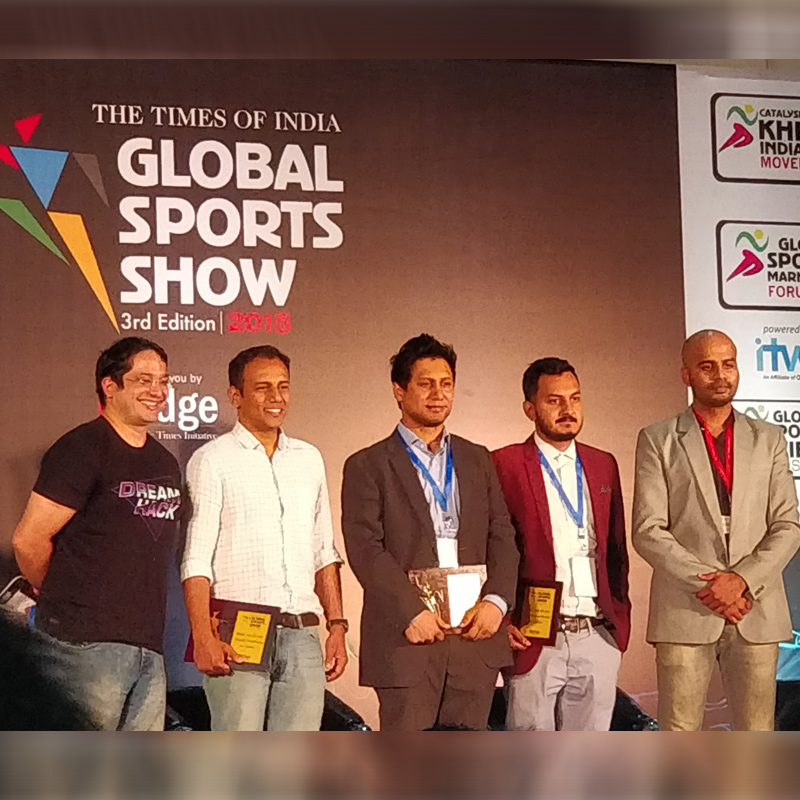
    In the third edition of Times of India Global Sports Show (GSS) 2018, industry experts came together to discuss about “Unlocking potential: The eSports revolution in India”.

    The state of esports industry over the next three to five years is estimated to grow by 5.3 per cent in Asia and 9.4 per cent in Middle East and Africa (ME&A) according to PwC Sports Survey 2018.

    Esports is a subculture that is just growing. It is the sport of the new generation. In India, it is played on multiple platforms like Voot, Hotstar, Youtube and Twitch.

    Tencent GM Aneesh Arvind said, “Once you have a large enough mass in a region or a country then I would think it’s a matter of time to really become big. The three things we can do from our side to make it really popular are the infrastructure, devices and data where people can play and watch others play.

    The recent sensational game made by Tencent Games is PlayerUnknown’s Battleground’s (PUBG) Mobile, which has crossed 100 million downloads.

    “We have such a large player base in India that all the assumptions we used to have in the gaming industry doesn’t hold true anymore. We have built the game and the ecosystem around it by doing TV commercials, advertisement in different media, got influencers on board,” Arvind added.

    U Sports AVP-brands and partnerships Tushaar Garg said that esports was the first they spotted when they looked for new investment. “The first season of UCypher was to create awareness and created a docu-drama series format. We looked at two thing that is the big massive fan base in terms of demographics as we have a very young population below the age of 35 and biggest smartphone market after the US. We took the most popular title like DOTA, Tekken and Counter-Strike.”

    “We packaged UCypher in such a way that the actual user gets tri-fold offering i.e., career, content and community and with that, we also looked at how we can mass-ify it,” Garg added.

    Esports for the first time became a part of a major sporting event in 2018 Asian Games Jakarta as a demonstration sports. This was announced by Asian Esports Federation (AESF). 10 Indian gamers qualified for the event.

    According to Tencent, Esports is a video game, which is played competitively with rewards attached to it and an ecosystem where people are ready to watch that.

    Nodwin Gaming MD Akshat Rathee asked the panel whether it a monetisation time or a growth time for esports in India to which Garg said, “I think for us it is an investment time. As a company which is building IPs we are very clear that for the next 3-5 year time frame we have to invest in the fan base, create the infrastructure getting the right stakeholder and the right federations.”

    According to UK-based Juniper Research, the advertising spend will dominate in terms of revenue and spend (accounting for 50 per cent in 2022).

    In 2018, the market size of esports is supposed to be $900 million and in 2021 it is likely to reach $3 billion. “We as the esports industry are trying to figure out ways in which we can grow and models of monetisation,” Arvind added.

    “We are the only sport in the world which is not run by the federation because the publisher owns the trademark of the game,” Rathee concluded.

  • For FIFA coverage, ESPN’s perfect assist to Sony

    For FIFA coverage, ESPN’s perfect assist to Sony

    MUMBAI: The 2018 FIFA World Cup has been quite a show already. For fans, the tournament’s been nothing short of a thrill-a-minute ride with sheer drama and constant surprises on offer. The steady state of suspense during key matches has enabled Sony Pictures Networks (SPN) India, the event’s official broadcaster in India, rake up its viewership numbers. What’s also helped is SPN’s partnership with ESPN India that has brought fans as close to the action as possible.

    Apart from telecasting the Malayalam regional feed of the showpiece event, ESPN is also leveraging its digital platforms to increase the viewers’ engagement through wrap around shows for the tournament. 

    Despite it being a non-rights player, ESPN has more than 150 people covering the event in Russia. 

    ESPN India’s head of television initiatives Jasdeep Pannu says, “With the studio facility in Moscow, all of that is coming back to help our partners in various parts of the world including Sony in their coverage.” 

    ESPN has rolled out a holistic set of content programming which includes a unique country-wide sports-travel show ‘The Last Train to Russia’ on Sony TEN (HD/SD), a daily match day analysis show called ‘Free Kick’ which is presented by ESPN anchors.

    ESPN’s Moscow is providing content for 17 hours a day via four feeds that can transmit simultaneously. The feeds are also helping fuel ESPN’s partners’ coverage across the globe, including Africa (Kwese), China (Tencent), India (Sony) and the Philippines (TV 5).

    ESPN has also launched the ESPN FC Match Predictor – the first truly global game, created in three languages (English, Spanish and Portuguese) across 13 global editions of ESPN.com – it gives fans a chance to pick the winners for each World Cup round.

    On the deal with Sony, Pannu said, “It’s a fantastic collaboration with a lot of synergy between the two brands. Sony has been very intelligent with their rights management and acquisition. They have got the biggest ongoing show in the world.”

    The challenge ESPN faces pertains to delivering the relevant content to keep the fans engaged as the mass audience gravitates towards all the sports right owners.

    However, Pannu believes that event rights are not the only way forward.

    “The rights guys are too busy focusing on the rights to look at non-rights content like we do,” he says.

    ESPN has also seen strong growth on the digital front across the sub-continent. 

    In terms of unique visitors between January to September 2017, ESPN’s digital platform witnessed a 24 per cent growth y-o-y. In India, 78 per cent of the traffic to ESPN digital (sites+app) comes from mobile devices which has growth at 150 per cent y-o-y.

    ESPN’s digital platform is also planning to target a larger group going forward by increasing its reach to the Hindi speaking audience, along with some regional languages like Tamil and Bengali.

  • Paytm ranked among Top 50 global companies

    Paytm ranked among Top 50 global companies

    MUMBAI: India’s largest mobile payments platform Paytm’s instrumental role towards pioneering the cashless economy has been honored in American business magazine Fast Company’s annual ranking of the world’s ‘50 Most Innovative Companies’ for 2018. The company is among the only two Indian companies that has joined the list of other leading global companies such as Netflix, Tencent and SpaceX.  

    Most Innovative Companies is one of Fast Company’s most significant and highly anticipated editorial efforts of the year. To produce the 2018 list, more than three dozen Fast Company editors, reporters, and contributors surveyed thousands of enterprises across the globe to identify the most notable innovations of the year and trace the impact of those initiatives on business and industry. 

    Paytm has played a key role in making payments easy for Indians. It has pioneered QR based mobile payments in the country and supports all payment methods including Credit/Debit Cards, Net Banking, Paytm BHIM UPI and the Paytm Wallet. It offers customers the widest range of offline and in-store payment use-cases among others. Today the company’s widely accepted QR is enabling merchant partners across India to accept unlimited payments directly into their bank accounts at 0% fee. It is also fast emerging as the largest platform for UPI payments in India.

  • Hike unveils ‘No Formality’ campaign for Diwali

    Hike unveils ‘No Formality’ campaign for Diwali

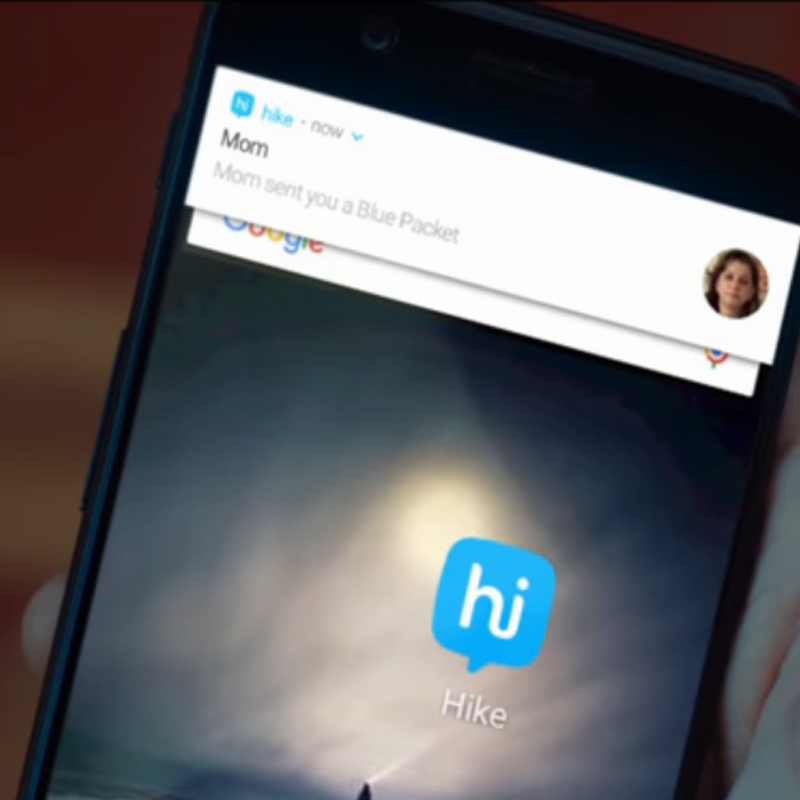
    MUMBAI: Hike Messenger, India’s homegrown messaging platform, has announced the launch of its new marketing campaign “No Formality.”

    According to a Hike spokesperson, “No Formality is a way of life that emphasises that you should simply be yourself without any formalities or pretence – a way of celebrating traditions without formality.” He further added,“It is about accepting that we all need to treat each other as equals in a fun and easy manner. And ‘No Formality’ is an expression of that spirit. ‘No Formality’ cuts across culture, language, and geographies and is a reflection of our society.”

    The campaign kicked off with one and there would three three films. The campaign will run till December on digital, social and traditional media. It will be available in five languages – Hindi, Telugu, Kannada, Malayalam and Tamil across 16 states.

    In the countdown to Diwali, the campaign highlights scenarios related to the festival. For instance, the homecoming film is based on the fact that Diwali is usually celebrated with family.

    Even if someone does not want to go back but wants to spend it with his or her friends, tradition demands you have to go back home. The campaign of Hike, investors of which include Tencent, Foxconn, Tiger Global, Softbank and Bharti, will be amplified across social channels using #NoFormality.

    The homecoming film shows a young boy travelling back home for Diwali and there is an entire build-up of emotion as it shows him on the journey back home. But, there is a complete anti-climax when he reaches home: The Homecoming.

  • Digital ad investment will surpass TV in five more countries: GroupM’s Interaction 2017

    MUMBAI: GroupM has published Interaction 2017, a state of the union assessment of digital advertising worldwide with forecasts on technology developments, media marketplace trends and evolving consumer behaviors informed by experts from WPP’s worldwide network of communications, marketing and data companies. 

    The report offers in-depth insights underpinning digital advertising growth forecasts in 46 markets. Topics covered include ad fraud and marketplace integrity, fake news, privacy, ad blocking, artificial intelligence, augmented and virtual reality, video competition across platforms, live video, advanced television, streaming and on-demand audio, and much more.  In the report, GroupM’s global chief digital officer Rob Norman and Futures Director Adam Smith, also share views on media pricing, the consolidation of economic value in media among a small group of companies, and media consumption and ecommerce trends.

    As reported in its “This Year, Next Year,” worldwide media and marketing forecast, GroupM predicts that digital advertising will capture 77 cents of every new ad dollar in 2017; TV will capture 17 cents. Despite challenges around standards, measurement and supply chain integrity, digital advertising continues to grow rapidly as marketers follow consumers to the media destinations where they spend their time, and increasingly transact for goods and services. Digital investment has already surpassed TV in ten markets* and another five will cross this bar in 2017 (France, Germany, Ireland, Hong Kong and Taiwan), GroupM predicts.

    As the competition for consumer attention and advertiser investment escalates, people worldwide are spending more time with media. On a population-weighted average, the overall time spent with media (the ‘media day’) grew by nine minutes to eight hours in 2016, but time spent with online media grew by 14 minutes. This is attributable to the greater access to media that mobile technologies provide. Mobile similarly contributed to the growth of adult internet users to 2.34B in 2016.

    However, GroupM’s data shows that for now, TV is still king with advertisers when global data is aggregated. TV’s share of advertising investment was largely stable at 42% in 2016; GroupM predicts a share decline to 41% in 2017. TV rode a five-year peak share at 44% from 2010-2014, with only minimal share shedding since then.

    Still, linear TV demographics continued shifting in 2016, with the loss of the 16-24 year-old demographic remaining one of its biggest challenges. Though the global population of 16-24 year-olds only decreased 1% 2014-2016, the average “tonnage” of the 16-24 linear TV audience shrank 16%, with some markets reaching numbers closer to 30%. GroupM clarifies that some of this loss is exacerbated by TV’s other big challenge – the inadequate measurement of TV’s total audience across platforms. GroupM continues to advocate measurement improvements to better evaluate television across all devices in markets across the globe. The absence of close substitutes means that for now, those advertisers seeking this young adult TV audience can be willing to bear price inflation in proportion to its rising scarcity.

    In the report, GroupM also examines the coalescing of economic value among six global companies who hold the lion’s share of digital ad spending, with Google and Facebook at the forefront. GroupM notes that these companies have very different business models than the owners of linear TV, and they also attract different advertisers. Advertisers accounting for 90% of TV advertising revenue represent between 30% and 40% of the revenue earned by the digital giants. The other 70% of their revenue comes from a combination of small and local businesses, often ones that trade in digital products or services. This bifurcation among classes of advertisers is subject to change as television becomes more data-fueled and targeted (more like digital) and as video content on digital platforms continues to be enhanced with greater quality (more like TV).

    “Google and Facebook attracted the vast majority of incremental digital ad investment growth in 2016,” said Smith. “In 2017, the industry will be watching closely to see how Snapchat or Amazon may creep into Facebook’s and Google’s value chain, and if the stronghold that ‘BAT’ (Baidu, Alibaba, Tencent) has in China can expand to international markets.”

    Interaction 2017 also looks at consumer purchase behaviors. In 2016, ecommerce totaled USD 1.874 trillion, globally, fully 20% more than the USD 1.558 trillion logged in 2015. GroupM forecasts 18% growth for ecommerce in 2017, surpassing the two-trillion mark to USD 2.205 trillion.  On average, online shopping per user is projected at USD 869 in 2017. The U.K. remains home to the most active online shoppers, predicted to average USD 4,000 per user in 2017. Combined, Amazon and Alibaba represent more than half of all e-commerce (excluding the travel category).

    “Last year, we were cautious in our estimation of the rate of change, but this year we are less so in the face developments in hardware and software technologies that are advancing us from the information age to the intelligence age,” said Norman. “To help shape our thinking and speculation in this year’s Interaction, we invited more than 20 partners** to discuss AI, augmented and virtual reality, video competition, advanced and data-driven TV, streaming and on-demand audio, the Google/Facebook digital duopoly, live video, ecommerce, marketplace integrity and fake news. The result is both one of the most comprehensive pieces on the state of digital we’ve ever written and also a springboard for marketers to think long and hard about their future. We invite debate that will undoubtedly ensue.”

    (* Australia, Canada, China, Denmark, Finland, the Netherlands, New Zealand, Norway, Sweden, United Kingdom.)

    {** Amazon, AppNexus, comScore, DoubleClick, eMarketer, ESPN, Facebook, Google, Hulu, IAB, IBM, LinkedIn, NBCU, Pandora, Pinterest, The New York Times, Snapchat, Turner, Twitter, Vox Media, YouTube.}

    public://global-002.jpg

  • Practo TVC conveys good health message

    MUMBAI: Having got US$ 55m Series D funding from Tencent, ru-Net, RSI Fund, Thrive Capital, Sequoia Capital, Matrix Partners, Capital G, Altimeter Capital & Sofina earlier this year, eventually adding up to US$ 180m, Practo has unveiled its new brand identity and positioning – Your Home for Health. 

    One of the leading healthcare platforms, Practo has partnered with New York-based graphic design firm-Chermayeff & Geismar & Haviv (CGH) to create a global, distinctive and memorable identity. Practo’s platform is expanding rapidly and the new brand identity better represents the larger purpose and range of businesses that Practo now has around the world. 

    The positioning ‘Your Home for Health’ embodies the powerful concept of having a single, trusted and familiar place where consumers can find doctors and book online appointments, chat online with doctors, order medicines and lab tests, store health records and even read health articles written by doctors. For healthcare providers, Practo is the platform that helps them connect with consumers, provide a better patient experience as well as provide tools that help them manage and grow their practice.

    In the last year, Practo’s various offerings have made significant progress to create a strong platform: 116% growth in patients visiting Practo and 81% more appointments booked. There has been 114% growth in patients internationally and 129% growth in international appointments. Medicine delivery of Practo will cover Top 7 cities in India by May 2017.

    Practo is now focused on opening the platform to more healthcare stakeholders including insurers, pharmaceutical companies, medical devices companies and others so they can build new services on top of Practo’s platform and deliver a superior healthcare experience for both consumers and providers.

    The brief to CGH for the new brand identity was to create a global brand that symbolizes the platform role Practo plays in healthcare. The identity must encompass the complexity of Practo’s offerings but at the same time, depict it with exceptional simplicity.

    The positioning- Your home for health, signifies that Practo is the single destination for consumers to take care of all their health needs as well as those of their loved ones. Practo is the trusted, familiar place where consumers can take good take care of themselves and their families, assessing health issues, finding the right doctor, managing records securely, and finding new ways to live a longer healthier life.

    The new distinctive logo symbolizes the platform role Practo plays. Consisting of two dots at either end with Practo in the center, it denotes that Practo can connect any two stakeholders in the healthcare ecosystem – they could be a hospital and a patient, an insurer and a patient, an insurer or a provider and more. Each can now easily connect with the other through Practo.

    In addition to the master brand, Practo also has four product sub brands for its products sold to healthcare providers. These are Ray™, Qikwell™, Insta™ & Querent™. 

    Practo founder & CEO Shashank ND said, “Practo is the platform that connects any two stakeholders in healthcare, be it patients, providers, insurers, medical devices and more. As we open our platform to other stakeholders in healthcare, we are excited to see the amazing experiences they will build to dramatically improve healthcare around the world.”

    “The new identity had to take care of the current and future growth for Practo, it also had to stay true to its vision to help people live longer, healthier,” says Sagi Haviv, Partner and Designer, CGH. “The new visual identity showcases two circles which represents Practo establishing connection between two entities whether its customer and the healthcare provider or any two health care stakeholders” says Mackey Saturday, Principal Designer, CGH.