Tag: Ten Sports

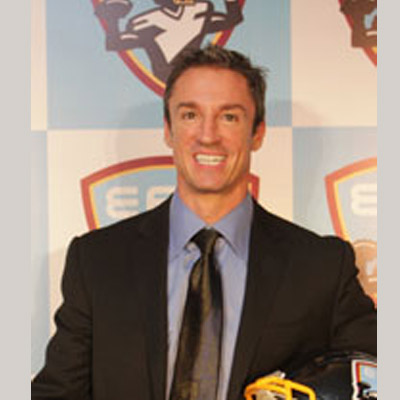
  • ‘We plan to list at the US stock exchange to raise funds for the league’ : EFLI CEO Richard Whelan

    ‘We plan to list at the US stock exchange to raise funds for the league’ : EFLI CEO Richard Whelan

    There is a rush among sporting bodies to follow the Indian Premier League (IPL) way to build their sport. The latest to follow this route is American football.

    The Elite Football League of India (EFLI) is making an entry with its first edition ready to kick off in November 2012 in Pune. The franchise model starts with eight teams, building up to a total of 52 by 2022 representing all Indian cities with a population in excess of one million.

    EFLI will work with the Indian government to develop the first ever governing body for the game, similar to that of the BCCI and its governance of cricket.

    Ten Sports has the rights to televise 33 games in the first season including Saturday and Sunday games as well as 13 Monday Night Football games. The league will commence its first nationally televised game beginning November 2012 and the inaugural season will run through February 2013.

    EFLI plans to list in the US stock exchange to raise funds for the league.

    In an interview with Indiantelevision.com‘s Ashwin Pinto, EFLI CEO Richard Whelan talks about the growing sports market in India.

    Excerpts:

    You have a scene where different sporting bodies are looking at leagues in India. What is the reason for this sudden push?

    India is today one of the fastest growing economies in the world. Its vast middle class population acts as the backbone of its economy. They want more than just cricket; they are today watching F1, EPL, Wimbledon and various other sporting activities. This has encouraged people to explore opportunities in the dynamic Indian sports landscape.

    When you look at the Indian sporting landscape, what is your vision for EFLI?

    Looking at the sporting scene in India today, the future for EFLI looks very bright. Games like rugby, basketball and lawn tennis have gained a strong ground in this country. Moreover, F1 and other motorsports events too are getting off the ground. The environment for sports in India is very conducive.

    Have you done any research to find out how American football is perceived in India?

    Clearly we‘ve started from scratch, and the slate couldn‘t have been any clearer for us. This has been terrific. From the early responses to our training and orientation camps, we can tell that India has a great sporting culture hitherto unknown.

    The message about the advent of American football coming to India spread virally at the ground level purely through word-of-mouth and we‘ve had a massive response with hundreds of candidates turning up for player and coach trainings. We are overwhelmed with this kind of response, and whilst we understand that we need to educate people about the sport in its entirety, the desire to want to learn is very strong.

    Indians don‘t watch much of other sports except for cricket. A few major events like the soccer World Cup get some traction primarily among males. Do you see things changing in this regard?

    We have seen some radical changes in Indian sports scenario in these recent years. As recent as two months ago, there was a report in one of the leading English Indian dailies that audience and advertising revenue are bound to multiply in the coming years and that Indians love to see American sports on television.

    It‘s fast, furious and fun to watch. They further reported that according to Tam, Indian viewers are now watching sports other than cricket. There is no doubt in our minds that the EFLI has picked the right time for its Indian touchdown. Even women are keen on watching sports!

     ‘EFLI will create legal bylaws, working with the Indian government to develop the first ever governing body for the game, similar to that of the BCCI and its governance of cricket‘

    You start with eight franchises. How will this be scaled up?

    Economically, EFLI will have an astoundingly unmatched impact on India. The league will incorporate sponsorship from around the world and provide a platform for multinational companies to reach India‘s burgeoning retail market.

    EFLI will auction eight teams internationally. An opportunity will be created within the Indian investment banking arena to offer franchise, league and team ownership to the public marketplace. India offers enormous room for growth within the industry of sport. The US sports industry is currently valued at a half trillion dollars leading the layperson to easily recognise India‘s potential to reach beyond the scope of the American precedent.

    In order to achieve this standard, India must embrace and become a country of many sports. Football will lay the foundation and open the pathway for an explosive sports and media marketplace with reverberating impact into memorabilia and second and tertiary product sales. There is no question that, on behalf of India, football will elicit interest and participation from a broad spectrum of sporting enterprises once the door has been opened.

    What are the different revenue streams available to franchises and have you spoken to any parties for feedback?

    We are still working out these details.

    On the broadcast front, have you signed a deal with anybody?

    EFLI has signed letter of intent with Ten Sports to televise 33 games in its first season including Saturday and Sunday games as well as 13 Monday Night Football games.

    The league will commence its first nationally televised game beginning November 2012 and the inaugural season will run through February 2013.

    Could you talk about how you will partner the sports ministry to set up a governing body like the BCCI?

    We have set up EFLI, the first ever American-style Football Federation in India. This allows for the non-profit entity to work directly with the central government of India for the benefit of Indian society.

    EFLI will distribute 15 per cent of its revenue to the Sports Ministry of India to help maintain many of its ongoing programmes and facilities.

    Also, the league will forge strategic alliances by offering ownership opportunities to all Indian entities; business, military, political, municipalities, private and public partnerships. The EFLI will create legal bylaws, working with the Indian government to develop the first ever governing body for the game, similar to that of the BCCI and its governance of cricket.

    Could you give us an idea of the investments being made and by when you expect the venture to be profitable?

    We plan to list EFLI at the US stock exchange to raise funds for the league. We are planning to raise around $10-12 million through this route. Americans know the growth story of India and want to invest in India.

    The sports business industry is untapped and they are very familiar with the power behind American football. Besides tapping the US stock market, we are also looking at the option of raising funds from private investors but at this point we have quite a few options. We also have private investors and potential debt investors for equity down the line.

    Is the initiative being done under the aegis of the NFL and do you have similar leagues in other markets?

    No, EFLI has no affiliation with NFL. It‘s a completely independent entity which was formed by people sharing a similar thought process.

    There are various other leagues which are present in the US today like the United Football League (UFL), or the Stars Football League which will begin from August 2011. Even Canada has its own football league called the Canadian Football League (CFL). Apart from these professional leagues, there are other various semi-pro and amateur leagues which are held in various parts of United States.

    Could you talk about the team and support staff behind the EFLI?

    EFLI‘s management is in the hands of a very dynamic and experienced team. We have Sunday Zeller, who is the founder of this exciting new initiative. She has worked as a marketing consultant in branding and positioning startup enterprises to help attract capital and attention for the past 22 years.

    Then we have Alex Emmanuel who is the co-chairman. He was the Tata group global VP for Human resources. He has also worked with MNCs like ABB / Boehringer Mannheim. I am the CEO of EFLI. I come from a stock broking background. I had a firm called Moveable Cubicle. I have been involved in many start-up or early stage private companies, many of which went on to become publicly traded.

    Mohan Bangera is our COO. Previously he was Videocon VP marketing and sales. He has been closely associated with sports since a long time. He is the Technical Council of Judo Federation of India Chairman. Bangera comes with 30 years of experience in this field as a player, coach and administrator.

    We also have a robust executive management team with specialists from various backgrounds coming on board with their expertise in specific roles such as corporate alliances, production, events, marketing and choreography among other important job functions.

    What are the different facets of the EFLI?

    EFLI will create an exclusively Indian product packaged perfectly and specifically to advantage television and media support ultimately to become the most valuable sports franchise in the world.

    Thousands of jobs will be created as a result of the immense need for coaches, athletes, trainers, referees, and support staff as well as the even greater demand for employees in the legal, maintenance, media, marketing and retail sectors.

    EFLI will strive to eventually support the highest paid athletes in all of India. Founding athletes and coaches will have an opportunity to become owners of the league. The league will recruit and train a team that will physically and strategically compete at the level of the current US teams, one day defeating the US in competitive play.

    EFLI will establish a grassroots educational project to incorporate the game of football in schools beginning at grade school level extending to universities which will feed the professional recruitment efforts. By introducing and supplying footballs and equipment along with the programme, the league will provide a much needed physical and intellectual stimulus through competitive game play to the male youth of India.

    What are logistical challenges you will face and what is the strategy to tackle this?

    Educating people about the game, providing them with the right kind of exercise and nutrition to be able to play the game in its true form will be our biggest challenge. And we are fully aware of this, and will do everything possible to make this best in sports entertainment.

    What is American football‘s USP from a viewer‘s perspective compared to other sports that Indians follow like cricket and soccer?

    Indian viewers have opened up to newer sporting events in recent years. Sports like rugby and badminton have gained momentum in the Indian sporting culture.

    The introduction of American football will be a new robust sport that Indian viewers can look forward to. It‘s a game which needs speed, strength and strategy. These traits will keep the viewers to their seats. It‘s a total entertainment for the viewers.

    In the US, American football has maintained its pinnacle in a competitive and fragmented market with the Super Bowl being the most watched event in the year. What are the learnings from this success that you would look to apply in India?

    When football took off in America in 1960, there was a population of 180 million people; India has 1.2 billion.

    America had 45 million TV households; India currently has 130 million and this is increasing exponentially.

    The economic strength of the United States was $520 billion; the economic strength of India is currently more than double at $1.2 trillion and growing at a blistering pace! India is without doubt an exceptionally fertile market for the immediate and overnight success of the game of football.

    Having said that, you have the disadvantage of a relative lack of awareness for American football compared to other sports in India. How will you work around this?

    We agree that there is lack of awareness towards American football in the county but people are willing to know about this game. There is a huge Indian population in America which follows American football. This trend has passed on to the Indian audience as well.

    EFLI believes that it will easily be able to capture the interest of the enormous population under the age of 30 which has shown proven interest in American form of sports. The EFLI will be branded as the “New and Cool” intelligent ultimate athlete gladiator sport and form of entertainment.

    We also believe that the top US companies with an international presence or those looking to grow their international presence in this enormous 1.21 billion population market will have a keen interest in attaching their brands to the “proven power” of this game. The EFLI will capitalise from the unbelievable discrepancy between the number of unpaid athletes in the country and the enormous potential of gross revenue football has proven to capture through television and electronic media broadcasting, merchandising and licensing revenue, ticket sales, and local and corporate sponsorship as well as future team franchise sales.

    We plan to establish EFLI as an educational project at the grassroots level to incorporate the game of football in schools beginning at school level extending to universities which will feed the professional recruitment efforts. By introducing and supplying footballs and equipment along with the programme, the league will provide a much needed physical and intellectual stimulus through competitive game play to the male youth of India.

    What new technologies have come in to enhance the viewing experience of American football?

    These aspects will be worked upon in close cooperation with our broadcaster partner. Needless to say we will offer our viewers a cutting-edge and technologically advanced viewing experience.

    In terms of global television viewership, how does American football compare to the NBA, soccer and tennis?

    American football has gained strong ground outside US. It‘s now a very popular sport in countries like Israel, Australia, Belgium, Brazil, Germany, England, Ireland, Italy, Japan, Mexico, New Zealand, Hungary, Norway and Spain. Ironically, these are the nations where soccer and rugby are a religion. In terms of viewership, the Super Bowl has a global audience of over two million – this is an impressive number.

    What role do new media like mobile and social networks play for American football in building brand equity?

    Mobile and social networks play a huge role in building a brand name for American football. These are the new platforms through which we can spread the word amongst the new generation.

    They are connected through Facebook and Twitter for news and information, which I guess is apt to promote the game. Besides, new media tools like electronic and fantasy gaming have already proven their ability to attract consumers and also rake in huge profitability.

  • ESPN Star Sports to rake in Rs 1.5 bn from India-England series

    ESPN Star Sports to rake in Rs 1.5 bn from India-England series

    MUMBAI: ESPN Star Sports (ESS) has the potential to rake in Rs 1.5 billion as advertising revenue from the upcoming India-England cricket series, according to a preliminary estimate made by Indiantelevision.com.

    The official broadcaster of the series has roped in Maruti, Nokia, Seagrams and Tata DoCoMo as sponsors, according to sources. ESS is said to be looking for eight sponsors.

    An ESS spokesperson declined to comment, saying that discussions with sponsors are on.

    ESS is looking at Rs 375,000 per spot for the Twenty20 International, Rs 275,000-300,000 for the ODIs and Rs 50,000 for the Test matches, sources said. Sponsorship outlays are ranging from Rs 90 million-150 million.

    India and England play four Test matches, five ODIs and one Twenty20 International.

    “The series is generating positive sentiments. Interest will revive in cricket given that this is the first time a full-strength Indian team is playing since the World Cup,” said Madison Media Group CEO Punitha Arumugam.

    The India-West Indies series has drawn in weaker audiences due to the absence of stars like Sachin Tendulkar and Chris Gayle in the tournament. Ten Cricket, the broadcaster of the series, will be able to fetch under Rs 500 million as advertising revenue, sources said.

    Ten Sports executives did not want to comment on the revenue that the India-West Indies series would generate.

    “After the World Cup, India is playing its first big series and the timings are good. By beating Australia and retaining the Ashes, England’s worth as a team has grown. A full- strength Indian team will also be taking part,” a media analyst said.

  • ‘We are now in a very strong position to overcome any new challenges in the Indian marketplace’ : WWE International executive VP Andrew

    ‘We are now in a very strong position to overcome any new challenges in the Indian marketplace’ : WWE International executive VP Andrew


    Earlier this year to better reflect its business, World Wrestling Entertainment rebranded as WWE. Among other things, it is looking to develop new television products including scripted, non-scripted and animated programmes as well as the launch of a new WWE Network in the next 12-18 months.


    Recognising the importance of India, the company this month set up an office here with Rukn Kizilbash as its head. The company has a strong association with Ten Sports and is also exploring possibilities of putting its content on regional channels.


    In an interview with Indiantelevision.com‘s Ashwin Pinto, WWE International executive VP Andrew Whitaker talks about the company‘s growth plans in India.


    Excerpts:

    You recently opened an office in Mumbai. Given that this is an important market, why did it take so long?
    India has been one of our most successful television markets for a number of years now. In line with our global strategy, since we have begun to introduce our other lines of business, the time is now right to begin building a more local presence in the market. The Mumbai office is the first step of that process.

    Could you talk about the opportunities and challenges that you will face in India?
    With our new Mumbai office and Rukn Kizilbash in place as general manager India, as well as our strong TV penetration with Ten Sports and other lines of business, we are now in a very strong position to overcome any new challenges in the marketplace.

    We have an extremely loyal and extensive fan base in India and are highly confident about the opportunities open to us in this important market.

    How have you built upon the relationship with Ten Sports?
    Ten Sports is pivotal to our success in the market. We deliver fresh original content 52 weeks of the year and are able to provide new content to meet with the growing demands in the market. The promotional strategy we deploy with Ten Sports includes implementing regular local consumer promotions and bringing WWE Superstars to market every year.

    Are you talking to regional channels regarding having your content being seen there?
    We are working with Ten Sports to see if we can make some content available on regional channels.

    Live events will play a big role in terms of growing the fan base here. What can we expect?
    We have held live events in India in the past and I think this is something we will consider for the near future.

    “We are working with Ten Sports to see if we can make some content available on regional channels”

    You now have a talent development department. Is India going to be a part of this?
    We have seen a number of non-American talent prosper within WWE, from The Great Khali to Rey Mysterio and more recently Alberto Del Rio, Sin Cara and Sheamus. In fact this year we signed a new talent from India, Jinder Mahal.


    This success indicates a significant appetite and opportunity for us to actively recruit international talent and it is an area we will continue to invest in across all markets, including India.

    How have you grown the studio side of the business over the past couple of years?
    From 2010 through 2012 we have a full slate of nine movies, four of which have been released so far. These are ‘Legendary‘, ‘Knucklehead‘, ‘The Chaperone‘ and ‘That‘s What I Am‘.


    We have successfully deployed a deal by deal model which allows us to achieve structural efficiencies per movie. This model has seen our movies released through multiple platforms around the world including theatrical, home video, pay-per-view, VOD/Pay TV and Free TV. The remaining releases for this year include ‘Inside Out‘ and ‘Family Reunion‘.

    Is there a chance of doing a film co-production in India?
    It‘s certainly something we may consider. We enjoyed a successful partnership last year with Viacom whereby one of our top WWESuperstars, The Great Khali came runner up on Bigg Boss.


    There are a number of parallels to be drawn between WWE and Bollywood and we see great opportunities for us in this area.

    What strategy has WWE followed to grow the brand globally over the past couple of years?
    Our global growth strategy on a market by market basis is first to bring WWE‘s television programming into the marketplace, which is usually the starting point to begin engaging fans and bringing our unique form of entertainment into people‘s homes. Once we have established a strong television audience, we then look to introduce our other multiple lines of business, from live events where fans can see our Superstars live and in person to our vast lines of consumer products, digital media and publishing.


    WWE is a global business, seen in more than 145 countries in 30 different languages, and key to our successful global growth is our local office presence. We have offices in Stamford, New York, Los Angeles, London, Shanghai, Singapore, Tokyo and now Mumbai, which are fundamental to our local level operations.

    Has there been any change in terms of how fans in India and globally perceive WWE?
    I think that our fans have always understood that WWE is fundamentally an entertainment business. In India our partnerships with the likes of Ten Sports, Sify and Mattel provide our fans with multiple brand touch points across TV, online and consumer products and our fans have responded well to our evolution and growth as a family-friendly integrated entertainment business.

    To what extent has the share of revenue from international markets grown? Which are the top three markets?
    When we set up our first international office in London in 2002, international revenues were worth $32 million. That figure has now grown to over $133 million.


    Outside of the USA and Canada, our biggest markets are the United Kingdom, Mexico and France.

    In terms of your various divisions, which has shown the healthiest growth and why?
    Internationally, our television business continues to grow and remains our most profitable division. We have also expanded our global live events business, now scheduling more than 70 international live events on an annual basis.


    Since 2006 international consumer products revenue has doubled, meaning that the retail brand value of WWE now exceeds $1 billion per year globally.

    In terms of the new business model, which are the key focus areas?
    There are two key components to WWE‘s recently announced brand expansion plans. First, the company will maintain a strong focus of growing its core business on a global basis and announced that Paul “Triple H” Levesque will be heading a new talent development programme.


    In addition, innovation will be the key to the long term growth through new consumer product launches, new television programming and international growth.


    The second component will be the active pursuit to acquire entertainment content companies and the outsourcing of WWE‘s core competencies – television and film production, live event production and licensing.

    What targets has WWE set for this year?
    Internationally, our focus continues to be on the Bric markets on the back of our recent TV launches with 2×2 in Russia and EI in Brazil and the growth of our already established business operations in India and China.


    As mentioned above, our new talent development department will be another key focus for us in 2011.

    What growth has there been in terms of doing international tours and holding ‘Raw‘ and ‘Smackdown‘ abroad?
    As I mentioned above, we operate over 70 live events internationally each year and are continuously exploring potential new live event markets. In the last five years, we have held live events in 35 different countries.


    To date, we have taken our Raw and SmackDown TV events that you mention to three markets outside of the USA and Canada – the UK, Japan and Italy – and in May of this year we announced that in October 2011 Mexico will become our fourth international market to host our Raw and SmackDown TV events.

    You recently rebranded as WWE. What was the aim?
    WWE is constantly evolving and this is simply the next step in that evolution to provide a ‘bigger, badder and better‘ – as we say in our advertising campaign – entertainment product for our fans.

    There has been talk about mixed martial arts and boxing now providing more competition for your viewership globally. I would appreciate your take on this?
    We don‘t view MMA or boxing as competitors for our viewership globally. Their product is completely different to WWE. Whilst they may borrow from various elements of WWE‘s production to entertain their own fans more, what they provide is a pure sporting spectacle.


    We view our competition as any live or televised family entertainment event.

    You have stars of the past returning briefly like Bret Hart. Is the aim to reinforce WWE‘s brand value?
    We are fortunate enough to have an extremely loyal and diverse fan base on a global basis, spanning all ages. As such, WWE has the ability to bring back stars of the past and feature them in programming from time to time, thereby creating both nostalgia and new storyline angles.

    What role is the global tie up with Mattel playing in growing your licensing and merchandising business?
    With Mattel, the number one company in toys, WWE has enjoyed impressive growth in its toy revenues. Mattel‘s distribution footprint is unrivalled.


    Allied to the reality of reaching more fans and customers in more countries is Mattel‘s innovation of various WWE lines.


    New play patterns in the action figure segment as well as bringing genuine scaling mean the current line of action figures are as accurate and detailed in their depiction of WWE Superstars than ever before.

    How are you growing the consumer products business in India?
    We have announced our appointment of the specialist licensing agency Dream Theatre to undertake the task of developing a scaled up programme of branded consumer products.


    Local licensees in apparel, footwear, stationery, publishing, magazines, nightwear, underwear and novelties are due to be added over the next two years to compliment the efforts of Mattel, THQ and Topps. We anticipate direct to retail tie ups and traditional licensees representing WWE‘s business as it continues its efforts to grow distribution as India‘s retail landscape continues to change and mature.


    Piracy is a big concern especially in markets like China. How are you tackling this issue?
    WWE is actively engaged in minimising the impact of piracy and counterfeit products on its businesses. We have a robust and mature trademarks registration and protection policy.


    The company takes down sites in real time that illegally stream WWE‘s PPV‘s, which otherwise represent a significant segment of annual revenue. The company also ensures that it seizes all counterfeit goods and legally challenges those companies and individuals found guilty of their manufacture and distribution.


    Piracy is a problem all over the world and cheats fans of genuine articles. It is a cost burden for brands and limits the investment being made in new lines for those consumers purchasing the genuine and authentic branded products. We are committed to continuing to do our utmost to protect our IP in every country.

    How is WWE expanding its presence in the digital space?
    WWE has seen 1,000 per cent growth over the last year in worldwide fans to our Facebook pages. We are currently working with Sify, our web partner in India, to create a WWE branded Facebook page with a few simple but powerful goals in mind:

    To build a direct connection with our fans in the local market, create awareness of our local site (wwe.in), encourage brand loyalty through special offers and promotions, and give fans the opportunity to connect and share their passion for our brand with other fans.


    Could you shed light on how social networks are changing the equation between WWE and its fans?
    The way I see it, the rapid adoption of social networks gives a large amount of power to the fan. It is less about “selling” and more about engaging with the fans. WWE is taking a more editorial rather than a promotional approach with social networks. The key is to use social networks to entertain and inform while subtly marketing to fans.


    Are the social networks allowing you to change course and take corrective action quicker?
    Absolutely! social media gives us immediate feedback to everything we do as a company.


    We have Facebook pages for many of our products from the WWE Superstars to our merchandising and the information we receive is shared directly with our creative and editorial teams. Social media feedback is key to our future initiatives.

  • RBNL announces senior appointments in sales team

    RBNL announces senior appointments in sales team

    MUMBAI: Reliance Broadcast Network (RBNL) has announced key appointments in its sales team.

    The company has appointed Gargi Kaul as national sales head, television and Soumen Datta is elevated as regional sales head, west for television, reporting into Kaul.

    Additionally, Jayant Bhokare has been appointed as Big Connect, south regional head.

    In their new roles, Bhokare will work closely with Praveen Malhotra on the sales mandate. Kaul will work with the newly appointed business head for the television business, Nikhil Mirchandani, and Praveen Malhotra.

    RBNL EVP- Sales Praveen Malhotra said, “These appointments have been done keeping in mind the aggressive growth of Reliance Broadcast Network businesses. This is a fresh, well experienced and able team and we are confident that they, together with the teams will create unprecedented value for clients and shareholders alike.”

    “The closure of these critical senior sales positions aligns the team to leap to the next growth level,” RBNL said in a statement.

    Kaul has over 18 years of experience in television sales. She has worked with TV Today, Sony Entertainment, ESPN Star Sports, Ten Sports and Dubai Sports City.

    Prior to joining RBNL, she handled key IPL projects with Pioneer Digadsys Services as the head of sponsorship sales and chief of operations.

    Kaul said, “Am happy to join Reliance Broadcast. The right approach and attitude is the key to success at all times and I would look at re-enforcing the same as I am inducted in this fast growing multimedia organisation.”

    Meanwhile, Datta has worked with companies including Konica Minolta, De Beers, Ogilvy, and Times of India over the last 11 years. In his new profile, he will be looking after the sales in the west region for the television businesses. Before taking on this new mantle, he was working as a key member of the Big Live team.

    Datta said, “It’s a great to get an opportunity to expand my horizon within this dynamic organisation. I look forward to continue adding value to the business.”

    For Bhokare, it is second inning at RBNL. Earlier he played an integral part in the initial setting up of the Big Street business. In his current role, he will be heading the revenue function for all verticals of Reliance Broadcast Network for the entire southern region. His last assignment was with Explocity where he was the business head.

    With 18 years of experience, Bhokare worked with leading media houses ranging Times of India, Star TV, Radio City, Jupiter Entertainment Ventures and Decathlon in various capacities. Bhokare said, “I am happy to return to RBNL. This is an excellent opportunity and I look forward to a great stint.”


  • ‘We will be the No. 1 distribution company this fiscal’ : Zee Turner chief executive officer Dinesh Jain

    ‘We will be the No. 1 distribution company this fiscal’ : Zee Turner chief executive officer Dinesh Jain

    Zee Turner Ltd, the joint venture distribution company between Zee and Turner, is eyeing a revenue of Rs 10 billion this fiscal on the back of a faster growth from DTH while pay-TV income from cable TV stays strong.


    In the earlier fiscal, Zee Turner had clocked Rs 7.5 billion after adding Ten Sports into the bouquet.


    Regionalisation will be a big growth driver for Zee Turner. With Zee Telugu and Zee Kannada turning around, the contribution from the southern region is also set to improve.


    Adding channels in the bouquet, which has a strong mix of general entertainment, movies and kids content, would form a part of Zee Turner‘s growth strategy. The plan is to have 50 channels within two years.


    In an interview with Indiantelevision.com‘s Sibabrata Das, Zee Turner Ltd. chief executive officer Dinesh Jain talks about the company‘s bouquet strength across 16 genres, the efforts to fill in the gaps and the next wave of pay-TV revenue growth in a digital environment.


    Excerpts:


    Zee Turner has set an ambitious revenue target of Rs 10 billion this fiscal. Has this growth momentum since the last fiscal been led by the addition of Ten Sports?

    Yes, Ten Sports has contributed but our organic growth has also been significant. I can‘t, though, comment on what our target is. But we expect to get a little under 20 per cent growth from cable TV while revenue from DTH will be at a faster pace. We, after all, have the widest bouquet with 35 channels.


    But isn’t the weight of the bouquet a weakness in today’s environment where cable TV networks have no bandwidth and charge hefty carriage fees?

    Providing such a wide choice is, in fact, our biggest strength. We have presence across 16 genres and have the maximum number of movie and regional language channels. In the Hindi general entertainment channel space, Zee TV is very powerful. And we have the strongest kids content in Cartoon Network and Pogo. We are a top-of-the-mind bouquet.


    Our plan, in fact, is to have 50 channels within the next two years. We may not release all the channels to all parts of the country. But they can be driver channels for the relevant market. We will increase the width and depth of our portfolio.


    But Zee Turner is still not the largest broadcasting distribution company in terms of revenue?

    Yes, our revenues are not in line with the strength of the bouquet. But we are the fastest growing company today. We will be the No. 1 distribution company this fiscal.


    Will the new wave of pay-TV revenue growth come from the regional markets?

    Regionalisation is a big thing for us. We have the largest bouquet of regional channels. We have, for instance, big drivers in Zee Marathi and Zee Bangla. News is also becoming regional and in local language. Zee has launched several regional news channels.


    We have set up task forces to cater to these regional portfolios. We are connecting the interiors for the regional packages and doing local trade marketing. We see big growth coming from our regional channels.


    Even in the South, which was a weak link, Zee Turner would be on a stronger wicket with the turnaround of Zee Telugu and Zee Kannada?

    The contribution from the South has increased as our Telugu (Zee Telugu) and Kannada (Zee Kannada) language channels started delivering. But we also had a strong base there due to our English content, led by HBO, Zee Studios and Zee Cafe. We have added WB, the English movie and entertainment channel, this year.


    We expect the pay-TV revenues from regional channels to look up, including the South. Zee Marathi, Zee Telugu and Zee Kannada will give us faster growth. We will also be taking our Zee News Uttar Pradesh and Zee Tamil (which will transition increasingly to a news channel) channels pay in the next 6-12 months. This will mean that all the 35 channels in our bouquet will be pay.


    Do you still miss the English news genre in the bouquet after CNBC TV18 moved out?

    We do not have channels in genres such as infotainment, travel, English general news and English business news. There are some regional languages where we are also absent. For completing our portfolio, we would be looking at filling such gaps.
     

     ‘Regionalisation is a big thing for us. We have the largest bouquet of regional channels. We have big drivers in Zee Marathi and Zee Bangla. Zee has also launched several regional news channels‘
     

     The government has recently come out with a Headend-In-The-Sky (HITS) policy. How do you see this impacting Zee Turner?

    HITS offers another great opportunity for digitisation and addressability. We expect the Telecom Regulatory Authority of India (Trai) to come out with a pricing policy for HITS. As long as the delivery platforms and addressability are similar, the pricing policy should be same.


    Do you strongly feel that Trai needs to lift the freeze on pricing?

    The freeze in pricing has led to anomalies. Different channels in the same genre are priced differently because they were launched in different dates. The price freeze will not, thus, impact the channels equally.


    A case in point is Zee Sports. If Zee Sports is to acquire a cricketing property paying as much as Star Cricket does, it will be at a disadvantage because of the price freeze. Launched later, Star Cricket is priced higher.


    Trai, in fact, is looking at revisiting the price freeze issue. Today there is enough competition in the market for channels not to start profiteering from high prices.

     
     Is Zee Sports turning out to be a liability as it is devoid of cricket after failing to bag the BCCI rights?

    No, but then there is definitely an opportunity loss. However, it is overcome by the strength of the bouquet.


    How is Zee Turner gearing up for the digital environment?

    We are building capabilities for the digital environment – be it IPTV, DTH, cable TV or 3G devices. India will have all models successful because it is such a huge market. We have created vertical heads separately for digital, analogue cable and commercial business 18 months back to bring more focus into these business segments.


    Do broadcasters see faster growth coming from DTH?

    Cable TV currently accounts for 70 per cent of the broadcasters’ pay-TV revenues. We see the industry settling at an equal ratio between analogue cable and digital platforms within two years.  


    Broadcasting distribution companies have entered into joint ventures like Zee Turner, MSM Discovery and Star Den. Is there scope for further consolidation?

    There are still many splinter groups such as Sahara and UTV. At some stage, they may decide to align. We are looking at such opportunities and alliances.


    Cable networks have been consolidating over the last few years. How do you see this impact broadcasting companies?

    The market is getting matured and organised. Though we are seeing the emergence of bigger MSOs (multi system operators), this will mean that the business is getting more rationalised. Bigger cable companies will look at improving bandwidth. There will be huge upsides – much like the coming together of organised retail helping FMCG companies.
     

    , Zee Studios and Zee Cafe. We have added WB, the English movie and entertainment channel, this year.


    We expect the pay-TV revenues from regional channels to look up, including the South. Zee Marathi, Zee Telugu and Zee Kannada will give us faster growth. We will also be taking our Zee News Uttar Pradesh and Zee Tamil (which will transition increasingly to a news channel) channels pay in the next 6-12 months. This will mean that all the 35 channels in our bouquet will be pay.


    Do you still miss the English news genre in the bouquet after CNBC TV18 moved out?
    We do not have channels in genres such as infotainment, travel, English general news and English business news. There are some regional languages where we are also absent. For completing our portfolio, we would be looking at filling such gaps.

  • ‘India is fast becoming one of WWE’s most important international markets’ : Andrew Whitaker- WWE president, International

    ‘India is fast becoming one of WWE’s most important international markets’ : Andrew Whitaker- WWE president, International

    World Wrestling Entertainment (WWE) has emerged as one of the strongest TV brands in India, providing sports broadcaster Ten Sports a daily diet of popular content.


    While US stays as its main revenue earner, WWE’s international revenues make up 26 per cent, or $135 million, of its total pie. UK, Australia and France are its top three markets in terms of size, but the fan base in India is growing. So is WWE’s efforts to market the property as it recently brought down one of its Superstars Kane for a promotional visit to Mumbai and Delhi.


    Despite the enormous proliferation of content in the market, WWE is a significant force within the entertainment and pop culture.


    In an interview with Indiantelevision.com’s Ashwin Pinto, WWE president, International Andrew Whitaker unveils the company’s growth plans in global markets.


    Excerpts:

    Why do you think WWE is so effective in connecting with audiences globally?
    One of WWE’s greatest strengths is that it offers quintessential American content that translates well across cultural boundaries. Developed over the last 25 years, our broad portfolio of specialised business units ranges from live and televised entertainment through to consumer products, digital media and our studios division. These business units, all marketed and distributed under the WWE brand, have made WWE into the recognised global leader in sports entertainment. The content is easy for audiences to relate to. So regardless of our fans’ culture or language, they can become enthralled in the drama, storylines and characters.

    In terms of revenue and business generated, how much comes from outside the US?
    In 2008, international revenues represented 26 per cent of total annual revenue for the WWE, equating to around $135 million. The top three markets in terms of size are currently the UK, Australia and France.

    Where does India fit in?
    Given how quickly the WWE’s fan base continues to grow in size, loyalty and passion, India is fast becoming one of WWE’s most important international markets.

    Ten Sports recently started airing WWE content in the same week as the US. Is this practice followed by most broadcasters globally?
    Yes, we aim to deliver WWE content to our international fans as soon as we can.

    Do you have a special relationship with Ten Sports?
    Ten Sports has been WWE’s television affiliate for over seven years. During this time, it has invested in successfully growing WWE’s profile across India. They are one of our most proactive and supportive television partners internationally.

    Our most important revenue generators are live and televised entertainment and consumer products. Our aim is to continue to grow in these areas, as well as in the digital and studios divisions

    The last time the WWE had a full tour here was back in 2002. How come there has not been more activity in this regard?
    WWE is broadcast in 145 countries globally. We are continuously assessing the right time to hold a live event tour in every market.


    Outside of the US, we deliver around 80 live events per year. While we do not have any confirmed tour dates for India at the moment, we hope to return in the near future.

    Has the number of tours in Asia gone up over the last couple of years?
    Yes, in line with WWE’s growth within Asia, we are also increasing our live events in the region.

    Which of your four divisions has grown the most over the past year?
    Our most important revenue generators are live and televised entertainment and consumer products. Our aim is to continue to grow in these areas, as well as in the digital and studios divisions.

    What increase has there been in revenues derived from television licensing fees over the last five years?
    Internationally, revenues generated from TV licensing fees have grown by well over 30 per cent in the last five years.

    Are you looking at other areas like licensing and merchandising to grow the WWE brand in India?
    Yes. The WWE has appointed an agency to solicit licensing opportunities on our behalf in India, allied to Mattel’s launch of WWE’s new toy line in 2010. The WWE is also exploring the opportunity to develop stand alone official merchandise stores in Mumbai and Delhi.

    WWE reported a drop in the first quarter revenues. By when do you expect to see a turn around?
    During the first quarter, WWE’s core businesses performed relatively well. It is important to note that WWE’s annual WrestleMania event (WrestleMania XXV) occurred on 5 April, 2009 and consequently will be included in our second fiscal quarter financial results.


    By comparison, WrestleMania XXIV in 2008 occurred on 31 March and was included as part of our first quarter results that same year, contributing approximately $31.3 million in revenues and 7.1 million in profit from across our various business lines.


    All in all, despite a challenging economy, WWE stock actually outperformed other entertainment companies on both stock price performance and total return basis for the first quarter of 2009. WWE was actually up 4.2 per cent on a stock price basis versus the likes of CBS, Dream Works and Walt Disney Company, who were all down.

    With the economic slowdown, how is WWE looking to manage costs more efficiently?
    Although WWE is performing relatively well in the current economic environment, as a company we are working to significantly reduce operating expenses. The changes we have made will allow us to deliver even stronger financial performance in a challenging economic climate.

    Could you shed light on how the WWE is using new media?
    WWE’s online presence is continuously growing and developing. We have more than 14 million unique visitors worldwide every month to our primary website, WWE.com, viewing approximately 22 million video streams.


    This makes us a larger site than those of professional sports leagues, such as the NFL and Major League Baseball, and in 2008 WWE was the second most searched term on Yahoo! after Britney Spears.


    We have also launched localised websites in a number of international markets including Spain, Italy, Portugal and, of course, India. In India, WWE has partnered with Sify to deliver a local Indian website. WWE content is also available to fans via on and off portal mobile platforms across the globe.

    In terms of getting in fans at on ground events and driving pay-per-view buys, who are your top three performers at the moment?
    The great thing about WWE Superstars and Divas is that they each hold a different appeal for different fans. While one fan will follow Rey Mysterio or John Cena, another will be a Jeff Hardy supporter. WWE offers something for everyone and that diversity comes to life at live events just by observing the amount of different WWE Superstar signs that are being held and merchandise worn by the fans.
    What have the learnings been from making movies through WWE Studios?
    The success proves that there is an immense appetite from our fans to see their favourite WWE Superstars undertaking movie roles for their enjoyment, either in cinemas or on DVD. It has also highlighted some exceptional talent among several WWE Superstars for applying their acting skills to the big screen.

    How do you view competition like TNA which airs on another sports channel?
    All forms of entertainment are competition for WWE as we compete for the public’s attention and entertainment dollar. For any sports or entertainment company, whether you are Manchester United, U2 or WWE, the biggest concern is the enormous proliferation of content in the market.


    However, WWE is a significant force within entertainment and pop culture. Within our specific entertainment genre, we clearly are the industry leader. While TNA is pro-wrestling, WWE is entertainment.

  • ‘We expect ICL to break even in two and a half years’ : Himanshu Mody – Zee Sports business head

    ‘We expect ICL to break even in two and a half years’ : Himanshu Mody – Zee Sports business head

     When Zee launched the Indian Cricket League in the face of a take-no-prisoners campaign of opposition from the Board of Control for Cricket in India last year, there was scepticism galore on whether the Subhash Chandra-backed league would bat it out. Particularly after the the BCCI announced plans for its own league shortly thereafter.


    ICL, however, successfully staged two events despite all the hurdles thrown in its way. The Indian Premier League kicking off on 18 April notwithstanding, Zee Sports business head Himanshu Mody is confident that his cricket endeavour will hold its own.


    Indiantelevision.com’s Ashwin Pinto caught up with Mody to ascertain his views on the progress made and future plans.


    Excerpts:

    Firstly, congratulations on having been able to deliver the second edition of the ICL despite the best efforts of the BCCI to skewer you. How has the experience been different from the first edition?
    It was much better. The first one was with six teams in one venue. There were 20 games. For the next event we added two more teams and had three venues. Lahore came from across the border. The event was held on a larger scale.

    What were the learnings from the event that you will take, going forward?
    We learn every day. Despite the pressure and resistance that we face, I think that we are set on a path to success. We have good players and have built on the ground infrastructure. We have 250 members, 80 of whom are Indian players. The rest are foreigners – coaches, players support staff, etc.

    How is the event being expanded upon this year?
    From April to September it is summer and then the monsoon season. There is not we can do in this period. We will hold an event later this year. We could include ODIs as well. We had a non televised ODI tournament in January which was played in Chennai and Hyderabad. What we come out with will depend on the commercial viability.

    How succesful have you been thus far in infrastructure and grassroot talent development?
    The Indian players come from various small towns and cities like Jammu, Srinagar, Assam, Indore and Bhopal. The Indian players come from 58 cities. We have a diverse mix in this sense. We also have talent scouts in each Zone where they have gone out to find emerging talent. We will now be setting up a central Academy for our boys.

    A notable feature this time round was that there was an increase in spectators in the stadia. Has some sort of a spectator/viewer connect with the state teams happened?
    This is starting to happen. The event is a family viewing experience. People are supporting the local team. In the final, Hyderabad Heroes had a lot of local support. At the same time support depends on performance as well, which is what has hampered Mumbai.

    Simulcasting the event on Ten Sports and Zee Sports has ramped up viewership quite significantly. What have been the average combined ratings? Have they been up to expectations or have they exceeded your brand partners’ expectations?
    The ratings have exceeded our expectations. We managed an average of 1.5. Ratings peaked at 3.5, which is more than India Test cricket and some ODI ratings.

    Was it a challenge to get sponsors on board given the BCCI stance?
    The establishment tried everything they could to prevent us from getting a start. They tried to resist sponsors from coming on. Also, to be fair, for the first event sponsors were reluctant as they did not know what to expect. The first event was a solid start.


    The second event has been a big hit and on the back of that we launched a tri series between an Indian XI and a World XI. We sold most of our inventory for this. The likes of Pepsi, HUL and Vodafone have come on board.

    And what of the other cricket boards? Do you see a softening of their stances vis-a-vis the ICL and what could be the catalyst for it?
    The other cricket boards have to realise that more than ICL, it is the IPL that presents the biggest threat to them. I think that they are starting to realise this. We do not ask any existing players to break their contract. At the moment the IPL presents that dilemma to current players as to whether they should play for their country or IPL club. We have taken players who are on the fringe or who do not have a central contract with their respective boards.


    The international governing body needs to take a call on what is more important. In soccer for instance, club soccer contributes more revenue as opposed to countries playing against each other. Cricket must decide if it wants to go down this route. If that happens, then country versus country matches will have to come down. If, however, it decides that the country format is more important, then the IPL could be limited in terms of matches played.

    How has ICL fared businesswise? Could you offer any idea of the kind of investments that have been pumped in?
    I cannot talk about numbers. However the business is robust. Earlier when we started this last year, we had given ourselves a breakeven period of three years. Now we expect that to happen in two and a half years.

    The other cricket boards have to realise that more than ICL, it is the IPL that presents the biggest threat to them

    Where have the revenues come from and how does it compare with the inaugural edition?
    We have several revenue sources. We have ground sponsorship, associate sponsorship, ticket sales sponsor, advertising on television, broadband rights.


    ICL was aired in several countries including UK, US, Pakistan, the Middle East, Africa, Southeast Asia, Australia and New Zealand. We did deals with international broadcasters for ICL including Showtime in the Middle East, Starhub in Singapore and Astro in
    Malaysia.

    The ICL is unique in that everything – whether it be telecast rights, teams, stadia – is owned by the promoters. Therefore, by extension, it’s Essel that has to spend on development, promotion and marketing of every aspect of the event. With IPL as a rival, in effect you’re confronting the power of 10 – not just a powerful cricket board but eight strong franchises as well as an established television network for share of mind. Doesn’t that become a huge challenge?
    We took satisfaction from the fact that the IPL format has duplicated ICL. The economics of the whole thing differs from product to product. We knew what the marketing plan would be and what would be enough to cover the country. We are on track. If we incur all costs and do it ourselves, then all revenues belong to us. We do not have to share them with anybody on a
    80:20 or 60:40 basis.


    If there is no India cricket in a certain period, then the ICL becomes a strong proposition. If you can have many news channels, I don’t see why two leagues cannot co-exist. We can have as many events as we like with all our players.

    Actor Mithun Chakraborty has picked up a stake in the Kolkata ICL team. What are the future opportunities for stakes in teams?
    We are talking with a few corporates. We chose not to sell teams initially as we wanted to show people the value that we bring to the table and what our delivery is. Having done this, we can now command a premium for our teams for strategic partners. It is not just a question of money. We are looking for partners who share our vision and who can bring synergies to the table that will help the ICL grow.


    We will, therefore, be selective about whom we choose to partner. We need to know the drive they have and what their objective to invest is.

    With the BCCI’s league being launched next week, what impact will this have on ICL in terms of retaining both local and international talent and viewer interest? In the present context, the ICL has a shelf life as a low-cost, lower value alternative to the IPL. But if these eight franchisees are going to expand in a big way, what will be left over for the ICL to pick up might just be the crumbs. Are some of these fears being expressed?
    I don’t think that it is a fair comment. There is enough local and international talent to go around. We have contracts with our players and I know that the satisfaction level they have is high. We are a closely-knit family. I don’t see substantial movements happening.


    A mature sports market allows for trading, though. The players have contracts with us and if somebody wants them, then they will have to pay us accordingly. That is how sports clubs operate globally. A player cannot simply break his contract. Our stated objective has been to have talent at the grassroots level. So we did not go out and try to get the likes of Sachin, Dravid.


    What we do is in line with what Zee does if you look at shows like Sa Re Ga Ma or India’s Best (Cinestar Ki Khoj). We short-listed 15 Indian players who we felt were the best. They played in the tri series. The fight they showed was commendable against a global bowling attack.

    The flip side to ICL is that many cricket boards, including Pakistan, are peeved that cricketers were taken. Do you feel that this will negatively affect your ability to go after their TV rights?
    I do not think that there is a conflict over here. The businesses are separate. If our bid is the highest, then it will come to us. A good price is what any board would look for. The best man wins. I don’t think that the board will be concerned about who offers the highest.

    How is the relationship with Ten Sports working out?
    We have been partners for a year and a half. It is working well. There is content sharing. We distribute Ten Sports. They handle our ad sales. The FPC is made by a central team. If there are clashes, then the programmes get split between the two channels.


    The Uefa Champions League sometimes has two games at the same time. So we air one match. In fact, we started doing this before we partnered with them. This offers the power of two.

    You are also doing an initiative Goal 2010. How did this idea come about and what progress has been made?
    This came about when Fifa president Sepp Blatter came down to India. This sport has a huge potential. We are putting money into this sport and in a couple of years, we will start seeing the results. We do a lot of school soccer tournaments.


    Our focus is at the grassroots level. We need to emerge as champions at the Asia level by 2010. We should be among the top five teams in Asia. Ten Sports airs domestic football in the Middle East. We are also working with the AIFF at tweaking the format of domestic football.

    Is the appeal of soccer moving beyond the three states of Goa, Kerala and West Bengal?
    Yes. It is getting popular in parts of states like Gujarat and Maharashtra.
    Do you think corporatisation will help sports like soccer and hockey to move forward?
    It can certainly help soccer. Hockey, however, is on a downturn not just in India but also abroad. In soccer, you have 32 teams playing the World Cup. In hockey just seven or eight teams play the event. Even in those countries the popularity is not as high as it should be.
    How is Zee Sports faring on the distribution front?
    The ICL has done us a lot of good. We have achieved 50 per cent connectivity. This rose from 25 per cent over the last three months.

    What property acquisitions were recently made?
    Zee and Ten Sports acquire things together. We renewed the West Indies cricket rights. We have the US Open tennis event for the long term.


    India is a unique country in that there are several sports channels but only one sport dominates. In other countries there are only two sports channels but multiple sports are followed. This is why the price of rights are going up dramatcially in India due to
    competition.

    Finally on the advertising front brands at the moment are not sure about how to use sport beyond cricket. Do you see this changing in the near future?
    It is changing already. A lot of advertisers are going to Golf. Once the Indian advertisers start to understand the true value of sponsorship that goes beyond just TRP, things will change. The best example is what the EPL has done for Barclays.


    This, though, has been built over several years. Indian companies are realising that they should invest in sport over a long term. The advertiser has to invest with the sports federation.

  • ‘Why would BCCI want its biggest new property on a new channel?’ – Kunal Dasgupta

    ‘Why would BCCI want its biggest new property on a new channel?’ – Kunal Dasgupta

    For Sony Entertainment Television (Set) India CEO Kunal Dasgupta, the big wish for 2008 is to throw up that one hit narrative show that would get some momentum going for his network’s flagship channel Set. Other than the vexed issue of Set and its equally struggling Hindi GEC sibling Sab, the network is doing fine thank you, argues the long serving head honcho of the Indian broadcast operations of Sony Pictures  In conversation with Indiantelevision.com recently, Dasgupta looks back on the difficult year that was 2007 and offers some pointers to the strategic direction Set India (now renamed Multi Screen Media Private Limited) is looking to take in 2008 and beyond.Excerpts:

    Let’s start with the new name. Is this because your parent Sony Pictures Entertainment is distancing the Sony brand name from the Indian broadcast entity?
    Certainly not. The name is reflective of the company’s evolution from a pure television broadcaster to a multimedia one. We want to be on all screens that are video enabled. Going forward, we will be actively investing in mobile, movies, Internet, and out of home screens. Mobile in particular is going to be a focus area for us.

    When you say you want to be on all screens, could you elaborate on that?
    I am going to be recycling the over 30,000 hours of television content and 750+ movie titles that I have with me. We plan to repurpose a lot of it not just across the different screens, but across networks too. The realm of exclusivity is no longer the norm. To stay ahead of the game you have to be focused on how best to leverage the content that you have.

    Like the Rs 40 crore (RS 400 million) deal you did with Peter Mukerjea’s INX for 60 movie titles?
    Yes. That deal entitles INX to three airings of each film I have syndicated to them.

    Looking back to 2007, how would you rate the performance of the channels in the Sony network?
    Well, Max was fantastic; Pix became viable. On Sony and Sab we have suffered reverses on account of our fiction programming not working.

    And looking ahead into 2008?
    The business paradigm is changing and we are at the forefront of that. You could say we are the catalysts for change. Syndication, mobile; these are going to be areas that will explode. The one who reads the writing on the wall and adapts will survive.

    How has the year been in terms of revenues? The perception in the market is that Sony had a terrible year?
    If you add up ad sales, distribution and our international business, it would be Rs 1,200 crores (Rs 12 billion) overall, so you can’t say it was a terrible year.

    One reason for the perception that Sony had a lousy year, aside from its programming not working, was the ICC World Cup debacle in March. We understand you lost some RS 800 million odd due to India’s early exit. Comment?

    The ICC rights should not be looked at from the results from one tournament, but on how it delivered over four years. And it delivered on every count for us.

    Looking at the larger perspective, what have been the big challenges the broadcast sector faced and will face, going forward?
    The pathetically slow pace of digital rollout (Cas) has been the biggest challenge for existing players. Though I do believe digital distribution will come into play from 2008 onwards.Combating all these new players will be the big upcoming challenge. The (leadership) pecking order will have to be reestablished. Star is not complacent in its position of number 1. Even Zee as a challenger is not complacent. Everybody will face challenge. The whole media business will face challenge.

    The industry is seeing huge churn now. The channel explosion is going to further fragment audiences. We will soon have 9/10 channels in each of the genres – news, sports and movies.

    You say pathetically slow digital rollout on the cable front is the biggest challenge for the new players as well as the existing players. But if we look at 9X, the numbers they are drawing are not due to cannibalization, but due to new viewers?
    It’s not cannibalization of GEC but other genres like music.

    So you don’t believe that people have an inherent desire to consume entertainment content but may have been tuned off by the lack of variety presently on offer so they are trying out channels like 9X?
    It’s not just 9X. Even Bindass is getting new viewers. 9X is making a lot of noise but give me a name of one show that stands out. On NDTV Imagine also, nothing will stand out.

    What do we have in 2008? BCCI’s Indian Premier League will take off and what else?
    I don’t know on which channel it will take off. I hope it is on ours.

    But as you yourself said, there will be new sports channels launching and we should expect bids from new players?
    They can of course bid but why would BCCI want its biggest new property on a new channel? Its not just money, they (the cricket board) have to make it successful.

    We do have an example of Ten Sports, which launched with World Cup Soccer in 2002?

    There were only two channels – ESPN and Star Sports – then. Today there are seven channels (DD Sports, Ten Sports, Zee Sports, ESPN, Star Sports, Star Cricket, Neo Sports). Additionally, Max is half a sports channel.

    Each time you launch a new channel, the space will get further fragmented. There is too much out there. There is going be a blood bath.

    What about a platform proposition, like in the case of Sky in the UK? For a rights holder, could IPL potentially become as critical as EPL was to Sky?

    Firstly, in India no exclusivity is being allowed. Secondly, the new guys bidding for the rights are channels which are not yet launched. If platforms like Dish TV or Reliance were to buy the rights, then I would understand but the guys buying are unknown people. They are all startups. They are doing it for their business valuations. They are not bothered whether IPL succeeds or not. Whereas BCCI wants IPL to succeed. IPL will collapse with new players.

    Coming back to the year ahead, how do you see 2008 for your network and the industry?

    As far as the industry is concerned, we would want to see the Reliance launches happening. It’s a very big thing. Then IPL should succeed. New players should enter digital distribution in the cable front. More people are required, more funding is required.

    As for ourselves, we will take some other new initiatives and continue to build our business. We need one hit show. Saat Phere was the starting point for Zee. I need one hit show from Monday to Thursday. That is my perspective. I have no problem in any other area of my business except that. We need to build up, which is not happening.

    Each channel is doing its own thing and so are we. In the meantime, I am doing syndication and international distribution. I am doing everything right except getting that one hit show.

  • ‘Why would BCCI want its biggest new property on a new channel?’

    ‘Why would BCCI want its biggest new property on a new channel?’

    Looking at the larger perspective, what have been the big challenges the broadcast sector faced and will face, going forward?
    The pathetically slow pace of digital rollout (Cas) has been the biggest challenge for existing players. Though I do believe digital distribution will come into play from 2008 onwards.

    Combating all these new players will be the big upcoming challenge. The (leadership) pecking order will have to be reestablished. Star is not complacent in its position of number 1. Even Zee as a challenger is not complacent. Everybody will face challenge. The whole media business will face challenge.

    The industry is seeing huge churn now. The channel explosion is going to further fragment audiences. We will soon have 9/10 channels in each of the genres – news, sports and movies.

    You say pathetically slow digital rollout on the cable front is the biggest challenge for the new players as well as the existing players. But if we look at 9X, the numbers they are drawing are not due to cannibalization, but due to new viewers.
    It’s not cannibalization of GEC but other genres like music.

    So you don’t believe that people have an inherent desire to consume entertainment content but may have been tuned off by the lack of variety presently on offer so they are trying out channels like 9X?
    Its not just 9X. Even Bindass is getting new viewers. 9X is making a lot of noise but give me a name of one show that stands out. On NDTV Imagine also, nothing will stand out.

    What do we have in 2008. BCCI’s Indian Premiere League will take off and what else?
    I don’t know on which channel it will take off. I hope it is on ours.

    But as you yourself said, there will be new sports channels launching and we should expect bids from new players.
    They can of course bid but why would BCCI want its biggest new property on a new channel? Its not just money, they (the cricket board) have to make it successful.

    New players should enter digital distribution in the cable front. More people are required, more funding is required

    We do have an example of Ten Sports, which launched with World Cup Soccer in 2002.
    There were only two channels – ESPN and Star Sports – then. Today there are seven channels (DD Sports, Ten Sports, Zee Sports, ESPN, Star Sports, Star Cricket, Neo Sports). Additionally, Max is half a sports channel.

    Each time you launch a new channel, the space will get further fragmented. There is too much out there. There is going be a blood bath.

    What about a platform proposition, like in the case of Sky in the UK? For a rights holder, could IPL potentially become as critical as EPL was to Sky?
    Firstly, in India no exclusivity is being allowed. Secondly, the new guys bidding for the rights are channels which are not yet launched. If platforms like Dish TV or Reliance were to buy the rights, then I would understand but the guys buying are unknown people. They are all startups. They are doing it for their business valuations. They are not bothered whether IPL succeeds or not. Whereas BCCI wants IPL to succeed. IPL will collapse with new players.

    Coming back to the year ahead, how do you see 2008 for your network and the industry?
    As far as the industry is concerned, we would want to see the Reliance launches happening. It’s a very big thing. Then IPL should succeed. New players should enter digital distribution in the cable front. More people are required, more funding is required.

    As for ourselves, we will take some other new initiatives and continue to build our business. We need one hit show. Saat Phere was the starting point for Zee. I need one hit show from Monday to Thursday. That is my perspective. I have no problem in any other area of my business except that. We need to build up, which is not happening.

    Each channel is doing its own thing and so are we. In the meantime, I am doing syndication and international distribution. I am doing everything right except getting that one hit show.

  • ‘Ten Sports’ distribution is open for negotiations’ : Gurjeev Singh Kapoor – Set Discovery head

    ‘Ten Sports’ distribution is open for negotiations’ : Gurjeev Singh Kapoor – Set Discovery head

    Riding high on the ICC World Cup, Set Discovery reaped a harvest of $120 million (around Rs 4.8 billion) in 2006-07.

    The challenges, though, are stiff this year as flagship Hindi general entertainment channel Sony TV is floundering. But direct-to-home (DTH) revenues will start kicking in substantially as subscribers have doubled. And the cricket play is not over yet.

    The One Alliance, Set Discovery’s brand, has recently added three news channels from TV Today including Hindi market leader Aaj Tak. It is also planning to form regional bouquets with presence in Tamil, Telugu and Bengali markets.

    In an interview with Indiantelevision.com’s Sibabrata Das, Set Discovery head Gurjeev Singh Kapoor speaks about the distribution company’s interests in bidding for Ten Sports and HBO as they come up for grabs while chalking out its expansion plans.

    Excerpts:

    Will Set Discovery manage to retain its last fiscal revenue of $120 million in a year where it doesn’t have strong cricketing properties?
    I wouldn’t like to comment on the revenue front. But we would surpass it this fiscal, thanks to DTH (direct-to-home) where the numbers have doubled. We are also close to signing up with Reliance ADAG and Bharti Airtel’s upcoming DTH ventures. We have done IPTV deals with players like IOL Broadband, HFCL and Aksh Optifibre. And don’t forget that Ten Sports had a lineup of live cricket telecast.

    But Ten Sports admits that not having India cricket will affect their ad revenues this fiscal. Won’t this same logic extend to distribution?
    Ten Sports is a good sporting channel for distribution. Though it doesn’t have live India playing content this fiscal, we could capitalise on other cricket as it was exclusive. Having no India cricket may affect advertising. But our experience shows that distribution profits if there is live and exclusive content on the channel. Besides, Ten Sports has WWE which is a good property for distribution.

    Will Ten Sports not slip out of The One Alliance after the term ends in March 2008, particularly after Zee has taken a 50 per cent stake in the sports channel?
    Ten Sports’ distribution is open again for negotiations, despite Zee having taken a 50 per cent stake. The channel strategically helped us in pushing our bouquet and with the ICC World Cup, we had back to back cricketing properties. We gained from the ‘synergy effect.’ We are going to bid for it again. The distribution is up for grabs.

    Why didn’t Sony bid for the ICC World Cup, if it is crucial to have a cricketing property to push distribution bouquets?
    Our experience shows that on the distribution revenue front, it is always good to have 2-3 boards if you are getting live and exclusive cricket. We, undoubtedly, gained in subscription revenue because of the World Cup. But it is also true that we couldn’t encash on smaller markets because the World Cup is a largely shared property. We had to share with Doordarshan the India and other important big matches.

    Which is why Sony bid and took the New Zealand cricket board?
    Our cricket story will not stop there. We are looking at cricketing properties that make business sense for us. The thought process is that we will bid for IPL and other boards that come up for renewals.

    We are actively seeking a regional presence. We are looking at having Tamil, Telugu and Bengali channels

    Sony was in talks to distribute Neo Sports. Did it fail because Neo was asking for very high minimum guarantees?
    We couldn’t agree on the commercial terms. Though Neo has the BCCI rights to international cricket played in India, matches will have to be shared with DD. We felt the asking price was on the higher side.

    Set Disocery has recently signed a pact with TV Today Network to distribute Aaj Tak, Headlines Today and Tej. Will Aaj Tak help you to push Sony TV, which has weakened its position, and Sab TV in the Hindi heartland?
    It will complement our two Hindi general entertainment channels. But more than that, it will open up the Hindi news channels to go pay. Star News and Zee News are virtually free. As Aaj Tak is the No. 1 in its genre, cable operators will now have to understand that Hindi news channels are also pay. Already NDTV India is planning to go pay.

    Our bouquet will have pay channels in every genre. We already had NDTV as the leading English news channel; and with Aaj Tak, we will now have the leader in the Hindi news segment.

    How much of an upside do you see in revenue terms?
    The only way we can ask for more revenues from cable operators is by expanding our content. As we are adding the three TV Today news channels, we are hiking our second bouquet price from Rs 58 to Rs 65. We have a 40-month deal with TV Today which extends across all distribution platforms – cable, DTH, IPTV.

    Is The One Alliance planning to add more channels?
    We will be pitching for English movie channel HBO as its distribution deal with Zee Turner comes up for renewal early next year.

    What about forming regional bouquets?
    We are actively seeking a regional presence. We are eagerly looking at having Tamil, Telugu and Bengali channels. While Andhra Pradesh has an estimated 11 million cable households, in case of Tamil Nadu it is 10 million and West Bengal five million. Even if we manage to convert 50 per cent of that, that is a lot of pay revenues. Kerala is not on our radar as even popular channel Surya is free-to-air.

    Along with the regional channels, we can push our national bouquet more aggressively into these markets.

    Will more existing channels go pay as carriage fee shoots up?
    Several existing channels are looking to go pay fast. Carriage or placement fee is going to shoot up and up as cable networks have no frequency available. Between Star, Set Discovery, Zee Turner and ESPN Star Sports, there are about 70 pay channels. So where is the space on analogue cable. Bandwidth is going to be a big problem for everybody to handle.

    The telecom regulatory authority of India (Trai) has asked for a la carte pricing from broadcasters in non-Cas (conditional access system) areas. Do you see this contributing to more carriage fee?
    If the tariff order sails through, Trai will actually be promoting carriage as a concept. The multi-system operators will charge for carrying the channels while we have to offer them on an a la carte basis.

    Why has Sony moved the Tdsat (Telecom Disputes Redressal and Settlement Tribunal) against the Trai tariff order for non-Cas areas?
    We have two points of contention. Even if broadcasters offer channels on a la carte basis, how do we get paid for the exact number of our subscribers? The other reason is that we will have to reduce the rates of our channels for non-Cas areas. In Cas areas we do so but are compensated in a way because there is exact declaration of subscribers.

    And for whose benefit is this a la carte rate for? How the hell does the consumer benefit as technology won’t allow for a la carte choice of channels without a set-top box?

    If the Trai tariff order for non-Cas areas goes through, it will be a disaster for the broadcasters. It will send bad signals to a new channel wanting to come to India.

    Aren’t broadcasters also unhappy with the progress of Cas?
    For the first time, all of us came under one roof to foster Cas. But what we realised is that MSOs were in a way curbed by the last mile operators who did not want Cas.

    We are concerned about the low penetration of set-top boxes. There was the T20 World Cup on ESPN Star Sports, India won the championship, and it was live and exclusive. How in a Cas market, there was no big upside? This defeats the purpose of Cas and leads to a lot of questions.

    Besides, Trai came out with a particular reporting format, but we haven’t got anything of that from the MSOs. We have no choice but to knock at the doors of Trai. We want the sector regulator to intervene.

    Why aren’t broadcasters joining hands with MSOs to market for set-top box penetration?
    We are willing but the MSOs have internal problems. The last mile operators see a bigger threat from digital cable rather than DTH.


    How do you see new entrants impacting the market?
    Competition is healthy for everybody so long as the new MSOs can invest in technology and have financial stability. If cable monopolies are attacked in towns, it means more choice for customers and more revenues for us.