Tag: Temasek

  • Tata Sons get CCI nod for additional slice of Tata Play

    Tata Sons get CCI nod for additional slice of Tata Play

    MUMBAI: Tata Sons has secured regulatory approval to tighten its grip on the arguably the country’s best distribution platform operator. The Competition Commission of India (CCI) has given the green light for the conglomerate to acquire a 10 per cent stake in Tata Play from Temasek-owned Baytree Investments. 

    The transaction, valued at an unconfirmed $100 million, boosts Tata Sons’ ownership to 70 per cent, with Walt Disney holding the remaining 30 per cent. Industry insiders note the deal values Tata Play at a modest $1 billion—a significant haircut from its earlier publicly known  $3 billion valuation.

    “Commission approves the acquisition of certain additional shareholding in Tata Play Limited by Tata Sons Pvt Ltd  from Baytree Investments (Mauritius) Pte Ltd,” the CCI declared in Monday’s press release.

    The move comes as speculation swirls around a potential merger between Tata Play and Bharti Airtel’s rival DTH business. Both companies are reportedly engaged in bilateral talks, with sources suggesting a share-swap arrangement that would make Airtel the majority stakeholder with 52-55 per cent of the combined entity. Tata Play’s stakeholders, including Disney, would retain 45-48 per cent, according to unconfirmed media reports.

    Airtel’s senior management is expected to lead the merged business, with Tata angling for two board seats. 

     For Tata Sons, already registered as a “Systemically Important Non-Deposit Taking Core Investment Company” with the Reserve Bank of India, this represents another strategic tile in its sprawling business mosaic.

    The regulatory approval mirrors last year’s CCI nod for Bharti Airtel’s acquisition of a 20 per cent stake in its DTH arm, Bharti Telemedia, from Warburg Pincus affiliate Lion Meadow Investment Ltd  for Rs 3,126 crore.

  • Singapore’s Temasek bags a tasty morsel of Indian snack giant Haldiram’s

    Singapore’s Temasek bags a tasty morsel of Indian snack giant Haldiram’s

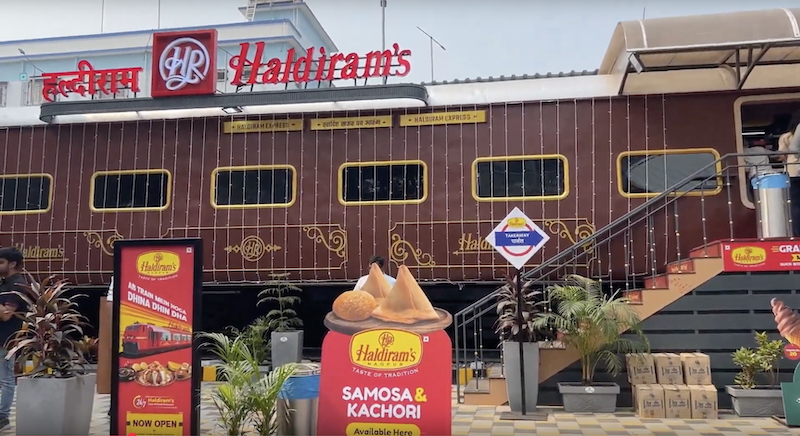
    MUMBAI:  Singapore’s state investment firm Temasek has finally taken a bite out of India’s snack market, snapping up a 10 per cent slice of Haldiram’s for a whopping $ one billion. 

    The deal, which values the bhujia behemoth at an eye-watering $10 billion, comes after months of negotiations and sees Temasek trumping several heavyweight rivals who baulked at the hefty price tag.

    bhujias

    American private equity titan Blackstone pulled out of the race just over a week ago, finding the valuation too hard to swallow after seven months of talks. Other potential suitors, including Bain Capital, General Atlantic, and even Tata Consumer Products, had previously walked away from the table.

    Haldiram’s journey from a tiny shop in Bikaner, Rajasthan in 1937 to commanding nearly 13 per cent of India’s $6.2 billion (almost Rs 60,000 crore) savoury snacks market has been nothing short of remarkable.

    The company’s most popular offering, “bhujia” – a crispy fried snack made with flour, herbs and spices – sells for as little as Rs 10 in corner shops across the country and has helped turn the family-run business into a global operation spanning 100 countries.

    Haldiram Snacks Foods posted a tidy profit of Rs 1,400 crore in FY24 on revenues of Rs 12,800 crore, excluding its Rs 1,800 crore  restaurant business, which wasn’t part of the Temasek deal.

    Not content with just one slice of the pie, the Agarwal family that controls Haldiram’s is reportedly looking to offload another five per cent stake for around $500 million as part of a pre-IPO placement.

    Haldiram savouries

    Industry insiders suggest the family had initially sought an even higher valuation, but recent wobbles in the Indian stock market and lacklustre quarterly results from food companies forced a reality check.

    The deal represents a significant expansion of Temasek’s Indian portfolio, which already includes stakes in Manipal Hospitals and KFC and Pizza Hut operator Devyani International.

    For Haldiram’s, which has diversified into ready-to-eat foods, beverages, chocolates and retail supermarkets, the cash injection could fuel further expansion in a market predicted to more than double to Rs  95,521.8 crore by 2032. That’s a scorchingly hot pace.

    Hot indeed – and with traditional Indian snacks now accounting for over half of all salty snack sales in the country, it seems the crunch is only just beginning.

  • Tata Sons seeks CCI green signal for additional 10 per cent  stake in Tata Play

    Tata Sons seeks CCI green signal for additional 10 per cent stake in Tata Play

    MUMBAI: Tata Sons, the promoter of The Tata group, is seeking to own a larger slice of its distribution platform operator Tata Play. It has sought approval from india’s fair trade regulator, the Competition Commission of India (CCI), to acquire an additional 10 per cent  stake in Tata Play. The stake will be purchased from Baytree Investments (Mauritius) Pte Ltd, an affiliate of Singapore’s sovereign wealth fund, Temasek Holdings.

    Currently holding a 60 per cent stake in Tata Play, Tata Sons’ acquisition will increase its ownership to 70 per cent. Tata Sons is an investment holding company registered as a core investment company with the Reserve Bank of India, classified as a systemically important non-deposit taking core investment company.

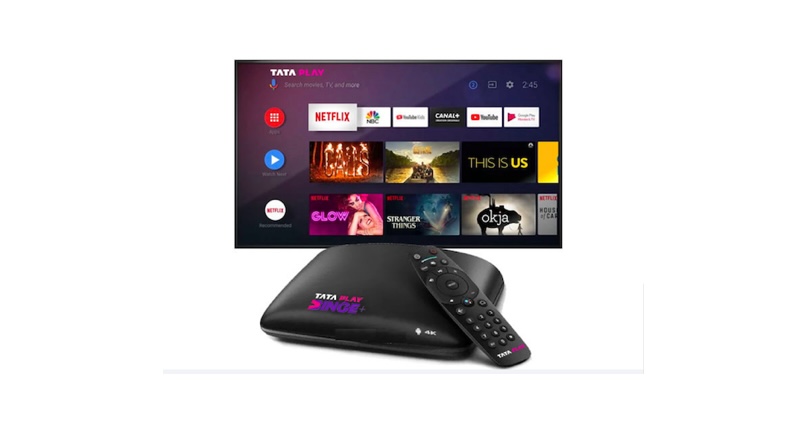
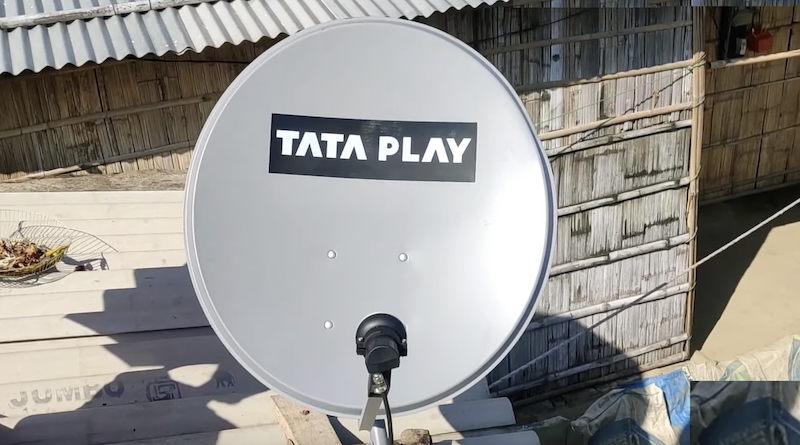
    Tata Play, formerly known as Tata Sky, is a leading content distribution platform in India, offering pay TV  and direct-to-home (DTH) services. it also operates Tata Play Binge, an over-the-top (OTT) platform that aggregates popular streaming apps under a single subscription model.

    The proposed transaction has been notified to the CCI under sections 6(2) and 5(a) of the Competition Act, 2002. these provisions mandate regulatory approval for acquisitions exceeding certain thresholds.

    Both Tata Play and Tata Sons have asserted that the transaction will not adversely affect competition in any relevant market. They have appealed to the  CCI to  examine the deal in the context of India’s wired broadband internet services and the complementary linkages between Tata Sons’ internet services and Tata Play’s online platforms.

    Meanwhile, the buzz of a transaction between Airtel and Tata Play taking place seems to have died down. Apparently, valuations are an issue and the further loss of subscribers by the  pay TV ecosystem has put a dampener in any deal going forward, reveal sources close to the conversation. Also, the earlier transaction between the Essel group Dish TV and Videocond2h didn’t yield any clear identifiable long term benefits for the former as it struggles to sustain itself in a sector that is being gnawed away at by DD’s free DTH service FreeDish, and low cost streaming services. 

    And going by the way that Tata Sons has applied to the CCI is it possible that the group has decided to retain its broadband part of Tata Play while letting go off of the video services portion the Distribution platform operator provides?If that is the case, then who is the buyer?  Or is it that the group still sees potential in both the video and internet delivery components of Tata Play and has decided to continue to invest in both? The Tata group is not talking;  neither is Tata Play.

    Guess, we will have to keep watching this space. 

  • “ShareChat & Moj are focused on building robust creator economy in India”: Senior director Shashank Shekhar

    “ShareChat & Moj are focused on building robust creator economy in India”: Senior director Shashank Shekhar

    Mumbai: Social media company ShareChat which was founded back in 2015, became a unicorn in April 2021. It has raised several funding rounds over the years, most notably in 2021 as it scales up rapidly. Earlier this year, it raised $255 million from Google, Times Group, and Temasek. It is now valued at $5 billion after this multi-tranche funding round.

    In the first part of the round, ShareChat raised $266 million in December 2021 from Alkeon Capital, Temasek, HarbourVest, Moore Strategic Ventures, and India Quotient. Twitter, Tiger Global, and Snap are among the other investors of ShareChat.

    ShareChat’s parent company is Mohalla Tech. ShareChat, besides its app, also runs short-form video content platforms Moj and TakaTak. It had acquired Takatak from MXMedia earlier this year. The platforms cater to over 400 million users.

    Indiantelevision.com caught up with ShareChat & Moj senior director of content strategy and operations, Shashank Shekhar. Among other things, he shed light on how the company has built diversified monetisation avenues beyond advertising in areas like virtual gifting and video commerce.

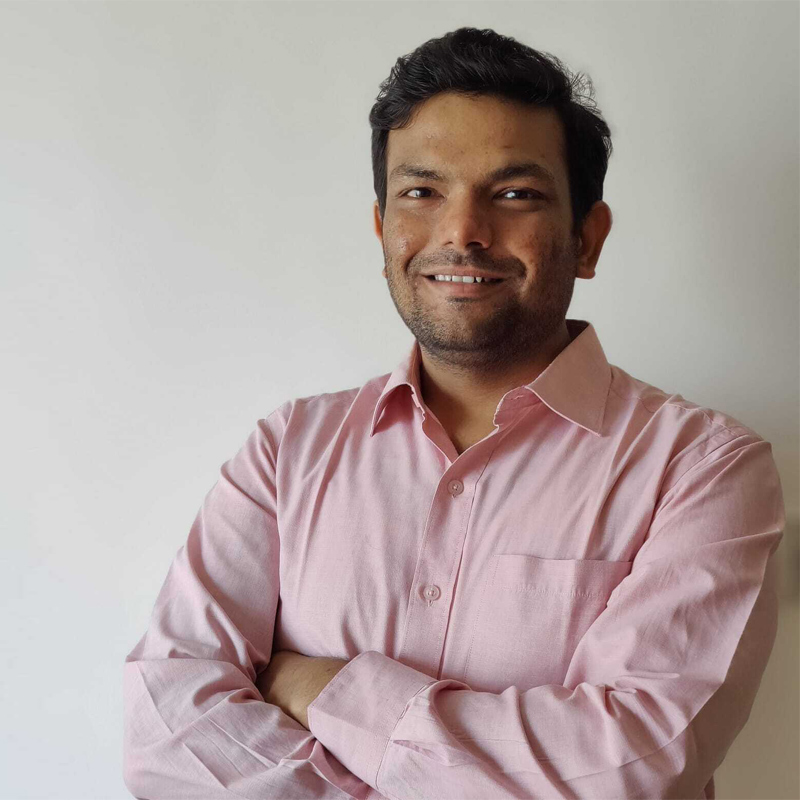
    He leads content operations for the organisation and focuses on driving the growth of the user and creator communities across all languages. In his role, he manages the content operations, creator growth and management, feed and product operations, and the overall app experience. Prior to joining ShareChat, Shashank was an entrepreneur. He founded Circle Internet, an Indian language hyperlocal content platform in 2018, and Elegart Solar Technologies, a company focused on offering outdoor solar lighting solutions in 2014. Shashank also briefly worked with Grabhouse as category head-commercial in 2015.

    He is a BTech graduate in Material Science and Engineering from the Indian Institute of Technology, Kanpur. He is fluent in two languages—Hindi and English—and enjoys exploring all content related to social media.

    Edited excerpts:

    On the monetisation strategy for ShareChat

    Shashank: We opened ShareChat to monetisation through advertising in early 2020. We have been building ShareChat’s ad platform for over two years now. We personalise ads using machine learning and AI algorithms as this enables marketers to target their customers more effectively and makes advertisements feel very organic to the consumer. As a result, we can improve revenue yield while keeping customer retention rates high.

    As several brands want to collaborate with us to tap into regional markets with their large-scale campaigns, we are helping micro-influencers monetise their content through native brand endorsements.

    Last year, we launched virtual gifting on ShareChat Live Audio Chatrooms. This year we rolled out video commerce. We are the only platform in India that offers all three avenues of monetisation-brand collaboration, gifting, and commerce-to creators in a consolidated bouquet.

    We also introduced a self-serve advertising platform, ShareChat Self Serve Ads, a few months ago that enables SMBs to create highly targeted multilingual advertisements. So far, it has supported more than 1,500 SMBs in posting highly targeted advertisements on ShareChat.

    On the content creators and remuneration

    Shashank: More than 32 million creators use the ShareChat app, and nearly 50 million creators use Moj. A passion for creating content no longer fuels the creator ecosystem. It’s a lucrative career option, and creators are equipping themselves with the right tools, skills, and technology to stay ahead of the curve. ShareChat and Moj are focused on building a robust creator economy in India.

    To enable creator growth, Moj recently launched the ‘Moj For Creators’ programme to build a path of accelerated growth for talented creators at different stages. With plans to facilitate creator earnings worth Rs 3,500 crore by 2025, we have several revenue sources for creators on the platform—virtual gifting, influencer marketing, and video commerce. These avenues will help creators across India earn a sustained livelihood and pursue a full-time career as content creators, thereby fuelling the creator economy.

    Virtual gifting is among the successful revenue models for monetising the Live Audio Chatroom feature on ShareChat. The feature enables users to send virtual gifts in the form of digital tokens to the hosts or the chatroom creators, making them feel valued. We are one of the largest Indian virtual gifting platforms in the country right now. We have generated more than Rs 390 crore in annualised earnings through virtual gifting on ShareChat and have recently launched it on Moj, witnessing a similar trajectory of growth.

    On the live and video commerce partnership with Flipkart

    Shashank: Our Live and Video Commerce partnership with Flipkart has also been a key development. While enriching the viewing experience on the platform by providing convenient access to products that content creators are showcasing, it also allows creators to share their curated tastes with their community and opens a revenue stream for them. In recent months, Moj has also become a key social commerce platform in the country through its partnership with Flipkart.

    On trends being seen when it comes to user generated content

    Shashank: In the last two years, we have seen the growing popularity of live streaming content across both our platforms. ShareChat Live Audio chatroom has emerged as India’s largest voice-based hangout destination with 12 million+ MAUs. Users from across the country are joining the chatrooms to connect with like-minded people and express themselves. We have seen interesting use cases of our community organising birthday parties, satsangs, sermons, discussing movies, celebs launching songs and products, connecting with astrologers, jamming together through this feature.

    We recently announced the launch of live video streaming on Moj, giving creators from across the country access to create highly engaging content across different creative formats such as live talk shows, live game streaming, jam sessions, stand-up comedy, shayari, cooking, astrology, and much more. Since its beta launch, Moj LIVE is already witnessing one million daily active users watching live content on the platform.

    On the whitespace that exists

    Shashank: Of late, we have witnessed a growing preference for shorter video content from both the creator and viewer perspectives. Most of our user community prefer watching short videos that are less than 30 seconds, and are also inclined towards long format videos that are less than three minutes long.

    Users these days are looking for quick doses of entertainment and infotainment that can be consumed on the go. While comedy and challenges are the most popular content categories, infotainment content, where information is presented innovatively, in a fun manner, has a higher chance of getting more engagement. Moreover, we have seen an increase in interest in lifestyle content categories like food, fashion, beauty, and grooming, and e-gaming content is also getting popular amongst teenagers. 

    On the languages that people prefer for content consumption

    Shashank: By virtue of the large number of creators and users of that language in our country, Hindi content is consumed the most across our platforms. In the southern regions of India, regional languages like Tamil, Telugu, Malayalam, and Kannada take precedence. Other Indian languages are also gaining high traction among our users.

    On the plan to go deeper in terms of language offerings 

    Shashank: Today ShareChat is India’s leading homegrown social media platform that operates in 15 Indian languages, which include Hindi, Marathi, Gujarati, and Punjabi. Kannada, Malayalam, Bengali, Tamil, Telugu, Odia, Assamese, Haryanvi, Bhojpuri, Rajasthani, and Urdu.

    We are already present in the major languages of our country, and the short-term focus is to go deeper within them and deliver an unparalleled social experience for our community.

    On the challenge in scaling up rapidly

    Shashank: The ecosystem of social media and short videos has experienced rapid growth. Users have a wide range of options, and there is fierce competition. Only businesses with a strong retention engine—i.e., those with a high percentage of users who frequently use the app—will succeed in this market. The keys to ensuring users and creators continue to be dedicated to the apps are and will be constant innovation and product enhancement.

    The delivery of a user-specific content stream will largely depend on sophisticated recommendation engines. Most social media businesses are working to tackle the significant problem of hiring AI expertise and developing these networks.

    On the challenge posed by other platforms

    Shashank: With over 650 million Indians on the internet, there is a lot of ground to cover for all. Consumers stick to a particular platform if it is highly personalised to their interests. Both Moj and ShareChat exclusively focus on Indian users and customise the product based on their needs.

    Our goal is to make Moj and ShareChat the top two social media platforms in India. We have observed interaction overlaps between our platforms and US-based global social media platforms. This indicates that ShareChat and Moj are fulfilling certain needs of Indian audiences with their capability to reach out to language-first audiences.

  • upGrad turns unicorn with $1.2 billion valuation

    upGrad turns unicorn with $1.2 billion valuation

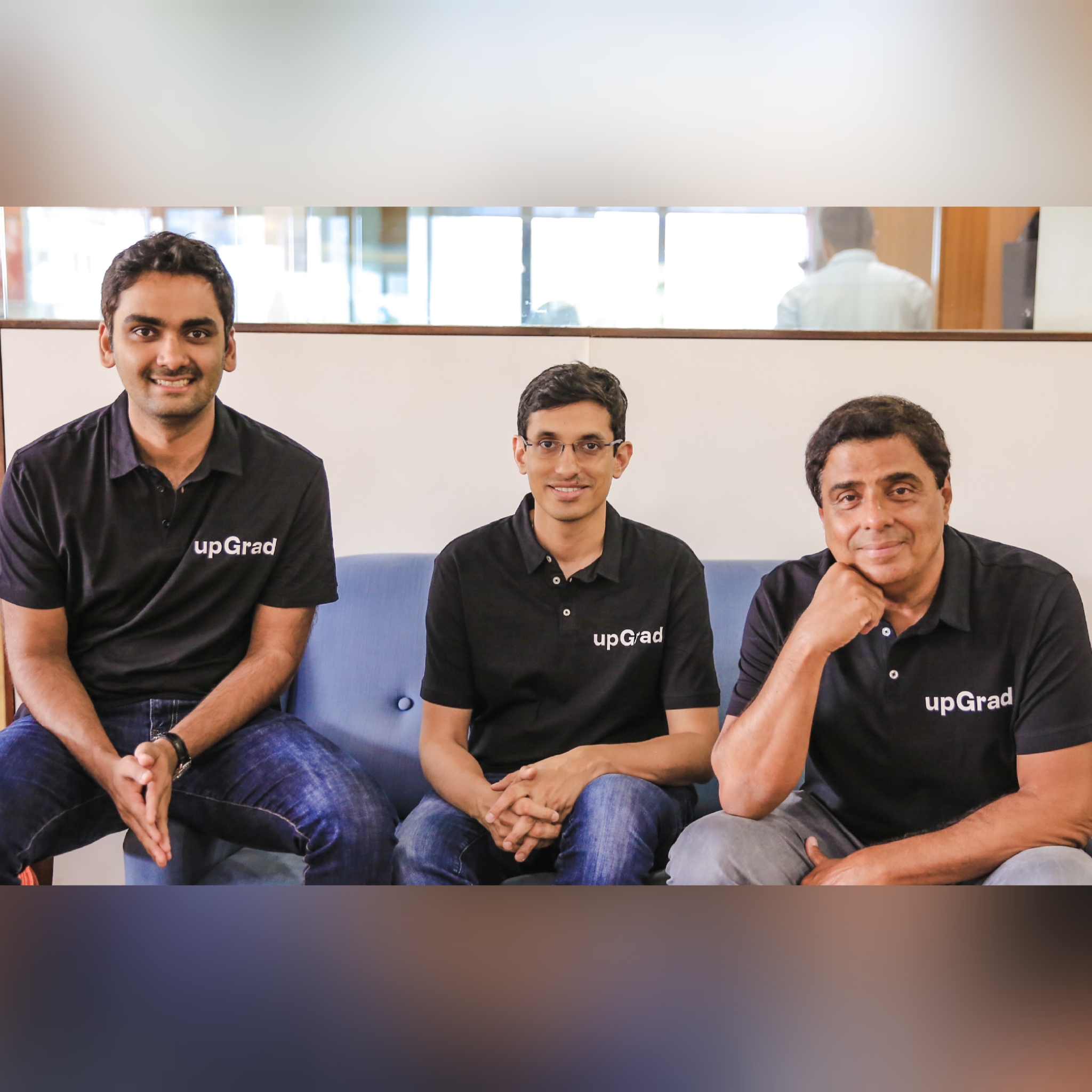
    Mumbai: Homegrown online higher education provider upGrad has become the newest unicorn from the country after it closed a series of raises from Temasek, IFC (International Finance Corp, a sister organisation of the World Bank and member of the World Bank Group), and IIFL. The ed-tech startup has raised a total of $185 million at a value of $1.2 billion.

    “We are very focussed on our path to being in the top three to five companies globally in ed-tech and serving the one billion workforces across the age group of 18 to 60 years,” said upGrad chairperson and co-founder Ronnie Screwvala. “We are pleased with the investor interest ever since we opened up for a fundraise, and had our maiden raise from Temasek, followed by IFC and IIFL in the last 60 days.”

    “We will announce further updates on M&As, and unlocking value as they unfold. Yes, the last value was at $1.2 billion, but as I keep saying, we are not a fan of the tag name unicorn – for us, it is only a means to a much larger goal,” Screwvala added.

    upGrad has always been promoter-funded with the founder group still owning 70 per cent plus in the company. It is reportedly in advanced talks for a $400 million fundraise at a valuation of $ four billion.
     

  • Tata Group’s Cyrus Mistry plans Rs 2,000 crore IPO for Tata Sky

    Tata Group’s Cyrus Mistry plans Rs 2,000 crore IPO for Tata Sky

    MUMBAI: In 2012 Tata Group chairman Cyrus Pallonji Mistry is believed to be offering Rs 2,000 crore for the Tata Sky’s amount of issue, according to a report.

    Mistry had had initiated the process to sell part of Tata Sky in his first initial public offering (IPO) move after becoming the group chairman and a recent report by Times of India says Tata Sky will also be the 30th publicly listed company from the Tata Group which currently has a combined market cap of nearly Rs 7.2 lakh crore.

    Early next week, the company’s investors, management, underwriters and counsel will hold the kickoff meeting to thrash out the red herring prospectus, Times of India reported.

    To take matters forward, Morgan Stanley, Citi and Kotak Mahindra Capital will manage the DTH provider’s offering in which Tata Sons owns 51per cent, media mogul Rupert Murdoch’s 21st Century Fox has 30 per cent, Singapore state investor Temasek 10 per cent, and Tata Opportunities Fund holds 9 per cent.

    Mistry has revived the plan to list Tata Sky on the domestic stock market, which will help the 47-year-old to part-monetize the asset by bringing in fresh funds to fuel the conglomerate’s growth plans and trim its debt. In fiscal 2015, its loss stood at Rs 267 crore.

    The report also stated that there are prospects of sale of new shares as well as of existing shares held by promoters including Tata Sons and Temasek, which has remained invested in Tata Sky since 2007. According to the report, Temasek wants to encash some of its holdings in the 12-year-old Tata Sky, which will have a gross profit of Rs 1,000 crore in fiscal 2016. Murdoch’s 21st Century Fox intends to retain its ownership, while Tata Opportunities Fund is undecided whether it wants to sell a stake in the IPO, the person added.

    Tata Sky intends to use the proceeds from the share sale to beef up its balance sheet. The company, which has emerged as the leader in the DTH field, will break even this financial year.

  • Tata Group’s Cyrus Mistry plans Rs 2,000 crore IPO for Tata Sky

    Tata Group’s Cyrus Mistry plans Rs 2,000 crore IPO for Tata Sky

    MUMBAI: In 2012 Tata Group chairman Cyrus Pallonji Mistry is believed to be offering Rs 2,000 crore for the Tata Sky’s amount of issue, according to a report.

    Mistry had had initiated the process to sell part of Tata Sky in his first initial public offering (IPO) move after becoming the group chairman and a recent report by Times of India says Tata Sky will also be the 30th publicly listed company from the Tata Group which currently has a combined market cap of nearly Rs 7.2 lakh crore.

    Early next week, the company’s investors, management, underwriters and counsel will hold the kickoff meeting to thrash out the red herring prospectus, Times of India reported.

    To take matters forward, Morgan Stanley, Citi and Kotak Mahindra Capital will manage the DTH provider’s offering in which Tata Sons owns 51per cent, media mogul Rupert Murdoch’s 21st Century Fox has 30 per cent, Singapore state investor Temasek 10 per cent, and Tata Opportunities Fund holds 9 per cent.

    Mistry has revived the plan to list Tata Sky on the domestic stock market, which will help the 47-year-old to part-monetize the asset by bringing in fresh funds to fuel the conglomerate’s growth plans and trim its debt. In fiscal 2015, its loss stood at Rs 267 crore.

    The report also stated that there are prospects of sale of new shares as well as of existing shares held by promoters including Tata Sons and Temasek, which has remained invested in Tata Sky since 2007. According to the report, Temasek wants to encash some of its holdings in the 12-year-old Tata Sky, which will have a gross profit of Rs 1,000 crore in fiscal 2016. Murdoch’s 21st Century Fox intends to retain its ownership, while Tata Opportunities Fund is undecided whether it wants to sell a stake in the IPO, the person added.

    Tata Sky intends to use the proceeds from the share sale to beef up its balance sheet. The company, which has emerged as the leader in the DTH field, will break even this financial year.

  • MPG Media Contacts wins Temasek’s global media biz

    MUMBAI: Investment company Temasek Holdings has consolidated its global media mandate with French communications network Havas Media‘s media agency, MPG Media Contacts.

    The agency currently handles the media duties for Temasek‘s portfolio company in Singapore – DBS Bank and will now handle media planning and buying duties for the company globally.

    The incumbent agency on the global account is OMD.

    The agency‘s experience on DBS business in particular and financial category in general turned the clients in MPG Media Contacts‘ favour.

    Havas Media Singapore CEO Melvin Lim said, “We are elated to be given the opportunity to manage the strategic media services of Temasek Holdings and, by extension, to propagate the success of one of our globally renowned national wealth management organisations. We found a common ground to synergistically contribute to Temasek‘s marketing outreach goals because of the deep-set experience we already have in the financial and business sectors.”

    Temasek was started in 1974 and is based in Singapore. The company is supported by 11 affiliates and offices in Asia and Latin America and owns S$ 198 billion portfolio as of 31 March 2012, concentrated principally in Singapore, Asia and growth markets.

  • Thailand may buy Shinsat from Temasek

    Thailand may buy Shinsat from Temasek

    MUMBAI: Thailand is putting pressure on Singapore to return satellites it acquired as part of a $3.8 billion purchase of ousted Prime Minister Thaksin Shinawatra’s telecom empire.

    Media reports state that Thais are going to the polls to vote if the country’s military-led government should buy back the nation’s satellite operator Shinsat.

    The five satellites are operated by Shin Satellite a unit of Shin which was sold to Singapore’s state investment firm Temasek last year.

    The Shin sale reports state led to street protests that led to Thaksin’s downfall and coup leader Sonthi Boonyaratglin has promised to get the assets back.

    Meanwhile nformation and Communications Technology Minister Sitthichai Pookaiyaudom ghas been quoted in reports saying that Shin Satellite’s concessions with the country could be revoked if Temasek is found to have used illegal nominees to buy Shin Corp last year.

    Bangkok is also said to be looking at legal options. Temasek executed the Shin deal through a complicated web of Thai holding companies, one of which, Kularb Kaew, may have broken rules against foreign companies using local ‘nominees’ to skirt a 49 per cent limit on foreign ownership.