Tag: Television

  • Reliance Media Works reports lower net loss for April-June 2013 quarter

    Reliance Media Works reports lower net loss for April-June 2013 quarter

    BENGALURU: Reliance Media Works (RMW), formerly Adlabs Films and a part of the Reliance ADA group, reported lower consolidated net loss in the April-June 2013 quarter as compared to the preceding quarter (January-March 2013) and the corresponding quarter (April-June 2012) of 2012.


    RMW’s net worth has eroded, however, having regard to revenue visibility of new businesses in film and media services, improved operational performance of exhibition business, financial support from its promoters, further restructuring exercise being implemented etc, the financial statements have been prepared on the basis that the company is a going concern and that no adjustments are required to the carrying value of assets and liabilities.


    Important Notes:


    (1) Since the previous financial year of the company was extended till 30 September 2012, the result for the April-June 2013 quarter will be referred to as Q3-2013, January-March 2013 quarter as Q2-2013 and April-June 2012 quarter as Q3-2012 in this report/analysis.


    (2) Notes of the attached financial statement must be read along with this analysis.


    For the current quarter (Q3-2013) RMW reported a consolidated net loss of Rs 123.60 crore which was 5.9 per cent lower than the Rs 131.30 crore (y-o-y) for Q3-2012 and substantially lower by 44.4 per cent as compared to the Rs 222.12 crore for Q2-2013 (q-o-q).


    Details of RMW’s standalone financial information are: Turnover Rs 126.40 crore for Q3-2013 as compared to Rs 122.61crore for Q3-2012. RMW’s loss before tax for Q3-2013 was Rs 83.73 crore as compared to the Rs 91 crore loss for Q3-2012. Loss after tax stood at the same figure for Q3-2013 and the previous year’s corresponding quarter (Q3-2012).


    Let us look at the other figures reported by RMW for the April-June 2013 (Q3-2013) quarter


    RMW reported a total income from operations of Rs 180.16 crore for Q3-2013, 10.91 per cent lower than the Rs 202.15 crore in Q3-2012, but 24.6 per cent higher than the Rs 144.63 crore for Q2-2013.


    Its total expense for Q3-2013 was Rs 238.97 crore, 6.5 per cent lower than the Rs 255.56 crore for Q3-2012 and 2.2 per cent lower than the Rs 244.38 crore for Q2-2013.


    RMW’s net loss from operations at Rs 58.80 crore was 10.1 per cent higher than the Rs 53.41 crore of Q3-2012, but substantially lower than the Rs 99.75 crore in Q2-2013.


    Let us look at RMW’s segment results


    Film Production Services, Theatrical Exhibition, and Television, Film Production & Distribution are the three segments. Pursuant to the business restructuring exercise of Film Production Services, with effect from 1 October 2011, animation business is no longer considered to be a part of this segment.


    Film Production Services reported income of Rs 41.62 crore for Q3-2013, 2.4 per cent lower than the Rs 47.88 crore for Q3-2012, but 14.33 per cent more than the Rs 36.40 crore for Q2-2013.


    Loss before interest and tax by this segment was Rs 33.55 crore, almost double (more by 93.9 per cent) the Rs17.31 crore in Q3-2012, but 10.14 per cent lower than the Rs 37.53 crore loss incurred in Q2-2013.


    RMW’s Theatrical Exhibition segment reported income of Rs 127.56 crore for Q3-2013 (Includes exceptional items of Rs 60 crore) which was 39.56 per cent lower than Rs 204.29 crore for Q3-2012 and 11.86 per cent lower than the Rs 144.71 crore in Q2-2013.


    Loss before interest and tax by RMW’s Theatrical Exhibition was Rs 24.25 crore for Q3-2013 was however 10.46 per cent lower than the Rs 29.09 crore for Q3-2012 and less than a quarter (4.42 times less or 21.74 per cent) of the Rs 111.56 crore loss incurred in Q2-2013.


    RMW’s Television/Film Production and Distribution income of Rs 13.25 crore which contributed to just 7.4 per cent to its consolidated revenues in Q3-2013 was the only one that reported a profit before interest and tax of Rs 4.34 crore in Q3-2013 which was 60 per cent higher than the profit before interest and tax of Rs 2.73 crore in Q3-2012. This segment had reported a loss of Rs 3.50 crore for Q2-2013. Revenue from this segment in Q3-2013 was higher by 13.3 per cent as compared to the Rs 11.7 crore for Q2-2012 and 25.7 per cent higher than the Rs10.54 crore for Q2-2013.

  • Future of Television

    Circa 2061 – Television in its new form and shape, as a personalised medium will not just continue to exist and will be 130 years old, but would actually wield a true global power.

    I truly believe that television will continue to play a critical role for India to emerge as a developed country and one of the top three economies of the world.

    Two aspects are unlikely to change – human beings will continue to bear the same thirst for entertainment and
    content will continue its reign as the real King….
    _____****_____

    It is not easy to visualise where technology will take us in the future – but two aspects are unlikely to change – human beings will continue to bear the same thirst for entertainment and content will continue its reign as the real King.

    Zee will be a leading brand for entertainment, education and a medium for prosperous growth for every Indian. Burt Manning, founder of J Walter Thomson said 40 years ago when he founded Media Lab at MIT, that the 21st century will all be about personalised segmentation of the media. We are heading towards relevant, curated content consumption. We will move from semantic web (web 2.0) to intuitive web (3.0) and finally to machine to machine talks (web 4.0).

    At Zee, our global focus is to connect to every household, and offer relevant content, to keep them engaged. Having entertained over 670 million viewers worldwide, Zee is now marching towards reaching one billion viewers. We also aim at multiplying our productivity by many folds, in order to re-conquer our achievements in the last 20 years in merely eight years. With the swift pace, at which Zee as a brand is growing worldwide, it makes me extremely confident to state that by 2061, we would be amongst the top global media conglomerate, entertaining more than half of the total television viewers across the globe.

    Zee is a pure family entertainment company. Three generations of a family can sit together and watch our programmes. We will continue in our endeavour for freedom, dignity and prosperity of our viewers and shareholders in the future. Zee as a brand, has achieved global recognition today, and has grown exponentially over the years, establishing a strong connect in the minds and hearts of its audiences globally and has gained a top of the mind recall in the media & entertainment space. Zee has been able to achieve all this through its people-centric programming and keeping its audience at the core of all its offerings.

    Our pioneering vision, has led to the formation of a seven billion dollar industry in India, and has set a foundation for not just Indian, but many international media companies. ZEE being an Indian company, has ventured into the international markets and has earned a global recognition, unlike the international media brands which have ventured in Indian markets. This strong penetration in the global markets, and the immense high brand equity earned in the last 20 years, has taken Zee to the cadre of an emerging multinational. Leveraging its core expertise of a sharp insight in the audience pulse, Zee will continue with its string of innovations and industry firsts, enhancing the media & entertainment landscape by many folds.

    Zee has been a social catalyst in TV programming and dramas, in less than 20 years. Although it surely happens at a subconscious level. When viewers watch middle class people achieve higher boundaries, they appreciate the quality of life. When they witness the rags to riches stories, they celebrate their belief in dreams and destiny.

    In another decade or so, I still expect consumers to catch up with the linear TV content. Although there would be trends of short form content in terms of news, sports, entertainment, etc., but these would never fall in high content consumption patterns. The reason being that, largely depends on the consumers’ moods, their information seeking thirst and their desire to express on social media platforms. These traits are extremely high in the mornings and also in the later part of the evening time bands. Both these activities create a leap in short consumption of content. Even today, the specially created content on new media platforms is largely following traditional media content approach.

    Introspecting the world of Television

    Television is all about content – irrespective of the advancements from a technology perspective. It has surely transformed India in the last two decades and has effectively brought about changes to hearts and minds of millions. Zee would continue with the same zeal to play a catalyst in the transformation that not just India, but the rest of the world, will witness in the coming decades.

    May be a decade later, i.e. 2020 onwards, we could expect consumers to express new moods and tastes, even when they are on the go, provided the mode of transport gets more comfortable. The content formats would also enjoy a deep paradigm shift, considering the change in consumption patterns. Just to cite some of the experimental content formats, which surely would evolve in the near future on the Non TV Screens – we could expect five to 15-minute comedy films, five-minute exposure slots (back to back new film promos), 30-minute documentaries and factual entertainment for students and business travellers, five-10 minute amateur content – short films, 60-second public service campaigns or five-10 minute highlights of sports, etc.

    TV programmes are benefiting today from the consumer habits, values and lifestyles, and at the same time they are also power feeding new lifestlyes to the consumers.

    Going forward, programming would be more inclined towards relevant issues and concerns, segmenting would
    be the way forward…
    _____****_____

    They need to evolve to a stage where they are able to predict modern India, or modern Indian lifestyles and possibly taking a position on almost all issues that affect society. Whether masses favour your position or stance, would not be that important, but a strong stance/positions will have to be taken. As of now, TV is aiming at making consumers happy with one set of generic content for all the viewers. However, going forward, when programming would be more inclined towards relevant issues and concerns, segmenting would be the way forward. So we might have a channel which only showcases modern value content, or a channel which showcases only non-fiction content, or a channel which showcases only current issues, and so on.

    As television companies adapt to the internet by deciding which shows to offer for free online, internet users accustomed to free content, and the rhetoric that promotes it, have protested that shows should be supported with advertising alone. The problem is that in a world with a hundred channels – let alone a thousand websites – there may not be enough advertising to go around. That’s why, over the course of the 1990s, cable channels that once relied mostly on advertising tried to create hit shows or buy sports rights that would let them demand higher fees from cable companies. When cable channels started to invest in original shows, they did so very differently from traditional networks. Since networks only made money on advertising, they chose shows that would reach as large of an audience as possible, whether or not individual viewers felt strongly about them. Carriage fees gave cable channels a very different incentive: to develop programmes, some viewers cared about so much that they might cancel their subscriptions without them. Not only could channels show more adventurous fare – their success depended on it.

    As we stand, we are on a brink of a revolution and convergence of television and new media platforms. We are heading towards people getting what they want, when they want, and how they want. Although it goes without saying that top quality content will be the king in the new world of TV convergence.

    In my view, TV will woo audiences to interact with the programming. And viewers will not be satisfied on the one way communication and interact with TV.

    A basic social media integration on the content distribution platform will bring in a whole new perspective to
    the viewing experience…
    _____****_____

    Unlike the pre-digitisation era, wherein there was just a monologue between the consumer and broadcaster, a more circular relationship is expected with real time communication, enabling consumers to express their feedback instantaneously. Also a basic social media integration on the content distribution platform will bring in a whole new perspective to the viewing experience.

    Reality shows shall become more and more real and would almost touch the nature of a sports event. From the current era of scripted and fictionalized content formats, there would be a huge paradigm shift to much realistic shows. The only way they can sustain the attention of viewers is by revealing real pacer content and hence as much closer to something like sports content.

    The industry is changing before our eyes and this kind of innovation creates winners and losers. No longer will consumers be forced to overpay for a one-size- fits-all bundle of channels and services.

    As rightly put forth by Robert Levine, “In the digital world, television will be revolutionised once again”. Already, more viewers than ever are using their laptops to download and to watch shows they once saw on a TV screen. The problem is that even legal online services only generate a fraction of the revenue that cable does. Like newspapers, television channels are now reaching more viewers than ever before, but in a medium where they don’t like to pay for content and aren’t worth much to advertisers. And if more viewers begin “cord-cutting”- cancelling their cable subscriptions in favour of online options – it’s hard to see how television producers could avoid the same kinds of cost reductions that are killing newspapers.

    We will be able to watch Live or On-Demand stations, either as merely stations or individual shows on home television sets, tablets, desktops or mobile phones.

    Some screens may discontinue along the way, but there will be other screens that will emerge as life continues
    to evolve…
    _____****_____

    The rise of the DVR gave access to shows on the viewer’s timetable, and the explosion of apps are putting control in consumers’ hands – who can now watch anything, anytime, anywhere. Speaking of control, a number of new TV sets- turn viewers into a remote. A remote has a touch-sensitive track pad on one side, and a Qwerty keyboard on the other. An advanced version of the same remote functions like a magic wand, allowing TV watchers to move a pointer on the screen. On the other hand, some just function based on the movements of the viewers hands. Some very advanced sets, now have an in-built voice recognition
    intelligence, enabling the viewers to literally dictate their search preference.

    To summarise, I truly believe that TV will not die. At Zee, we no longer term ourselves as merely broadcasters, but “Content Creators” and will focus on reaching out to audiences at the end of any screen that they are available on. Some screens may discontinue along the way, but there will be other screens that will emerge as life continues to evolve.

    I think there will be several technologies and platforms that are going to emerge that we have to consider and migrate. Ditto TV, which is Zee’s yet another pioneering step in the over the top television space, is something that we have foreseen and we do believe that it is going to be a big opportunity for us, in the years to come.

    The future of television is all about viewers experiencing entertainment and information content on their preferred devices, time and place.

    (Excerpted from the India 2061- A Look at the Future of India Copyright Cogito Consulting Publication) 

  • Q1-2014: DQE International continues profitable run

    Q1-2014: DQE International continues profitable run

    BENGALURU: The Tapas Chakravarti (he’s the CMD and CEO) led, Hyderabad based DQ Entertainment (International) Ltd, (DQE) continued its profitable run in Q1-2014.


    DQE had reported loss for Q1-2013 of Rs 9.2 crore. It reported profit of Rs 14 crore in Q3-2013 followed by a profit of Rs 23.3 crore in Q4-2013. DQE’s net profit for FY-2013 was Rs 37.3 crore. As of June 2013 (Q1-2014), DQE had recorded a net consolidated profit of Rs 6.6 crore.


    The company says that its revenue and profitability has a clear seasonal pattern, similar to that of the rest of the global animation industry, wherein almost 60 per cent of the annual revenue is achieved in the third and fourth quarter of the financial year and these results are in line with that trend.


    DQE is a global player in the creation, production, distribution, licensing and marketing of various forms of entertainment. The company is a major player in the country in animation production capacity for television, feature films, home video, online game art, visual effects, mobile and next generation console games.


    Let us take a look at DQE’s other figures for Q1-2014


    DQE’s consolidated net income from operations of Rs 30.43 crore in Q1-2014 was 1.64 per cent lower than the Rs 30.93 crore for Q1-2013 and a little more than a third (34.4 per cent) of the Rs 88.54 crore for Q4-2013.


    In Q1-2014, DQE had suffered a foreign exchange loss of Rs 18.4 crore, in Q1-2013, this loss was lower at Rs 5.94 crore, while in Q4-2013, it had a gain of Rs 4.3 crore on account of foreign exchange.


    DQE’s total expense for Q1-2014 at Rs 18.9 crore was more than half (51.7 per cent) of Rs 36.56 crore in Q1-2013 and less than a third (31.9 per cent) of the Rs 59.26 crore in Q4-2013.


    DQE’s production expense in Q1-2014 at Rs 1.65 crore was a little more than a third (36.7 per cent) of the expense of Rs 4.5 crore in Q1-2013 and almost a quarter (25.24 per cent) of the Rs 6.53 crore in Q4-2013.


    DQE’s employee expense at Rs 20.22 crore for Q1-2014 was 15.1 per cent lower than the Rs 23.81 crore in Q1-2013 and just 0.75 per cent lower than the Rs 20.38 crore in Q4-2013.


    DQE’s animation segment reported consolidated revenue of Rs 27.57 crore in Q1-2014, lower by 1.8 per cent as compared to the Rs 28.08 crore in Q1-2013, and a little more than a third (35.22 per cent) of the revenue of Rs 78.28 crore in Q4-2013.


    DQE’s animation business had revenue of Rs 182.01 crore for FY-2013.


    Capital employed for the animation segment at Rs 192.80 crore for Q1-2014 was 42.3 per cent more than the Rs 135.50 crore for Q1-2013 and 17.5 per cent more than the Rs 164.05 crore for Q4-2013.


    In its Q2-2013, DQE had said that it expected its distribution business to deliver significant net cash flows from FY-14 onwards. This has not happened in Q1-2014. Results from this segment were Rs (-1.859) crore in Q1-2014, Rs (-1.884) crore for Q1-2012 and Rs (-9.482 crore in Q4-2013. For FY-2013, DQE’s segment result from Distribution was Rs 12 crore.


    Revenue from DQE’s distribution business in Q1-2014 at Rs 2.852 crore, was almost flat as compared to the Rs 2.847 crore for Q1-2013 and a little more than a fourth (27.8 per cent) of the Rs 10.26 crore in Q4-2013. Given the fact that DQE’s overall business has seasonal patterns, this segment could show results as per the company’s expectations during the rest of the quarters of FY-2014.


    Capital employed for distribution for Q1-2014 at Rs 244.56 crore was 35.2 per cent less than the Rs 377.28 crore in Q1-2013 and 1.7 per cent more than the Rs 240.33 crore in Q4-2013.


    Chakravarti said, “The macroeconomic environment in some markets, especially in Europe and Canada, remains very challenging even in the children’s entertainment business. There is however a definitive improvement in the US Animation and children’s entertainment segment where considerable effort is being paid by us to further enhance our footprint.”


    “Our core business fundamentals remain sound with a strong current order book, to be executed over the next 2-3 years Our business is global and we have had particular success in TV and Home Video distribution, licensing, merchandising and publishing for brands like The Jungle Book and Peter Pan, as well as for many other properties such as Iron Man, Casper, Charlie Chaplin, Tara Duncan and Little Prince.”


    “We are in the process of rescheduling DQE India’s working capital facilities necessary to execute our new order pipeline and complete production and delivery of high brand equity properties such as The Jungle Book – series II, Peter Pan – series II, 5 Children & IT- series I, Lassie – series I, Little Prince – series III, Robin Hood – series I, besides several other productions”, informed Chakravarti.


    “We have given a special focus to strengthening our balance sheet by putting an extraordinary effort into the collection of receivables from our clients and partners, which will further improving our working capital position.


    I remain cautiously optimistic that we will end the fiscal year in a satisfactory position as planned,” Chakravarti said.

  • Television business props up Network 18 Q1-2014; prevents further reddening

    BENGALURU: Network 18 Media & Investments Limited (Network 18) reported a profit after tax (PAT) of Rs18.9 crore in Q1-2014, as compared to a loss of Rs 90 crore in Q1-2013.

    Results from three of the four revenue segments of the media and entertainment player reported losses, with television playing the lone hand in keeping profits for Q1-2014 buoyant and positive. Though Network 18 reports combined figures for Television and Motion Pictures, company officials confirmed that Motion Pictures had also added to Network 18 losses.

    Despite showing revenue growth, the other two segments -digital content and e-commerce business; and allied businesses also pulled down profits for Q1-2014.

    Let us take a look at the figures for Q1-2014

    Operating revenue for Q1-2014 stood at Rs 556.6 crore on a reported basis.

    The corresponding figure for Q1-2013 was Rs 435.6 crore, hence showing a 28 per cent growth for Q1-2014. Operating revenue during Q1-2014, was however lower by 18 per cent as compared to the Rs 679.6 crore for the preceding quarter Q4-2013.

    Revenue from the television and motion business at Rs 437.4 crore was 47.2 per cent higher than the Rs 297.2 crore for Q1-2013 but about 8.6 per cent lower than the Rs 511.3 crore for Q4-2013.

    Revenue from digital content and e- commerce at Rs 106.9 crore grew 46.8 per cent as compared to the Rs 72.8 crore in Q1-2013, and was about 3.2 per cent lower than the Rs 110.4 crore during Q4-2013.

    Revenue for Q1-2014 from allied businesses fell 37.7 per cent to Rs 65.6 crore from Rs 105.3 crore in Q1-2013 and 36.7 per cent from Rs.103.6 crore in Q4-2013.

    Digital content and e-commerce reported a loss of Rs 43.5 crore. Allied businesses reported a loss Rs 9.9 crore and Rs 9.2 crore were contributed to the losses from discontinued operations. Television and Motion picture business propped up the company with an operating profit of Rs 23.8 crore. The company turned in a profit after tax of Rs 18.9 crore for the quarter.

    Network18 managing director Raghav Bahl said, “The macroeconomic environment continues to be challenging and growth prospects remain uncertain. Despite this backdrop, our core TV and digital businesses turned in a steady performance. We continued the profitable monetisation of our investments and raised growth capital in HomeShop18. There were pockets of weaknesses in our portfolio and we are committed to improving segments that are not meeting expectations. We have a strong portfolio of media businesses and remain confident of unlocking its value for our stakeholders”.

    Network 18,group CEO B. Saikumar said, “The core television and digital businesses got off to a stable start in the new fiscal year. Our entertainment broadcasting business showed strength and the e-commerce businesses grew strongly. While our news and infotainment businesses have seen distinct softness in advertising, our entertainment businesses led by Colors have performed well on this front. Motion pictures have seen losses this quarter and the management is confident of stemming them in the immediate term. Net distribution revenues from IndiaCast are on a strong growth trajectory and we continue to be enthused by its growth potential. Our e-commerce businesses continued their stellar growth and the digital content business grew steadily as well. We remain confident of delivering a strong year ahead.”

  • Marjorie Cohn to lead DreamWorks’s TV efforts

    Marjorie Cohn to lead DreamWorks’s TV efforts

    MUMBAI: DreamWorks Animation has tapped Marjorie Cohn, a 26-year veteran of Nickelodeon, as its first-ever head of television.


    Cohn and her team will be responsible for the development and production of 1,200 new original episodes over the next five years. The production slate will feature series based on current DreamWorks’ franchises, future films and heritage properties from Classic Media. Cohn most recently held the role of president of content development at Nickelodeon.


    Joining Cohn is Mark Taylor as head of TV production. Taylor was most recently at the helm of Nickelodeon Animation Studio. He also previously served as senior VP and general manager at Nick and was responsible for all the network’s in-house animated productions.


    Rounding out the new leadership team is Peter Gal as head of TV development. He currently oversees creative on DreamWorks’ Dragons: Riders of Berk and Turbo F.A.S.T. He spent three years as the VP of production at Twentieth Century Fox and before that spent five years at Nickelodeon developing animated programming, including the DreamWorks’ inspired Penguins of Madagascar.


    “Having Margie join us to oversee our television efforts is an incredible coup for DreamWorks Animation. She is uniquely suited with the experience, skill and creativity to immediately dive in and oversee our aggressive expansion into this space,” said DreamWorks Animation’s chief operating officer Ann Daly. “Margie has tremendous instincts when it comes to kids’ programming, and we can’t wait to unleash her creative force on DreamWorks’ vast IP to bring exciting new content to families across the world.”

  • ABC International to be beamed on the DD Direct Plus

    ABC International to be beamed on the DD Direct Plus

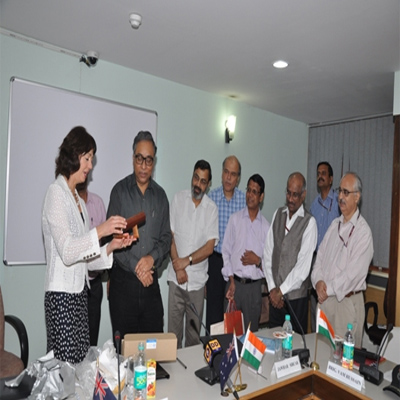
    NEW DELHI: The Australian Broadcasting Corporation (ABC) has decided to hitch on to DD Direct Plus, the country’s only free to air direct-to-home platform. The channel has also decided to collaborate with Prasar Bharati in other fields like archives and indigenous and classical music for both television and radio.


    This was stated by both Prasar Bharati chief executive officer Jawhar Sircar and ABC CEO Lynley Marshall during a discussion prior to the formal signing of a memorandum of understanding with Doordarshan.


    Marshall said: “India has a rich heritage of classical music, and we at ABC can contribute by making available its collection of aboriginal and indigenous music for both Doordarshan and All India Radio.”


    Appreciating the gesture, Sircar said that Indians needed to know more about Australia than what they read in newspapers or saw on foreign television channels.


    The new carriage agreement, Sircar said, “Aims to strengthen the partnership between the two public broadcasters.”


    “With this agreement, ABC International will be available on DD Direct Plus from 1 November,” added Doordarshan director general Tripurari Sharan.


    Australia Network is Australia’s international television service, beaming 24×7 to more than 40 countries across Asia, the Pacific and Indian subcontinent. Its mission is to promote television and digital service that informs, entertains and inspires audience, with a unique Australian perspective.


    The agreement was signed by Marshall and Sircar at a function attended by Sharan, DD News director general S M Khan and additional director general Ranjan Thakur apart from several senior members of both DD and All India Radio.


    With this agreement DD, fulfils a part of its public service mandate to develop knowledge, broaden horizon and showcase the diverse culture of Australia.


    Marshall welcomed the new partnership with Doordarshan, describing it as a significant alignment of the two respected public broadcasters in the Asia-Pacific Region. The partnership between Doordarshan and ABC will open many doors not only for carrying ABC International on DD’s platform, but also to explore specific areas like co-production activities, exchange of TV programmes, exchange of radio and FM (including music), interesting films, audio-visual materials regarding culture, history and geography from both the countries. These steps will help bring people of both the countries understand each other better and forge understanding and empathy.


    Marshall also hopes to strengthen programming for children through this bond. “India will be interested in more news from Australia,” said Sircar.


    Thakur informed Indiantelevision.com that they had earlier also signed an agreement with France 24. “This international english channel will also feature on DD Direct Plus platform from 1 November,” said Thakur.


    At present DD offers 59 channels in its bouquet on DTH platform. “We expect to get the permission to increase the capacity to 97 by December,” he added.

  • Debutant cross-cultural film and television awards SAIFTA launches brand campaign

    Debutant cross-cultural film and television awards SAIFTA launches brand campaign

    Mumbai, July 2013: Film and Television are mediums of communication which bring people together, connecting them with an invisible but tangible force; understanding this connection is the South Africa India Film and Television Awards (SAIFTA). Organized by Celebrity Locker along with Toursim KZN, SAIFTA is a maiden venture bonding the cultures of the two countries, India and South Africa. Ushering in a spirit of brotherhood between the Indian and South African entertainment industry; SAIFTA aims to reward outstanding performers, while promoting and enhancing the exchange of the diverse cultural elements. Representing the coming together of these two distinct cultures, SAIFTA is launching its new brand identity, giving the world a taste of the impending awards event at Durban on the 6th of September 2013.

    The brand campaign, created by Mumbai based design firm Two, is a contemporary twist on the traditional Indian and South African motifs joining together on a vibrant canvas. There is a play of juxtaposing motifs from the two cultures such as the tabla in harmony with the bongo drums and a vibrant colour palette and design culture that are intrinsic to both countries. These motifs are wonderfully offset amidst a vibrant and opulent design against the black and gold elegance of the logo. Complimenting the opulent design language are distinctively crisp fonts communicating in a welcoming tone; A Window to South Africa, Where Cultures Meet, Where Films and Television Meet along with Where Music and Entertainment Meet. The campaign is based on intertwined themes of film and television, music and culture, fashion and glamour;

    embodying the true spirit of SAIFTA which is a cultural curry consisting of two distinct cultural melting pots.

    Commenting on the new logo, Mr. Kedhar Gawde, Creative Director, Official Spokesperson of SAIFTA and Director of Celebrity Locker said,” The spirit of SAIFTA is the union of the Indian and South African cultures, in order to showcase and celebrate this fact we decided to create a novel identity for ourselves. Our new brand identity is an apt representation of the two culturally rich countries against the vibrant tapestry of South Africa. We are very excited about the campaign and cannot wait to share it with the world.”
    According to Arti Agarwal and Siddharth Khandelwal, Co-Founders, Two

    Design, “The design language is a result of the merging of traditional South African and Indian motifs that represent entertainment themes but with a contemporary twist. Themes such as film + television / music + culture / fashion + glamour from two culturally rich countries against the vibrant tapestry of South Africa.”

  • Cable TV carriage fees head south

    Cable TV carriage fees head south

    Carriage fees have been a bane of the Indian television industry. Most broadcasters have been groaning and moaning how they have been choking up their capital, preventing them from investing in content, especially news channels.

    Now throwing some light on the trend in carriage fees is five year old television media and distribution audit company Chrome Data Analytics & Media which has just released its Chrome Dii R3 (Distribution Investments Index – Round 3).

    Chrome Dii,says the company, has been worked out while tracking deals done by broadcasters over the past year, with information gathered from across various sources including broadcasters as well as distribution platforms. After eliminating high variance deals, an average of six solo deals per cable network were studied for their investments for S band and UHF.

    Jeffrey Crasto…

    “For the digital scenario, Chrome Dii indicates a benchmark carriage to be available on the basic tier that is channels under BST (mandated FTA channels) along with the first tier of pay channels,” says Chrome Data executive director Jeffrey Crasto. “The study is inclusive of both new launches/new deals done in the last one year and existing deals expiring in April/May 2013.”

    Adds Chrome Data founder & CEO Pankaj Krishna: “Digitisation was expected to be a harbinger of correction leading to nullification of carriage fees. As per TRAI, they had anticipated the Chrome Dii to come down to Rs 1, however though there has been a significant drop; it has not come down to Rs 1.As compared to R2, Dii has come down from Rs 20 to Rs 11.6. “

    .. & Pankaj Krishna have attempted to demystify the burden broadcasters have to bear

    In its third round, the Dii has revealed that north India has emerged as the costliest region with a whopping 16.7 crore in carriage fees for 100 per cent availability across Basic + S band for new channel launches and 13.3 crorefor renewals of existing deals whereas central India is the lowest with 3.11 crore and 2.73 crore for Basic + S band for new launches and renewing existing deals respectively.

    While a different image is revealed if the Dii (cost per contact for the television channels) is studied, Chrome Dii R3 data shows the cost (renewals, S-band) per contact (household) is the highest in west India with an average of 17.6 followed by Central at 14.4. The national average for renewals stands at 11.6.

    Out of a total universe of 47 million households in Class I India, 42 million are C&S Homes. Chrome Dii study tracks 31 million homes, 2 million remain uncovered and balance 9 million are DTH!


    Source: Chrome Data Analytics & Media

    C&S Households
    89%
    DTH
    74%
    Non TV Households
    11%
    Chrome Dii
    21%
     
     
    Balance
    5%

    Chrome Data says that its Dii R3 was pre-subscribed by eight leading TV networks. And it is an addition to the other services that it offers (covering1800+ cities and towns) Chrome Track 2.0, Chrome DPi, Chrome Dii & Chrome SES, Chrome AV, Chrome LC1, Chrome NE and Chrome Language Feed.Some 132 channels subscribe to its various services.

    Some interesting facts according to Chrome Dii R3 –

    Carriage Fee Cost
     
    Existing
    New Launch
    REGION Basic + S BAND Basic + UHF Basic + S BAND Basic + UHF
    CENTRAL 273,75,000 194,70,000 311,95,000 235,30,000
    EAST 376,65,000 281,25,000 404,65,000 340,00,000
    NORTH 1330,33,300 1118,71,800 1673,03,300 1343,67,800
    SOUTH 549,50,000 466,67,000 625,65,500 527,32,500
    WEST 1099,80,000 1014,80,000 1320,00,000 1195,00,000
    Grand Total 3630,03,300 3076,13,800 4335,28,800 3641,30,300

    * To cite an example as per the above data, comparing how much a Hindi News channel would spend for 75 per cent HSM availability as per Dii R3 as compared to Dii R2 – it would pay 75% of (Rs 36.30 croe minus Rs 5.49 crore for the south) = Rs. 23.1 crore as per Dii R3, whereas it would have paid Rs 38.2 crore as per Dii R2 – a saving of over 39 per cent! But has the overall pie reduced, not really! As there has been an increase in network bandwidth, hence the number of takers has increased.

    North emerged as the costliest region with Rs 16.7 crore for 100 per cent availability across Basic + S Band and Rs 13.4 crore for 100 per cent availability across Basic + UHF for New Launches. Renewals of existing deals for Rs 13.3 crore for Basic + S Band and Rs 11.2 crore for Basic + UHF.

    The study also provides a benchmark for carriage fee efficiency with respect to the investment indices that is Chrome Dii that is cost per contact (see tables below). Chrome reveals that the Dii (renewals, S-band, household) is the highest in West India with an average of Rs 17.6 followed by the Central at Rs 14.4. The national average for renewals stands at Rs 11.6.

    Carriage Fee Cost per contact for existing channels in Rs


    Existing-Basic+S Band

    West
    17.6
    Central
    14.4
    North
    14.1
    East
    7.1
    South
    6.6

    Source: Chrome Data Analytics & Media

    * In terms of highest Chrome Dii, West was followed by North, Central, East and South.

    * The gap between Dii for Existing and New Launches has reduced over the years owing to digitization and increase in bandwidth of the networks.

    Carriage Fee Cost per contact for new channels being launched in Rs


    New Launches –
    Basic+S Band

    West
    21.1
    Central
    17.7
    North
    16.4
    East
    7.6
    South
    7.5

    Source: Chrome Data Analytics & Media

    * Further, the gap between Dii for S Band and UHF has also reduced due to digitization

    * Chrome Dii for a New Launch in Central and East India has halved.

  • Hyundai i20 viral campaign ‘Casts a Spell’ crosses over one million viewers

    Hyundai i20 viral campaign ‘Casts a Spell’ crosses over one million viewers

     NEW DELHI: A unique viral campaign ‘Hyundai i20 Casts a Spell’ launched by Hyundai Motor India to promote the i-Gen i20 garnered over one million views on YouTube and other digital platforms within a span of three weeks.


    The campaign is an initiative to expand its outreach through digital medium. Targeting the youth, HMIL has undertaken a slew of initiatives to engage its customers and bolster the appeal of the brand.


    The ‘Cast a Spell’ digital film uses a generous sprinkle of humour to highlight the car and its innovative features. The viral campaign creatively highlights the hatchback’s latest features including its automatic headlamps, rain sensing wipers and rear view camera with parking sensor.


    Unbridled by the constraints of a television commercial with limited time frame of 20 to 30 seconds, the video has been successful to engage its viewers, all in a short span.


    On the i20 viral video, Hyundai Motor India senior GM and group head Nalin Kapoor said, “The audience of digital media is innovative and experimental in their reception to brand communication. The viral video for the i20 was conceptualised to reach the youth on the internet in an engaging format. The i20 viral campaign was developed to create a buzz on the digital media, involve and engage consumers using humor and at the same time communicating class leading features of the i20.”

  • The story behind Life OK’s Police Dial 100

    The story behind Life OK’s Police Dial 100

    Crime always sells, believes Shruti Anindita Vermaa who has now put on a director’s hat for the crime show, Police Dial 100 on Life OK.

    Talking about her new initiative, Shruti says, “As a director what excites me is the newness of a genre. Spearheading interesting shows and innovative concepts has been my forte.”

    Police Dial 100 is a unique show that tracks the life of cops on duty

    With the urge to do something new and interesting, Shruti and her team conceptualised a show that had real cops in the place of reel cops, capturing on camera live cases with the police as opposed to reenactment of past cases.

    Dissuaded initially by friends in the police, Shruti took the show as a personal challenge

    “There are lots of shows abroad involving cops but for India this was new thinking and for the concept that we had, there was no format at all. There are no shows that one can connectPolice Dial 100 with. It is original and 100 per cent real,” she adds.

    Life OK GM Ajit Thakur said he had never imagined that a media team could do this, but he said the series will make the people feel safer as it showed the police as it actually worked to combat crime. “Police forces have a tough job of maintaining law and order, especially in densely populated Indian cities such as Delhi and Mumbai.”

    Police Dial 100 is Life OK’s effort to delve deeper into the functioning law enforcing agencies and capturing on camera the highly stressful lives our police forces lead. The one-of-its-kind show in India will showcase things that are often not discussed on camera. The series is not based on any script and will not feature dramatisation or enactments, but will only capture reality as it happens in the police’s world. We are confident that the audience will be thrilled to see our real life heroes on camera.” adds Thakur.

    Police forces have a tough job of maintaining law and ordersays Life OK GM Ajit Thakur

    The making of Police Dial 100…….

    A show that breaks away completely from the existing crime shows, we take you to the journey of Police Dial 100, produced by Endemol India.

    Shruti discussed the concept of doing a crime show the way she envisioned it with Endemol India managing director Deepak Dhar, who was not very sure that the police would agree with her idea. Taking it up as a challenge almost eight months ago Shruti explored the various routes that would make her team’s concept into a reality on television.

    An eight month long journey…………

    Dissuaded initially by friends in the police, Shruti took the show as a personal challenge. She met the Mumbai joint commissioner of police Himanshu Roy and narrated the concept to him. An impressed Roy was completely sold on her vision for the show.

    Next Shruti approached the Delhi police commissioner Neeraj Kumar with the idea. Kumar immediately accepted the concept without even looking at any powerpoint presentation. “He said that everyone is out here to criticise the police. So if I meant what I was promising to do, he was there to give me all the support,” reveals Shruti.

    Police Dial 100 team has been permitted to sit in the control room at the police headquarters to better understand the functioning of the case

    Flushed with success, Shruti returned to Mumbai. Now she needed to have a channel on board. Dhar and Shruti discussed a couple of ideas for the show with Life OK general manager Ajit Thakur who said his channel would air it if she got permissions. “Ajit liked the idea but was not very sure if we would be able to pull it off,” says Shruti.

    Making a pilot that was great and acceptable was a major challenge.

    Even as Shruti started looking out for cases to highlight and track for it, 16 December happened. 23 year old physiotherapy intern Jyoti Singh Pandey was brutally gangraped, assaulted in a moving chartered bus by a gang of hooligans, and finally left on the streets to die with her intestines torn out.

    The media went berserk and everyone was lambasting the cops for their alleged gross inefficiency and disregard for what was going on.

    A skeptical Neeraj Kumar asked Shruti if she still wanted to go ahead with the show which would only track the police on their job (rather than be judgemental as the media was being) when she contacted him. She of course replied in the affirmative.

    Everyone is out here to criticise the police says Delhi police commissioner Neeraj Kumar

    Neeraj Kumar asked the then DCP of Delhi South Chhaya Sharma – who was the main investigating officer on the Jyoti Singh Pandey case – to permit Shruti to sit with her and capture each and every move for the next 72 hours. She was reluctant at first but finally agreed on the commissioner’s insistence.

    And it was during the course of this that Shruti got to witness first hand the efforts put in by the police to hunt down and then book the perpetrators; she tracked the protests at India Gate, the police handling the family of the rape victim as they silently saw their daughter fight for her life. She also followed the capture of the last rapist.

    Talking about the police’s determination to do their job, she confesses: “The police team in South Delhi was busy filing charge sheets and ensuring that Jyoti Singh Pandey got justice. My commitment grew stronger following this. I knew what I wanted. I spent 10 days with Sharma and her team, had lunches and dinners in their canteen and sat in their Gypsy vehicle as a silent spectator while they went about on their night patrol even as the temperature dropped to near freezing.”

    Now there was no way she was looking back. She was determined to make her show.

    But things got stalled after that. “I left Delhi to come back again in January and yet again it was a case of wrong timing. 26 January preparations were on and once again the city was quiet… I had come to shoot action but the cops had none. And finally I got my first case that not only became my pilot but also became the opening story of my series. A kidnapping case that took place at Lodhi Colony in New Delhi” says Shruti.

    Her team rushed to Lodhi Colony and shot everything from zero hour. The case was cracked in two and a half hours. The team came back with the shoot and edited the story and presented it to Life OK.

    They are more comfortable with us and our presence does not irritate them as much as it did earlier says Shruti about cops

    Above (L-R) DCP of Delhi South Chhaya Sharma, Inspector Rajendra Singh and Shruti Vermaa


    Says Shruti : “I did not have a format to refer to or a show to follow. It was just pure conviction that worked. Deepak Dhar and I took the pilot to Life OK and Ajit Thakur and his team gave us a standing ovation.”


    She admits that it has not been easy. “In terms of difficulty that we had during the pilot, well, Delhi is a huge space and when we actually started shooting, the cops were not comfortable with the idea of a camera encroaching upon their privacy. So the commissioner’s permission initiated a conversation, but the task was to win their confidence. Gradually, they started opening up and were supportive.”


    How the Police Dial 100 team works….

    The Police Dial 100 team consists of more than 100 people. It includes a creative director who is responsible for what goes on when the filming is happening and a creative head who looks after the post-production, six cameramen, three associate creative directors, reality producers, sound engineers and a support production team on ground.

    Director Shruti has been on the streets of Delhi and Mumbai in the freezing nights following the cops investigating the cases

    Besides, there is a large post-production team with six editors and six assistant editors-cum-post producers. The team generally shoots with a simple HD camera, but depending on the kind cases, they use GoPros, cameras mounted on cars, pen cameras, button cameras and watch cameras as well.

    Additionally, there is a team that has been permitted to sit in the control room at the police headquarters. So whenever there is a case, Shruti gets a call from the police control room.

    Once she decides to follow a case, she sends a team to the police station after a conversation with the station house officer so that the team can capture events as they unfold from the crucial zero hour. And this Endemol bunch continues to be with the police team that is following the case till it is solved.

    Every night the team views the footage together and also plans the way forward. Once each case is shot and the no-objection certificates of all the concerned people are in place, the entire docket along with a log sheet reaches the Mumbai office where it is edited.

    A script is written, a voice over laid and then the graphics and the music are added. The episode is then handed over to the channel which plans an interesting promo for each week.

    A team of more than 100 people are documenting real life cops on the field; quiet a refreshing change from the other crime based shows

    “There are times when after two days of shoot we realise that the story is not going forward. We bounce it off and move on to the next case,” reveals Shruti.

    She explains how each episode is put together. She says: “It is the case that is most important. We start following many case files because it is difficult to figure out at the call level the intensity or layering of the case. And the camera just follows the action as it unfolds. It is not scripted at all because there is no space for that. Direction is mainly limited to directing the cameras how to operate and also the ACD gives direction on the pitch one needs to take.”

    Shruti believes Police Dial 100 will maintain its freshness for a long time; there’s no question of staleness setting in. She explains: “Police story telling is also like film story telling. Every case has a different narrative. No

    Every night the team views the footage together and also plans the way forward

    two murders are the same, no two kidnappings are the same, the suspects are different, their backgrounds are different, every crime has a different modus operandi. So there is no chance of duplicating ever. A major part of an episode is made on the editing table because it is here that the narration is planned and scripted. The post team is huge. There are more than 20 people working round the clock to meet deadlines and maintain quality.”

    Shruti’s team includes award winning director Sohail Tatari, Amitabh Varma who handles scripts, Bapi and Tutul are in charge for music, Himanshu looks after graphics.

    When asked how much say the Delhi police have in each episode, Shruti asserts that everything is based on mutual understanding. “They trust us and we trust them,” she confesses. “So we know when to switch off the camera and they know it pretty well. They are more comfortable with us and our presence does not irritate them as much as it did earlier. The only thing they do is direct us to follow the legalities of what can be shown and what cannot. The idea is to create a great show by highlighting the work of the cops and not create a problem in the case.”

    Endemol India Deepak Dhar MD and CEO says, “For the first time in the history of Indian television we present a show that explores the real world of cops and crime. Our cameras have captured the activities of the police force, working to solve a case in real time.” He said this was real TV, not reality TV.

    Current scenario…

    The show hit television screens on 22 June at 7.00 pm on Life OK.

    At the time of writing, 12 episodes have already been shot in Delhi. Both Life Ok and Endemol have an initial 13 week telecast schedule. Shruti however has been extremely pleased with the response the first episode has receieved. She says: “Superb. I got almost 900 messages from my friends and relatives. So I know that apart from the making of the show I am also contributing to its TRP. But I know we have made a path breaking show and with a social purpose as well. So I am very satisfied with Police Dial 100.”

    “Endemol has always broken the mould when it comes to new and innovative programming”, says Deepak Dhar

    A short note on Shruti Anindita Vermaa…..

    Shruti has been a TV professional for two decades and has a varied experience on a variety of programming formats with a clutch of production houses. Amongst these figure: Balaji Telefilms as the head of non fiction division, with Gajendra Singh as a creative director, with Miditech as a creative director and supervising producer and with Applause Entertainment as the head of non-fiction and events. She has spearheaded shows like K for Kishore for Sony TV , a very prestigious project called South Asian Superstar which is a parallel version of Indian Idol on a bigger platform with five countries participating for the final title. She worked as creative director for Antrakshari and Voice of India for Star Plus, and as a senior creative director for Raaz Pichle Janam Ka for NDTV Imagine for both the seasons. She has also worked as the production designer for the National Award Winning Film Antardwand that was released last year by PVR.