Tag: Television

  • Majority of American viewers still prefer TV to other mediums: Study

    Majority of American viewers still prefer TV to other mediums: Study

    NEW DELHI: Television remains the “key” viewer for video in American homes, but video is increasingly coming from the internet which is taking some toll on traditional distribution.


    That is one of the conclusions of a new market research analysis by the Consumer Electronics Association.


    According to a report given out by the National Association of Broadcasters in the United States, 45 per cent of TV households reported getting some programming on their TVs via internet (from Netflix or Hulu, for example), up a whopping 17 percentage points from 2013’s 28 per cent.


    Nearly half of TV households (46 per cent) also watched video on a portable computer (laptop, notebook or netbook), up from 38 per cent in 2013, or on a smartphone (43 per cent, up from 33 per cent in 2013), or on either a tablet (35 per cent, up from 26 per cent in 2013) or a desktop computer (34 per cent, up from 30 per cent in 2013).


    Consumers who said they receive internet-based programming are also doing so on other devices, including gaming consoles (50 per cent), Blu-ray players (40 per cent) and services such as Apple TV or Roku (33 per cent).


    But internet-only viewers are still a small fraction at 5 per cent, about the same as 2013.


    That number could be growing. CEA says that according to figures as of January 2014, 24 per cent of all households had an internet-enabled TV, with 16.1 million app-enabled TVs projected to ship this year.


    The vast majority of U.S. households (93 per cent) have used TVs to access video in the past 12 months. Traditional TV programming is primarily accessed through a pay-TV service, with cable claiming half (52 per cent) of that subscriber base with 60 million subs, down from 63 million in 2013.


    Satellite services boast 36 million households (31 per cent), up from 35 million in 2013. Fiber to the home video services account for 14 per cent or 16 million subs, up 33 per cent from 12 million in 2013.


    17 per cent of TV households receive television programming through an antenna, with only 6 per cent relying exclusively on an antenna for their TV, in line with 2013 findings.


    CEA says there has been a seven percentage point decline in the number of homes using traditional pay-TV platforms since 2010, when 88 per cent of households said they subscribed to cable, satellite or fiber to the home. And since 2005, says CEA, cable service subs have declined from 61 per cent to 52 per cent in 2014. Even with the increases over that time for fiber and satellite, total paid subs are still down.


    “The decline in traditional pay TV service may be partially attributed to increasingly accessible internet sourced television programming on TVs as well as the adoption and use of alternative video-capable CE devices in homes,” said the report. “Inexpensive streaming options, such as Netflix and Hulu Plus, are also contributing to the overall decline.”


    The numbers appear to bear that out. Over the past 12 months, in homes not subscribing to pay TV, “non-subscriber use of notebook, laptop or netbook computers to view video content increased from a quarter (25 per cent) in 2013 to over half (53 per cent) in 2014. Use of smartphones for in-home video consumption increased among non-subscribers from 27 per cent in 2013 to 46 per cent this year, and 27 per cent of non-subscribers now view video content on tablets compared to just 13 per cent in 2013.”


    The CEA report found that 10 per cent of pay TV households currently subscribing to cable, satellite or fiber video services said they were “likely” to cut that cord in the next 12 months. Of those, 23 per cent said they were going the all-internet route, with 20 per cent saying they would be getting an antenna and 17 per cent said they were swearing off video entirely.


    The report is based on findings of a telephone survey of 1,006 adults, 504 men and 502 women 18 and older, living in the continental United States. The survey was conducted between 24 and 27 April, with 606 landline interviews and 400 by cell phone. The margin of error at 95 per cent confidence is +/- 3.1 per cent. 
  • Need to strengthen TV, radio connectivity with North-East India: Javadekar

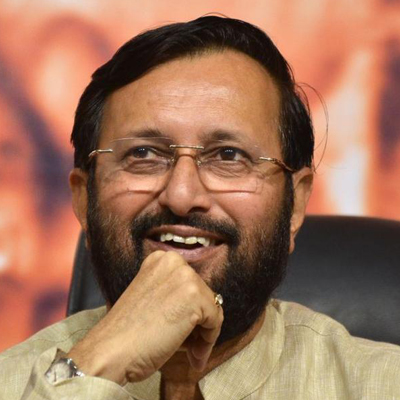
    Need to strengthen TV, radio connectivity with North-East India: Javadekar

    NEW DELHI: Information and Broadcasting Minister Prakash Javadekar said the North-East should be India’s gateway to South-East Asia and therefore connectivity of television and radio should be strengthened in that region.


    He observed that these channels of communication should promote harmony in the states and take the country’s rich culture beyond the borders of India. Javadekar was addressing a delegation led by MP Bezbaruah with whom he had wide-ranging discussion on issues related to the North-Eastern region.


    The discussions included recommendations for promoting north-east as a filming destination and featuring North-East films in the various film festivals.


    Appreciating the talent among the people of this region, the minister observed that there should be better participation of the North-Eastern people in the various genres of information and entertainment. A constant dialogue and an inclusive approach were realized as the need of the hour in order to integrate the north-eastern brethren into the mainstream.


    Recalling former Prime Minister Atal Bihari Vajpayee’s initiative of better air-connectivity with the North-east, he called for a need to explore plans for integrating the north-east with the rest of India through telecom, digital, radio and TV connectivity. 

  • HT Media needs to rethink ‘No TV Day’

    HT Media needs to rethink ‘No TV Day’

    MUMBAI: Hindustan Times is back with its ‘NO TV Day’ initiative. The campaign in its third year, now invites Mumbaikars (who, according to them, are the only ones owning a TV set) to switch off their TVs and celebrate quality time with family and friends through a wide range of activities specially put together by HT Mumbai (Does that mean Mumbaikars also do not know how to organize activities for friends and family and need an HT Media to do it for them?).


    The Facebook page of the campaign has many ads put together to promote the “Apna TV Band Karo Campaign.”  Bollywood actor Imran Khan is seen saying he enjoys cooking on ‘NO TV Day’ – not surprising considering the number of films he has been doing (or he rather did). 
     

    Another activity suggested is the ‘Get Fitter Mini Marathon’ at Carter Road, Bandra. Located in the western suburbs of Mumbai, it seems to insinuate that Mumbai can get fitter only at Bandra man (Read: the common Bandra lingo). 
     

    The ‘Head to Adlabs Imagica and Get Amazed’ has a number of postings on the page because maybe Essel World is now passé and not so amazing anymore. 
     

    Jokes apart, the campaign is being planned at a time when IPL mania has gripped the country. Why is the HT Media management trying to spike the viewership of Sony Entertainment’s most expensive and revenue generating product in the city of cricket lovers? 
     

    Is it a case of sour grapes with HT Media? Publication houses like India Today, DNA and the Times of India have their own channels but HT doesn’t. Maybe not now! But it surprisingly did so once in the late nineties. The Hindustan Times had started a Hindi entertainment channel, Home TV in collaboration with Pearson group of London which soon shut shop. And now with its ‘switch off your TV’ HT is behaving like a kid throwing tantrums.


    What’s also concerning is that HT Media’s No TV Day coincides with No Tobacco Day this time. Are they not really very different products? TV definitely is not equal to tobacco.

    The dynamic audio visual element of the TV medium allows its viewers to consume content as it comes alive on a screen immediately and live. It informs, it entertains, it engages, it educates, it connects and it is an integral part of our lives.

    As compared to this, newspapers take an entire day to publish information that has probably expired and has been dust binned. May be some of their analyses are pertinent and different, but in the era of paid content that’s something you have to really seek out. The world over newspapers are being given a decent or indecent burial. And TV and the digital medium are continuing to grow and thrive. In India, however, that’s not the case and newspapers are showing that they have a lot of legs. 
     

    Yes, the intent behind the HT Media initiative – get families and each one of us out together doing things they and we normally don’t – is laudible.  But why hit out at the medium of TV? Why call it ‘No TV Day’ when calling it “HT Media’s Family Day out” would do just as well.  Then do we really need a special day to spend time with our families?  And will HT Media decide what we should do with ours?

    The campaign also suggests that one can help a great deal in protecting the environment by turning off the TV for a day. HT has also organised ‘Nature Trails’ on ‘NO TV Day’ in Goregaon, in the western part of Mumbai. Can it ensure that the participants will not leave behind a trail of plastic bags, bottles and other wastes as they trudge along?  


    At indiantelevision.com we believe it makes more sense to watch TV in order to protect the environment. After all no trees are cut to make newsprint when you watch TV.


    HT Media managers would do well to take their communications seriously. Imagine what could happen if the channels were to take the anti-TV messaging to heart and were to organise a No Newspaper Day nationally? It could lead to a loss of crores for the whole newspaper industry.  Imagine what would happen if TV channels were to go online alone to promote their shows and for their TV guides? Again a loss of crores would hit the industry. Imagine if TV manufacturers were to cancel advertising in newspapers for a day? Again the impact would run into crores. 


    It’s possible that HT Media’s campaign may also be costing the TV industry some viewership (though many doubt that). Hypothetically let’s say it is, that means the ‘No TV day’ would be impacting TV channels’ revenues. The question is why are TV channels taking all this lying down? When probably they are among the bigger spenders in the newspaper’s pages.


    The appeal from all of us at indiantelevision.com to HT Media is that its managers should avoid using the term ‘No TV Day’ and coin something more positive and family oriented instead. It will be just as fun for its readers in Mumbai. 


    (We at the Indiantelevision.com group live and breathe audiovisual content – both on TV and online. But we also love newspapers. We believe they are relevant. At least for a few years. We also believe that HT Media’s ‘No TV Day’ campaign is a case of misdirected and wrongful communication, though it has been organised in good faith and with a good intent to bring families together.)

  • Life OK to reward good content through ‘Life OK Now Awards’

    Life OK to reward good content through ‘Life OK Now Awards’

    Updated: 09:50 PM


    MUMBAI: In the age of instant noodles and even instant sex, why should entertainers from the world of music, television and films wait for as long as a year or even six months for their 15 seconds of fame? It was this thought that led to the conceptualization of the ‘Life OK Now Awards’, a partnership between Star Plus’ sister channel, Life OK, and BIG Productions.


    Billed as the country’s first instant awards celebrating excellence in the field of film, television and music, they will be held every month, with the first edition scheduled for 31 May and film star Akshay Kumar roped in as its face. According to Life OK general manager Ajit Thakur, “In the events space, we went ahead and did the Screen Awards, which we are quite happy about, but we always thought of them as a product that we got and took to the next level. By contrast, this initiative is our own innovation.”


    Further explaining the thought behind the awards, Thakur said, “It’s not that Bollywood releases movies only three or four times a year. It’s the same like television; we keep launching shows every now and then and the same goes for music. So this is where the whole insight came from that if there is so much excellent work happening week after week and month after month, why should the celebration, rewards and coming together happen only once or twice a year? That was the basic premise on which we worked with Big Productions and turned the whole thing on its head.”


    The ‘Life OK Now Awards’ have been conceptualized by Life OK and will be produced by Big Productions along with 92.7 BIG FM as radio partner.


    Thakur recalled that when RBNL CEO Tarun Katial and he met a month ago to discuss something interesting, they never imagined that 30 days of thinking would get such a WOW reaction from the industry. With Life OK planning to get at least six sponsors for the awards and huge amounts of money required every month, are clients ready for this? “We have been pitching it only for the last 15 days because the earlier 15 days went into finalizing the idea. We have four-five powered by and associate sponsors. We are in the middle of locking the main sponsor,” said Thakur.

    The channel has got wild stone as it’s powered by sponsor. Though Life OK officials chose to remain tight lipped about financial details of the show, an industry source revealed that the channel is expecting close to anywhere between Rs 80,000 to Rs 100,000 per 10 seconds slot.

    The ‘Now’ awards encompass film, music and TV, and are not restricted to television alone. “It is not a television award show at all. It is primarily a Bollywood show and will happen every month unless we feel that there is a particular month in the year where there are not enough film releases. We may skip say July while during Diwali, we may do something much better depending on the scale of releases,” said Thakur.

     
    This month’s shoot will be shot on 21 May at Reliance Studio and will telecast on 31 May at 8 pm. Significantly, these awards will see no involvement of the jury save for short-listing movies. Even the Life OK shows that will be chosen will be purely on the basis of ratings. While seven categories will remain constant from month to month, Life OK plans to introduce newer categories every month, depending on the film releases during that month. For the first edition of the awards, voting will go live from 15 May.


    There will be categories like best actor (male and female), best movie, best picturised song and Life OK hero of the month and many more. Each subsequent edition of the awards will have a different face. “It is a great platform for these actors to promote their movies. Otherwise, they only get to promote their films on reality shows. This way, every month, they will have a platform to promote their films and even the music,” said Big Productions business head Rajesh Chadha.


    Speaking of movies nominated for the ‘Now’ awards, would ‘B’ and ‘C’ grade films qualify? “Television is a mass platform. We also want to promote experimental content. I don’t categorize films as ‘B’ or ‘C’ grade but each film which has got noticed by the audience will be taken into consideration. Remember, small films need all such platforms as compared to big films in terms of budget,” said Thakur.


    Wouldn’t there be a saturation point with so many awards flooding the market? “Depends on how you see it. If you look at celebration of good content, talking, showcasing, presenting good content and interacting with your favorite stars; I don’t think there is any problem then. Look at the content on your channel and look at the content on your online platform, look at the content in the extension of the newspapers, every day, there is content around Bollywood, television and music,” said Thakur. “I don’t think there will be saturation. Today, supplements are growing thicker by the day because people want to know about things. For me, if there is so much content and so much curiosity and so much engagement with respect to entertainment, then why would you postpone the celebration, rewards and recognition? Many people work hard to make one film and by January next year, with 500 films, the smaller films get lost. I don’t think there is any saturation.”


    Regarding the association with BIG FM, Thakur said, “I think the 45 stations are great to take the message across. They are our only media coverage; we have not roped in any other media partner.”


    Are the ‘Now’ awards just an experiment? “We don’t give up easily on something which we are quite excited about. We are not going to give up on the experiment for sure.  But I also think it is not going to be an overnight success, so we have to be different in every way. It will take time for us to build it but we will be on it,” said Thakur. “Both the industry feedback and advertisers’ feedback has been excellent. People have come and told us they want to sponsor from July to October.”


    Starting with the first edition, every installment will be shot around the middle of the month and telecast over the last weekend of the month. Viewers can avail exclusive content by giving a missed call on 1800 270 8701 or downloading the Life OK Now Awards app from the Android Store or Google Play or by logging into www.lifeok.com/NowAwards

  • Reliance MediaWorks: 400 and counting…

    Reliance MediaWorks: 400 and counting…

    MUMBAI: The field of visual and special effects is really gaining ground in films nowadays and a company that has done some great work in this area is the Anil Dhirubhai Ambani run Reliance MediaWorks – the media and techno-creative solutions provider and a part of the Reliance Group.

    The company commemorated the landmark achievement of completing 400 films with a star studded event graced by accomplished cinematographers, directors and producers that Reliance MediaWorks has worked with including Mahesh Limaye behind the Dabangg fame, Anil Mehta renowned cinematographer behind Saathiya, Laagan and Ketan Mehta director of Mangal Pandey: The Rising, to name a few.

    Reliance MediaWorks CEO Venkatesh Roddam in a statement said: “At Reliance MediaWorks we have always believed in adding value to the filmmaking process by keeping up to date with the latest technology and techniques. The completion of 400 Films is a testimony of our commitment and hard work.”

    Set up in 2008 as Asia’s first digital intermediate lab with a 4K facility, the Reliance film lab has revolutionised the way films are processed in India. Having worked with reputed production houses such as Dharma Productions, Yashraj Films, Balaji Motion Pictures and Red Chillies Entertainment, amongst others, its consistent efforts have helped reduce the costs of films and increase the speed of overall production.

    Amole Gupte with the team of Reliance MediaWorks

    Reliance MediaWorks also offers cutting edge VFX Solutions to Indian and International productions through its state of the art VFX studios in LA, London and Mumbai. With specialisation in highly complex VFX, the company and its team of award winning artists stand at the forefront of an extremely dynamic world of VFX production.

    Reliance MediaWorks post production services president Krishna Shetty added: “Digital filmmaking has opened up greater possibilities and opportunities for filmmakers than ever before. Every movie, from the massive big budget blockbusters, to the small independent films made on a shoestring budget, has been influenced by the advents in digital technology and filmmaking. We look forward to continuing our efforts to reinvent the ways in which movies are viewed.”

    Equipped with a state of the art DI facility to cater to film, TV and web related video content, the team has worked on a slew of recent blockbusters that include Chennai Express, Goliyon Ki Raasleela Ram Leela, Krrish 3, Yeh Jawaani Hai Deewani, 3 Idiots and Singham, amongst others.

    (L-R) Mahesh Limaye, Nishith Shetty, Ketan Mehta, Anil Mehta, Anita Kaul Basu, Siddharth Basu and Venkatesh Roddam


  • Television…. will remain eternal

    Television…. will remain eternal

    MUMBAI: Television will continue to be a dominant medium notwithstanding the emergence of new means of consuming content. New mediums of content delivery are likely to change viewing habits, but more importantly are likely to increase the time spent on watching the stories that are delivered and also provide more opportunities to content creators.


    Rather than fragment television viewership, new mediums of content delivery would open up new opportunities for content creators as well as platform providers.


    To drive home this message, India’s largest broadcaster Star India COO Sanjay Gupta pointed out that 10 years ago the topic of discussion was that newspapers are dead. The fact is that in the last 10 years the size of the newspaper industry has doubled.


    The topic now is ‘Television is Dead’ but like the newspaper industry television will continue to grow, said Gupta, participating in a panel discussion on “Television is Dead – Long Live Television” on the second day of FICCI Frames 2014.


    Fundamentally, new mediums provide new avenues to carry content and to tell stories, Gupta said underlining that there will be greater opportunities with the digital medium opening up.


    IndiaCast Media Distribution Group CEO Anuj Gandhi said, “Fundamentally, we as a nation are a daily soap market. In India daily soaps sell.”


    IndiaCast distributes a multitude of content but in the global markets it has found demand for its serial 24, based on an American thriller series in a real-time format, and not for the Indian staple daily soaps. IndiaCast is mandated to drive domestic and international channel distribution, placement services and content syndication for TV18 Broadcast, Viacom18 and A+E Networks I TV18.


    Celestial Tiger Entertainment CEO Todd Miller echoed the prevalent view. He said, “It is still the living room that is the bulk of our business.” Celestial Tiger is a Hong Kong-based diversified media company that focuses on Asian consumers.


    TELEVISION TO TRANSFORM


    Television as a medium is expected to undergo a transformation from being a linear gadget to a multi-functional smart device. The reinvention of television will allow it to not only survive but blossom despite the onslaught of new mediums of content delivery.


    Effective use of the mobile as a means of content delivery is still a distant given the bandwidth constraints. “For me the biggest challenge is bandwidth. 3G and 4G will change consuming patterns. It will still be sports and news that will be largely consumed on mobiles,” said IndiaCast’s Gandhi.


    There have been so far no serious efforts at making differentiated content. With 3G and 4G, there would be real efforts at making meaningful content.


    Star India’s Gupta said Star Sports’ tie-up with Vodafone has shown there is deep desire among consumers to view content on mobile, even though not at huge costs but by spending smaller amounts.


     “Millions are coming in to check content on Vodafone. They may not want to spend in small amounts,” Gupta said.


    Consumers will seek more and more stories, different stories with the rise of the digital medium of content delivery.  The broadcasters as they now exist and the new means of content delivery and the new content creators would be collaborating rather than working at cross-purposes.


    IndiCast’s Gandhi reiterated that TV Everywhere in the digital era will still remain largely confined to shorter duration content.


    CHANGING DYNAMICS


    Almost 50 per cent of Olympics was watched on mobile. This suggests there is great opportunity to deliver what the consumer wants.


    “We can’t wish it away. Dynamics are changing fast. The distinction between the content creators and platforms is blurring,” said Gupta.


    Industry players expect disruptions to happen but are wary as history shows an outsider has most of the time been the disruptive force.


    New mediums will provide new platforms for content. The broadcasters may go downstream to business to consumer model and the distributors may move up the chain to be the content producers.


    In the US, the average time spent watching television is six hours. In India the average time spent is three hours and the new mediums are seeing an increase in the time spent watching television content.


    Celestial Tiger’s Miller said, “Most of the innovation that comes is from Telcos and DTH.”


    Media Partners Asia executive director Vivek Couto, anchoring the panel discussion, said, “Precedents have already been set for digital deals in the US.”


    Gupta, however, said the cap on prices of television content is hindering creation of quality content. “People are willing to spend. We have 2.5 million HD customers, which is likely to rise to 8 million by the end of this year,” he said.


    The whole ecosystem of story-telling is set for a transformation aided by improved delivery platforms and more creative content creation, and a dominant part of the viewership would still be on television.

  • Zee News brings ‘Change Maker Awards’

    Zee News brings ‘Change Maker Awards’

    MUMBAI: One of the leaders of the Hindi news channels Zee News has come up with an initiative to recognise creative talents across the country. ‘Change Maker Awards’ will be held in March 2014 to highlight areas where change is required in various sectors of society such as environment, social issues and civic issues.


    Online entries are being invited for print, television, radio, digital and out of home categories from creative talents across India.


    An official statement from the company says that the awards have been created to ‘salute and reward such creative ideas that revolve within when it comes to make things better for everyone’.


    Speaking on this initiative,Zee Media Corporation Limited (ZMCL) VP-marekting Rohit Kumar said, “Zee News has always read the nerves of its audience and change itself according to demand and environment. Our constant endeavor has been to recognize and facilitate change makers to substantiate a positive India. Change Maker Award is to promote and to provide a platform to such individuals.”


    The jury will consist of names such as Creativeland Asia Founder and Creative Chairman Raj Kuru, Havas Worldwide India managing partner and chief creative officer Satbir Singh, Flipkart Sr. VP- Marketing Ravi Vora, Raymond Director – Marketing Mrinmoy Mukherjee, BITM Managing Partner & Chief  Creative Officer Prathap Suthan.


    Bang In The Middle Managing Partner & Chief Creative Officer Prathap Suthan said, “There cannot be a better time than now for these awards. The nation is on full boil as far as the youth, energy and change is concerned, especially with the elections drawing near. More importantly, I believe that inviting, including, and involving creative people from advertising to take a shot at change just might fire some big ideas. I really hope that all our talent finds and uses this opportunity to bring up braver ideas. Our country needs all the help and hope it can get.”


    Ex Chief Election Commissioner Dr SY Qureshi said, “I am glad that Zee News is using its preeminent position to encourage an effort towards positive thinking. The Change Maker Awards is a well intentioned initiative that should unearth innovative ideas that can change people’s lives.”


    Previous initiatives of Zee News include ‘My Earth My Duty’, ‘Aapka Vote Aapki Taqat’, ‘Gift a Life’ etc. The last date of submission is 15 March 2014. 

  • Pitch Madison projects 2014 to be a good year for media ad spends

    Pitch Madison projects 2014 to be a good year for media ad spends

    MUMBAI: The year 2014 is expected to be one of the best years of recent times for media advertising, including for television.


    Pitch Madison Media’s advertising outlook for 2014 estimates media advertising spends in 2014 to grow 16.8 per cent to  Rs 37,216 crore from Rs 31,877 crore in 2013, with the biggest contribution of Rs 5,000 crore to this growth coming from elections to the Lok Sabha and to assemblies of four major states including Maharashtra.


    Advertising spends on television are expected to grow well because of increased penetration of digitisation, as ad rates increase because of restricted supply with the enforcement of the 12 minute per hour cap on advertisements and with many new channel launches once the licences are issues after the Lok Sabha elections.


    The advertising spends on television in 2014 are expected to grow by a robust 15 per cent in 2014 to Rs 14,282 crore from Rs 12,419 crore in 2013. The growth in advertising spend on television was 8.2 per cent against the projected 6 per cent.


    The advertising spend outlook for 2014 contrasts that of 2013, when the watchword was caution. The prediction for growth of media advertising in 2013 was 7.4 per cent but the actual growth turned out to be higher at 11.1 per cent.


    On television, the completion of digitisation in the top 42 cities in 2013 led to increased spending on niche channels, SD and HD channels and also local advertising options due to split runs across channels.


    According to the Pitch Madison advertising outlook, the proliferation of channels from existing bouquets will increase inventory availability at higher rates.


    Television’s share in the total ad spend in 2014 is projected to fall to 38.4 per cent from 39 per cent in 2013. Television’s share in the advertising pie was 42.1 per cent in 2011 and 40 per cent in 2012.


    Though the growth in advertising spends on television seems to be healthy enough for the TV industry, increasing popularity of the internet is likely to cut down the share of television in total advertising spends.


    In 2013, out of 15 categories of advertisers, advertising spends by seven of them showed a dip implying that advertisers are losing interest in television-based advertisements.


    Media, retail, alcoholic beverages and corporate have registered a negative growth of advertising spends on television in 2013 and only fast moving consumer goods emerged as the driver of growth for advertising on television.


    Print has shown immense promise and in 2014, regional dailies are expected to continue their onward march and grow at a faster rate at the expense of English dailies. In 2014, advertising in print is expected to grow by 17 per cent to Rs 15,405 crore. In 2013, print advertising spend had grown by 10 per cent and in 2012 by only 4.0 per cent.


    Radio is expected to grow by another 15 per cent. Consolidation within radio will take place due to the expected phase III auction rollout. Digital will continue to grow stronger at 29.5 per cent, outdoor medium is set to grow  by 8.2 per cent and cinema by 7.2 per cent.


    The outlook said it was time for the medium to reinvent itself for the advertiser.


    The digital medium will pull in a total of Rs 3,950 crore in 2014, which is Rs 900 crore more than Rs 3,050 crore in 2013. The growth in advertising spends on the digitial medium has however subsided from around 50 per cent from 2009 till 2012. In 2013, the growth on digital dropped to 32.4 per cent.


    The digital medium’s share in the total advertising pie will rise to 10.6 per cent from 9.6 per cent in 2013, 8 per cent in 2012 and 5.6 per cent in 2011.


    Due to the economic slowdown, marketers have scrutinised each and every penny spent and internet being a return on investment medium, it is becoming the preferred choice for them. The growth in online advertising is expected from FMCG, automobile and banking sectors.


    For radio, the growth in advertising spends in 2013 was 17.96 per cent against the projected 4 per cent. Looking at the growing faith of advertisers in this medium, the outlook projects 15.04 per cent growth in advertising on radio in 2014, with the total advertising spends adding up to Rs 1,262 crore against Rs 1,097 crore in 2013.

  • Balaji Telefilms television segment reports PAT for Q3-2014

    Balaji Telefilms television segment reports PAT for Q3-2014

    BENGALURU: The blue eyed entity of the Indian media and entertainment industry Balaji Telefilms Limited (Balaji) Television content production segment reported a standalone PAT of Rs 1.66 crore for Q3-2014, more than double the Rs 0.80 crore for the immediate preceding quarter (Q2-2014), but a little less a third (33.5 per cent) of the Rs 4.94 crore which included a negative tax figure that added to the profit by Rs 1.18 crore during Q3-2013. 


    Television entertainment has been the foundation stone for Balaji Telefilms Limited (BTL). This segment saw a growth of 41.7 per cent in commissioned programming to 173 hours during Q3-2014 as compared to the 123 hours during the immediate trailing quarter and 18.5 per cent as compared to the 146 hours during Q3-2013. Revenue realised per hour dipped to Rs 21.18 lakh (100 lakh = 1 crore) for Q3-2014 from Rs 23.10 lakh during Q2-2014 and was 2.8 per cent lower than the Rs 21.79 lakh realised during Q3-2013. 


    With no movies released during the quarter, overall, the company reported a consolidated loss of Rs (-5.75) crore for Q3-2014, the sole contributor to the loss being its Motion Picture business ­ Balaji Motion Pictures Limited (BMPL), with a loss of Rs (- 7.56 crore). Four movies, from the movies under production, are likely to be released between February and April 2014 – Shaadi Ke Side Effects, Raagini MMS 2, Main Tera Hero and Kuku Mathur Ki Jhand Ho Gayi. This segment had contributed Rs 11.81 crore to the Rs 12.32 crore PAT reported by Balaji during Q2-2014. 


    Balaji’s third revenue segment – BOLT Media Limited (BOLT) returned a PAT of Rs 0.14 crore during Q3-2014 as compared to a loss of Rs (-0.32) crore for Q2-2014. 


    Let us look at the other results declared by Balaji Telefilms


    The company reported consolidated income from operations of Rs 43.22 crore for Q3-2014 as compared to the Rs 194.62 crore during the immediate trailing quarter and the Rs 46.6 crore reported for Q3-2013.  


    Increase in stock in trade by Rs 13.74 crore during Q3-2014 has seen total consolidated expenditure figures (on paper) dip to Rs 49.83 crore. During Q2-2014, decrease in stock in trade of Rs 93.77 crore had increased the total expenditure to Rs 185.09 crore during Q2-2014, while an increase in stock in trade of Rs 15.23 crore had reduced the total expenditure to Rs 40.88 crore during Q3-2013.


    Production cost for movies and serials during Q3-2014 at Rs 51.49 crore was six per cent less than the Rs 54.82 crore during Q2-2014, but 14.5 per cent higher than the Rs 44.96 crore during Q3-2013. Marketing  and distribution expense for Q3-2014 at Rs 1.09 crore was just a small fraction of the Rs 23.81 crore spent during Q2-2014 and two and a half times the Rs 0.5 crore spent during Q3-2013.


    Revenue from operations from Balaji’s Television content production segment was up 50 per cent at Rs 37.80 crore for Q3-2014 as compared to the Rs 25.25 crore during Q2-2014 and 16.4 per cent more than the Rs 32.48 crore during Q3-2014. Total Operating revenue from this segment was Rs 38.75 crore for Q3-2014, Rs 30.33 crore for Q2-2014 and Rs 33.32 crore for Q3-2013. 


    Cost of production for the television segment during Q3-2014 was up 23.6 per cent at Rs 31.19 crore as compared to the Rs 25.25 crore during Q2-2014 and 25.2 per cent higher than the Rs 24.92 crore during Q3-2013. 


    BMPL reported operating revenue of Rs 1.13 crore for Q3-2013 as compared to the Rs 165.05 crore for Q2-2014 and Rs 13.25 crore during Q3-2013. BMPL’s expenditure for Q3-2014 was Rs 8.72 crore for Q3-2014, Rs 172.4 crore during Q2-2014 and Rs 29.73 crore during Q3-2013. As mentioned above this segment has reported a loss of Rs (-7.56 crore) during Q3-2014. 


    Balaji says that Production cost for this segment comprises of old films inventory amortisation, marketing and distribution expenses of future releases. Balaji’s two releases during the second quarter of 2014 – Lootera and Once upon a Time in Mumbai Dobaara were declared ‘Average’ and ‘Flop’ respectively at the Box Office. 


    BOLT reported revenue of Rs 3.37 crore and a total expenditure of Rs 3.33 crore during Q3-2014.


    Click below for:-

    Balaji Telefilms Financials

    Balaji Telefilms Investor Presentation

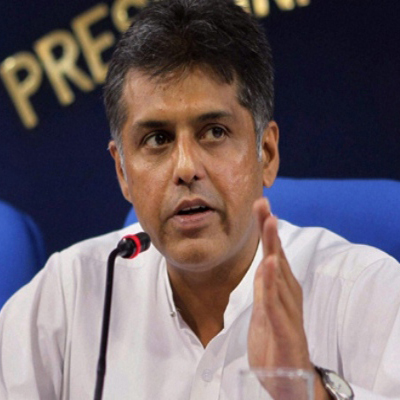
  • I&B minister  Manish Tewari inaugurates BES Expo 2014

    I&B minister Manish Tewari inaugurates BES Expo 2014

    NEW DELHI: The Information and Broadcasting minister Manish Tewari inaugurated the 20th International Conference and Exhibition on Terrestrial and Satellite Broadcasting – BES Expo 2014, today at New Delhi. Speaking on the occasion he said, “The last two decades have witnessed exponential growth in both the broadcasting and telecom sectors, giving rise to 800 plus television channels.”

    Commenting on the problems and challenges faced by the broadcasting sector due to competition for market share, he said the union cabinet has recently approved the proposal of the Ministry of Information & Broadcasting for a comprehensive regulatory framework in the form of guidelines for Television Rating Agencies in India. These guidelines cover detailed procedures for registration of rating agencies, eligibility norms, terms and conditions of registration, cross-holdings, methodology for audience measurement, a complaint redressal mechanism, sale and use of ratings, audit, disclosure, reporting requirements and action on non-compliance of guidelines. 

    Also speaking at the function, Ministry of Information & Broadcasting secretary Bimal Julka, said the ministry is planning to strengthen community radio movement in India, which would help in giving voice to the voiceless. 

    The BES expo is being attended by over 300 eminent broadcasters, media industry professionals and experts from India and abroad. The three day long expo will have deliberations on issues such as terrestrial broadcasting, future of TV, digitization, disaster broadcast systems for information dissemination, regulatory framework in broadcasting and other important issues related to the broadcasting industry.