Tag: Television

  • Patanjali continues TV ad blitz in Feb 2016; spends Rs 20 crore

    Patanjali continues TV ad blitz in Feb 2016; spends Rs 20 crore

    MUMBAI: It’s got ambition: turn Indian prime minister Narendra Modi’s dream of ‘make in India’ a reality. The Swami Ramdev-Acharya Balkrishna-founded Patanjali Yogpeeth & Divya Mandir Trust has launched a slew of fast moving consumer goods products over the past couple of years, set up vast and deep distribution channels reaching them into every nook and corner of rural – and now spreading into urban –  India. Beginning first with ayurvedic products, it moved into cateogries  like toothpaste, ghee, oil, noodles, soap, shampoo, biscuits and what have you dominated by multinationals like Hindustan Lever, Prctor and Gamble, Colgate Palmolive. And it has been making the big boys nervous, slowly chewing away impressive market shares in almost every category.  Revenues are slated to touch Rs 5,000 crore this year and Rs 20,000 crore over the next three years.

    It is backing its onward march with a massive advertising warchest  over the past year, emerging as the top spender on television, a position it continued to retain in the period 11 February 2016 to 11 March 2016.

    According to data that indiantelevision.com has obtained, the brand gave out out checks of close to Rs 28 crores on television ads in this period,  without considering the discounts it has enjoyed on individual deals. As per several industry experts, if one were to take these discounts into account, the guesstimated figure is close to Rs 20 crore.

    What is interesting to note is that unlike most of its rivals,  the genre that Patanjali spends most on is news channels, be it regional  or national news, instead of Hindi GECs. The brand used 65.5 percent of its total television advertising spends on news channels, followed by Hindi GECs with 29.89 per cent and 3.89 percent on regional entertainment channels. The brand also shells out 0.76 per cent or Rs 15 lakhs of its advertisisng spends on its in-house spiritual channel Aastha TV.

    “Going by its advertising spends in the media, Patanjali is going with media differentiation as a strategy. A lot of FMCG brands invest in soft programming which mostly comes down to the GEC sector. When everyone is in one sector, it is good to differentiate oneself and take another positioning,” explained veteran brand consultant and business strategist Harish Bijoor.

    “Secondly”, Bijoor noted,” news is the new entertainment. As a genre, it has changed from simple reporting of facts to what we call news entertainment. If you look at the television debates today, they are often pitted against highly rated entertainment shows, and therefore have larger audiences these days. Not only do you have the men watching, but women also enjoy this new variation of entertainment. Therefore I think Patanjali is playing smart by being visible on the news space.”

    In the Hindi GEC space, it spent close to Rs 1.8 crore on Star Plus, followed by Rs 1.5 core on Sony Entertainment Television and Rs 1 crore on Zee TV approximately. However, the brand buys inventory from most number of channels under Zee Entertainment Enterprises Limited (ZEEL).

    Patanjali has a good presence in the regional entertainment market as well, with Zee Kannada leading others in the genre in terms of Ad EX from the brand.

    As per Broadcast Audience Research Council India’s ‘Top 10 Brands’ report, the Patanjali brand has bagged as many as 21,751 insertions in week 10, followed by Colgate with 15,553 television ad insertions. One can easily see the clear lead that Pantanjali commands over the second in the list. While the brand’s investment is definitely a leading factor for its growing visibility on both TV and the shelves, careful and strategic media buying is also to be credited for its continued domination of television space. The Patanjali group has given part of its media buying mandate to Delhi based agency Vermillion Communications, and if reports by industry insiders are to be believed, there are two other local agencies that work with Patanjali.

    A late entrant to India’s Fast Moving Consumer Goods market with a wide number of retailable products, Patanjali has quickly moved on to go head on with market leaders such as Parle. The brand’s quick rise to fame, at least can be attributed to its aggressive direct marketing strategy and strong distribution reach, thanks to its retail deal with the Future Group.

    Patanjali branded products were already selling well before it decided to invest heavily in TV ads. A media expert close to the development said, “The products were selling a lot already, even before the brand was well known in the media space. But for sure this strong media presence has given the brand a very good exposure, and its sales must have augmented as well. It clearly shows that the brand is aiming for a multi-fold growth.”

    Lauding Patanjali’s  effort in going aggressive with its TV buying, Bijoor cautioned, “I think other brands need to be worried of this late entrant. Not only does it have a very hard working product and an excellent distribution network, its recent entry into advertising spends clearly shows it is reaching for the top.”

    Several industry veterans however beg to differ. Dentsu Aegis Network South Asia CEO and chairman Ashish Bhasin said, “I don’t think Patanjali poses a serious worry for other players in the category. In the FMCG business, they have plans for every competitor. Hypothetically, if there were five competitors for an FMCG brand earlier, now they have one more to consider and marketers will plan accordingly. ”

    When asked if spending huge advertising money will work in the brand’s favour in the long run. Bhasin replied, “The brand has definitely spent a significant amount on television in the past few months. Whether it will sustain the same throughout the year is hard to say. It is understandable for a brand launching itself and trying to build a quick presence for itself to spend in the tried and trusted media. It is too early to say how long its continued dominance of the television space will work out for it.”

    Bhasin isn’t the only one who voices uncertainty about Patanjali continuing with its chart topping spending spree in the coming months. A veteran media player under condition of anonymity opined, “I think Patanjali’s current trend of buying TV ad slots aggressively will go down in a month. It had the gall when it entered media marketing with its aggressive strategy, the brand has achieved that, and I don’t think it has a reason to continue the same spends on television.”

    Other media observers state that the Patanjali group is working to a plan. “The foot on the advertising pedal is not going to be eased,” sas a source very close to the group. “Patanjali’s marketing mavens are  going to move into more clever and refined media buying as it starts  rolling out its products in even more kirana stores and large outlets in urban and suburban India. Both Swamiji and Acharyaji want to create a mutli-product giant competing with long established players, and for that aggressive marketing, distribution and advertising will have to continue.”

    Whether Patanjali continues to spend tens of crores per month or not, the presence of such an aggressive spender among the advertisers definitely augurs well for TV advertising as a whole – and news channels in particular.
  • Only two cases of vulgarity and indecency on reality TV shows reported to Government in last two years

    Only two cases of vulgarity and indecency on reality TV shows reported to Government in last two years

    NEW DELHI: Only two instances have come to the government over the past two years of vulgarity and indecency in reality shows on television, and both relate to Colors.

    Answering a question in Parliament today, Information and Broadcasting Minister Arun Jaitley however ruled out any guideline to check such trends as he said “the existing provisions contained in the Programme and Advertising codes and the existing mechanism are considered adequate to regulate content including reality shows on TV channels”.

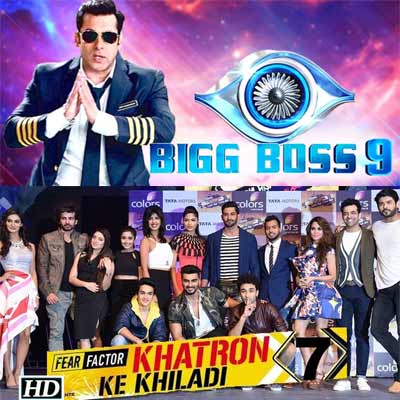
    In the first case relating to Bigg Boss Season-7, Colors had been issued an advisory on 26 March 2014 and a warning was issued on 8 January last year on the second case relating to “Fear Factor Khatron Ke Khiladi-Dan Ka Blockbuster” when the channel was asked to run an apology scroll.

    The Minister said in reply to a question that the content telecast on private satellite TV channels including reality shows of different genres is regulated under the cable Television Networks (Regulation) Act, 1995 and cable Television Network Rules, 1994 framed there under. The Act does not provide for pre-censorship of any programmes and advertisements telecast on such TV channels.

    However, it prescribes that all programmes and advertisements on such TV channels should be in conformity with the prescribed programme code and Advertising code enshrined in the Act and the rules framed there under, which contains a whole range of principles to be followed by these  channels including the reality shows carried thereon.

    He said the Government has set up Electronic Media Monitoring centre (EMMC) to review the content of private TV channels in the contest of violation(s) of programme and Advertising Codes.

    An Inter-Ministerial committee (IMC) has also been set up in the Ministry to look into the specific complaints or suo-motu take cognizance against the violation of programme and Advertising codes and appropriate action is taken as per cable Television Networks (Regulation) Act’ 1995, if any violation if established.

    This Ministry also issues advisories to TV channels from time to time on various issues, which are also relevant to reality shows. These are available at Ministry’s website www.mib.nic.in.

    In addition,the  National Commission for Protection of Child Rights (NCPCR) has formulated the ‘Guidelines for Media Reporting on children, which have been circulated by this Ministry among ail TV channels/NBA,/IBF on 23 November 2012. The guidelines lay down provisions to be followed by broadcasters/producers in case child participants are taken in their shows.

    Besides, as part of its self-regulating mechanism, Indian Broadcasting Foundation which is a representative body of non-news & current affairs TV channels, has set up the Broadcasting content Complaints Council (BCCC) headed by retired High Court judge Mukul Mudgal to examine complaints about television programmes. BCCC has also issued some Advisories on various issues related to reality shows to their member channels, which are available at their website i.e. www.ibfindia.com.

    The Programme code, inter-alia, provides that no programme should be carried in the cable service which (i) offends against good taste or decency; (ii) contains anything obscene, defamatory, deliberate, false and suggestive innuendos and half truths; and (iii) denigrates women through the depiction in any manner of the figure of a women, her form or body or any part thereof in such a way as to have the effect of being indecent, or derogatory to women, or is likely to deprave, corrupt or injure the public morality or morals.

    Action is taken against defaulting channels whenever any violation of the said codes is noticed or brought to the notice of the Ministry.

  • Only two cases of vulgarity and indecency on reality TV shows reported to Government in last two years

    Only two cases of vulgarity and indecency on reality TV shows reported to Government in last two years

    NEW DELHI: Only two instances have come to the government over the past two years of vulgarity and indecency in reality shows on television, and both relate to Colors.

    Answering a question in Parliament today, Information and Broadcasting Minister Arun Jaitley however ruled out any guideline to check such trends as he said “the existing provisions contained in the Programme and Advertising codes and the existing mechanism are considered adequate to regulate content including reality shows on TV channels”.

    In the first case relating to Bigg Boss Season-7, Colors had been issued an advisory on 26 March 2014 and a warning was issued on 8 January last year on the second case relating to “Fear Factor Khatron Ke Khiladi-Dan Ka Blockbuster” when the channel was asked to run an apology scroll.

    The Minister said in reply to a question that the content telecast on private satellite TV channels including reality shows of different genres is regulated under the cable Television Networks (Regulation) Act, 1995 and cable Television Network Rules, 1994 framed there under. The Act does not provide for pre-censorship of any programmes and advertisements telecast on such TV channels.

    However, it prescribes that all programmes and advertisements on such TV channels should be in conformity with the prescribed programme code and Advertising code enshrined in the Act and the rules framed there under, which contains a whole range of principles to be followed by these  channels including the reality shows carried thereon.

    He said the Government has set up Electronic Media Monitoring centre (EMMC) to review the content of private TV channels in the contest of violation(s) of programme and Advertising Codes.

    An Inter-Ministerial committee (IMC) has also been set up in the Ministry to look into the specific complaints or suo-motu take cognizance against the violation of programme and Advertising codes and appropriate action is taken as per cable Television Networks (Regulation) Act’ 1995, if any violation if established.

    This Ministry also issues advisories to TV channels from time to time on various issues, which are also relevant to reality shows. These are available at Ministry’s website www.mib.nic.in.

    In addition,the  National Commission for Protection of Child Rights (NCPCR) has formulated the ‘Guidelines for Media Reporting on children, which have been circulated by this Ministry among ail TV channels/NBA,/IBF on 23 November 2012. The guidelines lay down provisions to be followed by broadcasters/producers in case child participants are taken in their shows.

    Besides, as part of its self-regulating mechanism, Indian Broadcasting Foundation which is a representative body of non-news & current affairs TV channels, has set up the Broadcasting content Complaints Council (BCCC) headed by retired High Court judge Mukul Mudgal to examine complaints about television programmes. BCCC has also issued some Advisories on various issues related to reality shows to their member channels, which are available at their website i.e. www.ibfindia.com.

    The Programme code, inter-alia, provides that no programme should be carried in the cable service which (i) offends against good taste or decency; (ii) contains anything obscene, defamatory, deliberate, false and suggestive innuendos and half truths; and (iii) denigrates women through the depiction in any manner of the figure of a women, her form or body or any part thereof in such a way as to have the effect of being indecent, or derogatory to women, or is likely to deprave, corrupt or injure the public morality or morals.

    Action is taken against defaulting channels whenever any violation of the said codes is noticed or brought to the notice of the Ministry.

  • Kids television viewership up; Nick leads with Motu Patlu: BARC Week 8

    Kids television viewership up; Nick leads with Motu Patlu: BARC Week 8

    MUMBAI: With an overall increase in the Kids genre, Viacom 18’s Nick stayed strong in its top position in week 8 according to the  Broadcast Audience Research Council (BARC) India’s all India (U+R) data in NCCS All 4-14 Individuals category.

    The channel has bagged 81897 (000s sums) ratings, followed by Pogo TV with 66609 (000s sums) on the second spot in the ratings list.

    Hungama took the third spot with a viewership rating of 57121 (000s sums), while Cartoon network, which was at the last position, secured the fourth spot with a viewership ratings of 53108(00s sums). Disney Channel on the other hand dropped to the fifth spot, although its viewership ratings showed increase from 51470 (000s sums) in week 7 to 52110 (000s sums) in week 8. 

    When it comes to the top five programmes in the kids genre, Nick’s Motu Patlu Kungfu King Returns stole the show with a rating of 766 (000s sums) closely followed by Disney Channel’s Doraemon The Movie : Toofani Adventure in second position with  673 (000s sums) ratings.

    Nick’s Motu Patlu returns as the third most watched programming in kids genre with Motu Patlu  Aur Khazaane Ki Race, which got a viewership ratings of 651 (000s sums). It is followed by  Pogo TV’s Chhota Bheem & Krishna vs Zimbaraat in fourth position andChhota Bheem Himalayan Adventure at fifth spot with viewership ratings of 514 (000s sums) and 500 (000s sums) respectively.

  • Kids television viewership up; Nick leads with Motu Patlu: BARC Week 8

    Kids television viewership up; Nick leads with Motu Patlu: BARC Week 8

    MUMBAI: With an overall increase in the Kids genre, Viacom 18’s Nick stayed strong in its top position in week 8 according to the  Broadcast Audience Research Council (BARC) India’s all India (U+R) data in NCCS All 4-14 Individuals category.

    The channel has bagged 81897 (000s sums) ratings, followed by Pogo TV with 66609 (000s sums) on the second spot in the ratings list.

    Hungama took the third spot with a viewership rating of 57121 (000s sums), while Cartoon network, which was at the last position, secured the fourth spot with a viewership ratings of 53108(00s sums). Disney Channel on the other hand dropped to the fifth spot, although its viewership ratings showed increase from 51470 (000s sums) in week 7 to 52110 (000s sums) in week 8. 

    When it comes to the top five programmes in the kids genre, Nick’s Motu Patlu Kungfu King Returns stole the show with a rating of 766 (000s sums) closely followed by Disney Channel’s Doraemon The Movie : Toofani Adventure in second position with  673 (000s sums) ratings.

    Nick’s Motu Patlu returns as the third most watched programming in kids genre with Motu Patlu  Aur Khazaane Ki Race, which got a viewership ratings of 651 (000s sums). It is followed by  Pogo TV’s Chhota Bheem & Krishna vs Zimbaraat in fourth position andChhota Bheem Himalayan Adventure at fifth spot with viewership ratings of 514 (000s sums) and 500 (000s sums) respectively.

  • FMCG, e-commerce, telecom & auto to boost Indian AdEx by 15.5% in 2016: GroupM

    FMCG, e-commerce, telecom & auto to boost Indian AdEx by 15.5% in 2016: GroupM

    MUMBAI: India’s advertising investment is predicted to reach an estimated Rs 57,486 crore in 2016, which is a growth of 15.5 per cent for the calendar year 2016 over the corresponding period in 2015, according to GroupM’s bi-annual advertising expenditure futures report This Year Next Year (TYNY).

    The last calendar year closed on a promising note, with the advertising expenditure in India closing at Rs 49,758 crore, growth of over 14.2 per cent over 2014.

    The growth will come from the FMCG sector as it continues to remain the most dominant sector with a 28 per cent share of the AdEx. Despite facing volume pressure, the sector is expected to continue ad investment aided by the softening of commodity prices.

    In 2016, e-commerce ad spends are expected to be high on the back of increasing competition, market expansion and newer players entering the space. Many leading traditional retailers will be expanding their e-commerce presence in 2016 even as consolidation continues in the sector. Another exciting development is the opening up of e-commerce as a platform for advertising, which will see further traction in 2016.

    What’s more, with the advent of 4G services in India, telecom service providers are expected to roll out extensive marketing campaigns across media. This roll out will also see global and domestic handset manufacturers launching new models of 4G/ LTE handsets. Another big contributor to the Indian AdEx this year will be the Auto sector, on the back of multiple launches across both four-wheelers and two-wheelers.

    GroupM South Asia CEO CVL Srinivas said, “India is the fastest growing ad market among all the major markets of the world. 2015 was the best year for ad spend growth we’ve had in the last five years. While global headwinds are building up in the new year, there are a number of positive factors that will help the Indian ad sector grow at higher levels in 2016. The GroupM TYNY report released today highlights these factors. While FMCG, Auto and e-commerce, which have been the top sectors contributing to ad growth in 2015 will continue to invest, Telecom, BFSI and the Government sector will see a ramp up. Events like the T20 World Cup, IPL and many state assembly elections will give a further impetus to ad spends. While digital will remain the fastest growing platform, India is one of the few large markets where all traditional media platforms will show positive growth.”

    GroupM South Asia chief growth officer Lakshmi Narashimhan added, “With significant number of users accessing internet primarily from a mobile device, ad-spend on mobile will become as large as the digital AdEx from two years ago. With digital media achieving audience reach numbers that are next only to television, multi-screen planning is the order of the day. We have seen focused targeting of digital and native advertising with programmatic buying over the last two years, and this momentum will continue in 2016, as automation increases.”

    GroupM estimates the Digital AdEx to grow by 47.5 per cent in 2016 to Rs 7,300 crore from the earlier Rs 4,950 crore. A significant part of this growth is on the back of higher investments in cross-screen campaigns. The digital AdEx is estimated to take a 12.7 per cent share of the total AdEx in 2016. However TV still leads the pack with 47.1 percent contribution to the total AdEx, which is a growth from 46.3 per cent in 2015. On the otherhand print advertising will see a slight decline in AdEx from 32.4 per cent share of the total pie in 2015 to 29.7 percent in 2016.

    2016 will see Video on Demand (VOD) services gaining popularity in India. The Asia Pacific region is expected to overtake Western Europe as the second largest market for VOD services by 2020, fuelled by rapid growth of smart phones in China and India. With the recent Netflix service launch in India, several domestic and international players will actively market their VOD services and acquire customers in the next 12 to 24 months.

    2016 is estimated to be a better year for newspapers than 2015. The increase in ad spends expected from print heavy sectors like Auto, BFSI and the Government sector augurs well for newspapers. Regional advertising of Telco and FMCG brands will benefit language dailies. While print as a medium is facing a lot of pressure from digital there is still headroom for growth in certain pockets and amongst certain audience clusters.

    While Radio is expected to grow at a little over 10 per cent, there is scope for the medium to pick up towards end 2016 when most of the new stations (set up after Phase III licenses, round I were issued) are fully operational. Digital audio platforms are gaining in popularity, opening up a new format for radio.

    There has been an upswing in Cinema Advertising in the last few years, which will continue in 2016 with an estimated 25 per cent growth in ad spends. Recent acquisitions by larger multiplex chains will help create a far richer viewing experience for consumers, giving brands another avenue to capture their target audience. The medium can expect more brands to come on board with longer term deals if they invest in measurement and build more accountability. At present Cinema advertising is less than one per cent of the total ad spend.

  • Vin Diesel inks first-look deal with Universal Television

    Vin Diesel inks first-look deal with Universal Television

    MUMBAI: Vin Diesel’s One Race Television is partnering with Universal Television on a multi-year, first-look production deal.


    One Race, founded in 1995 by writer, director, producer and actor Diesel, has produced the four highest-grossing films in the seven film Fast franchise — Furious 7, Fast and Furious 6, Fast Five as well as Fast & Furious. The franchise has earned $3.9 billion at the worldwide box-office. He has directed Multifacial, Strays and Los Bandoleros.


    Previously, One Race launched multiple franchises in the action genre, including the science-fiction thriller Pitch Black and the two follow-up films, Chronicles of Riddick and Riddick, along with the hit xXx and the follow up xXx: Return of Xander Cage, in pre-production now. Diesel’s business acumen also extends to the gaming universe, where his Tigon Studios produced three critically acclaimed console titles including Chronicles of Riddick: Escape from Butcher Bay and original property The Wheelman.


    One of the first offerings going to market will be a television series complement to Diesel and writer/director David Twohy’s highly successful sci-fi franchise, Riddick.


    “In addition to being a huge star for our feature division, Vin is a true creative force as a producer. After sitting down with him and his team at One Race Television, it’s clear he will now also be an incredible asset to both the network and our television studio. We feel really fortunate to be in business with, not only an international powerhouse, but a truly thoughtful and passionate producer,” said NBC Entertainment president Jennifer Salke.  


    Diesel has hired industry veteran and former Fox Broadcasting Co senior vice president – event series Shana C. Waterman as head of television. Waterman will oversee development and production under this multi-year, first-look deal.


    “I have dreamt about expanding the One Race brand into television and now we’ve found the perfect creative partners in Bob, Jen and the team at Universal Television,” Diesel said. “Shana is an incredible addition to this team.”


    “I’m incredibly excited to join the exceptionally smart, innovative team Vin’s built at One Race,” Waterman said. “Both he and fellow producer Samantha Vincent, alongside their partners at Universal, have grown a formidable global brand ready-made for this diverse and highly creative time in the world of television.”

  • ‘Television has great competition coming from digital:’ Siddharth Kumar Tewary

    ‘Television has great competition coming from digital:’ Siddharth Kumar Tewary

    The man who has taken the mythological and historical concepts on television a notch higher with his creative innovation, Siddharth Kumar Tewary is known for shows like MahabharatRazia Sultan and Suryaputra Karn. With exquisite images and content creation Tewary has given a new dimension to shows catering to these popular genres on Hindi general entertainment channels (GECs). Tewary’s production house Swastik Production launched its first show Amber Dhara in 2007 and since then there has been no looking back. 


    The production house’s founder and creative director Tewary believes that in the coming times, digital is going to give tough competition to the television broadcast industry.


    In conversation with Indiantelevision’s Sonam Saini, Tewary talks about how 2015 has been for Swastik Production, the mythological genre, OTT platforms and more.


    Read on… 


    How has the year 2015 been for you and your production house?

    It’s been a decent year for us if not a great one. We have done a variety of shows from historical shows like Razia Sultan to dramas like Manmarziyaan. We stretched ourselves to keep us out of the comfort zone. So it’s been a good year for Swastik Production. 


    A few things were appreciated by the masses, some have been appreciated by critics, while some others have been liked by the people from the industry as well. As a company, we have always believed in doing something different.


    What’s your take on the mythological and historical fare on TV this year?

    I genuinely believe that the mythological and historical genre is really cool. It’s time that such legendary stories with today’s technology and superior presentation take off on television. This is premium content, which is being made on a large scale.


    We are making these shows relevant for today’s viewers and it’s really interesting to do mythology. In period dramas, so much needs to be created and you need to transport viewers into that era. And that’s the reason why I am more than happy to do these kinds of shows. 


    In the last two years you have taken mythological and historical concepts on TV to a different level with exquisite images and creative innovations. What drives you to experiment in these genres?

    Thanks to Mahabharat, my belief has always been that I need to better myself with everything I do. From whatever work I have done so far, luckily with mythology I got a chance to recreate a world that has not been seen on Indian television. 


    I also did the same kind of thing with Agle Janam Mohe Bitiya Hi Kijo. People have not seen the village that we created with the story line in the show, which was a different concept altogether. The same goes with Bandhan, which  again had a different concept. So something, which is really interesting and comes with a lot of challenges to recreate is what excites me. 


    I don’t do things for the sake of being different. I do it differently with all my creative efforts. The shows we do should appeal to the masses. 


    Mythological and historical shows almost cost double of a normal fiction show. Is it a profitable proposition for you?

    Of course, it is. I don’t think we can survive without profit in the industry but yes the cost of making these is much higher than normal fiction shows because we spend so much on everything from set decoration to costume to jewellery to locations. So since the production costs are much higher, it takes longer time to recover unlike regular daily soaps.


    Also with such shows the revenue is already fixed in a way, so one needs to keep an eye on expenses, which doesn’t happen initially. Expenses tend to go higher than anticipated and hence it takes time to recover costs.


    With your success in this genre, a firm perception is building that Swastik is for mytho and historical content? Do you see that as a challenge because the fact is that you do create content, which does not belong to this genre?

    As a company we do all kinds of shows. If we have done mythological shows, then we have also done shows likeBegusarai and Manmarziyaan. Though we don’t do typical saas bahu dramas but yes we do differentiated content. So our company is perceived for doing different content. I don’t see that as a problem. We believe in doing creative things and right now people are thinking that we do more of mythological shows but the moment we do something different, this perception will change. 


    OTT is making a lot of noise. What’s your take on the platform.

    I think it’s good and it is a great time for production houses and people who create content. As a production house, we are conceptualisers and we started this company to create content. We will stick to doing that for every platform.


    Netflix is about to set foot in India soon and they have already started talking to production houses. Have you been approached? 

    I don’t want to comment on that. There certain things that makes the digital space very exciting and from a creative point of view, it gives us a platform where we can tell different kind of stories. Initially, the medium will remain niche and by niche I mean it will only cater to the audience, who are online.


    In TV, the IP belongs to channel commissioning the content. If you start creating content for OTT, will you follow the same formula or will you keep the IP with you? 

    We have already started working in that direction. So whether it’s television or digital, we need to create value for the company and I think that is the space content creators should move into. And for creating that value, we need to lessen the number of projects we take on. We have to focus more on the limited content that we create, so the industry needs to change to create that value.


    If bandwidth issues get sorted and digital advertising takes off in a big way, do you think digital can be a good medium or is 20 minutes of content on mobile devices a little too much?

    Mobile devices are the platform to consume content through internet only. The ecosystem is constantly evolving. Earlier we used to have three-hour movies, now they’ve been cut down to two hours. 


    As storytellers and creators, we need to know who we’re talking to. The most important thing is that we are talking to the younger generation today, who want instant gratification. Hence your content cannot be 20 minutes long. Sometimes if your content is that strong and it can hold your viewers’ attention, then it’s absolutely up to the creators.


    Recently the TV industry has seen some negativity and the editors strike was one such example. Do you think it’s getting more and more difficult in Mumbai? Shouldn’t there be more collaboration?

    I will be diplomatic if I say that there is no problem. We are facing some issues. We are currently shooting one of our shows in Gujarat. What’s more, during Mahabharat we were shooting half our shows there because of good infrastructure. So we don’t face any issues on the shows that we are shooting out of Bombay. 


    In Bombay, the issues that are raised by others are not always one sided. From cable and satellite point of view the Indian television industry is 25 years old now. I think very soon things will fall into place. 


    Do you see the quality of content on television getting better?

    It’s already getting better but it needs to raise the bar yet again. I am happy in the way that other channels and producers are investing in content these days. As a team, we need to push the quality of content more. We have great competition coming from digital. Therefore, we need to push more before someone else asks us to improve.


    Indian television content is getting somewhat bold. Don’t you think it can kill the family viewing factor, which has been its strength?

    Television is self regulated currently. It depends on the time in which the bold content is being aired. If makers feel that their audience need that kind of content, they put it because the objective is to keep the audience hooked and not let them go away. People are sensible enough to choose what that want to see and what they don’t want. The choice is always in the hands of viewers.


    Has BARC rural data impacted the dynamics of content creation?

    My understanding is still limited because everybody is still figuring out the trend. It will need a couple of more months to find out the actual trends. At least now we know that what the whole country is watching. The best part is that in rural India, Zee Anmol is doing well. Till now we didn’t know what was happening. Our show Bandhan is the number three show on an all India basis!


    I believe it will have a great impact on content because now we clearly know who we are talking to. So we need sharper content now.


    Where is Swastik going from here? And where would you like to see it by the end of 2016?

    I wish I knew but I can say that Swastik will always be around. If there’s one thing that we always knew, it’s that we have to deliver the best quality of work. Our aim is not to always play safe but to try and do something different. Taking on challenges and not being in our comfort zone is what we do.


    In 2016, we would like to mix two famous television series together, which will be loved by all.

  • TV18 & CNN extend partnership on CNN IBN

    TV18 & CNN extend partnership on CNN IBN

    MUMBAI: TV18 and CNN International have extended their collaboration on CNN-IBN.


    In this second term, the two will strive to take the partnership to next level, enabling CNN-IBN viewers to stay ahead on news from around the world and across multi-platforms.


    Talking about the extension, Network18 chairman Adil Zainulbhai said, “We are delighted to announce the renewal of this extremely cherished partnership between two most respected brands in journalism. In this second term, we aim to present a brand new CNN-IBN that will bring news with even greater speed, accuracy, clarity and credibility and keep the viewers tuned to global developments much ahead of others. With this renewed partnership, we will enhance the process of news gathering and delivering it to our viewers by informing and enlightening.”


    The renewed addendum aims to cut through the noise and clutter that is currently prevailing on the television news space. It will also provide the channel an opportunity to access live reports and discussions in real time from CNN studios around the world. CNN will also provide the technical knowhow and training to CNN-IBN anchors and editors.