Tag: Television

  • Zeel’s Ashish Sehgal’s positive ad outlook for Q1’23

    Zeel’s Ashish Sehgal’s positive ad outlook for Q1’23

    Mumbai: Ouch! Speak to any senior advertising or media agency official or even a broadcast sales executive, and they all seem to be yelping in pain, courtesy the evaporation of premium ad spends by innovative and new age digital startups. Forced by investors to tidy up their operations and balance-sheets, the latter have been focusing on consolidation, rather than going berserk spending big on giddying growth through advertising and marketing.

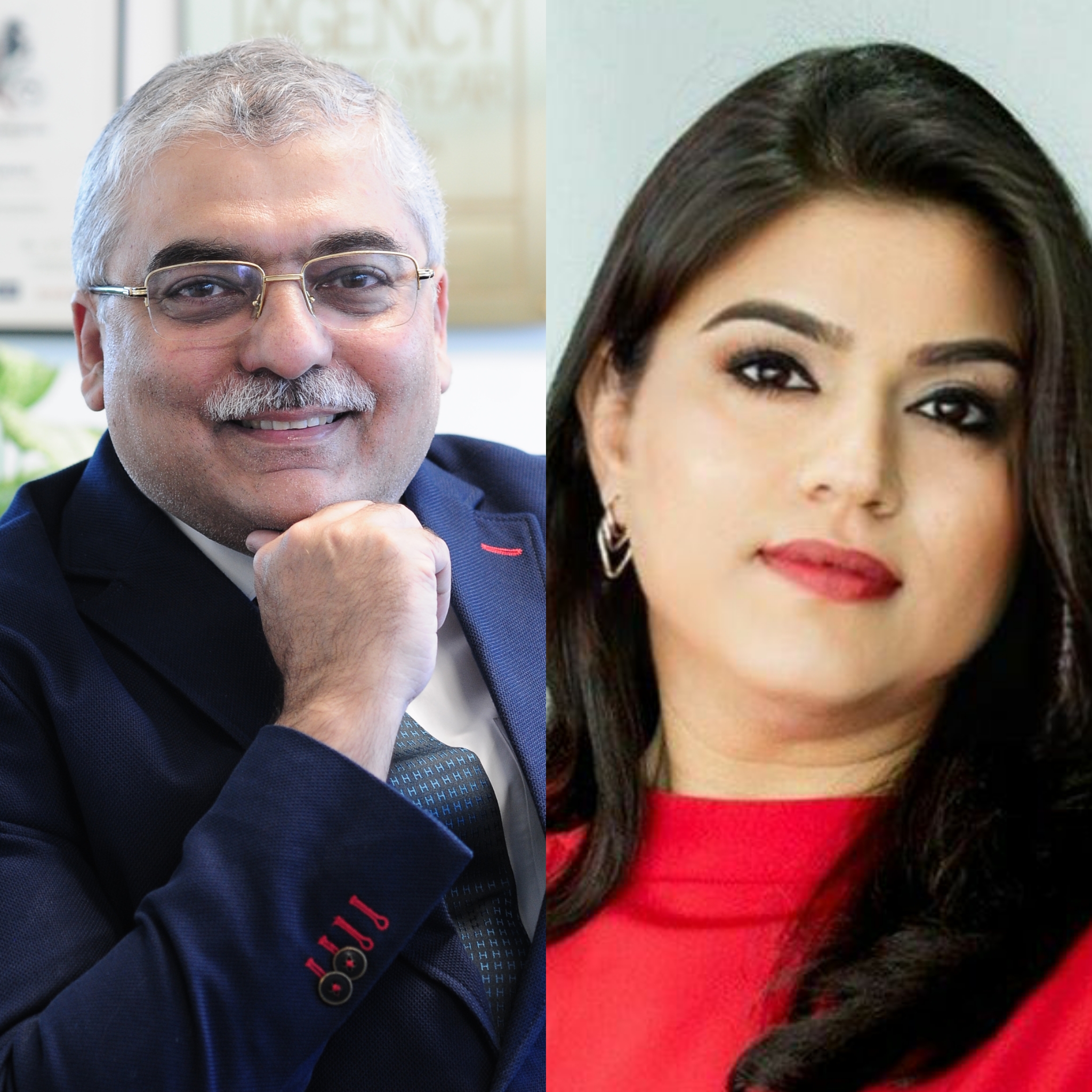
    However, this is not causing broadcast major Zee Entertainment Enterprises Ltd (Zeel) chief growth officer of ad sales Ashish Sehgal to have any sleepless nights. A sales veteran, he’s witnessed the ups and downs that the media industry goes through periodically – needless to say, he’s seen it all.

    Sehgal believes that the silver lining of the advertising drought is that the fast moving consumer goods (FMCG) category has to an extent, come to the rescue and is cushioning some of the blows. He estimates that TV ad spends during the festive season, which is on currently, will show a growth of seven to eight per cent.

    Those used to the heady growth figures of 10-20 per cent may consider this too low, but one has to remember that this growth is coming in at a time of economic upheaval, crashing of global currencies, high fuel costs and rising inflation.

    “The way things have been while it was good, the festive season could have been better. The absence of new clients has made a difference. E-commerce has also reduced spending a bit. While inventory has been going jam-packed, the premium money has not come in the festive season. This has been made up for by the FMCGs to an extent, and TV will see an ad revenue growth during the festive season. This is a good sign as this category will continue to spend even beyond the festive season.”

    He also notes that the TV industry has gone in for a rate hike across the board, which was long overdue. TV viewership was affected in June and August. But post August, the number of eyeballs glued to TV has grown, which is why the FMCG category is spending a lot more.

    Sehgal highlights that general entertainment channels (GECs) are starting to get the reach that they were delivering earlier. Categories like beauty will count on the festive season heavily with the top five advertisers on TV coming in from FMCGs. He feels that the latter’s contribution to overall TV adex could rise by five per cent this festive season compared to the previous year.

    The scenario for 2023

    Sehgal believes that the situation can only improve going forward in Q1 ’23 with spends going up for television advertising and overall ad expenditure. “Every category may come back,” he reiterates.

    He says there are enough signals emanating from the market. Amongst them, the expected spurt in marketing spends by the automobile sector will fire more in the coming months.  “Demand was high during the festive season but supply was low due to the earlier supply issues. So they did not advertise much,” he declares. “They will spend some money in November and December to sell the remaining inventory. That may be a small burst. But now that production capacity has gone up, they will have new launches in Q1’23. That is when they will spend it.”

    “Also, for some new age categories, D2C companies like ed-tech could have digested their heady growth by then. Of course, the banking, financial services and insurance (BFSI) category – say companies like Policybazaar – will be strong in Q1’23, so some of the premium money that was missing in the festive season could come in then,” Sehgal asserts.

    Then, the funding tap for startups could once again open and start flowing by January 2023.

    “This year they have been trying to balance out their bottom line. How long will they continue to do that? They will have to look at growth as well. Hopefully, they will start triggering spends in Q1 ’23,” he says.

    According to him, with FMCG input costs going down, companies will be forced to pass on the benefits to customers through price cuts and promotions. “So they will have to advertise more to promote that,” he says. “A lot will hinge on FMCGs implementing price cuts and promotions. Right now, that has not happened, maybe due to a fear of raw material inflation returning.”

    But he says the FMCG companies would benefit immensely if they slash prices. “Consumer sentiment will bounce back. More consumption will happen. Things look good for Q1’23 as long as no adverse issues come from Europe and America.”

    Sehgal discloses that while travel and tourism ad spends have risen now, most of those are going into print and social media. “TV, too, will get some state tourism ad spend money whether it is on news media, GECs or on regional channels,” he says.

    He feels that while ad spend on OTT platforms is growing, it is seen as an add-on to TV – especially in entertainment. “Whenever there is a TV campaign, the same person likes to also advertise on OTT. OTT helps them add on to their TV reach. It is not an either-or situation,” he explains.

    For the industry’s sake and his too, here’s hoping Sehgal’s forecast does come true!

  • Indian Performing Right Society targets Rs 60 crore revenue from public performance, says CEO Rakesh Nigam

    Indian Performing Right Society targets Rs 60 crore revenue from public performance, says CEO Rakesh Nigam

    Mumbai: During the past two Covid infected years on-ground events took a severe hit. This had an extremely negative impact on the revenues generated from live events and public performance of music. However, with normalcy returning The Indian Performing Right Society (IPRS) CEO Rakesh Nigam is optimistic about generating revenue of Rs 60 crore from public performance for the current fiscal. The revenue generated will increase from fiscal 2019-2020 (pre-covid), which was Rs 52 crore. The overall revenues generated at IPRS from across verticals for the fiscal are pegged to be above Rs 300 crore.  

    “IPRS has started engaging with a lot of people. We have taken a proactive stand with the users, who are also coming out of the pandemic. We will consider giving them discounts and ask them to pay for music.  People are now positive about taking licences. We have boosted our on-ground team to meet the growing requirement. We have adopted a 360-degree approach and are trying to motivate people to get licences to play music in public. We also try and give discounts to coerce them to take licences.”

    He adds that there is more advertising taking place on digital platforms like YouTube which will benefit the music industry. There is a revenue share and so there will be income growth. However for subscription-driven OTT platforms or music used for television, there won’t be an impact from ad revenue. The festive season has more of an impact on public performance and on anything that is driven by revenue share. “The festive season for us in public performance is a full six-month period. It starts in October and goes on till March. In the summer, things slow down and during the rainy season not much happens. Apart from this, in October corporate events, general events, parties, etc., all start taking place.

    The mood today is very positive. We expect a growth in consumption, which was on a standstill for the past two years.  As malls have opened, footfalls in theatres have increased. Things are looking bullish across the country. Recently, malls had stopped using music to cut down on costs and save every penny. Now they are willing to spend money and take licences. They use music in the background to create the right ambience.,” Nigam points out further.

    “The fervour is across the country. Everyone is waiting to go out and break the shackles, be free and enjoy. So, retail sales are going up. Malls are quite positive. The mood picked up in August. The festive season is Diwali through Christmas.” IPRS, he says, has started engaging with clients. They had asked for discounts in the previous two years which the IPRS had agreed to help during a very difficult period.

    In terms of the growth in the number of artists and music publishers, the growth has been over 50 per cent, he says. “During the lockdown, we made everything digital. We made the online application process as smooth as possible. Only the signature on the statutory documents has to be done offline. We have also held digital seminars and campaigns to reach out to music creators and publishers to tell them that IPRS is a society to extend support. We also reached out to music authors and composers who felt the brunt of Covid. We gave financial support. This sent out a positive message that we are an organisation that does not just collect royalties. We also help when it is required. As a society, we help the less privileged members. We gave financial relief to a lot of members during the pandemic. As a result of all our initiatives to help and support we have also grown in numbers. From 4,000+ we are now a community of over 9000 songwriters, composers and music publishers from across the country. We have seen this growth in the past three years. During seminars, we focused on the fact of learning and earning. We educated people on the new things that are shaping the music industry and careers of those associated with it. How can they be at par with things happening around beyond music creation? What is happening on platforms like Youtube? What is metadata? And all that is relevant for them to reap the best benefits as a creator and publisher.”

    IPRS also aims to educate music users through our campaign that speaks about fair pay and fair play of music. #LicenseLiyakya? is the message. “Why not pay fairly for the usage of music? This encourages creativity. 90 per cent of people online listen to music. We are bullish. Why not ensure that you subscribe and pay for music? That is how we have come up with the campaign. If there is no music at your event, how will it sound? Please help us serve you better by paying for the music. This will encourage authors and composers to create better music for them.” In terms of IPRS members, he said that they can play their role by letting copyright societies like IPRS know where their music is being played. “They also have to push to see that those places obtain a licence as that will only benefit the music creators and publishers.”

  • BCCI & MPL Sports launch new T20I jersey for team India

    BCCI & MPL Sports launch new T20I jersey for team India

    Mumbai: MPL Sports, the official kit sponsor of the Indian Cricket Team, and the Board of Control for Cricket in India (BCCI) today unveiled the official team India jersey for all T20 internationals. Called the One Blue Jersey, it celebrates the indomitable energy and enthusiasm that supporters bring to the game. Most importantly, it pays homage to the legions of fans that span different genders and age groups and transcend geographical borders.

    The jersey is styled with a pattern of equilateral triangles—a universal symbol of the blend of energy, spirit, and power—that celebrates the unswerving support of the fans who have stood behind the team through thick and thin. Combined with the petals found in the BCCI’s insignia, the jersey embodies the loyalty and merit that the game demands. The jersey comes in shades of royal blue for a look befitting the champions of the game.

    The One Blue Jersey will make its debut on the pitch during the upcoming T20 series against Australia on 20 September. It replaces the Billion Cheers Jersey at all T20 international competitions. Players will continue to sport the Billion Cheers jersey at One Day Internationals.

    For Rs 1,999, the jersey will be available for purchase at mplsports.in beginning today, as well as at all major e-commerce and retail outlets. Along with this, over 40 SKUs, including player edition jerseys, training gear, and athleisure wear, will be available.

  • Ficci Frames makes a comeback with Ficci Frames Fast Track

    Ficci Frames makes a comeback with Ficci Frames Fast Track

    Mumbai: Ficci Frames Fast Track 2022, a pre-cursor to the Ficci Frames which makes a comeback after the pandemic, is slated to be held on 27 & 28 September in Mumbai.

    Ficci Frames, organised by the Federation of Indian Chambers of Commerce & Industry (Ficci), is the country’s biggest international seminar for the media and entertainment industries, which spans across film, television, digital entertainment, animation, gaming and visual effects.

    The theme of Ficci Frames Fast Track is the comeback after the pandemic. The two-day long conference will commemorate the industry which underwent the heat of COVID and has only emerged stronger. It seeks to bring the industry back to its feet and is raring to go.

    Ficci assistant secretary general and head media & entertainment Leena Jaisani brought forth, “The idea is to bring together the industry under one roof and just celebrate the fact that we have not only survived the pandemic that affected people and industries world over, but also came together during that period to help and support people. Many studios and associations took the responsibility of vaccinating employees and their families.”

    As OTT emerged as a very robust player during the pandemic, the focus this year will also be on OTT. The convention would discuss top trends, policies and regulations in the industry with various stakeholders including filmmakers, technicians, actors, heads of the film studios and representatives from exhibition sectors.

    There will be dialogues and exchanges around what kind of a change has the pandemic triggered and what the future looks like for the media and entertainment sector. Conversations will also be around film tourism, IP rights and film incentives.

    Ficci Frames Fast Track will also organise masterclasses and workshops around various aspects of filmmaking. This year, students from various schools and colleges will also get an opportunity to hear and learn from the leaders in the sector.

    The celebrated and much loved actor, Ranveer Singh, would be inaugurating the event and shall be present for the opening session.

  • MM TV appoints Smitha Narayanan as new sales & marketing head

    MM TV appoints Smitha Narayanan as new sales & marketing head

    Mumbai: The largest media network in South India, MM TV has appointed Smitha Narayanan as the new sales & marketing head. She will be overseeing the operations of its three channels – Mazhavil Manorama, Manorama News and ManoramaMAX OTT.

    Having over 18 years of experience, Smitha was associated with several blue-chip companies like Colgate, Palmolive, Dell Computers, Britannia Industries and Wipro Enterprises. She has played a crucial role in strategising sales, branding and product functions at these companies in various capacities. Prior to her association with MM TV, Smitha was with Wipro Yardley, a Middle East business based out of Dubai.

    Speaking on the appointment, MM TV CEO Satheesh PR said, “Having worked with brands across various markets, Smitha brings in her rich diversity and insight. We are happy to welcome her into MM TV’s senior leadership team and look forward to her contribution to strengthening our vision and pursuing our goals”.

    She is a graduate of IIM Lucknow and has the experience that can take MM TV to great heights.

  • Indian Film & TV Producers Council re-elects Sajid Nadiadwala as its president

    Indian Film & TV Producers Council re-elects Sajid Nadiadwala as its president

    Mumbai: Indian Film & TV Producers Council (IFTPC) has once again re-elected Sajid Nadiadwala as president at the 31st annual general meeting (AGM). This is the 11th year in a row that Nadiadwala has been president. Jamnadas Majethia was also elected again as chairman of the TV and web wing of the IFTPC.

    The AGM saw the induction of two new directors and the new board composition as follows: Ratan Jain, NR Pachisia, Madhu Matena, Shyam Bajaj, Kumar Mangat Pathak, Rajat Rawail, Shyamashis Bhattacharya, Dinesh Vijan, Nitin Vaidya, Abhimanyu Singh, and Ramesh Taurani.

    Nadiadwala expressed satisfaction that the pandemic has ebbed and that box office business is once again flourishing. He added that he would soon lead a delegation to the Maharashtra chief minister Eknath Shinde to discuss concerns pertaining to the sector.

    Jamnadas agreed with Nadiadwala and stated that while the TV business is developing well, there are some difficulties related to the film city that need to be addressed. He expressed hope that the meeting with the CM will help to address these concerns.

    He lamented the need to lower the extremely high electricity prices. He added that the contractual agreement with art directors is cause for serious concern because some art directors fail to pay their employees’ salaries on time, which causes unease and tension among the employees.

    The meeting paid tribute to all the departed souls during the year including Lata Mangeshkar and IFTPC former director Vijay Galani.

  • Zee Zest has a 40% market share in the lifestyle category, says business head, Amit Nair

    Zee Zest has a 40% market share in the lifestyle category, says business head, Amit Nair

    Mumbai: Since its inception in 2020, Zee Entertainment Enterprises’ first lifestyle channel, Zee Zest, has established itself with a diverse and comprehensive lineup of shows.

    Zee Zest, which is known for its global content, hosts a great mix of Indian and international lifestyle and infotainment shows.

    The channel’s content includes food, travel, lifestyle, home improvement, wellness, culture, and do it yourself (DIY). Apart from producing travel category shows including Kahani Kashmir Ki, Shonar Bengal, Safari India, Mast Maharashtra, and Goan Gullies, the channel also has highly popular food shows like Patt-ay ki baat, Taste Ki Gully, Papad Pickles Aur Pyaala, Simple Korea, and The Baker’s Table.

    In an exclusive conversation with Indiantelevision.com, Zee Zest’s business head Amit Nair talked about the content & business strategy for Zee Zest shows. With a key focus on bringing original content to the platform, Nair added 100+ hours of original content every year across food & travel, in partnership with award-winning chefs, anchors, influencers, celebrities, and hosts. From documenting the evolving Indian culture and contextualizing it for modern sensibilities, he created a contemporary brand identity for both Living Foodz and Zee Zest, on-air, online, and on-ground.

    By delivering substantial revenue growth through a combination of advertisements, subscriptions, and syndication, Nair oversees all major functions of the brand, including business strategy, content, editorial, marketing, and product development.

    With over 10 years of experience at Zee Zest, he was instrumental in the acquisition of major international titles and the development of relationships with top international distributors such as BBC, Freemantle and Banijay. He also built mega tent poles, including “Ganga–The Soul of India” with Dia Mirza, “Station Master’s Tiffin” with Ranveer Brar, and “Fit, Fab and Feast” with Huma Qureshi.

    Edited Excerpts:

    On Zee zest’s viewership

    Amit: Zee Zest’s viewership is always in the top ranking. They have overshadowed their competitors every year. We have 40 per cent market share. There are five or six players in this market, and we always keep 40 to 42 per cent viewership as our benchmark to be there.

     On Indian content growth

    Amit: We are looking at a high-growth strategy right now. So we are investing significantly in content. Indian stories have more takers than international stories. When you create content for India or the Indian market, there are many more takers as compared to international stories. Our primary goal is to produce original content from India.

    On the importance of user-generated content

    Amit: Zee Zest is looking forward to collaborating with content creators to develop unique content, preferably recipe shows. Audiences watch user-generated content to be entertained as well as to learn something.

    User-generated content has its importance, and it’s something that we’ve also been keenly looking into because certain formats want to develop where a user is a central person where we can develop ideas and content around them.

    There are several formats currently. The easiest is the one where, if it’s a food show, you invite them to be part of the audience or share something that’s part of the entire theme of the particular show.

    Zee Zest will soon focus on user-generated content where users want to express themselves, their skills, and their talents. We are trying to balance this entire thing by keeping audiences engaged but at the same time engaging with our advertisers and with the users as well so that we bring them on a platform that gives them better reach.

    On Zee Zest’s online reach

    Amit: The channel has about three million users per month and is among the top 15 websites in the country. It’s a multi-platform brand. We don’t want Zee Zest to be just a television-centric brand. Since our users search for us or various media, they are different from TV. As a publishing platform, it makes perfect sense for us to not only provide a platform to watch a point of view, but also to serve as a handy guide for their lifestyle.

    The social media platform offers recipes and interactive content as a way to make it happen, while the channel offers interesting viewing content. Web platforms and events have become the two-way communication channels between the audience and the brand.

    Zee Zest is investing in the web platform as well. We’re also looking to buy a couple of untitled Intellectual Properties (IPs) this year, which will be mostly online. So several more ideas are being put into play. And all of this will be taking shape next year.

    On the competition in the OTT space

    Amit: Interest among the audience has remained unchanged. We always find our audiences when there is new content because that is when we create content that is entirely original, new, and innovative. It’s a mix of finding and wanting the content rather than the medium, which is particularly important.

    On regional collaborations

    Amit: Zee Zest, along with the network’s sub-channels (regional channels), is venturing into various regional collaborations. While Mast Maharashtra and Sonar Bengal are already on Zee Zest’s channel, the upcoming show Highway Dream will start in mid-September and will be on Zee’s south sub-channel. There are a lot of insights, knowledge, audience insights, and so on.

    On new content and ideas

    Amit: We have a great ideation cell internally, which manages to churn out some interesting formats and ideas. Now, these ideas are also taken to advertisers, where they find fitment. The newly launched eight-episode series Luxe Pins aims to let the audience experience exclusivity through the host’s eyes.

  • DNEG appoints Academy Award, Bafta winner Janek Sirrs as visual effects supervisor

    DNEG appoints Academy Award, Bafta winner Janek Sirrs as visual effects supervisor

    Sirrs’ list of production VFX supervisor credits to his name includes Marvel movies like “Doctor Strange in the Multiverse of Madness” (2022), “Spider-Man: Far from Home” (2019), “Spider-Man: Homecoming” (2017), “The Avengers” (2012), and “Iron Man 2” (2010). Other client-side VFX supervisor credits in his filmography include “Terminator Genisys” (2015), “The Hunger Games: Catching Fire” (2013), and “Batman Begins” (2005).

    In 2000, Sirrs received the Academy Award and the Bafta Award for Best Special Visual Effects for his work on “The Matrix” (1999). He has subsequently received two additional Academy Award nominations, for his work on “The Avengers” and “Iron Man 2,” and two additional Bafta nominations, for his work on “The Avengers” and “Batman Begins.”

    “I am proud to announce that Janek Sirrs is joining DNEG’s creative leadership team. I have admired Janek’s work for many years, and he is a truly outstanding creative leader who pushes the boundaries of what is possible on all of his projects. There are huge opportunities ahead for DNEG, as we drive our company forward in a world of technological advancement and new creative possibilities, and I am delighted that Janek is onboard as an important part of the DNEG creative team that is helping to lead that charge,” said DNEG chairman and CEO Namit Malhotra.

    Sirrs said, “As a client-side supervisor, I have worked with DNEG for more than twenty years, all the way back to Batman Begins and Mission: Impossible II. I am a big fan of the company’s work and its ethos. This new extension of my relationship with DNEG is incredibly exciting for me, as it allows even closer collaboration with DNEG’s talented teams, and the opportunity to develop groundbreaking and unconventional ideas, concepts, and approaches. One of my goals in designing and world-building for movies is to create something that has never been seen before, and I am looking forward to working with interesting and esoteric filmmakers to help bring a different take and a unique approach to the craft of storytelling.”

  • News Nation Network strengthens its sales team

    News Nation Network strengthens its sales team

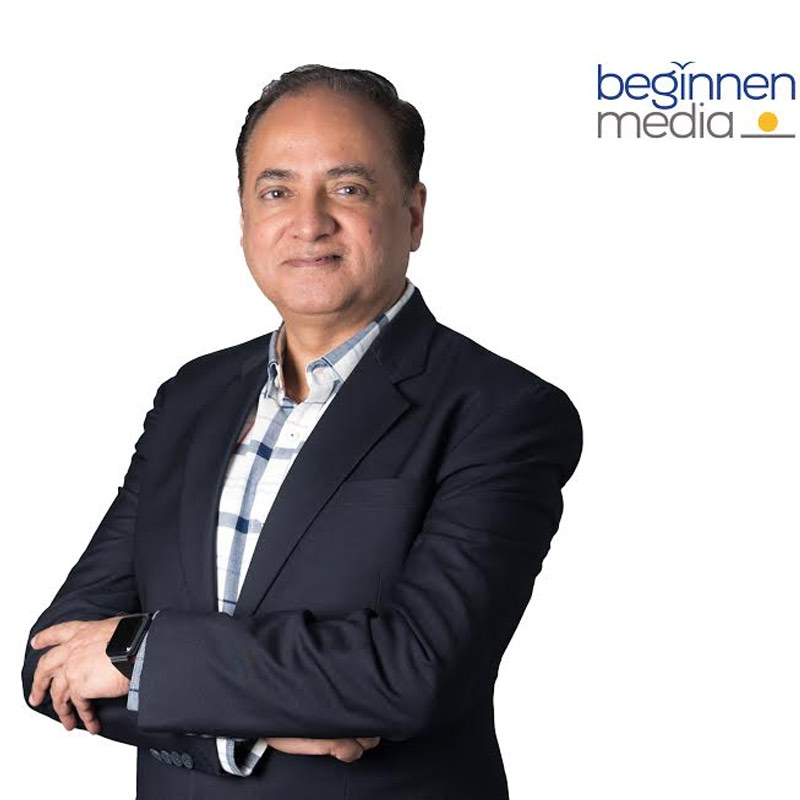
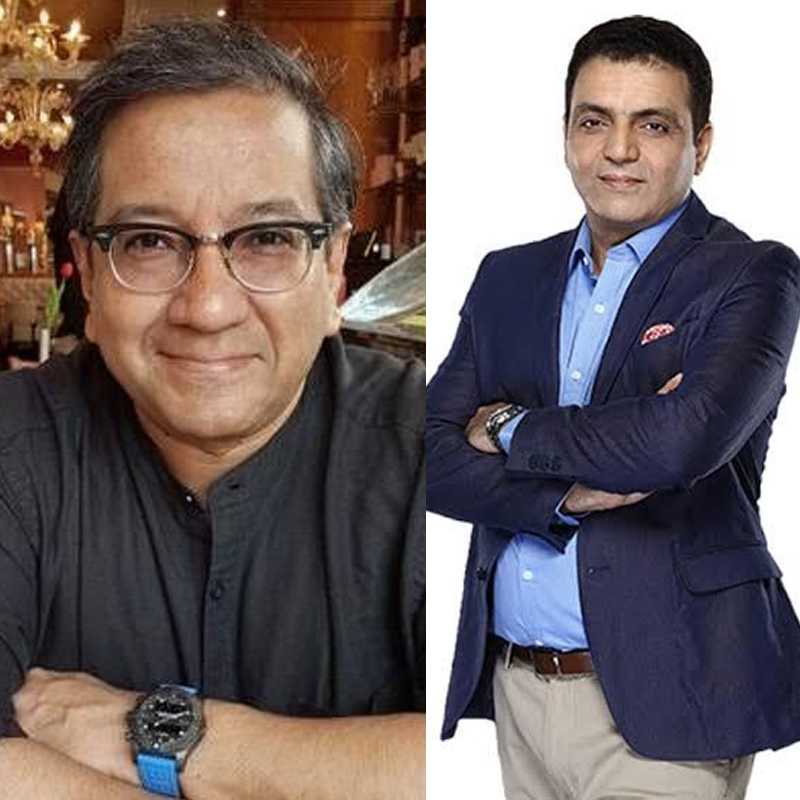
    Mumbai: News Nation Network ropes in Vivek Makker as executive vice president & national head of sales for the network. Harsha Vardhan Dwivedi as vice president of sales to take care of its regional business.

    In their capacity, they will be responsible for the performance of all revenue-generating avenues, drive growth through strategic decisions, partner with key stakeholders and steer revenue acceleration through their leadership.

    Prior to this, Vivek Makker was the National head for NDTV India. Vivek is a well-known media professional with over two decades of experience and a unique relationship-driven personal approach with Clients, Advertising agencies and his Teams. He has also worked with HT media, Star TV, and Times OOH.

    In his role, Vivek added “Feeling excited and happy to be part of News Nation, one of the fastest expanding Media groups that have futuristic approach and deep-rooted traditional values”

    Speaking of joining the team, Harsha said, “It gives me great pleasure to join the enthusiastic and aggressive team of News Nation Network. The brand is already well established, and I look forward to collaborating with all stakeholders to achieve long-term goals”.

    With over 20 years of work experience, Harsha in his previous roles has worked for various organisations like Sahara TV Network, Zee Entertainment Enterprises Ltd., Zee Media Corp Ltd., Mahuaa Media Network, ETV News Network & Network 18 before joining News Nation Network. He has been a part of launches like Zee Bihar Jharkhand and relaunches like Zee Sangam, India 24*7, etc.

    News Nation Network chief business officer Bhuwan Bhatt said “Inclusion of Vivek and Harsha, will further strengthen the team. We are immensely hopeful that Vivek & Harsha would bring huge value to the organization with their leadership and interpersonal skills. We look forward to driving growth of all the brands with each passing day in their respective roles.”

  • Prasar Bharati sets a higher reserve price for Hindi movies & devotional channels in its 61st e-auction

    Prasar Bharati sets a higher reserve price for Hindi movies & devotional channels in its 61st e-auction

    Mumbai: Public broadcaster Prasar Bharati has invited applications for allotment of vacant MPEG-2 slots of the DD Free Dish free direct-to-home (DTH) platform for the period 17 August 2022 to 31 March 2023. The 61st e-auction process will be tentatively held on 10 August.

    The public broadcaster has categorized the vacant MPEG-2 slots under six buckets including Bucket A for all Hindi movie channels, Bucket R1 for devotional channels, Bucket A+ for all Hindi general entertainment (GEC) channels, Bucket B for all Hindi music channels, Hindi sports channels, Bhojpuri GECs, Bhojpuri movies and Hindi teleshopping channels, Bucket C for Hindi, English and Punjabi news and current affairs channels and Bucket D for remaining genre language channels.

    The reserve price of the MPEG-2 slots is set as high as Rs 14.37 crore and as low as Rs 4.40 crore. Notably, the prices for Hindi movie channels and devotional channels are the highest while Hindi GECs and news and current affairs channels are low-priced in comparison.

    Prasar Bharati recently concluded its 60th e-auction where it allotted two MPEG-4 slots to the channels Swaraj Express SMBC and Sanskriti 24×7 for the period 5 July 2022 to 31 March 2023.

    In a recent interview, former Prasar Bharati CEO Shashi Shekhar Vempati revealed that the public broadcaster earned as much as ~Rs 750 crore from the sale of vacant DD Free Dish slots in 2021.

    With an estimated reach of 50 million viewers, DD Free Dish is the largest DTH platform in the country. The platform has 167 TV channels including 145 channels in standard definition (SD) MPEG-2, 21 channels in SD MPEG-4 and one channel in high-definition (HD) MPEG-4. The public broadcaster intends to expand its overall number of channels to 200.

    Also Read: Prasar Bharati has seen a big change in its revenue in the last five years, says former CEO Shashi Shekhar Vempati