Tag: Television

  • Sports sponsorship in 2017 up by 14%: SportzPower-GroupM report

    Sports sponsorship in 2017 up by 14%: SportzPower-GroupM report

    MUMBAI: SportzPower, in association with GroupM’s sports arm ESP Properties, has released its 2018 report on sports sponsorship in India.

    Ground advertising was up from Rs 6400 crore in 2016 to Rs 7300 crore in 2017. Another GroupM report said that Indian advertising expenditure in 2017 was Rs 61,263 crore out of which 12 per cent was contributed by sports. The year also saw sports other than cricket gain traction. India’s second biggest sport by participation and attendance, football, grew by a considerable 64 per cent. India hosted its first ever FIFA U-17 world cup that became the most attended in the history of the event. Attendance for this football world cup was a record 1,347,133, surpassing China’s 1985 audience of 1,230,976.

    ESP Properties business head Vinit Karnik said, “2017 was truly the ‘big’ year for the business of sports. With PKL emerging as the second-most popular league in India after the Indian Premier League (IPL), and the Indian edition of U-17 football world cup creating history in terms of audience attendance, has given sports sponsorship enjoyed a bull run. As popularity of sports grows in India, sports stars also expand their brand endorsement portfolios. Virat Kohli led brand endorsements with 19 brands and 150+ crore in value, while PV Sindhu leads the non-cricket endorsement space with 11 brands and 30+ crore in value.”

    Despite demonetisation and GST hiccoughs, the sports sector has been able to ride the storm with a steady and positive trajectory. All major sporting leagues managed to bring on board sponsors at a 100 per cent or more incremental value for the title sponsorship.  Specifically, the IPL has emerged as one of the top five most valuable global sports properties in the world.

    Since last year, Indian Super League (ISL) is a 10 team, 18+ week showcase, up from eight teams and 10 weeks in the last season. ISL sponsorship has grown by 22 per cent from the previous year. The report states that the gap between Pro Kabaddi League and IPL TV ratings is narrowing – PKL delivered 1.5 TVR with 312 million reach and IPL delivered 2.7 TVR with 411 million. 

    2017 also saw the birth of five new franchise based leagues – UTT, SBL, SFL, Cue Slam & P1 Power Boating. Brands are interested in emerging sports and 25 per cent increase in franchise fees came from them. Thirty-six new franchises were added across all new and existing leagues.

    SportzPower co-founder Thomas Abraham said, “With the 2017 momentum and the economy also looking up and set to grow at 7.3 per cent in 2018-19, sports is looking at an even bigger year. As the industry anticipates clarity on the structure of club football in India, among the new leagues on the horizon, volleyball seems the most promising. In the media firmament, while new revenue benchmarks are expected from television, it will be traction in the digital arena that provides real pointers to where the industry is going over the next few years.”

    Also Read:

    IPL 2018 gets a makeover with Star India

    Dsport not in the running for BCCI’s media rights

  • M&E to cross Rs 2 trillion by 2020: FICCI-EY report

    M&E to cross Rs 2 trillion by 2020: FICCI-EY report

    MUMBAI: FICCI Frames 2018 saw the launch of its annual media and entertainment (M&E) report, this year by Ernst & Young (E&Y) titled ‘Re-imagining India’s M&E sector’ which captures key insights from the exciting and fast growing Indian M&E sector.

    Launched on Sunday in the presence of the Information & Broadcasting minister Smriti Irani and other industry stalwarts like Star India MD Sanjay Gupta, Siddharth Roy Kapoor, filmmaker Karan Johar and others, the FICCI-EY report highlights that the M&E sector continues to grow at a rate faster than the GDP growth rate, reflecting the growing disposable income led by stable economic growth and changing demographics.

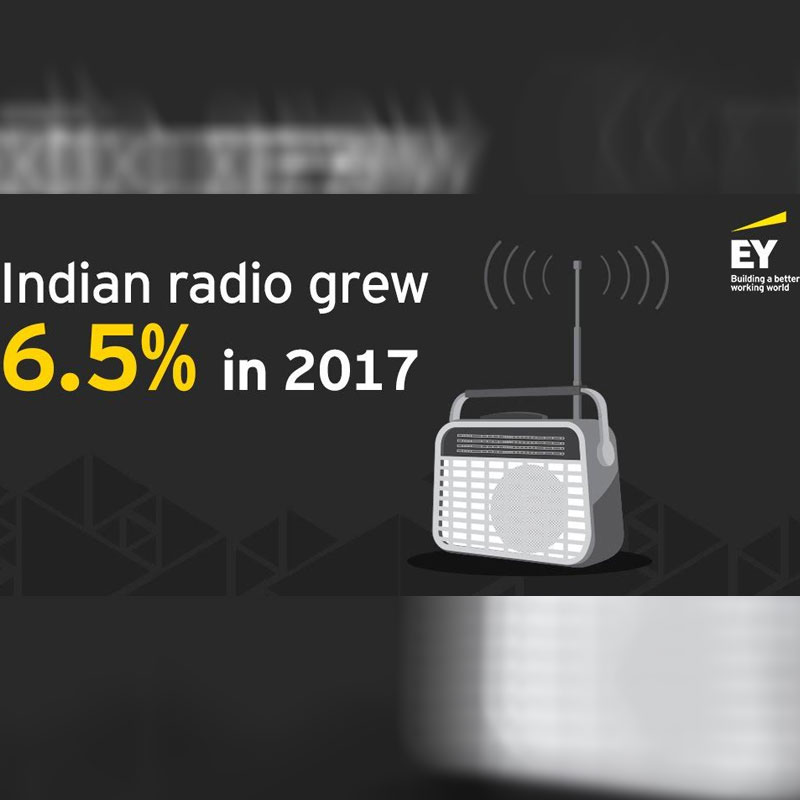
    The report suggests that the Indian M&E sector reached Rs 1.5 trillion in 2017, a growth of around 13 per cent over 2016 and is expected to cross Rs 2 trillion by 2020, growing at a compounded annual growth rate (CAGR) of 11.6 per cent. The digital segment led growth, demonstrating that advertising budgets are in line with the changing content consumption patterns.

    The report states that subscription growth outpaced advertising growth in 2017 but advertising will continue to grow till 2020 led by digital advertising. The report estimates that approximately 1.5 million consumers in India today are digital only and would not normally use traditional media. It is expected that this customer base will grow to 4 million by 2020 generating significant digital subscription revenues of approximately Rs 20 billion. Going forward, micropayment, enabled through the Unified Payment Interface (UPI) and Bharat Interface for Money (BHIM) platforms developed by the National Payments Corporation of India (NPCI) will further accelerate subscription revenues for entertainment content.

    EY India partner and M&E leader Ashish Pherwani expects digital and gaming sectors to grow between 2 to 3 times by 2020.

    Television
    While advertising is 41 per cent of the total revenues today, the report expects it to grow to 43 per cent by 2020. There are over 30 per cent households in India which are yet to get television screens, but being at the bottom of the pyramid, these households will tend to move first towards free and sachet products. 

    EY report states that the TV industry grew from Rs 594 billion to Rs 660 billion in 2017 and advertising grew to Rs 267 billion while distribution grew to Rs 393 billion. At a broadcaster level, however, subscription revenues including international subscription made up approximately 28 per cent of revenues. 

    Digital media

    250 million people viewed videos online in 2017 and the figure is expected to double to 500 million by 2020. 93 per cent of time spent on digital videos is in Hindi and other regional languages and OTT subscription in India is expected to touch Rs 20 billion by 2020.

    Digital media has grown significantly over the past few years and continues to lead the growth charts on advertising. Subscription revenues are emerging and are expected to make their presence felt by 2020. In 2017, digital media grew at 29.4 per cent on the back of a 28.8 per cent growth in advertising and a 50 per cent growth in subscription. Subscription, which was just 3.3 per cent of total digital revenues in 2016, is expected to grow to 9 per cent by 2020.

    Print

    Today, 98 per cent of readers read dailies and 20 per cent read magazines. Reader base is 395 million, or 38 per cent of the population. Readership has grown by 110 million over the last 3 years. Rural (52 per cent) reader base is larger than urban (48 per cent). 44 per cent of children aged between12-17 years read a newspaper or magazine. Magazines have a higher readership in urban area (57 per cent) as compared to rural areas (43 per cent).

    Print accounted for the second largest share of the Indian M&E sector, growing at 3 per cent to reach Rs 303 billion in 2017 and is estimated to grow at an overall CAGR of approximately 7 per cent till 2020. 

    This growth is expected despite the FDI limit remaining unchanged at 26 per cent and therefore, restricting access to foreign print players and the imposition of GST at 5 per cent on the advertising revenues of the print industry for the first time in history.

    Films

    Regional movies drove the growth in number of releases in 2017. Screen count increased from 9481 in 2016 to 9530 in 2017. Number of Hindi movies crossing the Rs 1 billion mark was highest in 2017 in the past five years. From 31 movies in 2016, Hindi dubbed movies increased more than three times to 96 in 2017.

    The Indian film segment grew 27 per cent in 2017 on the back of box office growth – both domestic and international, coupled with increased revenues from sale of satellite and digital rights. All sub-segments, with the exception of home video grew and the film segment reached Rs 156 billion in 2017. 

    The Hindi films comprise the majority component of the Indian film segment. They contribute almost 40 per cent of the net domestic box office collections annually, despite comprising only 17 per cent of the films made. Films in 29 other Indian languages account for approximately 75 per cent of the films released but they contribute approximately 50 per cent to the annual domestic box office collections. Hollywood and international films comprise the balance.


    M&A in M&E

    The Indian M&E sector witnessed a relatively new trend in deal activity with emerging segments such as gaming and digital gaining momentum, while the deal activity in the traditional media segments was slower. The slowdown can be partially attributed to challenges faced by the advertising segments of the industry due to demonetisation and GST. Overall, the number of transactions in the M&E sector decreased from 56 deals in 2016 to 40 deals in 2017.

  • Urban areas dominate DD viewership: Zapr

    Urban areas dominate DD viewership: Zapr

    MUMBAI: Once the sole television provider in India, Doordarshan (DD) has survived the onslaught of television privatisation over decades. TV analytics conducted on DD channels provide insights into its diverse content across sports, Hindi entertainment and news and how the broadcaster is still relevant for India’s TV population. In 2003, DD radically changed its monetisation plan by paying private producers for prime-time shows to promote new content and open advertising avenues on its channels. With data-driven audience segmentation being an important prerequisite for media planners to set priority markets for their branded content, Zapr Media Labs (Zapr) has mapped out viewership trends of DD channels at the individual user level. From channel level analysis to geographic positioning of viewers, the study even traces migration patterns to see how DD viewers are switching channels across the Indian Television landscape. The company has analysed DD channels over three months—September, October and November 2017—and mapped out current trends in reach, viewership and audience migration. Over the considered period, there was a gradual rise (165.7 million)​ and fall (92.4 million)​ in audience reach and 4 per cent non-DD viewers ​(August) started watching DD in September. Deep-diving into DD’s viewership trends, the study found 59.20 per cent of urban viewership share​ for the pubcaster’s channels. These insights were derived from Zapr’s active user-base comprising over 40 million smartphones.

    DD’s viewership over September, October and November

    DD channels’ viewership ranged from 165.7 million​ to 117.1 million​ during week 36 and week 37. This viewership spike is before and during the India-Australia ODI series. The chart below shows the viewership of the broadcaster across weeks:

    public://DD-Channels1_2.jpg

    DD’s top-ten channels

    DD channels are home to various genres, languages and television programmes. The top-ten list comprised channels from across DD’s categories. Irrespective of the fact that the channel caters only to Hindi audiences, DD National (previously DD1) topped the list ​with an audience share of 23.90 per cent. ​This high viewership could pertain to the varied shows—serials, bhajans, news, cookery shows and even news for the hearing impaired (15 minutes daily) that ensures DD National has something for everyone.

    public://DD-Channels1_3.jpg

    DD National is followed by DD News (15 per cent)​ and DD Bharati (13.20 per cent) ​in terms of viewership. Interestingly, the sole international DD channel, DD India did not make it into top three and was followed by six regional channels​—DD Madhya Pradesh (13.10 per cent), DD Yadagiri (12.80 per cent), DD Oriya (12.5 per cent), DD Kashir (12 per cent), DD Sahyadri (11.90 per cent) and DD Podhigai (11.59 per cent). DD prevails in metros and cities with million plus population. The report also identified geographical locations that claimed a major share in DD channels viewership. Delhi (30 per cent)​ claimed the top position in the metro cities list, followed by Mumbai (25 per cent), Chennai (16 per cent), Bengaluru (11 per cent) and Kolkata (11 per cent). For brands and media planners, these insights reveal deterministic geo-segmentation by actual content consumption, something which large sample TV data cannot provide. The chart below also indicates viewership share across top five cities distributed across tier-2 populations. These stats show Pune with the highest viewership share (17.30 per cent). ​The top city is followed by Ahmedabad (9.40 per cent), Bhopal (6.20 per cent), Jaipur (6 per cent) and Lucknow (5 per cent) based on actual actual audience share for DD channels.

    public://DD-Channels-1_4.jpg

    Urban folks flock towards DD

    The urban segment claimed a substantial viewership share of 59.20 per cent​ over rural regions (40.70 per cent)​. With studies reporting higher socio-economic position among urban audiences, this urban skew among DD viewer suggests that their buying power is not lagging behind other TV segments across paid channels. For media planners, DD channels and their upward-mobile audiences constitute a trough of unexplored opportunities compared to largely cluttered spots on more commercialised channels.

    public://DD-Channels1_5.jpg

    DD caters to viewers across the TV spectrum

    Cricket broadcasts such as ​Sri Lanka vs India T20I ​and Micromax Cup Sri Lanka vs India 2017 ODI Series and news ​telecasts such as News Night, Batmya and Samachar ​occupy top positions in the list of most-watched prime-time shows on DD channels. With significant overlaps between the viewers of cricket tours and sport leagues such as the IPL. Marketers can tap into high-value TV segments and reach them on cost-effective spots using surrogate targeting offerings, DD’s top five primetime shows based on viewership have been listed below.

    public://DD-Channels-1_6.jpg

    DD National penetrates Urban India with purely Hindi content

    To understand how language influences viewership at a national level, Zapr looked at DD’s popular all-India channels—DD National and DD Sports. Interestingly, DD National with its single-language content in Hindi had higher viewership skew towards urban audiences (63 per cent) compared to its rural counterpart (37 per cent). DD Sports with its bilingual telecasts in Hindi and English witnessed smaller difference between its urban (55 per cent)​ and rural (45 per cent) markets. Our analysis indicates that DD’s all-india content in Hindi which began as instructive and informative content for India’s largely rural masses has now majorly penetrated much of urban India. Are marketers keeping up with DD’s evolution from Bharat to India?

    public://DD-Channels1_7.jpg

    Non-FTA to FTA

    To further understand purchase power of DD viewers, Zapr mapped out DD audience overlaps with free-to-air (FTA) channels exclusive of DD content and non-FTA channels. As the name suggests, FTA channels are accessible without subscription charges and according to Zapr data, 55.6 per cent of​ DD viewers tune into these channels regularly. Interestingly, the data reveals larger skew towards with non-FTAs or pay channels with an overlap of 58.4 per cent​, suggesting that DD audiences have high propensity to spend on premium content.

    public://DD-Channels-1_8.jpg

    Migration to DD channels post agency accreditation

    The growing commercialisation of television indicates more focused marketing efforts across TV segments. Zapr wanted to understand the impact of DD’s agency accreditation in September 2017 when the network opened commercial ad-spots and a round of new TV content on 30+ DD channels. “TV analytics at Zapr reveal that there has been a 4 per cent rise in DD viewership from August to September suggesting a shift towards DD channels which could be an early positive result of the broadcaster’s agency accreditation plan. The 58.4 per cent overlap of DD viewers with Non-FTA channel viewers is also an incredible result,” Zapr VP (data insights) Aditya Kulkarni said.

    public://DD-Channels-1_9.jpg

    DD has revamped its content and advertising avenues, and clearly succeeded in staying relevant to India’s dynamic media landscape. Armed with data-backed insights, broadcasters can optimise their content inventories and expand their TV audiences. Marketers can avoid clutter by targeting these growing segments, and ultimately stand strong in the minds of their priority markets.

    Also read:

    Doordarshan’s R-Day broadcast notches up record TV viewership

    DTH’s year of consolidation

    BARC ratings: DD Sports in top 5 after 37 weeks

  • Pitch Madison report forecasts 2018 digital adex growth at 25%

    Pitch Madison report forecasts 2018 digital adex growth at 25%

    MUMBAI: According to the findings of the 16th Pitch Madison Advertising Report (PMAR) 2018, the advertising market slowed down to 7.4 per cent (Rs 53,138 crore) in 2017. The report also predicts the advertising growth in 2018 to be around 12.03 per cent thereby adding Rs 6,392 crore to adex to reach a total size of Rs 59,530 crore.

    “We are optimistic about 2018 because you can’t keep the Indian economy down for too long,” said Sam Balsara as he presented the report. He added that the forecast is tempered by the possibility of the government’s reforms that may destabilise the economy in the short term.

    In 2017, the report had predicted growth for 2017 to be around 13.5 per cent; however, the industry could not keep up its pace because of the government’s structural reforms.

    Following the repercussions of demonetisation, 2017 had a bad start. “Adex was slow to recover from the impact of demonetisation and the first quarter of 2017 saw de-growth of 2 per cent and growth of a mere 2 per cent in the second quarter on the back of the IPL. Just when we expected adex to gather steam, the Goods and Services Tax (GST) Bill came into effect in July and the market saw a drop of close to 20 per cent in traditional media over June 2017, and a drop of 5 per cent as compared to July 2016,” the report notes. “Mercifully, the festive period brought cheer to adex, and it grew from August 2017 to December 2017 by 13 per cent.”

    Hindustan Unilever Ltd, Amazon Online India, Procter & Gamble, and Reckitt Benckiser topped the list once again. The newest entrant in the top five for 2017 was Patanjali Ayurved Ltd, which climbed from No 15 to No 5 on the list. Patanjali Ayurved is predicted to have nearly doubled its ad spend from Rs 300-400 crore to Rs 500-600 crore per annum.

    According to the report, in 2017, traditional media grew by only 4 per cent, the slowest in half a decade. Television, which continues to be the largest contributor to adex with 37 per cent share, grew by just 4.3 per cent and reached Rs 19,650 crore; this is the lowest growth television has witnessed in the last five years. TV that is closely followed by print at 35 per cent share had even lower growth of 2.7 per cent to reach Rs 18,640 crore.

    In 2018, television adex is expected to grow 13 per cent to reach Rs 22,205 crore while print adex is expected to grow by 5 per cent in 2018, taking the print market close to Rs 20,000 crore.

    “It is thanks to digital media, which continued its onward march and grew by 27.2 per cent in 2017, that we are able to report an overall adex growth of 7.4 per cent,” the report observed. Digital added nearly Rs 2,000 crore to adex, to reach a size of Rs 9,303 crore in 2017. It now contributes a whopping 17.5 per cent to Indian adex, with video gaining huge ground, along with search, display, native and programmatic advertising.

    Digital advertising is projected to grow by about 25 per cent to cross the Rs 10,000 crore mark and grow to Rs 11,629 crore in 2018. Digital is expected to continue its growth trajectory and growth at a rate of 25 per cent, taking the digital adex up to Rs 11,629 crore in 2018. FMCG, telecom, BFSI and real estate will continue to be growth drivers for digital while e-commerce will remain the backbone of digital adex.

    Emerging from one of the darkest years for advertising so far, the industry is keeping its fingers crossed for 2018. There are some key factors that will drive growth in 2018, the report observes. There are signs of return of consumer spending and benefits of GST will start accruing this year boosting growth. Media, in particular print, will also get a fillip from the eight State Assembly elections scheduled during the year.

    Also read:

    Digital takes centre stage on tepid Valentine’s Day for brands

    Industry applauds Sam Balsara as he turns 67

    Pro Wrestling League rallies on North India viewership


  • Guest Column: The scope for home-grown IPs for kids’ broadcasters

    Guest Column: The scope for home-grown IPs for kids’ broadcasters

    In the Indian television space, the specialised genre on kids emerged in 1995 and has only been growing ever since. The kids’ genre is the third largest, nationally, after Hindi GECs and Hindi movies. The category has seen a gradual shift with 4-14 audiences, with the genre being in single digits in 2005-2006, to now. There has been an exponential growth since then, with the age group increasing to 2-14 as well.

    The components of a child’s behaviour are summarised with two very simple attributes – imagination and spontaneity. But the kids’ genre now is a mature genre and more developed than ever before. Over 168 million kids under the age of 14-years are dedicated viewers. They demand variety, new concepts and most importantly connect with endearing characters.  Be it rural or urban, there is curiosity amongst kids to know more. Therefore, we respond to this need with exciting and engaging content in a language they can effortlessly comprehend.

    With kids relating to an immensely appreciating home-grown content, the scope for original content is unbeatable. Today, at least three out of the top five are Indian characters, reflecting the changing viewer preferences. Movie screenings on Indian cartoon characters rank high as well. Even if we bring foreign content to television screens, there always is a necessity to dub and bring in Indian flavours to be able to connect with the audience. Indian characters always get more traction, as they can be given physicality, context and mannerisms that are Indian and hence are more relatable. This is because kids are inclined towards situations and values they are familiar and comfortable with. 

    Other forms of engaging content created from these characters is where the true scope of growth lies – the ability to create a completely different ecosystem out of television, an edge that acquired content cannot offer.

    Broadcasters and producers have the edge as well since it gives them complete creative freedom – to design the content as well as decide the life of the content. And because they own the IP, the numbers of offerings are boundless. They can range from on-ground activations, merchandising, and brand extensions to other marketing activities.

    The scope for reducing the dependence on acquired content is immense and this is what will continue to boost localised, original content, thus fueling the expansion of the creative talent pool. Moreover, the localised content also attracts the right kind of sponsors to look at opportunities to weave in their brand story.

    It’s been two decades since we have realised the true potential of this genre. While we have come a long way, there is still a long way to go. And, launching with four home-grown shows, we at Sony Yay are just delighted to be a part of the growth journey of the category in the country.

    public://leena.jpgThe author is the business head of Sony Yay. The views expressed are personal and Indiantelevision.com may not subscribe to them.
  • Laban launches first TVC in India

    Laban launches first TVC in India

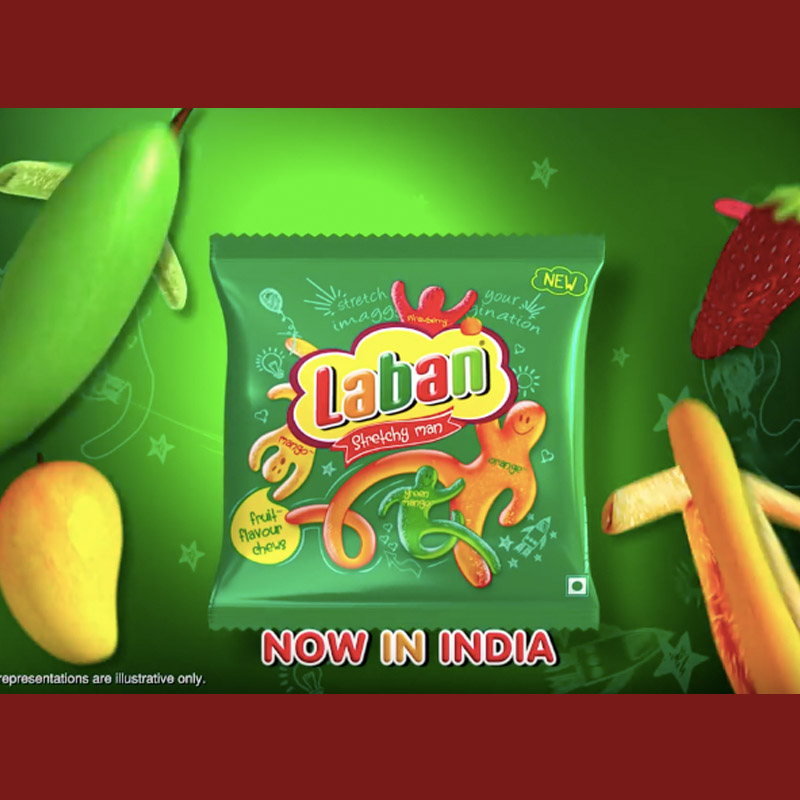
    MUMBAI: Laban, the confectionary brand from Norway that came to India early this year has released its first TVC, bringing alive its key properties. The TVC focuses on the mischievously funny Laban-fueled exploits of two kids based purely on their imagination.

    The TVC plays out an encounter between two school-going brothers and a taxi driver. When a taxi driver rudely shouts at the children who are trying to cross a busy traffic signal, the kids bring out their Laban Stretchy Men and catapult them across the street. The imaginary Stretchy Men stretch, jump and fly across the crossing and finally land on the traffic signal itself. They then proceed to dance on the lights, changing its colours in the process. This confuses the taxi driver who thinks the signal is green. When he tries to cross the signal he gets caught by a traffic policeman who points out that the signal is actually red and that he broke a traffic rule by jumping a red light. This leaves the kids laughing and feeling satisfied that they have taken their revenge on the rude taxi driver with the help of Laban Stretchy Man!

    The concept of the TVC was based on the insight that kids see themselves as small but they wish they could have the last laugh. The personality of Laban, which is uniquely differentiated from other confectionery in the market, provides a moment of escape for kids from their fixed routines. Laban is an idea engine that pushes their imagination and empowers them with creative ideas to help overcome everyday challenges. The communication and the new TVC has emphasised on this concept.

    MTR Foods CMO Sunay Bhasin says, “Laban is a powerful product that is capable of sparking imagination and encouraging creativity in the consumer’s minds. For its first TVC campaign, we wanted to focus on what makes Laban so unique by showcasing its differentiated properties and at the same time emphasise on the true spirit of joy and playfulness that the confectionary personifies. The new TVC is fun, engaging and relatable for our consumers with a memorable jingle “Laban ki Pahunch Lambi Hai” that has added to its fun aspect. We know that this TVC will be well-received and loved by our consumers.”

    Dentsu India senior vice president Samrat Chengapa adds, “Laban is an exciting new product that is unlike any other in the market. The Laban’s Stretchy Man is a very interesting and lively character. It was a fun challenge to conceptualise the Stretchy Man and create Laban’s first TVC in India. We are confident that the ad will catch the attention of our audience and are delighted to have worked on it.”

  • Viacom18 celebrations: Mukesh Ambani sets the roadmap for next 10 years

    Viacom18 celebrations: Mukesh Ambani sets the roadmap for next 10 years

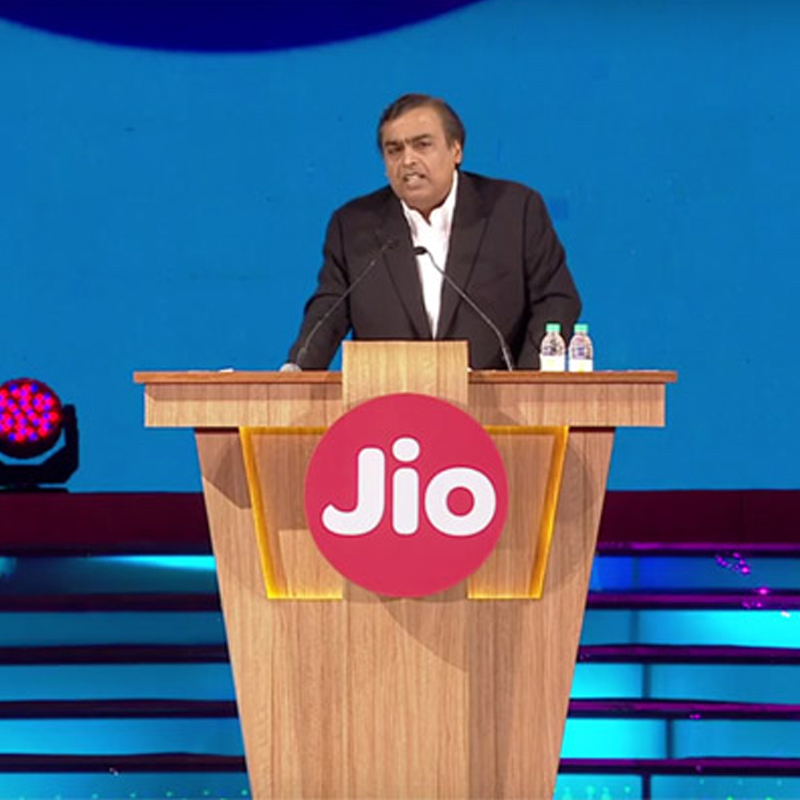
    MUMBAI: Indian television channel owners better watch out. Mukesh Ambani is riding into town and he means business. He sounded his intent at Viacom18’s tenth anniversary celebrations which, were held over the weekend in Mumbai’s NSCI Dome. He came in for a bit post 9 pm. And he was there for a few minutes on the massive stage that was flanked by large LED panels all around the dome. However, what he said, as a joint venture partner of US network Viacom, is what should make other TV industry entrepreneurs sit up and take note.

    Clearly laying out the roadmap for the group for the next 10 years, Ambani, India’s richest man, said: “The digital industry in India and the entertainment industry is going to grow manifold. The next decade is going to be the golden period of the entertainment industry and all of you should contribute and learn from this opportunity. This is a once-in-a-lifetime opportunity. And for all of us–Sudhanshu (Vats, the group CEO of Viacom18) told us we are in the storytelling mode–I think collectively for all of us, the entire Viacom18 team, has the responsibility to win the hearts of 1.3 billion people. (With) the synergies that can come from the talent in the Viacom18 family and digital distribution, there is no limit to growth. It’s been over three years since Viacom18 is part of the Reliance group along with Viacom. But I have to tell you. I was, too, obsessed with Jio and I had told Sudhanshu that once I am done with it I’ll be there. The birthday gift I am giving you is I will give you some of my time and support.”

    Obviously, Ambani is looking at replicating the aggressive growth that he has got from his 4G enterprise Reliance Jio. “I think that what we have achieved in Jio in the last two years is take India from 154th in the world to number one in the world in mobile data consumption. Last month on Jio alone, the video viewing was 200 crore hours. And this is just the beginning,” he said.

    Ambani also extolled the young leaders – the average age at Viacom18 is 32 and he urged Sudhanshu to keep at it that over the next decade – “to have courage to dream big, the determination to realise their vision, to have curiosity and the ability to learn.You have to learn something new everyday. And I believe that empathy is required of everyone–to see and understand what the other feels. It is not about yourself, it is about everybody else. These are three principles, which have helped me. I believe for leaders and the team at the top, the job is to win the hearts of our people.”

    Ambani erred when he said that he remembered in 1997 when Colors was launched (he obviously meant 2008), there was skepticism if a third entertainment channel could succeed. “Today as you stand here, the success is all yours – the entire ViacomTV18 team,” he said. “Today is the day to remember the founders and founding team of Viacom18, which includes Raghav Bahl and others.”

    The tenth anniversary celebrations had performances from many artists associated with Colors’ entertainment shows right from Manish Paul to Malaika Arora Khan to Parthiv Gohil to Mouni Roy to Bharti Singh to Raghu Dixit to Kailash Kher, among many others. The party was attended by the crème de la crème of the industry, including Sony Pictures Networks India CEO NP Singh, Star India MD Sanjay Gupta, Dentsu Aegis CEO Ashish Bhasin, Madison World chairman Sam Balsara as well as actors, producers and directors.

    For many, it was an evening to remember.

  • Seamus O’Brien to join MP & Silva as CEO in the new year

    MUMBAI: Indian sports television executives are pretty familiar with this international sports rights veteran. Seamus O’Brien – who was promoter of the World Spots Group when the IPL telecast rights deal with Multiscreen Media (now Sony Pictures Networks India) blew up in the previous decade – has been appointed by leading sports rights firm MP & Silva as CEO effective 1 January 2018. Former CEO Jochen Lösch will transition to the role of a senior consultant at the company.

    O’Brien has more than three decades of experience in the international sports industry around the globe. He started his career at CSI before setting up World Sport Group, of which he sold his majority stake to Lagardère Group in 2008. He continued to lead World Sport Group as executive chairman until 2015. He also served as deputy chairman of the executive committee of Lagardère’s sports and entertainment division.

    Lösch noted: “I am very grateful to the shareholders that they gave me the opportunity to lead such a great company. My special thanks go to Riccardo Silva and the MP & Silva staff, which always supported me 100 percent. I am glad that I can continue working with MP & Silva as a consultant focusing mainly on ventures in Latin America. There are plenty of opportunities coming up, and MP & Silva is very well-positioned to grab them.”

    Larry Feng, chairman of MP & Silva, stated: “First of all, I would like to thank Jochen Lösch for the contribution he made to MP & Silva as CEO. He led the business at a time of profound change and is to be thanked for his professionalism and dedication throughout his tenure as CEO. The appointment of Seamus O’Brien is a tremendous step for MP & Silva. Seamus is a pioneer with a fantastic reputation and is a man who instinctively understands the market we are in and the growth territories of the future. His experience of building strong international profiles for sports properties will be a huge asset to the company, our partners and our customers. This appointment is a fantastic reflection of the ambition we have to ensure MP & Silva remains as one of the world’s leading media rights companies.”

    O’Brien added: “I am delighted to join MP & Silva as president and group CEO. This is a business which, through its staff, founders and owners, has established a reputation for its entrepreneurial spirit and dynamism, and it’s those qualities which I hope I can also bring to the role of president and group CEO. The shareholders and members of the board, including people I have known and respected for many years, are incredibly ambitious with a great vision for the company. By working with the talented team they have built and utilising the extensive global network at our disposal, I am very confident that exciting times are ahead for MP & Silva.”

  • Netflix plans to become leading producer & distributor of high-quality Indian content

    Netflix plans to become leading producer & distributor of high-quality Indian content

    MUMBAI: Online properties are gradually overtaking television in the race to become video content leaders. From mass programming, entertainment now is moving towards personalised experience curated for each individual. Netflix plans  to become a leading producer and distributor of high-quality Indian content. In 2017, it has been doubling down on Indian investment and looking to put together a good content library.

    This year, it announced partnerships with Videocon, Airtel and Vodafone — which would help Netflix go deep into the diverse Indian market, taking in up millions of users to watch Netflix on a mobile phone, TV or through a set-top box.

    Netflix, although, very expensive as compared to the monthly subscription of other OTT / VoD players in India came to the rescue of content lovers, Netflix Asia vice president of communications Jessica Lee tells Verve.

    Be it TV shows or movies, Netflix, which closed Q2 2017 with 104 million members globally, has revolutionised video watching. It offers movies such as Okja and War Machine (both 2017) to a battery of shows such as House of Cards, Narcos and The Crown. Even though Netflix India charges the steepest subscription, it remains popular owing to its content.

    A viewer earlier spent months following a TV series to conclusion, but now, Indians are finishing a series in three days (although, the global average is four days) such as Unbreakable Kimmy Schmidt, Narcos, Bloodline Jessica Jones. The most-loved genre in India is sci-fi, Netflix believes.

    Netflix believes it is touching a pool of consumers in India with a great passion for diverse entertainment.  The VoD service offers global original shows from The Crown and Stranger Things to mainstream, star-driven Indian films such as Shah Rukh Khan movies, Baahubali and Dangal.

    It is also working on independent films with film-makers in India. Comedy is another popular genre in India which Netflix is thriving on with original specials from Aziz Ansari, Russell Peters, Ali Wong, Chris Tucker, Hasan Minhaj and Dave Chappelle.

    Some of the popular Netflix originals in India, one of its heaviest users of the ‘download’ feature, are Daredevil, Luke Cage, Narcos, House of Cards, The Crown, Stranger Things and Master of None. As a global platform, Netflix sees great stories travelling across regions which is a huge opportunity for Indian content creators.

    Indian content is a part of Netflix’s global plan. For 2017, its content budget is USD 6 billion for both, licensed and original content. It plans to reach over 1,000 hours of original content this year — about 400 original TV series and films including ones from India.

    On the originals front, Netflix is focused on finding great Indian stories – for the world to see, ‘Sacred Games’ being the first. It recently announced two other originals, Selection Day and Again. Another area for Netflix is top-quality local stand-up originals with, for example — Aditi Mittal and Vir Das.

    Netflix believes watching together is becoming a trend in India, with 79 per cent of couples surveyed saying that streaming is a way to spend time together. It has gathered that India is a nation of commute streamers. Indians, it says, are 82 per cent more likely to stream at 9 am, and the peak streaming time in India is 5 pm.

    An interesting habit Netflix has observed in India is that while 31 per cent of its subscribers sign up on mobiles, they move to TV around six months later. While sign-ups on television are lower (at 12 per cent), within six months that behaviour grows to about 32 per cent. Netflix concludes that consumers are taking advantage of the flexibility it allows — to watch on multiple devices.

    ALSO READ :

    Netflix to premiere multilingual original The Eddy by Academy award-winner Chazelle

    Indian content at Netflix to be creatively lead by Disney’s Simran Sethi

    Disney parts ways with Netflix, plans sports & TV shows VoDs, buys BAMTech majority


  • Television reigns in rural India despite 79 pc OTT scope

    Television reigns in rural India despite 79 pc OTT scope

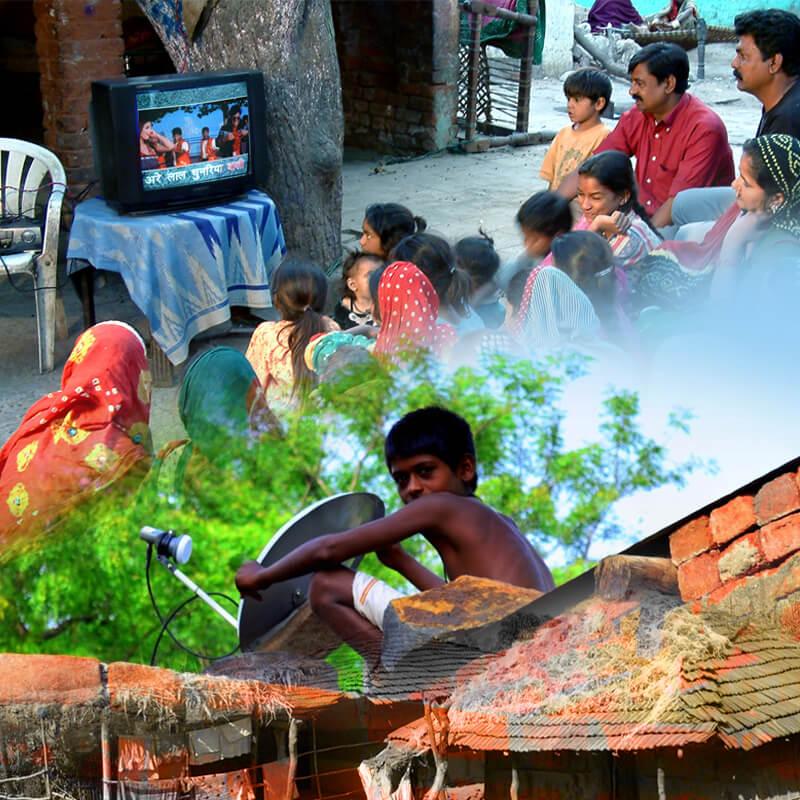
    MUMBAI: Television remains the dominant medium as far as the news, entertainment and advertising need in rural India is concerned although 79 per cent consumers (signifying crucial scope for OTT platforms) own a mobile, including those living in towns/villages inhabited by as low as 2,000-3000.

    Market research firm Kantar IMRB has found that only 22 per cent of rural consumers who were surveyed read a magazine or a newspaper in the four weeks preceding the survey. And, only four per cent surveyed said they listened to the radio, Mint reported.

    The penetration of mobile phones is the highest in southern and northern India at 80 per cent while it was 75 per cent in the west and  78 per cent in the east.

    In its report ‘Star 2017,’ the firm said that it found that 59 per cent of all rural consumers polled watched television in the previous week before they were queried for the survey. The report showed scant use of personal computer or laptop in rural India.

    These conclusions are in sync with BARC India data. As reported by Indiantelevision.com, according to BARC figures released in February 2017, the all-India TV universe has increased to 183 million from the earlier collated figure of 154 million with the growth in rural audience showing a quantum jump signifying that upswing is coming from non-urban areas.

    The data highlights that while the total urban TV universe stood at 84,414 (in ‘000) in 2017, the comparative rural figure is 98,639 (in ‘000), signifying that the rural segment has grown at a faster rate, which opens up whole new marketing options for broadcasters and advertisers. The comparative old figures as per BARC estimates in 2015 were 77544,000 (urban) vs. 75967,000 (rural).

    This data showed that, while the urban-rural audience mix was almost equal earlier, the rural segment has outpaced the urban as per latest figures in rate of growth. The data reiterates that since it started surveying the rural audience, a whole new world has opened up for subscribers of the data, which, incidentally, also include government organisations apart from the traditional TV channels and advertising agencies.

    ALSO READ :

    PKL rural telecast exceptionally propels Star Sports First to top

    IPL net realisation up, digital ad revenue grew astronomically as compared to TV

    Total TV universe up to 183 mn, rate of rural growth higher than urban: BARC survey