Tag: Television

  • Disney-Fox merger sees more layoffs: Report

    Disney-Fox merger sees more layoffs: Report

    MUMBAI: The Walt Disney Studios (Disney) 21st Century Fox (Fox) merger continues to cost jobs with another round of layoffs this week. A large number of employees have been laid off from both sides. Since Disney completed its $71.3 billion acquisition of much of Fox, nearly 250 people have exited so far.

    A report from Variety revealed that the latest round of layoff comes in the backdrop of analysts’ prediction of more than 1000 jobs being eliminated due to the merger. According to the report, the latest episode has mainly impacted the production and visual effects departments.

    Visual effects head  John Kilkenny, feature production executive VP Fred Baron, physical production executive VP Dana Belcastro and post-production executive VP Fred Chandler are among the executives who have received pink slips on the Fox side. Those roles reported to Fox film production vice chairman and president Emma Watts prior to the acquisition. Although Disney has enacted three previous rounds of layoffs mostly impacting Fox staffers, severance packages have been generous.

    Disney also informed its staffs that it would shut Fox Research Library on or before 6 January 2020. Fox Library’s content would be integrated into Disney’s own archives. While the teams at the Walt Disney Archives (founded 1970) and the Imagineering Research Library will be evaluating and handling the collection, it is not clear yet if the library’s archivists will also be laid off.

  • ITV Studios acquires Israeli formats specialist Armoza Formats

    ITV Studios acquires Israeli formats specialist Armoza Formats

    MUMBAI: Television production company ITV Studios has acquired Israeli formats specialist Armoza Formats. Under the acquisition deal, ITV Studios has taken full ownership of Armoza.

    Armoza will become part of ITV Studios’ global creative network, headed by Mike Beale. However, financial details of the transaction have not been disclosed.

    The television developers and distributor Armoza’s catalogue contains more than 100 formats  including primetime singing show The Four and gameshow Still Standing, as well as primetime studio entertainment format I Can Do That!.

    “Armoza Formats has rapidly grown to be one of the top independent creators and distributors of global entertainment hits. This is a unique opportunity to work with Avi and his team and combine his expertise with ITV’s presence and reach to undoubtedly create many more hits of the future,” ITV Studios International president Maria Kyriacou said.

    “Armoza always strives to be at the forefront of creativity and stay ahead of the challenges in our industry, and we are therefore thrilled to be joining ITV Studios. We both share the same values and passion for success through creativity and strongly believe that ITV Studios are the perfect partner for the next stage of the company’s evolution,” said Amoza founder Avi Armoza.

  • Ten events that shook television in 2018

    Ten events that shook television in 2018

    TV18 seized operational control of Viacom18

    India’s richest man Mukesh Ambani’s RIL rode the telecom, media and technology convergence wave better than most. The billionaire kick-started the year with a bang as he intensified TV18’s stake to 51 per cent by acquiring 1 per cent of Viacom18’s equity from Viacom Inc. for a cash consideration of $20 million. Viacom and Viacom18 also extended their brand and content license agreement by 10 years. That’s not all, RIL also pocketed a small but significant five per cent stake in content powerhouse Eros International.

    Consolidation in TV distribution

    The Indian market wasn’t exempted from the global merger frenzy. The coming together of two large DTH operators – Dish TV India and Videocon d2h – was finally concluded in 2018, creating the largest DTH service provider in the country with a subscriber base of about 29 million. One of the biggest attractions for Dish TV as the acquirer was Videocon’s significantly higher average revenue per user (ARPU). Significantly, the combined entity’s ARPU was Rs 207 in the second quarter as opposed to Dish TV’s standalone ARPU of Rs 144 pre-merger. The deal also helped Dish TV position itself better when it came to negotiating with broadcasters.

    Uday Shankar named Disney APAC boss

    A blockbuster deal that came through this year was the $71 billion acquisition of 21st Century Fox assets, including Star India, by Disney. After a long and sustained bidding war with Comcast, the Mouse House got its hands on much of the Murdoch empire. Late in the evening of 13 December came the announcement that Uday Shankar would be taking over as chairman of Star and Disney India and president of the Walt Disney Company Asia Pacific. Under the new structure, has multiple Disney executives reporting into him. Having run circles around Disney in India, Uday now shoulders the responsibility of entertaining more than half the world’s population. More TV disruption guaranteed.

    Jio unveiled ominous FTTH plans

    From formally launching FTTH service Jio GigaFiber to acquiring majority stakes in two large MSOs to speed up the rollout, the Mukesh Ambani-led Reliance Jio was definitely the centre of attention in 2018. Reliance Industries Ltd (RIL) made an investment of Rs 2,290 crore for 66 per cent stake in Den and Rs 2,940 crore for 51.3 per cent stake in Hathway. It will save RIL the cost of reaching out to customers as well as making the last mile connectivity easier in its ambitious bid of seizing control over India’s wired broadband business. As the Jio juggernaut marked its entry into India’s multi-billion-dollar cable TV and DTH businesses, traditional players eyed the development with a healthy mix of skepticism and optimism.

    OTT streaming gathered momentum

    When it came to content, OTT platforms captured the zeitgeist of 2018. Premium digital video content was relentlessly rolled out by the likes of Amazon Prime, Netflix, ALT Balaji, Hotstar, Voot and Zee5, keeping the audiences hooked at all times. Naturally, the band of programmers at some of India’s biggest broadcast networks felt the heat as a new wave of content competition hit India. Heads of Hindi GECs pulled out all stops in order to stay ahead of the game and keep their viewers happy. Thankfully for them, the cord-cutting trend, prevalent in several countries, didn’t grab India’s undivided attention. However, the sheer scale and quality of OTT content audiences were exposed to this year should be a cause for worry entertainment channels.

    Stalwarts made intriguing moves

    It was also a year of full surprises for the Hindi GECs, especially on the leadership front. Top-notch industry executives decided to call it quits including veteran Colors CEO Raj Nayak who dropped the bombshell of his Viacom18 exit after a distinguished seven-year stint with the media and entertainment conglomerate. Another prominent personality Discovery India and South Asia head Karan Bajaj also called it a day. Industry insiders believe the bespectacled Bajaj timed his exit to perfection, stepping aside when it mattered most. Both of them haven’t hinted at what gigs they are likely to take up next. Another heavyweight – Deepak Rajadhyaksha – who was heading Zee TV, turned to Viacom18 with his mantle being handed over to the broadcaster’s English cluster head Aparna Bhosle.

    Regional forces staged forward

    As far as content consumption was concerned, regional content too made its mark this year. While Hindi language consumption remains the country’s preferred choice, growth was fastidiously led by regional content. Backing this up with some facts, it was reported that the daily tune-ins on TV by the HSM led to 68.4 per cent, whereas in the South market it led to 78.3 per cent. Simultaneously, the advertisement expenditure in FY18, Hindi GECs declined by nine per cent as compared to an increase of 5.4 per cent in on regional channels. This was in line with growing investments made by broadcasting majors in the expansion of their regional offerings.

    Television business retained rhythm

    Channels continued to be launched in 2018 with almost all networks rolling out new offerings in regional languages – a trend which began over 2016 and 2017. Colors Tamil, Sony Marathi, Star Sports 3, Zee Keralam among others were unfurled for viewers by the major players. What's keeping broadcasters buoyant is the annual expansion in advertising continues unabated at about nine to 10 per cent annually. So, though traditional pay TV is not dead yet and will continue to grow in India as the saturation point is still far from over (BARC India estimates there are about 197 million TV homes in India over 100 million still to be covered), traditional media players have realised OTT and other forms of digital delivery of video — professional or user-generated — will continue to grow and put pressures on ARPUs and other numbers as more Indians take to smartphones and devises with broadband infrastructure slowly improving and cost of data plummeting in the short term.

    Tariff order turbulence

    TRAI’s new tariff regime, proposed first quarter 2017, continued to cast a shadow in 2018 with confusion relating to some aspects (like a 15 per cent cap on discounts to consumers for TV channels) lingering on like an unfinished record playing out discordant notes. While TRAI has sought clarification from the Supreme Court on the discount issue (the next hearing is sometime in January 2019), it has simultaneously cracked the whip on broadcasters and distribution platforms to fall in line with its new tariff regime by end of the present year.

    Major overhaul in the offing at ZEEL

    Subhash Chandra and family along with its advisors met in Mumbai over the Diwali weekend to undertake a strategic review of its businesses in view of the changing global media landscape. It was decided to undertake a strategic review of Essel's shareholding in ZEEL with a view to maximize value for the business. The proposed transaction to divest up to 50% of Essel's holding to such a strategic partner. Essel appointed Goldman Sachs Securities (India) Ltd. as their investment banker and US and European based LionTree as an international strategic advisor for this exercise. Essel expects the outcome of the strategic review to be concluded by March/April 2019.

  • TV tops news consumption in the UK

    TV tops news consumption in the UK

    MUMBAI: In the UK, TV is the most used platform for news (79 per cent) according to the 2018 News Consumption in the UK research report published by communications regulator Ofcom.

    TV is followed by internet (64 per cent), radio (44 per cent) and newspapers (40 per cent) among adults. However, internet is the most popular platform among 16-24s (82 per cent) and ethnic minority groups (EMGs) (73 per cent).

    Television being the most-used platform, BBC One is the most important news source and is used by 62 per cent adults in UK followed by ITV (41 per cent) and Facebook (33 per cent). When it comes to online news, social media is used by 44 per cent adults.

    BBC One is the most used source for news in Wales, Scotland and England, while UTV is most popular in Northern Ireland (NI). Facebook is the third most popular source across all nations. Welsh respondents are most likely to say they’re interested in news about their nation (55 per cent vs 49 per cent in Scotland, 37 per cent in NI and 32 per cent in England).

    One in seven adults (14 per cent) use all four main platforms for news (i.e. TV, radio, newspapers and the internet).

    Eighty two per cent of 12-15 year olds said that the news they heard from family was either ‘always’ or ‘mostly’ true, compared to 77 per cent for radio and 73 per cent for TV. Only one in three (34 per cent) think news stories on social media are reported truthfully.

  • India’s leading New Age News Brand TheLallantop.com set to take Television by storm

    India’s leading New Age News Brand TheLallantop.com set to take Television by storm

    New-age digital brand TheLallantop.com is about to take the television screens by storm! The digital brand, famous for its distinct news reporting style, storytelling and liberal use of colloquial words, is all set to debut as ‘The Lallantop Show’. Hosted on one of the stickiest Hindi news channels- Tez, the show is set to engage news audiences, starting from today. The show will run on weekdays, Monday to Friday at 9pm.

    The LallanTop Show will be a ‘breath of fresh air’ presenting the news in a witty, straightforward manner. The choice of words in digitally inspired storytelling format is sure to engage the viewers. The LallanTop Show aims to bring to the medium of television, the highly popular content seen on TheLallantop.com- a site that has enjoyed stupendous success in the digital space averaging more than 150000 and 200000 views per video on YouTube and Facebook respectively, the highest in the news category.

    The LallanTop Show, just like its digital footprint, will try to cater to the masses and connect with the audiences with the help of an unconventional style of news reporting and by highlighting so-called taboo topics of the society. The show also aims to bust myths and fake news circulating on social media.

    TheLallantop.com is among the top new-age digital news brands of the country. 

    Some of the milestones TheLallantop.com has achieved include becoming:

    India’s No.1 New Age News Brand with 2.4 million+ subscribers on YouTube
    India’s Most Watched New Age News Video Publisher on Facebook

    Given the brand’s past record, this latest endeavour by the TheLallantop.com is all set to become a trendsetter on television.

  • Broadcasters aiming at quality content on both TV, digital

    Broadcasters aiming at quality content on both TV, digital

    MUMBAI: The impending death of the television is something people have been talking about but that future is yet to arrive. However, one can’t ignore the fact that today’s audiences do consume content anywhere and from any platform.

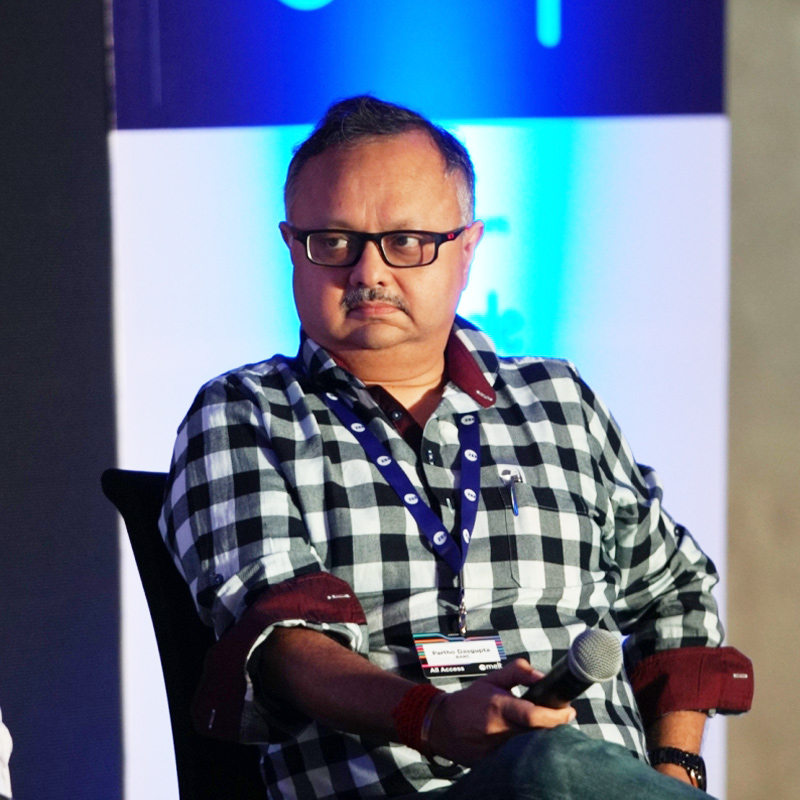
    Zee Melt 2018 saw a session on ‘The Next Seismic Shifts in Television’ with panellists Zeel domestic broadcast business CEO Punit Misra, Mediabrands IPG CEO Shashi Sinha and BARC CEO Partho Dasgupta. Provocateur Advisory principal Paritosh Joshi moderated the panel.

    When asked about the move to launch Zee5 as being a defensive strategy or a move to be at the front foot in the industry, Misra said, “Advertisers look for ROI. ROI on TV is significantly higher than any other. But it is a business of content and there is huge consumption happening on digital. However, if you do just digital, ROI can go horribly wrong.”

    He added that consumers would find ways and means to consume content as long as it is great content. “I see the synergistic benefits of having an OTT platform which will benefit from the content that is being made for the consumers as they want and equally we will create content which is tailor made for the audiences. In fact, I am thinking of how to bring digital to television again,” he said.

    Sharing his views on the path proposed by BARC to tackle non-TV screens, Dasgupta said, “It is all about how you measure content. Unfortunately, it needs to be discreet in this digital space. Although there is a convergence at every level, which makes it important to measure what India watches today now more than ever.”

    Dasgupta further explained that TV ratings body BARC is moving towards convergence, where telecom operators are moving towards distributions and distributions are moving towards telecoms. “You’ll see convergence at every turn,” he said.

    Sinha said that cost per thousand (CPT) as a currency for buying commercial time on TV has its own advantages. “I believe for a variety of reasons that CPT is a way of life. A lot of advertisers in the country use CPT and so too do agencies. CPT has multiple advantages. I presented a tool to a client that makes cross-media comparison much easier. For planning, CPT is there. But don’t mistake that for negotiations that happen. By and large, as markets evolve and as digital gets more share it is a matter of time where the agency and clients move towards gross impressions. It is happening.,” he said.

    The panellists agreed to one point that it is too soon to say whose future is brighter –TV or digital. But content will be the winner as people will consume content by any means and ways.

    Also Read :


  • HC orders stay on MIB’s licence cancellation directive to Alliance Broadcasting

    HC orders stay on MIB’s licence cancellation directive to Alliance Broadcasting

    MUMBAI: The Delhi High Court has ordered a stay on a Ministry of Information and Broadcasting (MIB) directive to a channel where it had withdrawn the channel’s licence stating that it lacked security clearance.

    Alliance Broadcasting had taken MIB to court for the issue since stating that since its security clearance had been withdrawn by the Ministry of Home Affairs (MHA), it was liable to have its licence taken away. It even rejected its application to extend the renewal for 10 years. Further responses on this case have been sought from the MHA and MIB.

    The channel got its licence in 2007 when it was known as Real Estate and in 2014 it rebranded to News7 Tamil. Since then, the channel has maintained its reputation and had even given the required annual licence fee. In November 2017, MIB issued a show cause notice to it. After a joint hearing, the MIB ordered cancellation of its licence due to lack of security clearance certificate.

    While approaching the court, it not only wanted to overturn this but also get its extension of 10 years. It even wants the MHA to disclose the reasons for which its security clearance was rejected.

  • Jio partners Screenz for interactive TV solution

    Jio partners Screenz for interactive TV solution

    MUMBAI: Mukesh Ambani’s Reliance Jio is wanting to capture every pie of the media and entertainment business. Even as it charters new growth avenues in digital, Jio has announced a partnership with Screenz to launch Jio Screenz.

    It will be a solution for broadcasters to get digital interactivity and will convert passive TV viewing and advertising into an interactive and participative one. Screenz is used globally by broadcasters and format owners for entertainment-based interactivity.

    For starters, there will be two-way communication between broadcasters and viewers through quizzes, polls and votes during the show. There will be an easy content management system (CMS) for broadcasters to design, create and launch interactive engagements. It can be enabled on any digital app using SDK with support on Android, iOS and Jio Kai-OS. Jio Screenz supports various social networks namely Google, Facebook, Twitter etc.

    It also has a drooling proposition to advertisers – better customer profile. Jio Screenz will support a rich data reporting and create unique profiles for each user, hence enabling targeted advertisement.

    This partnership will be an add on to Jio’s existing platform for gamification. Jio Screenz claims to be the largest and probably the only platform to provide entertainment-based gamification. Some of its features are to allow live, real-time interaction between broadcasters and viewers for intense engagement and viewership.

    In a press release, Jio calls itself a ‘customer obsessed organisation and will continue to bring disproportionate value, innovative features and best-in-class services to its customers, always’.

    A few days ago Jio launched JioInteract, an AI-based brand engagement platform.

  • Netflix CCO Ted Sarandos says India is ‘TV starved’

    Netflix CCO Ted Sarandos says India is ‘TV starved’

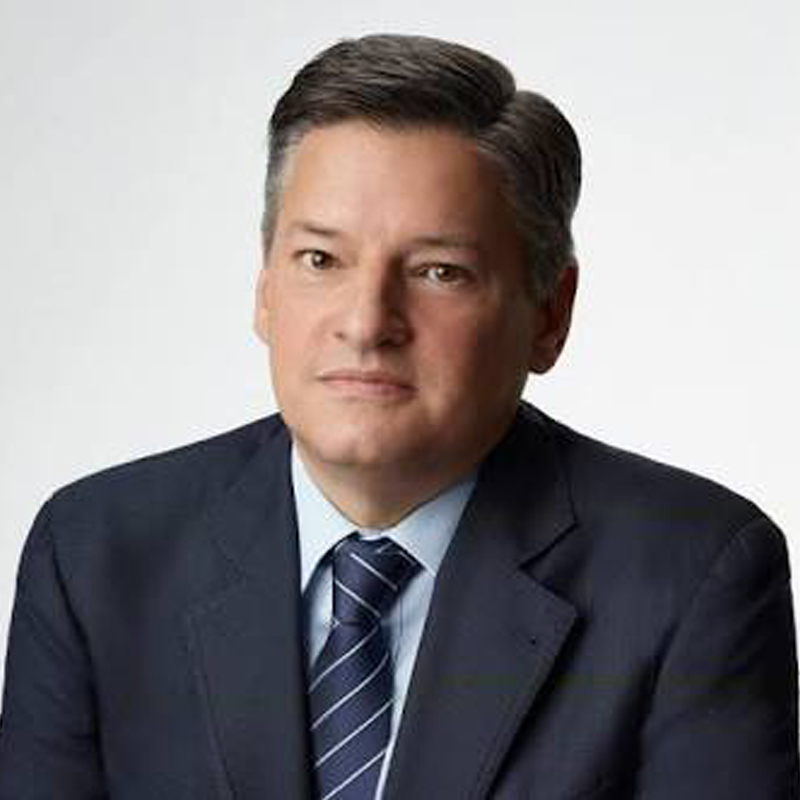
    MUMBAI: This could really make television executives in India, who have built a multi-billion dollar business, gnash their teeth. We are referring to Netflix chief content officer Ted Sarandos’ comment at the fifth MoffettNathanson Annual Media & Communications Summit, which is on in New York between 14 and 15 May.

    “There is no real great local television in India,” he said. “It is a television starved market.”

    He went to add that the interesting thing about the Indian market is that it is a culture that loves cinema. “What we are trying to do is bring something new to the country with cinema-infused television. Bit budget big scale productions in long form storytelling. We think this is going to differentiate us from the market,” he explained. “We believe that it is the big budget production with scale and local stars  which I think people like as much as the movies.”

    Sarandos went to explain that the streaming app has six tent pole shows under various stages of production in India and the first one to see the light of day will be Sacred Games.

    The streaming service obviously has got big plans under its sleeves for India. Amongst the senior professionals that it has hired for India  and is currently training in its US HQ figure Shrishti Behl, the Netflix director for originals, and former Fox senior executive Swati Mohan, who will be looking after marketing for Netflix as a brand in India.

    Sarandos added that productions are underway in 17 countries. And the reason that the streaming app is getting into originals is that clearing rights from existing content owners and studios was getting tooi expensive compared to the value they offered. Netflix has no control over the quality of the shows or the structure, hence that was a chellenge, he explained. Also  being able to get early windows was challenging. Additionally, Netflix users were increasingly watching original programming, hence the drive will be more towards creating new shows.

    He pointed out that the French press  read  Netflix’s  withdrawal from the Cannes Film competition wrongly. “We are totally interested in complying with the law that says that films need to be released in theatres and cannot be streamed online on a subscription model until three years between theatrical release is complete,” he said. “That law means we do not release our films in France in theatres. The past year the Cannes Film Festival applied this rule that we have to introduce our films in theatres in France to be eligible for the competition. We decided to pass because we would rather release our movies for millions oif viewers online in France than a limited number involved with the Cannes Film Festival.”

    Also Read :

    Netflix announces unscripted series on Mumbai Indians

    Localised content the way forward for Netflix in India

    Indian content at Netflix to be creatively lead by Disney’s Simran Sethi


  • We are becoming more platform and screen agnostic: Sudhanshu Vats

    We are becoming more platform and screen agnostic: Sudhanshu Vats

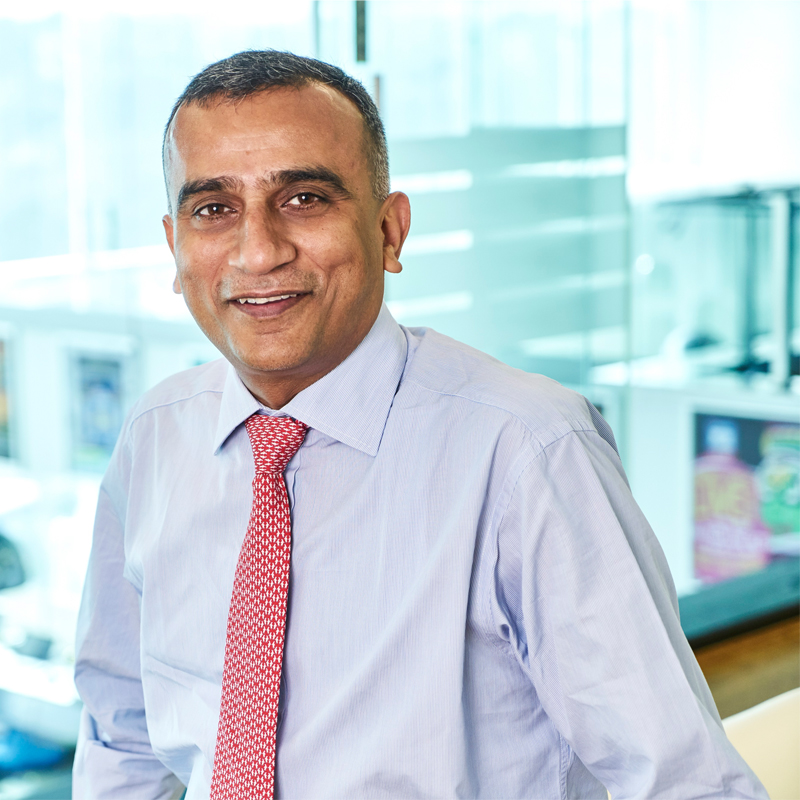
    He heads the youngest Indian network engaged in general entertainment television. Sudhanshu Vats, group CEO, has, over the past six years, steered Viacom18 India into launching a clutch of new channels catering to the different regions of India as well as niche segments. He has built a rock-solid leadership team to run the services, which have been growing at a rapid clip.

    Vats, a former long-serving Hindustan Lever (Unilever India) executive, has also seen the company transition from being a joint venture with global media major Viacom to one which is now majority owned by Mukesh Ambani’s Reliance Industries.

    A thought leader in the industry, he is constantly propagating the message that India is rich with media and entertainment potential at both domestic and international confabs. Vats was at the Media Partners Asia-run APOS in Bali late last month. On stage having a conversation with Vivek Couto, Vats spoke freely on a range of topics right from Viacom18, the Reliance ownership, Voot and the pay TV ecosystem in India. Excerpts from the interview.

    Your views on the pay TV ecosystem in India?

    At one level, the pay TV ecosystem is not developing as well as it should. Partly, all of us, as part of the ecosystem, are to blame. There is lack of addressability. There is lack of customer centricity and customer service attitude with the distribution partners. India being a poor country there will also be a pressure on free to air up to a particular stage.

    My view of the country is that it will be a hybrid ecosystem of both pay and free to air. And, in my opinion, both can exist. But for pay to exist, pay will have to earn its right. And as content players, we are concerned because it’s not going the way we would like it to.

    Free to air is growing and will grow and we need to find models, largely advertising-led models, to make that happen–that piece is okay. But the pay subscription growths are not commensurate–the addressability is not there. Recognition of change of viewership; change of pattern is not there today.

    And I think no better than us, we have leading channels in almost all genres; but our ability to get subscription income is very little. Because it is all dependent on this. Pick up a genre and we have a leading channel. We are not recognising the changes; we are not addressing the customer and not being customer specific.

    How is the Indian television ecosystem faring overall?

    There were two events in India in the last couple of years—GST and demonetisation. They affected ad sales in my opinion. But the good news is that in the last two or three months, it is coming back. We are clearly seeing certain sectors performing very well—FMCG is back and very strongly. Automobile is back in a reasonably big way. Consolidation in telecom will lead to more telecom spends. Handsets are there, they have always been there. Rural economy is also doing quite well. We are seeing a surge in the regional rural pieces quite a lot within our portfolio.

    If you look at Viacom18 per se – I think we have had a pretty good year in FY18, which we closed. We delivered 20 per cent top line growth led by our performance in films as well with Toilet ek Prem Katha. But even in ad sales, we have delivered a mid-teen growth for the year.

    And interestingly this has come at a time when our leading channel Colors was slightly muted because of the impact properties on Colors that came in. It’s the portfolio, which we built that has helped us—its regional, it’s FTA, it’s niche. I personally feel, moving forward, the ad sales will rebound to the levels that India has been used to seeing.

    The ad market will go to mid-teens and some of the better companies may look at doing even high teens.

    How has the change of majority ownership impacted the organisation you head?

    The advantage for us with the consolidation with Reliance is two-fold. Ambition and the things we can do is one big thing today. The second big thing is the resources that can come in which could be of a different level. Because, as a joint venture, we were balancing some of those pieces. Now perhaps we can take concurrent bets as we go forward. So that’s fantastic news for Viacom18. We need to continue to motor on what we have built as a culture that is critical for us. So, if we retain that culture and we bring in that ambition and resources, it’s good news.

    Your digital piece, Voot, how is that faring?

    Voot has been primarily advertising led. The good news here is that we have been growing quite rapidly. We exited March of 2018 at 3X the number we were at March of 2017 on almost all parameters.  So, today, according to App Annie, we are number two in everything which you see after Hotstar. We are number two in downloads; we are number two in active users. We are actually number one sometimes in time spent. We are between one and two in time spent. We have about 35-40 million monthly actives and close to about 45 minutes of watch time.

    The Voot service is doing very well. Interestingly, there is a lot of work which we are doing which is tailored for it. If you look at our content: the breakup of our viewership – if I were to give you an order of magnitude – would be about 60 odd per cent of what you have on television – that’s catchup maybe 60 to 65 per cent. About 20-odd per cent or sometimes 20-22 or 25 per cent is what we call Voot exclusives or content around content. So it is content which is running on television, that is the theme is running on TV – especially non-fiction – and there is a lot of content which is not on television which is shown here. That’s gaining a lot of traction. And finally there are originals and kids. That stacks up the full piece.

    What plans do you have for Voot?

    Our thinking moving forward is that this is just the beginning. It’s an AVOD piece, again advertising is coming in reasonably well from a very small base – we are doubling every year. But what we also do is we’ve built in a freemium layer, for people who are at the higher end where we offer them an ad free environment, maybe additional services—that is the thinking that is there.

    The second thinking that is there is that we are going to do something for Voot Kids. That’s a space we are very bullish on. We want to go well beyond video, we want to well beyond watch, we will go into spaces of watch, learn, play and all that. We are looking at the edutainment piece. You will come into it for entertainment, but you will have light gaming, some number of e-books, some amount of learning or options available to you particularly at the pre-school stage. We are not getting into pedagogy or hard-core education. That’s not the space we want to be in.

    We are looking four to five million daily active users currently. The kind of data you are seeing now is pretty rich. And we are just about beginning to learn to mine that data.
    On the original front, it has been part of our journey. This year you will see us going into overdrive or at least accelerate our originals. You will see a lot more of them in Hindi, you will see them in regional. And as we speak, there is work happening on many of them. We may use some of them to go behind our freemium service as well.

    You seem to have changed your mind on sports as a piece of content? Will Viacom18 drive deeper into sports?

    We have dabbled a bit in sports. We piloted a few things. We actually did the Nidahas Trophy on our channel. We are looking to see if there is a way of putting sports together that may not have cricket. Cricket, as you may know, is with Uday now. We are continuously looking at areas that might be of interest to us.