Tag: Television

  • Hindi GECs see 8% growth in non-prime slots: BARC-Nielsen

    Hindi GECs see 8% growth in non-prime slots: BARC-Nielsen

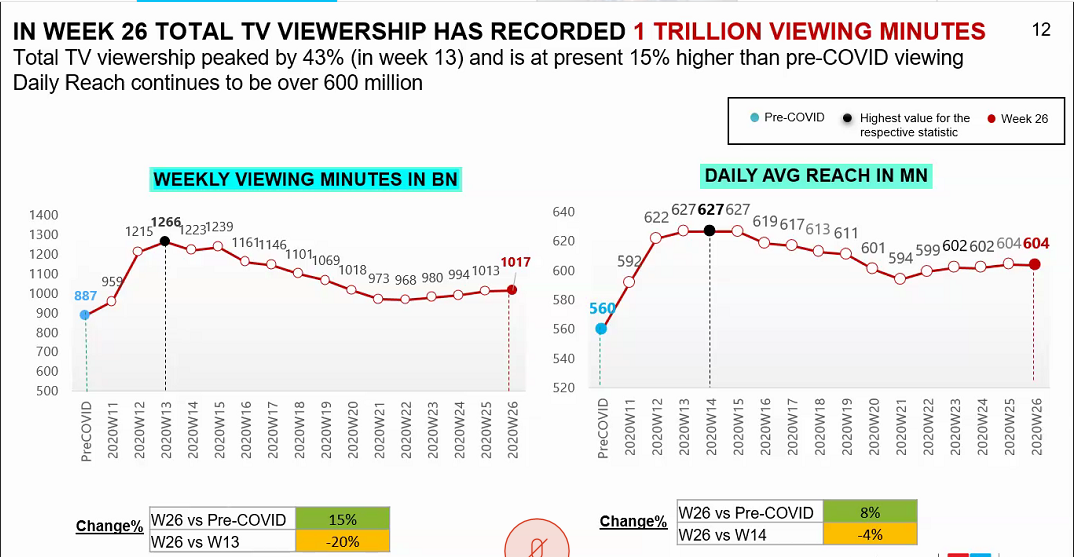
    MUMBAI: Hindi GEC saw eight percent growth in non-prime time slots in 2020 as compared to 2019, revealed the tenth edition of BARC-Nielsen data. However, there is a dip of two per cent in prime time shows. Kids non-prime time shows saw a growth of 32 per cent and in prime time shows it is 28 per cent.

    In week 26, TV viewership is 15 per cent higher than pre-Covid2019 times. Apart from that, TV viewership peaked by 43 percent in week 13. In week 26, daily viewing reach continues to be over 600 million.

    Average daily time spent on television is higher than pre-Covid2019 times but it is lower than usual peak time. The data also reveals that the total number of channels watched per viewer has decreased from the peak. In week 13 it was 23 channels which has now declined to 19 channels in week 26. 

    GEC channels have dominated the television market. The data highlights that TV consumption is higher than pre-Covid2019 time across all markets. The Hindi speaking market has seen a growth of 49 per cent.

    The data also reveals that the share of GECs has consistently increased in the past five weeks. From being at 52 percent in the pre-Covid2019 times it has seen a decline in week 22, but it picked from there and now it is at 48 per cent in week 26. 

    Apart from Hindi GEC, kids and English GECs are also performing better in non-prime time slots as compared to prime time. GECs that recently chose to  be on free platforms have seen growth.

  • Dangal to entertain viewers with fresh content

    Dangal to entertain viewers with fresh content

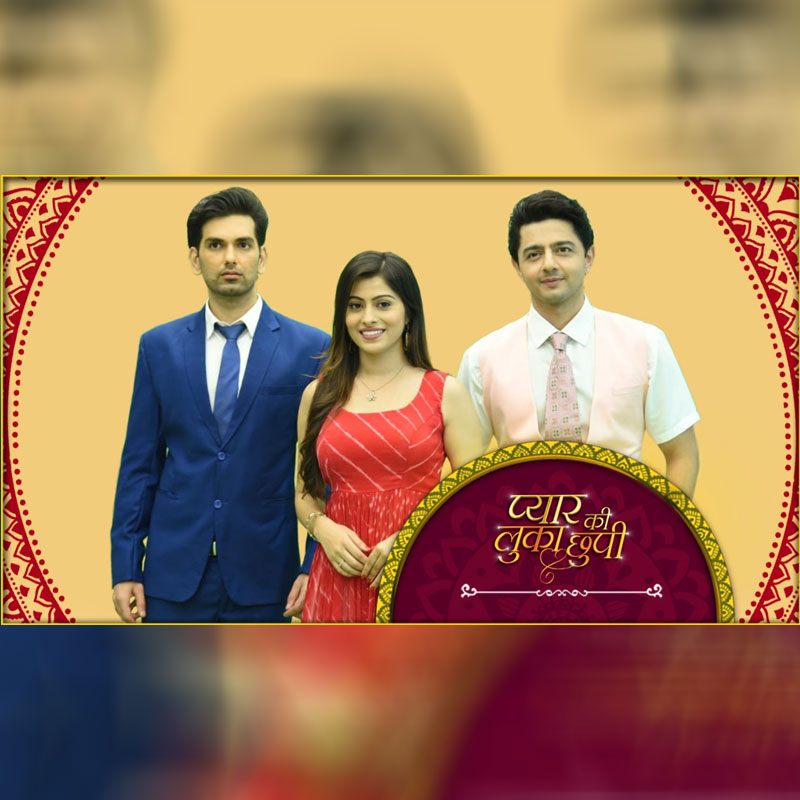
    MUMBAI: Hindi general entertainment channel Dangal will begin airing fresh content for its original show Pyar Ki Luka Chuppi starting 2 July 2020. A part of Enterr10 Television, Dangal was one of the first channels to begin production for its show Pyar Ki Luka Chuppi with production house Rashmi Sharma Telefilms. Latest episodes for fiction drama series Pyar Ki Luka Chuppi will air daily starting Thursday, 2 July 2020 at 7 pm.

    On steadily moving back to normal, a channel spokesperson said, “We are very excited to resume airing of fresh episodes for our viewers. Over the past few months, we re-ran interesting shows like Ramayana, Baba Aiso Varr Dhoondo, Chandragupt Maurya, which kept our viewers engaged and entertained. Now that lockdown restrictions have been relaxed, we have begun shoots for our shows with all guidelines and norms being followed on sets. We will begin airing new episodes for Pyar Ki Luka Chuppi on 2 July. The show will restart with a new turn of events that is sure to keep viewers gripped. We are also working towards launching some more fresh content that will keep viewers entertained. We urge our viewers to stay safe and follow best practices while adapting to this new normal.”

    Pyar Ki Luka Chuppi returns to Dangal with a new story twist. The story will also see the entry of a new character. In addition to Pyar Ki Luka Chuppi, Devi Aadi Parashakti has also resumed its shoot.

  • TV producers back on sets with safety protocols

    TV producers back on sets with safety protocols

    MUMBAI: After a long hiatus of three months following the nationwide lockdown, the entertainment industry is finally back on track. After resolving the outstanding issues IFTPC (Indian Film and Television Producers Council), FWICE (Federation of Western India Cine Employees) and CINTAA (Cine and TV Artistes’ Association) have agreed to work in unison.

    Among television shows, Colors’ Shakti-Astitva Ke Ehsaas Ki, Choti Sarrdaarni, Barrister Babu and Dangal TV’s Pyar Ki Luka Chuppi have already begun shoots.

    Hats Off Productions founder and Indian Film & Television Producers’ Council (IFTPC) chairman TV wing JD Majethia is ecstatic to start work. In a special interaction with indiantelevision.com Majethia said that it was a long-fought battle that has been won. He played an active role in bringing together television producers, broadcasters and trade associations to resume shooting.

    “It was a long chase because seeking government permission, coordinating with broadcasters and other trade unions was very challenging. Finally, we have come to common terms,” he says.

    He mentions that IFTPC has agreed to provide two sets of insurance coverage i.e., death cover of Rs 25 lakh due to Covid2019 and also hospitalisation cover of Rs 2 lakh uniformly across all hierarchy of the cast and crew. After a detailed discussion with broadcasters a decision was taken to reduce the period of credit for cast and crew from existing 90 days to 30 days for at least the first three months.

    Majethia has resumed the shooting of his show Bhakarwadi in Mira Road almost after 100 days. As per the government directives Majethia had called only 40 people on the set including original cast of Bhojani, Akshay Kelkar, Akshita Mudgal, Paresh Ganatra and few technicians. However, the strength of 100 crew members has now been reduced to 40.  

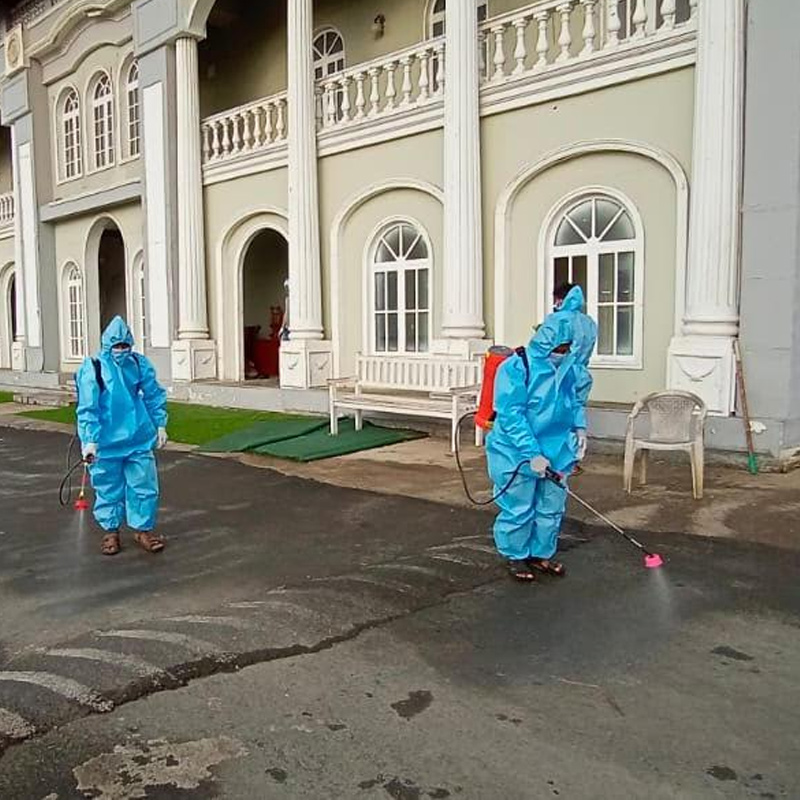
    As a safety measure, separate lockers have been installed at the entrance. Before the cast and crew members enter the set, they have to remove their footwear and wear the pair of slippers provided by the production house. Majethia has a unique solution to maintain social distancing, he has provided umbrellas that everybody walks around with in the premise. He highlights that there is a designated marked position for everyone, and the actors and crew members will have to sit only in the allocated areas. There is a nurse available on the set who checks everyone’s temperature before letting them in. It is mandatory for actors to wear masks and gloves when not filming a scene. But other crew members have to sport them all day long.

    He explains, “Earlier, people would share gutkha, other nicotine products and smoke on sets. We have introduced a concept called share a sanitiser. Now, exchange of any nicotine products or chewing gum is strictly banned; they are only allowed to share sanitisers. At lunch, the unit was served packed food thus avoiding crowding.”

    As far as travelling is concerned, actors are using their private vehicles to travel and crew who are travelling from far have been asked to stay on the set. Also a separate make-up kit has been allotted to each actor. Sanitation and fumigation are done twice a day.

    Sphere Origins founder Sunjoy Waddhwa has resumed shooting for his show Singhalagna in Kolkata. As per the West Bengal government guidelines, all safety measures and protocols are strictly followed. However, he will start shooting in Mumbai only after September.

    Creative Eye Limited MD Dheeraj Kumar explains that the production house is in the planning mode and shooting will be started in the next ten days. He is currently working on a show for Dangal. Preparations involving sanitisation, other SOP measures gathering technicians has been done.

    Rashmi Sharma Telefilms founder Rashmi Sharma shared a glimpse of the shooting for her show Pyaar Ki Luka Chuppi on Instagram. She was among the first few producers to start shooting in Mumbai. The show is filmed at Naigaon.

    Shashi Sumeet Productions’ shows Barrister Babu and Shubharambh have also started shooting.

  • Summer of IPL and a bonanza for the TV

    Summer of IPL and a bonanza for the TV

    MUMBAI: In Shaktigarh, a small town, on the outskirts of Burdwan, West Bengal, Ranjan Basu settles down in front of his TV set in his living room. It is all quiet outside, except for the chirping of crickets, as dusk settles. He picks up the TV remote, his finger pressed on the power button as his heart races with excitement.

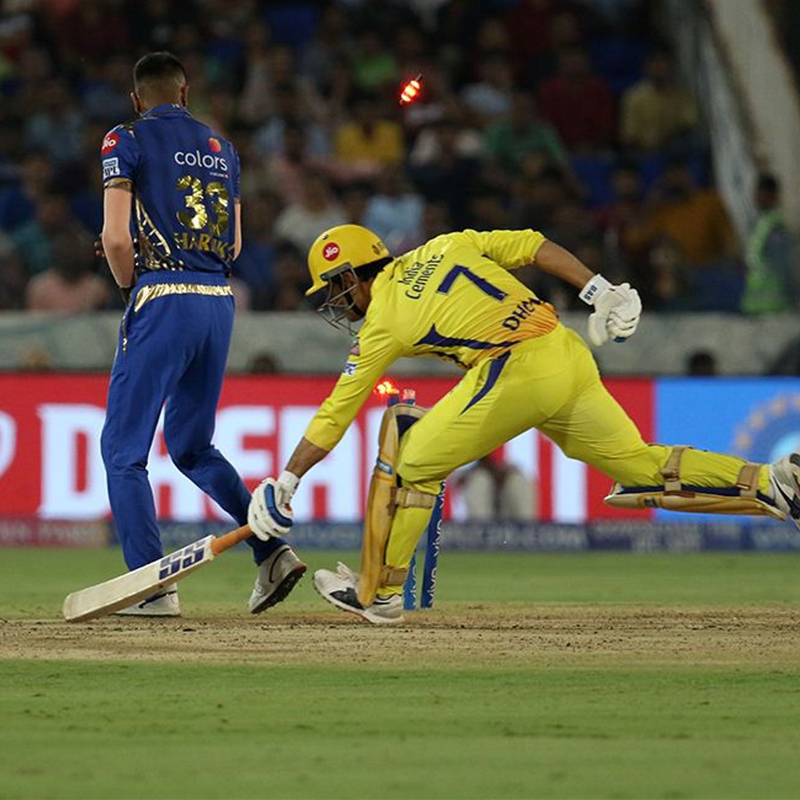
    It’s the final of IPL 2019, featuring the Mumbai Indians and the favourites CSK.  He raises the TV’s volume and the family sits down to what they hope will be an evening of a heart-stopping cricket match. The commentary is in Bengali and the action keeps them on the edge of their seats. For the next four hours, they will be transported to another world, as they find themselves totally engrossed in the fascinating game of T20 IPL cricket on the ubiquitous medium in India: the television.
    The scenario is repeated all over the country: in the north, south and the west.

    In fact, IPL is the biggest unifier in India. The spectacular event has now become so integral to the socio-cultural narrative of the country during the last one decade that the fans of a particular team leave no stone unturned in showering their love on its players even if they are out of the hometown or the state. Moreover, people’s alacrity to watch the matches with a group on the big screen of TV is not showing any signs of receding.

    Even as the naysayers have been saying that television is yielding ground to streaming services, the facts prove otherwise. According to the KPMG report 2019, TV continues to be a critical mass entertainment medium and is expected to grow at a CAGR of 11.2 per cent between FY19 and FY24 on the back of strong viewership from rural and urban markets as well as continued investment in new regional channels and sports properties by broadcasters.

    According to the Broadcast Audience Research Council (BARC), television is the widest spread medium in India and one of the most watched pieces of content is sports, and more specifically, the IPL. The TV measurement body revealed that 462 million viewers watched last IPL, 12 percent up from the previous year.

    Not only did the number of viewers go up but engagement as well. IPL season twelve garnered 337.7 bn viewing minutes, a 13 per cent increase in live viewership. Along with cumulative reach, average time spent for the last season of IPL also went up by eight per cent, reaching 36.40 minutes.  It’s no wonder that sponsors and advertisers are getting more aggressive to make their presence visible during the league.

    Moreover, IPL is not anymore a man’s game. The marriage of entertainment and sports in the biggest cricket showbiz of the country also brought viewers across age groups and genders before TV sets. IPL 2019 saw the highest growth of viewership among kids (2-14 years), an increase of 25 per cent compared to last session. Even female viewership grew by 14 per cent during  the edition. More age groups coming to the League are also increasing the chances of new brand associations.

    According to a report by Velocity MR, brands which were not associated with any IPL teams but were advertising heavily during the tournament were seen to be doing better than brands which were associated with a particular team. As per this report, Swiggy and PhonePe are major instances of the brands which reaped benefit from the association with IPL as an advertiser. Total awareness went up by 8 per cent for Swiggy and by 10 per cent for PhonePe, as both the brands were heavily advertised or marketed during the IPL season.

    IPL 2019 went deeper into the hinterlands, too. Star’s gambit on regionalization paid rich dividends for the broadcaster. Last year,  there were dedicated Telugu, Kannada and Bangla sports channels for matches. According to BARC data, while viewing minutes in Hindi increased by 18 per cent, other regional languages including Tamil, Telugu, Malayalam, Kannada, Bengali and Marathi saw 10 per cent growth. Regional languages other than Hindi got 74.9 bn viewing minutes, which was higher than the viewership that the English language commentary got. We may see local brands trying to associate themselves with the League in coming time.

    Sports in general, and the IPL in particular, is a driver for cable TV and DTH subscriptions. While major DTH operators are trying to penetrate deep into TV dark areas, major tournaments like IPL drive that growth.

    IPL may have crossed a decade. But the excitement around the League is not ebbing. The brand value of the tournament went up to Rs 47,500 crores in 2019 from Rs 41,800 crores in 2018. With just a month or so left for the next season, we can only see the League shining even better.

  • Advertising icon and philanthropist Ashok Kurien turns 70

    Advertising icon and philanthropist Ashok Kurien turns 70

    MUMBAI: “Life is a circus and I’ve been the clown,” is what Ambience boss and advertising icon (one of the pioneers  of private satellite TV in India as a founders of Zee TV and, now a committed social philanthropist) Ashok Kurien is known to say. And it was this belief of his that inspired the theme for his seventieth birthday party, planned and executed by Trinity Entertainment & Strategic Consultant.

    “The Circus of Life” celebrations marked the beginning of a new year in the life of Kurien, was one of the most enthralling evenings of the decade, it was uniquely planned and executed as an ode to his creativity. From an OTT pop up card announcing the Circus of Life theme to the OTT red-carpeted giant circus tent straight out of a kid’s fantasy, circus rings, aerialists, stilt walkers, jugglers, unicyclists, clowns, multiple photo-opts, a giant lion and a giant Ashok Kurien clown-like sculpture of his face, it was astounding but oh so colourful. Everywhere one looked on Friday evening, performance artistes and acrobats were putting on a spectacle never seen before.

    But what no one had expected was the wave of nostalgia that collectively swept over the evening. In retelling his life in the form of songs and dance, Kurien gave his friends an unexpected reliving of their own lives with music that touched the soul. From jazz standards to an Elvis impersonator; Choir songs, risqué rugby ditties; and a straight retro set which included numbers that ranged from ‘Bing Crosby to Boney M to Bruno Mars, and from Engelbert to Enrique’, most of the baby boomers (now senior citizens) were raving on the dance floor, with all elements seamlessly integrated into a story showcasing key milestones in Ashok’s life.

    The planning of the event started way back in September 2019 which gave the team at Trinity Entertainment & Strategic Consultants enough time to understand and break down each aspect of his life and do justice to it. Ashok’s first statement to the team was “Can you fly me out of a cannon” and that’s when it was sure that this celebration would be something that the city will always remember with Ashok being the key orchestrator!

    “I got to script my life story (and all my fantasies),” said Kurien the next day, adding “I hope it gave all of us the chance to relive our childhoods and become kids again”. Creating a magical experience for the guests, each one had a smile on their face. Attended by those closest to him, the guests were left mesmerised by the sheer scale and attention to detail.

    Close to his heart, the event also had another side to it that was so full of love that it made everyone's heart melt. Ashok and his wife Rachel Wawn are so deeply committed to corporate social responsibility and empowering the disfranchised, that they paid for an extra day and kept the entire set up intact so that they could host 350 underprivileged and challenged children for a circus show over lunch the next afternoon. Talk about making a wish on a birthday! Pictures from the lunch are a brief peek into Wawn and Kurien dancing joyously with the children, demonstrating that however OTT and grand one makes one's celebrations, the joy can be multiplied exponentially if we include the less fortunate. Will others who host such celebrations take a leaf out of Kurien’s progressive and thoughtful example? Could this be a (welcome) trend henceforth? We all definitely hope so. “If it even inspires a few others to do the same, think of what a thing it could be,” the delighted Ashok said.

    It’s safe to say, Ashok Kurien really has raised the bar. And big props to Trinity Entertainment for pulling off what seemed like one of their most magnificent projects ever.

    Ashok Kurien, a legendary stalwart of the advertising space in India is also the co-founder of Zee Entertainment Television and many other major ventures. Accredited with the iconic ‘Taste The Thunder‘ campaign for Thums Up, he is a man who has contributed immensely to the creative world. Words cannot do justice to his achievements and accomplishments and his reputation and passion for his work precede his name at all times.

  • Millennials seek local and purpose-driven content on TV and OTT

    Millennials seek local and purpose-driven content on TV and OTT

    MUMBAI: Seventy-one per cent of youth in our country are inspired by content. The number has moved from 58.4 per cent in 2016 to 71 per cent in 2018, revealed a new study by MTV Insights Studios ‘Mera Bharat Amazeballs’. Millennials are digital natives and they seek content beyond the confines of traditional TV. So what kind of content do they like? Which are the platforms they prefer to consume content and how is it helping the youth to overcome the challenges in their lives?

    Whether its Bhuvan Bam’s roleplay, Ashish Chanchlani’s gyan or Jose Covaco’s parenting on social media platforms, or the rise of thoughtful entertainment like Pad Man, Toilet, Dangal, Mary Kom and other movies or even dozens of stand-up comedy specials available on different platforms, there is an upsurge of local/Indian digital content being consumed by the youth. The report informed that there is more diversity than ever within digital content.

    The study revealed some interesting numbers, read below

    Why youth watch what they watch: 52 per cent of millennials watch content to learn something new; 30 per cent watch to distress and refresh themselves and 27 per cent watch content to help them to get through their life’s problem.

    What drives them towards new piece on content: 35 per cent of youth choose content based on the uniqueness of concept; 18 per cent like entertaining content; 14 per cent choose content based on the relatability of story; 10 per cent prefer content on ease of understanding story; seven per cent pick stories because of credibility and narrative and three per cent choose emotional narrative.

    What really gets them: As per the report 75 per cent of youth like stories where people struggle to win; 71 per cent of youth prefer stories based on real life people; and 62 per cent youth prefer watching real stories.

    What do they do when they discover a new show: 37 per cent of youth discusses it with friends whereas 21 per cent binge-watch the show. 20 per cent check out trivia about the show; 14 per cent try to find more similar shows; five per cent discuss with family and three per cent talk about it on social media.

    Where do they discover new content: 26 per cent youth discover new show on the internet and watch it online or download it to watch later; 24 per cent of them discover a new on TV and only watch in on TV; 24 per cent of youth discover new show on the internet and then find out when and where it comes on TV and watch it there; and 21 per cent discover new show on TV but they go online to watch it.

    Millennials' most preferred genre of shows: 30 per cent of youth like comedy; 13 per cent prefer romance; 12 per cent like family shows; 10 per cent looks for fantasy shows; eight per cent like action genre; seven per cent like documentary; seven per cent like crime genre; four per cent like historical genre; four per cent prefer music and dance genre; three per cent prefer Quiz shows and two per cent like animation.

    Where do they watch their favourite shows: 37 per cent of youth watch shows on both the platform but more on online than TV; 26 per cent watch shows only online; 20 per cent watch shows only on TV; and 14 per cent of youth watch shows on both but more on TV than online.

    Preferred device and platform: 75 per cent of millennials prefer watching shows at home on TV; 55 per cent of youth watches content on laptop; 41 per cent prefer streaming platform and 39 per cent opt for theatre.

    How MTV uses this study

    MTV Insights Studios has been doing this study since 2002 once in every two years to understand its target audience and cater tothem with better content. “Doing the study and sharing the facts with marketers have given them positive affinity that we know youth better than anybody else. That's one primary reason for us to do that from the external perspective. From internal it also helps form our choice of both new shows, tweak existing shows and even brand marketing,” says Viacom18 youth, music and english entertainment marketing head Navin Shenoy.  

    This year the channel will be tweaking its flagship show Roadies’ theme. The study revealed that the youth are purpose-driven, they want to get behind the cause and they are action-oriented. Therefore, this year Roadies’ theme is called Roadies Revolution, which means the contestant will not only be doing normal physical challenges, but there are also causes behind which they'll get and they'll have to perform actions to support that cause and showcase the impact.

    Last year, one of the insights that people felt more about was plastic pollution. “So we took up this issue and on the day of Dussera we called upon a message which was ‘Plastic is the new Raavan’ with TrashAsur. And what activities like these do is they reinforce brand affinity in the consumers’ mind, they realise that this brand understands what causes matter to them and they are actually taking action in that space. So in a nutshell, that's how it works for both existing shows, choosing new shows and for brand marketing; these insights inform most of our decision,” said Shenoy.

    This year one big theme that has emerged is women empowerment. He opines, “I think every aspect of that space seems to be something that bothers young people, and hence it equally bothers us, which is whether it's the brutal crimes against women or the fact that they are not getting enough of opportunities, or that society, in its thinking is more likely to be patriarchal, and gender stereotypes being enforced on women. There is very little positivity on how the system is structured, so that's likely to be a space we would want to explore.”

    The channel has doubled its viewership compared to last year. He informs, “A flagship show for us like Hustle has been key to the strategy of pulling more viewers, because it has pulled in both time from an existing viewer who's had a new MTV show and also a new kind of viewer whose destiny is hip hop music but may not have consumed so much of MTV’s other shows in the past. So that pretty much has been the key. And now the challenge is to keep the momentum going in season two.” 

  • What can industry learn from Kushal Punjabi’s suicide?

    What can industry learn from Kushal Punjabi’s suicide?

    MUMBAI: When Yama comes knocking, no one can hold back his embrace. But most of us hope that it is not our door he is choosing to knock.

    Actor Kushal Punjabi’s decision to open his door and rush into Yama’s arms came as a shocker to many.  Including us. A relatively senior actor at 42, Kushal chose to hang himself in his Bandra west, alone, close to midnight, just a day after Christmas.

    He had been a part of many of our functions, including indiantelevision.com’s The Indian Telly Awards and we had spoken and written about him on numerous occasions on Tellychakkar.com. Kushal was normally reticent, reserved, shy to an extent in public places, but he opened up amongst friends. And more so when he came on stage to dance, he set the stage alive with his sharp moves.

    Kushal’s physical fitness was above par.  A sports fanatic, he played football, took part in athletics and swimming in school and college and even after that when he evolved into a fine, sensitive actor who did both films and TV.  His muscular, toned and sinewy physique clearly marked him out from amongst many of his peers.

    A flat close to the posh Pali Hill Area in Bandra. A foreign wife and a kid all of three years, who he doted upon.  It looked like he had everything going for him?

    Then what triggered him to take the step of ending his life? Co-actor Chetan Hansraj says he was low a few days before his death, as his wife and he were separated and he was not keeping well.  And he never imagined that he would take the extreme step. A suicide note clearly blamed no one.

    But his is not the first case of actors who cut short their life on earth. Pratyusha Banerjee is the most famous case. Nafisa Joseph,  Viveka Babajee, Kuljeet Randhwa are some of the more famous ones who committed suicide while being a part of the Indian TV world. There are others too who went the same way: Bengali TV actor Disha Ganguly, Payel Chakraborty, Moumita Saha, and Telugu TV anchor  Nirosha are some of the names who come to mind.

    Most of them were young like Punjabi, some even younger. It clearly points to the malaise in the TV and celebrity industry – that it is a lonely journey most make. Today, you are wanted, tomorrow you are not. And the pressure to perform is intense, so intense – that only the tough can see it through.

    For the small towners, the glamour, the fame is exciting and hence they plunge deep into tinsel town. Getting the big break is excruciating requiring numerous visits to productions houses for auditions, and casting directors. Some audition rejections are heart wrenching. However, once they are past that and they get known, the roles trickle in for some, for others, they come in a smooth flow. For a relative few, it is stardom, beyond or  just like they imagined. But once they get known, keeping up with their peers in lifestyle, in terms of performance, brings with it added pressure. Then come the friendships, relationships and the inability to cope with their demands because of the filming schedules. This puts further pressure. Some cope; some don’t and drop out. Others stick on and suffer the highs and the lows. And a select few go the way of ending their lifes when they can’t cope.

    Industry needs to understand this. Broadcasters, producers and the actor associations. The Cine & TV Artistes Association does have resources in house to help members cope with their psychological needs. But is it enough? What more can be done? Can regular workshops to help actors address their emotional traumas be organised? And these workshops should be in good venues so that even the better off actors can attend and take part in them.

    Can the financial corpus they have to assist actors  in dire need be enlarged? Can donations be attracted to from production houses and the broadcasters and from corporate India?   Can peer groups addressed periodically by psychologists be set up within each TV show set to understand each actor’s pressures and help them address these?

    The warning bells are ringing. Too many in TV industry have died young. Will we wait for more?

  • World TV Day: Six decades of TV in India; three of democratisation and splintering

    World TV Day: Six decades of TV in India; three of democratisation and splintering

    MUMBAI: From 15 September 1959, when television was first introduced in India, to 2019, when India had over 19.7 crore TV homes, having a reach of over 83 crore, the medium has truly come a long way. So much so, that the earlier wooden cabinet-box TV, transmitting grainy black and white pictures, respectfully draped in a cloth and displayed proudly in our living rooms, now seems like an object from another planet.

    Out of the six, the journey for the first three-decades (1959-1989) – the era of single channel Doordarshan that became synonymous with TV – has been smooth and unadventurous. In the following three-decades (1989-2019), however, the ride has been a roller-coaster with fair-share of bumps and hiccups. India now has over 800 licensed channels —broadcasting 24X7 programming in all genres of channels, ranging from news, sports, kids, entertainment, music, business, infotainment and even spirituality in Hindi, English and more than two dozen regional languages.

    The Indian TV industry as a whole, as per a recent KPMG report, currently stands at Rs 714 billion, growing at a CAGR of 11.2 per cent, and remains the biggest platform for advertising and the most effective means of mass communication.

    No less audacious has been the evolution of content transmitted on this medium. From Hum Log (1984), India’s first TV serial, we moved to the era of Ramayan and Mahabharat in the late eighties that showcased the power of TV in India. And from early 2000, that saw the rise of the K phenomena (Kyunki Saas Bhi Kabhi.. Kasauti Zindagi Ki, Kahani Ghar-Ghar ki), stories of nouveau-riche, urban, joint-families firmly rooted in Indian traditions that were in-sync with the evolution of middle class in post-liberalisation phase to shows like Choti Sardarni (a hit serial on Colours on the life of a Sikh-village woman), the characters on Indian TV serials have evolved and shows a democratisation of the demographics of lead characters.

    However, along with the democratisation of lead characters, there has also been a splintering of TV-audiences and the content we watch. Television used to unite the whole country in late eighties with shows like Hum Log, Buniyad, Ramayan and Mahabarat, something that only Cricket is doing off-lately. As broadcasting opened to private players following the landmark 1995 Supreme Court judgement ruling that “airwaves are not the monopoly of the Indian government,” private television channels like Star, Zee, Aaj-Tak, CNN, BBC, Discovery, flooded the market, targeting different segments of audiences with different genres of channels and shows. Now there is no one size fits all, and shows are written, produced and marketed based on the interests of each segment – rural/urban, house-wives/kids, business/news, entertainment/spirituality.

    Nowhere is this splintering of audiences, and viewpoints, and ideologies more visible than in the news segment. While Prannoy Roy’s The World This Week (DD National) and The News Tonight (DD2) and SP Singh’s Aaj Tak, transformed the Doordarshan’s press-release style news reading in the late nineties, by 2010, news-segment was a different animal altogether with celebrity news anchors humbling the who’s who of business, politics, chit fund owners, investors and political parties. Anyone, howsoever mighty and high, can be put on media trial and humbled on TV. The monologue news-reading of nineties has transformed into a contested space, with a plethora of voices from all realms of life fighting it out on TV screens to validate their own point-of-view. While this has given expression to many underprivileged voices, it has also made us a much-more fragmented, polarised society. Today there are close to 900 channels in the news segment alone, transmitting in more than two dozen languages and funded by corporates, builders, bankers, chit fund owners and even politicians. Today, TV is not the great unifier it used to be, but an enhancer of our schisms along the lines of ideology, region, religion and political parties.

    The same democratisation of TV, and its content, can be seen in the evolution of reality TV shows as well. While Zee’s Sa Re Ga Ma Pa and Sony’s Boogie Woogie were early frontrunners in this genre, it was Star’s Kaun Banega Crorepati that truly showcased the potential of this genre. A prominent KBC feature was, small-town people from normal walks of life, teachers, tax-officers, shop-owners, sitting face-to-face with Amitabh Bachhan – a cinematographic equalizer that symbolically flattened the class differentiation between the two. No wonder that talent hunt shows remain sure-shot eye-ball grabbers even today, mirroring the restlessness in small-town aspirational Indians.

    Much has been written on the spread of small-screen smartphones and how it will disrupt video distribution and video consumption patterns. The TV, however, will maintain its place of prominence. The number of TV homes in India is expected to rise from the current 197 million to 209 million by 2023. At the same time, the TV industry is expected to rise from Rs 714 billion in 2019 to Rs 1,215 billion by 2024. It is also important to note that TV, cornering 45 per cent of the total ad spends, continues to be the largest medium for advertisers and ad revenues for TV are expected to grow at 13 per cent this year. The advertising revenues in the broadcast industry, currently at Rs 205 billion, are expected to rise to Rs 455 billion by 2024, as per a recent KPMG report – India Media & Entertainment report 2019.

    Going forward, not only our TV screens will be digitised, but with the integration of Internet of Things (IoT) and Artificial Intelligence, television will become the centre of our homes and transform it into a seamless gadget, helping users control other smart home devices, ranging from ACs, fridges, to our cars through voice-enabled-commands.

    The march of the idiot-box in India seems unstoppable, at least for the foreseeable future.

    On the occasion of this World Television Day (21 November), we take a look at how TV, cable and DTH brands connected to their consumers and celebrated the spirit of television.

    Panasonic India

    Hindustan Coca-Cola Beverages Pvt. Ltd

    Jio Chat

    Sun Direct

    Zee TV

    Star Sports
  • TRAI tariff order impacted uptake of niche channels: KPMG

    TRAI tariff order impacted uptake of niche channels: KPMG

    MUMBAI: Even as TRAI is mulling over changes to its existing tariff order, a report by KPMG, India’s Digital Future, highlighted that niche channels were affected especially due to lesser focus on such channels in broadcaster packs.

    “The uptake of niche channels has suffered in the new regulatory environment as broadcasters focused on creating packs that ensured pick-up of their GEC and movie channels with DPOs building on top of them with FTAs at their disposal. While niche channels belonging to larger broadcasters are likely to do better than others in the long run owing to the network effects enjoyed by their parent company, they will still need to be innovative in order to survive and remain relevant in the long run,” the report read.

    According to the report, niche genres on TV in this new era are expected to be under pressure from rival offerings on digital platforms. It also added the English channels are also likely to encounter challenges in terms of viewership and subscription in the new regime. But the uptake of pay regional channels, especially top GECs and movie channels, has remained firm in the regional markets in the new regime, particularly in the Southern markets.

    Despite the tariff order giving consumers options to choose channels, the report noted that initial trends indicate that the monthly bills of viewers wishing to watch the same number of channels as earlier has gone up significantly. However, the ARPUs have increased across all the markets with phase III and phase IV markets witnessing massive growth of 30-35 per cent in average realisations.

    “This choice of channels has come at a dearer price for individuals at the lower end of the ARPUs who are either paying more for watching the same number of channels or are content with lesser number of channels at their disposal. As per industry discussions, some choice is taking place at the higher end of the subscription pyramid, leading to lower TV bills, however, the same is definitely accompanied by a lower number of viewable channels at the disposal of the consumers,” the report added.

    It went on to say that viewership and reach for the TV universe is likely to change as the effects of NTO start to play out. But it also added that the broadcasters will need to renew focus on content quality to ensure survival and pick-up of their channels.

  • Vikatan Group’s B Srinivasan on TV-OTT dynamics, air time barter model, first digital-only daily soap

    Vikatan Group’s B Srinivasan on TV-OTT dynamics, air time barter model, first digital-only daily soap

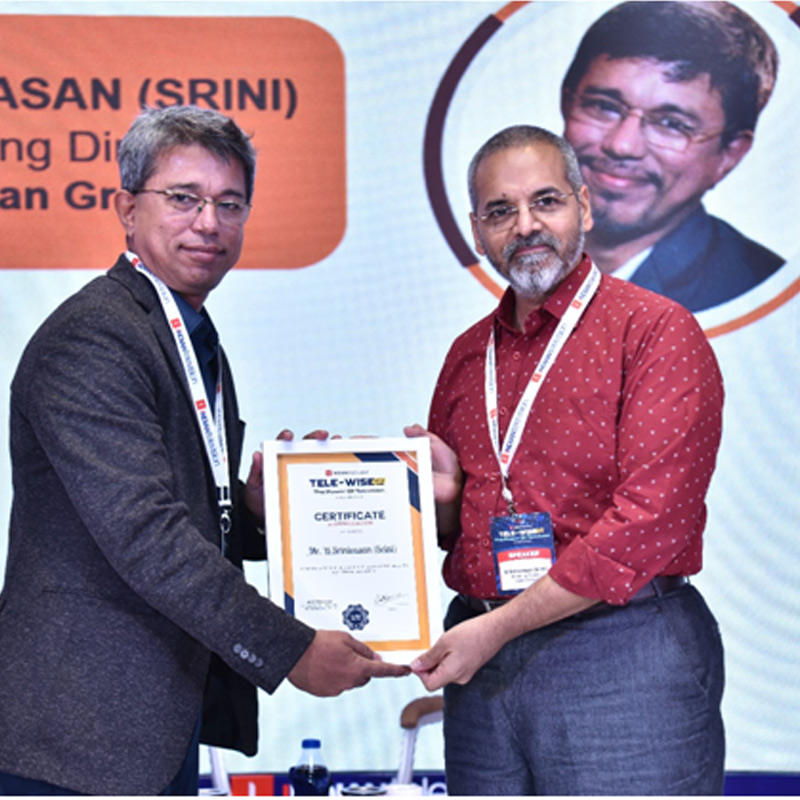
    MUMBAI: Tele-Wise Tamil witnessed a one–on-one conversation between Vikatan Group managing director B Srinivasan and Indiantelevision.com founder, CEO and editor-in-chief Anil Wanvari which brought out interesting facts on the journey of Vikatan Group. The duo also discussed the company’s road ahead in the Tamil market.

    The group creates content for various streams from television to YouTube and has its own YouTube channel with 10 million subscribers. The company is also looking forward to cater to the audiences in Tamil Nadu through OTT platform.

    Taking the audience through the journey of Vikatan Group, Srinivasan said, “It has been 29 years since I joined. After the launch of Sun TV it took us around five years to gain the courage that we had lost in 1993. That time I decided at least to produce if I am unable to start a satellite channel. We were having our own fiction and that was the bread and butter of Ananda Vikatan. We have had the best creators working for us so we thought it was a natural extension to enter into production. We started in 1998 with a weekly serial called Akshaya.”

    “We had an interesting journey; we consistently worked with some of the best channels in the industry. Daily soap is not easy to come by, it is tough to bring out the cassette at the end of the day and since the last three years it has become six days a week. 26 episodes a month is not a joke,” he commented.

    Talking on the presence of Vikatan’s content on digital platform, Srinivasan said, “Since 2011 we are on YouTube as well. Today across fiction and non-fiction we have around 10 million subscribers on our YouTube platform. We crossed 150 million views last month. Today we got into a place where we can produce content beyond television. We are in talks with a couple of OTT players and trying to understand how it works since it is nothing like television.”

    Wanvari mentioned that apart from Doordarshan and Sun TV, most producers operate on a commission model, then why did they choose the air time barter model. “In 1998, Sun was the dominant player in the television market and it had air time commission model, they did not have commissioning model at that time. That gave us one of the biggest advantages of creative independence and I can guarantee that none of the producers today have that. Creative independence is cherished a lot by our creators today,” replied Srinivasan.

    Tamil TV is under-indexed compared to the share of viewing it gets, sharing his views on the impact of the same on Vikatan Group, Srinivasan said, “The market is rough but we have been having an amazing relationship with our advertising clients and they know us from different days. There is a trust that we have been able to build in the market.”

    He further said, “Because of the market dynamics we have not been able to make money always but we have been able to supplement our presence through YouTube.”

    Wanvari also inquired whether Vikatan Group would be opened to get commissioned from the broadcaster. To which Srinivasan replied, “I would rather get commissioned in the OTT space than on the television because our product will make lot of money with the kind of IPs we have.”

    Going further he said, “The OTT space is completely different. On television, the investment that is required in a single episode can run into almost Rs 1 crore. So, that is something that we wouldn’t want to go ahead with.”

    The group also shared his plan to produce the first digital daily soap for YouTube. Srinivasan said, “We have been fortunate enough to be the first producer commissioned by YouTube to produce the first digital daily soap and that’s likely to come out in the next few months.”

    “There are going to be digital avatars of the characters. There will also be digital interaction which will lead to the storytelling and those will lead to the social interaction. That’s how the story will pan out. It’s a 120-episode series which will air from Monday to Friday,” explained Srinivasan.

    If the show does well then it would be the first daily soap which will be told exclusively on YouTube. Srinivasan is hoping to get the interest of advertisers on the same and also plans to come back with seasons of the show.