Tag: Television

  • NT Awards 2020: And the winners are…

    NT Awards 2020: And the winners are…

    NEW DELHI: Indiantelevision.com concluded the much-coveted News Television Awards in a virtual ceremony today. Conferring the honours was Indiantelevision.com founder and editor-in-chief Anil Wanvari. The event was powered by TVU Networks.

    Over 120 awards were presented to multiple news media groups and eminent personalities in the industry. News channels were awarded in multiple categories – Programming Awards, Promo – Design – Packaging Award, Sales & Marketing Awards, Special Awards. These included the likes of Zee, Aaj Tak, NDTV, India Today, Wion, TV9 Telugu, ABP News, Odisha TV, ABP Ananda, Zee Rajasthan, News18 Lokmat and others.

    A round of personality awards were conferred to anchors, journalists, producers, cameraperson, video editor, and others. Some of the winners in the category include CNBC TV18 managing editor Shereen Bhan, India Today & Aaj Tak news director Rahul Kanwal, Aaj Tak’s Rohit Sardana, Zee 24 Kalak’s Janak Sutaria, Wion’s Digvijay Singh Deo, NDTV India's Nidhi Kulpati and others.

    The Hall of Fame Award went to India Today vice-chairperson Kalli Purie.

    The complete list of winners is shared here.

  • Catch NT Awards Live today

    Catch NT Awards Live today

    New Delhi: Last week, Indiantelevision.com concluded a successful two-day News Television Summit powered by TVU Networks, where eminent broadcast news industry leaders discussed imminent opportunities and challenges that lay ahead of them. They touched upon several core subjects like ad-volumes, subscriptions, pay-TV, ratings, regulations, and technology.

    Industry leaders such as TV9 News Network CEO Barun Das, ABP CEO Avinash Pandey, Zee News CEO & editor-in-chief Sudhir Chaudhary, Times Network MD & CEO MK Anand, Wion executive editor Palki Sharma Upadhyay, India Today & Aaj Tak News director Rahul Kanwal, Times Now editor-in-chief Rahul Shivshankar, PolicyBazaar head of brand & marketing Samir Sethi, and TVU Networks VP of sales – South Asia & MENA Sushant Rai participated in the discussion.

    Up next is the News Television Awards, also powered by TVU Networks. The awards will felicitate the best in broadcast news industry across multiple categories such as – Programming Awards, Personality Awards, Promo Design & Packaging Awards, Sales & Marketing Awards, and Special Awards.

    Read more about NT Awards

    Indiantelevision.com received over 500 entries that were rigorously screened by a 37-member jury that includes senior personages of the industry.

    The awards will be handed over to the winners in a virtual ceremony by Indiantelevision.com’s founder and editor-in-chief Anil Wanvari. The event begins at 2.30 pm today.

    Join the festivities here.

  • TV witnesses highest ad volumes since 2015

    TV witnesses highest ad volumes since 2015

    MUMBAI: Week 43 of Broadcast Audience Research Council of India (BARC) data has witnessed the highest ever ad volumes on television since week 16 in 2015.

    It also highlighted that 38,705,978 million seconds is the highest ever ad volume since week 16 (2015) on television in week 43.

    According to BARC, the festive season and big ticket properties have led to this growth. It further mentioned that ad volumes are also returning to normal (compared to week 43 2018):

    *Ad Volume in Million secs

    The report states that growth in week 43 is over second highest week: 2.1 per cent. Whereas the growth in week 43 is over third highest week: 5.7 per cent.

    In week 43 of BARC India rating, the top ten advertisers are Hindustan Unilever, Reckitt Benkiser, ITC, Godrej Consumer Products, Wipro, Ponds India, Colgate Palmolive India, Amazon Online India, Cadburys India, and Brooke Bond Lipton India.

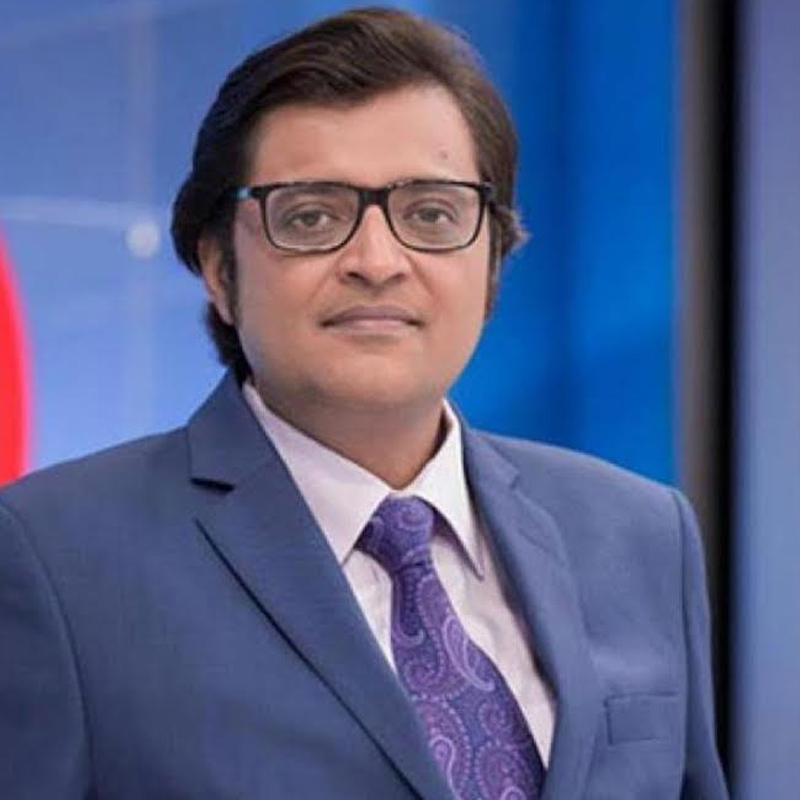
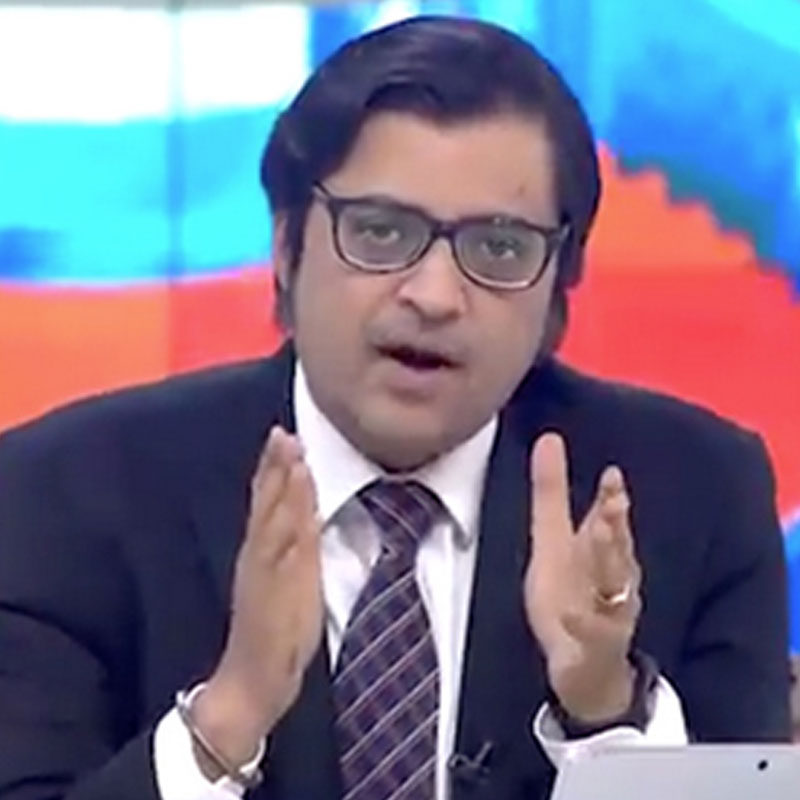
  • Republic TV’s Arnab Goswami sent to judicial custody for 14 days till Nov 18

    Republic TV’s Arnab Goswami sent to judicial custody for 14 days till Nov 18

    New Delhi: Republic TV editor-in-chief Arnab Goswami’s problems does not seem to be coming to an end. Yesterday, in a big spectacle, Mumbai Police arrested him in abetment to suicide case. Soon after his arrest, there were reactions from different stakeholders of the industry and bureaucrats and many of them condemned the manner in which Mumbai Police had acted. Ministers, celebrities, lawyers, and broadcaster associations called upon the Maharashtra government to ensure a fair investigation in the matter without exercising powers of the government on media.

    In the latest development, Arnab Goswami has been sent to a 14 day judicial custody until 18 November. Media reports say that Goswami was presented before a magistrate in the evening and a court in Alibaug passed the order. However, the court turned down the plea for police custody.

    Reports also mention that Mumbai Police has registered FIR against Goswami, his wife, son and two others for allegedly assaulting police official. It will also start an enquiry against the officer who had earlier investigated abetment to suicide case in which Goswami was arrested today. The investigating officer had filed closure report, saying there was no evidence.

    Read more news on Arnab Goswami

    According to the reports, the case goes back to 2018 when the architect Avnay Naik, and his mother committed suicide in 2018 over alleged non-payment of dues by Republic TV. In 2018, the Alibaug police had filed a case of abetment to suicide but in 2019 the case was closed by Raigad Police. In May 2020, Maharashtra home minister Anil Deshmukh announced a fresh CID investigation into the case after Adnya Naik, daughter of Avnay Naik, approached him.

    However, ARG Outlier Media has completely trashed the case finds it shocking that a case that was decisively closed has been reopened with the sole purpose of misusing power, concocting facts and forcefully arresting Arnab Goswami in a prima facie act of revenge and vengeance for his news coverage which questioned those in power in the state of Maharashtra. It further mentioned that the ARG Outlier Media had paid 90 per cent of its dues to the company of the deceased as per the terms of agreement. The remaining sum was to be paid on completion of the pending work, which has since not been undertaken. Repeated attempts were made by ARG Outlier Media to make the balance payment to CDPL, for full and final settlement of all claims.

    It must be noted that these developments are taking place amid the investigations of the ongoing TRP scam that saw Mumbai Police – Maharashtra government at loggerheads with Goswami on multiple occasions. The two sides have been repeatedly attacking each other.

  • Mumbai Police violated Supreme Court guidelines in Arnab Goswami’s arrest, says AIBA

    Mumbai Police violated Supreme Court guidelines in Arnab Goswami’s arrest, says AIBA

    NEW DELHI: The arrest of Republic TV’s editor in chief Arnab Goswami has evoked a response from multiple sections of the industry.

    Senior bureaucrats and news federations have condemned the arrest and called upon the chief minister of Maharashtra to conduct a free and fair investigation in the matter without exercising the authority of the government on media.

    In the latest development, All India Bar Association (AIBA) has condemned the arrest of noted journalist Arnab Goswami by Mumbai Police as it has violated the landmark guidelines to protect the rights of arrestee as enumerated in judgment delivered by Hon’ble Supreme Court in D. K. Basu v. State of West Bengal (AIR 1997 SC 610).  

    In a letter to the governor of Maharashtra, AIBA chairman Adish C Aggarwala, senior advocate, appealed for immediate release of the journalist as it is blatant misuse of power by Maharashtra Govt. against Republic TV and Arnab Goswami. The illegal arrest is an attack on individual freedom and the fourth pillar of democracy. 

    The following guidelines of
    honourable Supreme Court in the judgment passed in D. K. Basu v. state of
    West Bengal (AIR 1997 SC 610), have been violated by Mumbai Police in
    the matter of arrest of Arnab Goswami 

    Duties of Police Making
    Arrest and Handling Interrogation: All Police personnel should wear name tags clearly indicating their name and designation.

    Police must enter the complete details of police officials conducting interrogation in a register.

    Arrest Memo: The police officer making
    an arrest has to prepare an arrest memo that records details of the
    arrest. The arrest memo must contain:

    a. The signature of at least one witness, who can be a relative of the arrestee or a respectable person of the locality where the arrest is made. 

    b. The time, date, and place
    of the arrest. The arrested person should sign the arrest memo after it is
    properly prepared.  

    Inspection Memo: If the arrested person requests it, the arresting officer must record any minor/major injuries on his/her body in an inspection memo. The memorandum should be signed by the arrested person and the arresting officer. A copy of the Memo  must be given to the arrested person.

    Information About the Arrest & Detention: The arrested person has the right that his/her relative/friend is informed about the arrest. The police must contact and inform the relative/friend of the time and place of arrest, and the exact location where the arrested person is detained, at the earliest. If the relative / friend is in a different district / city, the concerned police station should be informed by telegraph within 8-12 hours of the arrest and then convey the  information to the relative / friend. The information of the arrest should also be sent through the district legal aid committee.

    Right to a Lawyer: The arrested person has the right to meet and consult a  lawyer during his/her interrogation. The police cannot deny this.  

    Illaqa Magistrate: The Police must send one copy of all documents, relating to the arrest (including the Arrest and Inspection Memos) to the Illaqa Magistrate for his/her records.

    Police Control Room: Police Control Rooms should be set up in all district and state headquarters. The arresting officer has the duty to inform the control room about the place of detention of the arrested person. This has to be done in all arrests.This information must be sent to the control room within 12 hours of the arrest. This information must be displayed clearly on the notice board of the Control Room. Duties of Police making arrest and handling interrogation: 

    These directions should be mandatorily followed. Refusal to do so results in the initiation of contempt of Court proceedings.

    Departmental action should be initiated against police officials who have violated above safeguards guaranteed to the citizens of the country. 

  • NBA condemns Arnab Goswami’s arrest

    NBA condemns Arnab Goswami’s arrest

    NEW DELHI: The News Broadcasters Association (NBA) has condemned the manner in which Republic TV editor in chief Arnab Goswami was arrested by the police. According to the police, Goswami was arrested in a 2018 abetment to suicide case.

    The association released a statement noting, “NBA condemns the manner in which Arnab Goswami, editor-in-chief of Republic TV, was arrested by the Raigarh police. Even though the NBA does not agree with his type of journalism, we denounce retaliatory action, if any by the authorities against a media editor. Media is not above the law but due process must be followed." 

    NBA also appealed to the chief minister of Maharashtra to ensure that Goswami is treated fairly and state power is not misused for vendetta.

    NBA president Rajat Sharma also tweeted his views on the same.


    For the record, earlier in the day, Republic TV founder & editor in chief Arnab Goswami was picked up from his residence  by the Mumbai police. According to Republic TV, 10 policemen entered Goswami’s residence and pushed him around, before taking him away. According to the media firm, the police had no summons or arrest warrants at the time of his arrest. It has been said that Arnab has been arrested in connection with an old abetment to suicide case of a 53-year-old interior designer. A Mumbai police official said that an architect and his mother committed suicide in 2018 over alleged non-payment of dues by Republic TV. 

    Goswami, it says, has been arrested under Section 306 and Section 34 of IPC. Goswami has been taken to Raigad for questioning.

    However, the Republic Media has issued clarifications on the subject and pointed out that it is a false case and has been made as part of a larger vindictive exercise against an independent journalist and an independent news organisation.

    Several bureaucrats and ministers have also lent their support to Goswami and condemned the act.

  • Here’s why news genre works for advertisers

    Here’s why news genre works for advertisers

    NEW DELHI: Covid2019 impacted brands across the board and as a result, ad volumes on television also took a hit. At that point, businesses were forced to realign their advertising budgets with an eye on future projections. However, advertising is once again on a roll and there is a year-on-year growth in ad volumes across some product categories. 

    In a session titled – ‘Advertising on News’ at Indiantelevision.com’s News Television Summit, co-powered by TVU Networks, eminent advertisers and agency heads conferred on the importance of news genre in a media plan for a CMO. They discussed why advertisers continue to reach out to their audiences via the news space. The panellists included FBB, Future Group CMO Prachi Mohapatra, Policy Bazaar head of brand marketing Samir Sethi, Wavemaker CEO – south Asia Ajay Gupte, Essence SVP & MD – India Anand Chakravarthy, ITV group CEO Varun Kohli. It was moderated by E&Y partner M&E Ashish Pherwani.

    Pherwani started off by asking Mohapatra how the brand looks at news genre and why they advertise on it. “We have been actively using this platform for a long time. I think it’s not a new category for us. For our campaigns, we have given our due respect to this genre as one of the highest reach provider for us. We are a young brand and reach out to the right kind of customer segment and news has worked for us. We have seen results,” said Mohapatra.

    She further added that the brand has been able to use both FCT and non-FCT space effectively. “It’s not about platform anymore but the content that you are associating with it. Of course it became a very pertinent place for us in the pre-Covid time but post-Covid it has definitely skewed a little more towards the digital platform but news is right up there for us,” explained Mohapatra.

    Echoing the sentiment, Sethi stated that news is the anchor genre on which Policy Bazaar advertises throughout the year. “News takes approximately one third of our TV spends. During the slump of Covid, when most categories were pulling out of their advertising plan, we were extremely bullish because insurance was one of the categories that were positively impacted by the pandemic. So, during the slump as well when the overall ad volumes were down, our share of voice also increased without spending extra on that. And we will continue to be extremely bullish on news because insurance is an extremely male dominated category in terms of shoppers and the audiences we find there is very relevant.”

    Next, Pherwani asked for the panellists’ take on the impact of the impending legislation on ad-cap in the news genre. Kohli shared his view that Covid2019 was a blessing for news channels in the sense that since people were not very clear whether the information in the digital space was right or not, they came back to the news channels.  Many channels also reinvented themselves during this period and that is why the reach of the genre went up considerably. “It is the cheapest way to reach out to the audience because it is FTA. I do not see the legislation happening for news cap on news channels in the next two-three years,” he added.

    But what do agencies think about advertising on news genre? To answer this question, Pherwani turned to Gupte from Wavemaker and Chakravarthy from Essence.

    Gupte shared that rates are effectively a function of viewership. “If you put more ads in a break, the viewership tends to drop in the middle of it, but if you shorten the break, the viewership is a lot higher, there is higher TVRs and eventually one gets better rates.”

    Chakravarthy pointed out that three Cs – clutter, context and cost – determine whether the platform is going to do a good job for the client or not. “Today on FTA channels we see advertisers ranging from all kinds of products – from high end cars to the ones speaking to the last mile audiences. I believe that context will be important because there are advertisers who for the right value of the right audiences will be willing to pay a premium price,” he said.

    He went on to add that people are not on news channels to watch advertising and a 15 minute ad-break will be too long because people will switch off and move to another genre; plus there is also the ever-present distraction of the smartphone. “So, I think it is important that our advertising environment becomes consumer friendly. Yes, consumers want ads but how much advertising and how you place it and what kind of breaks you have is very critical to give the right kind of experiences and value to the entire ecosystem,” concluded Chakravarthy.

  • Times Network’s MK Anand prioritises subscription over advertising model

    Times Network’s MK Anand prioritises subscription over advertising model

    NEW DELHI: On day one of the News Television Summit  2020, Times Network MD and CEO MK Anand had a few words of caution to offer: monetisation by ad sales is a huge steroid that the news business is running on and which it needs to get out of. Instead, he advocated subscription.

    “When you go the subscription route, there is no need to be ratings-led. The current subscription numbers are 10x of what they were in 2014, when I joined Times. We have to benchmark ourselves on net distribution income (NDI). When it comes to NDI, a news channel should look at the top of the population pyramid more,” he said during a virtual fireside chat with Indiantelevision.com founder, CEO and editor-in-chief Anil Wanvari.

    For instance, Times Network focuses on the top of the pyramid as it believes this is something the organisation needs to cater to, not because of a single-minded determination to chase numbers. “We are numbers-sensitive in the sense that we believe our ratings, our reach, our penetration has to be high. But I absolutely do not consider time-spent (TSV) as a driving factor at all,” he claimed.

    Reach is a good driver, said Anand, adding that Times went from 300 headends when he joined the group to 3,000 plus in just two years.

    Anand went on to reveal that 54 per cent of the Times Network’s revenue in FY21 is going to come from subscriptions. “The total ratings-led business in our topline is less than 25 per cent. Earlier it used to be 90 per cent. Back then we didn’t have branded content or premium-led ground or digital business. Now 14 per cent is from digital while 14-15 per cent is branded content. Specifically, Times Now’s TRP-led business is less than 11 per cent of the total.”

    Wanvari quickly asked Anand if there’s a scenario where the Times Network converts its business model to 90 per cent subscription-led? Anand disagreed with that train of thought for the reason that the network’s audience is hot property for advertisers.

    “Our audiences are premium and our reach management is very aggressive. For advertisers, 40-45 per cent of the top-end audience can only be met through Times Network’s English movies or English news channels. We may not depend on them for survival but that’s a very solid audience for us to monetise and one advertisers can’t do without,” he explained.

    He went on to qualify that the ratio of ad sales (including digital) to subscription will settle at 40:60.

    Anand also upheld rival channel CNBC as a solid example of a subscription-based brand, adding that when it comes to business news channels there isn’t a high degree of dependency on advertising.

    “For niche channels, ratings do not matter. At Times, I have never, ever called up my editors and asked them why the ratings were up or down in any given week. I don’t believe that ratings are the be-all and end-all of right content,” he said.

    Touching upon the television ratings measurement mechanism, Anand asserted that he genuinely believes in the process – it’s only certain unscrupulous players who are trying to manipulate the system and they must be dealt with.

    “Whether it was Tam or BARC, I agree with the statistical and sampling processes. Lapses can happen anywhere but 99 per cent of the time it works. I don’t have a problem with the process. But content sensibilities are very different going down the population pyramid and it’s so much easier to get great numbers by continuously lowering the focus from the top of the pyramid to the bottom,” he added.

  • How technology has democratised news production

    How technology has democratised news production

    MUMBAI: The newsrooms of today are much evolved than what they were a decade ago. They are spending millions of dollars every year to make systems and processes more efficient so that the news churn out rate is faster and more mobile. Technology is being leveraged in unexpected ways to cater to a dynamic audience.

    On day one of the NT Awards 2020 Summit, industry experts came together to examine these unprecedented changes taking place in the news business, and discussed how news organisations are navigating the Covid2019 crisis and strengthening their operations for a better tomorrow.

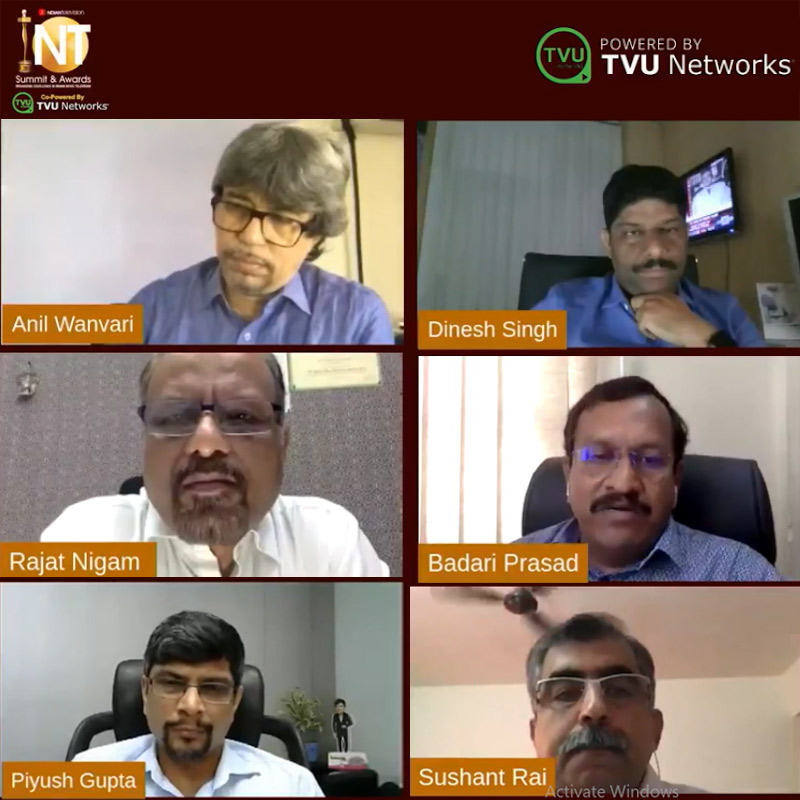
    The panellists were Network18 group chief technology officer Rajat Nigam; India Today group chief technology officer Piyush Gupta; NDTV Ltd chief technology officer Dinesh Singh; TV9 technical head S Badari Prasad; TVU Networks VP – sales South Asia, Middle East & Africa Sushant Rai. The session was moderated by indiantelevision.com founder, CEO & editor-in-chief Anil Wanvari.

    Badari stated that while challenges exist in the industry, the pandemic has given them an opportunity to learn and experiment with new things, which they never did or thought of before. "We tried remote production, remote graphics, remote editing and luckily many of us have become successful in achieving the output on television,” he said.

    Rai mentioned that the transition to moving beyond legacy devices had started a while ago, and Covid2019 was only the catalyst for bigger changes. “We have been busy through the pandemic addressing these requirements of the clients. For example, we had clients who came back and said we want to reduce costs of going out on the field and using phones. We came up with something called the dual camera capability on the device on the phone rather than carrying two phones to do an interview, two chargers, two batteries, two tripods, etc. We now have the capability to simultaneously record with the front and back cam of a phone. For instance, while conducting an interview, you get the DVE output to get a picture in picture and that output can go with GSM and Wi-Fi to the station. So you reduce your cost and maintain your quality of content while using only a mobile phone on the field.”

    Breakthroughs in technology have led to democratisation of news production, in the sense that reporters and camerapersons no longer need to lug around heavy, expensive equipment, for mobile devices, can serve the same purpose equally well, explained Rai.

    “Look at the iPhone 12, the sensor they have is equivalent to studio cameras. Incidentally, we also do Dolby vision recording in the phone with HDR. You no longer need OB vans to go and cover a story, just take a backpack, connect it with a drone and send it to shoot from a different perspective altogether. have film cameras and video cameras and now you have mobile phones doing it that’s where the news is going,” he said.

    This has resulted in drastic cost reduction: instead of sending a big crew in a van and paying for VSAT connectivity and bandwidth even during non-live hours, the production unit is equipped with mobile phones and directed to the site of coverage. Besides being cost-effective, it has also considerably sped up the production process.

    “Using mobile phones and cloud technology, you get the footage in a minute or two and can immediately push it on social media platforms. This is what's happening increasingly, rather than waiting for the nine o’clock bulletin, which is the legacy way of doing things on the television,” Rai outlined.

    He went on to explain how, in this age of breaking news and viral sensations, latency between acquisition and distribution can make or break a news outlet. Consequently, media groups have stepped up their digital expansion on a war footing.

    India Today group chief technology officer Piyush Gupta said, “Social media is not a competition, it is a distribution channel. Yes, the challenges have gone up because of the opening of this easy medium."

    Rai echoed the view and described social media as an augmentation of a big monetization model. "I think the Aaj Tak digital team has four channels on satellite television, with 17 or 18 digital properties, similarly News18 also has multiple digital properties out there. Everybody is getting their digital properties faster than their regular satellite properties. This is no longer limited to English or Hindi, but extends to various regional languages as well. News has changed now, earlier families used to sit down and watch the 9 o’ clock bulletin to get updates but now you can get the updates at any time you want,” said Rai.

    Gone are the days when editorially controlled content was the domain of TV news, now it’s equally accessible on social media and the digital property of a particular news channel.

    Badari added, “People are not just relying on television for news but also on social media, which is overtaking television. TV has to compete with social media equally and all TV channels are diversifying into online platforms."

    Gupta acknowledged that the competition has increased now, but news organisations are adapting to new technologies through new mediums to generate, produce and distribute content. "The face of news production is changing, news consumption is increasing a lot and social media is one of the very largest mediums for consumers,” he concluded.


  • MK Anand asserts that advertisers are reposing faith in news channels

    MK Anand asserts that advertisers are reposing faith in news channels

    NEW DELHI: Times Network MD and CEO M K Anand believes the TRP scandal couldn’t have come at a better time. In a virtual fireside chat with indiantelevision.com’s founder, CEO, and editor-in-chief Anil Wanvari during the NT Awards 2020 Summit powered by TVU Networks, Anand said the incident has given the TV news industry a time to pause to step back and evaluate itself. And the events that followed in light of the probe have presented a great opportunity for the entire system to put its house in order.

    “From what I’ve seen in the last four years, fixing the back-end of the measurement mechanism is required. BARC CEO Sunil Lulla has been trying to bring a lot of sense to the process.He has been continuously improving it. But whether it is inside BARC or outside, there are people who break ranks and resort to corrupt means. We have seen them use shortcuts to get to the numbers and that is not acceptable,” he said.

    Anand stressed the need to have legal remedies to deal with instances of tampering or malpractice. The Mumbai police’s investigation and action against those caught in the TRP racket was an unprecedented move, which should serve as a deterrent to wrongdoers."It is now a criminal offence to tamper with the ratings," he said. "In several instances in the past, when we wanted to register a complaint with the police, it was not possible. Hence it is good that it was registered as a police complaint for whatever reason."

    But if we were to dive deeper, what precipitated this problem in the first place?

    Gamification, coupled with a flux in the market, are major factors that contributed to the "TRP race," said Anand.

    "A brand is built over a period of time with activities, groundwork, standing up for causes. But new players don't have the luxury of quarters and years that established brands – like Times Now or Aaj Tak – have. They try to break into the noticeable set by getting the numbers. It’s easier to use numbers to make the argument that they’re as good," he explained.

    Read more news on Times Network

    The current break in measuring TRPs for news channels, while a welcome decision by BARC, is not on account of content quality, claimed Anand. “Had the TRP scam not been unearthed, there wouldn’t have been a break. I wouldn’t connect the two. A player like us hasn’t been besotted with ratings from a time spent viewing (TSV)  point of view.”

    He illustrated how, when the network lost its “prime asset” in 2016-17, that being the News Hour host Arnab Goswami, it dealt with that huge loss and managed to reach its current position in the market.

    “We have never, ever been time-spent focused, we have always gone the 'reach' route. We are content-focused and responsible to the viewers,” he added.

    Consequently, Times Now has not peddled the kind of lower end content that the industry, in general, is currently being ridiculed for, Anand stated. However, he went on to assert, it’s not fair to tar all journalists and reporters with the same brush, and social media is responsible for propagating this herd mentality.

    “Technology-empowered idiots are now dissing the experts in all fields. Same applies to journalism. People are coming onto social media with half-baked views and opinions and making the journalists out to be idiots. They get trolled by idiots sitting in an echo chamber – because that’s what social media is,” he said.

    But journalists should take heart. Smart reporters shouldn’t get directed by social media, they should just do what they’re good at, not pay attention to the noise, and they will enjoy the work, directed Anand.

    He pointed out that October advertising revenue numbers for his news channels and for those his industry colleagues are running are bouncing back. This despite the fact that the ratings are not being dished out. "Year to year the numbers are up clearly showing advertisers are reposing their faith in the category of news channels."