Tag: Television

  • TV-owning households grew 6.9% to reach 210 million: BARC report

    TV-owning households grew 6.9% to reach 210 million: BARC report

    MUMBAI: Television measurement body Broadcast Audience Research Council India (BARC India) has revealed TV owning households have continued to grow, reaching 210 million in 2020. Home to over 1.3 billion people across 300 million households, India’s television viewing universe has expanded across several metrics, according to the TV Universe Estimates 2020 (TV UEs) report released by BARC.

    Findings of the study play an important role in the structuring of BARC India’s sample design and in ensuring the selected panel represents a true microcosm of India. Equally important is that TV UEs also serve to properly project audience estimates to the population.

    Households and individuals

    According to BARC India’s TV UEs 2020, 210 million Indian households now own a TV set, an increase of 6.9 per cent from 197 million in 2018. Simultaneously, TV viewing individuals also surged 6.7 per cent, reaching 892 million from 836 million in 2018, an increase of 57 million individuals in 2020. TV-owning female population grew by seven per cent, while male population grew by six per cent. In terms of age-groups, the highest growth was witnessed in the “kids” category (age two to 14) at nine per cent.

    Markets

    TV households in Urban markets grew by four per cent from 87.8 million in 2018 to 91 million, whereas Rural markets have grown by nine per cent, up from 108.9 million to 119.2 million in 2020.  While TV households across India grew by 6.9 per cent, Hindi-speaking markets grew by eight per cent, outpacing All India as well as the south states which grew by five per cent.

    NCCS

    As the Indian population continues to move up the socio-economic pyramid, changes have been observed in the NCCS profile of TV households. The TV UE-2020 indicates that the proportion of NCCS A and B has increased to 27 per cent and 31 per cent respectively while NCCS DE has further contracted to nine per cent of TV households in the country.

    BARC India CEO Sunil Lulla said, “As a body that is deeply rooted in data science, BARC India is committed to providing its stakeholders with a true representation of the television universe. We are happy we have been able to ascertain that television continues to be the screen of choice for Indians. With an additional 13 million TV households and an opportunity for another 90 million households that are yet to own a TV set, India’s broadcast ecosystem continues to have a significant potential for growth in the years to come.”

    BARC India measurement science & business analytics chief Dr. Derrick Gray, said, “UE 2020 aptly sums up India’s linear TV ecosystem and highlights that TV owning households continue to grow. Given the global pandemic scenario, the updated estimate is robust and is developed with the help of data and findings based from various previously validated field studies. We are certain that these estimates will help the industry to a great extent. We will continue to provide the industry with a currency that is reliable and of global standards.”

    TV UE 2020 has been developed by computing the linear growth of TV Households and TV Individuals from Broadcast India (BI) studies conducted in 2016 and 2018 at geographic and demographic levels. The distribution of the TV population by NCCS was taken from the most recent Indian readership survey (IRS). BARC India will implement the findings from the TV Universe Estimates 2020 for its data starting week 14, 2021, which will release on 16 April 2021. The updated estimates will reflect for BARC India subscribers in the YUMI Analytics platform with immediate effect.

  • IFTPC proposes Bio-Bubble plan before Maharashtra Govt

    IFTPC proposes Bio-Bubble plan before Maharashtra Govt

    MUMBAI: Film and TV land juddered to a halt on Wednesday after the Maharashtra government imposed a ban on filming for a period of two weeks owing to the skyrocketing cases of Covid2019 in the state.

    The new order is part of the Break The Chain guidelines, that states all shoots of films, television and advertisement will be put on hold from 14 April to 1 May. Until this order, production had been taking place with restrictions like avoiding filming scenes with large crowds or background dancers and no shoots during the weekend lockdown.

    As the television and film industry gears up to brace the impact of the two-week-long restrictions in Maharashtra, several entertainment bodies and broadcasters met on Wednesday and decided to appeal to state chief minister Uddhav Thackeray to allow certain production-related activity by following Covid2019 safety protocols.

    Television producer and Indian Films & TV Producers Council (IFTPC) chairman TV wing & web JD Majethia has said that while the entire fraternity supports the government in its fight to curb the spread of Covid2019, they have decided to approach Thackeray to allow shoots to go on with stricter measures.

    “We are writing to the CM for a few exemptions during the next two weeks. People look forward to entertainment and fresh content while being confined to their homes during such a trying time,” said Majethia.

    He also mentioned that the production houses who have created a bank of upcoming episodes will sustain and those who do not have fresh episodes in the pipeline will have to air repeat telecasts.

    “Some film and television producers are also mulling over plans to shift productions to locations outside Maharashtra like Goa or nearby places to commence the shooting,” said Swastik Productions MD Rahul Kumar Tewary, who is currently shooting in Gujarat. “They are also changing the track of the shows to current times. The whole industry is facing a very challenging time despite following all the Covid2019 protocols the situation is uncontrollable and unpredictable. Broadcasters are also planning whether they want to air original content or repeat telecasts.”

    The new restrictions could impact the shooting of around 90 TV shows, 50 Hindi movies, and 40 Marathi films. Apart from these, the production of a large number of web series will also be impacted.

    While echoing the sentiment, Majethia mentioned that rather than changing locations, it would be easier for a fiction show to alter its storyline. However, it can be extremely difficult for a non-fiction property to create a whole new infrastructure, he highlighted. “Moving the entire cast and crew to a new location is a possibility but what will we do if the situation gets worse over there as well? A lot of shootings were happening in Madhya Pradesh but the government soon announced a lockdown, due to which ongoing shootings were immediately halted. These kinds of situations can happen anytime,” the producer said.  

    With the double-edged sword of rising caseloads and production shutdown at any time hovering over their heads, representatives of several producers’ bodies have decided to propose creation of bio-bubbles to the state government.

    “This week, along with other stakeholders of the industry, we will present our plan on bio-bubble to the government. Through this move we are trying to build a confidence among government officials that if shooting gets resumed, we have a protected environment where we can shoot,” Majethia explained. 

    He also expressed fears that if the lockdown continues and fresh content dries up, it could be difficult to retain existing viewers, who may migrate to online streaming platforms for good.

    Elara Capital research analyst Karan Taurani said TV shows will be most impacted by the shutdown, specifically Marathi and Hindi fiction and non-fiction shows.

    Meanwhile, broadcasters and producers are working in tandem to tackle the situation. There is no penalty on late delivery of content and discussions are underway on extending the budget in case of outdoor shoots.

    “TV broadcasters generally have a buffer of 10-15 days before a fresh episode is shown, hence the impact will be minimal if this restriction stays for 15 days, however in case of any extension, it will have a negative impact for broadcasters," pronounced Balaji Telefilms CEO Karan Taurani.

    Bollywood is also feeling the heat. Films like Shah Rukh Khan-starrer Pathan, Salman Khan-led Tiger 3 and Amitabh Bachchan’s Goodbye that were filming under these restrictions are now in limbo. Moreover, the industry is bearing losses as spot boys and other daily wagers have returned to their hometown due to no work.

    “We support lockdown, but there has to be a way for us. The government talks about others but not daily wagers in our industry,” said the president of the All Indian Cine Workers Association.

  • With Taarak Mehta Ka Chhota Chashmah, Sony Yay! wants to get parents & kids co-watching

    With Taarak Mehta Ka Chhota Chashmah, Sony Yay! wants to get parents & kids co-watching

    MUMBAI: Four years after it made its foray into the kids’ genre with Sony Yay!, Sony Pictures Networks India (SPNI) is all set to launch an animated version of one of its most popular TV shows- Taarak Mehta Ka Ooltah Chashmah (TMKCC).

    The animated show titled Taarak Mehta KKa Chhota Chashmah (TMKCC) will hit the airwaves on 19 April. Set against the backdrop of Gokuldham, the show will witness iconic characters – Jethalal, Bapuji, Dayaben, and Tapu in their animated avatar.

    However, this time, the entire show has been created from the lens of kids’ favourite characters, Tappu and Daya, who will be the protagonists. "The characters will remain true to their original role, but we have moulded the entire show from the lens of Tappu and Daya, as Tappu is immensely popular among young kids. The situations will revolve more around children's issues," said SPNI kids EVP and business head Leena Lele Dutta.

    Animated show that appeals to parents and kids alike

    Produced by Asit Kumarr Modi under the banner of Neela Telefilms, Taarak Mehta Ka Ooltah Chashma remains one of the longest-running shows on Indian television after it crossed the 3,000-episode mark in October last year. It reached out to 22.7 per cent of the children's population in India and has recorded a higher viewership than any other show.

    The channel mainly caters to kids in the age group of 6-10 years. However, this time, the idea was to create a show which caters to both parents and kids even in the animated avatar,” said Dutta.

    The property will be jointly executed by Neela Telefilms and SPNI, where SPNI will manage the production, while Modi handles the creative storytelling. The show will be launched with around 40 episodes; the makers are already creating a bank for season two and have hired multiple scriptwriters to take it ahead. The animation production has been done by Hitech studio based out of Kolkata and Green Gold Animation.

    According to the channel, TMKCC will mainly target the Hindi-speaking markets of Maharashtra and Gujarat. The channel has also planned a Gujarati market feed three months before the actual launch to enable the state residents to watch it in their native language. Colgate has associated with the show as the title sponsor, Play House is the co-powered sponsor.

    Journey of Sony Yay!

    The kids' channel category has evolved ever since Cartoon Network, the first channel exclusively dedicated to kids’ content, was launched in 2014. The category has grown by eight percent during FY2018-2020 and according to BARC data, five channels –Nick, Sonic, Hungama, Pogo, and Disney – dominate the top share.

    However, according to Dutta, the growth of Sony Yay! has been three to four times more than the category, with some popular shows like Shinchan, Doraemon, Chhota Bheem, and its most successful homegrown series Motu Patlu.

    “We are the fastest-growing channel in the category. Sony Yay! has exponentially grown at the rate of 42 per cent since 2018. We have faced many challenges in these four years. In 2020, we were exposed to Covid2019 pandemic, the year before that was NTO implementation, but we managed to sail through all this,” she shared.

    According to the latest data, the Indian Kids entertainment industry reaches over 73.2 million kids and counting (India U+R, TG: 2-14 All NCCS, Universe 183 million). Due to the current situation and curbs, kids are expected to spend more time indoors which will further broaden their interest in all things new.

    “Overall, the kids’ entertainment category occupies eight per cent of the viewership pie of television but receives only 3.5 per cent of the revenue share of advertising, making it a highly under-indexed category. That said, incremental growth will also be led by licensing and merchandising followed by character/brand integrations,” said Dutta.

    New shows to bolster the summer slate

    The channel is also planning to tap into the ever-increasing demand for fresh content this summer and will offer viewers a wide range of choices of new characters and fresh narratives this year. This includes new characters and narratives with shows like Kikoumba, Chimpoo Simpoo, Bhaalu Yeh Bindaas Hai, Chorr Police, Obocchama-Kun, new movies, and episodes of its existing properties Honey Bunny ka Jholmaal and Paap-O-Meter.

    “In an average Indian family, the non-prime time is when kids gain control of the TV sets and we have always conceptualised our strategy around these time bands. It has also led us to constantly evolve and enhance our content strategy into a wide array of 16 shows to match the demand of fresh and differentiated content,” detailed Dutta.

    This summer, the channel will also curate special content for its audience which includes episodic snippets, interactive games, contests, a gamut of entertaining content in seven different languages along a barrage of exciting virtual summer workshops. The makers will also have a 100-city canter activation followed by nine-city mall activation covering key markets in Gujarat, Punjab, Madhya Pradesh, and Uttar Pradesh with some engagement touchpoints incorporated.

  • Get crew members tested for Covid, IFTPC urges TV producers

    Get crew members tested for Covid, IFTPC urges TV producers

    MUMBAI: With no slowdown in sight in the number of Covid2019 cases in Maharashtra, the Indian Films and Television Producers Council (IFTPC) has urged all television producers to conduct RT-PCR/antigen tests of crew members working on ongoing projects. The statement comes at a time when the state government is mulling a complete lockdown for two weeks to combat the second wave of infections.

    Maharashtra is battling an unprecedented surge of Covid2019 cases, with nearly 60,000 cases being reported daily for the past few days. As many as 394 people lost their lives in the past 24 hours taking the death toll to 57,987.The state worst hit by the ongoing pandemic was forced to enforce a night curfew and a weekend lockdown last week. Except for essential services, it announced the closure of all other businesses, including theatres, cinema halls, and multiplexes till 30 April. However, the film and television shoots were permitted to continue amid restrictions.

    In a statement, the IFTPC said that it has asked the producers of 90 TV shows to conduct Covid2019 tests of their entire crew and submit a report. It has already received confirmation of as many as 9,000 tests, it stated further. The tests will be repeated after 15 days as per the ‘Break the Chain’ guidelines. The association has, however, mandated that antigen tests be done every week for additional safety.

    IFTPC chairman TV & web wing JD Majethia mentioned that broadcasters have borne the cost of the tests. "All the necessary guidelines are being followed scrupulously. We have also urged the producers to create a bio-bubble of the sets and post-production facilities for total safety,” he said, adding that the work on bio-bubble has already commenced and will fructify in a couple of days.

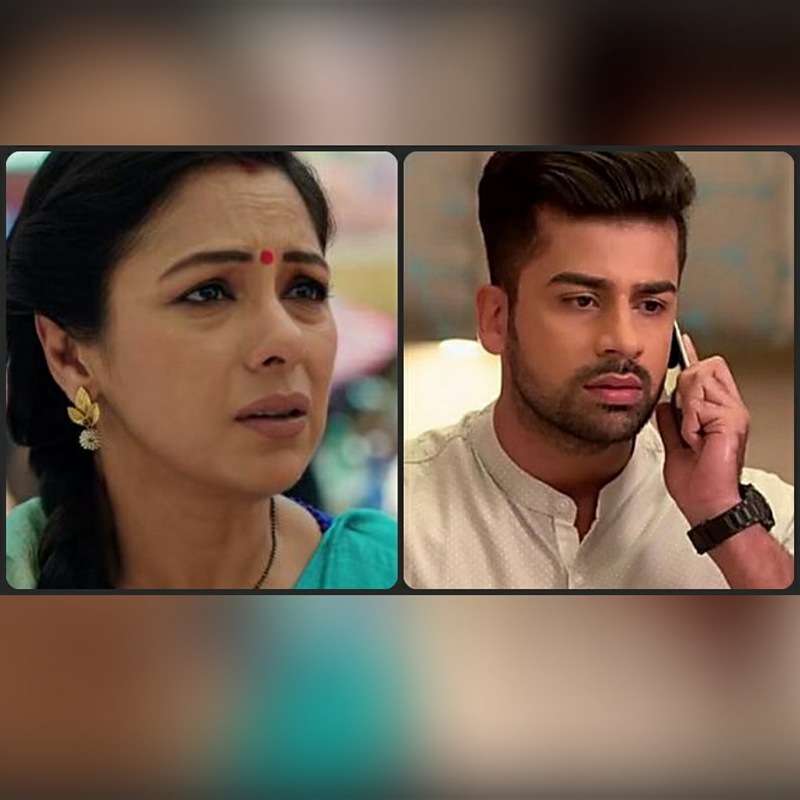
    Several on-ground productions including Ram Setu, Gangubai Kathiawadi, and Dharma Productions-backed Mr. Lele were impacted after actors, as well as other members on the sets, tested positive for the novel Coronavirus. Filming of Wagle Ki Duniya and Anupamaa was also halted after some members on the sets tested positive. Mumbai itself has recorded nearly 10,000 positive cases in the past 24 hours and recorded 79 deaths. Other cities like Aurangabad, Pune, Nashik, Thane also remain badly affected.

    Majethia said the television industry has been continuously producing entertaining shows which help the people to stay at home and bring relief to their stressful life. “We hope the government will treat the industry as an essential service and its workers as frontline workers,” he stated.

    On Sunday, chief minister Udhhav Thackeray held a meeting with the Covid2019 task force to discuss the current situation and the duration of a state-wide lockdown and its potential economic fallout. Thackeray had earlier warned that a lockdown is imminent if there is no let-up in cases. Talking to reporters post the meeting, state health minister Rajesh Tope said most of those present at the discussion were of the view that a lockdown should be imposed in the state for at least two weeks. However, he added that a final decision regarding imposing a lockdown in Maharashtra will be taken after 14 April.

    The state has administered Covid2019 vaccines to over a crore people so far.

    The second wave of Covid2019 and another lockdown could land a serious blow to the entertainment industry, which is still recuperating from the damages incurred last year due to an extended shutdown. Apart from the loss of revenue and the impact on the workforce, the restrictions have also put a question mark over the revival of the film exhibition business.

    What the second Covid2019 wave means for Maharashtra

    The IFTPC had earlier cautioned the producers about a potential "September-2020" like situation developing again and urged them to avoid outdoor shoots with immediate effect. Meanwhile, the Federation of Western India Cine Employees (FWICE) formed a monitoring team to ensure that all Covid2019 shooting guidelines, including safety precautions on the set, avoiding filming of crowd sequences are strictly followed.

  • Zee TV’s Aparna Bhosle on changing the content game in television

    Zee TV’s Aparna Bhosle on changing the content game in television

    MUMBAI: Traditional television broadcast has long been a staple of entertainment. But as the fast-growing internet and over-the-top (OTT) video platforms make inroads into the consumer market, more and more people are beginning to cut the cord and move to a digital viewing experience. The rules of the content game have changed. Digitisation has lifted barriers and offered a multitude of opportunities to tell stories that were once impossible to tell and it has become more important than ever for broadcasters to up their game in terms of content quality.

    Indiantelevision.com’s Shikha Singh spoke to Zee TV business head Aparna Bhosle on how this transformation has impacted the audiences’ demands, the use of newer technologies, shooting techniques to meet the ever-growing need of viewers for quality entertainment and more.

    Edited Excerpts:

    On what has led to the growth of TV shows.

    Technology has evolved over the years and has certainly contributed significantly to our shows looking much better visually. We have more sophisticated cameras and lenses today, much better visual effects, and cutting-edge post-production software. But, at the end of the day, it is more about a maker's intent. Our audiences are far more exposed to global content than they ever were. Hence we, as makers, have started putting in a lot more effort into every small detail which makes the content look more aesthetic and visually appealing. It is not only about monetary investment but also investment in terms of time and thought. A lot more thought goes into production design which overall results in shows looking much better.

    On changes they have introduced to improve the look and feel of the shows.

    Shooting on Sony F5 is a standard in today's time. We even shoot on more sophisticated cameras such as Arri Alexa, Sony FX9. These are some cameras that have given great results even in low lighting conditions and the picture quality is top-notch. And with the advent of specialty equipment such as drones, Go-Pros, one can bring alive the scale of production values.

    Apart from that, more and more technicians are now experimenting not only with cameras but also lighting techniques. The days of flat lighting are long gone. Today's storytelling requires different shows to have different lighting. It is not just about having the latest technology at your disposal, it is more about how one leverages it to narrate a story more effectively. Technicians today love to experiment and create new looks for the show. They play with camera angles, lighting techniques which overall helps in achieving a new contemporary look. Sound, too, plays a very important role in storytelling. Today, our shows come with a Dolby digital 5.1 output which gives our viewers a high-quality sound experience while watching TV.

    On advantages of shooting in 4K.

    Shooting in 4K means more resolution, deeper colours, more creative options to work with during post-production. But the 4K files are heavy, which means more time to grab, hence for daily shows, it becomes time-consuming and not viable as a process. Shooting in 4K is possible in the case of certain events or promos that provide sufficient timelines between the dates of the shoot and on-air telecast.  

    On what kind of discussion goes on with production houses before creating any property.

    Detailed discussions between the channel and the production house right from the concept of a show, the narrative and the pace at which the storytelling should unfold, the key drama spikes, the characterisation, casting, core communication pitch, the production design, and the overall look and feel of the show are an integral part of the show’s making. As one moves closer to the show going on the floor, aspects such as set design, art direction, costume styling, camera treatment, and edit patterns get discussed.  

    Today, with the audience being far more exposed and discerning,  it is imperative for every broadcaster to display their A-game to hold and sustain audience interest.

    On how shows are made and changes introduced in the script.

    Just a few years ago, a tape used to be delivered from the editing studio to a channel’s office for transmission. Today, the same is achieved by a simple file transferring process. Content production is a dynamic process, and we are always eager to introduce new technology into our ecosystem. The journey from envisioning to execution is always a challenging one. As far as scripting is concerned, technology has given far more creative freedom to content creators as a lot of sequences that were earlier unthinkable in terms of execution have now become possible and even cost-effective.

    On how digitalisation has changed content production on TV.

    It has certainly lifted a lot of barriers. The camera quality is far better. Cameras can now shoot much better in low light conditions; they are lighter in weight, there is sophisticated equipment to shoot underwater, action sequences, etc. Our requirement for lights has considerably reduced. Shooting in uncontrolled environments, outdoors has become far easier. Footage transfer has become faster. The advancement in visual effects has empowered us to bring our viewers stories that were once impossible to tell.

    The post-production process has gone through a mammoth leap. The process of DI (digital intermediate, or digitising filmed content and manipulating the colour and other image characteristics), colour grading, sound effects, and background music were all very time-consuming and today can be achieved in a decent timeline. From a viewer's point of view, they are experiencing content with never-seen-before visual and audio quality and further advances in digitisation will only help us to up our ante.

  • IPL vs GECs: Experts play down the league’s impact on the latter’s numbers

    IPL vs GECs: Experts play down the league’s impact on the latter’s numbers

    MUMBAI: The countdown to the country's biggest cricketing extravaganza, the Indian Premier League (IPL), has begun. Any doubts about the popularity of the IPL can be laid to rest if the viewership of the thirteenth edition of the tournament is taken into account. According to BARC, IPL 13 viewership grew by 23 per cent compared to the preceding edition, with overall 400 billion viewing minutes.

    Meanwhile, GECs are lining up new fiction and non-fiction properties to counter this Goliath. However, experts believe that the whole television ecosystem is so accustomed to this phenomenon that it will hardly make any difference. Broadcasters are used to devising strategies in advance to compete against the IPL for eyeballs and ad revenue.

    IPL to not have major impact on GECs

    Last year, due to the onset of the Covid2019 pandemic, the IPL was delayed by close to six months, and when it took place, it coincided with the launch of impact properties like Bigg Boss, Kaun Banega Crorepati on GECs. Back then, analysts had pointed out how these marquee shows were unable to garner TRPs like their previous editions due to the clash with the cricketing league. However, IPL 2021 is happening at its usual time.

    Wavemaker India sports national director Jigar Rambhia asserted that the tournament has nothing to do with festive or non-festive time period, viewers tune into the IPL regardless.

    Thinking along similar lines, Ormax Media CEO Shailesh Kapoor revealed, “There has traditionally been a 10-20 per cent drop in viewership of genres like GEC, movies and news because of the IPL. This has now been a known impact for almost a decade, and broadcasters plan for it consciously.”

    How broadcasters are prepping

    IPL matches are played in two slots – in the afternoon from 3.30 and in the evening from 7.30. The question arises how primetime shows are going to perform during this time frame. The common notion is that single TV homes will opt for the IPL, with GEC shows being watched between the match breaks or viewers tuning into them when the matches end.

    Zee TV business head Aparna Bhosle disagreed with this viewpoint.

    According to her, Hindi GECs over many years have managed to sustain viewership and even grow despite the IPL. “Long running fiction or non-fiction shows have, by and large, not seen an adverse impact on viewership due to existing fan bases and the loyalty channels’ command in terms of appointment viewership,” she noted.

    Viacom18 chief content officer Manisha Sharma, during an earlier conversation, had mentioned that the network’s flagship Hindi GEC Colors will continue to spice up its existing fiction line-up with consistent highpoints across all shows, while dance reality show Dance Deewane 3 will safeguard the weekends. “With our strong weekday & weekend programming line-up, we are sure to protect our ratings from the IPL brunt,” she had stated.

    However, Kapoor is of the opinion that prime-time shows will witness a ratings drop, ranging from 10 per cent for the popular programmes, and up to 20-30 per cent for the middling ones.

    Rambhia was of the view that broadcasters are unlikely to launch new programs that directly clash with the IPL. “There are some networks who are in fact putting their original content on Sunday afternoon when there is no match. For e.g. if any GEC is putting their show at 12 pm it can easily get over by 3.30 when the match will start. I believe Filmfare is also going to premiere at 12 pm,” he added.

    Audience engagement through different devices

    Kapoor shared that the consumption of IPL on digital (Disney+ Hotstar) is largely driven by solo viewing and out-of-home consumption, such as during travel. When the family wants to watch a serial on a GEC, an IPL fan in the house will watch the match online at that time.

    Growth of online consumption has created more viewing choices within the family, and this doesn't harm GECs in any way; in fact, it helps to some extent, he opined. Additionally, while HD homes are a niche group, one doesn't expect their viewing dynamics of IPL to be too different from SD homes.

    “We are still a single TV household. There is a consumption happening on mobile phones and other mediums but for genres to target specific people on various platforms will take some time. Largely, we are still a TV viewing country. So, it is not going to make much difference,” Rambhia detailed.

    How GECs fare in terms of advertisement

    When it comes to advertising, experts are confident that GECs will fetch their usual ad rates. Rambhia revealed that since January, advertising rates are at an all-time high. He shared, “In terms of inventory, I don’t think television channels are getting impacted. Because at the end of the day, only a certain percentage of advertising is available on IPL then you have other players who advertise on GECs. Whereas there are some categories and brands like cola which advertises on both IPL and GEC.”

    Kapoor pointed out that there has been no major impact on ad rates, as most bigger deals are for a longer period, like six to 12 months.

    “Over years, advertisers who want to be seen on IPL have allotted budgets to it, some of which have come from other media like print and outdoor, while some have been diverted from other genres on TV like GECs. But IPL is so settled now that we cannot call this an impact anymore. It's more like a norm now, whereby advertisers make their annual plans keeping IPL in mind,” he shared.

    It will be interesting to see if GECs are able to hold their own against the IPL come 9 April. Or will the shorter gap between the 13th and 14th edition play against the league’s favour? However the chips may fall, for now the game is on!

  • Covid sweeps TV Land: Rupali Ganguly, other actors test positive

    Covid sweeps TV Land: Rupali Ganguly, other actors test positive

    MUMBAI: The second wave of the Covid2019 pandemic has hit India hard. The country is struggling in its attempt to curb the spread of the deadly virus, and despite vaccine roll-out, cases are on the rise with every passing day. Today, India became the second nation, after the US, to report one lakh new cases in a day.

    This turn of events has precipitated a crisis in the television industry, with more and more actors testing positive every day. The lead actor of Apna Time Bhi Aayega, Megha Ray, is the latest TV celeb to test positive for the novel Coronavirus.

    Balaji Telefilms’ producer Ekta Kapoor recently updated fans about Yeh Hai Chahatein actor Abrar Qazi.

    “Actor Abrar Qazi who is an integral part of the TV show Yeh Hai Chahatein has tested positive for Covid2019. As soon as the symptoms were detected, he received medical help and quarantined himself. Immediately thereupon the entire cast and crew were isolated and tested. The BMC is informed and the sets will be fumigated and sterilised as per the protocol. Currently, the artist is receiving medical attention and under home quarantine. We are constantly in touch with the entire team as their health is our priority. We stand by our commitment to safety and will continue to ensure that all measures prescribed by the authorities are being adhered to,” the producer shared.

    Actor Narayani Shashtri, who is currently seen on Aapki Nazron Ne Samjha, is also one of the actors who has come down with the virus.

    Full House Media producer Sonali Jaffar informed that the entire cast and crew were immediately isolated and tested. The BMC was notified and the sets were to be fumigated and sterilised as per the protocol.

    Several TV actors who also recently tested Covid2019 positive include Aditya Narayan and Shweta Agarwal, Mishkat Verma, Yeh Rishta Kya Kehlata Hai's Kanchi Singh, Ankit Siwach, Namak Issk Ka actress Monalisa, Anupamaa actors Rupali Ganguly, Sudhanshu Pandey and Aashish Mehrotra, and Aap Ke Aa Jane Se actor Karan Jotwani. Other names include Molkki actors Toral Rasputra, Amar Upadhyay and Priyal Mahajan, Nikki Tamboli, Neil Bhatt, Manit Joura, Ariah Agarwal and Daljiet Kaur. TV producer Rajan Shahi also contracted the novel coronavirus.

    This, when TV land was trying to get back on its feet after braving a challenging 2020 marked by production in limbo, viewer migration and scarce ad revenues. But in the face of these troubled times, the industry is determined to weather the situation together and survive. 

  • Ad volumes for Jan-Feb 2021 highest since 2017: BARC India

    Ad volumes for Jan-Feb 2021 highest since 2017: BARC India

    MUMBAI: In a piece of good news for the industry battered by the pandemic, the latest data from television monitoring agency Broadcasting Audience Research Council (BARC) shows the combined TV ad volume for the months of January and February in 2021 was the highest since 2017.

    The advertising sector is on a path to revival and the gains made during the second half of 2020 have seeped into the first two months of 2021. According to the data, the ad volumes have increased by 21 per cent over last year. “Continuing the momentum built in the second half of 2020, TV ad volumes have had the most promising start with January and February ad volume levels of 2021 being the highest ever in five years. A lot of sectors/categories, and key non-FMCG brands, also seem to have increased their presence on TV during this period which augurs well for the medium,” said BARC India client partnership and revenue function head Aaditya Pathak.

    In terms of genres, movies and music + youth registered higher growth than the average growth in the overall ad volumes which was 25 per cent and 24 per cent respectively. This was followed by GEC and news with 21 per cent and 18 per cent growth respectively during Jan-Feb 2021 over the same period in 2020.

    The top ten advertisers drove the ad volumes on TV, contributing 45 per cent to the total share and recorded 35 per cent growth over last year. The next 40 advertisers rode alongside with 25 per cent growth during Jan-Feb this year.

    2020 also witnessed new entrants in TV advertising and the rise of advertisers in the digital segment, especially those from the e-commerce segment. The phenomenon holds true for the current period in consideration as well. E-commerce grew by 21 per cent in Jan-Feb 2021, showing a consistent growth year-on-year in TV advertising. Other categories like retail and building, industry, and land materials also saw an increase in spends this year, compared to 2020.

    Brands including Lizol, Dettol, and Harpic emerged as the most advertised brands during the period. Several non-FMCG Brands also increased their presence on TV during this period.

    With a promising start to the year, the expectations for higher ad spends have definitely gone up for the coming months. The upcoming national and international sports events are also expected to bolster the trend as advertisers continue to keep TV as their preferred choice of platform to reach out to the millions of homes across India.

  • Indian pay TV ecosystem yet to optimise HD viewing opportunity

    Indian pay TV ecosystem yet to optimise HD viewing opportunity

    KOLKATA: Industry leaders have emphasised over and over again that despite recent developments and change in consumer preferences, pay TV will continue to coexist with over-the-top (OTT) platforms. On the other hand, the need for a sustainable business model is also undeniable amid the rapid flux in the media and entertainment industry. In the coming future, the conversion from standard definition (SD) to high definition (HD) can be a key growth driver, the experts said in a panel discussion at the Video and Broadband Summit (VBS) 2021. Moreover, the broadband segment will be another crucial factor, which has seen higher uptake in the last few quarters.

    ‘The leaders speak laying out a profitable future’ moderated by Indiantelevision.com founder, CEO and editor-in-chief Anil Wanvari included Indiacast Media Distribution president Amit Arora, Siti Networks CEO Anil Malhotra, Star & Disney India- India & International TV distribution president Gurjeev Singh Kapoor, Travelxp 4K founder & CEO Prashant Chothani, Fastway Transmission & Netplus Broadband group CEO Prem Ojha, and NXTDigital MD & CEO Vynsley Fernandes as panelists.

    Arora said broadcasters will always remain focused on telling new, exciting stories. But the mediums of broadcasting, distributing content will include a range of devices, TV, screens. DPOs have to look at how they can assimilate all the content assets and determine the best way of marketing those.

    “The pot of gold I see for the industry is how you can make a dollar more from the customer giving him more and more content. India will stay in a broad spectrum of free TV to $10 in the next 10 years, which segment you want to operate in is going to be your choice,” he quipped.

    Fernandes agreed to the need of looking at a wider spectrum rather than having a singular kind of telescopic lens for the distribution platform operators (DPOs) as well. In addition to that, DPOs need to bear down costs like infrastructure sharing. The important thing is how they drive out a better value for each dollar, he added.

    “Our offtake of HD in the country is very low. We have not been able to achieve a strong HD push. There is that much runaway available to us. So, can we make the transition from SD to HD as one of the key drivers going forward as there is so much runway available? The second thing we have to focus on is if we can take the second runway of a whole bunch of customers who are watching FTA content and look at them converting them to basic pay bundles, maybe from one dollar,” he stated further.

    Arora highlighted another important aspect; while HD consuming subscribers are hovering around 14-15 million, a large section of the population buys HD boxes but watches SD channels. Hence, marketing the HD proposition is very important to raise awareness.

    “We are a market of 200 million TV homes and we have 15 million homes who are watching HD channels. We have closer to 40-45 million homes that have HD TV set. The communication piece is a big issue. People don’t know when they buy an HDTV set, they also have to buy an HD set top box, along with that they have to buy a subscription for HD channels. What they think is if they have a TV set, they would get brilliant quality of channels regardless,” Kapoor detailed.

    Broadcasters and DPOs have not taken HD expansion as an agenda but it is more important than ever as OTT platforms are offering high-quality video, experts concurred. However, Travelxp’s Chothani thinks the industry needs to look beyond HD and start focusing on 4K too.

    “Five years from now, there will be 40 million 4K homes in India. MSOs and DPOs have to look at the 4K opportunity. India has a great opportunity because of the infrastructure in the cable system. If a consistent effort by MSOs, DTH platforms is taken, people will realise SD quality is not good enough,” he noted.

    On the other side, broadband looms as a highly promising prospect on top of everything, Fernandes added. Siti Network’s Malhotra is also optimistic that there is an opportunity for everyone despite the presence of players like Jio, Airtel as there are 22 million wired broadband customers compared to 650 million internet users in the country. Even if Jio subsidises as it did for wireless broadband, they might have maximum market share but would not be able to acquire all consumers, he opined. However, the home broadband rollout is slow in the country because it is physically extensive work.

    Ojha said that his organisation has already penetrated the urban consumers in its strongholds and will reach rural areas faster than Jio. “Evolution is happening in the ecosystem. There can be imperfection at every level, even at the regulation level. But we will have to look at the longest horizon where the growth engine has to be broadband driven,” Ojha commented.

  • Monetising Ishara is the primary focus in next few quarters: Aditya Pittie

    Monetising Ishara is the primary focus in next few quarters: Aditya Pittie

    MUMBAI: In September 2016, Anand Mahindra-owned television channel Epic roped in Pittie Group CEO Aditya Pittie as its managing director. Since then, the Anand Mahindra-and Pittie-promoted IN10 Media has expanded – from television (Epic), to OTT platforms (Epic On and Docubay), and even a production house (Juggernaut) in its kitty.

    After establishing its linear broadcast channels in their respective genres, Epic, Filamchi, Gubbare and ShowBox, the In10 Media Network is all set to foray into the Hindi GEC market with Ishara. Five original shows debuting as part of the channel’s inaugural line-up include mythological masterpiece Paapnaashini Ganga; crime-thriller Faraar Kab Tak; and three fiction shows Agni-Vayu, Humkadam, and Janani. Besides that, it was recently announced that Juggernaut Productions and Mango People Media will also produce a show based on the life of Maharani Gayatri Devi, to air on Ishara.

    Pittie finds his passion in creating value and wealth and building scale. “That’s why I am interested in multiple businesses, not just any particular business. I am passionate about business, and building businesses that have scale, that gives employment to many people. That is what drives me,” says Pittie in a conversation with indiantelevision.com’s Shikha Singh, during which he spoke at length about new kid on the GEC block – Ishara, its programming line-up, marketing strategies and much more.

    Edited excerpts:

    On launching Ishara amid the pandemic.

    As a media broadcast channel, we have the ambition to have another market share and after adding Showbox in our portfolio and launching Filamchi, it was always in our plan to venture into the Hindi GEC genre, hence we launched Ishara. The planning was in place before the pandemic took place. Now as the market is bouncing back, and the GDP is coming back on track, we feel the demand for content is comparatively more and most importantly, we felt that the timing is right to offer something which is slightly differentiated and fresh to the audiences.

    On the channel’s standout USP.

    We are positioning the channel as a celebration of life, while the stories are about real India, we are trying to bring the element of freshness and progressiveness. The idea is to provide something that is deeply rooted in values but also progressive in nature. Our idea is already resonating with people on social media and other consumer engagement sites. I think our USP is communicated fairly well, and that is how we are going to differentiate from other competition existing in this space.

    On the initial sampling of the channel.

    The way we have chosen our line-up is unique. Sampling is a factor of availability, very rarely do you see a channel in the pay and HSM (Hindi speaking market), so availability plays a very important role. We tried to create a lot of awareness including using an extensive marketing plan. Then obviously, how interested audiences are after seeing the trailers and the promos that you communicated, and what kind of conversion you are trying to get out of sampling. The fact that we have chosen Paapnaashini Ganga as our mythological show and Janani is a very powerful concept which everybody can relate to. We feel that with the combination of all of these factors there definitely will be a strong sampling for our channel. We have a mix of fiction and non-fiction shows which are in the pipeline.

    On conducting research and deriving consumer insight pre-launch.

    We have engaged with certain focus groups and agencies; we collected some data and qualitative analyses to understand consumer preferences. The fact that we are launching a channel with a 7-9 pm programming slot and again 9-11 pm, it’s very rare that a channel repeats its prime-time programming in the same primetime slot. Our channel is our own competition. The decision has been taken after the deep consumer research including both quantitative and qualitative.

    On its target audience.

    The genre is targeting both urban and rural audiences. However, as our country is growing so fast, consumers are evolving it would be difficult to find where our audiences live, but we have a slightly more urban slew. Similar to any other GEC, our major target audiences are females.

    On advertisers’ response.

    The responses are quite encouraging, the feedback is very strong. They feel our content is very fresh and there is potential to get market share. They are willing to partner with us at the early stages.

    On content and distribution strategy.

    At present, we have launched all our channels as part of the  Epic value pack which is a Rs 2 bouquet. From 1 April onwards we are increasing our price to Rs 7, where you will get all the five channels in the same amount.

    On their media mix and how much digital will occupy.

    For Ishara, we have allocated maximum resources to television slots. That is the fundamental strategy, we feel the convergence is higher from television to another TV channel. We have also taken lots of EPG spots with cable and DTH players. Apart from that, we have partnered with all radio networks across India. We are also leveraging digital, print and OOH mediums.

    On linear feed availability on the network’s OTT platform Epic On.

    We are still considering when to make Ishara available on our OTT platform, the linear feed won’t be coming soon to Epic On. We’re still deciding on when to make livestreaming available, and catch-up will be available subsequently. Currently, maximum sampling of our channel is going to happen on broadcast before we start moving some of the audiences to digital. But eventually, it is going to be the combination of both linear TV and OTT. We are living in a world where both are complimentary so definitely the content will be available on Epic On at some point in time.

    On getting into sports broadcasting.

    We are very clear about our strategies, and we are definitely not getting into sports broadcast. It is not part of our agenda.

    On the secret ingredient that has kept the In10 brand going for years.

    I think being a challenger brand or a product is something that as an entrepreneur I enjoy building. The whole mentality of starting up when the odds are against you is what encourages and drives the organisation to grow our business. I have an inherent love for creating content, whether it is creating compelling infotainment which is India centric or loved by so many people, we are the only music channel which has 40 per cent non-Bollywood music. The love for offering and creating content is actually the main driver for our ambition. This is the only reason we call ourselves content engines.

    On content consumption trends, and what themes will rule 2021.

    With India’s disposable income rising and internet connectivity improving, there will be more consumption of premium content. People’s ability to pay for premium content will increase, hence we are witnessing a growth in OTT content consumption. However, I think television content will still continue to be a priority for Indian viewers. Both television and OTT will be complimentary to each other, while content will become the main driving force in consumption. People will switch between watching content on disconnected services like mobile phones or broadcast set-top boxes. In terms of genre, feel-good, spiritual content, and comedy content will resonate more with viewers. Apart from that, horrors and supernatural shows will also be there.

    On his vision for 2021.

    We have created a good product with Ishara, we hope viewers will appreciate it. Obviously, monetising Ishara will be our focus for the next few quarters. In the coming six to eight months, we will make sure our entire bouquet of channels continues to grow.