Tag: Television

  • Indian Broadcasting Foundation (IBF) moves SC against HC’s NTO 2.0 verdict

    Indian Broadcasting Foundation (IBF) moves SC against HC’s NTO 2.0 verdict

    New Delhi: The Indian Broadcasting Foundation (IBF) has filed a petition in the Supreme Court against the Bombay high court verdict, which had upheld the constitutionality of the amended New Tariff Order (NTO 2.0) passed by the Telecom Regulatory Authority of India (Trai).

    After a legal tussle that lasted over a year, Trai had managed to get a green signal from the court on 30 June on the implementation of amended NTO 2.0 passed in January, 2020. The division bench of the high court stated that the challenge to the constitutional validity of the 2020 rules and regulations of Trai does not hold any water. At the same time, it termed one of the twin conditions “arbitrary”, according to which the maximum retail price of an a-la-carte channel could not be more than one third of the maximum rate of a channel in the bouquet.

    The court had passed the judgement on petitions filed by several broadcasters under the umbrella of the Indian Broadcasting Foundation (IBF) including Zee Entertainment, Star India, TV18, and Sony Pictures Network India (SPN) who had opposed the order, challenged the tariff order and termed it “arbitrary and in violation of their fundamental right.”

    According to broadcasters, the new order could lead to a drop in the subscription revenue, especially now, when the industry is reeling under pandemic-induced low advertising revenue. NTO 2.0 has prescribed linkage between a-la-carte price and bouquet, and reduced the price cap on the subscription fees for pay channels. So, TV broadcasters can include a channel in a pack only if it is priced at Rs 12 or less than that. Earlier, this limit was Rs. 19.

    The broadcasters only got partial relief when the high court struck down one of the twin conditions relating to the average pricing of a channel in a bouquet terming it as ‘arbitrary’. This will allow broadcasters to increase the number of channels they want to provide in the bouquet and enhance the value delivered to consumers.

    According to the condition the a-la-carte rates of each pay channel (MRP), forming part of a bouquet, shall in no case exceed three times the average rate of a pay channel of that bouquet. So, if the maximum price of a channel in a pack was Rs.12, a broadcaster could not charge more than four rupees for an a-la-carte channel.

    The high court had also extended its previous interim order, asking Trai not to take any coercive action against the broadcasters, if they did not implement the new tariff order. The order was extended for the next six weeks.

  • Digital & TV steer ad industry’s recovery to pre-pandemic levels in 2021: dentsu

    Digital & TV steer ad industry’s recovery to pre-pandemic levels in 2021: dentsu

    MUMBAI: India has emerged as one of the top five markets with high year-on-year growth rate in advertising spends, said dentsu in its latest Global Ad Spend Forecast June 2021. After suffering a steep 12.9 per cent decline in 2020, the ad spend is expected to bounce back with 10.8 per cent growth in 2021, according to the report.

    The forecast suggests the overall ad spend will reach $ nine billion this year, and expand further by 12.4 per cent in 2022. The growth will largely be led by Television and Digital, as Print, Cinema, OOH and Radio are expected to take a longer time to recover.

    According to the data, Television continues to remain the most popular and resilient media in India, retaining a 40.9 per cent share in ad spend despite the pandemic. The medium also showed a 7.7 per cent spike in growth, as compared to the 2020 spend. Digital’s share of spend has grown rapidly, from 20.0 per cent in 2019 to 29.4 per cent in 2021, and is expected to reach 32.7 per cent by the end of 2022

    India in top 5 mkts-denstu

    The bi-annual report based on data from 59 markets, anticipates a full recovery for the global ad market in 2021, with spends exceeding pre-pandemic levels sooner than was previously forecast. 

    While 2020 remains the weakest performing year since the global financial crisis, the decline in growth during 2020 has improved since the January 2021 forecast from -8.8 per cent to -7.2 per cent. The pandemic-induced decline in global advertising spend during 2020 has also proved less severe than anticipated, it states. The overall ad market outlook for 2021 shows recovery with 10.4 per cent growth and a spend of $634 billion, which represents an improvement of 4.6 percentage points over January 2021 prediction.

    Ad-spend in APAC

    Overall, the ad spend in APAC is expected to grow by eight per cent, with Australia and India showing higher growth rates in 2021 compared to other countries. In APAC, the 6.2 per cent rise in digital spend last year is likely to grow by 12.8 per cent in 2021 to reach $124.5 billion, representing a 54 per cent share of total ad spend. 

    Regional live events such Tokyo Olympics and Paralympics Games will remain significant drivers of growth in Linear TV ad spend in APAC (3.9 per cent increase in 2021 to reach $59.2 billion). The report also indicates a shift towards CTV (Connected TV) and OTT (Over The Top). With audiences moving more towards digital media consumption, Linear TV spend will remain below pre-pandemic levels until beyond 2021.

    With gradual lifting of restrictions on social activities, OOH will bounce back post impact of the pandemic, rising 7.5 per cent in 2021 in the region. Cinema has a slightly longer recovery, with a further decline in 2021 (-5.0 per cent) but expected to bounce back in 2022. Radio will also see growth (4.3 per cent) in 2021.

    While most channels will return to growth in 2021 (Cinema in 2022), Print is seeing a slight decline in 2021 (–2.7 per cent) and expected to continue declining in 2022, as it evolves towards new modes of digital delivery.

    Meanwhile, government spending remained a key growth area, supporting the Covid vaccine rollout and other related initiatives. In APAC’s key markets, the travel and transport sectors, will still be affected by the uncertainty of the past year and see a muted increase in demand (4.9 per cent), while Media & Entertainment is forecast to see growth (9.7 per cent).

    dentsu International APAC CEO Ashish Bhasin said, “It is promising to see a return to growth in the APAC region with two of our markets in the top five contributors of ad spend growth; China and Japan. While China continues to see strong levels of growth driven by Digital and OOH, Japan’s growth will be buoyed by events like the 2020 Olympic & Paralympic Games, and the House of Representative elections and the advertising spend associated with it, particularly in TV.

    By market, the top five contributors to the $ 59.7 billion of growth in incremental ad spend during 2021 will be the US, China, UK, Japan and Australia. The US share of ad spend remains significantly above all other markets in 2021. The highest growth rates in 2021 are forecast to come from spend in India, Canada, the US, Australia and the UK.

    Media APAC CEO & Media Singapore MD Prerna Mehrotra said, “We are optimistic that the region will bounce back to positive growth in ad spend, with some channels likely boosted higher than pre-pandemic levels. The main drivers behind the growth is economic recovery, with the APAC GDP set to increase by 7.3 per cent, and a stronger-than-ever push to digital marketing.”

  • Azaad TV aspires to be the most credible platform for rural India: Bharat Kumar Ranga

    Azaad TV aspires to be the most credible platform for rural India: Bharat Kumar Ranga

    New Delhi: Even as the fast-growing network of Over the Top (OTT) platforms take the media industry by storm, television continues to hold its position as the preferred screen choice for a majority of Indians. And, a vast section of this audience lives in rural India. In fact, the ownership of TV sets in rural India has outpaced growth in urban pockets, shows the latest data from the Broadcast Audience Research Council (BARC).

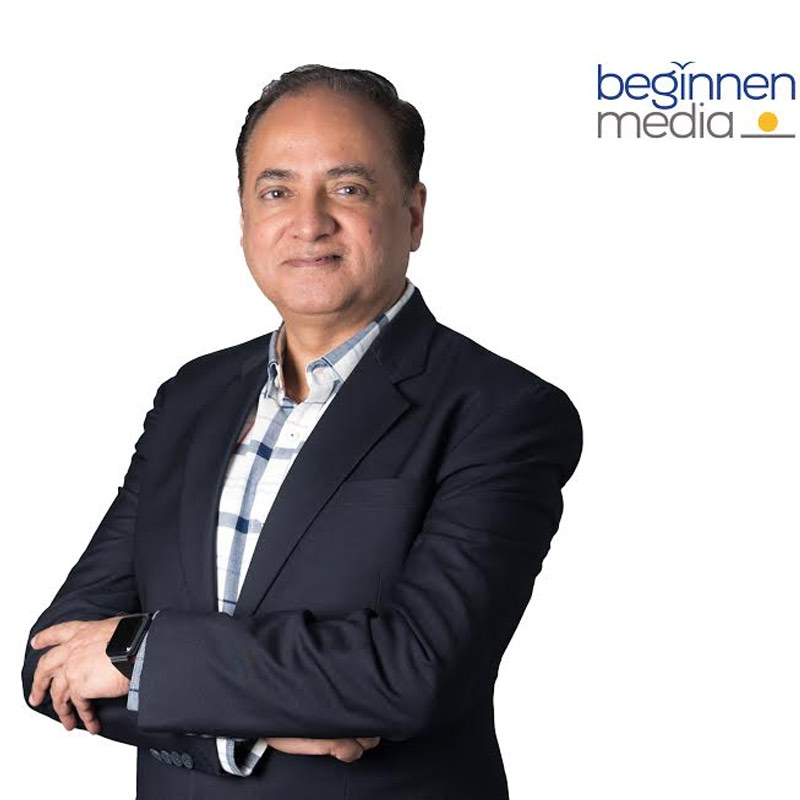
    With this, has come a paradigm shift, where consumers have once again taken the centre stage in determining how traditional broadcasters decide their content offerings. While there may be a plethora of content for urban viewers, there aren’t still enough choices for the rural audience. It is this vast market that Mumbai-based Beginnen Media is keen to tap into, with its new Hindi GEC- Azaad TV. The channel with its philosophy – ‘People First, Rural First’ hit the airwaves in May and caters exclusively to people in rural India. It’s currently available on DD Free Dish and select DPOs.

    In an exclusive interaction with Indiantelevision.com, Beginnen Media, managing director Bharat Kumar Ranga talks about his vision for the new channel, its financial model, content offerings, and introduces for the first time, the newly formed team that helped build the brand.

    Edited excerpts:

    On the decision to focus on rural India

    At Beginnen Media, we wanted to relook at the media and entertainment sector with a fresh perspective. We believe that the real transition is not from broadcasting to individual casting or TV to digital, but from being from creative/content-centric to being consumer-centric. We found a great opportunity in the rural segment. While the urban segment has been over-serviced by TV and digital platforms, consumers in rural India are still under-serviced with content that was originally created for urban viewers. They weren’t really considered primary consumers. So, we thought that there was an opportunity for us to see them as primary consumers and create stories exclusively for them.

    On how the target audience was identified

    We put most of our energies into identifying our target audience. We saw that rural people have a certain mindset, and we decided to focus on that. No matter which place they migrate to, they will carry that mindset with them. Though our content will cater to the Hindi-speaking audience, it will also try to reach out to Hindi-understanding markets like parts of Gujarat, West Bengal, Punjab, Maharashtra, where people may not speak Hindi, but they do understand the language. We want to design our content in such a way that people from across states relate to it. We have also hired specialist agencies that work on consumer products, like the Delhi-based agency- Futurebrands, which is led by Santosh Desai to provide us with data and insights.
    On the decision to go Free-to-air (FTA) and growth opportunities in the rural market

    In terms of distribution, the TV consumption in rural India is largely through DD Free Dish, and you cannot be on DD Free Dish if you are a Pay channel. So, we chose FTA so that we could reach out to that audience. Since we are the first rural GEC, we thought it makes much more sense to reach out to people quickly, and start building on that connection.

    Generally, people tend to confuse Free-to-air (FTA) with rural. While it is fair to say that most people who consume FTA channels are in rural India, and that is the market that we are entering into. But a significant part of the rural audience is also watching pay platforms, other than on DD Free Dish. So, we are venturing into a new category, where we are competing with not just the FTA channels, but also the Pay channels in the rural segment. FTA channels are also available in more households than Pay TV. It’s just that the FTA market has not unlocked its full potential yet. The over-supply of acquired content on these channels does not seem to be working anymore. The audience understands that the channels are recycling content, and they want something new, so that is why we hope that our rural model might work.

    On the content offerings and original shows

    Our original shows got delayed because of the pandemic. But since we had to start the channel distribution, we went ahead with the soft launch. We started building a connection with the audience. Now, our new shows are also under production and we hope that we will be able to sustain and keep the process running in case there’s a third wave too.

    In terms of content, we have put in a huge amount of energy to determine what our rural audience will like to watch. On the face of it, our content might not look different, but the larger differentiation is in the point of view of the people, that we will try to reflect in the shows. Currently, stories on pay platforms are set up in rural areas, but they are told to an urban audience. We wish to tell stories that reflect their point of view irrespective of where they are based.

    On the financial model and opportunities for advertisers

    As a rural entertainment channel, we need to have all kinds of revenue- subscription-based, advertising-based, as well as digital revenue. In terms of advertising revenue, we are looking at some sort of premium around the environment that we are giving to our advertisers- ‘digital virtues in a TV business’.  Firstly, we are providing a focussed target audience. For instance, if a campaign runs on any FTA channel, the advertiser may not know if it’s reaching the urban or rural audience. But, in the case of Azaad, the focus is entirely on people with a rural mindset. Secondly, the programming environment. If an advertisement is put on YouTube, it’s difficult to identify the content/genre that the consumer is watching. However, we will offer brand safety in terms of content that aligns well with the values of the brand. Advertisers will be interested in an entertainment platform that is consumer-focussed. We already have some regular advertisers like HUL on board. But the main exercise will begin once we launch original shows.

    On the distribution plans for the channel

    Simple to our plan, we have looked at all the MSOs. We began with DD Free Dish, where the channel is currently being aired. Then we identified some 50 individual distribution cable operators in rural areas. We are also in talks with 15 more such operators who are working in the outskirts of these areas. They may be lesser-known but attractive to us. We are also in touch with some top DTH and MSOs, but our priority is rural India and we will stick to that.

    Rural is a super mass category. We want to create a little space for ourselves, and we understand that it will take some time for us to create a relationship with the audience. We want to become the most credible platform for rural audiences.

    On the team that leads Beginnen Media

    Director – project & operations: Mohan Gopinath 

    A media and broadcast veteran, Gopinath carries nearly 25 years of work experience. He worked with Zee Entertainment Enterprises Ltd (ZEEL) for 18 years, turned entrepreneur, and co-created Bhu Entertainment in 2015. He also helped Viacom launch its first movie channel, Rishtey Cineplex.

    Chief marketing officer – Rachin Khanijo

    Khanijo carries over 17 years of extensive MarComm experience, during which he has worked at Eros Now as vice president, marketing, and COLORS as associate director – marketing. He has also worked as marketing head at &TV and brand director – Filmfare, Femina, and GoodHomes. At Beginnen Media, he handles marketing, corporate communications, on-air promotions, research & distribution.

    General manager, product: Doris Dey

    Dey spearheads Business Development, Programming & Content Strategy, Product Innovation, Content Creation, and Curation. In a career spanning 18 years, she has worked as a writer, creative director, and even Independent Producer (OTT). In her previous stint at Essel Group, she envisaged and launched &TV.’

    Chief revenue officer, Johnson Jain

    Jain carries over two decades of experience in the Media & Entertainment industry and specialises in advertising revenue. He has worked with leading media conglomerates including ZEEL, Sony Network (SET India) & 9x Group. He has played a key role in relaunching Zing in 2016.

    Chief financial officer, Dinesh Bhutra

    An associate member of the Institute of Chartered Accountants of India, Bhutra has more than a decade of experience in various sectors like Airlines, Telecom, Entertainment, Education, Finance, Media, Data Centre and Refinery including Jet Airways, Reliance Jio, Essel Corporate, MT Educare Ltd, ISSL.  At Beginnen Media, Bhutra also heads Commercial, Administration & Human Resources as its chief finance officer.
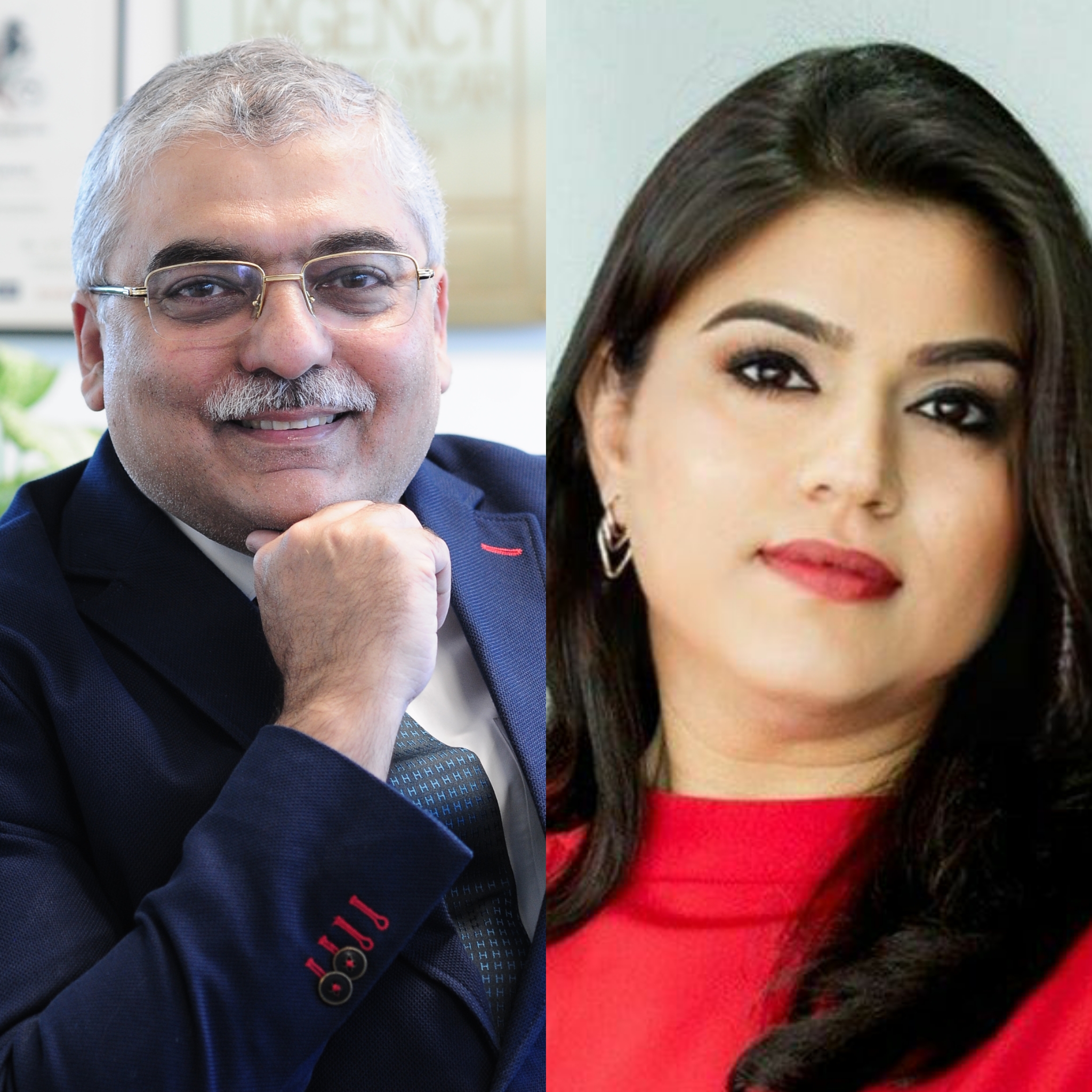
  • Rahul Joshi’s tenure as MD, Network18 extended till July, 2024.

    Rahul Joshi’s tenure as MD, Network18 extended till July, 2024.

    New Delhi: Rahul Joshi has been re-appointed as the managing director of Network18 for a period of three years. He will hold the position up to 8 July 2024, said the company on Friday.

    The appointment is subject to the approval of the shareholders. The information was submitted by Network18 in a BSE filing. “Joshi is not related to any of the directors of the Company and he is not debarred from holding the office of director by virtue of any order of SEBI or any such other authority,” it added.

    Joshi has been associated with Network18 Group since September 2015 and initially served as chief executive officer, News and group editor-in-chief. In 2018, the Board of Directors of Network18 Media and Investments (Network18) elevated Joshi to the position of managing director of Network18 for a term of three years up to 8 July 2021.

    Prior to joining Network18 Group, he worked with Economic Times (ET) for over two decades, and rose through ranks to become one of the youngest editors. He has also worked as its editorial director, and played a key role in the launch of ETNow, and shaping the digital coverage of ET Online. He has also worked with The Indian Express. Joshi was also on the board of the News Broadcasters Association (NBA). 

  • Business Today appoints Sourav Majumdar as editor, Siddharth Zarabi to lead Business Today TV

    Business Today appoints Sourav Majumdar as editor, Siddharth Zarabi to lead Business Today TV

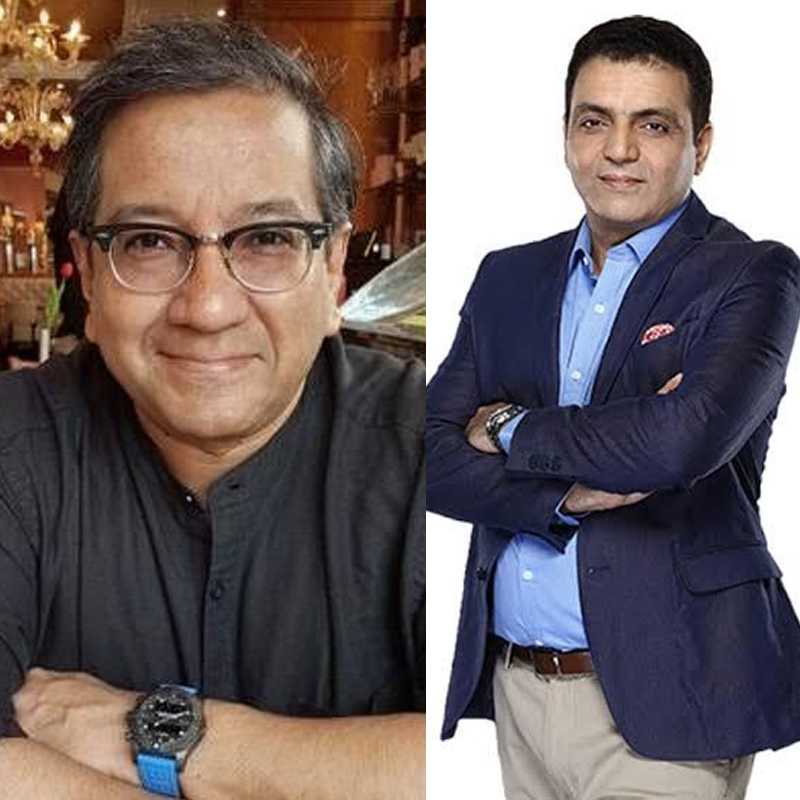
    New Delhi: After naming Udayan Mukherjee as its global business editor, the India Today Group on Wednesday announced two more big-ticket appointments as part of its larger plan to bolster its coverage of business news in the post-pandemic economic order.  
     
    The network has named prominent magazine editor, Sourav Majumdar, as the new editor of the Business Today Magazine, and Siddharth Zarabi, former editor of Bloomberg TV, as the managing editor of Business Today TV. 
     
    In a career spanning three decades, Majumdar has worked with several leading media outlets with leadership experience across platforms. He was initially associated with brands like The Financial Express and Business Standard in various capacities. In his most recent role, he was editor of the Indian editions of Fortune and Forbes. Prior to that, Majumdar was editor-in-chief of Entrepreneur.
     
    “It’s genuinely exciting to join an organisation that I believe is the Gold Standard of Journalism –the India Today Group,” he said of his new role at the ITG. “I look forward to being part of Business Today, as it makes a deep and dramatic transformation into a digital-first, multimedia offering with the magazine as a center-piece. India, and indeed the world, is witnessing dramatic change and we hope to bring compelling stories of this change to the readers of today.”
     
    Zarabi is a prominent prime-time business anchor, who has led newsrooms in marquee print and television media outlets, including Bloomberg TV India as its editor till recently.
     
    Noted for his stellar track record in covering Indian financial markets, macro-economy, regulatory and administrative architecture, he possesses first-hand experience of economic policy formulation in India since 1997, said the network in a statement.
     
    “I am delighted to be part of the India Today family. I look forward to being part of the Group’s latest foray as it expands and enlarges its business content offerings across television, print, and digital platforms to offer meaningful content as India navigates the post-pandemic economic era,” Zarabi said.
     
    Speaking on the appointments, the India Today Group vice-chairperson Kallie Purie said, “Every once in a while, the business arena goes through an irreversible change. In the midst of this disruptive flutter, the real journalists and real ideas reshape the world. We are happy to be on the leading edge of this transformational journey with the most credible journalists, an enviable legacy and a truly Omni platform multimedia BUSINESS TODAY Experience”

  • TRP  Scam: 3 Republic TV employees get anticipatory bail

    TRP Scam: 3 Republic TV employees get anticipatory bail

    New Delhi: A sessions court has granted anticipatory bail to three Republic TV employees in connection with the alleged Television Rating Points (TRP) scam, that came to light in October last year.

    The three employees named Shivendu Mulherkar, Ranjit Walter, and Sivasubramaniyam Sundaram had filed their pleas before the court last year, according to their lawyer Vikram Kamath.

    On Wednesday, the court allowed their anticipatory bail applications. According to their lawyer, the three accused had submitted before the court that they were not named in the FIR registered in the case initially and there was no ground against them (for arrest). Subsequently, a charge sheet was filed and they were named as accused. So, whatever material was there, it was before the court, and so, their custodial interrogation was not required, Kamath had argued.

    In a 1800 page supplementary charge sheet filed in June, the Mumbai police had named the three as accused, along with senior journalist and Republic TV editor-in-chief Arnab Goswami. Apart from him, the Mumbai Police had named four others from ARG Outlier Media– COO Priya Mukherjee, Shivendu Mulelkar, and Shiva Sundaram as accused in the case.

    The alleged fake TRP scam came to light in October 2020 when rating agency Broadcast Audience Research Council (BARC) filed a complaint through Hansa Research Group (HRG), alleging that certain television channels were allegedly rigging TRP numbers by bribing households where BARC bar-o-meters were installed to tune into a particular channel throughout the day. An FIR in the case was registered after former Mumbai Police Commissioner Param Bir Singh named the channel as being involved in the scam. 

    As many as 15 arrests have been made in the case, the most prominent being former BARC CEO Partho Dasgupta, who later got bail after furnishing a bond of Rs two lakh. The arrested people were charged with cheating, criminal conspiracy, and destruction of evidence.

  • Zee Salaam launches new show – Jai Hind Janab

    Zee Salaam launches new show – Jai Hind Janab

    New Delhi: 24×7 Urdu News channel Zee Salaam is all set to launch a new weekly show Jai Hind Janab which will air every Sunday at 8 PM.

    The channel has strengthened its place in the Urdu genre with its consistent news coverage and reporting.

    “Zee Salaam has always taken stand for soldiers of our nation and has strongly put forward their concerns in front of the government on all the important platforms so that their voices are heard by the authority and the nation. The new show has bee  launched with the same philosophy of patriotism & inclusiveness,” said the channel in a statement on Monday.

    Zee Media’s Cluster three CEO, Dileep Tiwari said “This is a great initiative of Zee Salaam. The nation should remain indebted to the sacrifice and service of the soldiers and through this show the channel gives the respect and honour which they deserve .”

    Zee Salaam editor, Irfan Sheikh said, “The country is very valuable to us and we always put our nation first. Through this special show, we recognize, honour & offer tribute to the brave hearts. The subsequent episodes will feature the real heroes from our society who have gone out of their way to immensely contribute to society or have helped those who were in need which will cover military, para-military, police, doctors and other frontline warriors.” 

    This show is based on the nation’s first philosophy and aims to motivate every individual to work towards prosperity, restoration, and progress of the nation in his or her own capability.

  • Over 48 million viewers tuned into SPSN to watch UEFA EURO 2020

    Over 48 million viewers tuned into SPSN to watch UEFA EURO 2020

    New Delhi: The UEFA EURO 2020 continues to captivate sports fans across the country. The sporting extravaganza has been watched by as many as 48 million viewers on its official broadcaster Sony Pictures Sports Network (SPSN), the network announced on Friday.

    The viewership figures are for the network’s entire coverage of the first 36 matches of the tournament from 11 to 25 June.

    According to the data (Source: TG: CS 2+, All India U+R) shared by the network, Portugal vs Germany on 19 June (Saturday) was the most watched match of the week in the tournament with ten million viewers. The defending champion Portugal led by Cristiano Ronaldo was defeated by 4-2 in the match in the group stage despite the ace player’s goal and an assist. This group was also touted by fans as ‘Group of death’ with current world champion France in it.

    The second most watched match this week was Italy vs Wales on 20 June (Sunday) which clocked 8.1 million viewers. Italy completed their Group A fixtures defeating Wales by 1-0, continuing its winning streak in the tournament.

    The regional feed of the network was also watched by fans with equal enthusiasm. The Hindi feed for Live matches was been watched by 14 million viewers across the country (TG: CS 2+, All India U+R). While the Malayalam and Bengali feed on SONY SIX channels were watched by seven million viewers across Kerala and West Bengal (TG: CS 2+, Kerala and WB U+R).

    The UEFA EURO 2020 is being telecast by SPSN in six languages across India: English, Hindi, Bengali, Tamil, Telugu and Malayalam. The tournament is LIVE on Sony Ten 2, Sony Ten 3, Sony Six and Sony Ten 4 channels and is also being livestreamed on SonyLIV.


  • Nippon TV elevates Yoshikuni Sugiyama as new president

    New Delhi: Nippon TV, Japan’s leading multiplatform entertainment powerhouse has elevated its representative director and operating officer Yoshikuni Sugiyama to the role of president and senior executive operating officer.

    He replaces Yoshinobu Kosugi who will be taking the new position of vice chairman and senior executive operating officer of Nippon TV. “President Sugiyama will report to vice chairman and senior executive operating officer Yoshinobu Kosugi and chairman and CEO Yoshio Okubo,” it said in a statement.

    Having had significant growth in its international business, Keiichi Sawa, currently operating officer responsible for Nippon TV’s Global Business Development, which includes International Business Development (IBD), has been promoted to Board Director and operating officer for that division. 

    Board Director Sawa will be responsible for Business Development and Real Estate. He will report to President Sugiyama.

    Nippon TV’s recent scripted format Mother was recently ranked #1 in the Top 10 Traveling Asian Scripted Formats, and Nippon TV also ranked for the first time in the Top Exporter of Asian Unscripted Formats 2020-2021, achieving the third position. The global sales of Mute it!, Sokkuri Sweets, BLOCK OUT, Pharaoh!, Old Enough! and other unscripted formats led to this position, as per the data provided by K7 Media in May 2021.

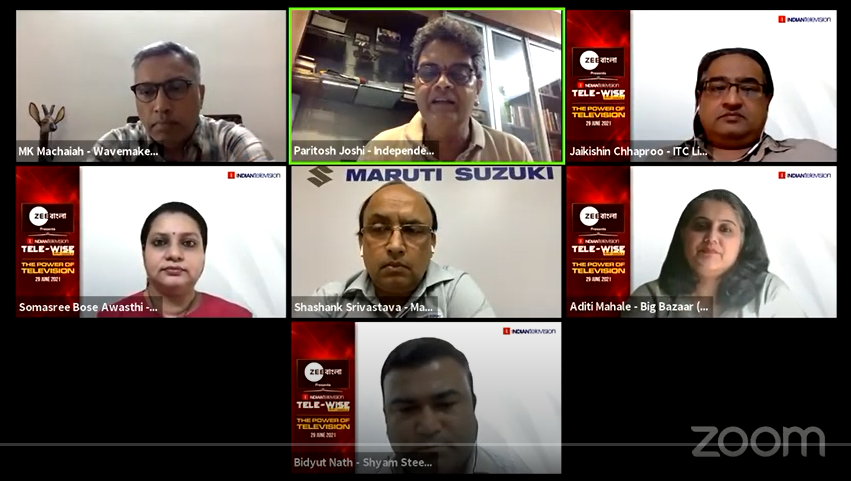
  • National brands gauge the Bangla TV market on Tele-wise Bangla summit

    Mumbai: There is little doubt about television as a far-reaching instrument of viewership connecting masses pan India. It remains the medium of choice to build reach and brand salience. However, as the second wave of the pandemic swept through the country, it also impacted the overall TV viewership across regions. This, in turn led the advertisers and brands to reflect on the way they leveraged TV to reach out to their target audience.

    As a part of the inaugural edition of the Tele-wise Bangla Summit 2021 organised by Indiantelevision.com in partnership with Zee Bangla, industry experts and stakeholders from across sectors weighed in on the strength of the West Bengal TV market and the disruption caused by Covid-19 on people’s lives, their consumer spending, and TV viewing habits.

    In an informative discussion ‘Gauging the Might of the Market’ –  moderated by independent media consultant Paritosh Joshi, marketers debated on how the Bangla market remains highly relevant for national brands looking to make their presence felt in the state when it comes to TV ad spends.

    The session kicked off with Joshi observing that, although the pandemic has largely resulted in an overall bleak economic environment, FMCG remained the sole bright spot. Godrej Consumer Products Limited marketing head (homecare category) Somasree Bose Awasthi pitched in that it was true specifically with regards to essential items, which have been driving the growth in the sector. The premium or discretionary categories like grooming or hygiene products have suffered a setback in the last year. She added, however, that the reverse migration due to the pandemic had led to a revival in the rural economy across the country, including West Bengal.

    Shyam Steel India, head of brand marketing, Bidyut Nath corroborated this by saying that, while the pandemic had brought most large-scale construction activity in the cities to a standstill, with workers going back to their villages, it had continued almost uninterrupted in the rural areas as people did not cease to build houses for themselves, irrespective of the pandemic. So while there was little positive growth in the sector, it did reflect a steady growth with nearly 69 per cent of the populace constructing homes, he said.

    The panellists discussed how the pandemic also caused people to become risk-averse when it came to buying decisions, due to which market leaders in a particular sector and trusted brands gained.

    According to Maruti Suzuki India’s marketing & sales executive director Shashank Srivastava in such times, the trusted brands become the anchor for consumers. “That trust helped us, and our market share went up in most segments, despite Automobiles being a discretionary, high-value purchase. In general, the retail sales were better in 2020 than the previous year for Maruti, mainly because of the change in consumer perception towards public transport, resulting in more people becoming inclined towards owning private vehicles,” he said.

    However, the fall in incomes did show in the “telescoping of demand”, whereby the demand for a higher segment shifted towards a lower segment vehicle, he added.

    Future Group’s Big Bazaar marketing head Aditi Mahale shared that while the group had 15 to 20 stores across the state, nearly eight to ten of them were based out of Kolkata.

    “We had to cut back on TV ad-spend last year, mainly due to lack of fresh content, and we focused more on the news genre and digital,” said Mahale, but the group continues to use television as part of its marketing strategy, especially during regional festivals, for “retail is, by nature, always local” with even their competition being largely local in the genre.

    For ITC, which has its roots in West Bengal, the state is “priority #1 market”, said ITC’s Media & PR head Jaikishin Chhaproo, largely because of the unparalleled distribution strength that it provides.

    When it came to the media mix in the state, panellists shared that television had a regional reach of more than 70 per cent in the state. Hence brands try to capitalize on the richness of the regional content by preparing creatives with local flavour and by going “hyper-local”.

    “Becoming hyper-local is the need of the hour. Doing local TVCs with local actors really pays off. But brands face challenges in terms of talent & cost,” said Wavemaker India’s ITC lead and special initiatives president MK Machaiah.

    In West Bengal, like most other markets- there is an innate attachment to sports. So while Shyam Steel India did see great brand engagement post onboarding Virat Kohli and Anushka Sharma as brand ambassadors, Bidyuth Nath agreed that going hyper-local by engaging with local celebrities is also indispensable. All panellists agreed on the value that localised content brings to brand promotions in the state, regardless of the medium – print, television, or digital.