Tag: television Industry

  • Expanding the Film and Television Industry’s Horizon, 23 years and counting

    Expanding the Film and Television Industry’s Horizon, 23 years and counting

    MUMBAI: Saicom Trade Fairs & Exhibitions Pvt Ltd is pleased to announce that the 23rd chapter of the Broadcast India 2013 will be held from October 9 -11, 2013 at the Bombay Exhibition Centre, Goregaon (East), Mumbai. A 2 day Conference will be held on October 9 and 10, 2013 at the same venue.

    As an added attraction, this year, Broadcast India along with RED bring you REDucation a workshop focused on hands-on learning with RED Digital Cinema camera packages (DRAGON, EPIC, SCARLET). Learn, shoot and review 4K footage on the big screen each day in the large 200+ sq mt. REDucation theatre.

    Broadcast India 2013 is the country’s biggest and the most comprehensive platform for the broadcast, film and entertainment industry which promises to bring to you the very best for all there is to do with Broadcast, Film, Audio, Radio from its content creation to its management and delivery.

    The show will be host to 35 participating countries and to over 550 companies, 30 of them exhibiting at the show for the first time. Panasonic, Sony, Blackmagic Design, Harris, GoPro, Grass Valley, ARRI, AJA Video Systems, Autodesk, Adobe, Canon, Datavideo, Wasp3D, Ross Video, Yamaha, Harman, RCS, Carl Zeiss and Shure, to name a few, will showcase their state-of-the-art equipment and cutting-edge technology. The other attractions are the new Pavilions of Korea and UK apart from the Bavarian Pavilion, all representing their respective countries.

    As promises go, at the very least we will be introduced to an enlightened environment that will challenge the very way we look at broadcast and entertainment.

  • Uday Shankar’s take on social responsibility

    Uday Shankar’s take on social responsibility

    MUMBAI: This Independence Day saw the who’s who of the film and television fraternity come together in a unique initiative by Star India to support the victims of the Uttarakhand tragedy.


    Christened Saath Hain Hum Uttarakhand, the seven-hour-long event held at the NSCI grounds in Mumbai was telecast live across the entire Star India network.


    In an exclusive interaction with indiantelevision.com, Star India CEO Uday Shankar spoke at length about the conviction behind this noble cause and Star India’s philosophy.


    “When such a tragedy occurs, there is a need to do something different. At Star, we have a very deep emotional connect with the audiences at large,” expresses Shankar. “Whether it is through our programming or by connecting with the film and television industry for this cause, we feel it is our duty to help people who are in pain there.”

    Star’s Uday Shankar says the network is not only number one in terms of content but it also has a very strong social conscience


    Shankar points out that the initiative helped reinforce another point that Star is not only number one in terms of content but it also has a very strong social conscience. “The endeavour was also born out of his sense of responsibility toward the large number of people that have made all the channels of the Star network successful,” he highlights. “People’s belief brings with it a huge responsibility, which we are continually aware of, and try and live up to. Doing this for the rebuilding of Uttarakhand is yet another acknowledgement of our responsibility.”


    So why I-Day? According to Shankar, Star India had wanted to do something big at the time the tragedy occurred but the logistics were daunting. That’s when he and his team started taking the creative community into confidence.


    “Obviously, an event on such a big scale takes time, as you have all the top stars from the industry and you need some time to bring all of them together. So, 15 August was very appropriate because both its symbolic and philosophical values were in sync with our objective,” explains Shankar.


    What was the idea of airing the event live? “Live has an element of intensity, immediacy and urgency. We wanted to share with the people how the creative community, comprising media, television and film has responded spontaneously to the disaster. We wanted to capture that intensity,” gushes Shankar.


    Are he and his team happy with the response the event garnered? “I was overwhelmed by the positive response from all the top stars and everybody from the film and television industry. Bringing together so many people is a challenge, but everybody was more than willing the moment we said it is for Uttarakhand victims. While some of them could not make it because of their own commitments, it was very satisfying to see them all so willing to lend their support to the cause,” exults Shankar.

    Star India has decided to encourage viewers from across the globe to donate generously toward the victims of the tragedy


    Have the network’s expectations been fulfilled, at least to some extent? According to Shankar, the immediate and material consideration was “to raise as much contribution as we can so we can play a more effective role in rebuilding Uttarakhand.”


    In fact, as a natural next step, Star India has decided to encourage viewers from across the globe to donate generously toward the victims of the tragedy.


    Donation lines will be open from 15 August to 7 September and the funds collected will be channeled to the People’s Science Institute (PSI) and Himmotthan society NGOs partners. How the funds are used will be overseen by a team of independent auditors.


    A large part of undertaking the initiative was about replying to the perennial question faced by the media as to whether it is living up to its social responsibilities or not.


    “Whether it is the political class or the rest of the country, this question is being put to journalists, people in the field of entertainment, TV, print, all of us, every day. To which we wanted to say, ‘Look, we are more alive! Doesn’t matter whether we are news or entertainment, we are there when society needs us’,” said Shankar.


    Before concluding the interview, Shankar bared his heart on what the country should do in such situations.


     “Within the creative community, there is a strong desire to be socially more relevant, more meaningful and contribute more effectively. Everybody – whether they are actors, directors, producers, technicians and many more – has that kind of desire. What we require is the leadership, and I think that is why we all came together so we could provide that leadership to channelise that urge and those emotions. If we can do that, I think the country can do a lot more.”

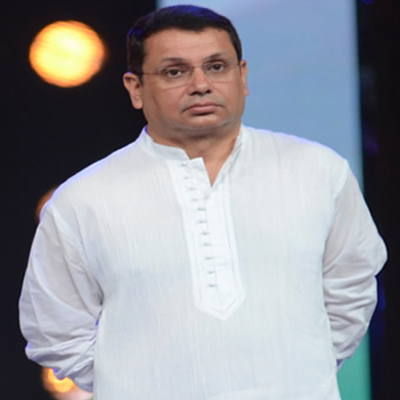
  • ‘The downturn will bring in corrections not just in carriage but in every other aspect’ : Barun Das – Zee News Ltd CEO

    ‘The downturn will bring in corrections not just in carriage but in every other aspect’ : Barun Das – Zee News Ltd CEO

    Churn. The television industry has been going through turbulent times with the economy downsliding and ad growth decelerating. Like its peers Zee News Ltd (ZNL) too has been riding the wave of turbulence with its unique mix of national news and regional language channels.

    While Zee News, Zee Marathi and Zee Bangla have been growing rapidly and notching up profits, Zee Telugu has turned operationally cash positive. The management has managed to keep losses from its ‘new businesses’ (channel launches in the south and Zee Talkies) under control; full fiscal loss forecasts stay unchanged at Rs 700 million, even though it is planning to launch a regional channel targeted at Uttar Pradesh. Simultaneously, it has decided to pull the shutters down on Zee Gujarati from 30 April as it was bleeding.


    ZNL is also pursuing growth through the franchisee model, an experiment not tried yet by the other news broadcasters. After partnering with SB Multimedia for a regional news channel in Chattisgarh, the company is keen to tap local entrepreneurs who desire to get into the TV news space in regions which do not occupy Zee’s immediate direct expansion plans.


    In an interview with Indiantelevision.com’s Sibabrata Das, Zee News Ltd CEO Barun Das talks about the success of the Zee News channel following a repositioning exercise, the turn around of Zee Business, the emergence of new driver channels within the bouquet, the challenges of tiding over the global economic turmoil, and the company’s growth plans.


    Excerpts:

    Media companies are reeling under a severe ad slowdown. How has Zee News Ltd bucked this trend so far?
    We are helped by the fact that the regional language markets are growing faster. What is working for us is the composition of the bouquet. Some of the new regional channels have started delivering while the driver channels continue to post strong growth. The positive thing is that more channels like Zee Telugu, Zee Kannada and Zee Business are positioning themselves to get into the driver category over the next 12-18 months.

    Isn’t the economic downturn affecting regional markets as well?
    There is an overall slowdown. But regional television media markets are still in their nascent stages. The size of these markets is small and there is a lot of potential to grow them. The Marathi news market, for instance, is new. Even in the general entertainment space, the regional channels arrived much later than the invasion of private satellite television in national languages. Outside the southern region, it is the Marathi and Bengali markets that really matter. The other regional markets are small and I don’t see them growing to any significant size in the near future.

    Is this the time to take hard calls like shutting down Zee Gujarati?
    We critically reviewed the channels that are not likely to make profit in the near future and decided to close down Zee Gujarati with effect from 30 April. Our learning in that market shows that the revenue is too small as entertainment consumption happens primarily in Hindi. It didn’t make sense to linger with the channel and burn cash any more. We would rather focus on the bottom line of the company while strategically expanding our presence in other markets, products and services.

    Has the break even success of the Telugu general entertainment channel put you in a comfort zone in the southern region to launch more channels?
    We are backing up the progress of Zee Telugu with the launch in this quarter of Zee 24 Ghantalu, a Telugu news channel. Though Zee Kannada will not break even this fiscal, it would happen in the first or second quarter of FY’10. So yes, we have managed to open up the southern space for ourselves.

    How bullish are you about cracking the Tamil market, particularly when the Marans (Sun TV promoters) and DMK party chief and Tamil Nadu chief minister M Karunanidhi have smoked the peace pipe?
    We are investing Rs 900 million for the Tamil channel in the first year (capex+one year opex). We expect Zee Tamil to break even over 36-48 months. We have signed up with Sun Group’s cable TV arm SCV and the channel is well distributed. We are also in talks with Sun Direct for a presence of the channel on the DTH platform.


    What makes us stay bullish is that Tamil Nadu is the biggest regional market. Besides, there is only one player (Sun TV) in that market, giving us space to climb the ladder. We feel we have a good opportunity to be a strong No. 2 or No. 3. Also, we have started understanding the nuances of the southern market from our experience, planning and research in running a Telugu and a Kannada channel.

    What is working for us is the composition of the bouquet. Some of the new regional channels have started delivering while the driver channels continue to post strong growth. The positive thing is that more channels like Zee Telugu, Zee Kannada and Zee Business are positioning themselves to get into the driver category over the next 12-18 months

    How much is ZNL going to lose from its new businesses this fiscal?
    We are sticking to our original guidance of an EBITDA loss of Rs 700 million from our new businesses (Zee Telugu, Zee Kannada, Zee 24 Taas, Zee Tamil, Zee Talkies and Zee 24 Ghantalu) this fiscal. There is no revision upwards despite us planning to launch a regional news channel in Uttar Pradesh.

    With the Indian economy coming under the shadow of a global recession, have you shelved plans to launch an English news channel?
    There is no additional expansion plan at this stage outside the launch of Zee 24 Ghantalu and a regional news channel in Uttar Pradesh. But we are exploring opportunities in the English business news space. There is a lot of potential, but we have not concretised our plan as yet.

    Marathi movie channel Zee Talkies got transferred from Zee Entertainment Enterprises Ltd (ZEEL) to ZNL. Will the company launch regional movie channels in each market where it runs a GEC?
    Theoretically, we should have a GEC, a news, a movie and a music channel in each regional market where we have a presence. But we are not getting into that gear at this stage. Our Marathi presence is the most widest, followed by Bengali where we are involved in two GECs. While we have the market leader in Zee Bangla, we have taken a 26 per cent stake in Akaash Bangla along with a channel management agreement.

    Will you be expanding in the near future through the franchisee model?
    After launching Zee 24 Ghante Chattisgarh under this model, we are exploring more such opportunities. There is a huge upside in revenues when the economic climate is more favourable; and the money goes straight into the bottom line.

    Is the flagship Hindi news channel growing at a slower pace?
    Along with the growth in viewership share, there is a significant revenue growth as well. After we relaunched the channel with a game-changing strategy, premium brands from sectors like cosmetics, automobiles, and IT – who were earlier not present as our advertisers – have come on board.

    How are you planning to push Zee Business which is considered as a laggard in comparison to its competitive channels?
    Zee Business has made rapid strides over the last several weeks and has moved up from a 11 per cent share in a four-channel market to a 26 per cent share in a five-channel market scenario. We have changed the look and feel of the channel, beefed up our research team, took it beyond a eight metro approach, targeted specific audiences, and focused on the SME sector. We have also concentrated on events; we would have conducted 47 events in the second half of the year. All this seems to be working for us.


    In fact, 2008 is also the year when 24 Ghanta went ahead to emerge as a leader in the Bengali news market with its focus on content, events and communications. We nullified Star Ananda’s strength in football coverage by acquiring the rights of the National Football League.

    Do you have plans to launch add-on channels like Tez to guard your flagship Hindi news channel?
    Primarily, our strategy is to have state-based news channels. This will continue to be our going-forward direction in the near future.

    Is subscription revenue looking positive with the entry of more DTH players?
    DTH is a growing segment and we stand to benefit from it. It currently accounts for 32 per cent of our subscription income.
    Will carriage costs continue to climb as more channels launch and continue to jostle for space on cable networks?
    With digitalisation growing, carriage rates will continue to slide. The downturn will bring in corrections not just in carriage, but in every other aspect.
    Including downsizing staff?
    Retrenchment is not required. But going forward, we will see how much we need to rationalise on our costs. We will scrutinise every cost, review every deal, and re-negotiate with our suppliers.
    In such a tough market, will you cut down on rates and play the volume game to consume ad inventory?
    The right strategy would be to provide better value than cut rates. Our plan is to offer tailor-made solution for clients and work on innovations. We are, for instance, getting four co-branded programmes on Zee News channel. The truth is that all of us have to stretch more than what we have ever done so far.
    How do you plan to survive the woes of 2009-10?
    It will probably be the worst year any of us have ever seen. Our endeavour will be to strongly hold on to the ground and use this period to prepare ourselves for being able to take the next big leap when we finally move out of the global recession.
  • ‘The Hindi GEC market can only grow between 10-15 per cent’ : Anita Nayyar- Havas Media CEO

    ‘The Hindi GEC market can only grow between 10-15 per cent’ : Anita Nayyar- Havas Media CEO

    The Indian advertising and television industry has started to feel the heat of the global economic slowdown. With advertisers trimming their ad budgets and postponing launches of products and services, the entire sector is beginning to feel the pinch.


    In an interview with Indiantelevision.com’s Anushree Bhattacharyya, Havas Media CEO Anita Nayyar speaks about how the Indian television and advertising industry is trying to cope with this financial crisis.


    Excerpts:

    How much has the global financial crisis affected the Indian advertising industry?
    The Indian advertising industry, pegged at Rs 160 billion, has been clearly affected by the global economic meltdown. The television segment, which accounts for Rs 72 billion, was growing at 18-20 per cent. Given the current situation, growth will slow down.


    Lots of big launches of products or services have been postponed. Advertisers are waiting till the first quarter of next year to see how the market is going to evolve. It is too early at this stage, thus, to quantify the pace at which the ad industry will grow.

    Looking at the current economic crisis, how deeply hurt will be the TV sector? Are the Hindi general entertainment channels (GECs) headed for further trouble due to the on-going dispute between the TV producers and workers?
    Out of the Rs 72 billion television ad industry, almost 50 per cent (Rs 36 billion) comes from the Hindi GECs. Looking at the current strike and the global financial crisis, the Hindi GEC market can only grow between 10–12 per cent. The strike between producers and Federation of Western India Cine Employees (FWICE) is, however, a temporary phase and would not continue for long. So the GEC market would pick up pace once again, after the strike in Mumbai gets over.


    FMCG is the category that advertises mostly on GECs. And presently it is one of the least impacted category. Hence advertising will gain momentum once the strike gets over.

    Will the TV news channels feel the pinch?
    It is true that the five to six categories that include banking, insurance, automobile, aviation and real estate are the worst hit by the global financial crisis. And so news channels would be affected. The news television market could see a 5-7 per cent growth. Interestingly, I think now is the time for the banking sector to advertise to regain the confidence of its clients. But it seems like banks are restraining from further advertising spends in a major way.

    What about the growth of sports and movie channels?
    Sports and movie channels are based on events and film titles. Channels like these will not get affected to a large extent and will grow between 5-10 per cent, each time they show events or big titles. Thus for sports channels, the more the sports events they have, the more they will get a chance to grow. In sports, cricket will keep bringing the advertisers in. However since the TV rights acquisition cost for live cricket is very high, it will be difficult for broadcasters to break even.

    Do you feel you have been able to bring Havas out of Euro RSG’s basket?
    I don’t think that we have ever tried to project that Havas Media works under the limelight of Euro RSCG; in fact we are trying to bring Havas Media out of the shadow of Euro RSCG. Today we have Havas Media as the umbrella brand which has various other brands like Euro RSCG, Havas Sports, Havas Entertainment, MPG, Media Contacts etc. Thus wherever there is an opportunity, we try to bring the Havas brand in front.


    Havas Media has clients like Reckitt Benckiser, which is our biggest client. It also has Voltas, Bank of Baroda, Air France, ibibo.com and Hindustan Motors as its clients.

    News channels will feel the heat as banking, insurance, automobile, aviation and real estate are the worst hit by the global financial crisis

    Interestingly, when you moved out of Starcom you were blamed for taking away both people and accounts?
    I don’t know how to answer these allegations. There were people who had shifted from Starcom even before I had joined Havas Media. Nevertheless for people who joined Havas after me, all I can say is that they were all intelligent people and no one has brainwashed them. So they were aware of their decision.


    As for the businesses that I got from Starcom, those moved based on pitches. But this also proves another point – that I share a very good relationship with the clients.

    Havas Group introduced Havas Sports in India. How has sports marketing picked up in India, especially after IPL?
    Sports marketing always existed in India. However thanks to the Indian Premiere League (IPL), it gained recognition. Sports marketing companies like Total Sports Asia and Globosports have been investing in sports like Golf tournament, Tennis matches, marathon etc. After the success of IPL, companies have openly accepted sports as an event to endorse their products or services. Cricket, however, continues to hog the limelight.


    We at Havas Sports have clients like Good Earth products, A1GP, etc. Havas Sports is also involved in celebrity endorsement.

    How are your clients reacting to this financial crunch?
    Fortunately for Havas Media, clients have not yet decreased their advertising budget or postponed launch of their products. So far, we have not seen our clients reducing their budgets.

    How is Havas Media tackling the situation, because sooner or later your clients will also reduce their ad budgets?
    We are looking at various cost efficient alternatives like internet, multiplex, radio and below the line activities.

  • International cinema exhibition next month in Chennai

    International cinema exhibition next month in Chennai

    NEW DELHI: An International Exhibition, ‘Cinema Today 2007’ is being held for the first time in Asia to commemorate 75 years of the Indian Talkie.

    Organised by Buysell Interactions, the technical show for the cinema and television Industry featuring the latest technology, services and products that are available Globally will be showcased at the expo scheduled from 16 to 18 February at the Chennai Trade Centre, a press release states.

    The highlights of the event include Seminar/Workshop on Cinematography by SICA – South Indian Cinematographer’s Association – on 17 February and the proposed “Film Panaroma” presented by National Film Development Corporation and ‘Maayajaal’ scheduled at the Mayajaal Multiplex, Chennai, from 14 to 18 February.

    A parallel event, “Talkie 75”- a research programme, has been planned to analyse the past and to work for the betterment of future Indian Cinema.

  • ‘Trai has come up with the correct CAS economics’ : K Jayaraman – Hathway Cable & Datacom MD & CEO

    ‘Trai has come up with the correct CAS economics’ : K Jayaraman – Hathway Cable & Datacom MD & CEO

    The Telecom Regulatory Authority of India (Trai) has laid out a fertile ground for digital cable TV take off. The formula is simple: price everything low and large volumes will create a viable market dynamics.

    India has seen it in mobile phones. The lessons will repeat itself in the television industry. Despite the initial blip, the industry will correct itself and grow as at the centre of this pull of gravity rests the consumers.

    Broadcasters are not in tune with this logic. Their programming costs are rising. So why not let them have the freedom of pricing their products?

    The cable operators, along with the consumers, are in love with the a la carte pricing of pay chanels at a maximum of Rs 5. The multi-system operators (MSOs) feel that a new business model is being set.

    In an interview with indiantelevision.com‘s Sibabrata Das, Hathway Cable & Datacom managing director and CEO K Jayaraman argues how every stakeholder will eventually stand to gain. The a la carte pricing will make digital cable popular while the revenue share across the value chain has been “very accommodative.”

    Excerpts:

    Do you agree with what the Telecom Regulatory Authority of India (Trai) has fixed as the price and revenue share under conditional access system (Cas)?
    The regulator has come up with the correct economics. Consumers will have choice and at a real affordable cost. The a la carte pricing of channels at a maximum of Rs 5 in Cas areas will increase the penetration of set-top boxes (STBs) and drive in volumes. The revenue share allocation across the value chain is also very accommodative. Broadcasters will get 45 per cent share and have access to advertising revenues as well. While multi-system operators (MSOs) will have 30 per cent and carriage fee, local cable operators are also given a fair share with full revenue on the free-to-air (FTA) package and a 25 per cent share on pay channel revenues. Also, the government will get more tax revenues.

    Broadcasters complain that the maximum price of Rs 5 per channel is too low and doesn‘t take into account their high programming costs.
    When subscription becomes transparent, the rate has to be low. For digital technology to take off, we need such a price regulation. Let us face the reality: these are the consequences of a new environment and a change in business model. Besides, the price regulation is only for one year. Free market will prevail and price will be discovered eventually.

    With a la carte pricing, cable bills are expected to drop. How will falling ARPUs (average revenue per user) affect the cable companies?
    Nothing can be worse than the current model. But under Cas, we will, at least, have a legally sanctioned revenue, albeit lower. No doubt we will get a Hindu rate of return. But we will not have under-reporting of subscribers. We are happy that a proper business model is being set. Revenues Will grow once the business model settles. Everybody will be on the move. As consumers have choice, broadcasters will have to worry about pricing their channels correctly within a maximum of Rs 5. If they do that, then MSOs can also make money. We will have to focus on providing quality cable TV service. If we don‘t do that, we have competition from direct-to-home (DTH) service and will face threat of being wiped out.

    Cable companies will also have to subsidise the boxes. Do they have the resources to absorb subsidy costs and still scale up?
    All of us will have to be in investment mode because the business model is changing. The initial subsidy on each box will work out to Rs 1,500. This is the price we have to pay for a change in the business model. But this can be squared off once it settles down. The price of STBs will fall by 15-20 per cent with a surge in volumes. Cable companies will have to raise resources, either through debt or equity. For those who can‘t, survival will be tough. The telcos like Reliance Infocomm are waiting to step in. We should be prepared for a high volume, low margin game. Distribution, initially, is a volume business.

    Won‘t your traditional business from non CAS areas be a support?
    Yes, we will have other businesses to run: internet, non CAS placement fee, ad revenues from local cable channels. We will also have carriage fee from FTA channels in a CAS system. For cable companies to cover up their overhead and variable costs (STBs), they will have to do other related businesses.

    A la carte pricing will drive down our ARPUs. But we are happy that a proper business model is being set

    Like having a well-rounded revenue stream?
    If you are a composite cable company, you will survive. We will have to provide video, voice and data through a common pipe. Standalone players will have a tough time. We, for instance, are preparing to launch voice over internet protocol (VoIP) services by the last quarter of this year. Test runs are currently on. We are also be aggressively pushing digital cable TV in non CAS markets. We recently launched in Jalandhar, having rolled out our digital services earlier in New Delhi, Mumbai, Pune, Bangalore, and Hyderabad.

    Do you see DTH having a perceptional advantage over cable?
    DTH platform providers are well capitalised and have a more long term vision. Their ARPUs can also settle higher as they better their products. But they have a huge variable cost in occupying transponder space. Cable companies, in contrast, have already made the investments and have low operating costs. Of course, now they will have a variable cost towards procurement of boxes. But they have an existing relationship with customers and cable is two-way enabled. Digital cable can also offer more channels. Composite cable companies with focus on multiple revenue streams can effectively fight DTH.

    How are you planning to infuse capital to fund digitisation?
    We will raise Rs 1 billion as debt to fund the first phase of CAS The bulk of the investments will be towards subsidising the STBs. Funding will also be required in setting up VoIP and expanding broadband infrastructure.

    Is it a good time to acquire last mile operators?
    If cable companies have the resources, acquisition of last mile will make sense. In the CAS areas where you have an administered price regime for one year, the payback period will be longer. But once the price is market-based, then recovery will be faster as more channels come under the pay system and people start subscribing to them. Even in non CAS areas, acquisition will provide size upon which a digital platform can be built later. But in case of Hathway where we have limited resources, we would rather put the money in placing more STBs.

    Will Valuations of cable companies go up under CAS?
    CAS will bring some semblance of order into the business. But it is a long term roll out and needs cash flow. What is more important is that cable companies will attract capital, whether in the form of equity, debt or convertible bonds.

    Will there be a consolidation in the industry?
    Consolidation will happen wherever digitisation is required because of new technology and service requirements.

    Zee network‘s Wire & Wireless India Ltd (WWIL) is planning to launch a headend-in-the-sky (Hits) platform and has expressed intent to make inroads into south and western suburbs of Mumbai. Do you see territorial warfare among MSOs returning?
    Hits is right now viewed more as a fashion statement. We are delivering digital without having Hits. If it is necessary, then everybody will do it. As far as poaching of operators go, it is an open ground. Cable companies who focus on good service and have capital to create capacity will turn out winners. Competition is not a one-way street.