Tag: television Industry

  • Charuta Saoji joins Viacom18 as Colors marketing head, leaving L’Oréal

    Charuta Saoji joins Viacom18 as Colors marketing head, leaving L’Oréal

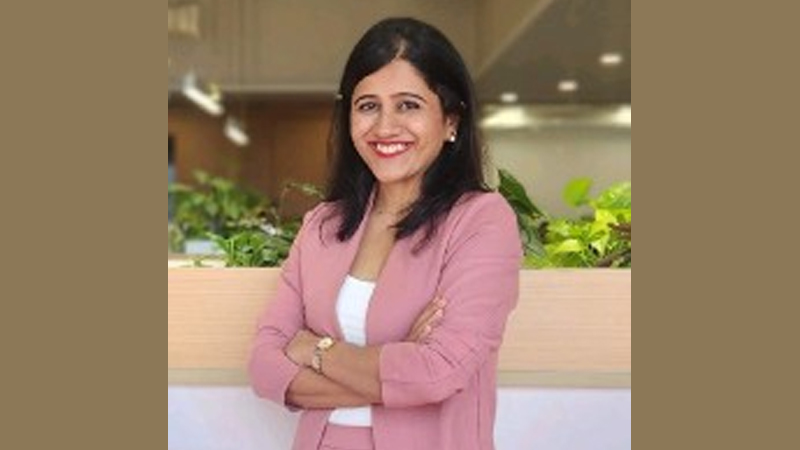
    Mumbai: In a notable move within the marketing and media landscape, Charuta Ambardekar Saoji has joined Viacom18 as the vice president and head of marketing for Colors, the network’s flagship entertainment channel. Saoji’s transition from L’Oréal, where she served as marketing director, marks a strategic shift in her career towards the dynamic world of television.

    Saoji brings with her a wealth of experience in brand management, having successfully spearheaded campaigns for several high-profile brands at L’Oréal. Her appointment at Viacom18 comes as Colors continues to seek innovative ways to engage audiences and strengthen its market position in the highly competitive television space.

    Expressing her enthusiasm for the new role, Saoji stated, “I am thrilled to join the Viacom18 family and look forward to shaping the future of Colors’ brand strategy. It’s an exciting time for the channel as we explore fresh approaches to content and audience engagement.”

    This move comes at a crucial time for Viacom18, as the company aims to further consolidate its leadership position in the entertainment industry. Saoji’s expertise in consumer insights and her ability to craft compelling marketing narratives are expected to play a pivotal role in driving Colors’ growth trajectory. The channel, known for its wide range of popular shows, stands to benefit from her leadership in enhancing brand communication and expanding its reach across diverse audience segments.

    Prior to this, Saoji made significant strides at L’Oréal, where she led campaigns that bolstered the brand’s presence in the Indian market. Her experience in navigating the complexities of consumer behavior and brand loyalty will be instrumental in crafting Colors’ future marketing strategies.

    Industry insiders view Saoji’s appointment as a strategic hire that will add considerable depth to Viacom18’s leadership team. With her track record of executing successful marketing strategies, she is well-positioned to elevate the brand’s market presence.

    “Charuta’s appointment reflects our commitment to bringing on board marketing leaders who can drive brand growth through innovation and consumer focus,” said a Viacom18 spokesperson. “Her ability to understand consumer trends and create impactful brand stories aligns perfectly with our vision for Colors.”

  • TV advertising shows resilience during second Covid wave, says new report

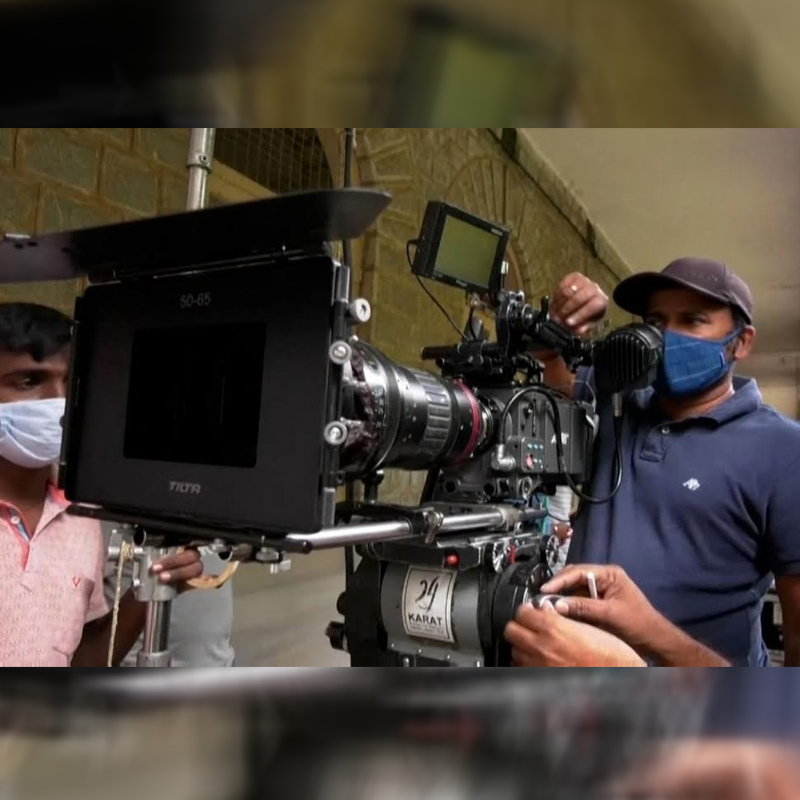
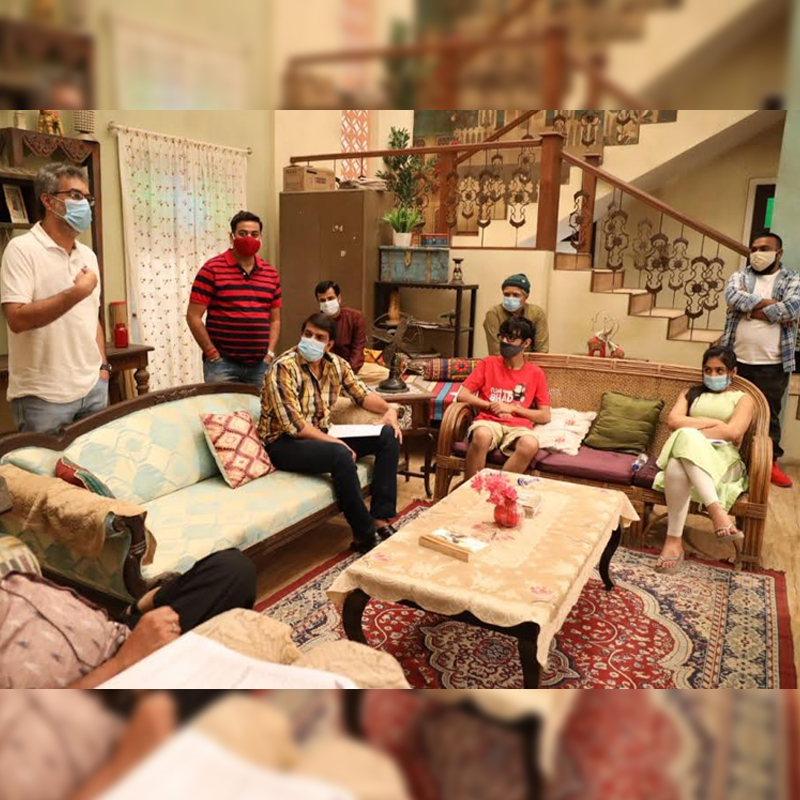
    Mumbai: Several states have begun the unlock process, as the second wave of Covid-19 begins to ebb out after its catastrophic impact across sectors. Television and film shoots have resumed under strict restrictions, allowing the media and entertainment industry to emerge out of the crisis.

    According to a recent report by Elara Capital, the second wave has submersed advertising spends softly versus 2020 levels. The first wave that hit last year defaced Q1FY21 ad revenues with decline of 61 per cent YoY(ex-IPL) for TV, 79 per cent for print, and 87 per cent for radio sectors, highlighted the report. The report has not factored the impact of the Indian Premier League (IPL).

    “Nevertheless, we expect Q1FY22 tapering to diminish, versus FY20 base, at 25 per cent decline for TV, 45 per cent for print, and 35 per cent for radio. This is primarily because of the ongoing TV shoots led by a shift to alternate locations with minimal Covid impact on fresh content, state-level restrictions versus pan-India lock-down in 2020 and continued print-newspapers’ circulation and delivery, leaning on 2020 learnings,” said the report, adding that vaccination pace should trigger a sharp ebb in new cases, which could uncork a faster unlock versus 2020 levels.

    TV advertising to revive faster than print, radio

    According to the report, TV advertising will reach pre-pandemic levels by FY2022 faster compared to print and radio. It estimates TV/digital advertising will grow 18.6 per cent (ex-IPL)/25 per cent YoY in FY22 respectively as verticals such as FMCG, e-commerce, auto, and telecom enjoy a larger share in these mediums. TV also remains the preferred medium for brand-building and favoured choice for advertisers as it has the widest reach among mediums.

    While, it predicted tough times for print and radio which are likely to take a longer time, given higher exposure to local/SME advertising segments. Other verticals like cinema and out-of-home advertising (OOH) will also need more time to recuperate from the impact of the pandemic, it said.

    “The shoots were not stalled completely for TV and films as several producers had shifted to alternate locations. Moreover, verticals like FMCG and e-commerce have a good presence for TV ad spends. It’s also important to note that TV’s has the least reliance on local ad spends compared to other mediums,” said Elara Capital vice president and research analyst Karan Taurani. 

    Regional broadcasters and news genre to outshine others

    According to the Elara Capital report, regional broadcasters are expected to outperform others in FY2022 when the industry returns to normalcy. Sports and news are the two genres with continued demand for live consumption, which should support their growth in the linear medium.

    “Regional genres such as Marathi, Telugu, Tamil, Malayalam offer a largely untapped opportunity in advertising growth, as their transition to the digital medium should take longer versus Hindi and English genres. TV Today Network (TVTN) and Zee Entertainment (ZEEL) are our top picks within the listed broadcaster space given their presence in key genres and market share gain visibility,” as per the report.

    According to the report, the average time a person spends on television has risen drastically post the coronavirus lockdown, and the trend is still continuing. Moreover, social distancing norms may continue as a precautionary measure even after the lockdown, which could further elevate the TV viewing time. 

  • From Maharashtra to Punjab, how TV industry is navigating Covid’s second wave

    From Maharashtra to Punjab, how TV industry is navigating Covid’s second wave

    KERALA: The second wave of Covid2019 that is wreaking havoc in India has reshaped the way in which television shows are made and broadcasted. As several states including Maharashtra have suspended the shooting of TV shows due to the surge in Covid cases, producers are now choosing states like Punjab to complete the filming of ongoing projects. 

    Producers compelled to shift shoots to other states

    During the initial days of shooting suspension, most showrunners shifted to states like Goa and Karnataka to complete their pending shoots. And now, as several states have started imposing strict restrictions, producers are going further afield – moving to Punjab, Gujarat, and Rajasthan to quickly film the pending episodes. 

    For television producers, this inter-state expedition is a costly proposition, especially because the shooting in these states has to be carried out in adherence to all Covid protocols. 

    “Shooting in other states outside Maharashtra is undoubtedly a very expensive deal, and producers are struggling financially. We are quickly trying to complete the filming of pending episodes in states like Goa, Gujarat, Karnataka, Rajasthan, and Punjab. We are facing huge loss, but the show must go on,” said Indian Films and Television Producers Council chairman JD Majethia. 

    Filming of non-fiction shows impacted

    According to Majethia, production of non-fiction shows has been largely impacted due to Covid restrictions, especially due to the huge funds and infrastructure involved in the filming process. 

    “Even in normal scenarios, running a non-fiction show is very challenging, and now, during the time of the pandemic, it has become more challenging than ever before. Contestants who participate in these shows come from different cities, and producers should take care of various things including their accommodation. We have to be very careful to ensure that no person in the sets is infected. It is a financial and moral responsibility, and it is stressful too,” added Majethia. 

    The actor-director also noted that it is really difficult to replicate everything on the new sets that are being erected to ensure continuity of shows. 

    Artists and technicians stranded in various states

    IFTPC revealed that several artists from Maharashtra are currently stranded in other states. To avoid this situation, producers have urged the government to permit the shooting of television shows within Maharashtra, and assured that filming will take place by maintaining all Covid protocols. Majethia also added that producers in Maharashtra are ready to work together with the government to curb the spread of the pandemic. 

    “There are several technicians and artists who are now in other states for shooting activities. To enter Maharashtra and to go back to other states for filming is not an easy task, as RT-PCR tests are mandatory to enter other regions. We also love to be a part of the government’s initiative to curb the spread of the pandemic,” added IFTPC. 

    Majethia went on to mention that the lockdown imposed in Goa has negatively affected the filming of many shows that had switched production bases to the smallest state in the country. 

    However, Goa Line Producers Association president Sandeep Korecha revealed that the lockdown has not affected indoor shooting. 

    “We are allowed to shoot at indoor venues, until May 30, even during the lockdown. Outdoor shoots aren’t permitted. We have also been asked to shoot with minimum crew members. We put an indicator on our vehicles so that they’re allowed to pass during the lockdown,” said Korecha during a recent interview with The Times of India.

    Television shows essential during Covid times

    Following the spate of restrictions in several states including Maharashtra, Karnataka, Goa, and Kerala, people are now confined to their homes, and for them, the primary means of entertainment is the television. Citing this point, Majethia claimed that makers of TV programs also come under essential services. 

    “People are depressed and frustrated due to the Covid pandemic. Entertainment is very much necessary at this time. Getting ample doses of entertainment will act as a medicine for depressed people,” he asserted. 

    Meanwhile, several television personalities have also succumbed to the deadly virus in recent days. On 30 April, actor and anchor Kanupriya died days after contracting Covid. She was known for her roles in Bhanwar, Ananro, Kahi Aek Gaon, Kartavya, Meri Kahani, Tesu Ke Phool and Tumhara Intezar Hai.  

    On 10 April, veteran Punjabi actor Satish Kaul, who had featured in BR Chopra’s Mahabharat, passed away due to Covid-related complications. 

    Television actor Divya Bhatnagar, best known for her role in Yeh Rishta Kya Kehlata Hai, died due to Covid2019 in December last year. She was just 34. 

  • Television industry faces renewed threat as Covid2019 cases begin to surge

    Television industry faces renewed threat as Covid2019 cases begin to surge

    MUMBAI: Just as the television industry began limping back to normal after braving the toughest lockdown in the country’s history, a resurgence of fresh Coronavirus cases nationally – and more so with Maharashtra leading the infections – have set it on high alert once again. In the past few weeks, some production houses have been forced to halt shooting or work with lesser staff and crew amid the new surging wave of Covid2019 infections in the general population. This, despite strict standard operating procedures (SOPs) being followed at every shoot location.

    There have been instances of cast and crew members contracting the novel Coronavirus. Bollywood actor Kartik Aaryan, Ranbir Kapoor, director Sanjay Leela Bhansali, Sanam Teri Kasam director and writer Vinay Sapru, Taarak Mehta Ka Ooltah Chashmah actor Mayur Vakani and an artist from TV show Mehndi Hai Rachne Wali and Gum Hai Kissi Ke Pyaar Mein tested positive recently.

    According to the Indian Film & TV Producers Council (IFTPC) member and  TV producer Nitin Vaidya, the TV production community has done well so far as far as Covid2019 is concerned, especially considering the pace they have to produce at.  Safety protocols with adequate arrangements for checking temperature of staff members and timely sanitisation and fumigation on the sets are being followed.

    IFTPC has asked producers to personally visit the sets and share pictures if Covid-2019 protocols are being followed.

    “We have been through the lockdown once, and we do not want to face that situation again. So, we are trying our best to ensure that adequate protocols are followed on sets. Each of us have to be careful and we are trying to ensure that producers do not become complacent and keep shooting programmes in a safe manner,” said Vaidya.

    Last week, the IFTPC wrote a letter to producers and cautioned them about a potential situation akin to "September 2020" developing again. The association urged them to avoid outdoor shoots with immediate effect. It also requested them to personally visit their sets and ensure that SOPs are implemented even more meticulously. “Fatigue and carelessness have crept into our system rather exponentially which needs to be rectified immediately," IFTPC warned.

    General entertainment  broadcasters were also alerted about the sudden resurgence of cases and urged to cooperate with the production houses and not make requests for extravagant scenes. “We asked the broadcasters to depute Covid inspectors on the sets and request their creative teams not to insist on any outdoor shoots at this point or even shooting in places where there can be a crowd,” IFTPC chairman (TV division) JD Majethia told Indiantelevision.com. “We have fought hard for the entire year and we will continue to do the same.”

    Maharashtra currently accounts for roughly 70 per cent of the total caseload of the country. Last week, state health secretary Pradeep Vyas also warned that Maharashtra’s active Covid2019 cases may reach the three lakh mark by the first week of April if the current trend of rising cases continues.

    IFTPC has asked producers to personally visit the sets and share pictures if Covid-2019 protocols are being followed.

    The surge in cases could pose serious trouble for the beleaguered television industry, which has just begun to show signs of revival. In its latest report, television monitoring agency Broadcasting Audience Research Council (BARC) had highlighted that the TV ad volume had a promising start in January and February, with a higher ad-spend than last year.

    Some production houses like Contiloe Pictures, Directors Cut, Banijay, Endemol Shine India, and StudioNext have Covid2019 compliance agencies which look after the sanitisation process, disinfection, and misting of the entire set including the main floor, vanity vans, and makeup rooms. Others like Swastik Productions have a separate residential facility in Umbergaon for the cast and crew members.

    There are concerns that actors and staff members who commute daily to the sets are more likely to be exposed to the Coronavirus. In its letter, IFTPC has asked the producers to restrict the crew size to 33 per cent like last year and avoid shooting scenes that require large crowds.

    Meanwhile, the Maharashtra government is mulling over an extended lockdown, but chief minister Uddhav Thackeray said he is counting on people to cooperate to prevent the situation from escalating. On Monday, the state witnessed a total surge of 24,645 cases in 24 hours and lost 54 lives. Roughly 3,200 of these cases were reported from Mumbai.

  • No plans to regulate TV industry or IPL: Piyush Goyal

    No plans to regulate TV industry or IPL: Piyush Goyal

    MUMBAI: Finance minister Piyush Goyal informed the Rajya Sabha that the government is not planning any law to regulate the television industry with regard to fund irregularities in the Indian Premier league (IPL) according to a report by Economic Times.

    The Revenue Intelligence authorities had not made any assessment regarding flow of unaccounted money into entertainment industry, including cinema production and distribution. The matters regarding tax evasion and unaccounted black money are under investigation and appropriate actions are taken under the Income Tax Act, Goyal informed.

    On a question on flow of unaccounted/black money into entertainment industry, the minister said, “There is no such assessment that unaccounted/ blackmoney has been found to specifically flow into entertainment industries, including cinema production and distribution, television and IPL cricket by the revenue intelligence agencies under the Central Board of Indirect Taxes and Customs (CBIC).”

    “There is no proposal as of now to bring out any new legislation to regulate cinema and television industries as well as IPL cricket,” Goyal said. 

    The action as per the I-T Act, he added, is taken against companies which may be engaged in diversified activities across various sectors, including entertainment industries as well as IPL cricket.

  • Bengali TV industry witnesses an uptick

    Bengali TV industry witnesses an uptick

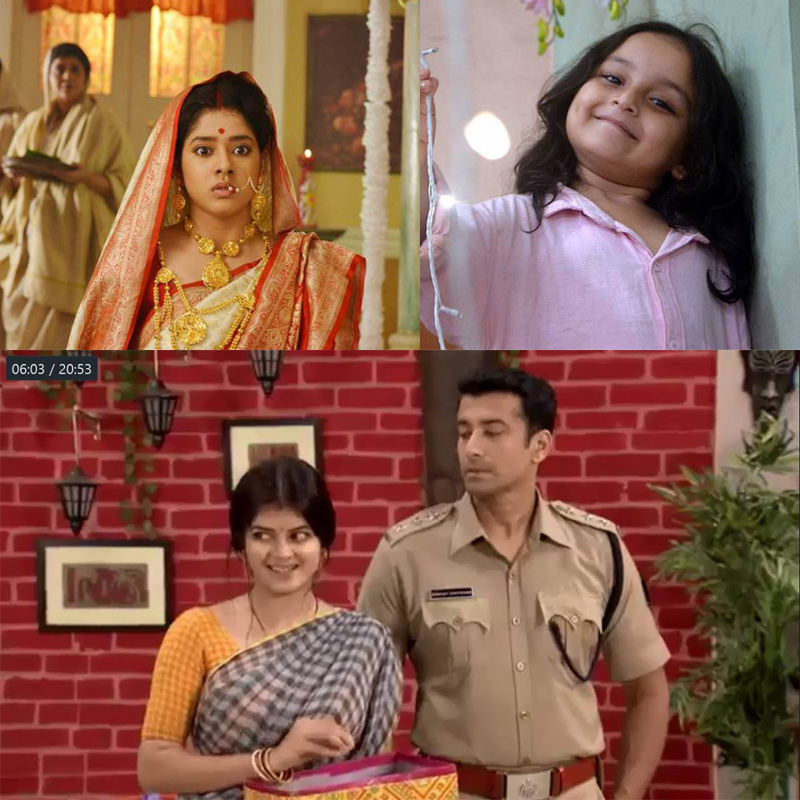
    MUMBAI: West Bengal has been one of the strong bastions of the film and TV industry in India. While fears of the regional industry facing tough financial times are not unfounded, Bengal’s TV industry is well and truly in the black despite the speculation that viewership of TV shows is dipping.

    Both local and national names have set themselves up in the state. Viewership allows them to rake in the moolah to survive. Moreover, top brands and advertisers choose regional TV channels to reach particular audiences.

    Bengali dramas aren’t immune to the age-old mix of shows and the saas bahu sagas reign even today. Despite content experimentation, soap operas continue to thrive because of their ability to pull viewers and, in turn, advertising revenue.

    For instance, many shows such as Bhutu, Icchenodi started with the promise of different content but soon kitchen politics took centre stage. A popular show, Ganer Opare, also succumbed to family politics despite being committed to the main idea. The dramatic element can be termed as a necessary evil as they can bring in good viewership that channels desperately need. If producers don’t agree to change the story’s plot, there are several instances of being moved to a different time slot. 

    Giving a tough fight to family dramas, however, is the highly popular Kusum Dola, Rasmoni, a periodic drama and Saat Bhai Chompa, a fantasy drama, topping many viewership charts. A Bengali show named Taranath Trantrik has even been dubbed for an Odia channel.

    Other than dubbing, many Bengali shows are being remade in several languages. “Almost 8 of our shows are being remade in different languages.  Star Plus next big launch “Kulfi Kumar Baajewala is a remake of one of our path breaking show on Star Jalsha “Patol Kumar Gaanwala”, SVF Entertainment’s director and co founder Mahendra Soni commented when he was asked about Bengali content’s potential to be marketed to other regions. 

    The Bengal entertainment industry has a large number of production houses. The big production houses are SVF, Magic Moments Motion Pictures, Surinder Films and Raj Chakraborty Production House which invest for both films and television shows. SVF invests 2.5 lakh per episode for a daily soap from the house. ” We have done shows at as high as 4 lakh per episode too. In fact our last limited series “Mahanayak” was costlier,” Mahendra Soni said.

    However, few players have a good control over the industry. The medium level and small production houses are not able to compete with the biggies and sometimes the big production houses buy a slot for whole year.

    Over the top (OTT) has taken hold of people’s imaginations in West Bengal as well. Everyone is trying to catch the young audience by investing in web-series. In a short time, Hoichoi, and Addatimes have gained a good amount of popularity. New shows are constantly on the launch. Many theatre groups are starting to enter the OTT industry with their own content.

    With the ongoing changes in the entertainment industry, regional players are also embracing new technology and new media content. The TV industry in Bengal, despite facing a potential threat from OTT platforms, has gained viewership in spite of all the odds.

    Also Read :

    Regional to be at the forefront of content

    COLORS Bangla launches new period drama ‘Prothom Protisruti’

  • “TV ad rates will continue to be under pressure” – Ashish Bhasin

    “TV ad rates will continue to be under pressure” – Ashish Bhasin

    MUMBAI: From leading brands discussing the advertising fraternity’s readiness to deal with the digital onslaught to panel discussions after panel discussions dedicated to cracking the content code of the digital world in reputed conferences; the Indian media world is truly enamored with the word ‘digital.’ And rightly so, as the media has completely changed how the trade works in the sector.

    But little is being discussed on the specifics of digital media’s effect on television and its business. To put this into perspective and shed light upon the current realities of the television industry from a media executive’s point of view, indiantelevision.com reached out to Dentsu Aegis Network chairman and South Asia CEO Ashish Bhasin.

    In a free flowing conversation, Bhasin opens up on sophistication employed in a new age television plan with the help of data analysis, ad-rates discrepancies in India,  future of TV media from advertising perspective, and more.

    Excerpts:

    Does Big Data and interpreting it play a role in today’s TV plans?

    It is important to pay attention to Big Data and analyse it right. At Dentsu Aegis Network we have set up our own data stack, which is driving through econometric modelling. That team is using it…it is composed of a young team of statisticians and senior data analysts, economists, and technicians who are analysing and decoding the available data on behalf of our clients.

    For example, you can get 44 percent reach for a particular plan on television.  Now if you spend 10 percent extra on your budget, you probably can get 46 percent reach on the same plan. This 10 percent of budget spends for 2 percent of incremental reach isn’t viable for the client. Thats where the data team comes in, who have developed a software who figures out where is that wastage happening. They combine the television exposure and digital exposure and tells us here is the sweet spot for advertisers to spend that 10 percent on.

    The age old problem of advertising is that advertisers know 50 percent of their advertising works but don’t know which half. Our approach helps the advertisers to know to some extent which half works.

    Many fear that digital will eat into television’s ad revenues even as TV continues to grow. What are your thoughts on this?

    Well in the distant future, in theory, digital will eat into television’s market share because everything will become digital. It is already happening in the more mature western markets but in India that has a long way go because television penetration has some way to go. We are all seeing it still from a Mumbai-Delhi point of view but the growth is not going to come from these two metros, there is already 100 per cent penetration there. The growth will come from tier III tier IV rural towns.

    There it is a long way to go. Therefore for the next five to 10 years there is enough space for all media to grow. Even print, which is collapsing everywhere else in the world is still still growing in India because literary levels are growing. But we don’t doubt that digital will grow faster – at least we believe – than any other medium.

    Will the per unit realisation (valuation) of television go up?

    Per unit realisation is the function of the audiences you get. More your distribution, more your audience, more is the realisation. I don’t think it will go because there are contradictory factors acting. On the one side you are getting more audiences, on the other side, the time of these audiences is getting more fragmented. It is getting fragmented — within television, and also between television and digital.

    So, there will be a balancing factor. It won’t collapse like it has in many other parts of the world. It may go up but gradually because there will be the other factor of the fragmentation which will come into play. There will be the two paradoxical forces acting together.

    Compared to markets like US, Indian television ad rates are very low even after adjusting the purchasing power parity. Your comments?

    I think it is unfair to compare US national rates with Indian semi regional rates because they are operating on completely different bases. There are 300 million people in the US. Out of that the TV audience is about 150 million. Per person per secondage average if you compare the two, you will understand, there are two different bases you are operating from. It’s unfair to compare US national rates with Indian semi-national or regional programs. Because then what you should compare is the 0800 ads in Minnesota, Iowa. You see their rates, their rates are less than or equal to the rates in India, even though the ones there are in dollars. The Super Bowl, one refers to, is a dense packed audience nationally – it is a unique phenomenon.

    Could the IPL be that property in India?

    It probably could be, But the IPL has already peaked; it will not go beyond this. That’s why IPL is commanding the premium; one spot on IPL is so expensive. It is anywhere between Rs three to five lakh for a 10 second spot.  

    What trend do you notice in the current television advertising rates per spot?

    I feel that the pricing on television will further go down. Today, we are looking at 0.1 rated programs. There are hundreds of programs that rated 0.1 by BARC. Tomorrow, you will be having programs with e rated 0.05, hypothetically. An advertiser is ultimately paying for the eyeballs the show is getting. If that number will go down, suddenly the prices can’t go up right?

    It is true that some premier shows will command higher ratings, such as a cricket match etc. But I don’t see the ratings going up in general.

    An advertiser is only paying more money to get more audience. To an advertiser it does not matter whether the viewer is watching it on Zee, Sony, Star or Colors, he is interested in that my target audience, say a million people, where do I reach them? So, if the reach or number of people is going to get more and more fragmented, then the per spot rate is headed south. Overall the advertiser may end up spending more because he has to take that many more spots to reach the audience he wants, but the per spot rate realisation will not go up, it will come down.

    The problem with television is also that there is too much supply, too many channels, too much inventory. The TV industry had one chance to limit the supply when the TRAI asked them to limit ad time on TV to 12 minutes an hour. Limiting supply could have had to benefit of taking rates up. But the industry did not comply with this. Hence, now there has been a commodisation of television air time.

    Do you think we will need  TV broadcaster going forward?

    The reduction of dependency on a broadcaster is at least five to 10 years away in India, which is what I keep reminding people. We are at that sweet spot where everything is going to grow. While there will be a lot of digital pressure and digital will grow fast, actually if there were no other contradictory pressures, TV should have started collapsing. That will not happen because TV is growing.

    Doordarshan has started giving away its Free Dishes in the south now. They started this in the north earlier. With this the penetration of free to air channels is going to really rise. Hence the distribution increase is going to keep an inward positive upward pressure for TV coming up. Digital is going to put pressure on it to push it down. Therefore it will remain in balance for four to five years. Finally, digital will prevail. Once you more or less have penetrated India. You have more or less got everyone in. That stage, that will be tipping point when digital will take over.

    What will happen when Jio launches?

    Globally, if you see, smart phone penetration when it goes over one third, it’s the rule of thumb. That’s the inflection point in digital anywhere. In India we are probably at around 18-20 per cent. We are about 12-18 months away from that point. The moment smartphone penetration crosses 33 per cent, bandwidth gets available cheaper and cheaper. And you get good quality bandwidth. That inflection point is going to happen.

    How will that impact the advertising agency?

    Lines are blurring. There is no difference between media  or technology or content. There is only one solution. And the advertiser is looking at a comprehensive digital solution from his communications partner.

    What does a traditional client looking for digital solutions want from an agency these days?

    The client today doesn’t want generalists. He wants super specialists. If it is digital, he doesn’t want a normally media guy to handle it, he wants a digital specialist to handle its social media, a search specialist and then a display specialist.

    The clients today want the benefits of specialization but he does not want the hassles of silos. Fortunately or unfortunately, all the legacy agencies are constructed in silos. For a guy in a creative agency, it does not matter if the media goes to any other agency. Because they are all separate companies. Because of this they have not been able to provide a single solution under one umbrella.

    The reason we have been successful is that we are structured as one P&L. Everything from media in India reports into me – whether it is Carat or Isobar or iProspect or  Dentsu Creative or whatever. And that is our biggest strength because you can bring talent in, think around the client in one seamless way.  And almost all of the others have not focused on this.

    Your take on ad blockers?

    Ad blocking is a very tricky subject. As a consumer when I look at it, ad blockers are damn good because audiences don’t want an intrusion when they consume content. I think advertising businesses are to be blamed for getting the pushback from the consumers because people just went berserk with displays online. Consumers are not paying to see your advertising, they are paying for content. So if advertisers start intruding so much, there will be push back. And it will only go up unless we figure out some standardisation. The future of digital advertising is going to be opted.

    We see ad blocking in conjunction with bot fraud and click fraud, it will lead to a scenario where the media will collapse unless the cleaning up doesn’t happen.

    We have a large programmatic buying division. The biggest challenge they face is how do you that it’s a human being consuming the content on the other end. So ad blocking will continue to happen unless you have incentivized the consumer to opt it. Either by choice or by incentives. Privacy laws will get stronger, they are much stronger abroad than they are here.


  • “TV ad rates will continue to be under pressure” – Ashish Bhasin

    “TV ad rates will continue to be under pressure” – Ashish Bhasin

    MUMBAI: From leading brands discussing the advertising fraternity’s readiness to deal with the digital onslaught to panel discussions after panel discussions dedicated to cracking the content code of the digital world in reputed conferences; the Indian media world is truly enamored with the word ‘digital.’ And rightly so, as the media has completely changed how the trade works in the sector.

    But little is being discussed on the specifics of digital media’s effect on television and its business. To put this into perspective and shed light upon the current realities of the television industry from a media executive’s point of view, indiantelevision.com reached out to Dentsu Aegis Network chairman and South Asia CEO Ashish Bhasin.

    In a free flowing conversation, Bhasin opens up on sophistication employed in a new age television plan with the help of data analysis, ad-rates discrepancies in India,  future of TV media from advertising perspective, and more.

    Excerpts:

    Does Big Data and interpreting it play a role in today’s TV plans?

    It is important to pay attention to Big Data and analyse it right. At Dentsu Aegis Network we have set up our own data stack, which is driving through econometric modelling. That team is using it…it is composed of a young team of statisticians and senior data analysts, economists, and technicians who are analysing and decoding the available data on behalf of our clients.

    For example, you can get 44 percent reach for a particular plan on television.  Now if you spend 10 percent extra on your budget, you probably can get 46 percent reach on the same plan. This 10 percent of budget spends for 2 percent of incremental reach isn’t viable for the client. Thats where the data team comes in, who have developed a software who figures out where is that wastage happening. They combine the television exposure and digital exposure and tells us here is the sweet spot for advertisers to spend that 10 percent on.

    The age old problem of advertising is that advertisers know 50 percent of their advertising works but don’t know which half. Our approach helps the advertisers to know to some extent which half works.

    Many fear that digital will eat into television’s ad revenues even as TV continues to grow. What are your thoughts on this?

    Well in the distant future, in theory, digital will eat into television’s market share because everything will become digital. It is already happening in the more mature western markets but in India that has a long way go because television penetration has some way to go. We are all seeing it still from a Mumbai-Delhi point of view but the growth is not going to come from these two metros, there is already 100 per cent penetration there. The growth will come from tier III tier IV rural towns.

    There it is a long way to go. Therefore for the next five to 10 years there is enough space for all media to grow. Even print, which is collapsing everywhere else in the world is still still growing in India because literary levels are growing. But we don’t doubt that digital will grow faster – at least we believe – than any other medium.

    Will the per unit realisation (valuation) of television go up?

    Per unit realisation is the function of the audiences you get. More your distribution, more your audience, more is the realisation. I don’t think it will go because there are contradictory factors acting. On the one side you are getting more audiences, on the other side, the time of these audiences is getting more fragmented. It is getting fragmented — within television, and also between television and digital.

    So, there will be a balancing factor. It won’t collapse like it has in many other parts of the world. It may go up but gradually because there will be the other factor of the fragmentation which will come into play. There will be the two paradoxical forces acting together.

    Compared to markets like US, Indian television ad rates are very low even after adjusting the purchasing power parity. Your comments?

    I think it is unfair to compare US national rates with Indian semi regional rates because they are operating on completely different bases. There are 300 million people in the US. Out of that the TV audience is about 150 million. Per person per secondage average if you compare the two, you will understand, there are two different bases you are operating from. It’s unfair to compare US national rates with Indian semi-national or regional programs. Because then what you should compare is the 0800 ads in Minnesota, Iowa. You see their rates, their rates are less than or equal to the rates in India, even though the ones there are in dollars. The Super Bowl, one refers to, is a dense packed audience nationally – it is a unique phenomenon.

    Could the IPL be that property in India?

    It probably could be, But the IPL has already peaked; it will not go beyond this. That’s why IPL is commanding the premium; one spot on IPL is so expensive. It is anywhere between Rs three to five lakh for a 10 second spot.  

    What trend do you notice in the current television advertising rates per spot?

    I feel that the pricing on television will further go down. Today, we are looking at 0.1 rated programs. There are hundreds of programs that rated 0.1 by BARC. Tomorrow, you will be having programs with e rated 0.05, hypothetically. An advertiser is ultimately paying for the eyeballs the show is getting. If that number will go down, suddenly the prices can’t go up right?

    It is true that some premier shows will command higher ratings, such as a cricket match etc. But I don’t see the ratings going up in general.

    An advertiser is only paying more money to get more audience. To an advertiser it does not matter whether the viewer is watching it on Zee, Sony, Star or Colors, he is interested in that my target audience, say a million people, where do I reach them? So, if the reach or number of people is going to get more and more fragmented, then the per spot rate is headed south. Overall the advertiser may end up spending more because he has to take that many more spots to reach the audience he wants, but the per spot rate realisation will not go up, it will come down.

    The problem with television is also that there is too much supply, too many channels, too much inventory. The TV industry had one chance to limit the supply when the TRAI asked them to limit ad time on TV to 12 minutes an hour. Limiting supply could have had to benefit of taking rates up. But the industry did not comply with this. Hence, now there has been a commodisation of television air time.

    Do you think we will need  TV broadcaster going forward?

    The reduction of dependency on a broadcaster is at least five to 10 years away in India, which is what I keep reminding people. We are at that sweet spot where everything is going to grow. While there will be a lot of digital pressure and digital will grow fast, actually if there were no other contradictory pressures, TV should have started collapsing. That will not happen because TV is growing.

    Doordarshan has started giving away its Free Dishes in the south now. They started this in the north earlier. With this the penetration of free to air channels is going to really rise. Hence the distribution increase is going to keep an inward positive upward pressure for TV coming up. Digital is going to put pressure on it to push it down. Therefore it will remain in balance for four to five years. Finally, digital will prevail. Once you more or less have penetrated India. You have more or less got everyone in. That stage, that will be tipping point when digital will take over.

    What will happen when Jio launches?

    Globally, if you see, smart phone penetration when it goes over one third, it’s the rule of thumb. That’s the inflection point in digital anywhere. In India we are probably at around 18-20 per cent. We are about 12-18 months away from that point. The moment smartphone penetration crosses 33 per cent, bandwidth gets available cheaper and cheaper. And you get good quality bandwidth. That inflection point is going to happen.

    How will that impact the advertising agency?

    Lines are blurring. There is no difference between media  or technology or content. There is only one solution. And the advertiser is looking at a comprehensive digital solution from his communications partner.

    What does a traditional client looking for digital solutions want from an agency these days?

    The client today doesn’t want generalists. He wants super specialists. If it is digital, he doesn’t want a normally media guy to handle it, he wants a digital specialist to handle its social media, a search specialist and then a display specialist.

    The clients today want the benefits of specialization but he does not want the hassles of silos. Fortunately or unfortunately, all the legacy agencies are constructed in silos. For a guy in a creative agency, it does not matter if the media goes to any other agency. Because they are all separate companies. Because of this they have not been able to provide a single solution under one umbrella.

    The reason we have been successful is that we are structured as one P&L. Everything from media in India reports into me – whether it is Carat or Isobar or iProspect or  Dentsu Creative or whatever. And that is our biggest strength because you can bring talent in, think around the client in one seamless way.  And almost all of the others have not focused on this.

    Your take on ad blockers?

    Ad blocking is a very tricky subject. As a consumer when I look at it, ad blockers are damn good because audiences don’t want an intrusion when they consume content. I think advertising businesses are to be blamed for getting the pushback from the consumers because people just went berserk with displays online. Consumers are not paying to see your advertising, they are paying for content. So if advertisers start intruding so much, there will be push back. And it will only go up unless we figure out some standardisation. The future of digital advertising is going to be opted.

    We see ad blocking in conjunction with bot fraud and click fraud, it will lead to a scenario where the media will collapse unless the cleaning up doesn’t happen.

    We have a large programmatic buying division. The biggest challenge they face is how do you that it’s a human being consuming the content on the other end. So ad blocking will continue to happen unless you have incentivized the consumer to opt it. Either by choice or by incentives. Privacy laws will get stronger, they are much stronger abroad than they are here.


  • Women employment in film and television industry drops: Study

    Women employment in film and television industry drops: Study

    MUMBAI: A study released by the “Center for the Study of Women in Television and Film at San Diego University” reveals that female representation behind the scenes in film and television industry has reached an abysmal low.
     
    Shocking figure reveals there were more female directors in late 90’s than we have today. Since 1998, the number of women directing any of the top 250 highest grossing films has dropped by two per cent. Which shows why we had to wait till 2010 to break the deadlock for a female director to win an Oscar for direction (Kathryn Bigelow, won the title for her film The Hurt Locker in 2010).
     
    Music composing and sound designing witnesses the poorest results, one per cent of all composers and only five per cent of all sound designers are women. Only three per cent of the movies had more the 10 female employees and 38 per cent of the films choose not to employ a woman in the crucial behind the scenes role.
     
    The production field gives us a better figure as we see women having little stronger representation as producers (23 per cent) and executive producers (19 per cent) compared to other behind the scenes roles.
     
    In 2011 – 12, female representation as editor in documentaries and narrative features increased to 25 per cent from 23 per cent in 2008- 09 but unfortunately the percentile dropped to 20 in 2013 – 14.
     
    The study also reveals that the representation is much stronger when it comes to independent posts in documentaries and narrative features and hence this woman under employment crisis cannot be termed as lack of intent or quality, and the forging forward industry should ensure better results.


  • Writer locks horns with ETV Kannada over Akka

    Writer locks horns with ETV Kannada over Akka

    MUMBAI: We’ve heard of instances where writers have been unable to stand up to errant television channels that have produced shows based on their scripts without informing them, let alone involving them.

    However, having such a writer drag the channel to court and succeed in getting a stay order against the concerned show is a rarity in the television industry.

    One such is Akka, the story of twin sisters, which was to air on ETV Kannada at 8.30pm starting Monday. As soon as Kannada writer-producer Rekha Rani got wind of the show being a replica of the draft copy she had submitted to the channel some months ago, she raised a stink. When ETV Kannada didn’t pay any heed to her allegations, she approached the Bangalore civil court which passed a stay order restraining the channel from airing the show from Monday.

    When contacted, Rekha Rani told  indiantelevision.com: “It is my story and idea that they have copied. The channel also came to me for monetary settlement but that’s not what I’m after. I want my story back.”                                         

    Rekha Rani says she only wants her story back, not money

    “I had given the story to the channel and they seemed interested but I had no idea they had taken it ahead without my involvement.” Rani claims she has audio recordings of programming head of the channel Parameshwar Gundkal, asking her to come to a monetary settlement as well as recordings of the show crew describing the show which she says she has produced in court. When contacted, Guntakal refused to comment on the matter.     

    Promos of Akka are already on air and a larger promotional campaign amounting to Rs 10 lakh is running across the state.

    When contacted, Viacom18 EVP Ravish Kumar who heads ETV Kannada, Oriya and Bangla refused to comment saying the matter is subjudice. Asked about the replacement for Akka, he simply said: “Wait and watch what we do on Monday.”

    “This is totally unethical. How can a writer now approach him? This is a clear signal to channels not to mess around with creative professionals. We need to safeguard the interest of writers,” says a senior executive from a rival channel.

    Meanwhile, ETV Kannada lawyer Shyamsundar has this afternoon submitted a reply to the court to vacate the stay on Akka. Coming to Rekha Rani, it’s now a fight to the finish…