Tag: Teleports

  • Eutelsat confirms ground infra sale deal with EQT Infrastructure

    Eutelsat confirms ground infra sale deal with EQT Infrastructure

    MUMBAI: Communications satellite firm  Eutelsat group has exercised the put option signed with EQT Infrastructure VI fund (“EQT”) on 9 August 2024 regarding a majority stake in a newly created entity that will hold Eutelsat’s passive ground infrastructure assets. This decision follows the completion of the consultation processes with relevant employee representative bodies of Eutelsat. 

    The exercise of the put option led to the signing of a binding share purchase agreement (SPA) between Eutelsat and EQT. 

    As announced on 9 August 2024 upon signing of the put option agreement, the transaction consists in the carve-out of the Eutelsat’s passive ground infrastructure assets (land, buildings, support infrastructure, antennas and connectivity circuits for the combined portfolio of teleports and SNPs) to form a new company to be incorporated as a standalone legal entity.

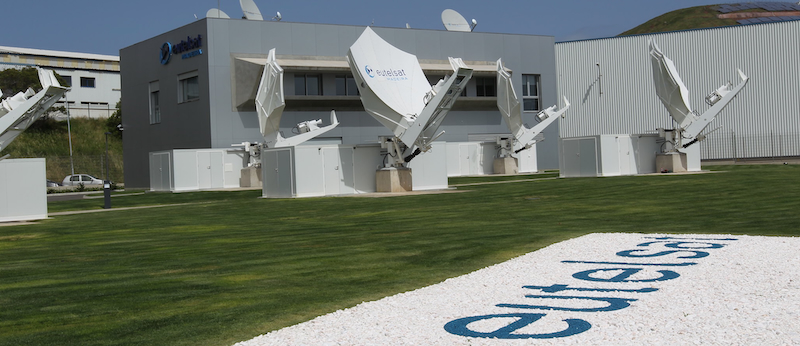
    Eutelsat has around 1,400 antennas across more than 100 locations globally, allowing satellite communications for Eutelsat group, OneWeb and third party clients.

    Under the terms of the agreement, EQT will acquire an 80 per cent stake in this new entity, while Eutelsat group will remain committed as long-term shareholder, anchor tenant and partner of the new company with a 20 per cent holding alongside EQT. 

    The transaction values the new entity at an enterprise value of €790m. It remains subject to customary conditions precedent, and closing of the deal is expected in the first quarter of calendar year 2026.

  • MIB restricts eligibility for temporary uplinking for non-news events

    MIB restricts eligibility for temporary uplinking for non-news events

    MUMBAI: In a fresh notice, the Ministry of Information and Broadcasting (MIB) has laid out a new norm for temporary uplinking applications for live coverage of non-news and current affairs TV channels. Now, only those channels and teleport operators that are already permitted by the MIB will be eligible to apply for temporary permits. This notification comes into effect immediately.

    It reiterated that no other entity apart from permitted broadcasters and teleport owners will be given permissions for uplinking in the case of temporary live events.

    The Telecom Regulatory Authority of India (TRAI) had suggested its recommendations to ease norms for uplinking and downlinking of TV channels. The MIB later stated that these suggestions were under consideration but did not give any time frame for making them into regulations. These norms last came into effect in 2011.

  • ISRO/DoS relent on use of foreign satellites; MIB starts processing applications

    ISRO/DoS relent on use of foreign satellites; MIB starts processing applications

    MUMBAI: India’s Department of Space, overseeing the Indian Space Research Organisation (ISRO), has eased up on its hitherto hard stance on Indian TV channels and teleports using foreign satellites’ capacity — if the Indian customer has a long-term contract.

    In a communication to Ministry of Information and Broadcasting (MIB), DoS/ISRO combine has advised that applications may be processed — for the time being — without insistence on migration to an Indian satellite or asking the time frame for doing it. 

    According to government sources, it has been suggested to MIB that it could start granting permissions to TV channels proposing to use foreign satellites for uplinking purpose if they are going in for a contract of three years or more. If an applicant company, having existing government permissions, has long-term capacity contract on foreign satellites, it too should be allowed to continue with its services.

    However, there’s a caveat to ISRO/DoS’ latest softening of stance. Any company that has existing permission from MIB to start a TV channel or communications service (like teleports) and is using foreign satellites should give the Indian space agency at least three-month notice for space on an Indian satellite when its contract with a foreign satco is ending. Same holds true for all fresh permissions for TV channels given by the government.

    The DoS/ISRO communication referred to over 35 applications that were kept pending by MIB as Department of Space had been insisting on migration to Indians satellites. MIB had also issued letters earlier this year asking companies seeking name change, for example, as to when they proposed to shift to an Indian satellite. Out of these cases highlighted by ISRO/DoS, at least 10 have long-term contracts for capacity on foreign satellites.

    Last month MIB cleared applications of three new TV channels in Indian languages under Aastha brand name. The Aastha channels are owned by a company controlled by Balkrishna, a close associate of yoga-guru-turned-entrepreneur Ramdev who’s Patanjali FMCG venture is giving even multinational companies sleepless nights, if revenues and sales growth are to be believed.

    Government nods recently were also given for name and logo change to some big broadcasting companies. Incidentally, some of the Aastha TV channels use foreign satellites for uplinking activity.

    In recent times, ISRO has been facing minor setbacks regarding launch of communications satellites, including Gsat-11, which returned to India just few days before launch from a European launchpad. 

    Still, it needs to be seen how long the government continues allowing Indian customers facilities of foreign satellites.

    MIB Expands Areas for Online Applications

    In a new advisory put out yesterday, MIB has expanded the services for which applications could be made online, something that the government has been insisting on in an effort to reduce processing time.

    The online module for submitting applications on www.broadcastseva.gov.in extends to cases relating to change in details of a company, annual permission fee for teleport companies and company-specific changes being sought to be made by teleports.

    The government has also reiterated an earlier stand of accepting online payments for various processing and annual permission fee, adding such payments should be made on time failing which action could be taken against companies concerned under existing regulations.

    Also Read :

    MIB clears TV channel applications; Rathore calls for stakeholder meets

    MIB, DoS nudge TV channel to use Indian satellites

    MIB says ISRO upping capacity to facilitate migration from foreign satellites

    Comment: 3 areas that new MIB minister Rathore needs to target

  • MIB reverts to earlier norms of seeking nod from ISRO on uplink/downlink of TV channels

    MIB reverts to earlier norms of seeking nod from ISRO on uplink/downlink of TV channels

    NEW DELHI: At a time when one arm of the government is said to be exploring review of usage norms for satellite frequencies for users of satellite services, Ministry of Information and Broadcasting has cancelled an earlier order — which simplified clearances for uplinking and downlinking of TV channels on permitted teleports and satellites — and reverted to an older tradition of also getting an okay from Department of Space (DOS), which could make the process lengthy.

    In a recent official communiqué, MIB stated DOS observed that by not referring TV channels’ applications relating to uplink/downlink to it, certain “key aspects” provided by the applicant were “not getting examined” and which could “create interference issues and difficulties in coordination with Indian satellites” at a later stage.

    Pointing out that a policy decision taken earlier by it has been reviewed

    in the light of DOS observations, MIB added, “It has been decided to revert to the erstwhile practice of referring all applications, seeking uplinking permission/change of teleport and/or satellite in respect of TV channels, to DOS for its no-objection with reference to proposed satellite’s coordination with Indian satellites.”

    A prior nod from DOS for uplink/downlink of TV channels on teleports and satellites, already permitted by MIB, was considered “duplication” of the clearance process and, thus, done away with by MIB in February 2017 as part of PM Modi-led government’s bid to ease norms of doing business in India. DOS, managed directly by the Prime Minister’s Office, oversees activities of Indian Space and Research Organisation (ISRO), an organization responsible for Indian satellites.

    MIB, while withdrawing its early-2017 order, said its decision comes into effect immediately.

    Interestingly, according to government sources, Wireless, Planning and Co-ordination (WPC) division, under Ministry of Telecoms, is exploring a review of clearance norms for users of satellite services in India and also optimizing value of satellite frequencies.

    At present, for a customer of satellite services, whether on Indian or foreign satellite, getting clearance for satellite capacity is a lengthy and time consuming process involving green signal from multiple government organizations, including DOS/ISRO and WPC.

    Telecoms and broadcast regulator TRAI has suggested a couple of times, in lengthy set of recommendations, that with an explosion in communications services, it was time India ought to explore an Open Sky Policy relating to satellite services; especially in KU-band category.

    ALSO READ:

    ISRO stresses on indigenization; TRAI for Open Sky policy

    Prasar Bharati, Dish TV, Star, Zee and BES bat for KU-band open-sky policy

    Will foreigners buy into easing of FDI in cable TV, DTH?

  • Broadcast media sector FDI norms see minor tweaks in govt’s fresh announcement

    Broadcast media sector FDI norms see minor tweaks in govt’s fresh announcement

    NEW DELHI: The government of India yesterday issued a comprehensive FDI policy for various sectors where a slight change has been noticed in the media sector from what had already been announced in June 2016. Now, 100 per cent FDI is allowed in cable TV and HITS under automatic route for both digital and non-digital carriage services.

    For those segments of the media where automatic FDI approval is not granted and a government okay is needed, it would now be the nodal ministry — Ministry of Information and Broadcasting (MIB) — that would be responsible for the green signal instead of Commerce Ministry’s Foreign Investment Promotion Board, a division that has been now dismantled as part of government’s bid to make easy doing business in India.

    public://b1_0.jpg

    FDI in broadcast carriage services like teleports, DTH, cable networks (both MSOs and LCOs for DAS and non-DAS areas), mobile TV, headend-in-the-sky broadcasting service (HITS) is 100 per cent under automatic route.

    The foreign investment limit (FDI) in terrestrial broadcasting of FM Radio and up-linking of news and current affairs TV channels remain at 49 per cent subject to government approval. Up-linking and downlinking of non-news and current affairs TV channels continue to be 100 per cent under automatic route.

    public://b2.jpg

    Publishing of newspaper and periodicals dealing with news and current affairs  and publication of Indian editions of foreign magazines dealing with news and current affairs have a 26 per cent FDI limit subject to government approval.

    The head of an MSO company, on condition of anonymity, said it’s slightly confusing as to why it has been stated that 100 per cent FDI is allowed for carriage services like cable TV and HITS in both digital and non-digital areas  under automatic route.

    Though the government is of the opinion that 100 per cent digitization has been achieved in the country, broadcast carriage industry (MSOs and LCOs) insist there analog pockets in the country persist as set-top-boxes are still being seeded in small towns and rural areas.

    The government has also notified — most of it reiteration of earlier policy decision — detailed conditions for the broadcast media and they can be viewed at http://dipp.nic.in/sites/default/files/CFPC_2017_FINAL_RELEASED_28.8.17.pdf:

    ALSO READ:

    Radical changes in FDI regime; Most sectors on automatic FDI route

    I&B Sector brings in over $1.25 billion  FDI between October 2014 and May 2016


  • Report details of TV channels by Mar-end or face action, teleports warned

    NEW DELHI: Teleports which fail to give full information of TV channels uplinked or downlinked by them within 15 days will be considered as lapsed and action initiated to cancel permission.

    The Information and Broadcasting Ministry said in a note put on its website but dated 17 March that all teleports have to report within fifteen days according to the formula attached to the notice on mib.nic.in.

    The Ministry had on 7 January 20I3 directed all the teleport operators having permission for up-linking and down-linking of TV channels to furnish the detailed list of TV Channels being uplinked from their teleport every month.

    The note said: “It has come to the notice of this Ministry that some of the teleport operators are still not furnishing the above monthly report and those who are furnishing the report, the data do not match with the permissions issued by this Ministry for uplinking/downlinking of TV channels from their respective teleports.

    The Ministry had decided that all the teleport operators having permission for up-linking and down-linking of TV channels shall immediately furnish details of the permissions issued by Ministry till date for uplinking/downlinking of TV channels from their teleports in the fixed proforma.

    Teleports who do not give such information will be presumed to be non-functional and action will be initiated for cancellation of the teleport permission.

    “Furnishing this information is mandatory and non-compliance will be construed as violation of the uplinking guidelines”, the Ministry said.

  • TV channels’ uplinking / downlinking procedure simplified

    MUMBAI: The ministry of information and broadcasting of the government of India has simplified the procedure for processing of application for uplinking/downlinking of TV channels. Marked to all broadcasters & teleport operators, this order, signed by the joint secretary to the government of India K Sanjay Murthy has come into immediate effect’

    All applications requiring permission for uplinking / downlinking of private satellites TV channels/ teleports/ news agencies/ DSNG etc. are processed as per clause 9.2 of the policy guidelines for uplinking of television channels from India dated 5 December 2011, which is reproduced below:

    “9.2 — On the basis of information furnished in the application form, if the applicant is found eligible, its application will be sent for security clearance to the ministry of home affairs and for clearance of satellite use to the Department of Space (wherever required)”.

    After detailed and careful consideration, the competent authority has decided that the following procedure would be followed in dealing with the phrase “wherever required” as mentioned in clause 9.2 of Uplinking Policy Guidelines’.

    DoS clearance would be required in case of applications seeking permission to set up teleports and operating DSNG vans.

    DoS clearance would not be required for TV channel applications proposing to uplink from teleports which are already cleared by DoS and permitted by the ministry of information and broadcasting.

    Also Read:

    Non-news temporary uplinking approvals in 15 days

    81 teleports permitted to uplink, downlink TV channels


  • 53 TV channels, six teleports’ licences up for renewal in ’17

    53 TV channels, six teleports’ licences up for renewal in ’17

    NEW DELHI: Ministry of Information and Broadcasting (MIB) has conveyed to all TV channels and teleports that licenses for uplink and/or downlink expiring in 2017 should be renewed six months prior to the expiry date.

    The MIB communication to TV channel and teleports, dated December 16, 2016 and posted on the ministry website on December 20, 2016 stated, “Permission-holding companies, whose initial period of permission for uplinking and/or downlinking of TV channels and setting up of teleports is going to expire during 2017 and which are willing to get the permission renewed beyond its initial period are required to apply for the same six months prior to the date of expiry of the permission period.”

    The government also clarified that TV channels who have not applied six months prior to the date of expiry of the permission period, the December MIB note may be “treated as 21 days notice” and the government would take it that the permission-holder was not interested in further extension after which the government was free to take “further necessary action”.

    MIB has put out a list of 53 TV channels and six teleports whose licenses expire at various times during 2017.

    The companies are required to apply for renewal of license along with relevant documents, including details of the company, shareholding patterns and foreign investments, for various government organizations like MIB and Ministry of Home Affairs to scrutinize the documents for renewal of licenses. Renewal will also depend on companies concerned agreeing to and updated guidelines relating to uplink and downlink.

  • 53 TV channels, six teleports’ licences up for renewal in ’17

    53 TV channels, six teleports’ licences up for renewal in ’17

    NEW DELHI: Ministry of Information and Broadcasting (MIB) has conveyed to all TV channels and teleports that licenses for uplink and/or downlink expiring in 2017 should be renewed six months prior to the expiry date.

    The MIB communication to TV channel and teleports, dated December 16, 2016 and posted on the ministry website on December 20, 2016 stated, “Permission-holding companies, whose initial period of permission for uplinking and/or downlinking of TV channels and setting up of teleports is going to expire during 2017 and which are willing to get the permission renewed beyond its initial period are required to apply for the same six months prior to the date of expiry of the permission period.”

    The government also clarified that TV channels who have not applied six months prior to the date of expiry of the permission period, the December MIB note may be “treated as 21 days notice” and the government would take it that the permission-holder was not interested in further extension after which the government was free to take “further necessary action”.

    MIB has put out a list of 53 TV channels and six teleports whose licenses expire at various times during 2017.

    The companies are required to apply for renewal of license along with relevant documents, including details of the company, shareholding patterns and foreign investments, for various government organizations like MIB and Ministry of Home Affairs to scrutinize the documents for renewal of licenses. Renewal will also depend on companies concerned agreeing to and updated guidelines relating to uplink and downlink.

  • Stakeholders welcome easing of FDI norms for broadcasting; want DAS to move faster

    Stakeholders welcome easing of FDI norms for broadcasting; want DAS to move faster

    NEW DELHI: The broadcasting sector and particularly the cable sector welcomed the government’s announcement bringing almost the entire broadcasting sector under the automatic route for foreign direct investment.

    Stakeholders said the step was very timely as the country was on the verge of completing the transformation to digital addressable systems for cable television.

    The government had this morning announced opening up setting up of teleports, direct-to-home, cable networks, headend-in-the-sky and mobile television to 100 per cent foreign direct investment through the automatic route.

    The announcement from the Prime Minister’s office said this had been done with the objective of providing major impetus to employment and job creation in India.

    However with regard to the broadcasting sector, it was made clear that infusion of fresh foreign investment beyond 49 percent in a company not seeking license/permission from sectoral Ministry, resulting in change in the ownership pattern or transfer of stake by existing investor to new foreign investor, will require approval of the Foreign Investments Promotion Board.

    However, Hinduja Ventures Ltd whole-time director and former president of the MSO Alliance Ashok Mansukhani told indiantelevision.com that these changes would have real meaning only if the government is able to bring back DAS ‘on the rails.’

    He said that just around six months were left for the final Phase of DAS and Phase III was already mired in several cases all over the country. Although the Supreme Court had directed that these be transferred to Delhi High Court, this process had not been completed with the result that the High Court could not proceed to hear the matter.

    Phase III was to cover 7,700 cities and Phase four is to cover 61 million (6.1 crore) television households, but all this will be derailed unless the government is able to implement the different phases.

    In a general reaction to the liberalization in FDI, FICCI Secretary-General Didar Singh said“There is no doubt that India today is the most preferred investment destination in the world. While the attraction of our market is known to all, there is now even more reason for global investors to commit themselves for making and doing business in India. Our government is translating words into action and after having made a strongest pitch ever to global investors, it if following up with a major overhaul of the FDI framework so that the interest generated is captured in the form of higher investment flows which are on a rise since the last two years”.

    National Cable and Telecommunication Association President Vikki Choudhuri, while welcoming the move, said the government should also immediately re-look at the regulations which are not favourable for BPOs and the last mile operator.

    Cable Operators Federation of India president Roop Sharma said that while the relaxation for cable and multi system sector going through automatic route was welcome, it would not serve any purpose unless the last mile operator is educated about this.

    As a result, she said it would only lead to creation of monopolies in the hands of a few large cable and MSO operators. This was because cable operators in smaller towns never even came to know about the changes since no effort was made by the government to educate them.