Tag: telephony

  • Trivayu Media Works announces its customer success services portfolio

    Trivayu Media Works announces its customer success services portfolio

    Mumbai: TriVayu Media Works has announced the launch of its new customer success service portfolio. The services will be launched under a new brand called TMW: NBUx (next billion users’ experience). With a presence in over 200 districts, 1,000 villages, and 20+ states across the country, TMW is a private hyperlocal content distribution company and distinguishes itself as a solution that assists India’s leading companies in targeting the hyperlocal market through the development of super-niche content, marketing, and resource services.

    TMW: NBUx’s customer success services include live chat support, email support, online reputation management, and telephony (inbound and outbound) in 10+ languages. TMW: NBUx service is a plug-and-play kind of module where clients just have to select their customers and define the aim or queries. TMW’s team will also facilitate the strategy and execution using their in-house CRM ecosystem. Soon, TMW plans to offer short services such as customer response surveys and user intent research surveys as well.

    “We are thrilled to announce the launch of our customer success services portfolio under the new brand of TMW: NBUx. The service aims to empower any B2C brand that is keen to enhance its customer loyalty and satisfaction. There are many tier-two-based SMB companies that want to set up a customer success team but are not able to do so due to a low budget and lack of awareness. With our cost-efficient and feasible plug-n-play hyperlocal dialect module, we are driven to serve more brands and help them scale quickly and build customer trust,” said Trivayu Media Works co-founder Ratnendra K Pandey.

    TMW offers content in 15+ languages to help brands reach a wider audience in tier two and tier three cities where branding and its associated concepts are challenging to develop. TMW also trains and employs youth in content learning, and the process is completely free until a candidate begins earning money. Candidates are hired based on their performance and work from TMW’s micro-offices, which the company claims no other company offers. By collaborating closely with trained resources from tier two and tier three cities, TMW is able to save its clients up to 30 per cent on project costs.

  • Media should consider reasonable restrictions: Tewari

    Media should consider reasonable restrictions: Tewari

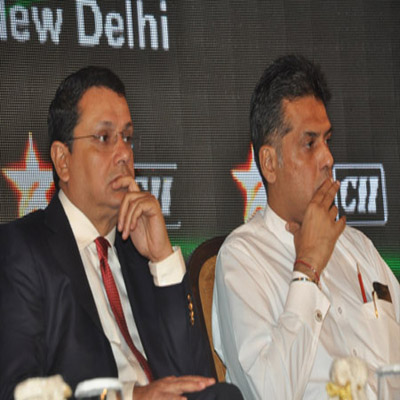
    NEW DELHI: Information and Broadcasting Minister (I &B) Manish Tewari today stressed that the government wanted the relationship with the media to be one of persuasion rather than regulation but the media should introspect about the reasonable restrictions laid down in the constitution to the freedom of speech.

    Making the inaugural address at the Big Picture Summit on Media and Entertainment organised by CII, the minister said the government will cooperate to ensure that the M & E sector is able to ‘unlock the potential of millions.’

    He stated that the phase III in FM radio will get underway next month with the e-auctions, adding that radio had seen a major resurgence thanks to mobile telephony.
    Manish Tewari believes that the industry must explore new avenues and technologies like mobile telephony and how it can be used to grow the sector

     The minister announced that the Justice Mudgal Committee which was going into the Cinematograph Act including film censorship was expected to give its report by mid-October. Tewari was responding to remarks made by previous speakers Star TV CEO Uday Shankar and Walt Disney MD Ronnie Screwvala about extra-constitutional authorities and even state governments raising voices even after a film had been cleared by the Central Board of Film Certification, and making a strong case for bringing cinema on the concurrent list.

    Tewari noted that despite the general slowdown the world over and in India, the M and E sector was expected to grow at a pace of 18.4 per cent CAGR to Rs 2,245 billion by 2017 from Rs 965 billion in 2012.

    He noted that the print and television sector comprised 48 per cent of this growth and the internet was expected to take over by 2017. He said the real success story was the print media since its growth continued at a rate of ten per cent per year when it was falling all over the world.

    Although India had the largest number of TV news channels in the world, it represented only 17 per cent of the M and E industry and therefore there was need to remove the bottlenecks in distribution.

    While the channels were not lagging in content, hardware was an area in which they were found lagging, he felt. The minister said that he wanted the industry to come up with ideas on how the number of cinema screens could be increased.

    Complimenting CII for its optimism in setting a target of USD 100 billion for the industry, he spoke of the opportunity that the sector presents in terms of innovation in content and non-content areas, adding that the government would partner the industry to put into place a system to see that the vision of USD 100 billion is translated into reality.

    He also mentioned that the industry must explore new avenues and technologies like mobile telephony and how it can be used to grow the sector, emphasising that the government would look to facilitate innovation and expansion.

    Screwvala in the keynote address said that although there have been challenges and a sense of gloom, there has been a fair amount of progress as well, especially in the movie industry, which has flourished.

    The M&E industry, he said, is seen as an industry of ‘high impact’ with the ability to bring about noteworthy transformation. Therefore, he felt that the time is right for the M&E industry, the government and other stakeholders to take time to deliberate upon the challenging issues that the industry faces such as dependency on advertising, inconsistent regulation, the need and ability to attract the best talent, unanimity and long-term thinking and then come up with a roadmap that will help the industry achieve the target of USD 100 billion.

    He hailed the progress in digitisation of cable TV and efforts to go on to better consumer TV viewing surveys, he said dependency on advertising remains a big problem and ways have to be found to make the consumer pay. There was need for unanimity and long-term thinking in the industry, a need to attract the best talent, and the need to recognise that new media needed a different kind of audience and talent.

    While India was among the least regulated countries in the world, he admitted that some regulation was necessary and this has to be consistent and not vary from state to state.

    He also wanted edutainment to be encouraged without being dependent on curriculum, sports to extend from just cricket as far as media was concerned, and the need for a greater bandwidth.

    He suggested setting up of a core group of the government and the industry which could work over the next 18 months or so to get over the bottlenecks, an issue supported by eminent filmmaker Amit Khanna.

    Khanna said the target of $100 billion for M &E was not unrealistic, if there was proper planning and greater cooperation between the government and the industry.

    He said it was unfortunate that the country was over-producing in cinema, considering the small number of screens.

    He suggested that the I & B ministry should change its name to the media ministry as new media was taking over.

    He regretted that there was no proper broadcasting regulator and the Telecom Regulatory Authority of India had been given this responsibility.

    India may have the largest number of TV news channels, but they were all getting ‘tabloidised’.

    He also felt the need for more trained professionals if the industry had to meet its targets.

     Delivering the theme address, Shankar said that openness to new ideas, capital and talent would unleash a fresh wave of growth, just as it did in the 1990s, when economic reforms ushered in a fresh wave of growth for the Indian economy.

    Earlier, in his welcome remarks, CII director general Chandrajit Banerjee spoke of the tremendous ‘soft power’ of the industry to bring about innumerable benefits to the Indian economy.
    A CII-PriceWaterhouse Coopers report on the M&E industry, titled ‘India Entertainment and Media Outlook 2013’ was also released on the occasion by Tewari.