Tag: Telenor

  • Sunil Raina calls the shots as new managing director at Lava International

    Sunil Raina calls the shots as new managing director at Lava International

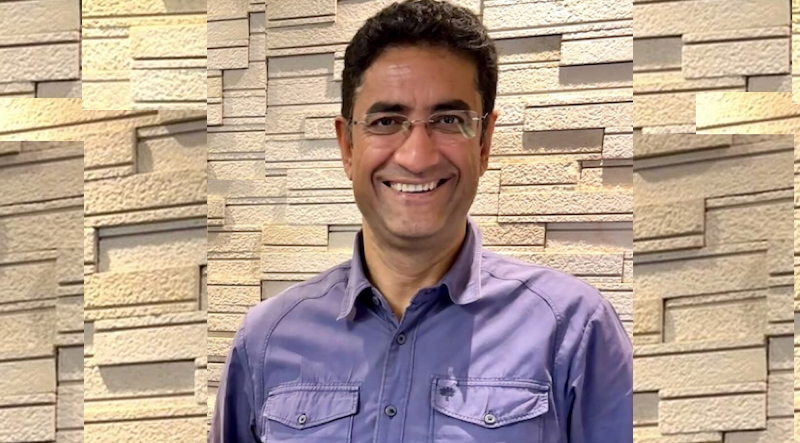
    MUMBAI:  Sunil Raina has officially taken the reins as managing director at Lava International, stepping into the hot seat after a stellar 15-year rise through the ranks at the homegrown mobile brand.

    From leading marketing at Xolo to steering strategy as president and business head, and most recently serving as executive director, Raina has been the driving force behind Lava’s brand identity, market expansion, and product innovation over the years.

    His journey with the company began in 2010 as chief marketing officer, and since then, he’s been pivotal in Lava’s evolution from an emerging player to a Make in India torchbearer.

    With earlier stints at Telenor, Reliance Communications, Airtel, and Tata Teleservices, Raina’s telecom roots run deep. His marketing chops and GTM savvy are expected to play a key role as Lava navigates India’s fiercely competitive smartphone battleground.

    Industry insiders say Raina’s elevation signals a renewed push for domestic dominance and global ambition, as the brand looks to consolidate its positioning against Chinese rivals and double down on manufacturing, design, and distribution.

    As the handset wars heat up, all eyes are on how Lava’s homegrown hero plans to dial up growth—and ring in a fresh era of desi disruption.

  • Hashtag Orange onboards Gaurav Singh as chief growth officer

    Hashtag Orange onboards Gaurav Singh as chief growth officer

    Mumbai: Digital communication agency Hashtag Orange has brought Gaurav Singh on board as chief growth officer. In this role, Singh will be responsible for all three verticals: creative, media, and technology, said the agency.

    Singh is a marketing professional with multifold experience across brand strategy, marketing communication, and digital transformation programs. He has launched multinational brands, built online businesses, and managed large digital transformation programs in India and other SEA (South East Asia) markets.

    “Glad to have Gaurav with his astute and proven experience in building brands and online business. I am confident Gaurav adds fresh thinking and energy to our leadership team and adds value to our existing and new clients,” said Hashtag Orange founder Mukesh Vij, welcoming Singh on board.

    Prior to joining Hashtag Orange, Singh’s last stint was with Telenor, where he worked in India, Thailand, and Myanmar. He also played a key role in the launch of Virgin brand in India, which bagged multiple awards including a coveted Cannes nomination.

    “Today the line between offline and online is disappearing and brands are looking for a partner who can offer integrated marketing solutions including brand strategy, creative, media & technology to deliver business growth,” said Singh on his new role. “Team at HO is already doing some great work in this direction, I am looking forward to working with them to accelerate this process.”

  • Airtel-Telenor to expand home broadband to 2 mn

    Airtel-Telenor to expand home broadband to 2 mn

    MUMBAI: Airtel’s acquisition of Telenor will provide the broadband business a boost. As India is an under-served market in broadband, the company is planning to expand its home pass footprint to 2 million in FY19.

    “For us, last couple of years we have been rolling out about 500,000 to 600,000 home passes. This year, our plan is to step it up to close to 2 million. We have begun this quarter in a slightly slower wicket, it takes time to ramp up, getting clearances and permissions and all. So you will see a step-up in our broadband, home broadband investment during the course of this year,” Bharti Airtel India CEO Gopal Vittal said.

    The company will also be looking at replacing in the marquee areas wherever they are in copper right now, to convert that into fiber. So that could be another 1 million-1.5 million home passes while all of it is planned in the next three, four to five quarters.

    Though APRUs are in constant pressure in the segment, the company thinks in long run this is an extremely profitable business to be in. In the home business segments, the company’s focus generally is highrises where the cost of rollout and capex is substantially lower than a flatbed. Moreover, it goes only for marquee flatbeds. Hence, the company is highly optimistic about this segment despite Jio’s recent GigaFiber rollout.

    In May, Department of Telecom’s (DoT) final nod completed Bharti Airtel and Telenor India’s fruitful merger and the company has net added 28 million customers from the acquisition. Though the overall number was approximately 31 million, it has lost 3-3.5 million customers, purely on account of dual simming or any other reason. While Reliance Jio’s entry in the market and ongoing tariff war has made the competition tough for the company, the merger may help it to stand in a better position.

    Vittal said the merger was very well planned. On the network side addition, the company knew exactly which site it needed and did not as there was no point of having a duplicate network. “The first 30 days (after the merger got approval), we actually shut off three circles. And then the next 30 days, we shut off another couple of circles. And we are now left with just one circle, which will be shut down very soon,” he said.

    Following DoT also nodded to Vodafone-Idea merger, the telecom industry in India is heading to a three players market largely. Vittal thinks the company is reaching a point where all the players are getting larger by the day. “There is a strong possibility that at the low levels of pricing, which are clearly sustainable in terms of return on capital and all the investments that have gone into the industry, also the fact that just an incredible amount of allowances that are being given to customers, I think some of this has to correct,” he commented.

  • Darwin effect: 3-4 telcos may Jio after potential M&As

    Darwin effect: 3-4 telcos may Jio after potential M&As

    MUMBAI: When you can’t fight them, join them. Discretion is the best part of valor — are some of the quotable quotes that one has heard. They seem to be proving right in the context of the neck-and-neck race among the existing rivals and a new entrant in the Indian telecom space.

    The new entrant Reliance Jio has caused a considerable disruption in the space. No matter it is working out to the benefit of the consumer and helping the industry expand albeit at a much lower cost to the end-user, well-entrenched rivals now are on a slippery wicket.

    Vodafone India for example is considering its options of a possible merger with one of the existing rivals. Or, the things could take such a turn that it may be inclined to join the tough new entrant — Jio.

    On the other hand, the leading telco Bharti Airtel too launched a number of schemes to face competition. Meanwhile, Airtel is reportedly in discussion to buy Telenor’s India business in a deal that will involve taking on debt of Rs 1,500 crore to take on Reliance Jio. Telenor operates in six of the 22 telecom circles in India and offers 2G services to its 45 million users.

    Although, there were reports that Vodafone may be seeking merger with Idea or Jio, experts believe a merger with the former was a possibility. Vodafone had launched several tariffs to browbeat competition from Airtel and Jio. The Indian unit is reportedly seeking a merger with one of the top telecom companies following intensified competition. Vodafone may be keen for a possible tie-up with Idea, Jio or another of the top three providers. Jio’s aggressive tariffs and heavy investments started impacting competitor a few weeks after it entered.

    Experts opine that the industry is prepared for a major consolidation with smaller companies such as Telenor likely to be bought over and middle-level companies such as Reliance Communication and Aircel seeking mergers. The exercise will eventually leave space for some 3-4 players.

    But, there is some apprehension. With two decades of existence, it may be a bit early to expect merger for Idea or Vodafone. Vodafone may rather go for a buyout.

    In September 2016, Vodafone invested Rs 47,700 crore in the Indian unit, most of which was used to reduce debt to Rs 35,430 crore by the end of second quarter of 2016-17. By September, the Indian company had 200 million mobile customers. In November, Vodafone cut the valuation of its Indian unit by GBP 5 billion owing to stiff competition.

  • Darwin effect: 3-4 telcos may Jio after potential M&As

    Darwin effect: 3-4 telcos may Jio after potential M&As

    MUMBAI: When you can’t fight them, join them. Discretion is the best part of valor — are some of the quotable quotes that one has heard. They seem to be proving right in the context of the neck-and-neck race among the existing rivals and a new entrant in the Indian telecom space.

    The new entrant Reliance Jio has caused a considerable disruption in the space. No matter it is working out to the benefit of the consumer and helping the industry expand albeit at a much lower cost to the end-user, well-entrenched rivals now are on a slippery wicket.

    Vodafone India for example is considering its options of a possible merger with one of the existing rivals. Or, the things could take such a turn that it may be inclined to join the tough new entrant — Jio.

    On the other hand, the leading telco Bharti Airtel too launched a number of schemes to face competition. Meanwhile, Airtel is reportedly in discussion to buy Telenor’s India business in a deal that will involve taking on debt of Rs 1,500 crore to take on Reliance Jio. Telenor operates in six of the 22 telecom circles in India and offers 2G services to its 45 million users.

    Although, there were reports that Vodafone may be seeking merger with Idea or Jio, experts believe a merger with the former was a possibility. Vodafone had launched several tariffs to browbeat competition from Airtel and Jio. The Indian unit is reportedly seeking a merger with one of the top telecom companies following intensified competition. Vodafone may be keen for a possible tie-up with Idea, Jio or another of the top three providers. Jio’s aggressive tariffs and heavy investments started impacting competitor a few weeks after it entered.

    Experts opine that the industry is prepared for a major consolidation with smaller companies such as Telenor likely to be bought over and middle-level companies such as Reliance Communication and Aircel seeking mergers. The exercise will eventually leave space for some 3-4 players.

    But, there is some apprehension. With two decades of existence, it may be a bit early to expect merger for Idea or Vodafone. Vodafone may rather go for a buyout.

    In September 2016, Vodafone invested Rs 47,700 crore in the Indian unit, most of which was used to reduce debt to Rs 35,430 crore by the end of second quarter of 2016-17. By September, the Indian company had 200 million mobile customers. In November, Vodafone cut the valuation of its Indian unit by GBP 5 billion owing to stiff competition.

  • DataWind partners Telenor to provide affordable Internet

    DataWind partners Telenor to provide affordable Internet

    NEW DELHI: Low-cost internet connectivity and wireless web access products provider DataWind Inc. has inked a partnership with Telenor to offer free unlimited bundled internet browsing for one-year. 

    This offer is available across six telecom circles namely Maharashtra, Gujarat, Bihar & Jharkhand, UP (East), UP (West), Andhra Pradesh & Telangana, where Telenor offers commercial mobile services.

    “This is a very exciting development for DataWind in India; we are making the internet more easily accessible to millions of people across the country, like never before. By broadening our internet service coverage, we can add more customers to our already fast-growing customer base and, in turn, increase our revenue stream. We are confident we now have all of the key building blocks in place – the product range, inventory, distribution network and now India-wide internet service coverage – to drive accelerated growth,” said Datawind CEO and president Suneet Singh Tuli.

    “Our customers will be able to use any of our devices to browse the internet in all the six circles, where Telenor has its network. Through this new partnership, we have strengthened our market position as an organisation that thrives for consistently bringing down costs for connectivity, both in terms of product range and internet access for emerging economies. We continue to move closer to our goal of bringing the next billion people online,” he added.

    Telenor India chief product officer Amaresh Kumar said, “We are delighted to partner with DataWind to offer affordable Internet services to customers. Telenor offers Sabse Sasta and value for money voice and Internet services. Products like these are step towards achieving our Internet for All ambition and empower customers with benefits of being connected. Last year Telenor had brought a paradigm shift in the market by offering service based Internet packs instead of volume of data used. Such innovative Internet services are used by 24 per cent of Telenor’s subscribers.”

  • Telenor Group appoints SigveBrekke as CEO

    Telenor Group appoints SigveBrekke as CEO

    NEW DELHI: Telenor Group has appointed SigveBrekkeas the new group president and CEO.


    He will succeed Jon Fredrik Baksaas by 17 August,2015.


    Brekke is currently executive vice president and head of Telenor Group’s Asia operations. He joined Telenor in 1999 and has held several executive positions in the company since then.


    “SigveBrekke has a solid track-record as the head of Telenor’s Asia operations and part of Group Management since August 2008. His leading role in our Asian success story combined with his vast international experience and leadership capabilities will be of great value as the company continues its profitable growth journey,” said Telenor Group chairman of the Board of Directors SveinAaser.


    Brekke has been instrumental in establishing Telenor Group as a leading international mobile operator. Under Brekke’s leadership, Telenor has added more than 100 million subscribers in Asia. The value creation from Asia has been significant and the region now represents more than 40 percent of the total enterprise value of Telenor Group. Telenor is well positioned to monetise on the next growth wave – providing internet for all.


    “It is a great honour to be asked to lead Telenor. Our company’s Norwegian and international success is a result of Telenor Group’s ability to provide digital communication services that are valuable to our customers. Telenor’sstrategy, including our financial priorities, forms a solid platform for value creation for our shareholders and continued growth in Norway, Europe and Asia. We are poised to capture value from the opportunities arising from strong demand for internet services and I look forward to executing our strategy together with our 33,000 employees,” said Brekke.


    Baksaas steps down after 13 years as the company president and CEO. In September 2014, he extended his tenure for another year, until the end of 2015. In preparation of Baksaas’ retirement, Telenor’s Board of Directors initiated a thorough process with a broad set of internal and external candidates to find his successor. Baksaas will continue as advisor to the Board of Directors until the end of 2016 and will serve as chairman of GSMA, the global industry organisation for mobile operators.


    “Jon Fredrik Baksaas has internationalized Telenor and transformed us into a modern, world-class telecom company and widely known consumer brand originating from Norway. I believe Fredrik is one of the most important industry leaders in Norway in modern times,” said Aaser.


    Telenor is a mobile telecom company with mobile operations in 13 markets and 192 million mobile subscriptions worldwide. Revenues have increased from NOK 49 billion to NOK 107 billion and market capitalisation from NOK 45 billion to NOK 270 billion during Baksaas’ leadership. A significant contributor to this development has been the company’s growth in Asia.


    “To lead Telenor during a period of rapid growth and major technological changes has been both exciting and rewarding. In SigveBrekke, the Board of Directors has found the perfect candidate to continue Telenor’s growth and value creation. We have worked closely for many years, and his knowledge of the business, customer focus and hands-on management style will ensure a great future for the company,” said Baksaas.


    Brekke’s annual base salary will be NOK 5.9 million. In addition he will be entitled to a long-term incentive grant of 30 per cent of his annual base salary. His maximum annual bonus is 50 per cent of annual base salary. His existing pension agreement will be continued, however his pensionable income will be capped at NOK 5 million. Brekke’s retirement age is 65 years.

  • Telenor Broadcasting appoints Ragnar Karhus as CEO

    Telenor Broadcasting appoints Ragnar Karhus as CEO

    NEW DELHI: Telecom service provider Telenor has appointed Ragnar Karhus as the new chief executive officer (CEO) of Telenor Broadcast Holding and Canal Digital.


    Karhus replaces Patrik Hofbauer, who was recently appointed as the CEO of Telenor Sweden.


    Telenor said Karhus, who comes from the position of senior vice president in Telenor Group Industrial Development, joined Telenor in 2000 and has held the position as CFO in several Telenor companies and was the deputy CEO of the Nordic region.


    From 2007 to 2011, he served as CEO of Telenor Norway.

  • Telenor selects Nokia for radio access equipment for modernising network

    Telenor selects Nokia for radio access equipment for modernising network

    NEW DELHI: The Telenor Group has selected Nokia as a candidate supplier for radio access equipment and professional services over a period of five years.


    The operator is modernising its existing 2G and 3G networks and continuing to deploy LTE across Europe and Asia.


    However, both Telenor and Nokia refused to spell out details of the financial deal.


    “We continue to invest in the modernisation of our network to provide excellent end-user experience as part of our vision of internet for all,” said Telenor Group EVP, group industrial development Hilde Tonne. “For this important radio access technology area, we have selected Nokia as a partner due to our excellent working relationship and the company’s proven expertise in mobile broadband and services.”


    “This project is another important milestone in our long-standing collaboration with Telenor Group which dates back to the 1990s, and we are currently supplier to several of Telenor’s business units across Europe and Asia,” said Nokia EVP Europe and Latin America René Svendsen Tune. “We are committed to support Telenor in developing a high-capacity mobile broadband infrastructure that will meet its subscribers’ needs today and tomorrow as well as those of new markets.”


    Nokia is a leader in mobile broadband, having the most 3G references and supplying LTE in the most advanced markets on the globe. The company’s single RAN advanced, based on the compact, scalable Flexi Multiradio 10 Base Station, runs different technologies on a single hardware platform to simplify macro radio networks, enabling the fastest rollouts and saving site costs significantly. Its NetAct operation support system provides comprehensive and consolidated management for all communications networks, and all of Nokia’s solutions are supported by its full range of global services.

  • NTT Docomo to exit from Tata Teleservices in face of losses

    NTT Docomo to exit from Tata Teleservices in face of losses

    NEW DELHI: Japan’s telecom network NTT Docomo has decided to sell its 26.5 per cent stake in the loss making Tata Teleservices.


    In its board meeting in Japan yesterday, NTT Docomo board took the decision to exit from TTSL following the poor performance of the Indian telecom operator.


    NTT Docomo had invested 266.7 billion yen ($2.61 billion) in Tata Teleservices – 252.3 billion yen in March 2009 and 14.4 billion yen in May 2011.


    Docomo is exiting from TTSL because it made a net loss of Rs 4,858 crore on revenues of Rs 10,859 crore in fiscal 2013. In FY 2012, TTSL posted net loss of Rs 4,228 crore on revenues of Rs 10,115 crore and Rs 3508 crore net loss on Rs 8,357 crore in FY 2011.


    In addition, TTSL’s net worth has fallen to Rs 1,863 crore in FY 2013 from Rs 2,996 crore in FY 2012 and Rs 5,941 crore in FY 2011. The company’s debt increased to Rs 23,491 crore in FY 2013 from Rs 19,299 crore in FY 2012 and Rs 17,651 crore in FY 2011.


    The Indian telecom sector appears set to see consolidation and TTSL will be one of the targets for telecoms such as Aircel, MTS India and Telenor etc.


    Under the agreement signed in March 2009 among Docomo, TTSL and Tata Docomo, Docomo holds the right to require that its TTSL shares be acquired for 50 per cent of the acquisition price, which amounts to 72.5 billion Indian rupees or a fair market price, whichever is higher, in the event that TTSL fails to achieve certain specified performance targets.


    If TTSL fails to achieve performance targets in fiscal 2014, Docomo can exercise the right in or before June 2014. Docomo on its website said it is uncertain how the option will be performed.


    It is also understood that the Tata group, which has around 59.45 per cent stake in TTSL, had been looking at an exit route from the telecom business.


    Reuters reported that the diversified Tata Group conglomerate would buy the stake. Singapore state investor Temasek and businessman C Sivasankaran also own small stakes in Tata Teleservices, a loss making telecom venture of Tatas.


    Tata Teleservices expanded into GSM-based mobile phone services after the deal with Docomo and amassed subscribers by offering a cheaper per-second billing plan, but it subsequently failed to build on its initial success and has lost market share in the past two years.


    It currently ranks seventh in terms of subscriber numbers among the 12 firms that operate in country’s fiercely competitive telecoms market.


    Analysts expect Docomo to report about 80 billion yen ($780 million) in related losses in the financial year ended on March 31.


    Interestingly, this coincides with UK telecom’s Vodafone increasing its stake in Vodafone India to 100 per cent.