Tag: Telegram

  • Telecommunications Bill 2023 to be tabled in Lok Sabha today

    Telecommunications Bill 2023 to be tabled in Lok Sabha today

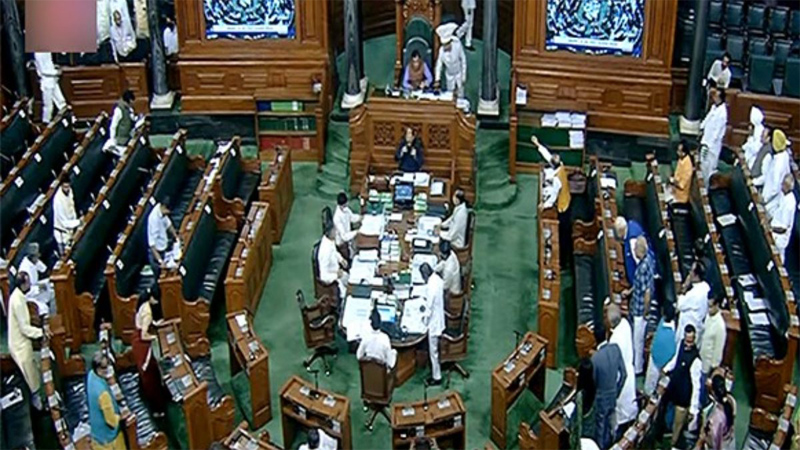
    Mumbai: The Telecommunications Bill 2023 will be tabled in Lok Sabha on 18 December i.e today.

    The draft Telecommunications Bill released in 2023 had proposed to bring over-the-top or internet-based calling and messaging apps under the definition of telecommunications to enhance users’ safety.

    The bill had also proposed to curb the power of the Telecom Regulatory Authority of India (TRAI), on which industry players had raised concerns.

    According to media reports, the definition of telecommunications services reportedly does not include OTT and this is believed to come as a relief for WhatsApp and Telegram as these communication service providers will be out of the scope of telecom regulations.

  • LALIGA’s corporate channels continue growing on X and Telegram

    LALIGA’s corporate channels continue growing on X and Telegram

    Mumbai: LALIGA’s corporate channels continue to post strong growth since being set up in January earlier this year. Less than a year on from creation, the X (formerly known as Twitter) account has almost 160,000 followers, more than the corporate accounts of other leading sports institutions such as the NFL, NHL and MLS. The Telegram channel, meanwhile, has grown impressively to over 9,100 followers.

    These LALIGA channels offer corporate and institutional content, showcasing the organisation’s reach beyond the football field. LALIGA institutional events, press conferences, announcements and even the competition are covered in full through a variety of formats including videos, photos and infographics.

    The corporate nature of the content complements LALIGA’s other web and social media channels, which offer sports content relating to LALIGA competition and its clubs.

  • Telegram rolls out new features, adds group video calling

    New Delhi: As its rival WhatsApp continues to be embroiled in a legal controversy with the government, Telegram has seized the moment to launch some new features for its users. 

    The messaging app has announced its latest update, which allows group video calls and screen sharing across all devices, tablets, and desktops. The update allows users to turn their camera on or share their screen during voice chats in groups – on all devices, including tablets and desktops, which can be used for online classes, business meetings, and family gatherings.

    The Group Video Call feature is the third major voice chat update from Telegram in the last six months. The audio-only participants are unlimited, and video is currently available for the first 30 people who join the voice chat. However, this limit will increase soon as voice chats take on streaming games, live events, and more, it said in its blog post. “When you are using a desktop app, anyone who starts sharing their screen will be pinned automatically. This is especially useful when small teams meet to coordinate their work,” it added.

    The app has also improved noise suppression on voice chats, for clear audio and a dedicated bot menu. There is also a new update that allows animated backgrounds, animated emojis and enables the import of customized third-party stickers as well. “These multi-colour gradient wallpapers are designed algorithmically and move with beautiful looking aesthetics every time users send a message. Telegram is offering this feature along with many default themes pre-installed,” it said in its blog post.

    The app has also enhanced user security measures in its latest update. Users will now get login info reminders, which according to the company, is an essential feature that will keep a user’s phone number up to date on Telegram. “Android users will get these reminders in the next update, for now, they can simply update their phone number by tapping on it in Settings,” it said.

  • GUEST COLUMN: How Telegram is fuelling streaming piracy

    New Delhi: The popular messaging app, Telegram, is fast becoming the leading source of pirated content throughout Asia – and the cause of substantial revenue loss for content providers and operators.

    Users of the platform, which provides end-to-end encryption, can conceal their identity to share texts, videos, or other files relating to copyrighted content. Given that Telegram is popular with millions of active users, intuitive, and offers its users privacy, it is no surprise that streaming pirates exploit Telegram.

    The latest Telegram statistics reveal that in January 2021 it had over 500 million monthly active users – 38 per cent from Asia – and it was also the most downloaded app across both the App Store and Google Play globally with more than 63 million downloads. According to App Annie, it is the most popular social networking app in Malaysia and ranks third in India.

    Telegram appeals to pirates because it allows them to disseminate information easily and speedily to huge, encrypted private chat groups – as large as 200,000 people – and its channels can attract millions of subscribers. Video and movie channels are amongst the most popular with pirate sites like Hindi HD Movies attracting well over two million followers.

    From newly released movies and popular live sporting events to lesser-known, critically acclaimed documentaries with subtitles, pirates have circulated, exchanged, and sold illegal copies and video clips on Telegram. The scale of this for-profit piracy is siphoning off billions of dollars that rightfully belong to content and streaming providers and rights holders. Analyst firm Nera Consulting places the global TV industry’s revenue losses from digital piracy at between $39.3 to $95.4 billion per year while a recent global study conducted by Ampere Analysis for Synamedia found that sports streaming piracy alone is worth over $28 billion.

    Synamedia has been fighting TV and video piracy for decades, providing services and technology to protect $70 billion in operator revenue every year. By adopting an intelligence-first security model, marrying the very best human intelligence with

    cutting-edge cybersecurity and AI technologies, we have disrupted pirate services and brought many criminals to the attention of law enforcement officials.

    Gaming the system

    Tackling Telegram streaming pirates is a 24×7 battle, requiring continuous monitoring and intelligence gathering not just within Telegram but across all social media platforms to profile rogue players and detect connections and cross-platform relationships. Armed with these insights, Synamedia employs AI-based content recognition crawlers to infiltrate Telegram channels, tracking and identifying specific pirate streams by combining the metadata of a target video – and/or live feeds via platform APIs – with advanced deep machine learning models.

    Here, we can share some of our observations about how streaming pirates exploit Telegram:

    Prized Piracy Booty:

    Hotly anticipated Bollywood blockbusters, newly-released content, and live events – particularly sports fixtures stolen from legitimate streaming sites – are the main attractions. One live sports event can spawn several hundreds of pirated channels with links to watch the illegal streams. But older VOD content is still valuable, as we witnessed during lockdowns when live events were on hold.

    Masters of Disguise:

    With no embedded player inside the platform, pirates use Telegram channels and groups to distribute text and M3U links to consumers and to upload videos for free to Telegram’s hosted cloud services. To maximise appeal, pirates even include subtitles in different languages and use legitimate payment systems like PayPal and Bitcoin. Pirates hide keywords relating to the event they are stealing or use code words to weave a web of intrigue by embedding references to new private pirate channels inside their messages.

    Masters of Strategy:

    Pirates act fast, in real-time. Minutes ahead of a live sporting fixture, for example, they will proliferate new channels on Telegram with new links to illegitimate content. They have backup channels ready to switch up at a moment’s notice – sometimes pre-warning consumers which channel to use should the first pirated live stream be removed. They even have their own virtual crow’s nest or ‘lookouts’ for monitoring during an event. We saw a case where a streaming pirate changed the name of the video midstream due to a tip-off from others in the chat group.

    Jumping Ship:

    Pirates will flaunt that a Telegram channel has been disrupted due to copyright and distribute guidance on how to follow a new one. They also encourage consumers to jump ship to other platforms and pirate sites, providing links to the open web or links to other platforms with players.

    Stealing the stream:

    Not satisfied with stealing streams of live or on-demand content, pirates also offer OTT subscribers’ stolen credentials, pirated APKs, and hacked IPTV emulator channels which give consumers a link to live channels without the need for a set-top box.

    Anti-piracy game-changer

    Fighting streaming piracy requires solutions that demotivate pirates at every point along the video distribution chain. That’s why Synamedia’s anti-piracy monitoring solutions extend far beyond social media platforms to the outer reaches of the openw web– as well as closed subscription-based IPTV networks.

    Building an anti-piracy strategy requires a painstaking, forensic, intelligence-led approach to map out the increasingly intricate and sophisticated pirate ecosystem in multiple layers to cross-reference data, spot piracy behavioural patterns, unravel approaches, and understand trends. And to win against the pirates, the media and entertainment industry needs to collaborate not just with tech providers but also with governments, regulators, and law enforcement bodies. It requires governments across the globe to mandate the use of technologies such as watermarking and introduce tougher legal penalties.

    Streaming piracy is an existential threat. In light of the eye-watering amounts of money spent on producing content and purchasing sports rights, providers have a right to be confident that they are covering their costs and bringing in enough revenue to build sustainable business models because revenue leakage due to piracy is simply not viable in the long term.

    As well as deterring and disrupting piracy, using a model that offers incentives encouraging viewers of pirate streams to move back to legitimate services is often overlooked but equally important. With an appealing mix of access and payment models, content providers, and operators can turn the tables on the pirates and play the system to their advantage, encouraging consumers to pay for legitimate services instead.

    (Avigail Gutman is the vice-president of Intelligence & Security Operations at Synamedia. The views expressed in the column are personal and Indiantelevision.com may not subscribe to them.)

  • CCI orders probe on WhatsApp’s new privacy policy

    CCI orders probe on WhatsApp’s new privacy policy

    NEW DELHI: The Competition Commission of India (CCI) has launched an investigation into WhatsApp’s new privacy policy, amid the raging debate over users’ privacy on social media platforms.

    The antitrust body has taken a prima facie view that the messaging app’s new policy is in contravention of India’s Competition Act. "…the Commission is of the considered opinion that WhatsApp has prima facie contravened the provisions of Section 4 of the Act through its exploitative and exclusionary conduct, in the garb of policy update,” said the order passed by the CCI, as reported by legal website LiveLaw.

    The development comes days after the Centre urged the Delhi high court to restrain the Facebook-owned platform from implementing its controversial new privacy terms, stating that the terms are not in alignment with 2011 IT rules.

    The controversial policy was initially expected to come into effect on 8 February but was later deferred to 15 May amid severe backlash from users. The app plans to make it mandatory for users to agree to its new data-sharing norms, a key point of which is allegedly sharing data from WhatsApp business chats with Facebook. Since there was no opt-out option, there were apprehensions about privacy which led people to migrate to alternate messaging apps, like Signal and Telegram.

    On 19 January, the CCI took a suo motu cognisance of the potential impact of the policy and terms for WhatsApp’s users and the market. In its statement, WhatsApp had stated that it “remains committed to protecting people’s personal communications with end-to-end encryption and providing transparency about how these new optional business features work.”

    According to media reports, CCI has pinpointed several other concerns with the new privacy policy, including aspects such as the “opacity, vagueness, open-endedness and incomplete disclosures” hiding the actual data cost that a user incurs for availing WhatsApp services.

    India is also the messaging app's biggest user base, with over 400 million users across the country. Union IT minister Ravi Shankar Prasad had also asserted that any digital platform must maintain the sanctity of personal communication and not infringe upon the rights of Indians who operate it.

  • Will social audio apps like Clubhouse make it big in India?

    Will social audio apps like Clubhouse make it big in India?

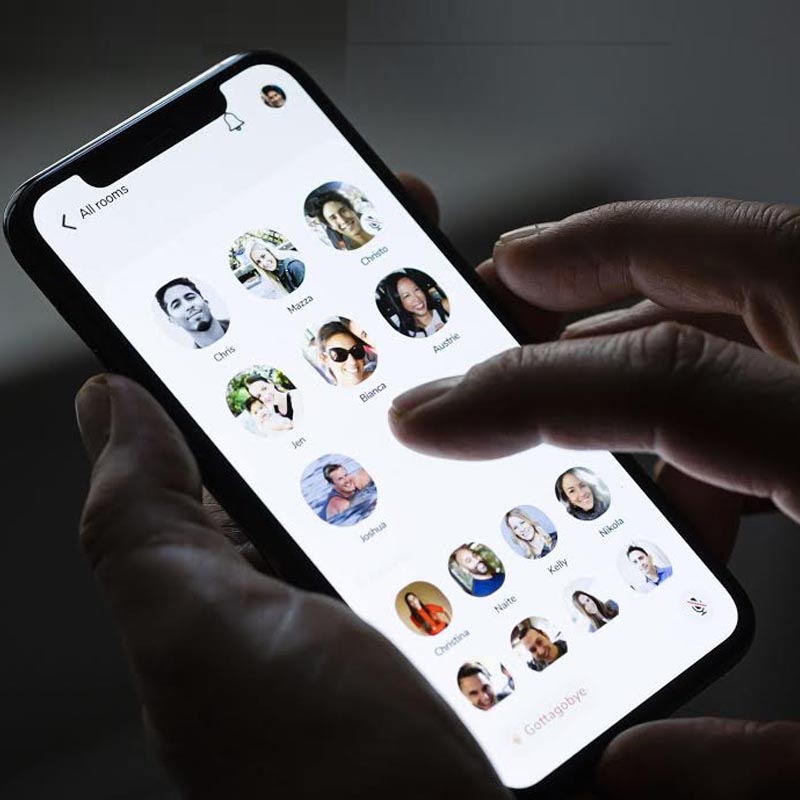
    KOLKATA: Audio-chat app Clubhouse has raced ahead in the last few months, especially it has gained more momentum after its Elon Musk moment. The Tesla CEO’s debut on the platform has not only maxed its craze but has thrown limelight on a new rage in the social media ecosystem. While emerging social apps based on audio chat are knocking on the door, established platforms are also making strides in the segment.

    What is the ‘Clubhouse’ frenzy?

    The invitation-only social media app Clubhouse has found takers in silicon valley investors, venture capitalists, tech executives, artists, musicians, TV presenters. Even before reaching its first anniversary, the company had amassed close to 10 million users and reached a valuation of $1 billion. Given the buzz the San-Francisco based app has generated in the international markets, it’s no surprise that a number of prominent faces in India are also jumping on the bandwagon.

    Another app which offered live voice chats way before Clubhouse is Discord, a niche platform popular among gamers. The app, boasting over 100 million monthly active users, secured $100 million in funding last year and is positioning itself as mainstream with the new tagline – “Your place to talk.” After it saw massive growth in voice users, it started to emphasise heavily on the voice chat feature. According to media reports, tech giant Microsoft is in the running to acquire Discord, in a transaction pegged at $10 billion. It is one of the most popular apps among the booming gaming community of India.

    The bottom line is that Clubhouse and Discord are relatively lesser-known names in our 1.3 billion-strong nation. However, social media platforms that have already made headway in the mass Indian market like Twitter, Facebook are investing big time to take on these emerging apps.

    “Audio-based apps are liberating for the user as it allows users to multitask than any other media out there. You can drive, text, run or do your chores while dropping in to listen to Elon Musk,” Tonic Worldwide chief strategy officer Unmisha Bhatt says.

    Will Indians adopt this global trend?

    The Indian digital ecosystem has kept up with all new global trends so far. No doubt the charm of something new will onboard users initially, but Mirum India joint CEO Sanjay Mehta is sceptical about the sustainable growth of audio based social media apps.

    He notes that the overall audio segment, as well as voice technology, is a high growth area in terms of consumption of content and creation of audio content. When it comes to apps like Clubhouse, the structure being used there is almost similar for all. Under the open discussion format, if any user just walks into a chatroom, one cannot be sure that the content they will get access to will be valuable. It leads to appointment listening – that is, joining the chats at the time when a particular well-known person is speaking on a topic of interest.

    According to Mehta, the concept of appointment consumption does not work well in a busy life. Hence, he is of the view that these apps will have limited value if the structure does not change. To have long-term growth compared to established social media players, the template or format needs to change.

    Isobar India COO Gopa Kumar also says that audio as a platform has been well accepted in India overall, giving examples of Gaana, Saavn, and Spotify. Which is why apps like Clubhouse will also see good uptake in India. Moreover, these audio-based social apps give users a certain kind of privacy. People can actually move around at their disposal and still interact, he explains.

    The reason users are receptive to audio is because they can consume content on the go as well, observes Kumar. But in the end, it’s the nature of the platform and the kind of content it puts out that makes all the difference. And since social audio apps is still a very niche segment, Kumar says it is too soon to judge if it can turn into a mass medium.

    “The growth of Clubhouse has been fuelled by high profile early adopters. With celebrities and Silicon Valley leaders leading the early adoption, users discovered and flocked to the app. Since these are live conversation apps, the audience consumption has been skewed towards quality content by well-known creators. For it to succeed in India, it would need a similar pattern. Mainstream content creators, celebrities and film folks would bring in the masses, otherwise, it will remain a niche product in India,” Bhatt adds.

    Moreover, India being a multilingual country has its own challenges. IdeateLabs founder and managing director Amit Tripathi is of the view that adoption in India might struggle until voice and vernacular marries. Video on the back of visuals and subtitles make it easier to be consumed in unknown or little known languages but audio does not stand that chance. So, regional content needs to be on platforms like Clubhouse to make them successful.

    How are big tech giants gearing up their efforts?

    Twitter announced a new voice chat room called Spaces last November. The microblogging network rolled out the feature gradually for some of its users globally, including India. It plans to make it available for all users in April so they can “Tweet and Talk”.

    Internal teams at Facebook are reportedly developing a product similar to Clubhouse to catch up with the trend. Notably, Facebook boss Mark Zuckerberg himself appeared on Clubhouse in February to talk about augmented/virtual reality. Messaging app Telegram that rose to fame in India after the WhatsApp privacy policy controversy has launched Voice Chats 2.0 that lets channels conduct live voice chat sessions with unlimited participants.

    With so many dollars being pumped into social voice features by these deep-pocket players, it will be interesting to see how this space evolves, Tripathi adds. He points out that adoption, penetration can be of a lesser challenge for the audio-based social apps compared to acceptance and usage which will be driven by content on the platforms.

    “Without proper content, customisation, a lot of education, I am not sure how far it will grow, how fast it will grow,” Tripathi sums up.

    Will brands jump on the bandwagon?

    Brands are already experimenting on Clubhouse to cash in on the craze. Isobar’s Kumar says that it is tough to project what kind of advertising opportunities will open up in the future, though he mentions that brands can open their own chat rooms and engage with consumers.

    “Brands will have to wear a creators hat to explore opportunities on these apps. For the right brand – one that’s willing to curate quality content and truly add value – there's an early mover opportunity. But these are early days and as adoption grows, we will see interest from brands,” Bhatt concludes.

  • ‘Den of pirates’: Why OTTs should tackle Telegram soon

    ‘Den of pirates’: Why OTTs should tackle Telegram soon

    KOLKATA: There is no dearth of OTT platforms in India, and which one is the most popular is a matter of debate. But what is very evident is Telegram’s overwhelming popularity as an alternative to providing free access to any new movies or shows launched on these platforms. The wide availability and easy access to pirated shows is making the messaging app more appealing day by day to a section of internet users. Even as OTT platforms burn mounds of cash to roll out premium content, such piracy could eat up a significant revenue going forward.

    Soaring popularity of Telegram

    Make a list of all recent popular shows or original movies that dropped on streaming services – Scam 1992, Mirzapur Season 2, Ludo, Naxalbari – and you’ll already find every single one of them on Telegram. Students who don’t earn yet but are keen to watch these programmes, thus, go the pocket-friendly way by downloading the Telegram app. And another section of users who have subscription to a few OTT platforms but don’t want to shell out money to watch just one show on a different, unsubscribed platform, use the app as well. Moreover, the simplicity in downloading content both in terms of mechanism, required time and data – unlike Torrent – has made it a den of pirates.

    “Telegram is a vast source of VOD content; many groups offer updated content of newly released movies and series, even with subtitles in different languages. We have seen certain titles appear on Telegram within a few hours of release. Pirates are increasingly using such groups as a way to easily share, exchange and sell this content without being exposed to malware prevalent on the dark web,” Synamedia chief intelligence manager-security Ted Rose said.

    During a webinar hosted in late October by Indiantelevision.com, SonyLIV technology head Manish Verma also acknowledged that Telegram is evolving as a potential threat. He added that it is very important for the platforms to stop piracy with content acquisition and content production costs increasing – be it for original content or live sports events.

    How pirates use the platform

    Synamedia’s Rose shared that streaming pirates are increasingly using Telegram groups as a way to distribute links to consumers. In fact, streaming of live events can be found on the messaging app as links that direct users to open internet streaming websites. The app can only share files that are stored on its cloud service or links to other sites.

    On the other hand, there are Telegram groups that share stolen M3U links to different subscription-based pirate IPTV networks. These links are updated daily and usually contain information on the content available on each pirate network. Rose went on to share that pirates have taken to Telegram, as well as the dark web, to share and sell OTT subscribers’ stolen credentials.

    “It is really a game of cat and mouse. If there are repeated claims of infringement, Telegram will shut down a group. Removal of a channel can be more difficult for a pirate to recover from, although some pirates can pre-empt this by notifying consumers in advance of backup channels they can use should the first group or channel be removed,” he added.

    Surge in piracy during Covid2019

    With a massive uptick in the use of streaming services during the pandemic, Telegram piracy has also seen a huge surge as well. As sporting events came to a halt in the wake of the crisis, pirates were scrambling for other ways to fill the revenue gap. As a result, OTT providers with premium VOD content and originals emerged as hot targets at that time.

    According to data shared by Markscan, a firm that provides digital IP protection to entertainment companies, piracy on telegram skyrocketed by 1092 per cent, or about 11 times, during lockdown.

    How can the law help?

    Although there are anti-piracy laws in India, it is tough to track the breach happening on Telegram due to encryption. Moreover, it becomes more difficult to take legal steps as the platform itself is legitimate despite the fact that there is pirated content available, according to Kaushik Moitra, partner at Bharucha and Partners.

    Moitra explained that Telegram is not under liability to take pirated content off until someone files a complaint. Hence, it is not possible for Indian law enforcement to actively track the infringement. He noted that the onus is on individual OTT platforms to track whether or not any illegitimate link is being circulated on the messaging app so the latter can take it down immediately. However, he mentioned that Telegram will be put on notice if the OTT platforms opt for John Doe order for pre-infringement injunction.

  • Gupshup announces launch of bot builder platform gupshup.io in India

    Gupshup announces launch of bot builder platform gupshup.io in India

    MUMBAI: Gupshup, the world’s leading messaging platform trusted by developers in more than 30,000 businesses, has announced the launch of its new bot builder platform, gupshup.io, poised to lead a new wave of bot revolution in India. The Gupshup.io platform consists of omni-channel messaging APIs and bot builder tools. The omni-channel APIs enable connectivity to almost every messaging channel including SMS, Facebook Messenger, Slack, Telegram, Teamchat etc, with more to be added soon. The bot builder tools support the entire bot lifecycle including development, testing, deployment, hosting, publishing, monitoring, tracking, search and discovery of bots.

    With messaging apps recently opening up APIs for businesses to build bots, we’re now on the verge of a once-in-a-decade paradigm shift in the tech industry. After desktop and clients in the mid-80s, browsers and websites in the mid-90s, and mobile OS and apps in the mid-00s, messaging platforms and bots are emerging as the next wave of tech revolution. Virtually everything that we do today on websites or apps will soon be done through bots. Bots will enable shopping, ordering food, banking, trading and most other activities through your favourite messaging app.

    “Bots are the new apps. Bots will transform virtually every aspect of our lives, making it simpler and easier to engage with businesses and brands just by chatting with them”, said Gupshup founder and CEO Beerud Sheth. He further added, “Every business and brand will have to develop a bot strategy quickly. Gupshup.io offers the most advanced tools globally for developers preparing to meet the explosive demand for messaging bots and services.”

    Gupshup used its extensive experience with the bot building process to automate common tasks performed by every bot developer. The Gupshup platform enables a developer to build, test and deploy a bot across multiple channels in minutes. The bot is automatically hosted with a one-click deploy process.  Post-launch monitoring and tracking of bots has also been automated. An omni-channel bot store enables the search and discovery of bots, helping developers to promote their bots. Instead of using a patchwork of tools, the Gupshup platform offers an end-to-end integrated platform for developers that frees them up to focus on their specific workflows.

    Gupshup continues to operate its smart-messaging app Teamchat, which pioneered the concept of smart messages i.e. structured fields within chat messages. Teamchat was the earliest and most bot-friendly messaging app, currently being used by over 2,000 businesses, including companies like HDFC, ICICI, Biostadt, Meru Cabs, PNB Metlife and others. Bots built on Teamchat continue to support enterprise use-cases such as CRM, HR and ERP.

  • Gupshup announces launch of bot builder platform gupshup.io in India

    Gupshup announces launch of bot builder platform gupshup.io in India

    MUMBAI: Gupshup, the world’s leading messaging platform trusted by developers in more than 30,000 businesses, has announced the launch of its new bot builder platform, gupshup.io, poised to lead a new wave of bot revolution in India. The Gupshup.io platform consists of omni-channel messaging APIs and bot builder tools. The omni-channel APIs enable connectivity to almost every messaging channel including SMS, Facebook Messenger, Slack, Telegram, Teamchat etc, with more to be added soon. The bot builder tools support the entire bot lifecycle including development, testing, deployment, hosting, publishing, monitoring, tracking, search and discovery of bots.

    With messaging apps recently opening up APIs for businesses to build bots, we’re now on the verge of a once-in-a-decade paradigm shift in the tech industry. After desktop and clients in the mid-80s, browsers and websites in the mid-90s, and mobile OS and apps in the mid-00s, messaging platforms and bots are emerging as the next wave of tech revolution. Virtually everything that we do today on websites or apps will soon be done through bots. Bots will enable shopping, ordering food, banking, trading and most other activities through your favourite messaging app.

    “Bots are the new apps. Bots will transform virtually every aspect of our lives, making it simpler and easier to engage with businesses and brands just by chatting with them”, said Gupshup founder and CEO Beerud Sheth. He further added, “Every business and brand will have to develop a bot strategy quickly. Gupshup.io offers the most advanced tools globally for developers preparing to meet the explosive demand for messaging bots and services.”

    Gupshup used its extensive experience with the bot building process to automate common tasks performed by every bot developer. The Gupshup platform enables a developer to build, test and deploy a bot across multiple channels in minutes. The bot is automatically hosted with a one-click deploy process.  Post-launch monitoring and tracking of bots has also been automated. An omni-channel bot store enables the search and discovery of bots, helping developers to promote their bots. Instead of using a patchwork of tools, the Gupshup platform offers an end-to-end integrated platform for developers that frees them up to focus on their specific workflows.

    Gupshup continues to operate its smart-messaging app Teamchat, which pioneered the concept of smart messages i.e. structured fields within chat messages. Teamchat was the earliest and most bot-friendly messaging app, currently being used by over 2,000 businesses, including companies like HDFC, ICICI, Biostadt, Meru Cabs, PNB Metlife and others. Bots built on Teamchat continue to support enterprise use-cases such as CRM, HR and ERP.

  • News Nation gets a place in Limca Book of Records

    News Nation gets a place in Limca Book of Records

    MUMBAI: Last year when the government decided to stop the telegram service, news channel News Nation decided to use it to its advantage. Upon inquiry from the Limca Book of Records (LBR), it found that the record for the maximum number of telegrams sent in a day had earlier been held by a person in Kerala for sending 201 telegrams in one day.


    It sent a mail to the LBR that it will be attempting to break the existing record. In order to break the record it had to send out a minimum of 50 telegrams more than the earlier record.


    On 13 July 2013, the channel sent out 400 telegrams from the Noida post office to various people including the President, Prime Minister, Sonia Gandhi, Shah Rukh Khan, agencies, socialites etc. The message on the telegrams was ‘ab telegram nahi aayega, News Nation har khabar pahunchayega.’ Once it was done, it had to send the original receipts, photos and a video of the process to LBR.


    Even though no one responded back in time (as the service was to be shut from 14 July), it has now received the response from the LBR that it has successfully created a new record of ‘most telegrams sent in a day (group)’. The record will feature in the next edition of the book that will come out in January 2015.


    This record has also become unbreakable because the service no longer exists in the country.