Tag: Telecommunications

  • Guest Article: ACS wire in telecommunications: Enhancing connectivity and performance

    Guest Article: ACS wire in telecommunications: Enhancing connectivity and performance

    Mumbai: In the dynamic era of telecommunications, where connectivity and performance are paramount, technological advancements continually drive the industry forward. One such innovation making waves in the telecommunications sector is the use of ACS wire. This robust and versatile material has emerged as a game-changer, offering a myriad of benefits that contribute to the enhancement of connectivity and performance across telecommunication networks.

    ACS wire combines the robustness of steel with the conductivity of aluminum. It’s essentially a steel core wrapped in an aluminum layer. This combination gives the wire special qualities, blending strength and electrical efficiency. To highlight the significance of ACS wire in telecommunications, recent industry data supports its growing adoption. According to a study by the Telecommunications Industry Association (TIA), the global market for ACS wire is projected to reach a value of USD 3.5 billion by 2026. This surge in adoption highlights the industry’s recognition of ACS wire as a valuable asset in improving connectivity and performance.

    How ACS wire revolutionizes telecommunications

    1. Strength and Durability

    The steel core of ACS wire imparts exceptional strength and durability, making it an ideal choice for use in telecommunications infrastructure. This robust construction ensures that the wire can withstand the challenges posed by environmental factors such as wind, ice, and extreme temperatures. As a result, telecommunication networks utilizing ACS wire experience improved reliability and longevity, leading to a reduction in maintenance costs over time.

    2. Enhanced Conductivity

    Aluminum is known for its excellent electrical conductivity, and ACS wire leverages this property to enhance signal transmission in telecommunications networks. The aluminum coating on the steel core facilitates efficient flow of electrical currents, reducing signal loss and improving overall network performance. This enhanced conductivity is particularly crucial in long-distance communication where maintaining signal integrity is paramount.

    3. Cost-Effective Solution

    Incorporating ACS wire in telecommunication networks proves to be a cost-effective solution. The combination of steel and aluminum results in a material that is not only durable but also more affordable than traditional materials. Telecommunication providers can benefit from significant cost savings without compromising on the performance and reliability of their networks.

    4. Reduced Weight and Sag

    Compared to traditional steel wires, ACS wire offers a notable advantage in terms of weight. The aluminum-clad steel construction is inherently lighter, reducing the overall weight of the telecommunication infrastructure. This characteristic minimizes sag, allowing for longer spans between support structures. As a result, telecommunication providers can achieve more efficient and cost-effective network designs, especially in challenging terrains.

    5. Corrosion Resistance

    The aluminum coating on ACS wire provides corrosion resistance, a crucial feature for infrastructure exposed to diverse environmental conditions. This resistance ensures that the wire maintains its structural integrity over time, even in corrosive environments. The longevity of ACS wire further contributes to the sustainability and reliability of telecommunication networks.

    Global Adoption Trends

    The implementation of ACS wire has experienced noteworthy traction in diverse regions, with varying regulatory landscapes and market demands shaping its adoption.

    In North America, where stringent standards often govern the telecommunications industry, ACS wire’s compliance with safety regulations has contributed to its widespread use.

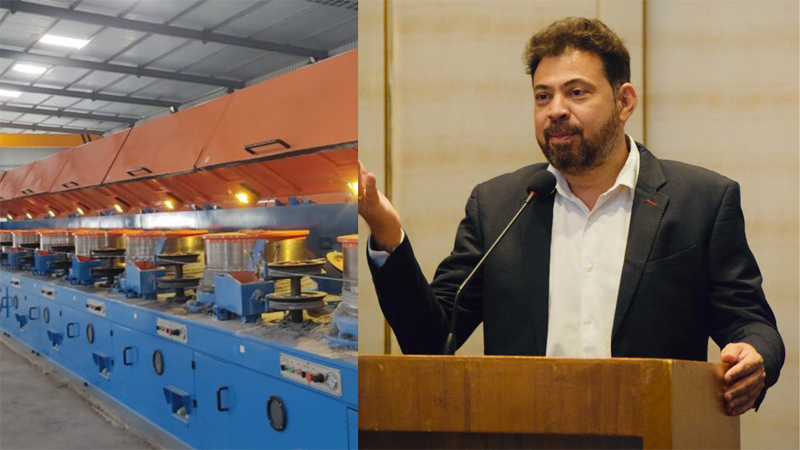
    In emerging markets across Asia, the cost-effectiveness of ACS wire aligns with the need for scalable and affordable infrastructure solutions. Specifically in India, Advait Infratech Limited operates a cutting-edge manufacturing facility located near Kadi, dedicated to producing ACS wire. Advait ensures precision through the use of an intelligent video measuring machine, ensuring accuracy up to 2 microns at 130x magnification. Supported by top-notch warehousing capabilities, the company strives for optimal resource utilization with a highly skilled workforce.

    Europe, with its focus on sustainability, has embraced ACS wire for its lightweight composition, reducing environmental impact. These regional nuances illustrate how ACS wire adapts to distinct regulatory frameworks and market dynamics, solidifying its status as a globally versatile and in-demand material for enhancing telecommunication networks.

    Conclusion

    In summary, ACS wire stands as a transformative milestone in the telecommunications sector, seamlessly combining strength, conductivity, and cost-effectiveness. As telecommunication networks continuously evolve to meet the demands of an interconnected world, the strategic adoption of ACS wire becomes increasingly apparent. Its capacity to enhance connectivity, optimize performance, and offer an economically sound solution positions ACS wire as a fundamental element in shaping the bedrock of modern telecommunication infrastructure.

    The author of this article is Advait Infratech founder & MD Shalin Sheth.

  • TRAI reiterates need for converged regulatory regime for telecom & broadcasting services

    TRAI reiterates need for converged regulatory regime for telecom & broadcasting services

    MUMBAI: The Telecom Regulatory Authority of India (TRAI) again highlighted the need for a converged regulatory regime for telecom and broadcasting services in India following the model of the Federal Communications Commission (FCC) in US and Office of Communications (OfCom) in the UK. 

    As large scale changes in these two sectors are taking place due to convergence, the regulatory body opines that there is an urgent need for having a comprehensive regulatory framework to deal with various issues arising out of the convergence of technologies and services.

    In reply to a letter by Rajyasabha MP Subhash Chandra regarding the need to have an independent regulator, TRAI has mentioned that there is no need for a separate regulator for broadcasting and cable sector addressing the ministry of communication.

    “Large scale changes in the telecom and broadcasting sector are taking place due to convergence and without a converged regulatory framework any attempts to regulate the telecom and broadcasting sectors in coming times may result in bottlenecks, imperfect competition, disputes and opportunities for arbitrage. Thus, if one service can be provided by two different routes and the license fees of one is much lower, then the tendency would be to use this alternative. The regulatory regime has to be such that the consumers and service providers should benefit from the technological advances,” it added.

    “The regime should not create any hindrance in the deployment of any technology for offering any type of telecom services including broadcasting services. At the same time due to technological developments, no service providers should be able to disturb the level playing field by taking advantage of regulatory policies. To achieve these objectives, it is necessary that licensing should be service neutral and the converged regulatory regime for telecom and broadcasting services should be in place. The organisational restructuring in view of technological developments is a must, otherwise, it may be difficult to exploit the full benefits of these technological developments,” the regulator highlighted. 

    Notably, the government brought the broadcasting and cable television services within the ambit of telecommunication services for the first time in 2004. TRAI, in addition to the telecoms sector, had also been set up as the regulator for the media and broadcasting industry. TRAI mentioned in the letter that since then it has brought various reforms in the industry including digitisation, the new tariff order which has helped it to grow. “Looking at the role so far played by TRAI, it is obvious that there is no need for a separate regulator for broadcasting and cable sector,” it states. However, those reforms were most of the time challenged in various judicial forums by the stakeholders and the regulatory body has been blamed for “micro-managing” the sector.

    Earlier in 2018, TRAI proposed a converged regulator for information and communications technology (ICT) and broadcast sectors but television broadcasters and broadcasting associations had opposed the proposal. 

  • Union Minister Jitendra Singh presents ISRO report card

    Union Minister Jitendra Singh presents ISRO report card

    MUMBAI: The Indian Space Research Organisation’s (ISRO) commercial arm Antrix Corp has been involved in 10 satellite launches of eight foreign countries from the two operational satellite launch pads at Satish Dhawan Space Centre, Sriharikota over the last three years. In the process, it has earned revenues of 540,000 euros in 2001-2012 and 21.09 million in 2012-2013. This was disclosed by Union Minister of State for Science & Technology and ministry of earth sciences, department of atomic energy and department of space Jitendra Singh in a written reply in the Lok Sabha today.


    Singh revealed that the government is considering setting up a new satellite launching pad, referred as Third Launch Pad, at Sriharikota. The Third Launch Pad is intended to support increased launch frequency, provide active redundancy to existing launch pads and to support launching requirements of advanced launch vehicles. The possible site  for the Third Launch Pad has been identified in Sriharikota taking into account the safety distances and maximal utilization of existing launch pad facilities. The existing launch pads  are used exclusively for launch vehicles developed by ISRO.


    Singh added  that ISRO’s  satellites have done yeoman’s service in improving telecom, long-distance education, telemedicine in rural and flung areas of the company. He pointed out that  ISRO satellites have helped in achieving 100 per cent coverage of the Indian mainland and rural and far flung areas for direct to home  (DTH) satellite television.  


    Additionally, they have helped in three other areas:

       * Telecommunication: About 1.75 Lakh satellite communication terminals are supporting various applications like village telephony, data connectivity, broadband connectivity, Automatic Teller Machines (ATM) of banks, etc., covering the rural and far flung areas of the country.


      * Tele-Education: 56,000 classrooms connected through satellite networking, of which 51,000 are Receive Only Terminals (ROTs) and around 5000 are Satellite Interactive Terminals (SITs) catering to all the sectors of education from primary to higher and professional education.


    * Telemedicine: The Telemedicine network connects the patients at a remote hospital to a speciality hospital for tele-consultation. 60 specialty hospitals connected to 308 remote and rural hospitals and 16 Mobile Vans.
     

    The Developmental Education and Communication Unit (DECU) of ISRO conducted  a study to ascertain the utility of tele-education and tele-medicine networks over the years, a Press Information Bureau (PIB) release states. The findings of the study indicate the following.
     

    * Tele-education networks are very effective to reach out remote and rural areas of the country and also to enhance the understanding level of the students. The target audience for tele-education include students from school, technical education, higher education, teachers training including physically challenged students. On an average 2-3 hours of programmes are transmitted for 4-5 days in a week.


    * Tele-medicine networks are very useful in treating the patients located in remote and rural areas. Through tele-medicine patients get the best doctors for consultation. Tele-medicine provides the advantage of saving time and money to the patients and also provides relief to family members from the hassles of accompanying the patient to speciality hospitals in the urban areas. Mobile tele-medicine vans are found to be ideal to cover larger geographical area with treatment in the fields of Ophthalmology, Diabetic screening, Cancer, General Medicine and hearing impairments in the infants.


  • Customs duty imposed on telecom products not covered by Information Technology Act

    Customs duty imposed on telecom products not covered by Information Technology Act

    NEW DELHI: Basic customs duty at 10 per cent has been imposed on specified telecommunication products that are outside the purview of the Information Technology Agreement as part of an attempt to boost domestic production and reduce dependence on imports.


    The Telecom Equipment Manufacturing Association (TEMA)  is all smiles about this largesse from the finance minister. It states that it is likely to generate 500,000 jobs over the next three years.


    TEMA chairman emeritus N.K. Goyal gives his perspective: ” The Government signed ITA 1 on 25th March 1997 and committed import of duty free on 217 items. However, several items which were not covered under ITA 1, were also imported Duty Free. So, now this has been corrected by levy of import duty on non ITA-1 items. While ITA allowed import of finished product duty free, domestic manufacturers paid taxes on import of components used for making a complete unit which made indigenous production of electronic products expensive and wiped out almost entire hardware production in India. This budget gives a positive signal that while India will meet all its WTO commitments, it will also support domestic manufacturing. This will go in long way to promote indigenous manufacturing of telecom equipment.”


    Some of the telecom gear which will see an increase in production, TEMA, says are VoIP phones and some network equipment, which will be in high demand during the roll out of 4G services. It expects that the move will push industry production to around Rs 25,000 crore, while the requirement of 3G and 4G equipment is expected to be worth Rs 10,130 crore and 12,660 crore in 2015-16. On the whole it stated that the telcos will be pumping in close to Rs 5.21 lakh crore by 20120 to expand their networks.


    Noting that the demand for electronics is growing very fast, Finance Minister Arun Jaitley in his proposals for 2014-15 announced that all inputs/components used in the manufacture of personal computers would be exempted from four per cent special additional duty (SAD). Education cess has been imposed on imported electronic products to provide parity between domestically produced goods and imported goods.


    An exemption of four per cent SAD on PVC sheet and ribbon used for the manufacture of smart cards has also been proposed.

  • China to lift ban on Facebook, but only within Shanghai free-trade zone

    China to lift ban on Facebook, but only within Shanghai free-trade zone

    MUMBAI: Beijing has made the landmark decision to lift a ban on internet access within the Shanghai Free-trade Zone to foreign websites considered politically sensitive by the Chinese government, including Facebook, Twitter and newspaper website The New York Times.

    There are rumors afloat that they would also welcome bids from foreign telecommunications companies for licences to provide internet services within the new special economic zone.

    Now the mainland’s three biggest telecommunications companies China Mobile, China Unicom and China Telecom – which are all state-owned enterprises – will need to be wary of the competition from foreign companies to compete with them for business in the free-trade zone in Shanghai.

    However Beijing’s decision to open up internet access only applies to the free-trade zone and not anywhere else in the country. In late August the State Council, China’s cabinet, approved the launch of the free-trade zone in Shanghai, which will span 28.78 square kilometres in the city’s Pudong New Area, including the Waigaoqiao duty-free zone, Yangshan deepwater port, and the international airport area.

    Facebook and Twitter – banned on the mainland since 2009 – have played important roles in political movements in the Middle East in recent years, and Beijing is concerned about the impact of new media on social stability.

    Although China’s economy is now already the world’s second largest, just behind the United States, Beijing keeps tight control over the media. It blocks access to several internet websites through the Great Firewall of China, the colloquial name for the Golden Shield project which is operated by the Ministry of Public Security.

    Foreign visitors and many foreigners who reside on the mainland for work and study have complained about difficulties in accessing those news sites. Occasionally even the world’s No 1 search engine Google and its email service Gmail are unavailable.

    Bosses at social media networks and major media companies whose websites are banned on the mainland have lobbied Beijing for years to lift these bans. More recently, Facebook chief operating officer Sheryl Sandberg met Cai Mingzhao, the head of the State Council Information Office in Beijing, and an official photograph of the meeting was published on the Chinese government’s website, though Facebook said Sandberg’s visit to China was mainly to promote her new book.

  • HBO launches mobile Vod service in Korea

    HBO launches mobile Vod service in Korea

    MUMBAI: HBO has announced a deal with telecommunications company SK Telecom for a mobile video on demand service in Korea. The service launched a few days ago.

    The mobile service features full episodes from HBO’s series Sex and the City, Six Feet Under and Curb Your Enthusiasm. SK Telecom is supporting the launch by offering a free one month trial period to 21 January, making four episodes of both Sex and the City and Six Feet Under available during that time.

    HBO International senior VP Stanley Fertig says, ” With one of the most advanced mobile networks on earth, SK Telecom is a leader in providing on-demand mobile entertainment to its subscribers. This deal is also an example of the many opportunities HBO is finding around the world as digital technology advances in the international marketplace.”

  • Rising number of SMEs drives growth of Asia-Pacific VSAT market

    Rising number of SMEs drives growth of Asia-Pacific VSAT market

    MUMBAI: The Asia-Pacific VSAT (very small aperture terminal) market is firmly in its growth stage, and has come to represent the new battleground for global VSAT players who are faced with declining growth in other regional markets.

    VSAT services are beginning to gain greater acceptance among the SME (small and medium enterprise) and SOHO (small office/home office) segments. The continuous expansion of corporate VSAT networks is also beckoning the next stage of growth for satellite services.

    New analysis from global growth consulting company, Frost & Sullivan reveals that revenues of VSAT customer premise equipment (CPE) – covering 13 major Asia-Pacific economies – totaled US$73 million in 2005 and is forecasted to reach an estimated US$109 million by end-2012. The total installed base for VSAT applications is likely to grow to over 900,000 sites by end-2012, from the approximate 300,000 recorded in 2005.

    “Future growth in the corporate and enterprise VSAT segment will result from the booming number of SMEs and the associated demand for easily deployable, reliable broadband connections in areas underserved by terrestrial services,” notes Frost & Sullivan research analyst James Lye.

    Growth of the VSAT market is also likely to be driven by the increasing deployments of rural telecommunications, telemedicine and distance education programs across the region. Rural telecommunications, in particular, is expected to contribute significantly to growth in this segment as many rural communities in emerging markets of the region still lack modern telecommunication access. Most governments in the region have universal access programs that set aside funds and subsidies to tackle this issue. Such developmental subsidies help to partially offset the initial capital expenditure required to deploy wireless and satellite infrastructures.

    VSAT service providers in Asia-Pacific will however need to brace themselves for increasing competition from telecom service providers. Sensing the same opportunities in the underserved areas, terrestrial telecommunication providers have been rolling out infrastructure as fast as they can justify it. These telcos are furthermore emphasizing the managed services model among enterprise customers, which increases revenue per customer and builds very strong loyalty due to the provision of complete solutions.

    “Telecom service providers often wait until the local market is sufficiently developed before moving in with lower pricing to oust the VSAT providers,” explains Lye. “The hardest hit segment is where VSAT is used solely to deliver broadband access.”

    The overall Asia-Pacific VSAT market is expected to experience continued and steady growth over the next few years, offering considerable opportunities for both VSAT equipment vendors and satellite service providers. India and Indonesia are seen as markets with high growth potential. Indonesia’s geography, combined with the lack of foreseeable terrestrial infrastructure build-out has already created a lucrative SME market in the corporate VSAT segment.

    While growth in India’s VSAT sector will come mainly from the myriad of small and medium businesses that are flourishing as the country opens-up its economy with the liberalization of regulatory barriers to foreign players.

  • VSNL to buy Indian ISP for Rs 750 million

    MUMBAI: Videsh Sanchar Nigam Ltd (VSNL) is strengthening its broadband presence in the Small and Medium Enterprises (SME) segment. The telecommunications giant has agreed to buy out Direct Internet Ltd (DIL) and its wholly owned subsidiary Primus Telecommunications India Ltd (PTIL) for Rs 750 million ($16.7 million).

    US-based Primus Telecommunications Group Inc will exit from India, selling its entire 85 per cent stake in DIL. VSNL is also buying out the remaining 15 per cent held by an Indian partner. The deal is expected to be completed in a few weeks, VSNL said in a statement.

    PTIL provides fixed broadband wireless internet services to SMEs in several Indian cities. The company has close to 1,000 SME and 10,000 retail customers. Out of a total revenue of around Rs 550 million in FY 2006, nearly 80 per cent came from the SME segment. Retail business accounted for 15 per cent while Voice-over-Internet Protocol (VoIP) contributed to around seven per cent of the company‘s income.


    The retail customers are likely to be rehomed in VSNL while DIL will focus entirely on the SME segment. The company‘s operations will continue to be run with the old management. “The huge infrastructre of VSNL will allow DIL an opportunity to expand in the SME segment. VSNL has massive bandwidth which will offer DIL‘s operations greater efficiencies. In the past, we were buying bandwidth on a leased basis and this was consuming 60 per cent of our costs,” says DIL and PTIL founder-CEO Tilak Sarkar.


    This will be VSNL‘s first SME-specific acquisition in the internet space. VSNL had earlier acquired DishnetDSL for Rs 2.7 billion and Tata Power broadband for Rs 2.39 billion which gave it broadband subscribers in the retail as well as the SME segments. DIL, on the other hand, has mostly SME subscribers.


    “The SME segment is a lowly penetrated but growing market. VSNL sees this as an opportunity to expand its presence in the broadband space,” says an analyst.


    VSNL has been aggressive in acquisitions over the last one year. While it bought Tyco International‘s global under-sea fibre optic cable network unit in July 2005, recently it acquired telecoms network service firm Teleglobe International Holdings Ltd.


    Nasdaq-listed Primus Telecommunications, an integrated communications services provider offering international and domestic voice, VoIP, internet, wireless, data and hosting services to business and residential retail customers, had reported a net revenue of $1.19 billion in the 2005 fiscal.

  • Pay TV reveunes sees growth in Canada; CRTC report

    Pay TV reveunes sees growth in Canada; CRTC report

    MUMBAI: The Canadian Radio-television and Telecommunications Commission (CRTC) has released its annual report indicating that the revenues and profits for Canada’s specialty and pay TV services have climbed steadily over the last five years.

    The reports signifies that on an average, from 2001 to 2005, revenues for these services increased by 10 per cent per year, and their earnings before interest and taxes (EBIT), by 19.4 per cent.
    EBIT for specialty, pay and pay-per view services rose even more significantly over the last year, posting an increase of 31.5 per cent. They climbed from $418.2 million in 2004 to $549.9 million in 2005. Also, revenues reached almost $2.2 billion in 2005, an increase of 6.3 per cent over the previous year, due in part to increases in the number of subscribers and reporting units.

    More specifically, in 2005, revenues from cable distribution services grew by 4.7 per cent over 2004 from $886.9 to $928.4 million. Those for direct-to-home satellite distribution services (DTH) increased by 6.2 per cent, reaching $460.7 million in 2005, compared with $433.9 million in 2004. National advertising revenues rose by 8.7%, increasing from $691.5 million to $751.3 million.

    This year, the report includes a new component: it details programming and production spendings by type of program, as provided to the CRTC by most Canadian specialty services. It shows that, for Canadian programming, services spent $162.5 million on drama, $128.4 million on news, $206 million on other information programming, $116.9 million on sports, $38.3 million on musical and variety shows and $45 million on general interest programs.
    This report was produced using the financial statements of Canadian specialty, pay and pay-per-view services. It is one of a series of reports that the CRTC publishes annually in order to inform those interested in the state of the Canadian broadcasting industry.

    The CRTC is an independent, public authority which was established to sustain and promote Canadian culture and achieve key social and economic objectives by regulating and supervising Canadian broadcasting and telecommunications in the public interest.

  • Panamsat unveils new solution for news delivery across the US

    Panamsat unveils new solution for news delivery across the US

    MUMBAI: Global satellite services provider Panamsat and On Call Communications have developed a new satellite-based communications solution to enable the coverage of breaking news and live events by local and independent news stations in the US. By using PanAmSat’s QuickSPOT on-demand satellite technology and On Call’s OnSpot auto-deploying broadband satellite communications systems, broadcasters can now report on breaking news events as they happen and then transmit the coverage to viewers in real time with unrivalled simplicity, mobility and cost-efficiency.

    Koce, a PBS-affiliate based in California, is using the new system to provide live news coverage to viewers of events that previously could only be pre-recorded. Koce says that the QuickSPOT/OnSPOT solution gives it the opportunity to deliver live remote broadcasts at far lower costs and convenience than anything it has been able to do in the past. Koce says that being live on the scene gives it a new dimension, covering the news as it happens, making the story much more ‘real’ to viewers. The recent fires in Southern California exemplified this as it reported from the field, delivering the latest updates from fire officials, what areas were being evacuated and what schools remained open. Thereffore the news was much more relevant to our viewers compared to something written and broadcast from the studio.

    The QuickSPOT/OnSPOT solution provides a cost-effective broadcast delivery system making it possible for smaller broadcasters to access the formerly cost-prohibitive world of live broadcasts. These stations can now avoid the expense of dedicated satellite space by paying only for their on-air time. And, no technical knowledge is required to operate the auto-deploying terminals.

    Panamsat executive VP, global sales and marketing Mike Antonovich says, “Through our work with OnCall, we’ve developed a truly game-changing broadcasting solution that transforms the world of satellite news gathering. By using smaller auto-pointing antennas in conjunction with the latest generation of digital encoding and compression and our bandwidth-on-demand provisioning service, live news coverage is now simpler, smarter and smaller then ever before. These lower-cost systems can now affordably be made available to support everyone from major market television stations to local community cable channels. Smaller communities benefit by getting up-to-the-minute reports on local weather, storm conditions and developing news events. And, independent stations can provide a wider variety of coverage and perspectives as they serve up their own live reports. It is a win-win for everyone—the broadcaster and the viewer.”

    On Call Communications specialises in providing quick deployments of mobile satellite telecommunications systems for broadcasting, disaster recovery and government applications. They design, integrate and install custom satellite communications networks.