Tag: telecommunication

  • Interconnect agreements mandatory for provision of signals: TRAI

    Interconnect agreements mandatory for provision of signals: TRAI

    NEW DELHI: Following several cases in this regard before the Telecom Disputes Settlement & Appellate Tribunal (TDSAT), the Telecom Regulatory Authority of India (TRAI) today proposed that no signals can be provided to multi system operators (MSOs) or cable operators after the expiry of the Interconnect Agreement.


    The draft Telecommunication (Broadcasting and Cable Services) Interconnection (Digital Addressable Cable Television Systems) (Sixth Amendment) Regulations 2015 says that: “It shall also be mandatory for the broadcaster to enter into written interconnection agreement with the multi system operator for retransmission of the pay channel(s) even if nil subscription fee is charged by the broadcaster or paid by the cable operator.”


    All stakeholders have been asked to respond with their comments by 20 November with counter-comments by 27 November.


    The draft says that it will be mandatory for the service providers to enter into new agreements 21 days prior to the date of expiry of the existing agreement “to ensure that inconvenience is not caused to the consumers by sudden disconnections of signals due to failure of the service providers to enter into new interconnection agreements.”


    Furthermore, broadcasters or MSOs, as the case may be, will give notice to the MSO or the linked local cable operator (LCO), as the case may be, to enter into the new agreement 60 days prior to the date of expiry of the existing interconnection agreement.


    In case the service providers fail to enter into new interconnection agreement, the MSO or the linked LCO, will have to inform the consumer the disconnection of signals 15 days prior to the date of expiry of the agreement.


    TRAI said it had been observed from the Interconnection details submitted by the service providers that signals of TV channels are being provided by several broadcasters to MSOs and MSOs to LCOs even in the absence of interconnection agreement in writing.


    This continuation of retransmission of signal without valid interconnection agreement on the pretext of continued mutual negotiations often results into disputes and sometimes abrupt disconnection, which affects the quality of service to the consumers.


    Another area of concern brought to the notice of the Authority was regarding the effective date of applicability of new agreements: that is, whether the new agreement shall apply from the date of entering into the new agreement or it shall apply from the date of expiry of earlier agreement. It not only results in complaints but also disputes between service providers.


    Therefore, TRAI has reviewed the present regulations, which provide scope for mutual negotiations even after expiry of the agreement has been reviewed so that no signal can be provided after expiry of the interconnection agreement between the service providers.

  • Gujarat HC adjourns TRAI DAS order till 13 December

    Gujarat HC adjourns TRAI DAS order till 13 December

    MUMBAI: The Telecom Regulatory Authority of India (TRAI), the central government and the Gujarat state government has time until 13 December to submit their responses to the Gujarat High Court. The three parties were dragged to court by the Gujarat Cable Operators Association (GCOA) on issues associated to the digitisation process.


    The court hearing which took place on 6 December was adjourned till 13 December as the lawyers representing the multi-system operators (MSOs) were not present at the court hearing. “It was TRAI that made MSOs a party in the case. The Court adjourned the case since the lawyers representing the MSOs did not turn up for the hearing,” said Gujarat Cable Operators Association president Pramod Pandya.


    Earlier, GCOA had filed a petition to the HC, challenging the legality of Telecommunication (Broadcasting and Cable) Services Tariff and the Telecommunication (Broadcasting and Cable Services) Interconnection Regulations. After this, in its hearing on 13 November, the Court had asked the TRAI and government to declare the reasons for formulating the existing laws pertaining to tariff and interconnection.


    Pandya had earlier told Indiantelevision.com that the TRAI aims to remove the local cable operators. “We have challenged all the notifications passed by TRAI. This includes revenue share, consumer application forms (CAFs) and billing,” he said. 


    The parties were given 15 days to submit their responses; however, it’s almost a month now since the first Court hearing took place. “We are hopeful that the HC will come out with its judgment on 13 December hearing,” he concluded.

  • DAS Phase II MSOs get 29 November deadline for activating SMS

    DAS Phase II MSOs get 29 November deadline for activating SMS

    MUMBAI: The noose is tightening around those operating in digital addressable system (DAS) phase II areas. The Telecom Regulatory Authority of India (TRAI) today stated that MSOs have until 29 November 2013 – less than 10 days from today to complete the process of collecting the consumer application forms (CAFs) with information which includes the name, address, choice of channels and bouquets and entering the information into their subscriber management systems (SMS).  They have been directed to have the SMS operationalised by then and also submit a compliance report.


    The direction states that the SMS system has to comply with the digital addressable cable TV system requirements as mentioned in regulation 20 of the Telecommunication (Broadcasting and Cable Services) Interconnection (Digital Addressable Cable Television Systems) Regulations, 2012, for ensuring efficient and error-free service to the subscribers by recording and providing individualised preferences for channels, billing cycles or refunds.


    It is to be noted that the regulator had first on 26 April directed the MSOs to ensure that the SMS is operationalised and the signals of TV channels are transmitted to only those subscribers whose details such as name, address, choice of channel and bouquets etc are entered into the SMS. The MSOs were also directed to disconnect TV signals of the subscribers whose details were not entered into the SMS system and allow such subscribers to surrender their set top boxes. The MSOs had then been asked to furnish compliance report by 7 May.


    Again on 19 July, the Authority convened a meeting of the MSOs operating in Mumbai, Kolkata and other 38 cities covered under DAS phase-II to review the progress of implementation of DAS, wherein the MSOs were asked to collect the CAFs, complete in all respects, including choice of channels/ services and enter the complete details of the subscribers in the SMS by 20 September.  The regulator had even issued a letter on 23 July directing MSOs to ensure compliance and communicate the same to the LCOs and furnish the report in the given deadline. But with the MSOs failing to comply yet again, the regulator again held a meeting on 25 September with the MSOs to review the progress of implementation of digitization in DAS phase II cities. The MSOs in this meeting had requested for the extension of the deadline to 15 November. Once again, they slipped on that deadline.
    With the new sunset date being set as 29 November, can we expect compliance or another extension?


  • Vodafone moves HC against DoT order of auction of its 900 MHz

    Vodafone moves HC against DoT order of auction of its 900 MHz

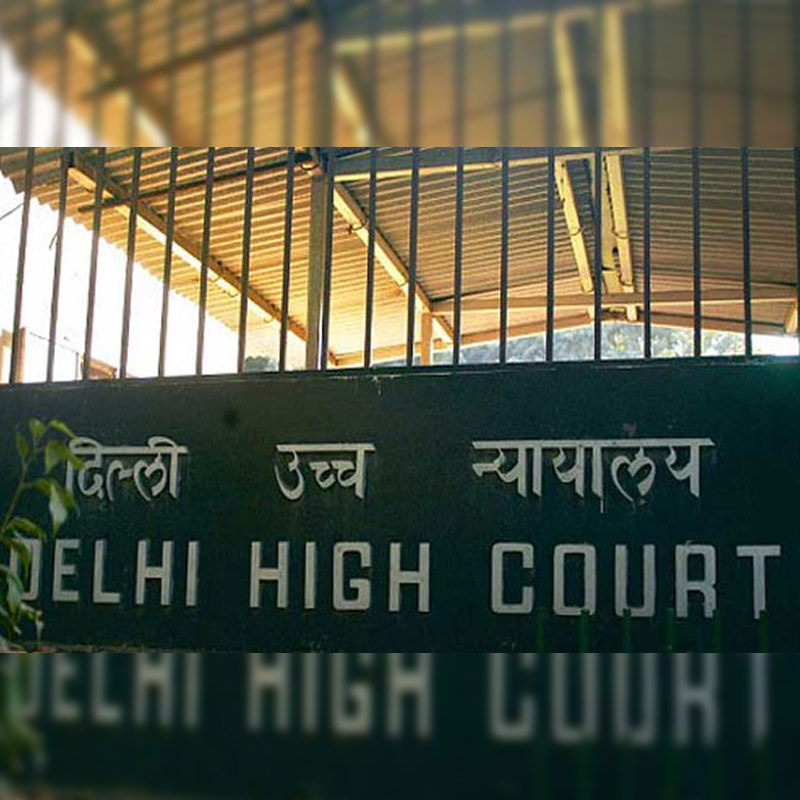
    NEW DELHI: Even as the government is preparing to auction the remaining 2G spectrum, Vodafone has filed a petition in the Delhi High Court challenging the Telecommunication Department‘s action of putting its 900 MHz spectrum to auction.

    The petition has opposed the auction as it had applied for licence extension which is pending with the Department. Vodafone said that it had in December 2012 sought extension of its licence period for Delhi, Mumbai, and Kolkata circles which are coming up for renewal in November 2014.

    Even when these applications for renewal were pending, the DoT went ahead to announce the auction of 900 MHz spectrum, Vodafone said. The extension of auction was sought under clause 4.1 of the licence agreement under which government can extend the period of licence for further 10 years, Vodafone said. It sought a fair and reasonable extension as per the rules.
     
    Vodafone contended that the action of DoT to auction its existing licenses is arbitrary and against the provisions of policy and licence and also disruptive against public interest.