Tag: telecom

  • Being pro-consumer does not mean one is anti-industry: TRAI chairman RS Sharma

    Being pro-consumer does not mean one is anti-industry: TRAI chairman RS Sharma

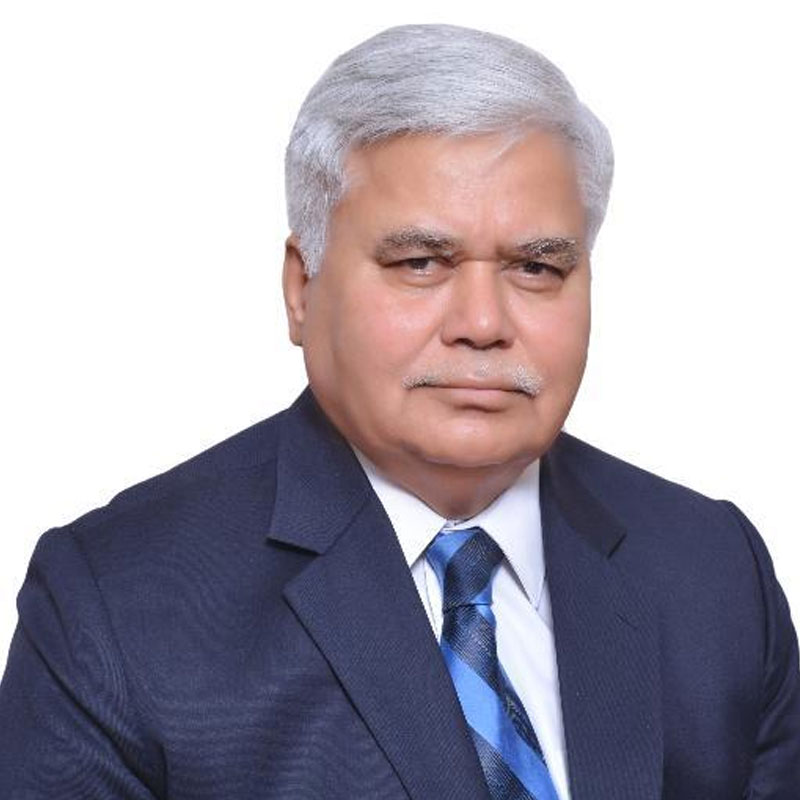
    MUMBAI: Outgoing TRAI chairman RS Sharma, whose tenure saw major, at times controversial, decisions on issues like termination charge and predatory pricing, on Wednesday said he is of the firm belief that being pro-consumer does not mean one is anti-industry.

    The TRAI Act itself calls for ensuring consumer protection and growth of the sector in equal measure, Sharma said.

    “Some people take the line that if you are pro-consumer, you are anti-industry… that is far from the truth. Pro-consumer does not mean anti-industry. It is not a zero-sum game, one should be conscious of that,” Sharma told PTI.

    The TRAI Act mandates that the regulator has to ensure fair competition, consumer protection and growth of the industry, said Sharma who is set to complete his term as TRAI chief on Thursday.

    In the past, decisions by Telecom Regulatory Authority of India (TRAI), ranging from slashing of call-connect charges to its stance on the provision of points of interconnect (sought by Reliance Jio at the start of its services), and predatory pricing rules have come under the industry’s attack. 

    Earlier this year, TRAI’s predatory pricing norms sparked-off a furore as old telecom operators and industry association criticised the new rules.

    More recently, industry body Cellular Operators Association of India (COAI) raised a red flag over TRAI’s new regulations on curbing pesky calls and messages, saying tailoring of systems, and use of blockchain technology will involve Rs 200-400 crore investment and 18 months for the rollout, at a time when the sector is financially-stressed.

    Sharma on Wednesday said that “reasonable time” has been given to the telecom operators on norms to curtail pesky telemarketing calls and messages. The rules, he said, came about only after a prolonged discussion with the industry.

    “I think reasonable time has been given…My position has been that the regulation has come after a lengthy year-long discussion process. It is not the knee-jerk reaction of TRAI, that it has issued these regulations,” Sharma said.

    Recounting his early days in TRAI, Sharma admitted that he had initially been somewhat apprehensive on whether the regulatory role would imbibe a developmental aspect.

    “… initially, I was a bit apprehensive as I had, through my life, been engaged in developmental work … I was wondering whether the regulatory role had any developmental facet. But I had the advantage of being in technology space for quite some time, and telecom is more about technology today…I have thoroughly enjoyed this role,” he said.

    Sharma noted that the telecom sector has undergone a “fundamental change” marked by operator consolidation, the explosion of data and fierce market competition.

    “There are concerns about the quality of service and those concerns, unfortunately, remain till date. TRAI has tried to do the best, within the framework of the Act.

    There is a new regulation on service quality that is granular and will be helpful…operators have also become sensitive to the fact that they cannot leave one area or tower unattended for long,” Sharma said.


  • Apex Court permits Reliance Communication to sell its assets to Reliance Jio

    Apex Court permits Reliance Communication to sell its assets to Reliance Jio

    MUMBAI: The Apex court had recently permitted Reliance Communications Ltd to sell its assets to Reliance Jio Infocomm Ltd.  On Friday, the Supreme Court cleared a settlement between RCom and the Indian unit of Swedish telecom equipment maker Ericsson AB, making it easier for the sale of the telecom operator’s assets.

    According to a report on Mint, the judgement regarding the sale of assets was delivered by a two-judge bench headed by justice R.F. Nariman. The bench directed Reliance Communications to pay Rs 550 crore to Ericsson by 1 October and asked RCom chairman Anil Ambani to give an undertaking to this effect. On 1 October, the apex court will also hear RCom’s plea to close the insolvency case. Bloomberg reports that Ericsson has objected to the settlement terms of the insolvency case.

    The report further notes that that the sale of RCom’s assets will reduce the lenders’ exposure by 50 per cent and it owes about Rs 42,000 crore to its lenders. As part of the deal, Reliance Jio will get 122.4 MHz of 4G spectrum in the 800/900/1800/2100 MHz bands. It will also get 43,000 towers and 1,78,000 RKM (route km) of fiber and 248 media convergence nodes that will cover five million square feet.

    Earlier in 2014, Ericsson had signed a seven-year deal with RCom to operate and manage its nationwide telecom network. The Indian unit Swedish telecom operator has stated that it has not been paid over Rs 1,000 crore. Earlier It has claimed outstanding dues of Rs 16,000 crore but settled for Rs 550 crore. The sale of Reliance Communications’ telecom assets to Reliance Jio is pegged at Rs 25,000 crore and the sale is expected to complete within the next three weeks.

    At the end of the deal, Reliance Jio will get more telecom assets to expand its wired and wireless business in the country. It will mainly help with Jio’s impending commercial availability of Reliance Jio GigaFiber service.

  • Q1 earnings could make Reliance Jio second largest telco by RMS

    Q1 earnings could make Reliance Jio second largest telco by RMS

    MUMBAI: In the 1st quarter of FY 2018, Reliance Jio’s operating revenue increased 14.6 per cent quarter-on-quarter (q-o-q). On the back of its strong earnings number, the telco operator could emerge as the second-largest telco by revenue market share (RMS) in the April-June quarter displacing Vodafone India which is in the final stages of merging with Kumar Mangalam Birla-led Idea Cellular.

    As per brokerage CLSA’s estimation Jio’s RMS would have increased by 3 percentage points to 23 per cent in the April-June period, following the positive surprise on the average revenue per user (ARPU) front that was 13 per cent ahead of its estimates, according to a report from Economic Times.

    Amid the tarrif war started by Jio, both Vodafone and Idea Jio added 28.7 subscribers Q1 2019  are losing ground in the telecom market. The speedy closure of the merger would help the combined entity as it will emerge as the country’s largest telco with the highest RMS of 37 per cent. However, as Jio is unlikely to raise tarrif soon, analysts expect the bad financial phase of Bharti Airtel and Vodafone-Idea merged entity to continue.

    Jio is in no mood to raise tariffs anytime soon as it’s adding 9-10 million subscribers per month, delivering strong minutes, data traffic and revenue growth, which is bad news for Bharti Airtel and the (emerging) Vodafone-Idea combined entity, who need to offer some resistance by raising large sums of capital to accelerate 4G network build and also start matching Jio on tariffs,” JM Financial said in a note to clients as mentioned by ET.

    Jio added 28.7 subscribers Q1 2019 and hence its subscriber base increased to 215.3 million in Q1 2019 from 186.6 million in Q4 2018. ARPU declined slightly q-o-q to Rs 135.50 per month in Q1 2019 from Rs 137.1 per month in Q4 2018. The company reported subscriber churn of 0.3 per cent per month in Q1 2019 as compared to a slightly lower 0.25 per cent per month in Q4 2018.

  • UK targets full-fibre broadband coverage by 2033

    UK targets full-fibre broadband coverage by 2033

    MUMBAI: To ensure that all citizens of UK benefit from technology, the government has said that FTTH should be fitted as standard in all new homes. This proposal is part of a new national telecoms strategy drawn up by the UK Department for Digital, Culture, Media and Sport (DCMS).

    Currently, copper wire network delivers the service which is targeted to be replaced by full-fibre broadband coverage by 2033 across the country. “We want everyone in the UK to benefit from world-class connectivity, no matter where they live, work or travel,” DCMS Secretary Jeremy Wright said.

    “This radical new blueprint for the future of telecommunications in this country will increase competition and investment in full-fibre broadband, create more commercial opportunities and make it easier and cheaper to roll out infrastructure for 5G,” he added.

    As in some parts of the country, it was unlikely that the market could deliver by itself, the government would support investment in the most difficult-to-reach areas. Recently, UK slipped from 31st to 35th place in the global broadband league tables, behind 25 other European countries, as per data from M-Lab.

    “We welcome the government’s review, and share its ambition for full-fibre and 5G networks to be rolled out right across the UK,” Ofcom chief executive Sharon White commented. “The government and Ofcom are working together, and with industry, to help ensure people and businesses get the broadband and mobile they need for the 21st century, ” she added.

    “As well as broadband, this plan will also leave the UK well-placed to introduce the latest 5G mobile technology wherever people live, work and travel,” National Infrastructure Commission chairman Sir John Armitt said.
     

  • TRAI releases recommendations for privacy & protection of consumer data

    TRAI releases recommendations for privacy & protection of consumer data

    MUMBAI: The Telecom Regulatory Authority of India (TRAI) has come out with its recommendations on ‘Privacy, security and ownership of data in the telecom sector’.

    It says that since digital ecosystems that collect user data are just custodians and don’t have privacy rights over it, TRAI recommends that a study should be undertaken to formulate the standards for annonymisation/ de-identification of personal data generated and collected in the digital ecosystem.

    All entities in the digital ecosystem, which control or process the data, should be restrained from using meta-data to identify individual users. The existing framework for protection of the personal information/ data of telecom consumers is not sufficient. Therefore, to protect telecom consumers against the misuse of their personal data by the broad range of data controllers and processors in the digital ecosystem, all entities in the digital ecosystem, which control or process their personal data should be brought under a data protection framework.

    Till a government notified law is passed, the existing rules/ licence conditions applicable to TSPs for protection of users’ privacy should be made applicable to all the entities in the digital ecosystem.

    Consumers should be given the right to choice, notice, consent, data portability, and right to be forgotten. The right to data portability and right to be forgotten being restricted rights should be subjected to applicable restrictions.

    Multilingual, easy to understand, unbiased, short templates of agreements/ terms and conditions should be made mandatory for all the entities in the digital eco-system for the benefit of consumers. Consumer awareness programs be undertaken to spread awareness about data protection and privacy issues so that the users can take well informed decisions about their personal data.

    Data controllers should be prohibited from using ‘pre-ticked boxes’ to gain users’ consent. Clauses for data collection and purpose limitation should be incorporated in the agreements. Devices should disclose the terms and conditions of use in advance, before sale of the device. It should be made mandatory for the devices to incorporate provisions so that user can delete pre-installed applications if he/she so decides. Also, the user should be able to download the certified applications at his own will and the devices should in no manner restrict such actions by the users.

    To ensure the privacy of users, National Policy for encryption of personal data, generated and collected in the digital ecosystem, should be notified by the government at the earliest. For ensuring the security of the personal data and privacy of telecommunication consumers, personal data of telecommunication consumers should be encrypted during the motion as well as during the storage in the digital ecosystem. Decryption should be permitted on a need basis by authorised entities in accordance to consent of the consumer or as per requirement of the law.

    A common platform should be created for sharing of information relating to data security breach incidences by all entities in the digital ecosystem including telecom service providers. It should be made mandatory for all entities in the digital ecosystem including all such service providers to be a part of this platform. Data security breaches may take place in-spite of adoption of best practices/ necessary measures taken by the data controllers and processors. Sharing of information concerning to data security breaches should be encouraged and incentivised to prevent/ mitigate such occurrences in future.

  • Powered by Jio, RIL touches $100 bn market cap

    Powered by Jio, RIL touches $100 bn market cap

    MUMBAI: Reliance Industries becomes the second company to hit $100 billion market capitalisation after TCS in 2018. Previously, in 2008 too, the company has hit the $100 billion mark when the rupee was around 40 to the dollar, according to Moneycontrol.com.

    RIL has seen a hike in the share prices of oil-to-telecom for the fifth consecutive day on Thursday. The stock closed 4.42 per cent higher at Rs 1,082.20 on the BSE and taking total five-day gains to over 12 per cent. This could be due to an aggressive plan announced in the AGM and ahead of its June quarter earnings.

    While having a buy call on the stock with a target price of Rs 1,340 per share (which implies 29 per cent potential upside), global brokerage house Goldman Sachs said it expects Q1 EBITDA to grow 45 per cent YoY (up two per cent QoQ).

    The company’s market capitalisation stood at Rs 6,85,726.98 crore at its record price level and TCS at Rs 7,45,612.17 crore (One US dollar = Rs 68.64).

    SP Tulsian of sptulsian.com expects that the telecom business will be the biggest contributor to the share price of Reliance Industries over the next 18 months. Hence, he is banking on the growth of Jio and Reliance Retail.

    Speaking about positive factors that could impact the stock, he said, “There is an increase in margins of the petrochemicals and refinery segments. The monetisation plan for Reliance Jio and Reliance Retail are likely in the next 30 months.”

    KR Choksey Investment Managers MD Deven Choksey was quoted stating that, the visibility is clearly emerging for Jio as the average revenue per user of Jio will jump from Rs 150 to higher levels.

    “Through the fiber-to-home proposition, if Jio customer base reaches 40 crore from the current 20 crore, it would mean an addition of Rs two lakh crore to the total revenue and 50 per cent of that may be EBITDA which works out to Rs one lakh crore. This could happen in two or three years. This is why the market is gung-ho about Jio,” said Choksey, according to Moneycontrol.com.

    Reliance consumer businesses, including Jio and retail, up from two per cent to 13 per cent of consolidated EBITDA.

  • In major Jio push, RIL to acquire Radisys for $74 mn

    In major Jio push, RIL to acquire Radisys for $74 mn

    MUMBAI: India’s largest private sector company Reliance Industries Ltd (RIL) has entered into an agreement with Radisys Corporation, US-based open telecom platform solutions provider, to acquire the latter. The deal involves a valuation of roughly $ 74 million or Rs 510 crore.

    According to a PTI report, Radisys, a NASDAQ listed company will be delisted post acquisition. RIL will acquire the US-based company for $1.72 per share in cash. 

    Radisys has nearly 600 employees with an engineering team based out of Bangalore, India, and sales and support offices globally, a press release from the company said.
    RIL hopes this deal will accelerate Jio’s global innovation and technology leadership in the areas of 5G, IoT and open source architecture adoption. Since the launch of its launch in 2016, RIL’s telecom venture Jio has been acquiring customers ata rapid pace.

    “Reliance and Jio have been disrupting legacy business models and establishing new global benchmarks. Radisys’ top-class management and engineering team offer Reliance rapid innovation and solution development expertise globally, which complements our work towards software-centric disaggregated networks and platforms, enhancing the value to customers across consumer and enterprise segments,” Reliance Jio director Akash Ambani said.

    Radisys CEO Brian Bronson said, “The backing and support of India-based global conglomerate Reliance, will accelerate our strategy and the scale required by our customers to further deploy our full suite of products and services. The Radisys team will continue to work independently on driving its future growth, innovation and expansion. The addition of Reliance’s visionary leadership and strong market position will enhance Radisys’ ability to develop and integrate large-scale, disruptive, open-centric end-to-end solutions.”

    The deal is subject to approvals from regulators and Radisys’ shareholders, and is expected to be officially sealed in the fourth quarter of 2018. RIL will finance the transaction through its own internal accruals.

    Also Read:

    Now, Reliance Jio coud set off broadband turf war with Airtel

    Reliance Jio ready to disrupt wired broadband: Matthew Oomen

  • Telco apps emerging as one-stop destinations in India: Report

    Telco apps emerging as one-stop destinations in India: Report

    MUMBAI: The newest trend in the world digital content consumption, is the emergence of telco apps as one stop shops for users. According to a Bank of America Merrill Lynch (BofAML) report quoted by Bloomberg Quint, Indians have shown a tendency to use apps like Jio TV, Jio Cinema, Airtel Wynk instead of downloading individual over-the-top (OTT) streaming apps.

    Among all the offerings from the data disruptor Jio, the live television streaming app Jio TV was the most used. Even Airtel’s Airtel TV app has clocked over 10 million downloads since its launch. Other than Jio TV, Jio Music and Jio Cinema also managed to capture the imagination of Indian users.

    Among the BofAML 1,000 consumers surveyed by BofAML, Jio recorded the highest number of users. The objective of the study was to document data consumption patterns. It found that 76 per cent users use mobile data to watch online videos, while 68 per cent download and save them

    The online content viewing numbers have increased exponentially, with 30 per cent of users breaching their daily limit of 1/1.5 GB almost regularly.

    Among the video streaming platforms, YouTube continues to hold its sway with consumers, with 58 per cent of them using the platform. 38 per cent viewed content on Hotstar, with ZEE5 and Eros being used by 2 per cent and 1per cent respectively.

    “We consider this as a new emerging theme in India and expect content companies to be beneficiaries of the telco price wars. However, given the nascent stage of the market, we don’t see a clear “winner” currently in the OTT space,” read the BofAML report.

    The findings of the study also indicated that cord-cutting may not disrupt the Indian television industry anytime soon, as monthly cable bills (200-400) continue to be significantly lower than what decent broadband connections cost.

    Also read: Reliance Jio to soon launch 5G services: all you need to know

    Amazon India’s new monthly subscription plan


  • Digital comm policy success depends on implementation: TAIPA

    Digital comm policy success depends on implementation: TAIPA

    MUMBAI: The Tower and Infrastructure Providers Association (TAIPA) has commented on the government’s proposed telecom policy by saying that though it addresses issues of all players, the growth of the sector will depend on its effective implementation.

    “It (telecom policy) is the first right step but the most critical part will be the on-ground implementation and alignment of state governments with central government’s rulings and guidelines,” TAIPA director general TR Dua told PTI.

    Despite the government notifying ‘right of way’ (RoW) rules, that mandate norms for rolling out telecom infrastructure, mobile tower firms (and telecom infrastructure companies) face challenges. The draft National Digital Communications Policy 2018 has proposed a broadband readiness index for states and union territories so that they can get investments and handle RoW issues. 

    “The Indian telecom tower industry has been struggling through a number of critical issues such as non-inclusion of IP-1s under RoW rules, November 2016, state tower policies not aligned with RoW rules,” Dua said adding that state government and local bodies command high and several types of fees after which authorities take them under coercive action and shut down towers. 

    “In the last one year period ended December 2017, the tower industry could install only 21,000 mobile towers when it could have erected many more had the challenges were addressed. Today, the mobile tower count stands at 4,61,000 across the nation,” Dua said.

    A week ago, the government announced the new policy replacing the earlier suggested National Telecom Policy by bringing the information technology, telecom and I&B departments under one umbrella. It does not suggest making the Telecom Regulatory Authority of India as the converged regulator.

    Also Read :

    Comment: India’s NTP 2018 gets digital makeover but needs complimentary policies

    Telecom policy likely to be rolled out in June 

    DoT addresses broadband issues in policy out for public consultation

  • Reliance Jio readies Rs 60,000 cr war chest: Report

    Reliance Jio readies Rs 60,000 cr war chest: Report

    MUMBAI: Reliance Industries Ltd (RIL), according to a Mint report, is likely to invest Rs 60,000 crore in Reliance Jio Infocomm Ltd (Reliance Jio), its telecom unit, this financial year as the company seeks to speed up the roll out of broadband services and expand its wireless network.

    Moreover, Reliance Jio may also borrow as much as Rs 1 trillion, the report quoted sources as saying.

    The fresh investments will also allow Reliance Jio to maintain pricing pressure on rivals, who are bleeding due to a tariff war sparked by the Mukesh Ambani-led company. The firm has also said it remains focused on providing higher value to consumers and will prioritise customer engagement over short-term revenue recovery, which means it will retaliate if rival operators try to sweeten their offers.

    Spokespeople for RIL and Reliance Jio did not respond to queries.

    The company will continue to invest in laying fibre even as it has already built the largest optical fibre network in the country, Jio’s head of strategy and planning Anshuman Thakur said in an interview on 27 April after RIL announced its earnings.

    Reliance Jio will also continue to invest aggressively to acquire content as it sees it as a key differentiator. The company is in final stage of commercial launch of home broadband services, though the rollout is expected to be gradual.

    For the March quarter, Jio reported a 1 per cent growth in profit from the preceding three months. It also saw its average revenue per user fall to Rs 137 in the March quarter from Rs 154 in the preceding December quarter.

    “Clearly, Q4FY18 numbers demonstrate that RJio is no longer insulated from competition and any rise in the same would hurt RJio equally or probably more than the incumbents,” ICICI Securities said in a 30 April report.

    Also Read:

    Reliance Jio makes a punt on tech start-ups

    Jio shifts focus to wired broadband