Tag: telecom

  • Mukesh Ambani promises market disruption with JioGigaFiber

    Mukesh Ambani promises market disruption with JioGigaFiber

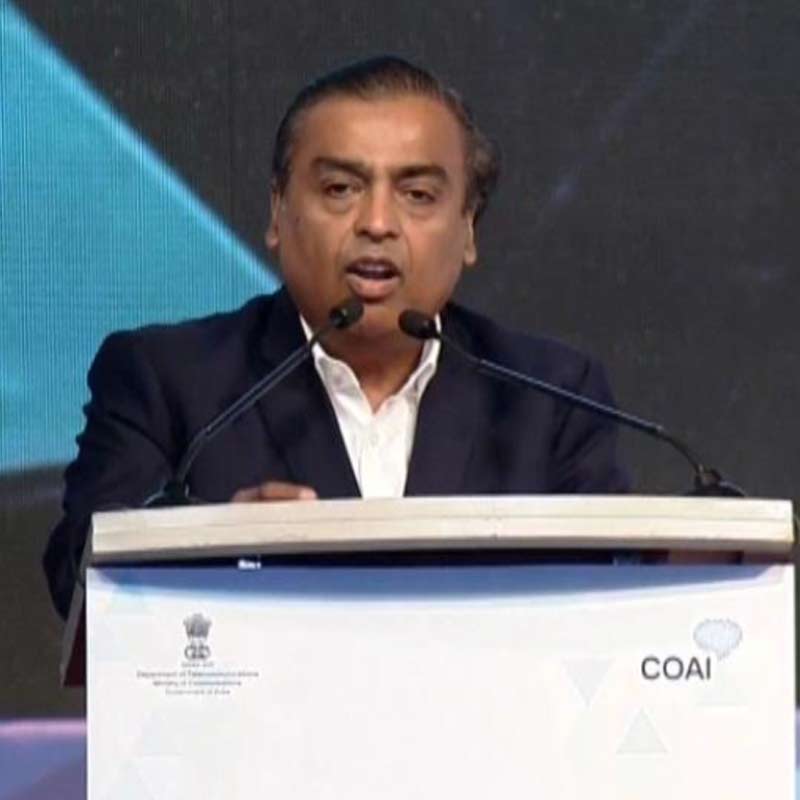
    MUMBAI: Mukesh Ambani today gave a clarion call to competitors saying that Reliance GigaFiber will bring about the same revolution in fixed line broadband as Reliance Jio had done with mobile data consumption making India the biggest mobile data consumers in the world.

    Speaking at the India Mobile Congress being held in New Delhi today, Ambani said, “Jio is committed to building a deep-fibre network across the country and ensuring that every premise is connected with the highest quality network. All of us are proud that India has become the world’s largest mobile data consuming nation. We now have a similar opportunity to replicate this success in fixed broadband as well.”

    When Reliance Industries announced the launch of JioGigaFiber, it was revealed the project would be rolled out in the shortest possible time. Additionally, RIL has acquired 58.92 per cent stake in Den Networks and 51.34 per cent in Hathway Cable and Datacom Limited, both MSOs.

    “From day one JioGigaFiber will offer complete fixed-mobile convergence where Indians will travel seamlessly between mobile and fixed broadband network 4G and 5G when on the move and Wi-Fi when indoors,” Ambani added.

    In the last two years, the Indian telecom sector has gone through a revolutionary change. In less than two years, India has moved from 155th rank in mobile broadband penetration to the top position. Now after 2G to 4g transformation, India is on the verge of experiencing 5G soon.

    “By 2020, I believe that India will be a fully-4G country… and ready for 5G ahead of others. Every phone in India will be a 4G enabled phone and every customer will have access to 4G connectivity,” he said.

    He also mentioned that digital connectivity can transform rural India comprehensively. According to statistics shared by him, as many as 50 million villagers have got affordable smartphones in the last eight months. Moreover, for many of them, this is the first radio and music player, TV, camera internet.

    “This combination of connectivity with affordability is unparalleled in the world. I would like to acknowledge the contribution of the government’s BharatNet program in providing high-quality connectivity in some of the remotest areas of our country. This transformation will accelerate as we get ready for a 5G world driven by the pro-active approach of the government,” he added.

    The highly optimistic man thinks digital technologies like artificial intelligence, robotics, blockchain, internet of things, virtual reality and augmented reality will propel the entire economy of the country along with the fourth industrial revolution.

  • 3 more quarters of losses for telecom industry, says COAI

    3 more quarters of losses for telecom industry, says COAI

    MUMBAI: According to COAI director general Rajan Mathews, the telecom sector will probably experience three or more quarters of losses, as the telcos remain under pressure due to high levies and unsustainable tariffs.

    Speaking to PTI, Mathews said, “Under the current scenario, I see at least another three plus quarters of losses. Why? Because personally, I do not think the present tariffs are sustainable for long term health of the industry.”

    Mathews explained that the high incidence of levies – licence fee and spectrum usage charges – intermingled by upfront payment for radio-waves have added to the operators' woes. Taking that into account he stated that 2018-19 will certainly be a "tough year" in terms of financial performance of the industry.

    “Already we have been through two quarters of losses (this fiscal). So something dramatic has to happen in the next two quarters and we know that is not going to happen. Clearly, 2018-19 will be a tough year in terms of financial performance for the industry but the beginning of fiscal 2019-20 will see clarity (emerging),” he added.

    When asked about whether the mobile rates will fall further or stabilise, he told, “The tariffs are already at affordable levels. It is difficult for me to see how much further the tariffs can drop.”

    He also described that the continuous decline in revenue stream would be unfavourable for the industry as telcos will need investments for updating technology and for wider and better coverage.

    Reliance Jio had set off a tariff war since its arrival in the market. In counter to Jio’s services, rival companies such as Bharti Airtel and Vodafone Idea had to cut tariffs.

    Bharti Airtel reported a loss of Rs 940 crore from its mainstay India business for the June quarter. However, Airtel in the April-June period reported a net profit of Rs 97 crore on a consolidated basis after taking into account revenues from its Africa business.

  • TDSAT grants permission to RCom to sell spectrum

    TDSAT grants permission to RCom to sell spectrum

    MUMBAI: Telecom Disputes Settlement and Appellate Tribunal (TDSAT) has given permission to Reliance Communications (RCom) to proceed with the sale of its spectrum. The telecom company would have to assure bank guarantees worth Rs 2900 crore as demanded by Department of Telecommunications (DoT).
    In its media release, the telecom company confirmed that it will be able to pay the Swedish multinational networking and telecommunications company Ericcsson its Rs 550 crore and the minority investors of Reliance Infratel (RITL) about Rs 230 crore, as agreed by the lenders.

    The official release stated, “Reliance Communications Ltd has been granted relief by the Telecom Disputes Settlement & Appellate Tribunal vide its Interim Order dated 1 October 2018, whereby TDSAT has stayed the demand of Bank Guarantee of Rs 2,900 Crore by the Department of Telecommunications”.
    “38 secured lenders of RCOM Group have already approved the sale of the above spectrum, and the proceeds thereof will be used for making payments to Ericsson India Private Ltd and to RITL Minority Investors, as per settlement terms,” continued the release.
    RCom even criticised the DoT for creating obstructions in the proceedings of the spectrum sale.

  • Lack of uniform policy framework hampering 5G growth in India: Deloitte-CII report

    Lack of uniform policy framework hampering 5G growth in India: Deloitte-CII report

    MUMBAI: A Deloitte-CII report said that the growth of 5G connectivity in India lacks uniform policy framework and will stand as a challenge towards cellular mobile communications.
    “The current regulatory framework for deploying network infrastructure has always been one of the most contentious issues in the industry,” the report said. It also mentioned how the industry is also “crippling under margin pressure”.
    The report expressed “Right of Way” (RoW) and lack of a uniform policy framework as a huge barricade and obstacle to come over to for a positive 5G growth in India.
    Even though, in the year 2016, new RoW rules and methodised processes were introduced, the published report says, “Roadblocks have hampered implementation of the new rules”.
    The report also said how the government has released the National Digital Communication Policy (NDCP) after analysing and looking at the benefits of 5G connectivity. The Union Cabinet had approved the NDCP 2018 on 26 September with the goal to provide “broadband to all”.
    Replacing the National Telecom Policy 2012, NDCP targets to initiate a “comprehensive data protection regime for digital communications that safeguards the privacy, autonomy and choice of individuals and ensure India’s “digital sovereignty”.
    Related to investments on 5G connectivity, the Deloitte-CII report said, “While the investment for 5G would grow incrementally as advancements on existing 4G/LTE technology, with 5G spectrum and network densification needs, it is anticipated that industry might require an additional investment of $60-$70 billion to seamlessly implement 5G networks.”

  • Telcos may skip 5G spectrum auction due to high prices: Fitch Ratings

    Telcos may skip 5G spectrum auction due to high prices: Fitch Ratings

    MUMBAI: Credit rating agency, Fitch Ratings, stated that India’s new National Digital Communication Policy (NDCP) could manage to benefit the telecom sector by making it easier to meet continuous rising data demand and focusing on tax and fee duty on the manufactory.
    5G spectrum auctions could be skipped by the Indian telcos if prices are too high. The Indian telecommunication companies are likely to raise investment in 5G spectrum which directly depends on the 5G spectrum principal price. This can overextend the liabilities on balance sheets of these companies.
    Furthermore, Fitch also explained how private telcos are going to benefit and enlarge their broadband coverage funded by the universal service obligation fund.
    By initiating and creating two million Wi-Fi hotspots in rural areas and another one million in urban areas, the NDCP plans on connecting almost more than 600,000 villages to the digital network. Although, according to Fitch, there are going to be a few execution challenges but it will only lead to broadband adoption rate increasing and going higher.
    The research report also stated that telco costs and red tape could be cut by the NDCP’s plans to review and rationalise the sector’s tax structure and optimise future spectrum asset pricing.
    A Fitch statement read, “Indian telcos face heavy and multiple taxes – including licence fees, spectrum usage charges, and universal service fees on top of expensive spectrum assets. Meanwhile, intense competition has limited telcos’ pricing power. Overall, these pressures have stretched balance sheets”.

  • TRAI to be renamed to DCRAI

    TRAI to be renamed to DCRAI

    MUMBAI: The Telecom Regulatory Authority of India’s name has been rechristened. From now, it will be called as the Digital Communications Regulatory Authority of India (DCRAI). The announcement was made at the annual general meeting of the telecom infrastructure body (TAIPA) by the Telecom minister Manoj Sinha.
    The post of TRAI chairman has been changed to Digital Communications regulator, said Sinha speaking to RS Sharma. The time frame hasn’t been finalised but he expects it to be formalised soon.
    The Telecom Commission has also been renamed to Digital Communications Commission at the Department of Telecom.
    Sinha explained how telecom infrastructure has played a crucial and important role in the development of the telecom market in the country these past years by enabling rapid rollout of towers from a mere 1 lakh in 2006 to 4.71 lakh currently.
    TRAI chairman RS Sharma said, “NDCP talks about creating tower authority. The policy very clearly lays down to prepare India for digital tomorrow.” The new policy will be transformational as it lays down quantifiable objectives – $100 billion investment, 50 Mbps download speeds.
    Since 93 per cent of data transportation is happening on wireless networks, Sharma said telecom infrastructure is crucial. “Therefore it is appropriate that we put together all our efforts, if you want to be ready for 5G, you need to put massive infrastructure,” he said. Sharma also mentioned that TAIPA chairman Akhil Gupta had said that 5G infrastructure will require hundreds and thousands of more towers. Many of them will be small cells. He has requested the minister to summon a high-level conference of ministers and IT secretaries of state.

  • FDI in telecom jumped 5X in 3 years

    FDI in telecom jumped 5X in 3 years

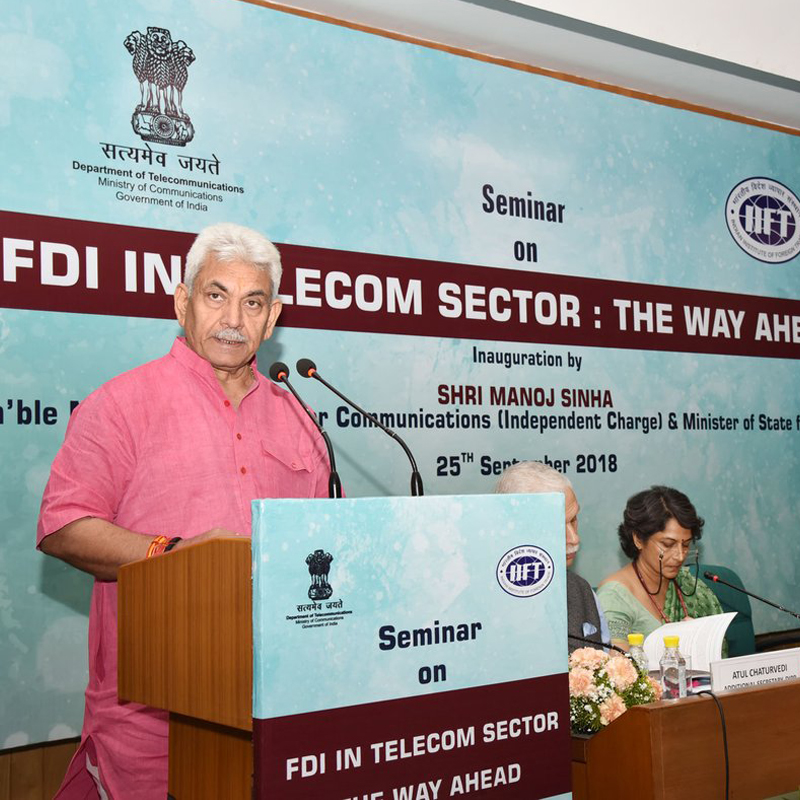
    MUMBAI: During the last three years, the Indian telecom sector has not only witnessed major disruptions but also nearly five times jump in foreign direct investment (FDI). While the amount of investment stood at $ 1.3 billion in 2015-16, it reached $ 6.2 billion in 2017-18, Communications minister Manoj Sinha said. The government is also looking at the funding of $100 billion for the draft National Digital Telecommunications Policy.
    “India needs massive investment in developing newer technologies which are accessible and affordable to the people and at the same time creates productive employment. For India to utilise its demographic dividend it is absolutely necessary to create semi-skilled jobs in short run, and the telecom sector will play an important role in creating those employment opportunities,” he added.
    The sector has also seen a few mergers, acquisitions in the same period. Highlighting that, Sinha said consolidation in the sector will strengthen it. He also calls international investors and telecom players to take part in the growth of the sector as Indian economy is back on the growth trajectory.
    He also added India already announced plans to launch commercial 5G networks by the year 2020. The 5G rollout will leave big opportunities for investing in the newer emerging technologies like AI, IoT, data analytics.
    Telecom secretary Aruna Sundararajan was also present at the occasion. She emphasised the fact that foreign investment is necessary to secure scientific, technical and industrial knowledge. The expert pointed out that the telecom sector has always been one of the core sectors attracting highest FDI inflows and overall this trend has been positive for the past two decades.
    “National Digital Communications Policy, 2018, will be the new platform for convergence of all the stakeholders, where we will be working with growth-oriented investment perspective, rather than with fiscal perspective alone,” she added.

  • Airtel, Netflix enter strategic partnership

    Airtel, Netflix enter strategic partnership

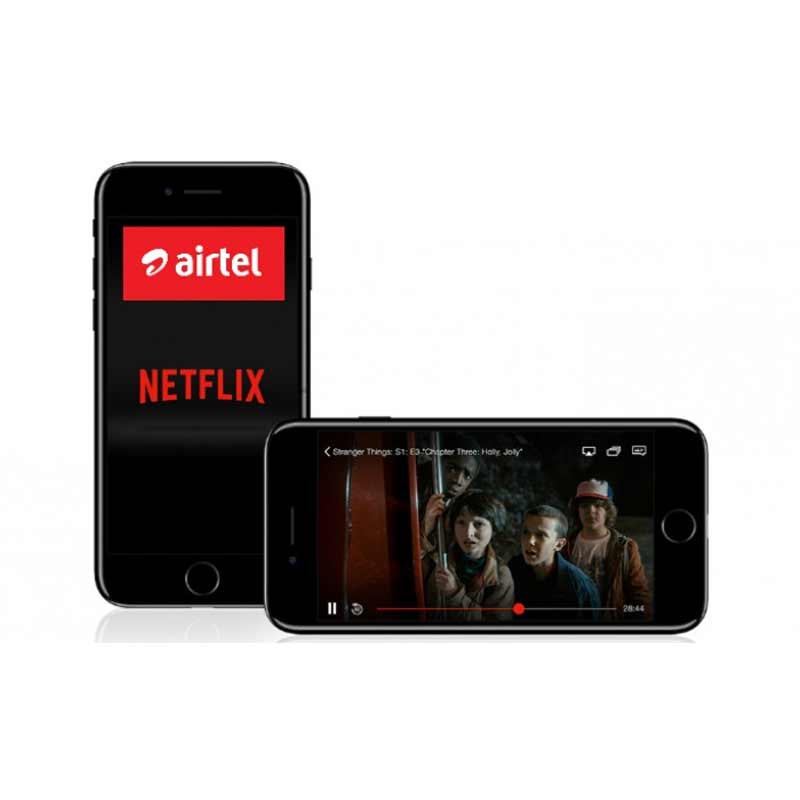
    MUMBAI: Adding to the OTT-telecom deal list is the partnership between global Netflix and Airtel in India. Airtel subscribers of select postpaid and V-Fiber Home Broadband plans will be able to enjoy free streaming of Netflix for three months. After the free subscription period of three months, they will be able to pay for the platform using Airtel postpaid or home broadband bill.

    “Partnerships are at the core of Airtel’s DNA and we are delighted to expand our strategic relationship with Netflix. Affordable high speed data services and growing smart devices have created a massive opportunity, perhaps one of the biggest in the world, for the uptake of content – both local and global. We look forward to working closely with Netflix to leverage this huge potential and continue delighting customers with some amazing offerings,” Bharti Airtel MD and CEO Gopal Vittal said.

    Customers on eligible Airtel plans will be able to avail the opportunity through the Airtel TV app and the My Airtel app. Even customers not on plans eligible for this offer will be able to sign up or upgrade to claim this and pay for Netflix using their Airtel bill. It has also partnered to promote Netflix content through a dedicated row on the Airtel TV app.

    “We are delighted to expand our partnership with Airtel and combine the latest technologies and the best of entertainment. Be it Sacred Games, Ghoul or Stranger Things, more and more fans are watching on mobile so we’re bringing together Netflix’s award-winning TV shows and movies with Airtel’s amazing mobile and broadband networks. Airtel customers will enjoy the simplicity of one monthly bill for their Netflix subscription and Airtel postpaid/home broadband bill,” Netflix business development global head Bill Holmes said.

    Airtel, which is gradually losing ground to Jio is trying to get back in the race with several content deals. Recently, it struck an exclusive deal with ZEEL under which a select premium content from ZEE5 library will be available for Airtel consumers exclusively. The telco platform has an existing deal with Amazon Prime also. All these deals may bring more users to the network owing to the digital content portfolio. Meanwhile, Netflix is also trying to gain a stronger foothold in the Indian OTT market through new Indian originals and partnerships.

  • Revenue model of ZEE5-Airtel deal is cost per subscriber, duration viewed: Tarun Katial

    Revenue model of ZEE5-Airtel deal is cost per subscriber, duration viewed: Tarun Katial

    MUMBAI: The OTT players in India seem to have found telecom partnerships fruitful. Recently, ZEE Entertainment Enterprises Ltd (ZEEL) struck a three year deal with Airtel. Under the deal, the partners will do a co-branded promotion while the revenue model will be based on cost per subscriber and duration viewed.

    “There is select premium content from ZEE5 library that will be available for Airtel consumers exclusively in addition to being available on the ZEE5 platform,” ZEE5 India CEO Tarun Katial says. Though this deal is unique, ZEE5 is open to striking deals with other telecom operators also.

    “Revenue model is based on cost per subscriber and duration viewed for both in the three buckets. In the first bucket, it’s for cost per subscriber and there’s a minimum guarantee, in the second bucket it’s about volume deal for a subscription for a high-end Airtel consumer and the third model is about upscaling ZEE5 subscription packages,” he adds.

    Katial thinks this co-branding promotion across platforms will enable to create an understanding of content among consumers of ZEE5 as well Airtel. “It’s also a really good opportunity to be able to do both consumer insight as well as big data and create a recommendation for Airtel TV consumers of ZEE5 premium content,” he says. The partners will leverage each other’s social media assets also.

    Under the partnership, other than ZEE5 premium content, video content produced by ZEEL, including TV shows and movies will be available exclusively on Airtel’s digital properties like Airtel TV. Since ZEE5 already streams content produced by ZEEL along with its originals some of the selected curated content may be available on ZEE5 first while some will be concurrently available on both platforms but “deeper premium library” will be available only on its own OTT platform.

    Recently ZEEL snipped its deal with Reliance Jio pulling off all its available content on Jio TV. Though this kind of incident happens due to the failure of negotiation of cost, both the companies remained tight-lipped about the problem.

    However, the deal can boost Airtel also which has had its dominance in the telecom industry threatened after Jio’s entry. Reliance is already in a better position as it holds stakes in production companies like Eros International, Balaji Telefilms and Roy Kapur Films.

    As ZEE5 is a late entrant in the market, it is still far behind other domestic players like Hotstar, Voot and Eros Now. Moreover, international rivals like Netflix and Amazon are also eying the same OTT market. Hence, the deal is very critical for ZEE5 to reach more consumers across the country as well as to increase the visibility of existing shows on the platform. The industry being in a nascent stage does not have any clear winner till now, hence, leaving enough scope for each of the players.

  • Higher production values of OTT content won’t put pressure on TV biz: Punit Goenka

    Higher production values of OTT content won’t put pressure on TV biz: Punit Goenka

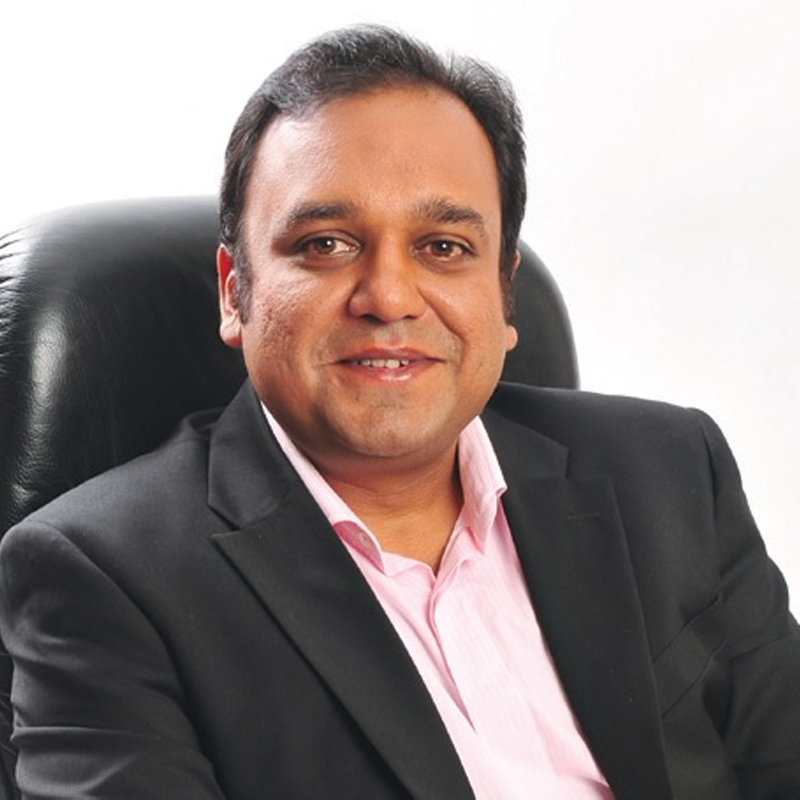
    MUMBAI:  With the growth of OTT market, all the big four broadcasters in India have ramped up their investment in digital ventures. To woo the online viewers, OTT platforms are producing high cost shows especially when it comes to originals. While there have been concerns that higher production values of OTT content might affect the content cost of TV business, Zee Entertainment MD and CEO Punit Goenka does not foresee such a scenario in his case.

    Starting from Amazon Prime’s Inside Edge to Netflix’s Sacred Games, ZEEL’s digital venture ZEE5’s Karenjit Kaur, the star cast, and content quality clearly indicates the high budget of the shows, though the exact numbers have never been revealed.

    Speaking in an earnings call, Punit Goenka said,“In terms of quality, I think it’s comparable to what television quality is because we use the same equipment. It will not put pressure on the television part because the sheer volume of television content that is being produced and the economies of scale that is being achieved there versus what we are producing for digital, the delta is far apart.” But he agreed that the content being made for digital platforms is of higher production value because of outdoor shoots and bigger stars.

    Zee crates 500 hours of original content every week for broadcast while that is a mere 800 hours for the whole year on digital. “There is no per hour concept there, it is all story and concept-based content cost,” he added.

    After creating a buzz in the Indian market thanks to its regional content, ZEE5 is expected to be launched globally soon. Commenting on that, Goenka said the global rollout will be completed in a phased manner. By the end of this fiscal year (FY 19), it will be available globally.

    Goenka is very hopeful of Zee5’s international success.”If ZEE5 does cannibalise our existing subscription revenue in international markets I will be very happy with that because that’s a direct ownership of the customer that the company gets rather having it through a distributor. So that’s a good problem if it happens that way and that is one of the parts of our strategy of going global with ZEE5,” he said.

    With the technological disruptors, the entertainment industry is always in a flux. 10 years ago, the entry of DTH players changed the industry. Then the increasing internet consumption with the entry of Jio bought another disruption. Now, as Jio with its FTHH connection eyes at  50 to 100 million households, there could be some structural changes especially affecting the broadcasters. However, that possibility does not concern Goenka.

    “My view has always been, even when DTH came 10-11 years ago, that all technologies will coexist in a country of our size. So, cable will also coexist, DTH will coexist and even ZEE5 will work. So, it’s all going to be different services at different price points. For a content company like us, it doesn’t really matter because at the end all three are pipes. So, as long as my content is relevant, I will still get my value from consumer payout,” he said confidently.

    However, with a realistic view, he expects ZEE5 to break even in next five years in stark contrast to several players who expect to break even within two-three years. According to him not only ZEE5 but the industry is still now in investment mode and there isn’t a chance to breakeven in the first three years.

    Almost every OTT player has already struck deals with telecom players, but ZEE5 has not yet signed any telecom deal in India or overseas. Till the time it isn’t getting the right value of its content, there won’t be any such negotiation.