Tag: telecom

  • “Sheikh Chilli & Friendz” are here to rule the world !!

    “Sheikh Chilli & Friendz” are here to rule the world !!

    One Take Media Co. is happy to announce the agreement reached with Apsons Entertainment (Mayapuri group,owners of Lotpot – kids comic magazine) for overseas distribution of World famous series “Sheikh Chilli & Friendz” for World Territories (except SAARC). This show has 104 Episodes of 11 minutes each.

    The rights are open for broadcast platforms and OTT platforms globally (except SAARC region). In India this show is successfully running on Discovery Kids and has millions of followers.

    The stories in this series have been designed keeping in mind today’s children, who are modern and have gadgets. The stories are light and are based in events linked to the children’s lives and have action, drama, and fun.

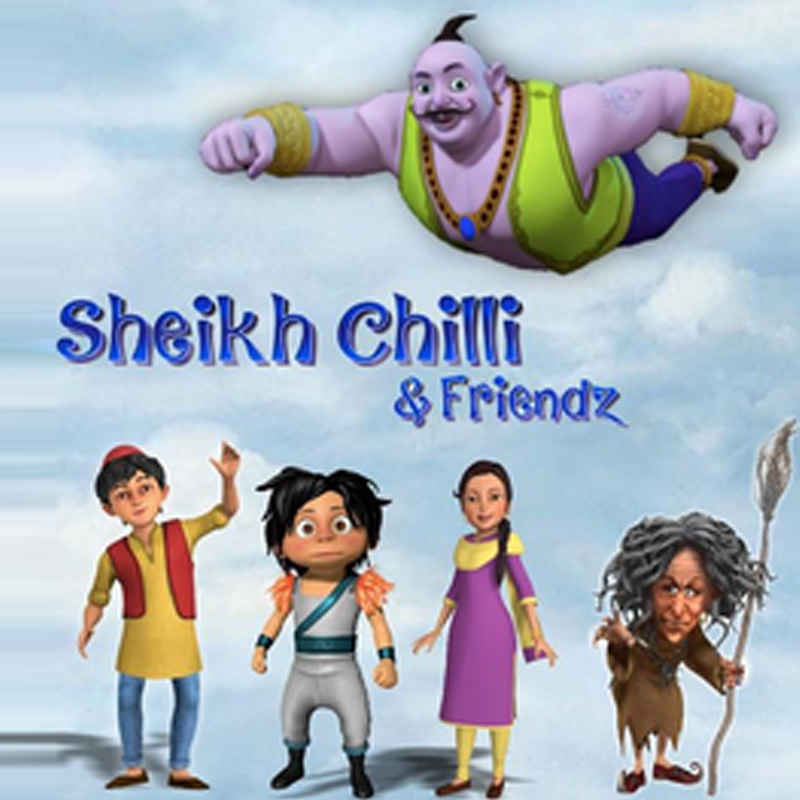
    The main characters of Sheikh Chilli and Friendz are 9-year old Sheikh Chilli, who lives in a town called Jhunjhun Nagariya. He is a sweet and innocent lad and has some good
    Friends. He has a friend Bulbul who talks a lot but is dumb-witted. Mallika is Sheikh Chill’s dear friend and very intelligent. Then we have “The One And Only” Khatkoo, who is just 6 inches tall and stays in Sheikh Chilli’s pocket. Noorie Jinn was found by Sheikh Chilli in a bottle. He comes out of the bottle only when Sheikh Chilli recites the magic words and does only what Sheikh Chilli asks him to do. Buri is a sorceress and is out to get the necklace with the blue diamond worn by Noorie Jinn. Another character is Gama, Sheikh Chilli’s class-mate but a bully and always troubling Sheikh Chilli. Lootera is the stupid thief who is always trying to rob everybody but does not succeed because of Sheikh Chilli’s gang.

    Mr. Aman Bajaj – Publisher (Owner) – Mayapuri Group – Lotpot magazine, with 30+ years of experience in production and animation.His team is developing multiple IP characters of Lotpot kids magazine like Motu Patlu ,Sheikh Chilli & Neetu.

    He has told “Sheikh Chilli & Friendz stories are based on magic and fantasy. The characters are based in the modern world and are well equipped with technology so that kids of this generation can connect to them “. Also, Shekhar Chopra, CEO of Lotpot has said “We are happy to collaborate with One Take Media Co. This association will take Sheikh Chilli & Friendz to global territories.”

    OTMC is one of leaders in providing value Added Services to DTH, Telecom ,OTT and Cable industries, services include Hollywood Movies, Hollywood Movies dubbed in Hindi,  Kid Animated Movies/shows, Celebrity based Cooking show and Korean TV series.

    Mr. Anil Khera , CEO & Founder of One Take Media says “ We are very confident that this acquisition of Sheikh Chilli & Friendz for global distribution would prove to be a successful bet. We are constantly striving towards offering new media and content to our viewers. Watching Sheikh Chilli& Friendz will be a complete delight for our audience’s world over “

  • Pitch Madison report shows adex grew 14.6% in 2018

    Pitch Madison report shows adex grew 14.6% in 2018

    MUMBAI: The much awaited Pitch – Madison Advertising Report 2019 was released this afternoon at an event in Mumbai amongst a high profile audience consisting of Madhusudan Gopalan, CEO, P&G, Manu Jain, Vice President, Xiaomi and Managing Director of Xiaomi India, Sunil Kataria, CEO – India and SAARC, Godrej Consumer Products Limited and other eminent people from the marketing and media world. 

    Figures at a glance:

    Indian Advertising Market


    2016

    2017

    2018

    2019 Forecast

    Medium

    In Rs Crore

    % Share

    In Rs Crore

    % Share

    In Rs Crore

    % Share

    Growth % 2018/17

    In Rs Crore

    % Share

    Growth % 2019/18

    TV

    18831

    38%

    19650

    37%

    23432

    38%

    19.20%

    27649

    39%

    18.0%

    Print

    18151

    37%

    18640

    35%

    19457

    32%

    4.40%

    20429

    29%

    5.0%

    Radio

    1749

    4%

    1875

    4%

    2144

    4%

    14.30%

    2401

    3%

    12.0%

    Cinema

    523

    1%

    586

    1%

    805

    1%

    37.40%

    1047

    1%

    30.1%

    Outdoor

    2910

    6%

    3085

    6%

    3365

    6%

    9.10%

    3750

    5%

    11.4%

    Digital

    7315

    15%

    9303

    18%

    11705

    19%

    25.80%

    15612

    22%

    33.4%

    Total

    49480

    100%

    53138

    100%

    60908

    100%

    14.60%

    70889

    100%

    16.4%


    Key findings of the report:

    A.    Overall:

    1.      In absolute terms, Adex has grown from Rs. 53,138 crore to Rs. 60,908 crore, an addition of                        7,769 crores, the highest addition in one year in the last decade.

    2.      The growth rate of 14.6% achieved in 2018 is almost double the growth rate achieved in 2017.

    3.      TV still continues to be the largest contributor to Adex with 38% share, followed by Print at 32%, Digital at 19%. Outdoor, Radio and Cinema share has remained steady at 6%, 4% and 1% over the last 3 years.


    B.   TV:

    1)      TV grew by an unbelievable 19% to reach close to the   Rs. 23,500 crore mark, reinforcing regular Advertisers’ unshakable faith in this medium, no doubt aided by the robust measurement mechanism set up by our Industry. 

    2)      This is the highest growth TV has witnessed in last 3 years. In terms of absolute numbers, TV advertising has grown by Rs. 3,782 crore in 2018.

    3)      And its share in the Adex pie stands at 38%. Whilst its share has declined over the decade from 43% in 2009, it is significant that since 2015 it has increased its lead over Print and now the gap in share is as much as 6 percentage points.

    4)      The main categories that have fueled the overall growth of Rs. 3,782 crores in 2018 are the evergreen FMCG (Rs. 1,660 crores) and Auto (Rs. 360 crores). E-commerce category too grew dramatically by 29% to reach Rs. 1,100 crores from Rs. 850 crores in 2017.

    5)      FMCG continues to rule the roost contributing as much as 50% to the total Television Adex, followed by Telecom at 12% and Auto at 8%.

    6)      Increase in FCT has also been a big contributing factor to the overall increase of 19% in the TV Advertising Market. The overall FCT demand in 2018 has increased by 12% led by growth in frequency channels and new channel launches.


    C.   Print

    1)      India probably is the only major market where Print Adex is actually growing year on year.

    2)      Print grew by 4.4% during the year, marginally lower than our projection of 5%.

    3)      However, Print continues to be 2nd highest contributor after Television with a share of 32%. And this share of Adex is also the highest in the world.

    4)      The resilience of Print is brought out in the fact that it has 200,000 Advertisers and the number is growing, compared to TV which has only 12,000 Advertisers.

    5)      Nearly 75%, of Print’s growth of Rs 820 crores is accounted by just 5 categories – FMCG, Education, Auto, Retail & E-commerce.

    6)      In terms of Volume, Hindi publications continue to be ahead of English publications contributing 35% of the total volume, while share of English publications dropped by 2% and now contributes 25%.


    D)  Digital

    1)      The digital advertising market had an impressive growth of 26% in 2018. It has been growing at a compounded annual growth of 30%+ for last 10 years and 24% for last 5 years.

    2)      The continued growth of digital is fueled by mobile, online video and social media, which are increasingly attracting more advertising investment.

    3)      One of the key reasons for this growth has been the proliferation of OTT platforms. The OTT playing field has seen a 3.5x increase in number of players from just 9 players in 2016 to 30 players now.

    4)      Digital Adex at Rs. 11,705 crores is now 19% of Adex in 2018. It was only 9% in 2013.

    5)      Google and Facebook continue to dominate digital spends cornering 80% of the total digital pie.


    E)   Forecast

    1)      We are bullish about 2019 and expect a growth of 16.4% taking the total Adex to Rs. 70,888 crores.  The reasons for our high forecast are upcoming Parliamentary elections, increase in government spending to showcase its achievements, the upcoming ICC Cricket World Cup 2019, growth of OTT, increased spending in rural and India moving to a Consumption Society.

    2)      In 2019, we believe highest growth will come from Digital at 33%, followed by Cinema at 30% (although on a very small base), followed by TV (18%), Radio (12%), Outdoor (11%) and                   Print (5%).

    Says Madison World chairman Sam Balsara, “After two dull years, 2018 has seen significant growth in Television and Digital and we expect the momentum to continue in 2019. With this growth, India has regained its pole position of being the fastest growing advertising market in the world and is expected to retain this position even in 2019.

    There is no doubt that for Advertisers, Media has become a complex subject and they need competent and experienced, creative media planners, working in enabling environments, provided by good media agencies to build their Brands.”

  • Vodafone Idea plans new music streaming service

    Vodafone Idea plans new music streaming service

    MUMBAI: The largest telecom player of India is now planning to bet on a music streaming service. Vodafone Idea Ltd has plans in store to launch a new music streaming app while its biggest rivals already have ventured into the segment. The telco player will come up with the new app through partnership though did not reveal the name of the concerned company.

    At a time when all the telco players are upping their content game, the strategic move will definitely help Vodafone Idea going forward, especially to take on Bharti Airtel’s Wynk Music and Reliance Jio’s JioSaavn. With the entry of the new music streaming app, the existing Idea Music app will be shut down.

    “We are sunsetting the Idea Music app and we will come up very soon with an offering that will provide the best-in-class music streaming services, through a partnership that we are in the final stages of closing," Vodafone Idea chief executive officer Balesh Sharma said in a post-earnings conference call with analysts.

    The move could help the telco giant to retain subscribers also. Since the entry of Jio in the market, the ARPU of the operators has declined rapidly due to the ongoing tariff war. Two legit players including Bharti Airtel and Vodafone Idea saw revenues from wireless business drop significantly over last two years.

    However, the competition for Vodafone Idea’s new entrant will not be easy. Along with Wynk Music and JioSaavn, there are other players like players Gaana, Hungama, Apple Music and Google Play Music. Moreover, Spotify is expected to enter the Indian market by March as per media reports.

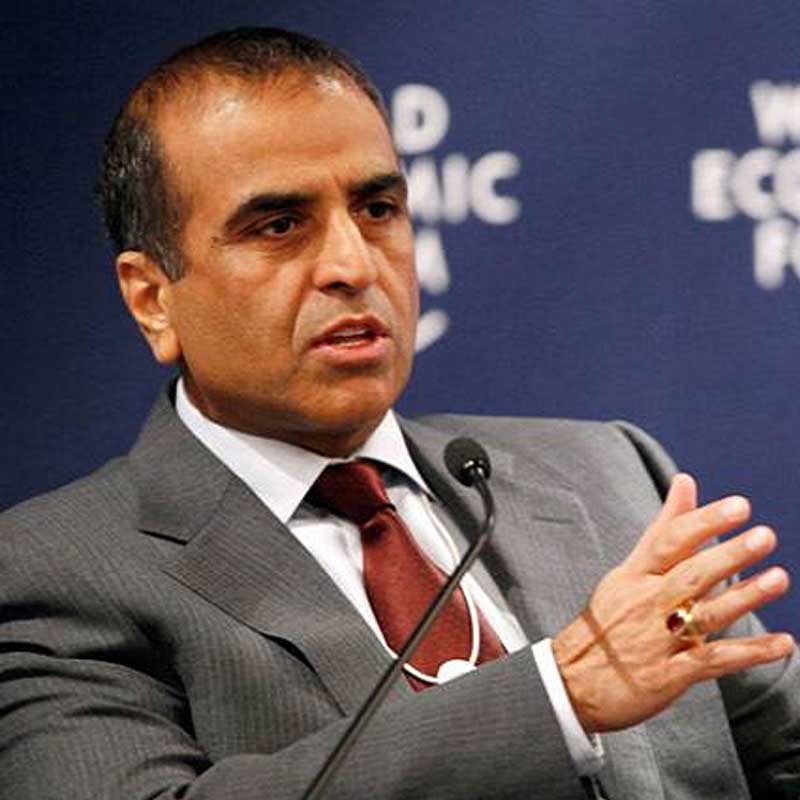
  • Sunil Mittal advocates hiking minimum tariff, strategic content deals for ARPU growth

    Sunil Mittal advocates hiking minimum tariff, strategic content deals for ARPU growth

    MUMBAI: India’s telecom industry has been bleeding losses for some time now. The entry of Reliance Jio in the market has only made things even more challenging. Airtel’s Sunil Bharti Mittal thinks 2020 could be the year when this haemorrhaging may stop. He also thinks that taking the lower table of tariff up and strategic content deals with online video platforms can help the industry to improve ARPUs which has been sliding continuously.

    In an interview with BloombergQuint at the World Economic Forum, Mittal said that getting more customers is necessary for telcos to drive up ARPUs. He mentioned Airtel’s recent move of limiting its minimum to Rs 35. If customers positively respond to the step, then Airtel may take it up to Rs 60 or 80.

    “There’s got to be a minimum ARPU coming in. Even for Reliance Jio, their minimum pack is Rs 50, there’s nothing below that. So you’ll have to keep taking the lower table up. And those people who are gouging a lot of data will have to start giving more than Rs 399. They were comfortably giving Rs 500-800,” Mittal added.

    Mittal also pointed out that right segmentation is a necessity and providing high-end customers access to content platforms like Netflix, Amazon, Zee or Wynk for music will also help telco players. He is also hopeful that the trend of ARPUs going up will be visible from 2019.

    After disrupting mobile broadband sector, Jio is now prepping up for its grand entry in fixed line broadband also. Although Mittal thinks there will be some turbulence in the sector, he is confident about surviving the upcoming storm on the back of previous experience. Despite the segment being a small part of the business, Airtel is planning to grow there. “We have been reducing our tariffs from Rs 1100 to now around Rs 700. So it will settle at around Rs 500 depending on where Jio comes in with pricing,” he commented.

    In the changing scenario, many telecom players both in India and outside India are eying on building a content library while some of them are venturing into content creation. Though Airtel is striking strategic partnerships with various OTT players, it isn't interested in investing in content creation.

    “We are not going to develop content on our own but we are partnering with Netflix, Amazon, Eros, Zee, Hulu. We are becoming the partner of choice as a telecom carrier for all the content players. That’s our strategy. We are not going to make investments in the areas we don’t understand very well. Similarly, we will go for e-commerce. Eventually, if that plays out then there are enough e-commerce companies who will seek us out,” Mittal commented on partnerships over acquisition of digital content.

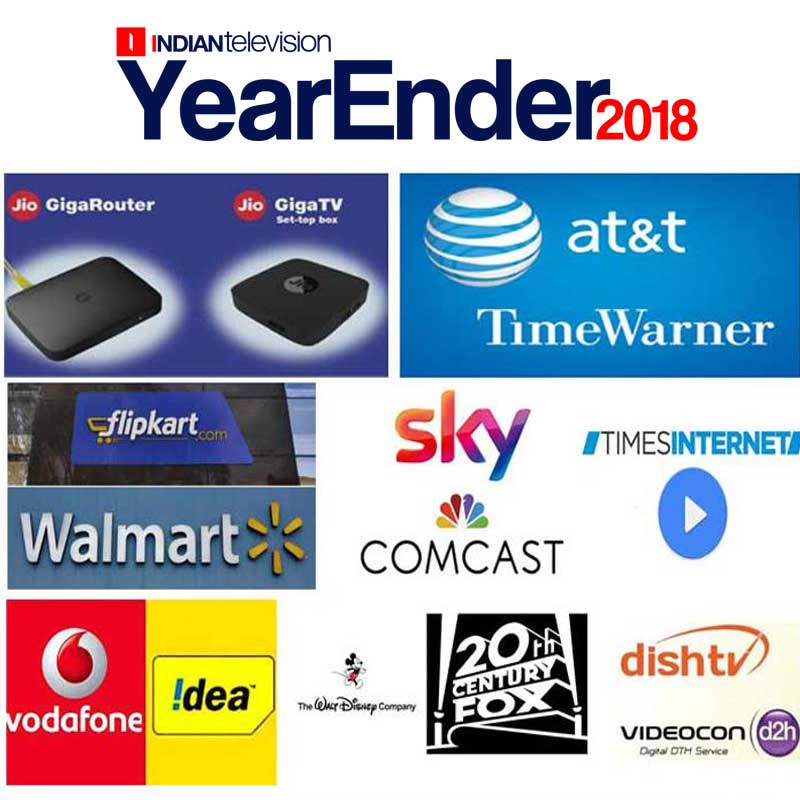
  • The year M&A changed the face of the media and entertainment industry

    The year M&A changed the face of the media and entertainment industry

    MUMBAI: The emergence of numerous streaming platforms and convergence between technology, media, and telecom companies shook the core of the media and entertainment business globally. Giant tech and telco players, on the back of their direct customer reach, started taking content creation and distribution a lot more seriously. Rapid change in content consumption pressurised traditional players to invest more in technology and focus more on the B2C model. The ongoing flux brought the industry on the brink of instability, leading to consolidation in the form of mergers and acquisitions.

    In the last couple of years, the nature of competition in the global ecosystem has witnessed a gradual swing. Organisations like Netflix, Amazon Prime and Google have brought a structural shift forcing traditional players to rethink their approach to content and distribution. Legacy brands upped the ante to attract and retain more consumers even through cross-border deals. PwC India partner Raman Kalra points that everybody in this world of media disruption is trying to be relevant in reach and scale, the two critical factors that are driving deals. To corroborate his thesis, he highlights the AT&T-Time Warner deal where the former, with a huge reach, wanted to scale up its content play with the collaboration.

    Closer to home, billionaire Mukesh Ambani’s RIL rode the TMT convergence wave better than most. India’s richest man started the year with a bang, intensifying TV18’s stake to 51 per cent by acquiring 1 per cent of Viacom18’s equity from Viacom Inc. for a cash consideration of $20 million. The RIL-owned Jio Infocomm also acquired a controlling stake in two large MSOs – DEN and Hathway – building ammunition for its FTTH’s foray. That’s not all, RIL also pocketed a small but significant five per cent stake in Eros International.

    E&Y media and entertainment advisory services partner Ashish Pherwani expects more deals to materialise in 2019.

    “Especially technology-driven deals because so many changes are happening in that space, and consolidation, led by inbound investments. There are three types of deal. One type of deal is happening in order to build efficiency and scale in the business, led by cost pressures. Another type of deal is around relevance and market share – to get a bigger slice of the market to monetise a larger base of consumers.  The third type of deal which is happening is basically technology driven – for access to technology that could drive competitive advantage in the digital future. Hence, the three reasons market share, efficiency, technology are driving the deals,” he adds.

    There were other interesting deals struck through the year that are likely to reshape the media and entertainment business going forward.

    Birth of the world’s second largest DTH company

    The Indian market wasn’t exempted from the global merger frenzy. The coming together of two large DTH operators – Dish TV India and Videocon d2h – was finally concluded this year, creating the largest DTH service provider in the country with a subscriber base of about 29 million. Apart from leveraging their individual strengths, it was expected that the combined entity would benefit from economies of scale. One of the biggest attractions for Dish TV as the acquirer was Videocon’s significantly higher average revenue per user (ARPU). Significantly, the combined entity’s ARPU was Rs 207 in the second quarter as opposed to Dish TV’s standalone ARPU of Rs 144 pre-merger. The deal also helped Dish TV position itself better when it came to negotiating with broadcasters.

    Decks cleared for FTTH warfare

    From formally launching FTTH service Jio GigaFiber to acquiring majority stakes in two large MSOs to speed up the rollout, the Mukesh Ambani-led Reliance Jio was definitely the centre of attention in 2018. Reliance Industries Ltd (RIL) made an investment of Rs 2,290 crore for 66 per cent stake in Den and Rs 2,940 crore for 51.3 per cent stake in Hathway. It will save RIL the cost of reaching out to customers as well as making the last mile connectivity easier in its ambitious bid of seizing control over India’s wired broadband business. With the launch of its telecom service, RIL gave rise to what many call ‘digital democratisation’. As the Jio juggernaut marked its entry into India’s multi-billion-dollar cable TV and DTH businesses, traditional players eyed the development with a healthy mix of scepticism and optimism.

    Rivals joined hands

    The Indian telecom sector this year saw the marriage of two giant companies, creating the country’s largest telecom company. In the month of August, Vodafone India and Idea Cellular completed the merger after getting approval from National Company Law Tribunal (NCLT). The consolidation of India’s telecom sector was a direct result of Jio’s relentless pricing war. Post the Idea-Vodafone deal, India’s telco business now comprises of just three players. Analysts expect the combined entity to yield better coverage than before as it would have access to a more robust ecosystem of cellular towers. COAI also believes that as competitive pressures drive consolidation, customers and the industry stand to benefit from the greater stability and better networks which will emerge. Surprisingly, a few years ago, the Indian telco sector had 13 operators.

    Bansals became billionaires

    Walmart gained a strong foothold in India’s this year as it completed its much-talked-about $16 billion acquisition of the country’s largest e-commerce company Flipkart. Poster boys of India’s start-up community Sachin and Binny Bansal became billionaires in a big win for Indian talent and home-grown businesses. Despite protests from traders across the country, as the deal could potentially harm their business, the Competition Commission of India (CCI)’s green signal came earlier this year. The biggest e-commerce deal globally bolstered Walmart’s repertoire in its war with Amazon internationally. With India being one of the most attractive retail markets in the world, a strong play here is bound to further boost the American behemoth in a rapidly changing environment.

    Times Group joined the streaming sweepstakes

    With almost major broadcasters and media companies trying to grab a slice of the hottest piece of the M&E business – OTT, the Times Group too jumped on the bandwagon. To get a stronger foothold in the space, Times Internet invested over Rs 1,000 crore to acquire a majority stake in video playback app MX Player. According to media reports, the company will introduce a streaming service within the app. The large cross-border deal which surprised the industry will definitely help Times Internet in the OTT race thanks to the huge base and popularity of MX Player in south Asian countries. With over 30 OTT players vying for consumers’ attention in India, the game has just begun with enough opportunities for new platforms. Earlier in the year, MX Player content head Gautam Talwar had told Indiantelevision.com that like many other OTT platforms, MX Player too wants to tap into the millennial audience. It wants to cater to users with 50,000 to 100,000 hours of premium curated licensed content along with a high focus on originals, he further added. 

    The telco takeover

    Giant wireless carrier and telco AT&T’s acquisition of content powerhouse Time Warner is just one example of how the lines between distribution companies and content creators are blurring. With the $85 billion deal, the telco gained ready access to the content pool of CNN, HBO, and Warner Bros.

    “Under the terms of the merger, Time Warner Inc shareholders received 1.437 shares of AT&T common stock, in addition to $53.75 in cash, per share of Time Warner Inc.1 As a result, AT&T issued 1,185M shares of common stock and paid $42.5B in cash,” said AT&T providing the financial details of the deal.

    Though the deal was first announced in 2016, it had to negotiate past several subsequent legal hurdles. The Donald Trump-led US Department of Justice (DOJ) even filed a lawsuit against AT&T and Time Warner to block the proposed merger. Following a six week trial, a US district court approved the deal without any conditions on 12 June and also urged the government to not seek any stay. The main argument of the US administration was that the merger would hand over too much power to AT&T, making the market less competitive.

    A once-in-a-lifetime deal

    Another blockbuster deal that came through this year was the $71 billion acquisition of 21st Century Fox assets by Disney. After a long and sustained bidding war with Comcast, the Mouse House got its hands on much of the Murdoch empire. “Combining the 21CF businesses with Disney and establishing new ‘Fox’ will unlock significant value for our shareholders,” 21st Century Fox executive chairman Rupert Murdoch said. The shareholders of both the companies approved the deal immediately, with foreign approvals and regulatory reviews now the final procedural hurdle.

    Disney is now in pole position to take on streaming giants like Amazon and Netflix with its OTT Disney+. The company has also already indicated its desire to stop licensing content to Netflix by ending the deal in favour of its own B2C service. Moreover, Disney now has majority control of Hulu, Endemol Shine Group and Star India, making it the most powerful content owner in the world. The reaction to the growth of OTT services has clearly shown that joining forces with rivals and competitors is not unacceptable anymore to survive in the market.

    Second time lucky

    After a failed attempt to buy 21st Century Fox, US cable giant Comcast won the bid for European entertainment biggie Sky. The former sealed the deal for a controlling stake in the British broadcaster with a winning bid of $40 billion. Analysts said that Comcast and Sky would become the biggest private sector provider of pay TV in the world with 52 million customers. Given the vast reach and growing customer base of Sky in Europe, Comcast took the step to expand its international business with it losing ground in the domestic market. This deal was a direct effect of cord-cutting as Netflix’s growth in the US has posed a major threat to the likes of Comcast. According to an analysis from Ampere, post the media mega-mergers of Comcast/Sky and Disney/Fox, two in every 10 dollars spent on content worldwide will now be spent by these two entities.

    The merger madness from 2018 is likely to continue in 2019, as corroborated by experts we spoke to. Not only would it be interesting to track which companies opt for consolidation, but 2019 will also give us a sense of how the deals from 2018 take shape and play out.

  • 5G to challenge 4G services: Jio President

    5G to challenge 4G services: Jio President

    MUMBAI: With time, third generation services (3G) were replaced by fourth generation services (4G) and Reliance Jio played a vital role in the transforming phase. And once again India’s youngest telecom company is eager to quickly roll out the ultra-fast fifth generation services (5G).

    While speaking to the Economic Times, Jio president Mathew Oommen spoke about the challenges which 4G will face after the deployment of 5G.

    Oommen explained, “Once 5G digital services arrive, business will be based on the actual value that the telcos offer a consumer in terms of digital solutions, content, and services.”

    He briefed about traditional pricing models being revamped, “4G will be challenged by the imminent wave of 5G services that will no longer be charged based on minutes, bits or bytes anymore.” Rather telcos would adapt to a new pricing mechanism which would look to measure the “overall revenue per subscriber” for a combination of digital services.

    With that being said, Jio believes that it’s high time for telcos to “either disrupt the marketplace or face disruption”.

    Oommen stated that “normalcy would soon get restored” in the telecom sector as once the telcos catch up with the technological advancement which will only increase usage that would drive compensation from newer services.

    The 5G spectrum allocations will take place by the second half of 2019 according to the government. Jio Chairman Mukesh Ambani recently had said that India would be ready for 5G services by 2020. Jio has indicated its eagerness to roll out 5G services as it seeks an early auction of 5G airwaves, whereas Bharti Airtel and Vodafone Idea want the auction dates to be pushed back to late-2019 and 2020, respectively.

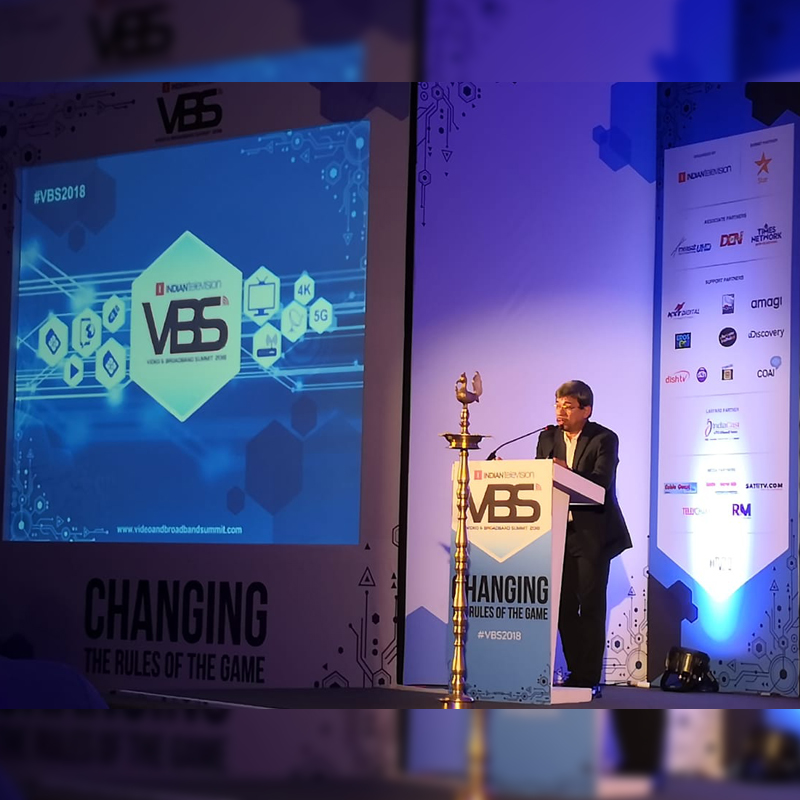
  • VBS 2018: Media & entertainment industry leaders address pressing issues on Day 1

    VBS 2018: Media & entertainment industry leaders address pressing issues on Day 1

    GOA: Rapid advance in technology and infrastructure, entry of disruptive forces and changes in consumption habits have led the Indian media and entertainment industry to major conversion. The interesting developments are attracting international players to invest in the market, with traditional domestic players adopting new strategies for growth. Where the industry is heading in the next few years is something everyone wants to know.

    To seek answers for several concerning questions, Indiantelevision.com brought together industry doyens on the first day of the Video and Broadband Summit. The conference dedicated to industry issues has been supported by esteemed broadcasters, technology companies as well industry bodies. All the speakers agreed that the VBS platform is the perfect stage to discuss relevant issues as well as to gain new insights while sharing their experience.

    Indiantelevision.com founder and CEO Anil Wanvari set the tone for the day with his welcome speech. He spoke about how demonetisation and GST put pressure on business in last couple of years. He also highlighted how the burgeoning OTT industry is throwing new challenges to traditional TV, cable and DTH operators along with the new tariff order that is likely to reshape the trajectory of the sector. He also added how a disruptive force like Jio FTTH is fueling the transformation.

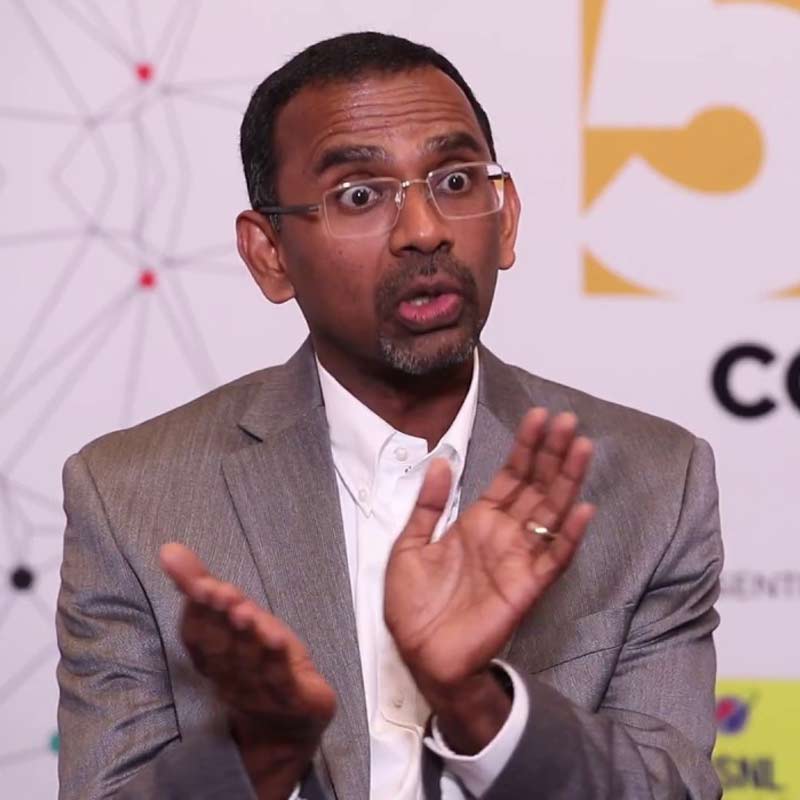
    The first session moderated by Anil Wanvari was about the future of digital delivery platforms where Tata Sky chief content officer Arun Unni, PwC India partner Raman Kalra and One Take Media founder and CEO Anil Khera participated. As the influence of video and broadband has become unmistakable now, Tata Sky recently rolled out a broadband service. While he was asked about how it stands out, Unni said customer centric nature of the business makes their service different. While broadband and telco players are throwing a challenge for distribution, Khera thinks India still has potential for DTH and cable growth owing to almost  90 mn households still unpenetrated by TV. Kalra said while pay-TV and OTT platforms will stay together, there will be a constant battle among players to stay relevant to consumers with proper content.

    In a fireside chat with Anil Wanvari, COAI director general Rajan Mathews spoke about various issues in the telecom industry. He said consumer choices are changing rapidly today, hence the model which is working at present, may get disrupted in future. He also spoke about the high cost of utilizing satellites in the country despite them being produced and launched at very low cost. Talking about 5G, he said it will take a while to be rolled out and added that it would be focusing on education, health, traffic management, smart cities and agriculture.

    Anil Khera who has now ventured into the value-added service space after spending considerable time in the DTH industry, explained the importance of this vertical and how DTH players are utilizing it.

    Another engaging session where audience also took an active part in the discussion, was about monetising TV in times of transition. ZEEL chief growth officer Ashish Sehgal, KMPG India media and entertainment partner and head  Girish Menon and TAM India CEO LV Krishnan spoke on the issue. “Only thing TV can't do is engagement which digital platforms allow but you cannot build your brand without TV,” Sehgal made a very important comment.

    The eventful day ended with a fireside chat between Viacom18 COO Raj Nayak and Anil Wanvari. Nayak shared glimpses of his inspirational journey in the industry and Viacom18 where he was the brainchild of several successful endeavors. Talking about the future, he said it will belong to those who can create content which is compelling. Moreover, he also said content cost is not going down but it's going up across broadcasters. Giving the example of Netflix’s change of fortune with House of Cards, he added that for changing the trajectory of the business, delivering two-three golden nuggets every year are enough.

    For more insights stay tuned for the updates from the second day of video and broadband summit 2018!

  • TRAI to meet telecom players next month to fix 2019 agenda

    TRAI to meet telecom players next month to fix 2019 agenda

    MUMBAI: To fix the agenda to be taken up in next calendar year, Telecom Regulatory Authority of India (TRAI) is expected to meet telecom industry players next month. The discussion, which is now an annual feature, is likely to involve a wider set of players in the telecom sector this time including operators, infrastructure providers and others.

    “The meeting will take place next month. We will talk to them and ask them about the items they think should be taken up in the next calendar year,” TRAI chairman RS Sharma said on Monday on the sidelines of an interactive session on ‘New Regulatory Framework for Broadcasting and Cable Services’, according to a PTI report.

    As Sharma noted, this time it would not be limited to telecom service providers alone but a broader consultation to figure out the new areas to be deliberated next year.

    While the regulatory body launched a consultation to explore the regulatory framework for OTT apps like WhatsApp, Facebook and Google Duo that provide calling and messaging services similar to that by telcos, he also added that TRAI will be able to finalise its views on the issue of a regulatory framework for OTT players in the coming 5-6 months.

    Supreme Court recently dismissed a petition challenging TRAI’s March 2017 regulations and tariff order paving the way for implementation of the order for the broadcast sector. Sharma while addressing the interactive session said the new comprehensive framework for the sector entailing tariffs, service quality and interconnect aspects, is aimed at “growth”.

    “It is not aimed at hurting players but ensuring growth of the sector in an orderly manner and keeps the interest of stakeholders in mind,” Sharma said.

    Local cable operators and multi system operators raised concerns on issues ranging from operationalising the new norms to ‘a la carte rates’. He urged players to give the new framework a fighting chance along with cautioning that technological changes, which improve service quality and enhance capacity, can also be disruptive.

  • Adarsh Nair appointed chief product officer of Bharti Airtel

    Adarsh Nair appointed chief product officer of Bharti Airtel

    MUMBAI: According to an Economic Times report, Adarsh Nair has been appointed as Bharti Airtel’s new chief product officer (CPO). Before this, Nair was the head, product and growth of US-based trucking start-up Convoy Inc. Now at Bharti Airtel, Nair will report to the company’s CEO Gopal Vittal.

    The CPO position at Bharti Airtel has been vacant since the previous product head Anand Chandrasekharan quit to join Snapdeal three years ago.

    Speaking to ET, a top company executive said that Nair will be “custodian of Bharti Airtel’s digital products and platforms” and work closely with the leadership team and partners to identify and prioritise market opportunities.

    Another top executive at Airtel said that the products head position had now evolved and taken on a much more strategic role. Chiefly, since the telco decided to evolve into a digital company as part of its Airtel 3.0 vision, Airtel would be deploying new age technologies and this is where the products head would come into play.

    With Airtel’s ongoing digital transformation, the CPO leadership position is reviving, said the executive.

  • TRAI, telco chiefs to meet in December over OTT regulation

    TRAI, telco chiefs to meet in December over OTT regulation

    MUMBAI: The Telecom Regulatory Authority of India (TRAI) is scheduled to meet top executives of telcos in the month of December. The meeting is being lined up in order to discuss plans for 2019. The regulator may also issue a consultation paper next week on whether over-the-top (OTT) apps such as Skype, WhatsApp and Google Duo should be regulated.

    Speaking to Economic Times, TRAI chairman Ram Sewak Sharma said, “We are going to call chief executives of telecom service providers in the month of December to actually finalise the agenda and roadmap for the next year.”

    The regulator will also separately meet the Indian broadcasting industry stakeholders and multiple system operators, informed Sharma.

    As these apps are already being regulated under the Information Technology Act, telcos have demanded that OTT communication apps should be brought under a regulatory regime similar to theirs since they provide comparable services without the liabilities associated with being a licence holder.

    TRAI chairman confirmed that they were coming out with a consultation paper next week as the final document was almost ready.