Tag: telecom

  • Aircel and Micromax join hands to share channel and retail network

    Aircel and Micromax join hands to share channel and retail network

    BENGALURU:  Telecom player Aircel and Indian handset supplier Micromax announced a strategic partnership with the aim to drive data growth. Under this new partnership, Aircel and Micromax will share their channel and retail networks, sales resources and run an integrated device sales activation program. The announcement was made simultaneously in four cities in India – New Delhi, Mumbai, Bengaluru and Chennai today.

    Also, the duo introduced reverse bundling handset offers worth Rs 12,000 per month for every new Aircel customer. Aircel’s focus on data innovation and its expertise in mobile network, along-with Micromax’s expertise in device marketing will redefine the user experience and take data penetration to the next level claim the companies.
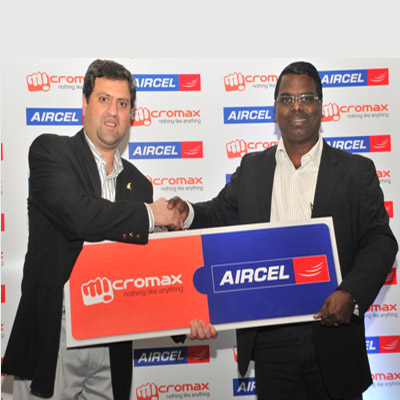
    Micromax business head – feature phone Khaja Muzaffarullah and Aircel Circle Business Head Kadhiravan

    In Bengaluru, Aircel Circle Business Head, Karnataka, Kadhiravan K, said, “India is at the cusp of a data revolution and device tie-ups will strengthen the telecom ecosystem in the country, which is critical to drive data penetration.  According to a recent study, by the year 2020, mobile internet users are set to grow four – five times and smartphone penetration is set to increase five times to 50 per cent in India. Affordability in devices will give a rise to data proliferation which will be the main revenue generator for both telecom operators as well as handset manufacturers in the near future.”

    “Aircel recognises the importance of smartphone devices to drive data usage. In line with that, it is our focus to get into partnerships with leading smartphone device manufacturers in an endeavor to bring to our customers exciting bundled products. In this exclusive partnership with Micromax, we will share their robust channel and retail network to deliver innovative and best value for money products and services,” added Kadhivaran.

    At present, mass media communications will be limited to print media by Aircel and Mircomax individually, where each company will mention the other in their advertisements. Since the festive season is not very far off, a joint multimedia ATL and BTL campaign will be launched before the Durga Pooja/Duhessara and Diwali festivals revealed a source.
  • Merger and Acquisition Policy for Telecom by mid-October: Sibal

    Merger and Acquisition Policy for Telecom by mid-October: Sibal

    NEW DELHI: The government hopes to announce its merger and acquisition policy for telecom companies by mid-October.

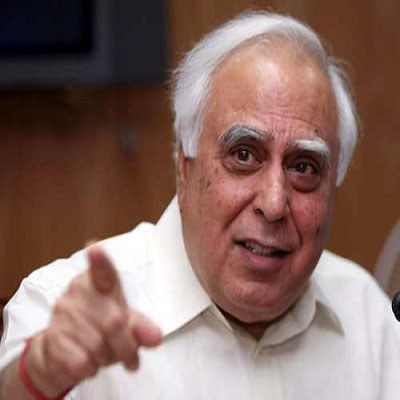
    Communications and Information Technology Minister Kapil Sibal said he had wanted them to in place by the middle of September but this had not been possible.

    Speaking at the Indian Women’s Press Corps, he said the Department of Telecom has plans to meet industry representatives before releasing the final guidelines.

    Meanwhile, Sibal said his top priority was to get Post Banks started in rural area. “Something that is very close to my heart is to get post bank in place for rural India. All post offices should also function as banks. I think we will be able to serve the rural economy and rural folk much better,” Sibal said.

    The Department of Posts has applied for a banking licence. The approval of banking licence by the Reserve bank of India is expected to triple bank branches in the country.

    The Minister wants to ensure that the “next auction is not just successful but phenomenally successful”.

    For the financial year 2013-14, government expects revenue of Rs 40,847.05 crore from other communication services, which include receipt from spectrum sale and one-time spectrum fee levied on old players for holding airwaves frequencies in addition to quantum they were allocated with licences.

    Sibal said that his ministry is working on a policy framework for Optical Fibre Network under which 250,000 village panchayats in the country will get connected by 2014. He wants to move the fibre optics policy framework as quickly as possible so that 600 universities and 3,500 colleges can also be connected with dedicated national knowledge network.

  • The Indian Media Business gets a new edition

    The Indian Media Business gets a new edition

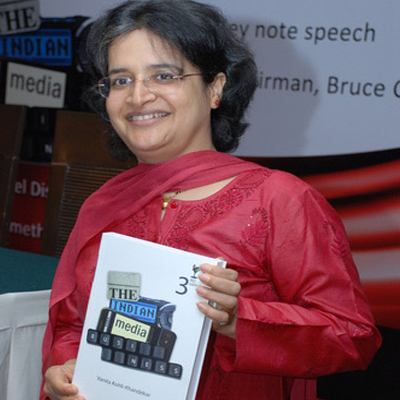
    MUMBAI: Her tome has become a reference book for students of Indian media courses. Media watcher Vanita Kohli-Khandekar released the fourth edition to her book on the Indian media business earlier this month. It has been titled matter of factly The Indian Media Business (TIMB) like in the past.

    She, however, reveals that things are different this time around in the book. Says she: “This edition has three major changes. One, there is a completely new chapter on digital media and I have dropped the chapters on telecom and internet. Two, I have focused a lot on regulation since it is very critical at this stage of the industry’s growth. And three, I have tackled a whole lot of the textural issues whether it is falling standards in news or the rising quality of Indian cinema in more detail.”

    TIMB gives a perspective and information to readers on eight segments: print, TV, film, radio, music, digital, outdoor, and events. It presents business history, current dynamics, regulation, economics, technology, valuations, case studies, trends (Indian and global) and a clear sense of how the business operates.

    The outstanding feature of the fourth edition is the chapter on digital media – arguably, the first ever serious and in-depth look at digital media from a comprehensive business perspective.  
    “This is the first time that anyone has focused on the progress of digital media in such detail, as there is no conceptual framework for the same. This chapter took a lot of effort and research,” adds Vanita.

    TIMB’s fourth edition tackles regulation in more detail than any of the previous ones. There is one large case study on the quality of regulation in India and several case-lets such as the ones on copyright law, defamation law and how it works for social media. Additionally, there are case-lets on the changes in readership methodology, on the trouble with news broadcasting and on the rising power of Hindi newspapers and the impact of digital on both print and TV among others.

    “At this stage of the growth in the industry the focus on good regulation is critical, and that can be seen in television where digitisation has finally been mandated and will have a huge impact on the top-line of the industry. So this time, this edition has a lot of focus on regulation as against earlier editions,” Vanita expounds.

    Sage Publications has been publishing TIMB for the past 11 years now. The book is also available on Flipkart.com, Amazon.com and Infibeam.com at a tab of Rs 650.   “I believe that this book will do better online as it is not in the realm of fiction. It is non-fiction and for a very specific audience,” says Vanita.

    In all 10,000 copies of the previous three editions have been sold thus far.

    Journalist, columnist and writer for Business Standard and Mid-Day, Vanita has been tracking the Indian media and entertainment business for over a decade now. Her earlier stints include one at Businessworld and Ernst & Young. A Cambridge University fellow (2000), Vanita teaches at some of the top communication schools in India as well.

    “For me professionally, it brings a lot of rigor to my work. Since I do the book every two years it forces me to sit back and read a lot of material which I would not have been able to read on the job, and this enables me to build phenomenal perspective. I ended up getting many story and column ideas while doing the research and analysis so it feels good,” Vanita exults.

    Vanita highlights that writing the book disciplines her as far as research and analysis go, and for her the whole idea of the book was that it helps those in the periphery of the media world – whether foreigner or student – get an understanding of it. A noble intent, and which many would agree has helped this generation of media professionals.

  • Mogae launches mobile couponing ecosystem

    Mogae launches mobile couponing ecosystem

    MUMBAI: Mogae Media today announced that its MoCoupons business vertical has signed up over 2000 grocers and general merchants in Delhi in its very first month of operation. MoCoupons is Mogae’s mobile couponing ecosystem by which mobile subscribers receive discounts. Hitherto, while mobile discount coupons could be originated by different brands, the encashing of the discount, or the offer was limited to company owned outlets which are very few in numbers.

    MoCoupons is a major step forward in the last yard connectivity between consumers and brands,” says Tanya Goyal, Executive Director, Mogae Media. “We at Mogae have invested a lot of time and money in creating an end-to-end solution for FMCG brands which have a large number of retail outlets that they need to reach across dispersed geographies. We can now target not only the desired customer profile for FMCG companies, but more importantly fulfil the redemption of the coupons through on-ground tie-ups with the local kiryana stores”.

    The MoCoupons couponing system not only serves, tracks, validates and encashes coupons delivered on the mobile to consumers, but also gratifies the trade in one complete transaction loop. The entire system has been developed in-house by Mogae Digital, the sister company of Mogae Media.

    “We have a large field force out in Delhi signing up grocers, general merchants and OTC pharmacies. In the first month we have crossed 2000 signups. We are currently testing the coupons of two of our partner FMCG companies. In the month of September we will cross 4000-5000 signups in Delhi and NCR,” adds Tanya Goyal.

    Mogae Media plans to cover all the metros by end of 2013. In the next 12 months thereafter, MoCoupons will extend to top 20 cities across India.
    Mogae Media, co-promoted by Sandeep and Tanya Goyal, former India JV partners of Dentsu, raised Rs 100 crores in private equity earlier this year from Multiples. Mogae Media are the sole and exclusive partners of India’s largest telecom operator, Airtel for mobile monetization. Today Mogae Media handles over 120 brands for mAdvertising.

  • Spectrum is a valuable national revenue and cannot be given free, says apex Court

    Spectrum is a valuable national revenue and cannot be given free, says apex Court

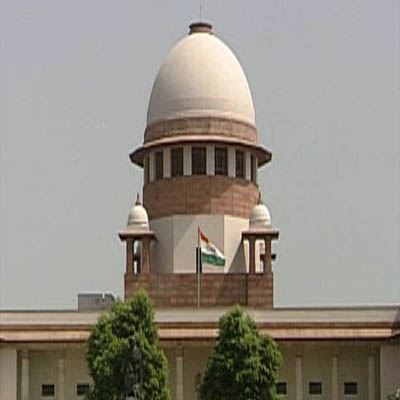
    NEW DELHI: Holding that spectrum is a valuable national resource and not meant for charity, the Supreme Court has asked the government to explain reasons allocating additional spectrum to GSM telecom operators allegedly free of cost.

    A bench headed by Justice G S Singhvi said: “Spectrum is taken by the Centre from the army on the name of developing telecom sector and to provide service to the common man.”

    “The price of spectrum is thousands of crores. It is a national resource and it cannot be alloted free of cost. You must follow due procedure for allocation of natural resources,” the bench said.

    It also imposed a cost of one lakh rupee each on Centre and seven telecom companies, including Bharti, Vodafone, Reliance and Idea Cellular, for not filing their response during the last one year on a plea challenging allotment of excess spectrum.


    “More than a year has passed but you have filed counter. The issues raised in the petition are serious and requires serious consideration,” the bench said asking the parties to deposit the money in the Supreme Court Legal Services Authority.

    The court was hearing a petition seeking cancellation of 2G spectrum beyond 2×4.5 MHz for metros and 2×4.4 MHz for other circles allocated since 1996 to the telcos without charging additional fee.

    The petitioner alleged that while allotting additional spectrum, the Centre ignored its own order of 1 February 2002, which said that “additional allocation could be considered only after a suitable subscriber base, as may be prescribed, is reached.”
    In another case, the Court rejected several petitions seeking recall of its 11 April 2011 order that barred the Delhi High Court from entertaining any plea against orders of Special CBI court hearing 2G cases.

    Pronouncing the judgment, Justice Radhakrishnan said it would be in the larger public interest and in the interest of the accused as well that the trial should proceed unhampered on day-to-day basis.

    Rejecting the pleas of Shahid Balwa, Vinod Goenka, Rajiv Agarwal, Asif Balwa and Ravinder Kumar Chandolia, a bench comprising of Justice G.S. Singhvi and Justice K.S. Radhakrishnan also rejected the plea for framing guidelines on the monitoring of investigations by the apex court. The court said it was only monitoring the investigation being undertaken by the Central Bureau of Investigation and the enforcement directorate and not monitoring the trial in 2G cases.

    The apex court by its April 2011 order had said: “We also make it clear that any objection about appointment of Special Public Prosecutor or the Assistant Advocate or any prayer for staying or impeding progress of the trial can only be made before this court and no other court shall entertain the same. The trial must proceed on a day-to-day basis.”

    The petitioners have sought the recall of the latter part of the order which had said: “…any prayer for staying or impeding progress of the trial can be made only before this court and no other court shall entertain the same. The trial must proceed on a day-to-day basis.”

    The petitioners had also sought vacation of a 9 December 2012, order by which the apex court had stayed all the proceedings before Delhi High Court arising from the order of the 2G special court. The apex court had reserved its order on 21 August 2013.

  • Radiation norms non-compliant mobiles can no longer be sold in India

    NEW DELHI: The government, which had introduced stringent mobile radiation norms from 1 September last year, has now said in new norms that non-complaint phone makers will not be permitted to operate in India.


    Companies manufacturing or importing mobile phones for sale in India will have to ensure that the handsets are compliant with new norms. In the EMF (Electromagnetic Frequency) Radiation Standards issued last year, mobiles to be manufactured from 1 September 2012 were to have one tenth of the radiation levels compared to the then mobiles.

    The government had also said at that time that the mobile handsets with existing designs which were compliant with 2.0 W/kg averaged over 10 gram of human tissue would continue to co-exist up to 31 August 2013. Thereafter, only the mobile handsets with revised SAR value of 1.6 W/kg would be permitted to be manufactured or imported in India.


    It is expected that this may also help in curbing illegal imports and help Indian manufacturers such as Micromax, Karbonn, Lava and Spice to avoid pricing pressure in the market since they will not compete with lesser known rivals.


    Under the new rule put in place by the Communication and Information Technology Ministry, the exposure of radiation emitted from a mobile phone over a gram of human tissue should not be more than 1.6 watt if a consumer uses it for six minutes.


    All companies will have to display radiation emitted from mobile phones on the handset in terms of SAR (specific absorption rate) unit. According to a Department of Telecom official, no fresh stock of non-compliant mobile phones will be allowed to be sold from 1 September.


    Bureau of India Standards is also working on certain norms which are expected to provide clause for seizure of non-compliant handsets, the official said. These guidelines made India one of the select few countries in the world to have stringent, established in the interest of public health, for mobile towers and mobile handsets. Indian standards are now 10 times more stringent than more than 90 per cent countries in the world.


    Furthermore, the Manufacturer‘s mobile handset booklet will contain safety precautions. All cell phone handsets sold in the market in India will comply with relevant standards and shall be available in hands free mode.


    A scientific study in India-specific context is being undertaken jointly by the Department of Telecom and Department of Science and Technology in collaboration with the Indian Council for Medical Research, the Ministry of Environment and Forests, and the Science & Technology Ministry to derive norms based on credible scientific evidence taking into account diversity of Indian social context.


    While guidelines for consumers on mobile handset usage have been issued and placed on the DoT Web site (http://www.gov.dot.in), they include keeping distance – Holding the cell phone away from the body to the extent possible; using a headset (wired or Bluetooth) to keep the handset away from and not pressing against the head, and limiting the length of mobile calls and using text.


    Radio Frequency (RF) energy is inversely proportional to the square of the distance from the source – being very close increases energy absorption much more. Other precautions include putting the cell phone on speaker mode and not carry a mobile phone that is close to the chest or pants pocket. When a mobile phone is switched-on, it automatically transmits at high power every one or two minutes to check (poll) the network.

  • Next version of Aakash tablets to be ready by January 2014

    Next version of Aakash tablets to be ready by January 2014

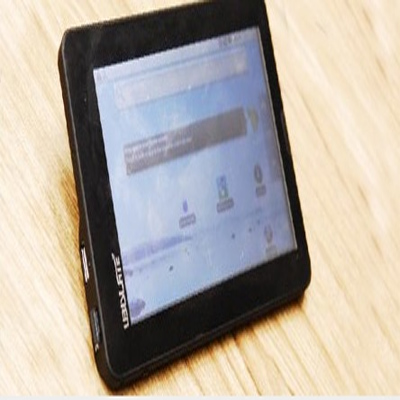
    NEW DELHI: The government has finalised specifications of next version of low-cost tablet Aakash which would be ready by January 2014, Telecom and IT Minister Kapil Sibal has said.


    “The generation four Aakash is ready, all the specifications are frozen,” Sibal said while addressing at the Telecom Summit.


    The minister also said that around 12 manufacturers from around the world are ready to make the tablet in India.


    “There is no problem in terms of manufacture. In fact lines are ready for manufacture, what they need is orders. Now that specifications are frozen, we hope that the Aakash will be available to the people of India by January 2014,” he said.


    The Directorate General of Supplies and Disposals (DGS&D) will start the process for orders, he added.


    Under the proposed specifications, the latest version of Aakash should be capable of supporting 4G services, phone calling features, 4 GB in built storage and Bluetooth connectivity.

  • TRAI reduces roaming charges for calls and SMSs

    TRAI reduces roaming charges for calls and SMSs

    MUMBAI: Telecom Regulatory Authority of India (TRAI) on Monday announced reducing the national mobile phone roaming charges. The regulator said there would be no free national roaming as of now, but it had come out with conditional free national roaming plans to bring down cellphone roaming charges, reports said.

    “TRAI has reduced ceilings for national roaming calls and SMS and instituted a new regime for providing flexibility to telecom service providers to customise tariffs for national roamers through STVs (Special Tariff Vouchers) and Combo Vouchers,” the regulator said.

    It has also mandated two types of free national roaming plans to be provided by all telecom service providers. These changes will come into effect from 1 July 2013, it said.

    “Mandating a fully free roaming regime is simply not practicable at this juncture. Compelling a transition to a fully free national roaming regime would result in telecom service providers not being able to recover their costs from roamers,” the regulator said.

    In turn, telecom service providers would pass these costs on to all consumers (predominantly non-roamers) through higher tariffs, it added.

    In 2007, TRAI had prescribed the ceiling tariffs of Rs 1.40 per minute for outgoing local calls and Rs 2.40 per minute for outgoing STD calls while on national roaming. These ceilings were reduced to Rs 1 per minute and Rs 1.50 per minute respectively, it said.

    Similarly, the ceiling tariffs for incoming calls while on national roaming have been reduced from Rs 1.75 per minute to Rs 0.75 per minute, it said.

    Tariffs for outgoing SMS while on national roaming, which were earlier under moderation, have now been capped outgoing SMS (local) at Rs 1 per SMS and outgoing SMS (STD) at Rs 1.50 per SMS. Incoming SMS will remain free of charge, TRAI said.

  • abm communications completes 10 years in advertising; dons new look

    abm communications completes 10 years in advertising; dons new look

    NEW DELHI: abm communication, which has completed 10 years in the field of communication, has unveiled its new logo that encapsulates its core mission of ‘Raising the brand value of its Clients‘.

    The new logo design marks a new beginning for the agency whose mandate is to focus on growth, diversification and pan-India operations.

    Over the years, the Gurgaon-based agency promoted by its MD Abhijit Basu has focused upon building integrated marketing solutions for the brands that it handles. Today, ten years since its inception, abm commands a large footprint both as a communication agency and a marketing solution provider.

    Commenting on the occasion Basu said, “This moment, as we complete 10 years, the memories of the challenges, the efforts and the victories instill a sense of pride for the entire team because of which abm has grown by leaps and bounds. Today, abm represents a team of people with a fanatic‘s faith in the power of advertising. The confidence that our clients repose in us is also exhibited by the new business acquisitions which come mostly as references from our clients. In the coming years, we aim to further this association and consolidate our market presence”.

    This decade old communication agency started with a team of two people and one client. Today, the count at abm communication has grown to include a 50-member team serving 19 clients.

    At abm, the intent is to create result-oriented and clutter-busting pieces of creative communication that command attention. The accent is on solutions that profoundly affect consumer thinking and behavior.

    The company offers sharp, integrated and cost-effective solutions and consistently provides strategic solutions based on the understanding of the target. The intent of the Agency is to create ideas to fill the need of the brand and use every single element of communication, so that every penny spent is worth more to its clients. The methodology is simple, yet effective. Beginning by identification of the core idea, the Agency goes on to implement the core idea into every possible communication element and ties it all together in the appropriate medium.

    “The next thrust area for business that the Agency has identified is the communication in the digital medium, new activation domains etc. Now, the Agency is concentrating to work towards real, solid growth and recognition”, Basu further added.

    abm today enjoys a client portfolio across industry verticals like Fashion, Interior, Healthcare, Telecom, FMCG, Consumer Durables, Finance, Retail and Real estate. Some of the clients that abm handles are Dr Lal PathLabs, Axiss Dental, Dalmia Cement, SBL, Guardian Pharmacy, Muthoot Group, Evok, Oxigen, Pearl Academy, Urban Country, Aspiring Minds, SG, Manohar Lal Jewellers, Khaaja Chowk, and Moen.


  • Obama nominates Tom Wheeler as next FCC chairman

    Obama nominates Tom Wheeler as next FCC chairman

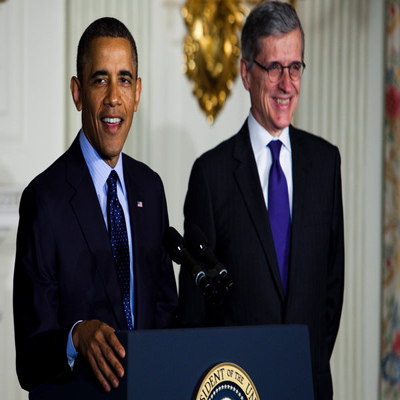
    MUMBAI: US President Barack Obama has nominated Tom Wheeler, a technology investor and former head of two major trade associations, as the next chairman of the media watchdog Federal Communications Commission (FCC).


    Obama announced Wheeler’s nomination at the White House and joked, “Wheeler is the only member of both the cable television and the wireless industry hall of fame. So he’s like the Jim Brown of telecom or the Bo Jackson of telecom”.


    If the US Senate approves Wheeler’s nomination, he will replace outgoing chairman Julius Genachowski, who had announced in March that he would step down from his post after four years. Until the Senate vote occurs, democratic commissioner Mignon Clyburn will serve as FCC interim chairwoman after Genachowski leaves in the middle of the month.


    National Association of Broadcasters (Nab) president and CEO Gordon Smith said, “Nab welcomes the nomination of Tom Wheeler as chairman of the FCC. He has the experience and temperament to serve the agency with distinction, and we look forward to working with him.”


    Meanwhile AT&T has called Wheeler an inspired pick, saying that his high intelligence, broad experience, and in-depth knowledge of the industry may, in fact, make him one of the most qualified people ever named to run the agency.