Tag: telecom

  • Telecom giant Verizon buys Yahoo for $4.8 billion; to merge Yahoo and AOL

    Telecom giant Verizon buys Yahoo for $4.8 billion; to merge Yahoo and AOL

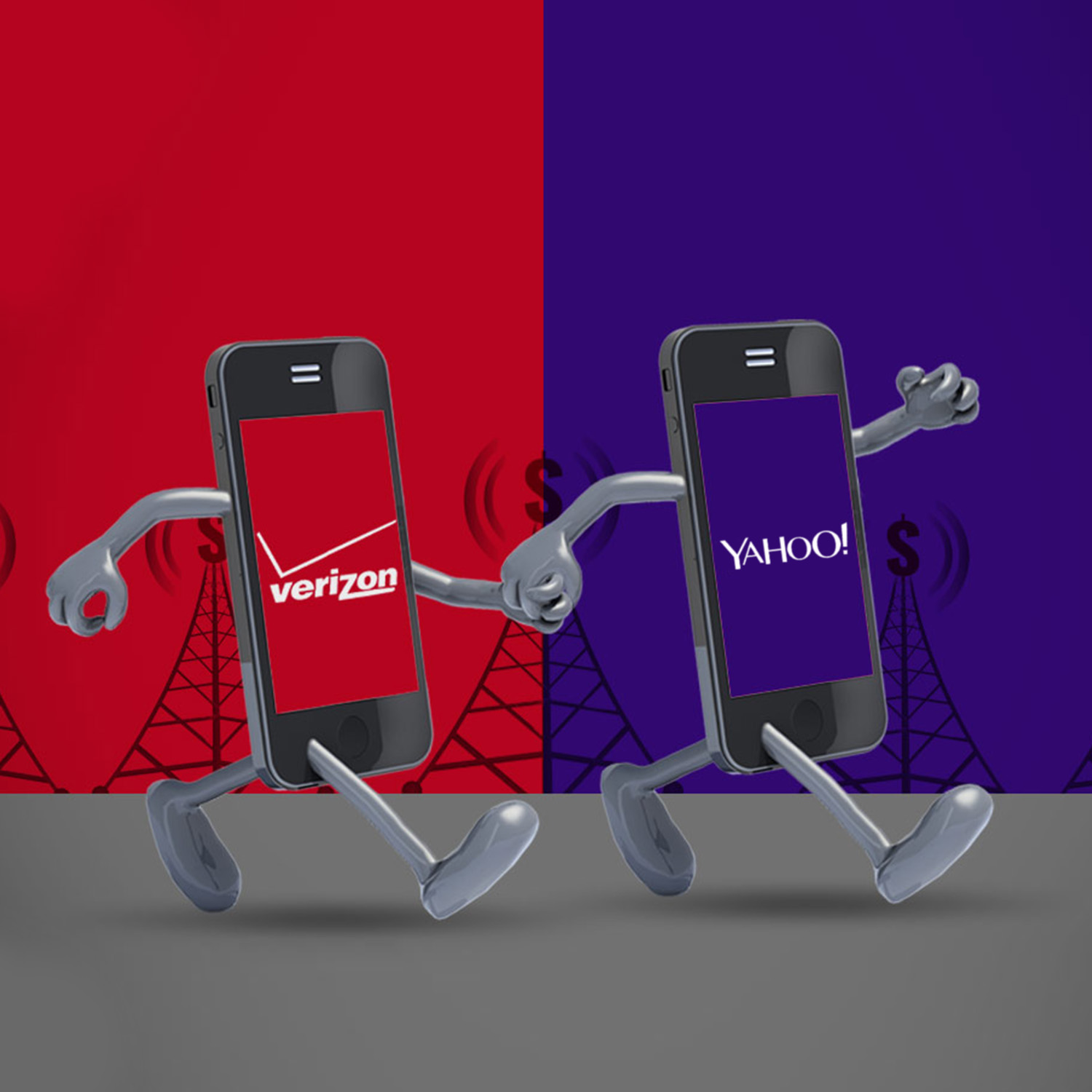
    MUMBAI: After much anticipation and speculation, word is out that US based telecommunication giant, Verizon will buy Yahoo for USD 4.83 billion in cash at the end of a closely-scrutinized, six-month sale process.

    Yahoo first put itself up for sale in February and it fielded multiple bids from almost 40 different types of buyers including AT&T; Quicken Loans founder Dan Gilbert with financial backing from Berkshire Hathaway CEO Warren Buffett; and private equity firms TPG and Vector Capital Management.

    But finally Yahoo informed the other bidders on Saturday that it has sealed the deal with Verizon.

    “Yahoo is a company that has changed the world, and will continue to do so through this combination with Verizon and AOL,” said Yahoo CEO Marissa Mayer in a press release. “The sale of our operating business, which effectively separates our Asian asset equity stakes, is an important step in our plan to unlock shareholder value for Yahoo. This transaction also sets up a great opportunity for Yahoo to build further distribution and accelerate our work in mobile, video, native advertising and social.”

    When it comes to how Yahoo, that was the front door to the web for many in the 90s and the early 2000s, and its internal functioning, Verizon has a few plans. It has been decided that Yahoo and AOL will be brought together as a new group that AOL’s CEO Tim Armstrong will supervise. It must be noted that Verizon has earlier bought AOL for USD 4.4 billion last year.

    “Our mission at AOL is to build brands people love, and we will continue to invest in and grow them,” he said in a press release. “Yahoo has been a long-time investor in premium content and created some of the most beloved consumer brands in key categories like sports, news and finance… We have enormous respect for what Yahoo has accomplished.”

    Marissa Mayer is not expected to stay on board, but that has not yet been confirmed by either company.

    Verizon’s acquisition is of “core” Yahoo, which includes search, email, advertising products, and the media business (including Yahoo Finance).

    Verizon has made a string of acquisitions in an apparent effort to move beyond a telecom provider into a media-and-mobile-advertising powerhouse that can compete with Google. Many believe buying Yahoo is a savvy move for Verizon. In addition to getting the fifth-most visited web site in the US, Verizon gets assets like Tumblr, Flickr, Polyvore and digital ad tools Flurry and BrightRoll.

    (Sourced from nytimes.com and Yahoo Finance)
  • Indian digital ad spends to touch Rs 7,044 crore: IAMAI-IMRB report

    Indian digital ad spends to touch Rs 7,044 crore: IAMAI-IMRB report

    MUMBAI: Fuelled by the smartphone explosion and bandwidth growth to consume digital video content in the country, the digital advertising market in India is projected to reach Rs 7,044 crores by December 2016  growing at a CAGR of 35 percent as per the ‘Digital Advertising in India’ report, which is jointly published by the Internet and Mobile Association of India (IAMAI) and IMRB International.  The digital advertising market was estimated at Rs 5,200 crores by the end of December 2015 according to earlier reports.

    The report finds that digital advertising spend is about 12 per cent of the total advertising spends in the country.  In terms of volume, e-Commerce palyers lead the digital ad spends with Rs 1,040 crores, followed by Telecom and BFSI. However, a comparison of these verticals in terms of share of spends on Traditional versus Digital show that BFSI organizations incurred the highest share on digital advertisement spends. 40 percent of their overall advertising spends was on Digital followed by e-Commerce, Telecom and Travel.

    In 2014, search ads constituted 30 per cent of the overall ad spends followed by Display ads at 23 per cent and Social Media at 18 per cent. The report finds that Search continued to lead in 2015 with spends close to Rs 1,488 crores. Social Media spend was close to Rs 940 crores. Spend on video ads such as YouTube also showed huge gains in 2015 and accounted for 17 percent of the overall ad spends in the digital space. This has been driven by higher Internet speeds available to the consumers coupled with an increase in mobile advertisements. As these trends continue, video advertisement is expected to gain further in 2016.

    It isn’t just IAMAI that has high hopes on the rapidly growing digital advertising spends in the Indian market. It must be noted that the earlier released FICCI KPMG report pegged Digital Advertising at Rs 8,110 crores by the end of 2016 growing at a CAGR of 33.5 per cent, the highest growing medium of all. The report also suggested that the evident shift would be towards mobile and video advertising backed by the opening up of bandwidth in the country by 2020. The report estimated that by 2020 digital advertising will touch Rs 255.2 billion (Rs 25,520 crore) and contribute 25.7 percent of the total advertising revenue.

  • Indian digital ad spends to touch Rs 7,044 crore: IAMAI-IMRB report

    Indian digital ad spends to touch Rs 7,044 crore: IAMAI-IMRB report

    MUMBAI: Fuelled by the smartphone explosion and bandwidth growth to consume digital video content in the country, the digital advertising market in India is projected to reach Rs 7,044 crores by December 2016  growing at a CAGR of 35 percent as per the ‘Digital Advertising in India’ report, which is jointly published by the Internet and Mobile Association of India (IAMAI) and IMRB International.  The digital advertising market was estimated at Rs 5,200 crores by the end of December 2015 according to earlier reports.

    The report finds that digital advertising spend is about 12 per cent of the total advertising spends in the country.  In terms of volume, e-Commerce palyers lead the digital ad spends with Rs 1,040 crores, followed by Telecom and BFSI. However, a comparison of these verticals in terms of share of spends on Traditional versus Digital show that BFSI organizations incurred the highest share on digital advertisement spends. 40 percent of their overall advertising spends was on Digital followed by e-Commerce, Telecom and Travel.

    In 2014, search ads constituted 30 per cent of the overall ad spends followed by Display ads at 23 per cent and Social Media at 18 per cent. The report finds that Search continued to lead in 2015 with spends close to Rs 1,488 crores. Social Media spend was close to Rs 940 crores. Spend on video ads such as YouTube also showed huge gains in 2015 and accounted for 17 percent of the overall ad spends in the digital space. This has been driven by higher Internet speeds available to the consumers coupled with an increase in mobile advertisements. As these trends continue, video advertisement is expected to gain further in 2016.

    It isn’t just IAMAI that has high hopes on the rapidly growing digital advertising spends in the Indian market. It must be noted that the earlier released FICCI KPMG report pegged Digital Advertising at Rs 8,110 crores by the end of 2016 growing at a CAGR of 33.5 per cent, the highest growing medium of all. The report also suggested that the evident shift would be towards mobile and video advertising backed by the opening up of bandwidth in the country by 2020. The report estimated that by 2020 digital advertising will touch Rs 255.2 billion (Rs 25,520 crore) and contribute 25.7 percent of the total advertising revenue.

  • TDSAT directs Star India to restore signals to MSO on payment of first of two Installments

    TDSAT directs Star India to restore signals to MSO on payment of first of two Installments

    NEW DELHI: City Digital Network has been directed by the Telecom Disputes Settlement and Appellate Tribunal tp pay a sum of Rs 3.5 lakh in two installments to Star India by the end of this month.

    Member B B Srivastava said the signals to the MSO will be restored on payment of the first installment of Rs one lakh by 24 June 2016.

    In his order of 22 June 2016, he said that the second instalment installment of Rs 2.5 lakh will be cleared a week thereafter.

    He also directed the parties to meet at a mutually convenient date to resolve differences and work on a new interconnect agreement.

    Listing the matter for 18 July, he said the matter of transmission of digital signals would be taken up then.

  • TDSAT directs Star India to restore signals to MSO on payment of first of two Installments

    TDSAT directs Star India to restore signals to MSO on payment of first of two Installments

    NEW DELHI: City Digital Network has been directed by the Telecom Disputes Settlement and Appellate Tribunal tp pay a sum of Rs 3.5 lakh in two installments to Star India by the end of this month.

    Member B B Srivastava said the signals to the MSO will be restored on payment of the first installment of Rs one lakh by 24 June 2016.

    In his order of 22 June 2016, he said that the second instalment installment of Rs 2.5 lakh will be cleared a week thereafter.

    He also directed the parties to meet at a mutually convenient date to resolve differences and work on a new interconnect agreement.

    Listing the matter for 18 July, he said the matter of transmission of digital signals would be taken up then.

  • Magna revises Indian Adex growth in 2016 from 18.4 to +16.2 percent

    Magna revises Indian Adex growth in 2016 from 18.4 to +16.2 percent

    MUMBAI: Going by the recently released half yearly Adex report by IPG Mediabrands India, the Indian advertising industry is growing at a rate of +16.2 percent in 2016. The size of the industry is expected to touch $ 9 billion or Rs 564 billion (Rs 56,400 crore) equivalents by this financial year. Magna Global, an IPG resource that puts together this industry recognized report has revised the rate from its earlier prediction of 18.4 per cent in 2015, to 16.2 percent in the current report. Magna also predicts that Indian Adex will see a slight dip in 2017 and grow at a rate of +15.7 per cent.

    On  revising the forecast,  Magna Global – India director of intelligence practice EVP S Venkatesh  said, “Basis our initial read of the emerging trends we had envisaged a stronger headwind across digital formats on the mobile platform while the real numbers for H1-2016 suggests a lesser significant acceleration”

    From a global perspective, India has overtaken Italy and made space for itself in the top ten list of advertising markets, and estimated to move up 4 ranks to become the 6th largest advertising market by 2020.

    http://www.indiantelevision.com/sites/drupal7.indiantelevision.co.in/files/styles/large/public/meghna1.jpg?itok=nAzHVEH8

    On India’s performance as an advertising market, IPG Mediabrands CEO Shashi Sinha said, “The outlook is extremely positive as globally India remains one of the fastest growing markets. In fact, India is now one of the top ten advertising markets in the world.”

    http://www.indiantelevision.com/sites/drupal7.indiantelevision.co.in/files/styles/large/public/meghna2.jpg?itok=wwjk769f

    Breaking the report further into media sectors, Television with 42 per cent market share will grow +17 percent. The biggest revenue growth drivers in the sector would be the T20 World Cup, Indian Premier League (IPL) and non-cricketing leagues buttressed by E-commerce, Telecom, Auto and CPG advertising. Addressable television and expansion of the measurement into rural India equips advertisers to reach more consumers and broadcasters to monetize now counted audience. Measurement will evolve to include addressable TV audience and though connected TV currently doesn’t pose a threat to linear advertising, it will open doors for more on demand content access. Mushrooming of both domestic and international OTT (over-the-top) players will eventually fragment TV viewing time.

    Print will continue to be the second biggest medium in India with 35 percent market share and ad sales growth of +8 percent. Conventionally print heavy advertisers in CPG, BFSI, Automobile and now E-commerce will contribute to the segment growth.

    Digital formats continue to disrupt traditional with the highest growth at +40 percent and increasing its share of market by 2 points to 13 percent. Videos will be the fastest growing format driven by consumption on mobile devices. Screen time will only increase as smartphones get bigger with better displays and faster bandwidth. Trailing this trend expect advertisers to ear mark higher promotional budgets. 

    Radio through foot print expansion along with increase in volume is estimated to grow +18 percent in 2016, whereas OOH will grow +15 percent in 2016. Both these segments will hold onto their market share of 4 per cent and 6 percent respectively.

    http://www.indiantelevision.com/sites/drupal7.indiantelevision.co.in/files/styles/large/public/meghna3.jpg?itok=4D6kB7Yw

    The report also shared that India will retain its position as the fastest growing economy with real GDP (gross domestic product) growth of +7.5 percent in 2016. According to International Monetary Fund (IMF), India is likely to maintain the same GDP growth in 2017 as well. Consumer inflation slightly outside of target will force the central bank to hold onto its policy rates.

    However the earlier reduction in rates gave the much needed impetus to automobile, housing, durables and education sectors. The farm sector, if favoured with a good monsoon, will set to rebound its output. The report estimates private consumption to mirror the growth rates and push for higher marketing spends.

  • Magna revises Indian Adex growth in 2016 from 18.4 to +16.2 percent

    Magna revises Indian Adex growth in 2016 from 18.4 to +16.2 percent

    MUMBAI: Going by the recently released half yearly Adex report by IPG Mediabrands India, the Indian advertising industry is growing at a rate of +16.2 percent in 2016. The size of the industry is expected to touch $ 9 billion or Rs 564 billion (Rs 56,400 crore) equivalents by this financial year. Magna Global, an IPG resource that puts together this industry recognized report has revised the rate from its earlier prediction of 18.4 per cent in 2015, to 16.2 percent in the current report. Magna also predicts that Indian Adex will see a slight dip in 2017 and grow at a rate of +15.7 per cent.

    On  revising the forecast,  Magna Global – India director of intelligence practice EVP S Venkatesh  said, “Basis our initial read of the emerging trends we had envisaged a stronger headwind across digital formats on the mobile platform while the real numbers for H1-2016 suggests a lesser significant acceleration”

    From a global perspective, India has overtaken Italy and made space for itself in the top ten list of advertising markets, and estimated to move up 4 ranks to become the 6th largest advertising market by 2020.

    http://www.indiantelevision.com/sites/drupal7.indiantelevision.co.in/files/styles/large/public/meghna1.jpg?itok=nAzHVEH8

    On India’s performance as an advertising market, IPG Mediabrands CEO Shashi Sinha said, “The outlook is extremely positive as globally India remains one of the fastest growing markets. In fact, India is now one of the top ten advertising markets in the world.”

    http://www.indiantelevision.com/sites/drupal7.indiantelevision.co.in/files/styles/large/public/meghna2.jpg?itok=wwjk769f

    Breaking the report further into media sectors, Television with 42 per cent market share will grow +17 percent. The biggest revenue growth drivers in the sector would be the T20 World Cup, Indian Premier League (IPL) and non-cricketing leagues buttressed by E-commerce, Telecom, Auto and CPG advertising. Addressable television and expansion of the measurement into rural India equips advertisers to reach more consumers and broadcasters to monetize now counted audience. Measurement will evolve to include addressable TV audience and though connected TV currently doesn’t pose a threat to linear advertising, it will open doors for more on demand content access. Mushrooming of both domestic and international OTT (over-the-top) players will eventually fragment TV viewing time.

    Print will continue to be the second biggest medium in India with 35 percent market share and ad sales growth of +8 percent. Conventionally print heavy advertisers in CPG, BFSI, Automobile and now E-commerce will contribute to the segment growth.

    Digital formats continue to disrupt traditional with the highest growth at +40 percent and increasing its share of market by 2 points to 13 percent. Videos will be the fastest growing format driven by consumption on mobile devices. Screen time will only increase as smartphones get bigger with better displays and faster bandwidth. Trailing this trend expect advertisers to ear mark higher promotional budgets. 

    Radio through foot print expansion along with increase in volume is estimated to grow +18 percent in 2016, whereas OOH will grow +15 percent in 2016. Both these segments will hold onto their market share of 4 per cent and 6 percent respectively.

    http://www.indiantelevision.com/sites/drupal7.indiantelevision.co.in/files/styles/large/public/meghna3.jpg?itok=4D6kB7Yw

    The report also shared that India will retain its position as the fastest growing economy with real GDP (gross domestic product) growth of +7.5 percent in 2016. According to International Monetary Fund (IMF), India is likely to maintain the same GDP growth in 2017 as well. Consumer inflation slightly outside of target will force the central bank to hold onto its policy rates.

    However the earlier reduction in rates gave the much needed impetus to automobile, housing, durables and education sectors. The farm sector, if favoured with a good monsoon, will set to rebound its output. The report estimates private consumption to mirror the growth rates and push for higher marketing spends.

  • Reliance Jio to raise Rs 15,000 crore via rights issue

    Reliance Jio to raise Rs 15,000 crore via rights issue

    MUMBAI: Mukesh Ambani’s telecom company Reliance Jio Infocomm Ltd is planning to raise a sum of Rs 15,000 crore via a rights issue. The company’s board has approved the plan for the same.

    According to the information given in a regulatory filing, the company will issue 15 billion equity shares of Rs 10 each totalling up to a whopping amount of Rs 15,000 crore to its existing shareholders.

    As of yet, the company has not given any further clarification for raising such a large amount.

    As was reported earlier by Indiantelevision.com, Reliance Jio also inked a spectrum sharing and trading agreement with Reliance Communications to strengthen its indoor coverage and voice services.

    Further, the company also plans to offer 4G services at a monthly charge of Rs 300 – 500 and will also provide 4G mobile phones at a low price of Rs 4000 per unit.


  • IBF urges Centre to grant ‘infrastructure status’ to broadcasting industry

    IBF urges Centre to grant ‘infrastructure status’ to broadcasting industry

    MUMBAI: In a bid to push the digitisation agenda, the Indian Broadcasting Foundation (IBF) today urged the Union Government to grant “Infrastructure Status” to the broadcasting industry, including direct to home (DTH) and cable sectors.


    At a pre-Budget consultation meeting, chaired by Union Finance Minister Arun Jaitley, IBF stressed that the expected investment in STBs (set-top boxes) and optical fibre network alone would be to the tune of Rs 25,000 – 30,000 crore.


    “In the present era of convergence, distinction between Telecom, IT and Broadcasting sectors is getting blurred. Telecom is already treated as an ‘infrastructure service.’ Broadcasters and distribution platforms will be aided with better and affordable financing options in the present capital-intensive growth phase if broadcasting sector is accorded infrastructure status. This will also provide a level playing field to the broadcasting sector with telecom and ISP industry,” IBF secretary general Girish Srivastava said at the high level meeting.


    The Foundation also urged the Government to reduce customs duty on STBs to five per cent from the present 10 per cent. “The Finance Act, 2013 had increased customs duty on STBs to 10 per cent from earlier five per cent. In order to push digitisation, customs duty on STBs should be reduced to the earlier level of five per cent if not entirely removed,” Srivastava added.


    On the direct tax front, IBF urged the Finance Ministry to allow carry forward of losses in case of amalgamation/merger. “Currently all industrial undertakings in manufacturing, software, electricity and telecom sectors are allowed carry forward of losses in case of merger/amalgamation. Media and Entertainment industry should be granted a similar status by amending Section 72(A)(7)(aa) of the Income Tax Act,” IBF said in its presentation.


    Another proposal presented by IBF related to tax withholding on transponder charges. Finance Act, 2012 retrospectively included payment of transponder hire and other charges as royalty. However, these are not regarded as royalty under DTAA definition of royalty. IBF requested the Ministry of Finance that the definition of royalty under the Indian Income Tax Act and Treaty (DTAA) be aligned so that the credit of withholding tax is available to the foreign satellite service providers.

  • Wipro Global restructures media & telecom services wing

    Wipro Global restructures media & telecom services wing

    New Delhi, 8 November: Software major Wipro Global media and telecom Business head Ayan Mukerji has quit, leading to a shake-up.  No reasons were given for Mukherji’s departure as the head of the nearly $1 billion business. Mukherji played a major role in growing the various businesses across geographies during his 28 years of association with the outsourcing major.


    Wipro said the global media and telecom business will have a new structure with its sub-vertical communication services providers carved out into a separate strategic business unit (communications) with Vice President Anil Jain as its head. Jain will report to

    president and chief operating officer Abidali Neemuchwala.


    A  statement from the company said the media vertical has been merged into the retail, consumer goods, transportation and government (RCTG) business unit headed by Srini Palla to tap increasing synergies. The network equipment providers’ (NEP) vertical that works with customers such as Cisco has been merged into the manufacturing and hi-tech business headed by NS Bala to strengthen the company’s position in this space.


    Product engineering services business will also report to Neemuchwala who joined Wipro in March after leaving Tata Consultancy Services.


    In the second quarter of fiscal 2016, Wipro generated 13.4 percent revenue from Global Media & Telecom, 26.7 percent from Finance Solutions, 18.7 percent from Manufacturing & Hitech, 11.4 percent from Healthcare, Life Sciences & Services, 15.1 percent from Retail, Consumer Goods & Transportation and 14.7 percent from Energy, Natural Resources & Utilities. Its revenue rose 2.1 percent sequentially to $1,832 million in the second quarter ended 30 September.


    The Americas region contributed 53 percent revenue in Q2, Europe 25.2 percent, India & Middle East business 10.6 percent and APAC and Other Emerging Markets 11.2 percent.