Tag: telecom

  • Guest column: Net neutrality – ensuring an open internet

    Guest column: Net neutrality – ensuring an open internet

    At a time when the US Federal Communications Commission is to vote on a rollback on the Net Neutrality Rules notified during the Obama administration, the Telecom Regulatory Authority of India (TRAI) has published its recommendations on the subject. Making headlines during the days of Zero Rating and products of the kind, and coming after nearly three years of setting up of a committee by the TRAI to make recommendations in this regard (January 2015), the document attempts to balance the interest of the general public by including ‘internet access services’ within the regulation of net neutrality and excluding “specialised services” that are “optimised for specific content, protocols or user equipment where optimisation is necessary in order to meet specific quality requirements.’’

    Net neutrality, in theory, is a laudable concept. It also finds mention in the UL, VNO and ISP licensing terms notified by the Department of Telecom. The specific mention is absent from the UASL and CMTS licenses. However, this principle can nevertheless be read into the obligation to provide non-discriminatory access even by the telecom service providers. In this background, what is to be considered is whether net neutrality, with its basic principle already enshrined in the law and some contours such as specialised services yet to be clearly defined, is even required to be separately regulated.

    First, net neutrality is, as stated in the recommendations, primarily to address and ensure “public internet access”. Importantly, what has not been considered is how much of this “public” of the country actually has access to broadband. The answer would be in the vicinity of 15 per cent. Of this “preferred public population,” many would be multiple connection/access holders and, hence, the effective penetration of broadband would be less than 12 per cent. With this background, the debate, rather than focusing on net neutrality, should focus on access to broadband for all. It is only when such a objective is achieved that the issue of whether or not we have a neutral internet would really need to be studied.

    Second, OTT, which is one of the aspects central to the debate on net neutrality, has been currently left out for separate consideration. It is unclear, therefore, as to what position is taken vis-à-vis this very important piece of the net neutrality puzzle.

    Third, it is strange that the document should pluck out internet of things, a concept and technology so nascent in India that even its mention in this document makes it conspicuous by its presence. Why is there a need for identification of such detail of a technology still under development, not only in India but in most parts of the world?

    Having said the above, all the right words have been used in the recommendations–non-discriminatory access, non-provision of fast lanes, etc. All or most of these recommendations are great in theory. However, and especially with the carving out for specialised services, the workability of these recommendations, if they are to be accepted and converted into regulations, is suspect. We need to have enough cars (population access to broadband) before we can deride the provision of fast lanes.

    (Abhishek Malhotra is a partner at Bharucha & Partners)

  • Trai to make recommendations on net neutrality today

    Trai to make recommendations on net neutrality today

    New Delhi: The Telecom Regulatory Authority of India (Trai) will issue its much-awaited recommendations on net neutrality today.

    “We will issue the recommendations on net neutrality tomorrow,” Trai chairman RS Sharma told reporters on Monday.

    Trai, which has so far adopted a pro-net neutrality stand, is expected to stick to its stand of ensuring a free and open internet for all.

    Net neutrality requires telecom service providers to treat all internet traffic equally, without regard for the type, origin, or destination of the content or the means of its transmission.

    The recommendations are expected to include the definition of what constitutes reasonable traffic management practices by ISPs. A likely negative list of non-reasonable traffic management practices could also emerge.

    The issue has been debated upon globally as well as in India, with activists arguing the case for an open internet without any restrictions on speed.

    The recommendations that the regulator releases on Tuesday will assume significance, especially at a time when the US plans to repeal its existing rules on net neutrality, which will essentially allow telecom companies in the US to restrict broadband speeds and favour their own services if they want.

    Trai had in January floated a consultation paper on the topic, seeking views on issues such as how to ensure non-discriminatory access to content on internet, among others.

    This was followed up by an open house discussion in August which saw participation by representatives from telecom and ISPs, consulting firms, activists, and policy experts.

  • TRAI wants spectrum cap revised to 35 per cent

    TRAI wants spectrum cap revised to 35 per cent

    NEW DELHI: The Telecom Regulatory Authority of India (TRAI) has suggested the revision of overall spectrum cap from the current limit of 25 per cent to touch 35 per cent.

    In its responses to the paper ‘Issues relating to spectrum cap’, TRAI said that there should be a cap of 50 per cent on the combined spectrum holding in the sub-1 GHz bands (700 MHz, 800 MHz and 900 MHz bands) instead of the intra-cap band which it suggests removing.

    The government recently constituted an inter-ministerial group (IMG) on ‘Stress in balance sheet in select sectors’. The IMG, among others, reviewed the spectrumcap applicable for telecom service providers (TSPs). IMG, in its report, stated that the issue of spectrum cap merits detailed examination and variety inputs from sectoral regulators. In light of IMG report, DoT, on 29 September 2017 requested TRAI to provide its views on spectrum cap.

    Presently, there is a cap of 25 per cent of the total spectrum assigned in 700/800/900/1800/2100/2300/2500 MHz bands and 50 per cent within a given band in each of the service area.

    The authority sought comments of the telecom service providers and took note of the following:

    • Overall spectrum cap of 25 per cent was imposed at a time when there were 6-10 TSPs in a local service area (LSA). After the ongoing consolidation in the sector, the number of TSPs in a LSA may be much less.

    • The spectrum being assigned through auction is a liberalised spectrum. At present, more than 80 per cent of the spectrum held by various service providers is liberalised spectrum wherein they can use any technology of their choice in any band or using multiple bands.

    • As LTE device ecosystem is evolving in each of the spectrum band, there is no real need to put spectrum cap in each spectrum band. In fact, asking a TSP to acquire spectrum in different band to deploy the same technology increase the cost of network with no real gains.

    • Sub-1 GHz bands are perceived as the most optimal bands to ensure availability of wireless broadband services over large areas with low population density. Therefore, spectrum in sub-1 GHz range – 700 MHz, 800 MHz and 900 MHz should be treated separately and special provisions have to be made to safeguard against creation of monopoly

  • After telecom, Jio to bite into broadband and TV

    After telecom, Jio to bite into broadband and TV

    MUMBAI: After disrupting the telecom sector, Muskesh Ambani led Reliance Jio is now heading towards the fixed broadband and television space.

    The company will launch high speed fibre to the home (FTTH) broadband in more than 30 cities early next year, to offer TV as well as internet to subscribers, it is learnt.

    As reported by Business Standard, Jio has mapped out a plan to address over 100 million TV households across these cities, including tier II and III, by ensuring dense fibre presence for last-mile connectivity to homes. In the first phase itself, at least 50 million households will be offered the service, according to sources in the know.

    Jio has already spread out over 300,000 kilometres of optic fibre (half of which is through a long-term contract with Anil Ambani’s Reliance Communications).

    In his annual speech, Reliance Industries chairman Mukesh Ambani indicated that Jio was on track to offer high-speed broadband services. The infrastructure was in place and it would be the next big monetisation opportunity for the company, he had said.

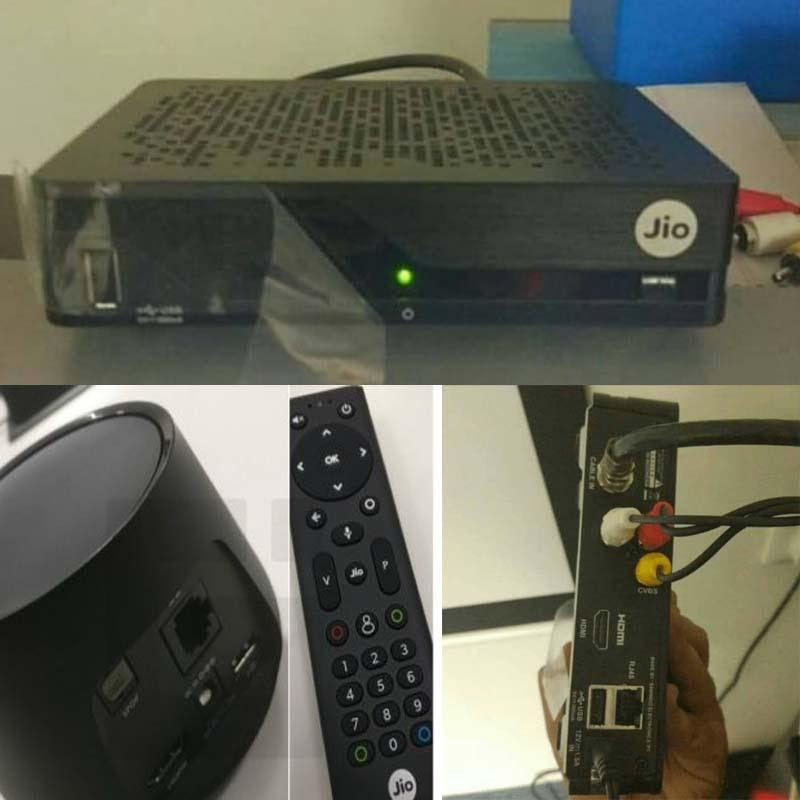
    According to the news report, Jio is expected to woo customers with premium offers such as ultra-high speed of up to 1 gigabit per second. The set-top box, as part of the package, will be a home entertainment hub – offering TV channels, high-end gaming and video on demand, among others.

    Jio is eyeing an average revenue per user of around Rs 1000 to Rs 1500 per month from subscribers (which includes internet and TV), as their usage of data goes up, a source said.

    Trials are being conducted in Mumbai and Delhi with only internet services at speeds of 100 megabits per second and 100 gigabytes of data free of cost. It is providing a special router, which connects multiple devices at a refundable deposit of Rs 4500. With a multi-service operator (MSO) licence in place, it will also offer TV services.

    Representatives of conventional TV industry cite numbers to back their claim that this is a tough game. While there are 180 million TV households in the country, subscribers fork out an average of only Rs 300- 400 a month for as many as 400 to 500 channels currently, they say.

    Competitors also say that currently, only three million subscribers cough up over Rs 1000 for high-speed broadband internet and only two million rustle up a similar amount per month for DTH or cable. So, the market that Jio is looking to address is currently niche and a small one.

    “Deploying FTTH is an expensive business and obviously Jio is making large investments. So, they have to get an adequate return on their investments. They might offer free broadband like they are doing currently and as they did earlier in the mobile space,” said a top industry executive to BS. But they will have to increase tariffs to make money and that might not translate into mass adoption.

    If the experiment succeeds, the number of households with TV and broadband, currently growing very slowly, could just explode, he said.

  • TRAI issues directions to prevent TSPs from blocking spectrum

    NEW DELHI: Taking note of the huge wastage due to blocked spectrum causing inconvenience to consumers, the Telecom Regulatory Authority of India has directed that a Unified Access Service (UAS) licensee must surrender such spectrum immediately upon closure of wireless access services if he decides to close down its wireless access services which were being provided through the administratively assigned spectrum.

    In its directions issued today related to closure of access services, TRAI says a UAS licensee should be permitted to discontinue any of the services, permitted under the scope of licence without the need to surrender the licence.

    In case of closure of access services through any technology in the entire service area or a part of it, the TSP should be mandated to give a 60 days notice to the licensor and TRAI and 30 days notice to its effected subscribers, clearly stating the options available to the subscribers, including that of Mobile Number Portability (MNP) facility.

    The Authority has recommended various time-lines to be followed by Department of Telecom/WPC and the Licensee in the spectrum trading process. These timelines will bring greater clarity and certainty in the entire process of spectrum trading. If the entire spectrum in all bands is being sold by a licensee and will result in discontinuation of services, recommended timelines will remove uncertainties and facilitate the TSPs to given 60 days notice to DoT/TRAI and 30 days notice to its subscribers.

    If a subscriber wants to switch from one technology to other, within the same TSP, the same should not come under the definition MNP.  

    At the outset, TRAI has said that due to adoption of market based spectrum management, the continuance of access service is now no longer assured. Recently, there have been cases where due to reasons such as licensee failing to re-acquire its spectrum holding in a band on expiry of its license validity period; change of technology deployed by licensee; sale of entire spectrum holding through spectrum trading; roaming arrangement coming to an end; etc., there has been closure of access services being provided by the licensee. As a result subscribers had to face lot of inconveniences.

    The directions are aimed at ensuring that subscribers are not put to undue hardships due to closure of access services.

    The Authority had suo-motu issued a Consultation Paper on “Issues related to closure of Access Services” on 30 November 2016 seeking the comments of the stakeholders and an Open House Discussion was held on 28 April 2017 at New Delhi.

    Also Read:

    Broadband connectivity in gram panchayats to be completed by Mar ’19

    Star India-TRAI jurisdiction case to come up in Madras HC today

    TRAI tariff: AIDCF impleads in Tata Sky, Airtel Digital pleas 

  • $23 bn Voda-Idea merger approved, 407 mn combined subs

    MUMBAI: Consolidation in the telecom sector seems to be progressing well, especially in the backdrop of big leaps by the new entrant Reliance Jio.

    The Competition Commission of India reportedly approved US$23 billion Vodafone-Idea merger unconditionally, with no additional scrutiny. Idea and Vodafone had, in March 2017, decided to join hands to take on intense competition, eventually creating India’s largest telecoms operator.

    Vodafone India advisor Shardul Amarchand Mangaldas, in a statement, said the regulator had approved the merger. Idea advisor Trilegal stated that the merger would create significant efficiencies and synergies.

    The combined entity would become the largest in terms of subscribers (over 407 million), revenue market share (41 per cent), subscriber market share (almost 34.50 per cent) and spectrum holdings (1850 Mhz). Market leader Bharti has over 278.60 million subscribers, around 35.6 per cent revenue market share (RMS), 23.59 per cent subscriber market share (SMS) and 1489 Mhz of spectrum holdings.

    The regulator has sent the letters of approval to Idea and Vodafone. NCLT is the agency which will ensure the merger is in accordance with DoT and M&A guidelines.

    Now, Idea and Vodafone will have to move to SEBI for required approvals.  Other regulatory approvals for the merger are reportedly anticipated in six months. Idea and Vodafone have assured the government they would return spectrum in whichever circle mandated.

    ALSO READ :

    Idea-Vodafone India merger creates leader with 42% market share

    Four telcos will emerge from India consolidation, predicts CCS Insight


  • TRAI Net Neutrality OHD in Bengaluru on 25 July

    NEW DELHI: An Open House Discussion has been slated in Bengaluru later this month on the Telecom Regulatory Authority’s pre-consultation paper on Net Neutrality which had been issued in mid-2016.

    The OHD will be held on 25 July after which the authority will begin work on its final recommendations.

    In a pre-consultation paper on Net Neutrality to ensure national security and customer privacy issued on 30 May 2016, the regulator had asked what should be regarded as the core principles of net neutrality in the Indian context and what key issues are required to be considered so that the principles of net neutrality are ensured.

    The regulator has also asked what the reasonable traffic management practices that may need to be followed by telecom service providers should be while providing internet access services and whether there any other current or potential practices in India that may give rise to concerns about net neutrality or its misuse.

    Stakeholders have been asked about the precautions with respect to the activities of TSPs and content providers to ensure that national security interests are preserved, and customer privacy is maintained.

    The regulator says it had issued a paper on 27 March last year and after much discussion among stakeholders and the government, the Department of Telecom had asked TRAI certain questions leading to the present paper.

    At the outset, TRAI says that during the last decade, the telecom industry in India has grown tremendously, both in terms of penetration as well as connectivity. Today, India is one of the fastest growing information and communication technologies markets in the world, fueled largely by the cellular mobile revolution. Starting from a few million connections in 1997, there are more than a billion connections, with 97.5 per cent of them being wireless subscribers. With this, the overall teledensity in India at the end of 2015 stood at 81.83 per cent.

    India has also witnessed tremendous growth in terms of the total number of Internet users. At the end of December 2015, there were over 331 million internet subscribers in the country, of which about 94 per cent (over 311 million) were wireless internet users.

  • TV in India may grow 10.3%, overall AdEx by 11.5% in ’17: IPG Magna

    MUMBAI: India is recovering from the aftereffects of demonetisation, and the currency deficit faced during this period has helped the country leap frog towards a lesser cash economy.

    The country is set to move towards a uniform tax regime with Goods & Services Tax (GST), effective July 2017, while this fuels growth it is likely to create a fleeting disruption in the short term when the industry realigns and adapts to the new tax structure. GDP in real terms is estimated to grow +7.2% in 2017 compared to +6.8% in 2016 according to International Monetary Fund (IMF). Within the next decade India will gallop to become one of the largest consumer markets in the world according. Rising affluence, ease of doing business, urbanization and enabling infrastructure will contribute to this status.

    Advertising revenue which is accounts for 0.38% of GDP (gross domestic product) is likely to grow CAGR of +12.6% to touch INR 992 bn by 2021. Within Advertising, offline is estimated to grow at a CAGR of +9.7%, while digital will grow at +25.5% CAGR in the next five years. Mobile is projected to overtake desktop by 2020. Television will still be the largest media in 2021 with a market share of 39%.

    In 2017, Adex is estimated to grow +11.5% to touch INR 611bn, predicts Magna, the intelligence, investment and innovation strategies agency of IPG Mediabrands. Ad spends will be driven by sectors like social, fin-tech, and payment banks, telecom service, content distribution platforms etc., in addition to FMCG, Auto and Ecommerce.

    Television, the foundation of advertising spends, continues to dominate the industry with its market share of 41% and will grow+10.3%.  With BARC release of rural audience data, new revenue stream in the form of FTA channels have gained significance. Quality localized content and HD experience will help regional TV to keep their audiences hooked. Sporting leagues outside of Cricket is finding way to generate mass involvement and Television will play a larger role. Star Sports Tamil demonstrating tangible results will increase fandom for local/state level formats.

    Print in India has been successful in guarding its revenues well with revenue expected to grow by +5.7% and India is one of the large markets where circulation is still growing thanks to rising literacy. The second biggest category with 36% share despite growing is losing its share to Digital year-on-year. Traditional sectors like auto, telecom and education will contribute to ad spend growth.  After a gap of 3 years, the category will invigorate with the release of new IRS and help publishers realize merit based value. Audit Bureau of Circulation (ABC) measuring digital consumption will lend authority and help in monetization. We expect the ad spends to grow beyond the estimated +5.7% in 2017 thanks to government’s focused campaign to popularize their marquee initiatives.

    Digital will grow +28%, and, within digital, mobile is driving spends with a growth rate of +65.7%. The launch of 4G triggered low price data products there by increase in usage. With improved speed Video, native and customized content has tremendous potential to grow.  BARC putting out a road map on digital panel takes India one step closer to a robust measurement not only for digital but also to showcase capabilities in incremental metrics. With expanding content library, OTT viewing is no more restricted to national languages. Aggressive push by Amazon and Netflix to address the original content gap will attract larger base of audience. With mobile increasingly being the choice of access, traffic will be higher than desktop resulting in advertising propelled by mobile which is estimated to expand at CAGR of 48%. E-commerce, Telecom, Auto, BFSI, Durables are large contributors to the revenue.

    Radio reach with around 150 new frequencies sold during phase III is set to deepen further and will help generate incremental revenue. We estimate radio to grow +13% and continue to grow at CAGR of 13.8% in the next 5 years. Currently the measurement is limited to 4 cities, widening this will help radio increase its share from the current 4%

    OOH will grow +12% in 2017. Technology integration will increase effectiveness and helps DOOH to drive ad spends. Urbanization in the form of new Metro lines and smart cities, modernization of Indian Railways and their new advertising policy etc., will provide opportunities for a planned development of quality assets and also push the industry to innovate and move beyond billboards. Regional cinema is pushing boundaries to outdo Bollywood cinema which augurs well for the industry.

    Table 1 – Media owner revenue by category in INR Cr Net

    public://F1_12.jpg

    Table 2 – Traditional Vs Digital Adex growth rate

    public://F2_5.jpg

    Table 3 – Mobile gaining shares over desktop

    public://F3_0.jpg


  • CCI rejects Airtel charges against Jio

    MUMBAI: The fair trade regulator has dismissed the case of ‘predatory pricing’ that Airtel alleged against Reliance Jio. Airtel officials declined to comment on the development.

    Just giving free access to its services cannot be termed as ‘anti-competitive’, the Competition Commission of India (CCI) stated.

    Airtel had alleged that Jio, in a bid to race ahead in the telecom competition, had indulged in ‘predatory pricing’ since its commercial launch on 5 September 2016.

    With unfair trade practice of free services, Airtel alleged, Jio had used its financial muscle to gain a foothold into the telecom world of stiff competition.

    Airtel charges, the trade regulator stated, would not be considered ‘anti-competitive’ since Jio’s offers were to attract customers.

    A short-term business offer or strategy of a new entrant to penetrate a market cannot be considered as ‘anti-competitive’ in nature and could not be a subject of investigation, CCI stated.

  • What are the rules for testing telecom networks

    MUMBAI: The Telecom Regulatory Authority of India, on Monday, started a consultation process to frame rules for the network testing before full-fledged commercial launch after witnessing the controversy related to Reliance Jio’s free trial run.

    “The DoT requested the Authority (TRAI) to provide its recommendations on testing of network before commercial launch of services including enrolment of customers for testing purposes before commercial launch, duration of testing period etc…,” TRAI consultation paper stated.

    Incumbent telecom operators had voiced concern that enrolment of subscribers and provision of service free of cost before commercial launch are leading to a non-level playing field. They also said the volume of voice traffic generated by such test users, due to free offers, is choking points of interconnect, and impairing the quality of service of other operators. The last date for seeking comments on the issue is May 29 and for counter comments 12 June.

    Telecom service providers (TSPs) are bound by roll-out obligations and other licence conditions, TRAI stated. The TSPs are required to install applicable systems for providing mobile services to the subscribers. It is important that these systems are tested before commencement of commercial services because a licensee has to ensure that its service meets the Quality of Service (QoS) standards prescribed by the Licensor or TRAI. As per the general practice, the Telecom Service Providers use test SIM Cards to check the quality of network, before the commercial launch of services.

    The Department of Telecommunications (DoT), through its letter dated 9 September 2016, communicated that at present, network testing is being carried out by licensees on the basis of erstwhile practices followed by DoT/BSNL and test SIM Cards are issued by such licensees to check the quality of network, before the commercial launch of services. However, the present licenses for various services issued by DoT do not mandate any time period for network testing before commercial launch of services by the licensees. Therefore, DoT requested TRAIto provide its recommendations
    on testing of network before commercial launch of services including enrolment of customers for testing purposes before commercial launch, duration of testing period etc. under the terms of clause 11(l)(a) of TRAI Act 1997 as amended.

    In view of the above, Consultation Paper on ‘Network testing before commercial launch of services’ has been released to discuss issues involved, possible solutions and framework to bring clarity on the matter. Written comments on the issues raised in the Consultation, Paper are invited from the stakeholders by 29th May 2017 and counter-comments by 12 June 2017.

    Comments and counter-comments may be sent, preferably in electronic form at advmn@trai.gov.in. For any clarification / information Sanjeev Banzal, Advisor (Networks, Spectrum & Licensing), TRAI, may be contacted at Telephone Number +91-11-23210481.

    Also Read :

    TRAI now seeks telecom biz ease ideas by 25 April

    OpenSignal too finds Airtel better than Jio in 4G speed, latter tops in reach

    TRAI to begin groundwork on next spectrum auction, TSPs not too keen yet