Tag: Telecom Service Providers

  • TRAI warns public against scam calls threatening mobile disconnection

    TRAI warns public against scam calls threatening mobile disconnection

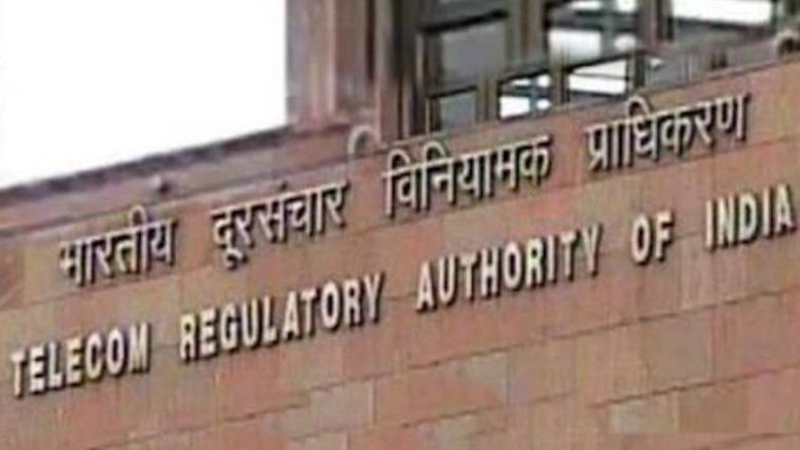
    MUMBAI: The Telecom Regulatory Authority of India (TRAI) has issued a public warning over a rise in fraudulent calls and messages from scamsters posing as TRAI officials, falsely claiming users’ mobile connections will be disconnected due to alleged illegal activity.

    “There have been several media reports in the recent times that the consumers are being targeted through telephonic calls or messages by fraudsters posing as TRAI officials threatening disconnection of mobile connection for being involved in illegal activities and for extraction of money,” TRAI noted in an official statement.

    The regulator clarified that TRAI does not contact consumers regarding mobile disconnections, nor has it authorised any third-party agency to do so. Any such calls or messages should be treated as potentially fraudulent and ignored.

    The responsibility for disconnection of mobile numbers whether due to billing issues, KYC non-compliance, or misuse rests solely with the respective Telecom Service Providers (TSPs).

    Citizens are strongly advised not to panic, and to verify any suspicious calls by reaching out directly to their telecom provider’s official customer care.

    To curb cybercrime and financial fraud, the Department of Telecommunications encourages users to report such scam attempts through the Chakshu facility available on the Sanchar Saathi platform.

  • TRAI recommends MIB should not introduce any fresh regulations in Cable TV distribution sector

    TRAI recommends MIB should not introduce any fresh regulations in Cable TV distribution sector

    Mumbai: The Telecom Regulatory Authority of India (TRAI) has recommended to the Ministry of Information & Broadcasting (MIB) that the government should not introduce any new regulations or take any corrective measures to enhance the competition in the cable TV distribution sector.

    Trai has further requested the MIB to monitor but also intervene only at the appropriate time. However, Trai recommended, “The government may take suitable measures to facilitate & promote sharing of cable infrastructure by a local cable operator with Telecom Service Providers (TSP) to enable the last mile for provision of broadband services.”

    “The government may issue necessary amendments to existing rules/ guidelines, to enable the use of last mile infrastructure created by cable operators by TSPs for promoting broadband connections,” it wrote.

    Trai further said that the government may amend the rules under the Cable Television Networks (Regulation), Act 1995 to explicitly indicate the following:

    “Cable operators may strive to provide last mile access to Access service providers/Internet Service Providers in a fair, transparent and non-discriminatory manner for the proliferation of broadband services.”

    On 19 February 2021, MIB sent a letter to TRAI where the government informed the authority that considerable time has passed on the recommendations on “Monopoly/Market Dominance in the Cable TV services on 26 November 2013” and the media and entertainment landscape has changed drastically since then, particularly with the advent of digital technologies in this sector. Therefore, MIB has requested Trai to provide a fresh set of recommendations for the development and expansion of the M&E sector.

    For this, Trai issued a consultation paper seeking comments from stakeholders on 25 October 2021. The date of submission for comments and counter comments was extended continuously and Trai received comments on the consultation paper from 70 stakeholders and counter comments from 7 stakeholders. (recommendations are available on Trai’s website). An open house discussion (OHD) was also held on 27 January 2022 in this regard through an online mode. After considering all comments and counter-comments received from stakeholders and further analysis of the issues, the regulator has now finalised its recommendations and issued it to the MIB.

  • DoT amends VSAT license rules to enable infrastructure sharing

    DoT amends VSAT license rules to enable infrastructure sharing

    Mumbai: The department of telecommunications (DoT) has amended the commercial VSAT license rules to enable sharing of satellite infrastructure and backhaul connectivity for cellular mobile services and access service providers.  

    According to the new rules, the licensee may share its own active and passive infrastructure for providing other services authorized to it under any other telecom license issued by the licensor. The sharing of infrastructure will be governed by the terms and conditions of respective licenses and amendments/guidelines to be issued by the licensor from time to time. It also mentioned that an authorised gateway hub operated by the satellite provider itself is permitted to be shared with the satellite bandwidth seeker.

    DoT also amended the existing rules to allow backhaul connectivity for cellular mobile services through satellite using VSAT to the access service providers; it allowed backhaul connectivity using VSAT to access service providers to establish Wi-Fi hotspots and mandated that the VSAT terminal of the commercial VSAT CUG service provider, which is used to provide cellular mobile backhaul link or Wi-Fi mobile backhaul link, is to be located in the service area of the access provider, where the backhaul link is used.

    The VSAT hub can be located anywhere in the country. The link from the hub station to the respective network element of the cellular mobile network can be provided through the terrestrial obtained from an authorised service provider.

    The move is expected to reduce the capital and operational expenditure of telcos and is a long pending demand of the industry. Earlier, only mobile towers and some active electronic components in the network were allowed to be shared among telecom service providers.

    The amendment which allows the use of satellite service through VSAT terminals to provide backend connectivity for mobile networks is expected to boost the rollout in difficult terrain and remote areas.

  • TSPs accountable for discriminatory MNP specific tariff offers: TRAI

    TSPs accountable for discriminatory MNP specific tariff offers: TRAI

    Mumbai: The Telecom Regulatory Authority of India (TRAI) has received complaints lodged by telecom service providers (TSPs) that rival TSPs are offering discriminatory tariff benefits to customers who want to switch telcos via mobile number portability (MNP).

    As per the Telecommunication Tariff Order (TTO), 1999, clause 10 on non-discrimination: No service provider shall, in any manner, discriminate between subscribers of the same class and such classification of the subscribers shall not be arbitrary.

    Provided that every classification between subscribers shall be based on intelligible eligibility criteria where such criteria shall have a rational nexus to the purpose of the said classification, it added.

    In 2011 letter, TRAI had clarified that: “The offering of differential tariffs to the subscribers porting from the network of other service provider is not valid and reasonable classification as the motive behind such classification is apparently to induce churn from the competitors’ network and which is discriminatory and contravenes the provisions of clause 10 of TTO, 1999.”

    “While TSPs have generally denied allegations of discriminatory MNP-specific tariff offers, in some cases, they have stated that their channel partners may have given some MNP specific benefits to the customers on their own without the consent and authorization of TSP”.

    Channel partners such as distributors, retailers and third-party apps are non-licensed entities that are appointed by TSPs for the purpose of offering telecom services. However, it remains the responsibility of the TSPs to adhere to regulatory provisions and guidelines with respect to tariff offerings.

    Considering all aspects and with the objective to ensure transparency, uniformity, and protection to its subscribers, TRAI has directed telecom services to ensure:

    1.     Only the tariffs reported to TRAI are offered through their channel partners, distributors, third-party apps etc.

    2.     All tariff orders comply with extant TRAI regulations/directions/orders issued in this regard as, where the TSPs name/brand is used for marketing/offering/selling products and services, the responsibility of ensuring compliance of TRAI’s regulatory guidelines/provisions shall remain with TSP.

    At the end of June, TRAI reported that telcos Reliance Jio and Bharti Airtel had added 5.4 million and 3.8 million mobile subscribers whereas Vodafone Idea has lost 4.2 million mobile subscribers.

  • No exclusive pacts with telcos: TRAI to building-owners; CTI mooted

    No exclusive pacts with telcos: TRAI to building-owners; CTI mooted

    MUMBAI: The Telecom Regulatory Authority of India (TRAI) has issued its recommendations on “In-Building Access by Telecom Service Providers”.

    An effective telecommunications infrastructure is an essential component of any building for its connectivity to the outside world. Telecommunications services such as voice, data and wideband multimedia services are indispensable in the modern society. In order to improve in-building coverage and to offer quality high data rate services, installation of in-building solutions (IBS) for wireless services and laying of cables such as copper cables, optical fibre cables (OFC),LANcables etc. is required.

    To lay  cables  or  install  telecom  infrastructure   inside  the  building, Telecom Service Providers (TSP) lnfrastructure Providers (lP-I) require permission of the owner of the building. However, it is seen that generally restrictive practices are adopted by building owners while giving access to the building due to commercial. interests. In many cases, these owners enter into exclusive agreement with one of the TSPs for providing telecom services to dwellers and deny access to other TSPs, thus creating an artificial entry barrier for other TSPs. Such practices not only limit competition, it also leaves no choice to consumers except to avail services from the TSP with whom the contract is done; taking away choice and flexibility from the consumers which they would have had in terms of quality of service (QoS), tariff, redundancy etc.

    In view of the above, a need was felt for policy intervention and to evolve a framework applicable to in-building facilities to enable the telecom operators to obtain efficient access on reasonable terms and conditions. Therefore, the Authority, suo-motu, decided to initiate a consultation process on the issue. Accordingly, a Consultation Paper on “In-Building Access by Telecom Service Providers” was released on 6 June 2016 seeking the comments of the stakeholders. An Open House Discussion (OHD) on the issue was also convened on 30 September 2016 at New Delhi.

    Based on the comments received and further analysis, draft recommendations on ‘In-Building Access by Telecom Service Providers’ have been issued and the same have also been placed on TRAI’s web site. Some of the main recommendations are:

    (i)    TSPs/IP-ls be mandated to share the in-building infrastructure (IBS, OFC and other cables, ducts etc) with other TSPs, in large public places, commercial complexes and residential complexes in transparent, fair and non-discriminatory manner.

    (ii)    Indulgence   into  exclusive  contract   prohibiting   access  to  other TSPs may be treated as violation of the license agreement / registration.

    (iii)    Suitable provisions for  the creation of  Common Telecom Infrastructure (CTI) inside the building should form part of the Model Building Bye-Laws.

    (iv)    The essential requirement for telecom installations and the associated cabling should be formed part of National Building Code of India (NBC), being amended by Bureau of Indian Standards (BIS).

    (v)    Completion certificate to a building to be granted only after ensuring that the CTI as per the prescribed standards is in place.

    (vi)    Access to building including CTI facilities be available to the TSPs on a fair, transparent and non-discriminatory manner and minimum three TSPs/IP-Is should have presence in the building.

    Also Read:

    “There would be a lot on TRAI’s plate in 2017” – RS Sharma

    Wi-fi proliferation, Net Telephony discussion in January


  • No exclusive pacts with telcos: TRAI to building-owners; CTI mooted

    No exclusive pacts with telcos: TRAI to building-owners; CTI mooted

    MUMBAI: The Telecom Regulatory Authority of India (TRAI) has issued its recommendations on “In-Building Access by Telecom Service Providers”.

    An effective telecommunications infrastructure is an essential component of any building for its connectivity to the outside world. Telecommunications services such as voice, data and wideband multimedia services are indispensable in the modern society. In order to improve in-building coverage and to offer quality high data rate services, installation of in-building solutions (IBS) for wireless services and laying of cables such as copper cables, optical fibre cables (OFC),LANcables etc. is required.

    To lay  cables  or  install  telecom  infrastructure   inside  the  building, Telecom Service Providers (TSP) lnfrastructure Providers (lP-I) require permission of the owner of the building. However, it is seen that generally restrictive practices are adopted by building owners while giving access to the building due to commercial. interests. In many cases, these owners enter into exclusive agreement with one of the TSPs for providing telecom services to dwellers and deny access to other TSPs, thus creating an artificial entry barrier for other TSPs. Such practices not only limit competition, it also leaves no choice to consumers except to avail services from the TSP with whom the contract is done; taking away choice and flexibility from the consumers which they would have had in terms of quality of service (QoS), tariff, redundancy etc.

    In view of the above, a need was felt for policy intervention and to evolve a framework applicable to in-building facilities to enable the telecom operators to obtain efficient access on reasonable terms and conditions. Therefore, the Authority, suo-motu, decided to initiate a consultation process on the issue. Accordingly, a Consultation Paper on “In-Building Access by Telecom Service Providers” was released on 6 June 2016 seeking the comments of the stakeholders. An Open House Discussion (OHD) on the issue was also convened on 30 September 2016 at New Delhi.

    Based on the comments received and further analysis, draft recommendations on ‘In-Building Access by Telecom Service Providers’ have been issued and the same have also been placed on TRAI’s web site. Some of the main recommendations are:

    (i)    TSPs/IP-ls be mandated to share the in-building infrastructure (IBS, OFC and other cables, ducts etc) with other TSPs, in large public places, commercial complexes and residential complexes in transparent, fair and non-discriminatory manner.

    (ii)    Indulgence   into  exclusive  contract   prohibiting   access  to  other TSPs may be treated as violation of the license agreement / registration.

    (iii)    Suitable provisions for  the creation of  Common Telecom Infrastructure (CTI) inside the building should form part of the Model Building Bye-Laws.

    (iv)    The essential requirement for telecom installations and the associated cabling should be formed part of National Building Code of India (NBC), being amended by Bureau of Indian Standards (BIS).

    (v)    Completion certificate to a building to be granted only after ensuring that the CTI as per the prescribed standards is in place.

    (vi)    Access to building including CTI facilities be available to the TSPs on a fair, transparent and non-discriminatory manner and minimum three TSPs/IP-Is should have presence in the building.

    Also Read:

    “There would be a lot on TRAI’s plate in 2017” – RS Sharma

    Wi-fi proliferation, Net Telephony discussion in January


  • Telecom cloud market to be worth US$ 31 billion by ’21: Report

    Telecom cloud market to be worth US$ 31 billion by ’21: Report

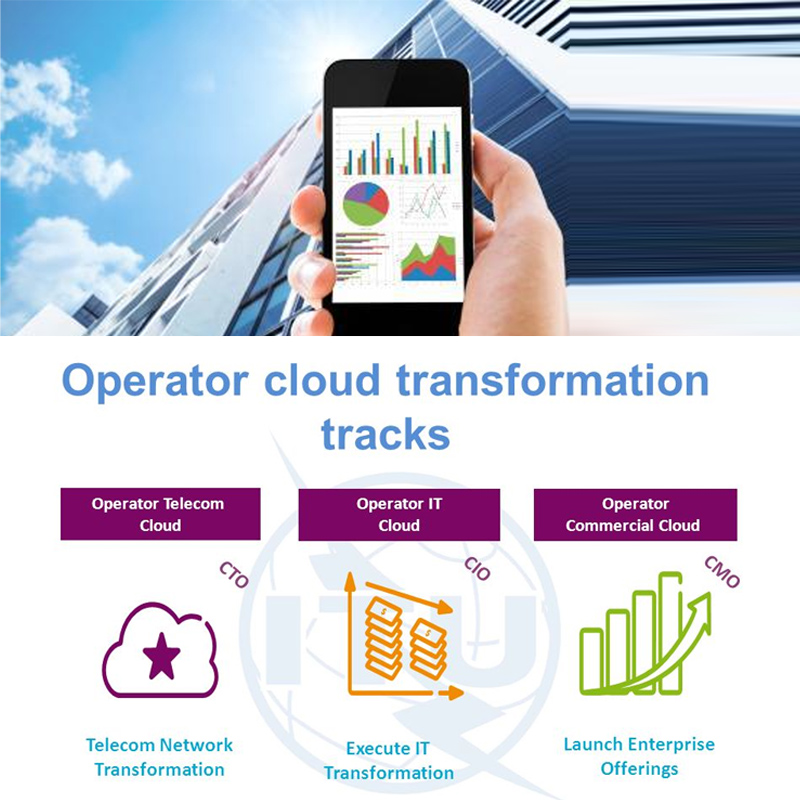
    MUMBAI: The telecom cloud market is expected to expand from USD 10.92 billion in 2016 to USD 30.79 billion (Rs 2098.5 billion) by 2021, at a compounded annual growth rate (CAGR) of 23.0% during the forecast period.

    This is according to a market research report “Telecom Cloud Market by Type (Solution and Service), Application (Billing & Provisioning and Traffic Management), Service Model (SaaS, PaaS, and IaaS), Organization Size, Vertical, and Region – Global Forecast to 2021,” published by Pune-based MarketsandMarkets.

    The major drivers of this market include the need for lower operational and administration costs, as telecom cloud is hosted on cloud platform. It offers flexible pricing for products & services and allows managing various types of revenue without constraints, a news release from PRNewswire stated.

    The Unified Communication and Collaboration (UCaaS) solution segment is estimated to dominate the Telecom Cloud Market share during the forecast period

    UCaaS is estimated to have the largest market share in the telecom cloud market. Various features, such as multimedia, unified messaging, conference bridges, presence management, and Customer Relationship Management (CRM) integration are helping improve business functions. Therefore, with its increasing demand, Telecom Service Providers (TSPs) are providing UCaaS solutions in the market.

    Network services are expected to capture the highest market share during the forecast period.

    The network services of the telecom cloud market is witnessing a potential growth, in comparison to other services, owing to the benefits, such as Local Area Network (LAN)/Wide Area Network (WAN)/Wireless Local Area Network (WLAN) management, Voice over Internet Protocol (VoIP), managed network services, Internet Protocol (IP) contact centre management, network integration, and network implementation services.

    North America is the leading region, in terms of market share in the telecom cloud market space.

    North America is expected to hold the largest market share and dominate the telecom cloud market in 2016. North America has a huge penetration from large enterprises with technically-sound employees providing continuous innovative technologies. This has led to the growing Telecom Cloud Market. These are some of the major driving factors contributing to the growth of cloud-based services and solutions in North America.

    Major vendors covered in the telecom cloud market for the study are AT&T, Inc. (Dallas, Texas, U.S.), BT Group PLC (London, U.K.), Verizon Communication, Inc. (New Jersey, U.S.), Level 3 Communications, Inc. (Broomfield, Colorado, U.S.), Deutsche Telekom (Bonn, Germany), NTT Communications Corporation (Tokyo, Japan), CenturyLink, Inc. (Louisiana, U.S), Singapore Telecommunications Limited (Singapore), Orange Business Service (Paris, France), and Ericsson (Stockholm, Sweden).

    M&M claims to be the largest market research firm worldwide in terms of annually published premium market research reports. Serving 1700 global fortune enterprises with more than 1200 premium studies in a year, M&M is catering to a multitude of clients across eight different industrial verticals.

  • Telecom cloud market to be worth US$ 31 billion by ’21: Report

    Telecom cloud market to be worth US$ 31 billion by ’21: Report

    MUMBAI: The telecom cloud market is expected to expand from USD 10.92 billion in 2016 to USD 30.79 billion (Rs 2098.5 billion) by 2021, at a compounded annual growth rate (CAGR) of 23.0% during the forecast period.

    This is according to a market research report “Telecom Cloud Market by Type (Solution and Service), Application (Billing & Provisioning and Traffic Management), Service Model (SaaS, PaaS, and IaaS), Organization Size, Vertical, and Region – Global Forecast to 2021,” published by Pune-based MarketsandMarkets.

    The major drivers of this market include the need for lower operational and administration costs, as telecom cloud is hosted on cloud platform. It offers flexible pricing for products & services and allows managing various types of revenue without constraints, a news release from PRNewswire stated.

    The Unified Communication and Collaboration (UCaaS) solution segment is estimated to dominate the Telecom Cloud Market share during the forecast period

    UCaaS is estimated to have the largest market share in the telecom cloud market. Various features, such as multimedia, unified messaging, conference bridges, presence management, and Customer Relationship Management (CRM) integration are helping improve business functions. Therefore, with its increasing demand, Telecom Service Providers (TSPs) are providing UCaaS solutions in the market.

    Network services are expected to capture the highest market share during the forecast period.

    The network services of the telecom cloud market is witnessing a potential growth, in comparison to other services, owing to the benefits, such as Local Area Network (LAN)/Wide Area Network (WAN)/Wireless Local Area Network (WLAN) management, Voice over Internet Protocol (VoIP), managed network services, Internet Protocol (IP) contact centre management, network integration, and network implementation services.

    North America is the leading region, in terms of market share in the telecom cloud market space.

    North America is expected to hold the largest market share and dominate the telecom cloud market in 2016. North America has a huge penetration from large enterprises with technically-sound employees providing continuous innovative technologies. This has led to the growing Telecom Cloud Market. These are some of the major driving factors contributing to the growth of cloud-based services and solutions in North America.

    Major vendors covered in the telecom cloud market for the study are AT&T, Inc. (Dallas, Texas, U.S.), BT Group PLC (London, U.K.), Verizon Communication, Inc. (New Jersey, U.S.), Level 3 Communications, Inc. (Broomfield, Colorado, U.S.), Deutsche Telekom (Bonn, Germany), NTT Communications Corporation (Tokyo, Japan), CenturyLink, Inc. (Louisiana, U.S), Singapore Telecommunications Limited (Singapore), Orange Business Service (Paris, France), and Ericsson (Stockholm, Sweden).

    M&M claims to be the largest market research firm worldwide in terms of annually published premium market research reports. Serving 1700 global fortune enterprises with more than 1200 premium studies in a year, M&M is catering to a multitude of clients across eight different industrial verticals.

  • TSPs asked to ensure transparency in mobile billing, cut call drops

    TSPs asked to ensure transparency in mobile billing, cut call drops

    NEW DELHI: The Government has told Telecom Service Providers (TSPs) that the public in general was highly dissatisfied with frequent and heavy call drops throughout the day and that were not confined to peak calling hours, which shows poor quality of the telecom networks.


    Briefing TSPs about the falling perception in the public with regard to poor quality of telecom services in the country in general and with special emphasis on degrading quality in Metros, the TSPs were today also told about the perception of the public that such call drops are deliberate attempts to have multiple charging and consequent commercial gain.


    It was also noticed that the billing by TSPs is not transparent and there are frequent changes in the package rates, contrary to initial agreed upon package, without the consent of the customer.


    The meeting chaired by Telecom secretary and Telecom Commission chairman Rakesh Garg was held following a recent Calling Attention Notice in Parliament in various public forums as well as in the media. 

    In case of international roaming, TSPs do not have any warning system about the tariffs to be charged for various applications, that is, data download, which result in many complaints of heavy charging of the customer. There have been frequent complaints of charging even though the customer has already disconnected or has not used the services of the TSPs. 

    The TSPs gave an assurance to look into the billing complaints on a priority basis and set up a transparent system to educate the customers about various tariffs being charged so that billing complaints are minimized. 


    The TSPs also highlighted the delay in acquisition of new sites for additional towers because of fear of EMF radiation in the public, closure of existing tower sites because of local bodies’ regulations and delay in getting permission from local bodies for laying/ repair of cables etc. 

    Garg emphasized the need for utmost integrity of the billing system and charging of telecom customers and to bring in place a transparent and foolproof billing mechanism with provisions for timely intimation and consent of the customer to effect any changes in the tariff plan, especially in case of national and international roaming. 


    It was also emphasized that TSPs should take further steps to educate the public about the stringent EMF norms being followed in India. It should be highlighted through seminars and public meetings that there are no harmful effects of tower radiations. The education material as well as seminars should also be conducted in vernacular languages. To improve the quality of the network to reduce frequent call drops, it was emphasized that the TSPs should optimize their RF network extensively in a regular and routine matter. 


    DoT has also written from time to time to various State Governments/ Local Bodies to facilitate the acquisition of tower sites, permissions for laying/ repair of cables in line with guidelines issued by the Department. The TSPs should also follow the guidelines issued by local bodies in this regard. He emphasized that in no case these can become shield for poor service in the public perception and all the TSPs should take all possible steps to improve the quality of service and deal with customers’ complaints promptly. 


    All the TSPs assured they would take all necessary measures to bring transparency in the billing system and to improve the overall quality of telecom services in the shortest possible time.

  • TRAI mandates interconnection for intelligent network services among all telecom service providers

      Newsletters Email Story Print Comment
    Indiantelevision.com’s News Releases
     

    TRAI mandates interconnection for intelligent network services among all telecom service providers


    MUMBAI: Telecom Regulatory Authority of India (TRAI) today issued a Regulation on Interconnection amongst all telecom service providers for Intelligent Network (IN) Services. This Regulation would ensure that specified innovative services made available through IN will not be restricted to the telecom service providers who have deployed the Intelligent Network platform but now also be available to subscribers of other operators.

    Consumers are today offered a number of innovative services made available through Intelligent Network (IN) deployed by telecom service providers in their network. Free phone or Toll Free Number, Virtual Calling Card (VCC) for long distance calls, are some of the popular examples of services offered through IN platforms. Some of the telecom service providers in the country have already started offering IN services for their subscribers. In the existing multi-service multi operator environment these services can only be accessed by subscribers of a specific service provider and are not available to the subscribers of other service providers.

    To enable the subscribers of different service providers to access the IN services of other service providers, TRAI had set up an Expert Group to handle the technical and regulatory issues pertaining to this. Based on the recommendations of the Group, a Draft Regulation was launched on website on 30.10.2005 for comments of stakeholders. The IN Regulation taking into consideration various comments/ suggestions received from the various stakeholders has now been finalised and issued.

    The regulation mandates all service providers to provide interconnection to all eligible service providers so that subscribers of all Access Providers will have a choice of using the IN services of other service providers. This regulation will enable all telecom consumers in the country to have access to Multi-operator Multi-service IN platforms and no operator will be permitted to block his consumers from accessing IN platform belonging to other service providers. Service providers are required to enter into the necessary commercial and technical agreements for the same within three months. The technical architecture and mutual revenue share among service providers has to be mutually decided upon based on the principles of Reciprocity and Non-discrimination. Also the various service providers have to comply with the various provisions and Access Code allocated as per the National Numbering Plan.

    The Regulation has been finalised after extensive consultation with all telecom service providers and, therefore, it should have smooth implementation.

    The Regulation is available on TRAI’s Website (www.trai.gov.in)